



Kolkata/Bengaluru, Sep 7 (IANS) Researchers at the Indian Institute of Science (IISc), Bengaluru, have found a more effective way of extracting uranium from seawater.
The method will also help in the removal of uranium from groundwater in a more effective manner.
“Developing efficient technologies to extract uranium from seawater could offer a promising long-term pathway toward securing a sustainable supply of nuclear fuel. At the same time, uranium contamination of groundwater is an important environmental and public health concern,” the institute has said.
With land-based uranium deposits depleting fast, the focus is now on extracting uranium from seawater. As compared to about 7.5 million tonnes of uranium on land, seawater has about 4.5 billion tonnes of the vital material needed for nuclear power plants.
“Over the years, researchers have developed a wide range of materials for capturing uranium from aqueous environments and seawater, including porous organic polymers and functional nanomaterials. Many of these materials rely on strong chemical interactions between functional groups and uranyl ions to selectively capture uranium. However, achieving highly selective uranium separation in the chemically complex environment of seawater remains a major challenge due to the high concentrations of competing ions,” the IISc has said.
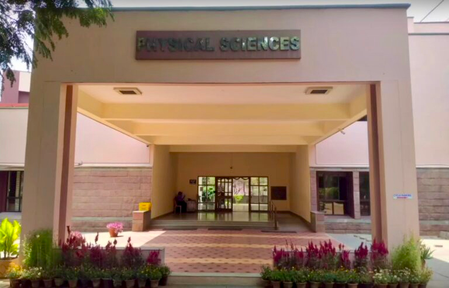
“A recent study from the Department of Physics, IISc, presents a new approach to addressing this challenge. The team has shown that specially designed slipped covalent organic framework (COF) membranes can completely reject uranyl ions while allowing common seawater ions to pass through,” it said.
The researchers investigated the molecular-level mechanisms responsible for this selective separation. Their analysis of ion hydration structures, free-energy barriers, and membrane-induced friction revealed how the structural arrangement of the COF layers controls the movement of different ions through the membrane.
“Unlike conventional approaches that often depend on extensive chemical functionalization to introduce selective binding sites, the new strategy exploits the intrinsic structural confinement created by slipping the COF layers. This provides a way to control ion transport across the membrane primarily based on its nanoscale structure, rather than relying solely on strong chemical interactions with uranium,” the institute has said.
The findings provide important insights into how the architecture of layered COF membranes can be engineered to control ion transport pathways and free-energy landscapes. Overall, the work demonstrates the potential of combining advanced molecular simulations with rational membrane design to develop highly selective separation technologies for challenging environmental and energy-related applications.
The research was carried out by Yogendra Kumar and Binu Varghese, under the mentorship of Prabal K Maiti, and carried out in collaboration with Accenture Labs, Bengaluru.
–IANS
jg/uk