
India’s bio economy grows from $10 billion to 190 billion in 12 years: Dr Jitendra Singh
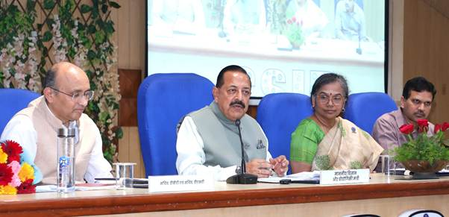
New Delhi, June 15 (IANS) India’s science, technology and innovation landscape has undergone an unprecedented transformation, with a twenty-fold expansion of the bioeconomy to over $190 billion from nearly $10 billion in 2014, Union MoS Science & Technology, Earth Sciences Dr Jitendra Singh, said on Monday.
India has a target of reaching $300 billion by 2030, he said, adding that the country has emerged as a global biotechnology hub through indigenous innovations in healthcare, genomics, diagnostics and biopharmaceuticals, supported by progressive policies such as the BioE3 framework.
Dr Singh said India has also strengthened its position in advanced healthcare technologies through breakthroughs in areas such as next-generation antibiotics, affordable CAR-T cell therapy, genomics and precision medicine. He noted that the country is increasingly developing solutions for diseases and disorders of global significance.
He mentioned India's historic Moon landing near the lunar south pole, rapid growth of the space startup ecosystem, revolutionary improvements in weather forecasting and the emergence of indigenous technologies across strategic sectors.
Addressing a press conference here on “12 Years of Transformative Growth in Science, Technology and Innovation”, Singh said science and technology have moved from laboratories to the lives of ordinary citizens and have become a central pillar of India’s development journey.
He said the growing public interest in scientific achievements itself reflects the transformation that has taken place during the last decade.
The minister said that indigenous science technologies power nearly all major government flagship programs, reflecting the success of an integrated, whole-of-government approach.
The government’s emphasis on innovation, global competitiveness, industry participation and private-sector engagement has accelerated scientific outcomes across sectors ranging from healthcare and agriculture to space, weather sciences, infrastructure and energy.
The minister cited the example of steel slag road technology, which has converted industrial waste into a valuable national resource.
He said roads built using the technology have demonstrated superior durability, lower maintenance costs and greater cost-effectiveness, leading to wider adoption across the country.
—IANS
aar/pk
SEBI likely to approve major reforms in bond markets, MFs and AIFs on June 19

New Delhi, June 15 (IANS) India’s markets regulator Securities and Exchange Board of India (SEBI) is expected to clear a package of reforms covering share buybacks, alternative investment funds, bond distribution and mutual fund liquidity at its board meeting on June 19.
The measures aim to boost market efficiency, ease compliance burdens and widen investor participation while tightening safeguards to prevent misuse, the report from NDTV Profit said, citing sources speaking on condition of anonymity.
A key proposal under consideration is the revival of open market share buybacks executed through stock exchanges — a route that was left unused after unfavourable tax treatment made it unattractive.
SEBI reportedly wants to reintroduce of exchange‑based buybacks with stricter guardrails, including restrictions on promoter participation and stricter disclosure requirements.
"The board is also expected to take up changes aimed at accelerating the rollout of alternative investment fund (AIF) schemes. The proposed framework would shorten approval timelines significantly, allowing fund managers to launch products faster after regulatory acknowledgment," the report said.
SEBI's move is part of a broader push to improve ease of doing business in private market vehicles and boost capital formation through AIFs.
The board meeting is also expected to rule in favour lowering entry barriers for bond platform providers and expand product offerings, to deepen retail participation in fixed income markets.
The market regulator aims to expand access to debt instruments beyond institutional investors by streamlining rules for bond platform providers.
The board may also approve relaxed intraday borrowing norms for asset managers in the mutual fund industry to give them more flexibility in managing short-term liquidity needs.
During periods of heightened redemption pressure such relaxation will reduce forced selling and improve overall market stability, the report said.
—IANS
aar/pk
India’s new producer price indices to strengthen inflation tracking: Experts

New Delhi, June 15 (IANS) Economists and industry experts on Monday welcomed the government's rollout of a new producer price index (PPI) framework, saying it will strengthen inflation tracking, improve industry-level price monitoring and align India's statistical system with global best practices.
The government has introduced the Output Producer Price Index (OPPI), Trial Input Producer Price Index (IPPI) and Service Producer Price Indices (PPI) alongside the revised Wholesale Price Index (WPI) series with 2022-23 as the base year, marking a major overhaul of the country's inflation measurement framework.
Rajani Sinha, Chief Economist at CareEdge Ratings, said the introduction of the output PPI, trial input PPI and services PPI is a positive step towards aligning domestic price indices with international practices.
Rajeev Juneja, President of PHDCCI, described the new series as an important modernisation initiative that would bring India's inflation statistics closer to globally accepted standards.
According to PHDCCI, the parallel publication of WPI and PPI over the next five years will strengthen inflation analysis, improve industry-level monitoring and facilitate a smoother transition to the new framework.
Meanwhile, data released by the government showed that annual wholesale price inflation rose to 9.68 per cent in May from 8.26 per cent in April.
The increase was primarily driven by a sharp rise in fuel and energy costs, with Fuel and Power inflation accelerating to 30.33 per cent. Manufactured Products inflation climbed to 7.48 per cent, while food inflation remained relatively moderate at 4.49 per cent.
"While there has been an uptick in inflation across all major groups, the increase is notable for fuel and power and manufactured goods. This reflects the impact of the West Asia crisis on wholesale prices," Sinha said.
She projected WPI inflation to average around 7.8 per cent in FY27, assuming Brent crude oil prices average around $90 per barrel and cautioned that food inflation risks remain due to the higher probability of an El Niño event this year.
According to Sinha, global energy prices have cooled significantly following recent positive developments in West Asia, although the situation remains fluid.
"So far, oil marketing companies and the government have absorbed much of the rise in crude prices. However, the future trajectory of domestic crude oil prices will depend on evolving global factors," she said.
Shashwat Singh of Bajaj Broking said the biggest contributor to wholesale inflation in May was Fuel and Power inflation, led by sharp increases in crude petroleum and natural gas prices, as well as mineral oils.
While stable retail inflation continues to support consumer demand, the persistent cost-push pressure visible in wholesale prices, particularly from fuel and energy inputs, remains a near-term risk amid ongoing geopolitical uncertainties, he added.
Notably, the government has replaced the old WPI base year of 2011-12 with a new 2022-23 framework.
The revised structure expands the commodity basket from 697 to 957 items, shifts weight calculation to Gross Value of Output (GVO), and lays the foundation for a comprehensive producer price index ecosystem in the country.
--IANS
ag/
Space technology is one of India’s strengths: Global industry leaders

New Delhi, June 15 (IANS) Space technology is one of India's key strengths and has emerged as a major area of global interest, representatives from the international diplomatic community said on Monday.
Speaking to reporters on the sidelines of at the India Space Congress (ISC) 2026 here, Dr Mumin Chen, Representative of the Taipei Economic and Cultural Centre in India, praised India's achievements in the space domain and highlighted the country's growing influence in advanced technologies.
“I represent Taiwan's representative office in India. Today I have the honour and pleasure to come to attend the India Space Conference of 2026,” he said.
“As a member of the diplomatic community in India, I think this is really fascinating because space technology is one of the strengths of India," Chen added.
For people from outside, it's a rare opportunity for us to really see what India has achieved in India's potential and India's interest in collaborating with other countries,” he noted.
The event also witnessed participation from Thailand's Geo-Informatics and Space Technology Development Agency (GISTDA).
Phee Choosri, Deputy Executive Director of GISTDA, underlined the long-standing ties between India and Thailand and said the conference offered an opportunity to strengthen cooperation in the space and geophysical sectors.
“We are responsible for space activity in Thailand and also about geophysics in Thailand. For this conference, so we have learned that we have long relationship with India for a long time," Choosri explained.
Policymakers, diplomats and industry leaders from several countries gathered for the India Space Congress (ISC) 2026 from June 15 to June 17 to discuss on the future of India's space sector.
The India Space Congress (ISC), organised by the Space Industry Association–India (SIA-India), serves as a premier platform bringing together government leaders, space agencies, industry executives, startups, investors, researchers and academia to shape the future of the global space ecosystem.
--IANS
pk
Undeclared electrical loads, unbalanced connections key cause of summer power outages: Experts
New Delhi, June 15 (IANS) As temperatures rise and electricity demand peaks during the summer months, power infrastructure experts have pointed to undeclared and unbalanced electrical loads as a major contributor to localised power outages in urban areas, urging consumers to take proactive measures to reduce stress on the distribution network.
According to a technical assessment, power distribution systems are designed to carry a specified load with limited capacity buffers to accommodate future growth.
However, when electricity consumption exceeds sanctioned limits, local networks can become overloaded, resulting in cable faults, blown fuses and supply interruptions, particularly during periods of high demand.
Experts noted that the widespread use of air conditioners during summer significantly increases electricity consumption.
Many households and commercial establishments often add new appliances such as air conditioners, geysers and microwave ovens without updating their sanctioned load with the electricity provider.
As a result, actual power consumption may far exceed the approved capacity, placing an invisible burden on the local grid.
The issue is further aggravated by load imbalance within consumer premises. Power sector observations indicate a noticeable rise in fuse-blown complaints during summer, with many cases linked to uneven distribution of electrical load across phases in consumer meter cabins.
Industry experts explained that air conditioning units are frequently connected to a single phase without assessing the overall load distribution.
This leads to one phase carrying a disproportionately high load, causing overheating, fuse failures and disruptions in electricity supply.
A power infrastructure expert said that connecting heavy appliances without balancing the load across phases can place excessive stress on a single phase, potentially damaging wiring and shortening the lifespan of electrical equipment.
The expert stressed that consumers should regularly inspect their meter cabins and ensure balanced electrical connections to maintain a safe and uninterrupted power supply.
To address the problem, experts have advised consumers to consult licensed electricians before installing new air conditioners or other heavy appliances.
They have also recommended reviewing load distribution across all three phases, shifting connections where necessary to balance the load, and checking meter cabin wiring after adding new equipment.
Consumers have further been urged to verify whether their sanctioned load matches their actual electricity usage and update it with the utility provider if required.
--IANS
pk
Higher reservoir levels, food stocks boost India’s resilience to El Nino: Report

New Delhi, June 15 (IANS) India is better positioned to withstand the impact of a potentially weak monsoon and emerging El Nino conditions this year, backed by higher reservoir levels, record foodgrain stocks and structural improvements in the economy, according to a report released on Monday.
Despite monsoon concerns flagged by the India Meteorological Department (IMD), a report by CareEdge Ratings said India's resilience to weather-related shocks has improved significantly over the years.
Reservoir storage levels stood at 30.4 per cent of full reservoir capacity in May 2026, higher than the average 25.1 per cent recorded during previous El Niño years between 2015-16 and 2023-24, it added.
In addition, buffer stocks of wheat and rice were at record levels at the end of April, providing a cushion against supply disruptions and inflationary pressures.
Notably, the IMD has projected rainfall at 90 per cent of the Long Period Average (LPA) during the southwest monsoon season, indicating below-normal rainfall across the country.
Moreover, the weather office has highlighted a high probability of El Niño conditions developing during the monsoon months.
The report noted that the Indian economy has become less dependent on monsoon outcomes due to structural transformation over the decades.
Agriculture's share in Gross Value Added (GVA) has declined from 53.2 per cent in FY1951 to 16.8 per cent in FY26, while the services sector's share has expanded significantly.
At the same time, irrigation coverage has increased from 17.1 per cent of gross sown area in FY1951 to 60 per cent in FY2024, reducing reliance on rainfall.
Moreover, the report highlighted the government's efforts to promote climate-resilient agriculture, noting that 2,996 climate-resilient crop varieties were released between 2014 and 2025.
Diversification within agriculture towards livestock, fisheries and allied activities has further strengthened the sector's resilience.
While the ratings agency cautioned that a poor monsoon could still affect farm incomes, rural demand and food prices, it said the overall macroeconomic impact is likely to remain manageable at the aggregate level, although localised disruptions cannot be ruled out.
--IANS
ag/
India’s market valuations more reasonable, domestic sectors likely to outperform: Report
New Delhi, June 15 (IANS) India's market valuations have become more reasonable after a correction, particularly in large caps and select cyclical sectors, a report said on Monday.
The report from Axis Mutual Fund said domestic‑facing sectors such as banking, capital goods, manufacturing and selective consumption themes are preferred over global‑facing sectors like information technology.
Mid‑cap and small‑cap segments have remained resilient supported by strong domestic liquidity and selective earnings visibility. The report added corporate earnings remained healthy but the outlook softened as FY27 earnings downgrades increased amid rising global uncertainties and cost pressures.
The report noted that US-Iran conflict’s impact is sector‑specific with upstream energy players to benefit from elevated prices while downstream oil marketing companies face margin constraints.
Sectors with high fuel dependence, including aviation, logistics, and transportation, face immediate cost pressures. Other segments such as autos, pharmaceuticals, and industrials are affected more indirectly through higher raw material costs and weaker demand sentiment.
Indian equities faced pressure due to geopolitical tensions and crude oil volatility, with benchmark indices declining during the month. In May, the benchmark indices declined, with the BSE Sensex and Nifty 50 falling 2.8 per cent and 1.9 per cent, respectively.
On fixed income, the fund house said the 10-year G-Sec yield is expected to trade in the 6.75 per cent–7.10 per cent range during the second half of 2026, while favouring short-duration and accrual-focused strategies.
Bond yields remained volatile, easing briefly on softer crude prices before moving back up as geopolitical tensions in West Asia persisted.
RBI kept the repo rate unchanged at 5.25 per cent and maintained a neutral stance while introducing measures to attract foreign capital into debt markets.
Inflation remains relatively contained at around 3.5 per cent, but risks remain from higher crude prices, weather-related disruptions and food inflation.
Structural drivers such as potential inclusion in global bond indices, FCNR(B) deposits and ECB inflows could support foreign investments into Indian debt markets.
—IANS
aar/pk
India’s auto sales hit record high in May as PVs jump 27 pc, 2-wheelers cross 19 lakh units
New Delhi, June 15 (IANS) India's automobile industry recorded its strongest-ever performance for the month of May, driven by robust demand across passenger vehicles, two-wheelers and three-wheelers, according to data released by the Society of Indian Automobile Manufacturers (SIAM) on Monday.
Domestic passenger vehicle (PV) sales surged 27.3 per cent year-on-year to a record 4,38,854 units in May 2026, compared to 3,44,656 units in the same month last year.
The two-wheeler segment also posted strong growth, with sales rising 14.8 per cent to 19,02,209 units, while three-wheeler volumes climbed 31.1 per cent to 70,720 units.
SIAM Director General Rajesh Menon said all three major vehicle segments recorded their highest-ever sales for the month of May.
He attributed the growth partly to the lower base of May 2025 and the demand boost generated by reduced GST rates and easier financing options.
“These factors continue to support higher vehicle off-take across categories,” he explained.
The strong wholesale numbers come on the back of a robust retail performance. Earlier, the Federation of Automobile Dealers Associations (FADA) reported that passenger vehicle retail sales crossed the 4 lakh mark for the first time in May, rising 23.25 per cent year-on-year to 4,02,591 units.
FADA had credited the growth to strong rural demand, a revival in the entry-level car segment and sustained demand for sport utility vehicles (SUVs).
The two-wheeler segment delivered its best-ever May sales performance, led by a sharp increase in scooter demand. Scooter sales rose 27.4 per cent year-on-year to 7,39,667 units.
Motorcycle sales grew 7.2 per cent to 11,13,973 units, while moped sales jumped 30.3 per cent to 48,569 units during the month.
Passenger vehicles continued to benefit from improving affordability and positive consumer sentiment, helping the segment achieve its highest-ever sales volume for May.
The three-wheeler segment also maintained its growth momentum. Sales increased to 70,720 units from 53,942 units a year ago.
Passenger carriers remained the dominant category, with sales rising 30 per cent to 57,649 units, while goods carriers posted a stronger growth of 35.3 per cent to reach 11,802 units.
Electric three-wheelers also witnessed healthy growth. E-rickshaw sales increased 38.9 per cent to 1,000 units, while e-cart sales jumped 81.8 per cent to 269 units, albeit on a relatively small base.
--IANS
pk
Property values near Jewar Airport may rise up to 20 pc annually: Industry

New Delhi, June 15 (IANS) The commencement of commercial flight operations at the Noida International Airport in Jewar is expected to significantly boost real estate activity in the region, with property values projected to grow at a compound annual rate of 15-20 per cent over the next four to five years, according to industry experts on Monday.
Industry stakeholders believe the airport's operationalisation holds immense long-term potential to elevate the region's real estate ecosystem and strengthen its position as a key investment destination.
"The international airport will further attract global occupiers, strengthening Noida's office market," industry experts said.
Although the residential market has already factored in the development in terms of prices to an extent, prominent residential localities along the Noida Expressway will see increasing traction in new launches and housing sales, they said.
According to real estate consultancy Colliers India, Noida is expected to witness annual office leasing of 2-3 million square feet, accounting for nearly one-fourth of Delhi-NCR's Grade A office space absorption from 2026 onwards.
The enhanced connectivity offered by the airport is likely to improve the region's attractiveness among multinational companies and corporate occupiers, further strengthening demand for premium office spaces.
On the residential front, the airport-led development has already been partially reflected in property prices.
However, prominent residential micro-markets along the Noida Expressway are expected to witness increasing traction in terms of new project launches and housing sales.
Colliers estimates that average capital values in areas surrounding the airport could rise at a compound annual growth rate (CAGR) of 15-20 per cent over the next four to five years, driven by demand in both the middle-income and luxury housing segments.
Notably, IndiGo became the first airline to start flight operations from Noida International Airport (NIA) in Jewar. The first flight was arrived at NIA from Lucknow.
Earlier in March, Civil Aviation Minister Ram Mohan Naidu said the airport, inaugurated by Prime Minister Narendra Modi, would emerge as a major hub for employment, investment and economic growth, benefiting not only Uttar Pradesh but the entire country.
Addressing the inauguration ceremony, Naidu described the launch as a moment of pride for the nation and said the airport would significantly boost the region's development.
--IANS
ag/
Mumbai redevelopment could unlock nearly 59,000 homes worth Rs 1,500 bn by 2031

New Delhi, June 15 (IANS) Mumbai’s redevelopment pipeline could deliver nearly 59,000 new homes worth around Rs 1,500 billion by 2031 as the city shifts from fragmented building‑level redevelopment to larger, cluster‑led projects, a report said on Monday.
The report from property consultant Knight Frank India said society redevelopment projects are expected to generate over Rs 9,115 crore in stamp duty revenues over the project lifecycle.
Redevelopment activity started strongly in 2026, with nearly 70 developer agreements signed within the first 90 days of the year, accounting for over 30 per cent of the total agreements recorded during full-year 2025.
Developer agreements (DA) in Mumbai crossed the 1,050-mark for the first time since 2020, with 1,094 societies currently under redevelopment, collectively unlocking nearly 432 acres of land across the city.
Redevelopment activity is increasingly concentrated in suburban Mumbai, which accounts for 95 per cent of the pipeline, and Western Suburbs led with 773 societies under redevelopment followed by central suburbs with 261 societies.
The report noted the rising urban density and an ageing housing stock across the city.
Around 1.6 lakh buildings in Mumbai are over 30 years old and have been identified for structural audits, with the highest concentration located in the Western Suburbs (46 per cent), followed by the Island City (28 per cent) and Eastern Suburbs (26 per cent).
Mumbai's population density of nearly 30,600 persons per sq km is significantly higher than global urban centres such as Tokyo, New York City and Singapore.
The report also noted that redevelopment activity accounted for nearly 8 per cent of Mumbai’s rental demand as of March 2026.
It highlighted a gradual shift in redevelopment activity towards larger land parcels, with projects exceeding 10,000 sq m gaining traction following key policy reforms such as DCPR 2034 and the Self-Redevelopment Policy.
“Redevelopment is likely to play a critical role not only in augmenting housing supply, but also in supporting infrastructure-led urban renewal and improving the quality of residential stock across the city,” said Shishir Baijal, Chairman & Managing Director, Knight Frank India.
—IANS
aar/pk