
India’s gem and jewellery exports rise 12.52 pc as studded gold surges

New Delhi, Sep 12 (IANS) India’s gem and jewellery exports continued positive momentum in the month of August, with gross exports rising 12.52 per cent year-on-year to Rs 21,945.87 crore, a report said on Saturday.
The report from the Gem and Jewellery Export Promotion Council (GJEPC) said the month saw a marked shift toward value‑added jewellery, with studded gold jewellery exports surging 64.96 per cent to $642.85 million.
The growth was driven by strong demand from the US, the UAE, Hong Kong, the UK, and France.
While cut and polished diamond exports remained under pressure in value terms, the volume of cut and polished diamonds exported increased from 12.94 lakh carats in August 2025 to 13.36 lakh carats in August 2026.
Meanwhile, studded gold jewellery exports surged 51.22 per cent in US dollar terms, indicating growing demand for finished and value-added jewellery from the international markets.
“This shift towards value addition is significant for India’s gem and jewellery ecosystem, as more diamonds are being incorporated into finished jewellery within the country, creating greater value across the manufacturing chain and supporting employment and economic activity,” the report noted.
“August’s export performance reflects the resilience and adaptability of India’s gem and jewellery industry. The increase in diamond export volumes, along with the sharp growth in studded gold jewellery exports, highlights India’s growing ability to create greater value by transforming precious materials into finished jewellery,” said Kirit Bhansali, Chairman, GJEPC.
Gold jewellery (plain and studded) exports increased 7 per cent to Rs 47,853.03 crore) during April–August 2026, the report noted.
Plain Gold jewellery exports declined 11.44 per cent, studded gold jewellery exports grew 26.73 per cent while cut and polished diamonds exports declined 7.38 per cent
Silver jewellery exports grew 35.57 per cent while platinum jewellery exports increased 19.67 per cent to Rs. 953.36 crore
Polished lab-grown diamonds exports increased 11.76 per cent to Rs. 5,076.61 crore during April-August 2026, while the coloured Gemstones exports declined 1.92 per cent.
—IANS
aar/na
Sri Lanka’s betel exports slump amidst Pakistani tariffs
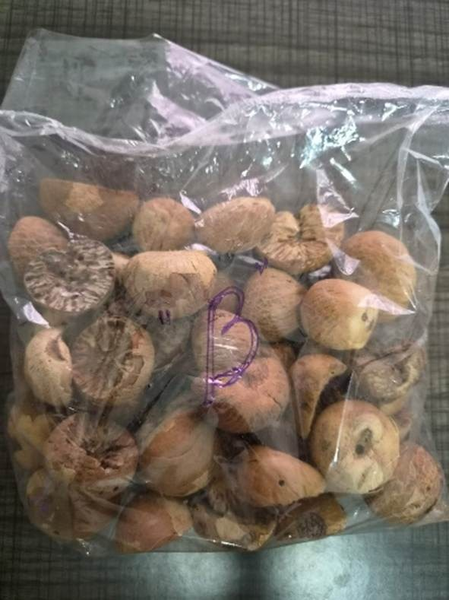
New Delhi, Sep 12 (IANS) Sri Lanka’s betel export sector has been hit by a sharp fall in shipments and dollar earnings to Pakistan--its primary betel market-- amid tariff and regulatory barriers, a new report has said.
The report from Sri Lanka Guardian said that a lack of coordination between trade and agriculture agencies risks leaving farmers exposed to overproduction.
Exports to Pakistan fell from 4,387.02 metric tonnes in 2019 to 2,250.99 tonnes in 2024 with export earnings dropping from $17.77 million to $9.27 million over the same period.
A partial recovery in 2025 saw volumes touch 3,336.18 tonnes and revenue reach $13.39 million but levels remain well below 2019 figures despite a 44 per cent expansion in cultivation area to 1,676 hectares by 2025 through free planting materials and investment subsidies.
"This highlights a clear contradiction between cultivation area and export earnings. Furthermore, the relative increase in LKR revenue during 2022-2023 despite falling US Dollar earnings was primarily driven by the depreciation of the Sri Lankan Rupee against the US Dollar," the report noted.
Exporters raised concerns with Sri Lanka’s Department of Commerce regarding market access loss, but the Department of Export Agriculture said that its development or research divisions had conducted no studies on the impact of Pakistan's tariffs and import restrictions on betel exports.
The concern was also presented to the Pakistani delegation during the Commerce Secretary Level Talks on January 28, 2026, and at the 4th Meeting of the Joint Working Group on Trade, Investment, and Auto Sector on July 01, 2026.
The report said that the Pakistani side conveyed plans to gradually reduce the relevant duty and phase it out completely by 2030.
To safeguard Sri Lanka's betel export sector, proper coordination between the Department of Commerce and the Department of Export Agriculture must be ensured, it urged.
Further, the publication suggested “field studies on exporters' tariff barriers, and to strengthen diplomatic engagement to secure the early removal of Pakistan's regulatory duties under the PSFTA framework rather than delaying until 2030.”
—IANS
aar/ag
India’s space economy may touch Rs 4.22 lakh crore by 2033: Report

New Delhi, Sep 12 (IANS) India's space economy could expand to Rs 4.22 lakh crore ($44 billion) by 2033 due to policy reforms, greater private sector participation and growing demand for space-enabled services, according to a report.
According to a joint report by EY and the Confederation of Indian Industry (CII), said the Indian Space Policy 2023, reforms introduced through the Indian National Space Promotion and Authorization Centre (IN-SPACe) and the role of NewSpace India Ltd. (NSIL) have laid the foundation for a transition from a government-led space programme to a more industry-driven ecosystem.
Achieving the projected growth will require coordinated efforts by government agencies, industry, startups, investors, academia and strategic users over the next seven to eight years, it said.
The report identified six priority areas for action, including scaling adoption of space-based applications across sectors, strengthening domestic manufacturing and launch capabilities, improving the regulatory and financing environment, leveraging government demand to support commercial adoption, enhancing defence and strategic space capabilities and positioning India as a global space partner and export hub.
In addition, the entire space value chain covers upstream activities such as satellite manufacturing, launch vehicles, propulsion systems and avionics; midstream segments including ground infrastructure and satellite operations; and downstream applications such as Earth Observation (EO), satellite communications (SATCOM), navigation services and geospatial analytics.
Mallavarapu Apparao, Chairman of the CII National Committee on Space, said India's space sector has evolved from a scientific exploration programme into an innovation-driven economy supported by satellite-enabled services and applications.
CDR Gautam Nanda, Partner, Aerospace, Defence and Space at EY India, said the next phase of growth would depend on building industrial depth, commercialising technologies, strengthening supply chains and translating satellite-generated data into actionable services across commercial, public and strategic sectors.
Moreover, downstream applications are increasingly supporting agriculture, logistics, disaster management, infrastructure planning, climate resilience and governance, while also strengthening defence capabilities through secure communications and maritime domain awareness, according to the report.
The report also highlighted that unlocking greater value from the space economy will require wider adoption of satellite data, stronger analytics capabilities, skilled talent and interoperable digital platforms.
--IANS
ag/
India supplies 895 crore litres of ethanol by August: Industry data

New Delhi, Sep 12 (IANS) India supplied 895 crore litres of ethanol by the end of August under the Ethanol Supply Year (ESY) 2025-26 with grain-based feedstocks accounting for nearly 70 per cent of these cumulative supplies, according to data released by the All India Distillers' Association (AIDA) on Saturday.
According to the data, it is equivalent to around 85 per cent of the 1,048 crore litres contracted for the period.
According to AIDA, grain-based feedstocks contributed 624 crore litres of the total ethanol supplied, while sugar-based feedstocks accounted for 271 crore litres.
Among grain-based sources, maize was the largest contributor with 345 crore litres of ethanol supply. Surplus rice sourced from the Food Corporation of India (FCI) contributed 214 crore litres, while damaged food grains accounted for 64 crore litres.
Within the sugar-based segment, sugarcane juice contributed 149 crore litres by the end of August. B-heavy molasses supplied 107 crore litres and C-heavy molasses contributed 15 crore litres.
AIDA said the figures reflect the increasing diversification of India's ethanol supply ecosystem, reducing dependence on any single feedstock pathway.
Commenting on the data, Bharati Balaji, Deputy Director General, AIDA, said nearly 70 per cent of the 895 crore litres supplied so far has come from grain-based feedstocks, led by maize and surplus FCI rice, while sugar-based sources continue to provide a significant share.
She said the diversity of feedstocks strengthens India's ethanol programme by allowing the industry to utilise multiple domestic agricultural resources.
The association, however, noted that as domestic ethanol production capacity and supplies continue to expand, ensuring adequate and predictable demand avenues will become increasingly important.
According to AIDA, the issue will gain significance as India seeks to move beyond the current ethanol-blending programme and expand ethanol utilisation in flex-fuel vehicles (FFVs), compressed biogas (CBG), sustainable aviation fuel (SAF) and other applications.
--IANS
ag/
Accelerated govt divestments could ease India’s market imbalance, support fiscal aims

New Delhi, Sep 12 (IANS) Strong government divestments could expand Indian equity market’s investable universe, ease valuation pressures and support fiscal consolidation as mounting fiscal risks threaten targets, a report said on Saturday.
The report from Axis Capital said the government’s holdings in listed companies have risen to Rs 44 trillion, roughly four times pre‑pandemic levels and that a sustained divestment programme could generate substantial receipts, deepen market free float, support fiscal consolidation, and strengthen capital flows.
A 15 per cent reduction in government ownership over the next three years could raise nearly Rs 6.6 trillion, expand market free float and help reduce the risk of capital outflows.
The government’s listed holdings have a significant concentration in banks and NBFCs.
“Accelerated divestments could help narrow the demand-supply imbalance, reduce pressure for foreign investor exits, and address the market’s underlying plumbing problem of excess demand for equities,” according to the report.
India’s capital outflows over the past 2 years and the EM benchmark index outperformed the US over the past 18 months.
Moreover, Taiwan and South Korea, the principal beneficiaries of the AI theme, have seen large outflows recently.
The report said that expensive valuations and prolonged earnings disappointment were the primary drivers of foreign selling in India.
Strong domestic inflows also provided FPIs an exit by absorbing secondary market selling at high valuations.
As fiscal strains are likely to persist in FY28 with the implementation of the 8th Pay Commission, divestment offers a more durable solution, the report said.
"Assuming a 12 per cent growth rate for income tax compared to the implied rate of 18 per cent leads to a shortfall of Rs 762 billion. Meanwhile, higher subsidy spending adds to fiscal pressures,” the report added.
The government has already achieved 70 per cent of its FY27 divestment target in five months, largely through the LIC OFS, with more stake sales in the pipeline (IDBI).
—IANS
aar/ag
SEBI proposes changes to derivatives settlement, CAS framework

Mumbai, Sep 12 (IANS) The Securities and Exchange Board of India (SEBI) has proposed changes to settlement methodology for derivatives contracts, market timings and recently introduced operational aspects of the Closing Auction Session (CAS), according to consultation paper issued on Saturday.
The market watchdog proposed two options for determining the settlement price of index and single-stock derivatives on expiry days.
Under the first option, SEBI proposed a 'Blended VWAP' methodology under which the settlement price would be based on trades executed during the last 30 minutes of the Continuous Trading Session (CTS) and the 10-minute CAS period.
The contribution of each period would be determined by its actual traded value instead of a fixed weighting, SEBI said.
The regulator said the methodology would capture a broader period of actual market transactions and could provide a more representative settlement price.
"Incorporate actual transactions executed during both the last 30 minutes of CTS and 10 minutes of CAS for determination of the settlement price of the derivatives contracts on the expiry day, thereby reflecting a broader period of actual market transactions," it said.
Under the second option, SEBI proposed retaining the existing CTS VWAP methodology as an interim arrangement. The settlement price would continue to be based only on trades executed during the final 30 minutes of CTS.
The blended methodology could be considered after at least a year, subject to adequate liquidity, participation and familiarity with CAS, according to the market regulator.
SEBI also proposed removing the display of the Indicative Index Value (IIV) during CAS while continuing to provide security-level Indicative Equilibrium Prices (IEPs).
IEPs are indicative and evolving values and do not represent prices at which actual trades have taken place, SEBI said. The regulator added that some market participants had misinterpreted IIV, resulting in positions being taken based on the indicative value.
In addition, on market timings SEBI proposed two alternatives. Under Option A, CTS for CAS stocks would continue until 3:30 pm, followed by CAS from 3:31 pm to 3:40 pm, while derivatives trading would continue until 3:45 pm.
Under Option B, CTS would end at 3:15 pm with CAS running from 3:15 pm to 3:25 pm and derivatives trading continuing until 3:30 pm.
Both alternatives would reduce the transition period between CTS and CAS from five minutes to up to one minute. The post-CAS derivatives trading window would also be cut to five minutes from 10 minutes.
SEBI said market feedback indicated that a shorter trading window after CAS would be sufficient.
Apart from that, the regulator proposed restricting the cancellation of limit orders placed beyond plus or minus 1 per cent of the reference price during CAS. Price-improving modifications would continue to be permitted within the existing plus or minus 3 per cent price band.
"An order placed at a price within ±1 per cent of the Reference Price may be cancelled during CAS in accordance with the existing framework," it said.
Moreover, SEBI suggested allowing unexecuted Iceberg orders at the end of CTS to be converted into normal limit orders with entire pending quantity disclosed in the CAS order book.
--IANS
ag/
Nifty, Sensex dip nearly 2 pc this week over oil prices, global interest rates
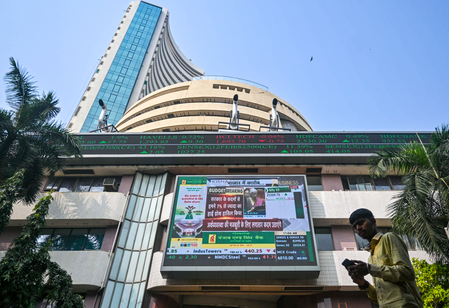
Mumbai, Sep 12 (IANS) The Indian equity benchmarks posted notable losses for the fifth consecutive week amid a sharp rise in crude oil and worries over global interest rates.
Nifty declined 2.09 per cent during the week and shed 0.34 per cent on the last trading day to reach 23,398. At close, Sensex was down 120 points, or 0.16 per cent, at 74,781. It lost 2.27 per cent during the week.
Analysts said that global macro developments weighed on investor sentiments. A firmer US inflation backdrop and rising Treasury yields — with the 10‑year US yield approaching the 5 per cent mark — reinforced expectations of a higher‑for‑longer rate environment and tightening global financial conditions.
The sell-off was broad-based, with major sectors ending lower during the week. Nifty realty emerged as the biggest loser on NSE down 6.54 per cent on a weekly basis. The Nifty IT index shed around 5.78 per cent during the week.
Indian equities saw sharp volatility due to the newly launched closing auction session, particularly on derivatives expiry days.
Crude oil emerged as the dominant headwind for domestic equities as attacks on tankers in the Strait of Hormuz intensified and Iran-aligned Houthi forces threatened oil shipments from the Red Sea region.
WTI Crude surged over 9.5 per cent moving above $104 per barrel, while Brent crude surged more than 8.5 per cent during the week.
Analysts noted that the crude price volatility has heightened India’s inflation risks and external-sector risks, with the potential to raise input costs and pressure corporate margins while reinforcing expectations of a higher-for-longer global interest-rate environment.
Broad market indices performed in line with the benchmark indices, as Nifty Midcap100 declined 1.40 per cent and Nifty Smallcap100 shed 0.94 per cent during the week.
The 23,300 zone remains the immediate support area for Nifty, while 23,500–23,600 region remains the immediate resistance zone.
Immediate support for Bank Nifty is placed around 56,200–56,000, while the 56,700–56,800 zone remains the key resistance area, market participants said.
Foreign institutional investors-led selling also emerged as another headwind for domestic equities. FIIs net sold Rs 1,795.19 crore worth of equities during the week, while domestic institutional investors (DIIs) net bought Rs 6,419.46 crore of equities.
Global macroeconomic and geopolitical risks are likely to keep Indian equities on edge in the week ahead, with crude oil prices, developments in the Middle East and shifting expectations for US monetary policy emerging as the key drivers of market sentiment, an analyst said.
—IANS
aar/na
India shaping next chapter of digital financial journey: RBI

New Delhi, Sep 12 (IANS) The Reserve Bank of India (RBI) on Saturday said that India has unveiled key fintech innovations and initiatives at ‘Global Fintech Fest 2026’, reinforcing a vision for a more trusted, connected, inclusive and future‑ready financial ecosystem.
The RBI’s post on social media platform X said the 'Global Fintech Fest' convened on the theme “Potential to Impact — Agentic AI | Tokenisation | Quantum — Trusted, Connected, Global Systems for Inclusive Finance” saw central bank Governor Sanjay Malhotra launching many innovations.
The fest provided a platform to launch developments that mark another step towards shaping the future of finance, and innovations enable smarter digital experiences and strengthen "the foundations of responsible fintech innovation," it added.
RBI Governor Sanjay Malhotra on Friday said fintech companies have emerged as important partners in India's financial ecosystem and will play an increasingly significant role in expanding financial inclusion across the country.
Speaking exclusively to IANS on the sidelines of the Global Fintech Fest (GFF) 2026, Malhotra said the central bank is working closely with fintech firms and financial institutions to make financial services more accessible, reduce digital fraud and lower the cost of banking and financial services.
"Financial inclusion, customer-centricity and the development of a secure digital financial system remain key priorities for the RBI," he said.
"Technology can help take financial services beyond traditional banking channels and bring them closer to people in villages and households," he added.
"Fintech is a very important partner for us," Malhotra said, stressing the need for greater collaboration between fintech companies and financial sector institutions to achieve wider financial inclusion and strengthen customer-focused services.
India’s first tokenised corporate bond pilot was launched at the Global Fintech Fest 2026, marking a significant step towards the use of blockchain and central bank digital currency (CBDC) in securities and asset settlements.
The fest also saw the introduction of Open-Source (Android) ATM for instant Rupay card and merchant UPI QR issuance, the enablement of ‘Credit Line on UPI’ for select government-backed credit schemes, and the introduction of Aadhaar Enabled Payment System (AePS) Three-Party Cash Deposit.
—IANS
aar/na
SEBI likely to issue consultation paper on CAS framework: Report

Mumbai, Sep 12 (IANS) The Securities and Exchange Board of India (SEBI) is likely to issue a consultation paper on the Closing Auction Session (CAS) on Saturday, with the regulator expected to propose changes to the methodology used to determine settlement prices for derivative contracts, according to a report.
The report from NDTV Profit said the proposal is likely to be discussed at the SEBI board meeting, scheduled for September 24, and will address concerns raised by market participants about how derivative settlement prices are calculated on expiry days under the newly introduced CAS mechanism.
SEBI is not planning to roll back the CAS itself but aims to refine the calculation of settlement prices under the auction mechanism on expiry days.
SEBI Chairman Tuhin Kanta Pandey earlier clarified that "CAS is here to stay," and that the market regulator was examining concerns raised by market participants to solve them.
CAS, which came into effect on August 3, ends continuous trading in futures-and-options eligible stocks at 3:15 pm, moving those securities into a roughly 20‑minute auction where buy and sell orders are matched to determine the official closing price.
Non‑F&O stocks continue trading until 3:30 pm, while stock and index derivatives trade until 3:40 pm. Indian equities have seen sharp moves during the newly launched closing auction session, particularly on derivatives expiry days.
Indicative close for Sensex briefly dropped 2.5 per cent, during last week's session, causing it put options' premiums to surge 400 to 500 per cent during closing auction. Similarly, Tuesday also saw Nifty put options surging multi-fold on expiry day trading.
Analysts said that CAS has made expiry‑day execution less predictable for systematic options strategies, adding that limited participation in the auction could allow a handful of orders to significantly change closing prices.
—IANS
aar/na
India can script new chapter of global economic growth with BRICS nations: Industry leaders

New Delhi, Sep 11 (IANS) India has the potential to work with BRICS nations to shape a new chapter of global economic growth, with industry leaders and global experts highlighting the country's strong economic expansion, entrepreneurial strength, innovation capabilities and growing role in international cooperation.
Speaking on the sidelines of the BRICS Summit and BRICS Business Forum on Friday, business leaders said India's robust growth, expanding digital public infrastructure and investment-oriented policies were creating fresh opportunities for trade, investment and collaboration across BRICS economies.
FICCI Director General Jyoti Vij told IANS that BRICS has evolved into a large and influential grouping comprising 11 member countries and 10 partner countries, giving it a significant role in global production, trade, energy, food security and fertiliser supply chains.
Neeraj Bhatnagar, Founder and Chairman of The Corporate Profiles India, said India's strength goes beyond its economic growth rate of 7.8 per cent and lies significantly in the country's entrepreneurial culture.
"India has the kind of potential in innovation and entrepreneurship that can serve as an inspiration not only for BRICS countries but also for the rest of the world," Bhatnagar told IANS.
Upasana Arora, Managing Director of Yashoda Group of Hospitals, said India's economy has continued to maintain strong momentum despite global challenges, attributing the resilience partly to effective government policies.
Harsh Pati Singhania, Chairman and Managing Director of JK Paper Ltd and Chairman of the International Chamber of Commerce, said trade among BRICS countries in local currencies is likely to increase, although this should not necessarily be interpreted as a move towards de-dollarisation.
Rajat Agrawal, CEO of Barista Coffee, said the government's objective is to bring the business community more actively into the country's development process. Government initiatives aimed at strengthening global supply chains, creating jobs and deepening commercial ties between countries can play an important role in this effort, he said.
Meanwhile, Olivier Frerot, Director of International Geoscientific Territories at France's Geological Survey BRGM, praised India's National Critical Mineral Mission and stressed the growing importance of critical minerals for the energy transition and industrial development.
Frerot said cooperation between India and France is expanding in areas including technology, resources, geological data and mineral processing. BRGM and the Geological Survey of India are already working together in areas such as exploration, data science and mineral processing, he said.
--IANS
pk