Popular
When Nana Patekar said that Anil Kapoor bullied him on ‘Parinda’
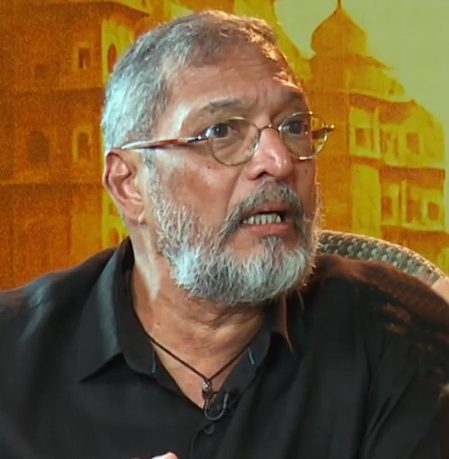
Mumbai, Oct 14 (IANS) The late actor Nana Patekar once shared that his friend, and actor Anil Kapoor bullied him a lot during the making of ‘Parinda’.
An old video from the promotions of the film ‘Vanvaas’ has resurfaced in which he can be seen having a conversation with Anil Kapoor.
He said in the video, “You have bullied me a lot in ‘Parinda’. I was doing Jackie Shroff’s role, his elder brother's role. We rehearsed, we did this, we did that. Later, Jackie came because of him. But I want to thank him because I got to play Anna. No, the reason was that he couldn't see me as a brother. As per you, Jackie could be your brother in the film but not me”.
Anil responded, as he said, “I might be wrong, but I felt that for my brother's role, I felt Jackie would be the best choice. I'm being very honest with you. But your honesty has ruined my role. No, but what happens is that you give suggestions to a director. Ultimately, decisions are always made by a director. A director is a director, a filmmaker is a filmmaker. He must have felt that Jackie is a better choice”.
Nana Patekar said, “Jackie did a good job. He got a Filmfare Award”.
Anil said, “So, what I mean to say is that sometimes, there are some things which are very, very important. I will never deceive you with a film”.
Nana Patekar passed away at the age of 75 in Goa. The actor suffered cardiac arrest. The actor was taken to hospital where doctors attempted CPR and resuscitation for about 45 minutes. However, he was later declared dead on arrival.
The late actor Nana Patekar was cremated with full state honours at his farmhouse in Donje in Pune district on Thursday. The actor was given a 3-gun salute.
The late actor’s friends and members of the film fraternity including Jackie Shroff, directors Anil Sharma, Aneez Bazmee, and producer Firoz nadiadwala arrived at Donje village to attend the last rites of Nana Patekar.
A huge crowd also turned up to bid adieu to the departed soul. Maharashtra Chief Minister Devendra Fadnavis also paid his last respects to Nana Patekar at Pune airport before leaving for Mumbai. Maharashtra Deputy Chief Minister Eknath Shinde went to the actor’s Pune farmhouse to pay his respects.
--IANS
aa/
Arunachal CM announces creative economy programme, ‘mini NITI Aayog’ to boost start-ups
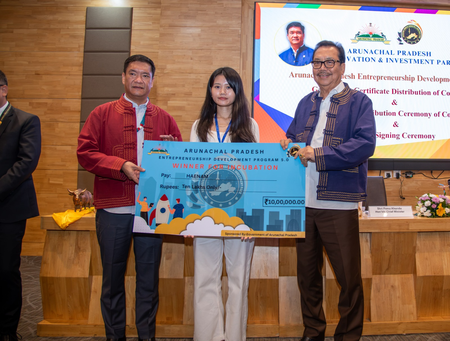
Itanagar, Oct 13 (IANS) Arunachal Pradesh Chief Minister Pema Khandu on Tuesday announced new initiatives to strengthen the state's startup and investment ecosystem, including an Arunachal Creative Economy (ACE) programme and an expert think tank, the Institute for Transforming Arunachal (ITA), which he described as a “mini NITI Aayog” for the state.
The announcements were made at a programme marking the graduation of the fourth cohort and the commencement of the fifth cohort of the Arunachal Pradesh Entrepreneurship Development Programme (APEDP).
The Chief Minister also inaugurated satellite incubation cells in seven higher education institutions and witnessed the signing of memoranda of understanding (MoUs) with five more institutions. Khandu said the ACE programme, being developed through the Chief Minister's Office, would provide young people with creative ideas a platform to turn them into viable businesses.
The ITA would bring subject experts together to guide policymaking in sectors such as agriculture, allied activities and tourism. Khadnu said he was in touch with venture capitalists and would organise a conference where Arunachal-based startups could present their ideas to potential investors.
He also directed officials to consult the Department for Promotion of Industry and Internal Trade on possible incentives for startups transitioning into private limited companies or limited liability partnerships.
The Chief Minister asked officials to organise workshops for APEDP alumni on accessing national and international markets through digital platforms. He also directed the Arunachal Pradesh Innovation and Investment Park (APIIP) to expedite its conversion into a Section 8 company.
Launched in 2021 during the COVID-19 pandemic, APEDP has supported the launch of more than 150 startups, Khandu said. The programme's intake has been doubled from 50 to 100 startups, while seed funding has been increased from Rs 5 lakh to Rs 10 lakh and from Rs 4 lakh to Rs 8 lakh under different categories.
The fifth cohort will undergo nine months of incubation, with mentorship from institutions, including the Indian Institutes of Management.
Satellite incubation cells were inaugurated at Rajiv Gandhi University, Arunachal Pradesh University, Arunachal University of Studies, NIT Jote, NEDIS Nirjuli, Dera Natung Government College and Dorjee Khandu Government College. Five additional institutions signed MoUs to expand the incubation network.
The Chief Minister also launched the YES (Youth Empowerment Sphere) Arunachal portal, a single-window platform providing information on Central and state government schemes. Highlighting investment opportunities, Khandu said hydropower projects totalling 19,000 MW were at various stages of development.
Under the Rising North East Investment Summit, investments worth Rs 809 crore had been grounded, while proposed investments worth Rs 7,941 crore were being pursued.
He urged local communities to support investors and called on young entrepreneurs to strengthen their businesses through professional accounting, digital marketing and value addition to the state's 20 Geographical Indication-tagged products.
Khandu also highlighted the role of women-led self-help groups, involving around 1.5 lakh active women, in strengthening the rural economy and achieving the vision of Viksit Arunachal by 2047.
--IANS
sc/uk
Fenesta Open 2026: Top seed Deepthi Venkatesan stunned in second round of girls’ U-16 event
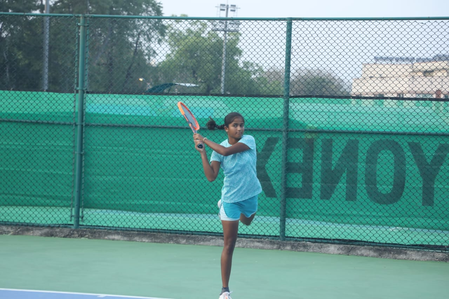
New Delhi, Oct 13 (IANS) Top seed Deepthi Venkatesan suffered a shock defeat in the Girls' U-16 singles event at the 31st Fenesta Open National Tennis Championship at the DLTA Complex in New Delhi on Tuesday, losing in straight sets to Unnathi Muralidhar.
Muralidhar, who hails from Karnataka, needed just 1 hour and 11 minutes to defeat Venkatesan 6-2, 6-2 and advance to the third round.
“It was really a good match; it was actually tough for me to play against the top seed,” Muralidhar said after the win. “It was really a good experience; I had my coach with me, so it was an advantage. It's really good to be here and play at the Fenesta Open; this is my first time playing here, so it's really good.”
Second seed Tanusshri Sathesh and third seed Aaradhya Meena cruised into the third round, dropping just three games between them. However, fourth seed Aashi Kashyap and sixth seed Harsha Oruganti were both knocked out of the competition in three sets.
Ribhav Saroha, who won the Boys' U-18 singles title last week, stayed on course for a double by advancing to the third round of the Boys' U-16 event. Saroha needed just 1 hour and 22 minutes to defeat Rhunmaan Mahesh 6-2, 6-2.
Saroha was joined in the third round by second seed Lakshya Chukka and third seed Paranjay Swiach, while fifth seed Divey Malk was upset in three sets by Parthiv Nallagundla.
Elsewhere, top seed Aarav Challani registered a comfortable 6-1, 6-1 victory over Rajishnu Poptani to reach the third round in the Boys' U-14 event.
“It was definitely a good match,” Challani said after the victory. “My opponent put up a good fight. It was better than the score suggests. I am happy with the way I played this match.”
Challani added that he has his eyes on the title but is not thinking too far ahead for now. “Pressure is a privilege. I am happy to be the top seed and be one of the favourites for the tournament. I have had my eyes on this title for a long time, but it's very early to say now.”
Second seed Puneeth Manohar led a group of nine seeded players who won their opening-round matches in the Boys' U-14 event.
Meanwhile, top seed Sarena Gahlot, second seed Siddhi Pandey and third seed Zoha Qureshi were among the players who won their second-round matches in the Girls' U-14 event.
“It was a great match against Janvi Sawant,” Gahlot said after her win. “She played really well. The score was 6-2, 6-1. I also played really well in the first set. It was a tough match, but I played good and was able to win it.”
Results:
Boys' U16 Singles Second Round (Round of 32):
Ribhav Saroha (1) def. Rhunmaan Mahesh 6-2, 6-2
Lakshya Chukka (2) def. Aarav Patel 6-1, 6-2
Paranjay Siwach (3) def. Tanish Dasari 6-4, 7-5
Parthiv Nallagundla def. Divey Malik (5) 7-6 (7-2), 6-0
Yaj Malik (6) def. Hemdev Mahesh 7-6 (7-3), 6-4
Jeevith Sathish (7) def. Ashwin Kabilan 7-6 (7-3), 2-6, 6-2
Yashwin Dahiya def. Ishaayu Desai (9) 6-0, 6-2
Harsh Marwaha def. Rishi Yadav (11) 7-6 (7-5), 5-7, 6-3
Monodip Dey (12) def. Arnav Bhuyan 7-6 (7-5), 6-3
Gyansh Manchanda (13) def. Atharv Anand 5-7, 6-0, 6-4
Kaustubh Singh (14) def. Lakshay Drall 4-6, 6-4, 7-5
Anay Pandey (16) def. Aarav Mulay 6-3, 6-2
Kushagra Arora def. Chandra Kopparapu 6-2, 7-5
Aaryan Kirrtane def. Sujai Pothula 6-1, 6-1
Vivaan Mirdha def. Viraj Jarwal 6-0, 6-0
Vishwak Gunampally def. Sarvadnya Sarode 6-3, 6-4
Girls' U16 Singles Second Round (Round of 32):
Unnathi Muralidhar def. Deepthi Venkatesan (1) 6-2, 6-2
Tanusshri Sathesh (2) def. Sanidya Karantoth 6-1, 6-1
Aaradhya Meena (3) def. N. Krishnaprabhu 6-0, 6-1
Rishita Yadav def. Aashi Kashyap (4) 3-6, 6-3, 6-2
Aahida Singh def. Harsha Oruganti (6) 3-6, 6-2, 6-0
Ranjhana Sangram (7) def. Tejaswi Manneni 4-6, 6-4, 6-3
Sanmitha Harini (8) def. Manvi Gupta 6-3, 6-0
Zoha Qureshi (9) def. Sana Varadhamani 6-0, 6-0
Vrandika Rajput (11) def. Rabiah Dullet 4-6, 6-3, 6-4
Ilaiyanila Kannan (12) def. Mehul Malik 6-4, 4-6, 6-1
Khushi Kadian (14) def. Aniha Gavinolla 6-4, 6-4
Sidhhi Pandey (15) def. Sarithra Entoori 6-2, 6-1
A Brahadeeswaran def. Ruhin Kaushal (16) 6-2, 6-2
Pooja Nagaraj def. Sarena Gahlot 6-4, 6-3
Shravee Deore def. Budhya Khushi 6-2, 6-2
Boys' U14 Singles Second Round (Round of 32):
Aarav Chhallani I1) def. Rajishnu Poptani 6-1, 6-1
Boys U14 Singles First Round (Round of 64):
Puneeth Manohar (2) def. Kabir Gundecha 6-1, 6-0
Nibras Hussain (3) def. Zaayn Mohammad 6-3, 6-0
Pranav Gaikwad (6) def. Ranveer Gawli 6-1, 6-4
Vishwak Gunampally (7) def. Rabeeb Ali Khan 6-2, 6-1
Adeshbir Ghuman (8) def. Kahaan Bhuva 6-1, 6-1
Sujai Pothula (9) def. Viraj Jarwal 6-2, 6-1
Vir Chattur (11) def. Tegveer Singh 6-3, 6-2
Devansh Kamboj (12) def. Sri Myneni 6-2, 3-6, 10-7
Soham Ransubhe (16) def. Ebinesh Suresh 6-2, 1-6, 10-8
Tejas Singh def. Daiwik Mann 6-2, 6-2
Vishnu Pandey def. Aksh Bora 6-0, 6-1
Manav Patel def. Kanishk Kanishk 6-2, 6-1
Shaurya Gadade def. Devansh Kumar 6-3, 6-0
Laqshya Tripathi def. Dhaiwik Arunkumar 4-6, 7-5, 10-8
Bhavik Garg def. K Vihaan Reddy 6-1, 6-0
Harsha Pudi def. Luv Pardeshi 6-1, 6-4
Hariharan Mahamuni def. Aarav Shah 3-6, 6-2, 10-8
Archan Pathak def. Hridayansh Pal 6-0, 6-1
Girls' U14 Singles Second Round (Round of 32):
Sarena Gahlot (1) def. Janhavi Sawant 6-2, 6-2
Sidhhi Pandey (2) def. Aaradhya Singh 6-4, 6-3
Zoha Qureshi (3) def. Sara Fengse 6-3, 6-2
Khushi Kadian (5) def. Shaurya Patil 6-2, 6-1
Saanvi Mohan def. Myra Shaikh (7) 6-4, 6-2
Purvi Patwa (8) def. Asmi Pitre 6-0, 6-1
Trisha Bhosale (9) def. Avni Arora 6-2, 6-2
Aaradhana Tehlan (10) def. Raima Chavan 6-1, 6-2
Aaral Vashishta def. Vaidehi Shinde (11) 6-1, 6-0
Kristi Haloi def. Falak Mehta (12), 6-3, 6-3
Aneeksha Gavinolla (13) def. Shubhi Sharma 7-5, 6-4
Atharva Peram def. Mrigakshee Changmai (14) 6-3, 6-1
Rishita Yadav def. Aditri Singh (15) 6-1, 6-2
--IANS
bsk/
Manipur CM, BSF chief review law and order; DGP inspects security in Jiribam
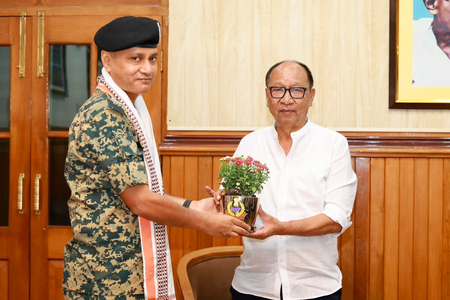
Imphal, Oct 13 (IANS) Manipur Chief Minister Yumnam Khemchand Singh and Border Security Force (BSF) Director General Praveen Kumar on Tuesday reviewed the prevailing law and order situation in the state, while Director General of Police Mukesh Singh visited the violence-affected Jiribam district to assess security arrangements and rehabilitation measures, officials said.
A senior official of the Chief Minister’s Office (CMO) said that BSF chief Praveen Kumar called on the Chief Minister at the Secretariat in Babupara, Imphal. During the meeting, Khemchand Singh and the BSF Director General deliberated on the prevailing law and order situation in Manipur.
“They also discussed matters pertaining to the forthcoming BSF Raising Day celebrations on December 1. The Chief Minister appreciated the BSF for its dedicated service and invaluable role in maintaining peace, security and border management,” the CMO official said.
The BSF chief was accompanied by Sumit Sharan, Additional Director General of BSF, Eastern Command, and Ravi Kant, Inspector General of BSF, Mizoram and Cachar Frontier headquarters.
The meeting assumes significance in view of the recent ethnic violence involving Naga and Kuki-Zo community members in Manipur’s hill districts.
More than 50 people have reportedly been killed and dozens of houses torched in clashes between the Naga and Kuki-Zo communities since February this year. The violence has largely been concentrated in Ukhrul, Kamjong, Kangpokpi and Tamenglong districts, Noney district and parts of Senapati district.
Manipur had earlier witnessed prolonged ethnic violence between the Imphal Valley-based Meiteis and the adjoining hill-based Kuki-Zo tribal communities. The violence left more than 300 people dead, while 49 people remained missing and thousands were displaced from their homes.
Meanwhile, Manipur DGP Mukesh Singh undertook a two-day visit to the ethnically mixed-population Jiribam district via National Highway-37 to review security arrangements and the situation in the region.
A senior police official said that during the visit, the DGP inspected resettlement localities of people affected by ethnic violence in Jiribam and Borobekra. He also reviewed security arrangements with senior officers and personnel of the Manipur Police, Manipur Rifles, Assam Rifles, Central Reserve Police Force (CRPF) and other security formations.
The police chief emphasised Jiribam’s strategic importance as the eastern gateway to Manipur and issued instructions to strengthen measures to curb illicit drug trafficking through the region.
Singh also interacted with leaders of civil society organisations representing various communities, including Meitei, Hmar, Naga, Kuki and Paite, at the District Police Headquarters in Jiribam. He appreciated their efforts to maintain peace and promote understanding among the communities.
During the two-day tour, the DGP also inspected the Superintendent of Police’s office, the headquarters of the 7th Indian Reserve Battalion, Jiribam Police Station and Borobekra Police Station to assess the functioning of police establishments and security preparedness in the district.
The visits by the Chief Minister and the BSF chief, along with the DGP’s review of security and rehabilitation measures in Jiribam, come amid continuing efforts to maintain peace and restore normalcy in the violence-affected areas of Manipur.
--IANS
sc/uk
Kusal Mendis helps Sri Lanka win third T20I; Pakistan claim series 2-1
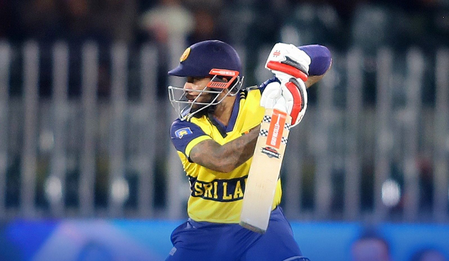
Rawalpindi, Oct 13 (IANS) Skipper Kusal Mendis struck an unbeaten 87 and shared an unfinished 98-run partnership with Kamindu Mendis to help Sri Lanka score a consolation win against Pakistan in the third and final T20I of the series at the Rawalpindi Cricket Stadium on Tuesday.
Pakistan concluded the three-match series 2-1, having secured wins in the opening two matches at the same venue.
Chasing 169, Sri Lanka lost an early wicket with just 15 runs on the board when Mohammad Imran trapped Lahiru Udara (1) leg-before for one in the second over.
However, Sri Lanka recovered through a 59-run second-wicket partnership between Sineth Jayawardena (38) and captain Kusal Mendis. Arafat Minhas provided Pakistan their second breakthrough when he dismissed Jayawardena for 38 off 26 balls, including five fours and two sixes.
Kusal then combined with Kamindu Mendis in an unbeaten 98-run third-wicket stand to guide the visitors to win in 17.1 overs.
Right-handed batter Kusal top-scored with an unbeaten 87 off 48 balls, hitting nine fours and four sixes, while Kamindu contributed 40 not out off 27 balls. Kusal completed his half-century in 30 balls, studded with six fours and one six as he propelled Sri Lanka towards victory.
Earlier, asked to bat first, Pakistan posted 168 for eight in their allotted 20 overs, courtesy of a commanding 76 from captain Sahibzada Farhan and an unbeaten 34 by Arafat Minhas.
Farhan led Pakistan’s batting effort with a 47-ball knock featuring seven fours and three sixes. The right-handed batter held the innings together despite wickets falling at regular intervals at the other end.
Pakistan lost Fakhar Zaman (12, 7b, 1x4, 1x6) and Maaz Sadaqat (0, 3b) in the fourth over, leaving the hosts at 34 for two. Hasan Nawaz (16, 17b, 2x4) added 33 runs with Farhan for the third wicket before departing in the ninth over.
The hosts suffered further setbacks as Khawaja Nafay (3, 5b), Mohammad Imran (6, 10b) and Abdul Samad (15, 10b, 2x4, 1x6) departed, leaving Pakistan at 102 for six in 13.4 overs.
Farhan then joined Arafat Minhas in a crucial 66-run partnership for the seventh wicket, helping Pakistan reach a competitive total. Arafat struck two fours and as many sixes in his unbeaten 20-ball innings, while Farhan was dismissed on the penultimate delivery of the innings.
This was Farhan's third successive half-century in the series, who was leading the side for the first time in Pakistan.
For Sri Lanka, Dasun Shanaka returned figures of three for 21, while Nuwan Thushara and Eshan Malinga took two wickets each.
Pakistan and Sri Lanka, along with England, will now feature in an ODI tri-series starting on Sunday (October 18) in Rawalpindi.
Brief scores:
Pakistan 168/8 in 20 overs (Sahibzada Farhan 76, Arafat Minhas 34 not out; Dasun Shanaka 3-21, Nuwan Thushara 2-38, Eshan Malinga 2-38) lost to Sri Lanka 172/2 in 17.1 overs (Kusal Mendis 87 not out, Kamindu Mendis 40 not out, Sineth Jayawardena 38; Mohammad Imran 1-31, Arafat Minhas 1-26) by eight wickets.
--IANS
bsk/
Odisha bags wind energy leadership award at Windergy India 2026
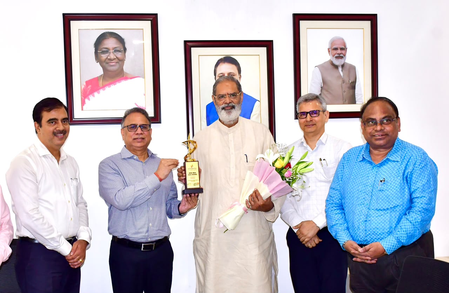
Bhubaneswar, Oct 13 (IANS) Odisha has received the "Wind India 2026: Leadership in Wind Energy De-risking" award in recognition of its efforts to promote clean energy and renewable energy development, according to an official statement issued on Tuesday.
The award was presented to Deputy Chief Minister Kanak Vardhan Singh Deo, who also holds the Energy portfolio, by Additional Chief Secretary of Energy Department Vishal Kumar Dev, at a ceremony in Bhubaneswar.
The award was conferred on Odisha at the Windergy India 2026 conference held in Chennai on October 8.
Satyapriya Rath, Managing Director of Grid Corporation of Odisha (GRIDCO), received the award on behalf of the state from Union Minister for New and Renewable Energy Pralhad Joshi during the event, which was attended by industry leaders and government representatives.
Several senior officials of the Odisha Energy Department attended the presentation ceremony in Bhubaneswar.
Congratulating the department's officers and staff, Deputy Chief Minister Kanak Vardhan Singh Deo said Odisha has ambitious plans to expand its renewable energy sector and attract more investment in the coming years.
"This honour reflects the state government's strong resolve and continuous efforts to accelerate clean energy transition and attract sustainable investments under the Odisha Renewable Energy Policy," the Deputy CM added.
As part of its efforts to promote Odisha's wind energy potential, the state government hosted a special session titled "Odisha: India's Next Wind Destination" at Windergy India 2026.
The session aimed to showcase the state's potential in wind power generation to national and international investors and highlight opportunities for investment in the renewable energy sector.
The officials also noted that the award recognises Odisha's initiatives to advance wind energy and promote clean energy development.
The state government is seeking to attract sustainable investments and expand renewable energy capacity through its policy framework and future plans.
The recognition comes as Odisha seeks to strengthen its position in the renewable energy sector and encourage investment in clean energy projects.
--IANS
grm/khz
Madhya Pradesh: CM Yadav to transfer 41st instalment of Ladli Behna Yojana tomorrow
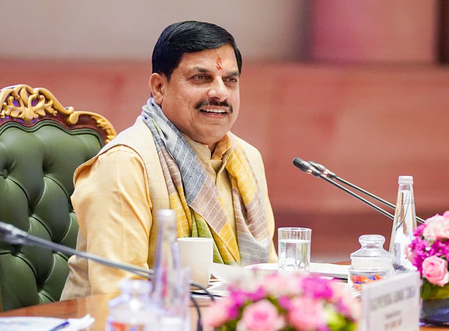
Bhopal, Oct 13 (IANS) Madhya Pradesh Chief Minister Mohan Yadav will transfer the 41st instalment of the Ladli Behna Yojana on Wednesday, providing monthly financial assistance of Rs 1,500 each to around 1.25 crore eligible women across the state.
The amount will be transferred directly to the beneficiaries' bank accounts through a single-click process at a Ladli Behna Yojana conference in Guruvahi village under Manpur Janpad Panchayat in Umaria district, coinciding with the Navratri festival.
The Chief Minister will also transfer subsidies for LPG refills at Rs 450 to eligible beneficiaries registered under the scheme, covering both Pradhan Mantri Ujjwala Yojana consumers and women in the non-Ujjwala category.
The Ladli Behna Yojana was launched in June 2023 to promote women's economic self-reliance, improve their health and nutritional status, and strengthen their participation in family decision-making.
Since its launch, the Madhya Pradesh government has regularly transferred monthly assistance to around 1.25 crore women. By September 2026, a total of 40 instalments had been disbursed, with the latest payment marking the 41st instalment.
In addition to the regular assistance, beneficiaries received special financial assistance of Rs 250 on four occasions in August 2023, 2024, 2025 and 2026, according to the state government.
While eligible general beneficiaries receive Rs 1,500 per month, women covered under the scheme who also receive benefits under the Social Security Pension Scheme are provided Rs 900 monthly, as per the scheme's provisions. Payments are made directly to Aadhaar-linked bank accounts enabled for Direct Benefit Transfer (DBT).
The state government has allocated Rs 23,882.81 crore for the scheme in the 2026-27 financial year.
During the Umaria conference, Yadav will also inaugurate 68 development projects worth Rs 87.31 crore and perform the ground-breaking ceremony for 68 other projects worth Rs 56.84 crore. The 136 projects together are valued at around Rs 144.16 crore. The projects cover the Bandhavgarh and Manpur Assembly constituencies.
In Bandhavgarh, 18 projects worth Rs 59.07 crore will be inaugurated, while the foundation stones for 46 projects worth Rs 32.25 crore will be laid. In Manpur, 50 projects worth Rs 28.25 crore will be inaugurated, and the ground-breaking ceremony will be held for 22 projects worth Rs 24.59 crore.
--IANS
pd/uk
UN head condemns attacks on shipping
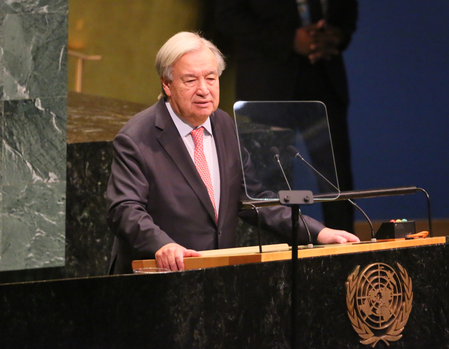
United Nations, 13 (IANS) Secretary-General Antonio Guterres condemns the attacks of civilian shipping, the most recent of which were in the Black Sea on Tuesday, his Spokesman Stephane Dujarric said.
“It's very worrisome because these attacks on ships carrying grain, food, and other products destined for the global market have multiplied and have expanded recently”, he told reporters at his briefing.
“Also, it has a terrible knock-on effect on the price of commodities worldwide”, he said.
According to Bulgarian officials, two cargo ships were attacked by drones off its coast and one of them sank.
Eleven sailors were missing, they said, but did not give their nationalities.
Dujarric said, “We all owe a debt of gratitude for all of these seafarers who continue to operate in extremely dangerous circumstances, just so that all the goods that we rely on for our daily lives keep moving”.
He noted the toll on seafarers also in the Strait of Hormuz and the Red Sea, which are fallouts of the Iran conflict.
Last week alone, at least 35 Indian crew members faced attacks on their ships, and India and Liberia, which co-chair a group for maritime safety, condemned the attacks on commercial shipping and seafarers in the Gulf region and the Black Sea.
India, which has the largest number of seafarers, and Liberia, where the highest number of ships are registered, head the Group of Friends on Safety & Security of Shipping & Seafarers (GoFoS4).
Their statement said they “strongly condemn the string of unacceptable attacks that commercial ships and seafarers have been subjected to in the Gulf and its vicinity, [and] the Black Sea, over the past few days”.
According to Bulgarian officials, the 11 missing seafarers were from the Guinea-Bissau-flagged cargo ship HS Dignity that sank off its coast on Tuesday, and five were rescued.
The Maltese-flagged Chelsea 3 was also hit by drones and 15 members of its crew from Ukraine and Ukraine were rescued, they said.
Last week, an Indian seafarer was injured when the cargo ship MV Royad Mammadov flying under the flag of St Kitts and Nevis was hit near the Romanian coast in the Black Sea.
Bulgaria did not directly blame Russia for the attacks near its coast, but Prime Minister Rumen Radev called Russia's envoy for a meeting at which he said “the results of these strikes favour Russia’s interests”, according to Bulgaria's press office.
--IANS
al/ksk/dan
Top Stories
When Nana Patekar said that Anil Kapoor bullied him on ‘Parinda’
Mumbai, Oct 14 (IANS) The late actor Nana Patekar once shared that his friend, and actor Anil Kapoor bullied him a lot during the making of ‘Parinda’.
An old video from the promotions of the film ‘Vanvaas’ has resurfaced in which he can be seen having a conversation with Anil Kapoor.
He said in the video, “You have bullied me a lot in ‘Parinda’. I was doing Jackie Shroff’s role, his elder brother's role. We rehearsed, we did this, we did that. Later, Jackie came because of him. But I want to thank him because I got to play Anna. No, the reason was that he couldn't see me as a brother. As per you, Jackie could be your brother in the film but not me”.
Anil responded, as he said, “I might be wrong, but I felt that for my brother's role, I felt Jackie would be the best choice. I'm being very honest with you. But your honesty has ruined my role. No, but what happens is that you give suggestions to a director. Ultimately, decisions are always made by a director. A director is a director, a filmmaker is a filmmaker. He must have felt that Jackie is a better choice”.
Nana Patekar said, “Jackie did a good job. He got a Filmfare Award”.
Anil said, “So, what I mean to say is that sometimes, there are some things which are very, very important. I will never deceive you with a film”.
Nana Patekar passed away at the age of 75 in Goa. The actor suffered cardiac arrest. The actor was taken to hospital where doctors attempted CPR and resuscitation for about 45 minutes. However, he was later declared dead on arrival.
The late actor Nana Patekar was cremated with full state honours at his farmhouse in Donje in Pune district on Thursday. The actor was given a 3-gun salute.
The late actor’s friends and members of the film fraternity including Jackie Shroff, directors Anil Sharma, Aneez Bazmee, and producer Firoz nadiadwala arrived at Donje village to attend the last rites of Nana Patekar.
A huge crowd also turned up to bid adieu to the departed soul. Maharashtra Chief Minister Devendra Fadnavis also paid his last respects to Nana Patekar at Pune airport before leaving for Mumbai. Maharashtra Deputy Chief Minister Eknath Shinde went to the actor’s Pune farmhouse to pay his respects.
--IANS
aa/
Arunachal CM announces creative economy programme, ‘mini NITI Aayog’ to boost start-ups
Itanagar, Oct 13 (IANS) Arunachal Pradesh Chief Minister Pema Khandu on Tuesday announced new initiatives to strengthen the state's startup and investment ecosystem, including an Arunachal Creative Economy (ACE) programme and an expert think tank, the Institute for Transforming Arunachal (ITA), which he described as a “mini NITI Aayog” for the state.
The announcements were made at a programme marking the graduation of the fourth cohort and the commencement of the fifth cohort of the Arunachal Pradesh Entrepreneurship Development Programme (APEDP).
The Chief Minister also inaugurated satellite incubation cells in seven higher education institutions and witnessed the signing of memoranda of understanding (MoUs) with five more institutions. Khandu said the ACE programme, being developed through the Chief Minister's Office, would provide young people with creative ideas a platform to turn them into viable businesses.
The ITA would bring subject experts together to guide policymaking in sectors such as agriculture, allied activities and tourism. Khadnu said he was in touch with venture capitalists and would organise a conference where Arunachal-based startups could present their ideas to potential investors.
He also directed officials to consult the Department for Promotion of Industry and Internal Trade on possible incentives for startups transitioning into private limited companies or limited liability partnerships.
The Chief Minister asked officials to organise workshops for APEDP alumni on accessing national and international markets through digital platforms. He also directed the Arunachal Pradesh Innovation and Investment Park (APIIP) to expedite its conversion into a Section 8 company.
Launched in 2021 during the COVID-19 pandemic, APEDP has supported the launch of more than 150 startups, Khandu said. The programme's intake has been doubled from 50 to 100 startups, while seed funding has been increased from Rs 5 lakh to Rs 10 lakh and from Rs 4 lakh to Rs 8 lakh under different categories.
The fifth cohort will undergo nine months of incubation, with mentorship from institutions, including the Indian Institutes of Management.
Satellite incubation cells were inaugurated at Rajiv Gandhi University, Arunachal Pradesh University, Arunachal University of Studies, NIT Jote, NEDIS Nirjuli, Dera Natung Government College and Dorjee Khandu Government College. Five additional institutions signed MoUs to expand the incubation network.
The Chief Minister also launched the YES (Youth Empowerment Sphere) Arunachal portal, a single-window platform providing information on Central and state government schemes. Highlighting investment opportunities, Khandu said hydropower projects totalling 19,000 MW were at various stages of development.
Under the Rising North East Investment Summit, investments worth Rs 809 crore had been grounded, while proposed investments worth Rs 7,941 crore were being pursued.
He urged local communities to support investors and called on young entrepreneurs to strengthen their businesses through professional accounting, digital marketing and value addition to the state's 20 Geographical Indication-tagged products.
Khandu also highlighted the role of women-led self-help groups, involving around 1.5 lakh active women, in strengthening the rural economy and achieving the vision of Viksit Arunachal by 2047.
--IANS
sc/uk
Fenesta Open 2026: Top seed Deepthi Venkatesan stunned in second round of girls’ U-16 event
New Delhi, Oct 13 (IANS) Top seed Deepthi Venkatesan suffered a shock defeat in the Girls' U-16 singles event at the 31st Fenesta Open National Tennis Championship at the DLTA Complex in New Delhi on Tuesday, losing in straight sets to Unnathi Muralidhar.
Muralidhar, who hails from Karnataka, needed just 1 hour and 11 minutes to defeat Venkatesan 6-2, 6-2 and advance to the third round.
“It was really a good match; it was actually tough for me to play against the top seed,” Muralidhar said after the win. “It was really a good experience; I had my coach with me, so it was an advantage. It's really good to be here and play at the Fenesta Open; this is my first time playing here, so it's really good.”
Second seed Tanusshri Sathesh and third seed Aaradhya Meena cruised into the third round, dropping just three games between them. However, fourth seed Aashi Kashyap and sixth seed Harsha Oruganti were both knocked out of the competition in three sets.
Ribhav Saroha, who won the Boys' U-18 singles title last week, stayed on course for a double by advancing to the third round of the Boys' U-16 event. Saroha needed just 1 hour and 22 minutes to defeat Rhunmaan Mahesh 6-2, 6-2.
Saroha was joined in the third round by second seed Lakshya Chukka and third seed Paranjay Swiach, while fifth seed Divey Malk was upset in three sets by Parthiv Nallagundla.
Elsewhere, top seed Aarav Challani registered a comfortable 6-1, 6-1 victory over Rajishnu Poptani to reach the third round in the Boys' U-14 event.
“It was definitely a good match,” Challani said after the victory. “My opponent put up a good fight. It was better than the score suggests. I am happy with the way I played this match.”
Challani added that he has his eyes on the title but is not thinking too far ahead for now. “Pressure is a privilege. I am happy to be the top seed and be one of the favourites for the tournament. I have had my eyes on this title for a long time, but it's very early to say now.”
Second seed Puneeth Manohar led a group of nine seeded players who won their opening-round matches in the Boys' U-14 event.
Meanwhile, top seed Sarena Gahlot, second seed Siddhi Pandey and third seed Zoha Qureshi were among the players who won their second-round matches in the Girls' U-14 event.
“It was a great match against Janvi Sawant,” Gahlot said after her win. “She played really well. The score was 6-2, 6-1. I also played really well in the first set. It was a tough match, but I played good and was able to win it.”
Results:
Boys' U16 Singles Second Round (Round of 32):
Ribhav Saroha (1) def. Rhunmaan Mahesh 6-2, 6-2
Lakshya Chukka (2) def. Aarav Patel 6-1, 6-2
Paranjay Siwach (3) def. Tanish Dasari 6-4, 7-5
Parthiv Nallagundla def. Divey Malik (5) 7-6 (7-2), 6-0
Yaj Malik (6) def. Hemdev Mahesh 7-6 (7-3), 6-4
Jeevith Sathish (7) def. Ashwin Kabilan 7-6 (7-3), 2-6, 6-2
Yashwin Dahiya def. Ishaayu Desai (9) 6-0, 6-2
Harsh Marwaha def. Rishi Yadav (11) 7-6 (7-5), 5-7, 6-3
Monodip Dey (12) def. Arnav Bhuyan 7-6 (7-5), 6-3
Gyansh Manchanda (13) def. Atharv Anand 5-7, 6-0, 6-4
Kaustubh Singh (14) def. Lakshay Drall 4-6, 6-4, 7-5
Anay Pandey (16) def. Aarav Mulay 6-3, 6-2
Kushagra Arora def. Chandra Kopparapu 6-2, 7-5
Aaryan Kirrtane def. Sujai Pothula 6-1, 6-1
Vivaan Mirdha def. Viraj Jarwal 6-0, 6-0
Vishwak Gunampally def. Sarvadnya Sarode 6-3, 6-4
Girls' U16 Singles Second Round (Round of 32):
Unnathi Muralidhar def. Deepthi Venkatesan (1) 6-2, 6-2
Tanusshri Sathesh (2) def. Sanidya Karantoth 6-1, 6-1
Aaradhya Meena (3) def. N. Krishnaprabhu 6-0, 6-1
Rishita Yadav def. Aashi Kashyap (4) 3-6, 6-3, 6-2
Aahida Singh def. Harsha Oruganti (6) 3-6, 6-2, 6-0
Ranjhana Sangram (7) def. Tejaswi Manneni 4-6, 6-4, 6-3
Sanmitha Harini (8) def. Manvi Gupta 6-3, 6-0
Zoha Qureshi (9) def. Sana Varadhamani 6-0, 6-0
Vrandika Rajput (11) def. Rabiah Dullet 4-6, 6-3, 6-4
Ilaiyanila Kannan (12) def. Mehul Malik 6-4, 4-6, 6-1
Khushi Kadian (14) def. Aniha Gavinolla 6-4, 6-4
Sidhhi Pandey (15) def. Sarithra Entoori 6-2, 6-1
A Brahadeeswaran def. Ruhin Kaushal (16) 6-2, 6-2
Pooja Nagaraj def. Sarena Gahlot 6-4, 6-3
Shravee Deore def. Budhya Khushi 6-2, 6-2
Boys' U14 Singles Second Round (Round of 32):
Aarav Chhallani I1) def. Rajishnu Poptani 6-1, 6-1
Boys U14 Singles First Round (Round of 64):
Puneeth Manohar (2) def. Kabir Gundecha 6-1, 6-0
Nibras Hussain (3) def. Zaayn Mohammad 6-3, 6-0
Pranav Gaikwad (6) def. Ranveer Gawli 6-1, 6-4
Vishwak Gunampally (7) def. Rabeeb Ali Khan 6-2, 6-1
Adeshbir Ghuman (8) def. Kahaan Bhuva 6-1, 6-1
Sujai Pothula (9) def. Viraj Jarwal 6-2, 6-1
Vir Chattur (11) def. Tegveer Singh 6-3, 6-2
Devansh Kamboj (12) def. Sri Myneni 6-2, 3-6, 10-7
Soham Ransubhe (16) def. Ebinesh Suresh 6-2, 1-6, 10-8
Tejas Singh def. Daiwik Mann 6-2, 6-2
Vishnu Pandey def. Aksh Bora 6-0, 6-1
Manav Patel def. Kanishk Kanishk 6-2, 6-1
Shaurya Gadade def. Devansh Kumar 6-3, 6-0
Laqshya Tripathi def. Dhaiwik Arunkumar 4-6, 7-5, 10-8
Bhavik Garg def. K Vihaan Reddy 6-1, 6-0
Harsha Pudi def. Luv Pardeshi 6-1, 6-4
Hariharan Mahamuni def. Aarav Shah 3-6, 6-2, 10-8
Archan Pathak def. Hridayansh Pal 6-0, 6-1
Girls' U14 Singles Second Round (Round of 32):
Sarena Gahlot (1) def. Janhavi Sawant 6-2, 6-2
Sidhhi Pandey (2) def. Aaradhya Singh 6-4, 6-3
Zoha Qureshi (3) def. Sara Fengse 6-3, 6-2
Khushi Kadian (5) def. Shaurya Patil 6-2, 6-1
Saanvi Mohan def. Myra Shaikh (7) 6-4, 6-2
Purvi Patwa (8) def. Asmi Pitre 6-0, 6-1
Trisha Bhosale (9) def. Avni Arora 6-2, 6-2
Aaradhana Tehlan (10) def. Raima Chavan 6-1, 6-2
Aaral Vashishta def. Vaidehi Shinde (11) 6-1, 6-0
Kristi Haloi def. Falak Mehta (12), 6-3, 6-3
Aneeksha Gavinolla (13) def. Shubhi Sharma 7-5, 6-4
Atharva Peram def. Mrigakshee Changmai (14) 6-3, 6-1
Rishita Yadav def. Aditri Singh (15) 6-1, 6-2
--IANS
bsk/
Manipur CM, BSF chief review law and order; DGP inspects security in Jiribam
Imphal, Oct 13 (IANS) Manipur Chief Minister Yumnam Khemchand Singh and Border Security Force (BSF) Director General Praveen Kumar on Tuesday reviewed the prevailing law and order situation in the state, while Director General of Police Mukesh Singh visited the violence-affected Jiribam district to assess security arrangements and rehabilitation measures, officials said.
A senior official of the Chief Minister’s Office (CMO) said that BSF chief Praveen Kumar called on the Chief Minister at the Secretariat in Babupara, Imphal. During the meeting, Khemchand Singh and the BSF Director General deliberated on the prevailing law and order situation in Manipur.
“They also discussed matters pertaining to the forthcoming BSF Raising Day celebrations on December 1. The Chief Minister appreciated the BSF for its dedicated service and invaluable role in maintaining peace, security and border management,” the CMO official said.
The BSF chief was accompanied by Sumit Sharan, Additional Director General of BSF, Eastern Command, and Ravi Kant, Inspector General of BSF, Mizoram and Cachar Frontier headquarters.
The meeting assumes significance in view of the recent ethnic violence involving Naga and Kuki-Zo community members in Manipur’s hill districts.
More than 50 people have reportedly been killed and dozens of houses torched in clashes between the Naga and Kuki-Zo communities since February this year. The violence has largely been concentrated in Ukhrul, Kamjong, Kangpokpi and Tamenglong districts, Noney district and parts of Senapati district.
Manipur had earlier witnessed prolonged ethnic violence between the Imphal Valley-based Meiteis and the adjoining hill-based Kuki-Zo tribal communities. The violence left more than 300 people dead, while 49 people remained missing and thousands were displaced from their homes.
Meanwhile, Manipur DGP Mukesh Singh undertook a two-day visit to the ethnically mixed-population Jiribam district via National Highway-37 to review security arrangements and the situation in the region.
A senior police official said that during the visit, the DGP inspected resettlement localities of people affected by ethnic violence in Jiribam and Borobekra. He also reviewed security arrangements with senior officers and personnel of the Manipur Police, Manipur Rifles, Assam Rifles, Central Reserve Police Force (CRPF) and other security formations.
The police chief emphasised Jiribam’s strategic importance as the eastern gateway to Manipur and issued instructions to strengthen measures to curb illicit drug trafficking through the region.
Singh also interacted with leaders of civil society organisations representing various communities, including Meitei, Hmar, Naga, Kuki and Paite, at the District Police Headquarters in Jiribam. He appreciated their efforts to maintain peace and promote understanding among the communities.
During the two-day tour, the DGP also inspected the Superintendent of Police’s office, the headquarters of the 7th Indian Reserve Battalion, Jiribam Police Station and Borobekra Police Station to assess the functioning of police establishments and security preparedness in the district.
The visits by the Chief Minister and the BSF chief, along with the DGP’s review of security and rehabilitation measures in Jiribam, come amid continuing efforts to maintain peace and restore normalcy in the violence-affected areas of Manipur.
--IANS
sc/uk
Kusal Mendis helps Sri Lanka win third T20I; Pakistan claim series 2-1
Rawalpindi, Oct 13 (IANS) Skipper Kusal Mendis struck an unbeaten 87 and shared an unfinished 98-run partnership with Kamindu Mendis to help Sri Lanka score a consolation win against Pakistan in the third and final T20I of the series at the Rawalpindi Cricket Stadium on Tuesday.
Pakistan concluded the three-match series 2-1, having secured wins in the opening two matches at the same venue.
Chasing 169, Sri Lanka lost an early wicket with just 15 runs on the board when Mohammad Imran trapped Lahiru Udara (1) leg-before for one in the second over.
However, Sri Lanka recovered through a 59-run second-wicket partnership between Sineth Jayawardena (38) and captain Kusal Mendis. Arafat Minhas provided Pakistan their second breakthrough when he dismissed Jayawardena for 38 off 26 balls, including five fours and two sixes.
Kusal then combined with Kamindu Mendis in an unbeaten 98-run third-wicket stand to guide the visitors to win in 17.1 overs.
Right-handed batter Kusal top-scored with an unbeaten 87 off 48 balls, hitting nine fours and four sixes, while Kamindu contributed 40 not out off 27 balls. Kusal completed his half-century in 30 balls, studded with six fours and one six as he propelled Sri Lanka towards victory.
Earlier, asked to bat first, Pakistan posted 168 for eight in their allotted 20 overs, courtesy of a commanding 76 from captain Sahibzada Farhan and an unbeaten 34 by Arafat Minhas.
Farhan led Pakistan’s batting effort with a 47-ball knock featuring seven fours and three sixes. The right-handed batter held the innings together despite wickets falling at regular intervals at the other end.
Pakistan lost Fakhar Zaman (12, 7b, 1x4, 1x6) and Maaz Sadaqat (0, 3b) in the fourth over, leaving the hosts at 34 for two. Hasan Nawaz (16, 17b, 2x4) added 33 runs with Farhan for the third wicket before departing in the ninth over.
The hosts suffered further setbacks as Khawaja Nafay (3, 5b), Mohammad Imran (6, 10b) and Abdul Samad (15, 10b, 2x4, 1x6) departed, leaving Pakistan at 102 for six in 13.4 overs.
Farhan then joined Arafat Minhas in a crucial 66-run partnership for the seventh wicket, helping Pakistan reach a competitive total. Arafat struck two fours and as many sixes in his unbeaten 20-ball innings, while Farhan was dismissed on the penultimate delivery of the innings.
This was Farhan's third successive half-century in the series, who was leading the side for the first time in Pakistan.
For Sri Lanka, Dasun Shanaka returned figures of three for 21, while Nuwan Thushara and Eshan Malinga took two wickets each.
Pakistan and Sri Lanka, along with England, will now feature in an ODI tri-series starting on Sunday (October 18) in Rawalpindi.
Brief scores:
Pakistan 168/8 in 20 overs (Sahibzada Farhan 76, Arafat Minhas 34 not out; Dasun Shanaka 3-21, Nuwan Thushara 2-38, Eshan Malinga 2-38) lost to Sri Lanka 172/2 in 17.1 overs (Kusal Mendis 87 not out, Kamindu Mendis 40 not out, Sineth Jayawardena 38; Mohammad Imran 1-31, Arafat Minhas 1-26) by eight wickets.
--IANS
bsk/
Odisha bags wind energy leadership award at Windergy India 2026
Bhubaneswar, Oct 13 (IANS) Odisha has received the "Wind India 2026: Leadership in Wind Energy De-risking" award in recognition of its efforts to promote clean energy and renewable energy development, according to an official statement issued on Tuesday.
The award was presented to Deputy Chief Minister Kanak Vardhan Singh Deo, who also holds the Energy portfolio, by Additional Chief Secretary of Energy Department Vishal Kumar Dev, at a ceremony in Bhubaneswar.
The award was conferred on Odisha at the Windergy India 2026 conference held in Chennai on October 8.
Satyapriya Rath, Managing Director of Grid Corporation of Odisha (GRIDCO), received the award on behalf of the state from Union Minister for New and Renewable Energy Pralhad Joshi during the event, which was attended by industry leaders and government representatives.
Several senior officials of the Odisha Energy Department attended the presentation ceremony in Bhubaneswar.
Congratulating the department's officers and staff, Deputy Chief Minister Kanak Vardhan Singh Deo said Odisha has ambitious plans to expand its renewable energy sector and attract more investment in the coming years.
"This honour reflects the state government's strong resolve and continuous efforts to accelerate clean energy transition and attract sustainable investments under the Odisha Renewable Energy Policy," the Deputy CM added.
As part of its efforts to promote Odisha's wind energy potential, the state government hosted a special session titled "Odisha: India's Next Wind Destination" at Windergy India 2026.
The session aimed to showcase the state's potential in wind power generation to national and international investors and highlight opportunities for investment in the renewable energy sector.
The officials also noted that the award recognises Odisha's initiatives to advance wind energy and promote clean energy development.
The state government is seeking to attract sustainable investments and expand renewable energy capacity through its policy framework and future plans.
The recognition comes as Odisha seeks to strengthen its position in the renewable energy sector and encourage investment in clean energy projects.
--IANS
grm/khz
Madhya Pradesh: CM Yadav to transfer 41st instalment of Ladli Behna Yojana tomorrow
Bhopal, Oct 13 (IANS) Madhya Pradesh Chief Minister Mohan Yadav will transfer the 41st instalment of the Ladli Behna Yojana on Wednesday, providing monthly financial assistance of Rs 1,500 each to around 1.25 crore eligible women across the state.
The amount will be transferred directly to the beneficiaries' bank accounts through a single-click process at a Ladli Behna Yojana conference in Guruvahi village under Manpur Janpad Panchayat in Umaria district, coinciding with the Navratri festival.
The Chief Minister will also transfer subsidies for LPG refills at Rs 450 to eligible beneficiaries registered under the scheme, covering both Pradhan Mantri Ujjwala Yojana consumers and women in the non-Ujjwala category.
The Ladli Behna Yojana was launched in June 2023 to promote women's economic self-reliance, improve their health and nutritional status, and strengthen their participation in family decision-making.
Since its launch, the Madhya Pradesh government has regularly transferred monthly assistance to around 1.25 crore women. By September 2026, a total of 40 instalments had been disbursed, with the latest payment marking the 41st instalment.
In addition to the regular assistance, beneficiaries received special financial assistance of Rs 250 on four occasions in August 2023, 2024, 2025 and 2026, according to the state government.
While eligible general beneficiaries receive Rs 1,500 per month, women covered under the scheme who also receive benefits under the Social Security Pension Scheme are provided Rs 900 monthly, as per the scheme's provisions. Payments are made directly to Aadhaar-linked bank accounts enabled for Direct Benefit Transfer (DBT).
The state government has allocated Rs 23,882.81 crore for the scheme in the 2026-27 financial year.
During the Umaria conference, Yadav will also inaugurate 68 development projects worth Rs 87.31 crore and perform the ground-breaking ceremony for 68 other projects worth Rs 56.84 crore. The 136 projects together are valued at around Rs 144.16 crore. The projects cover the Bandhavgarh and Manpur Assembly constituencies.
In Bandhavgarh, 18 projects worth Rs 59.07 crore will be inaugurated, while the foundation stones for 46 projects worth Rs 32.25 crore will be laid. In Manpur, 50 projects worth Rs 28.25 crore will be inaugurated, and the ground-breaking ceremony will be held for 22 projects worth Rs 24.59 crore.
--IANS
pd/uk
UN head condemns attacks on shipping
United Nations, 13 (IANS) Secretary-General Antonio Guterres condemns the attacks of civilian shipping, the most recent of which were in the Black Sea on Tuesday, his Spokesman Stephane Dujarric said.
“It's very worrisome because these attacks on ships carrying grain, food, and other products destined for the global market have multiplied and have expanded recently”, he told reporters at his briefing.
“Also, it has a terrible knock-on effect on the price of commodities worldwide”, he said.
According to Bulgarian officials, two cargo ships were attacked by drones off its coast and one of them sank.
Eleven sailors were missing, they said, but did not give their nationalities.
Dujarric said, “We all owe a debt of gratitude for all of these seafarers who continue to operate in extremely dangerous circumstances, just so that all the goods that we rely on for our daily lives keep moving”.
He noted the toll on seafarers also in the Strait of Hormuz and the Red Sea, which are fallouts of the Iran conflict.
Last week alone, at least 35 Indian crew members faced attacks on their ships, and India and Liberia, which co-chair a group for maritime safety, condemned the attacks on commercial shipping and seafarers in the Gulf region and the Black Sea.
India, which has the largest number of seafarers, and Liberia, where the highest number of ships are registered, head the Group of Friends on Safety & Security of Shipping & Seafarers (GoFoS4).
Their statement said they “strongly condemn the string of unacceptable attacks that commercial ships and seafarers have been subjected to in the Gulf and its vicinity, [and] the Black Sea, over the past few days”.
According to Bulgarian officials, the 11 missing seafarers were from the Guinea-Bissau-flagged cargo ship HS Dignity that sank off its coast on Tuesday, and five were rescued.
The Maltese-flagged Chelsea 3 was also hit by drones and 15 members of its crew from Ukraine and Ukraine were rescued, they said.
Last week, an Indian seafarer was injured when the cargo ship MV Royad Mammadov flying under the flag of St Kitts and Nevis was hit near the Romanian coast in the Black Sea.
Bulgaria did not directly blame Russia for the attacks near its coast, but Prime Minister Rumen Radev called Russia's envoy for a meeting at which he said “the results of these strikes favour Russia’s interests”, according to Bulgaria's press office.
--IANS
al/ksk/dan
Focus
NCP(SP) was prepared to hand over leadership of party to Ajit Pawar following merger: Shashikant Shinde
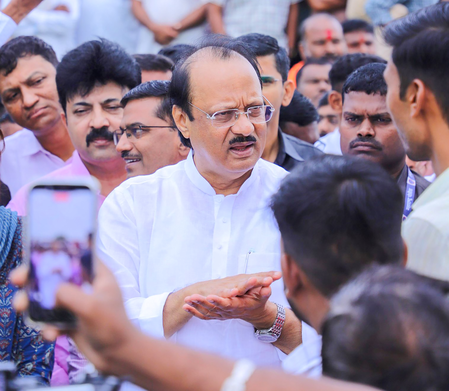
Mumbai, Feb 13 (IANS) Maharashtra NCP(SP) President Shashikant Shinde has written a commemorative editorial in the party’s magazine, shedding light on the hidden dynamics of the split and the alleged merger plans between the two NCP factions.
Shinde claimed that late Deputy Chief Minister Ajit Pawar was forced to exit the original NCP due to threats and conspiracies orchestrated by "invisible powers."
He further said that a final decision to merge the two parties was reached in the presence of Maratha strongman Sharad Pawar and was to be announced on February 12.
In a massive revelation, Shinde asserted that Sharad Pawar and other senior leaders had agreed to hand over the entire command of the unified party to Ajit Pawar following the merger.
“Fulfilling this merger and rebuilding the party with strength would be the only true tribute to Ajit Dada," Shinde wrote.
Shinde clarified, "It was our decision to hand over all party responsibilities to Ajit Dada once the merger process was complete. However, fate had other plans. We were all mentally prepared to accept Ajit Dada’s leadership.”
Shinde appealed to the party faithful, asserting that a merger is the only true tribute to the late leader. He noted, “Ajit Pawar’s dream remains unfulfilled, and it is now the party's responsibility to complete it. Unity: Reuniting and strengthening the NCP is the ultimate goal. Leaders and workers must set aside their differences and broaden their perspective to achieve this unity.”
Following the publication of the article, senior NCP(SP) leader and former Home Minister Anil Deshmukh remarked, "I am unaware of what our State President has said. Since he wrote the article, he likely has more information than I do. I personally have no knowledge of this matter."
While Sharad Pawar has avoided commenting publicly on the matter, Shinde’s article has brought these behind-the-scenes developments to light. However, Shinde’s revelations have sparked a new controversy and the NCP (Ajit Pawar faction) has reacted with sharp skepticism.
Party spokesperson Suraj Chavan questioned the timing of these claims. Chavan alleged that discussing a merger while the leader’s mortal remains were still at Vidya Pratishthan suggests a "lust for power" rather than genuine respect. He clarified that Sunetra Pawar is now the ultimate authority of their party and any dialogue must happen through her.
Further, the party legislator Amol Mitkari stated that no such merger discussions have occurred within their internal party meetings, attributing the rumours to the rival camp's leaders.
While the Pawar family continues to demonstrate a unique balance of political rivalry and familial bond — recently seen at family weddings — the political future remains clouded.
All eyes are now on Sunetra Pawar. Whether she will pursue the "unfulfilled dream" of a unified NCP or maintain a separate identity, remains a question that will define the next chapter of Maharashtra politics.
--IANS
sj/rad
India’s electronics exports outpace global growth: NITI Aayog report
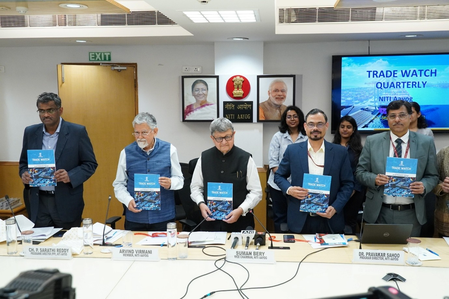
New Delhi, Feb 13 (IANS) India’s share in global electronics demand has expanded at a rapid compound annual growth rate (CAGR) of 17.2 per cent, significantly outpacing global growth of 4.4 per cent between 2015 and 2024, driven primarily by the sharp rise in mobile phone exports, according to NITI Aayog's Trade Watch Quarterly report for July-September 2025-26, launched on Friday.
Between 2016 and 2024, electronics exports increased nearly five-fold, reaching USD 42.1 billion. With global electronics trade valued at USD 4.6 trillion, the sector represents one of the largest and fastest-evolving segments of the world economy. India has demonstrated particular strength in products such as mobile phones, consumer electronics, and communication equipment, with exports increasingly directed towards major final-consumption markets including the United States, the United Kingdom, and the UAE, the report states.
Electronics, the thematic focus of this quarter's edition, has emerged as a cornerstone of India's manufacturing and export transformation. Now the second-largest item in India's export basket, the sector is both technology-led and deeply interconnected with industries such as automotive, renewable energy, telecom, defence, and digital services, making it a powerful multiplier for industrial growth.
The report states that having established a strong foothold in assembly and system integration, India is now entering the next phase of its electronics journey, moving decisively toward component manufacturing and higher value addition. This transition is supported by targeted policy measures, including the Union Budget's Rs 40,000 crore allocation under the Electronics Components Manufacturing Scheme, aimed at strengthening domestic capabilities.
The analysis underscores that sustained competitiveness will be driven by deeper integration into global electronics value chains, encompassing printed circuit board design, semiconductor assembly and testing, power electronics, and embedded systems. Complemented by continued improvements in logistics efficiency, tariff rationalisation, and industry-aligned skill development, these shifts position electronics as a key engine of India's export growth and technological advancement in the coming decade.
NITI Aayog Vice-Chairman Suman Bery said, "Electronics, as the organising core of modern manufacturing value chains, with semiconductors and components, plays a key role in determining trade balances and technological sovereignty. While India has achieved scale in final assembly, sustained competitiveness will depend on correcting structural cost disabilities, deepening domestic component ecosystems, and leveraging anchor investments in components to embed Indian firms more firmly within global production networks."
The publication also provides a comprehensive assessment of global and domestic trade trends at a time when global trade growth has moderated but remains positive, with services continuing to outperform goods and developing regions emerging as key drivers.
The analysis highlights that India's trade performance in Q2 FY26 was driven by export-led momentum sustaining the overall trade expansion amid heightened global uncertainty. Services and merchandise exports recorded robust growth of around 8.5 per cent, outpacing import growth in both merchandise and services.
At a structural level, the edition underscores the deepening of trade among developing economies, which has expanded nearly four-fold since 2005 and now accounts for a rising share of global exports, with India’s trade trajectory increasingly aligned with this Global South rebalancing through regional value chains and new trade corridors.
Further, this edition highlights the growing role of e-commerce as a key enabler of future export growth. India is now among the world’s top six e-commerce markets, with electronics accounting for nearly half of online retail.
--IANS
sps/svn
Centre okays 25 lakh metric tonnes wheat exports, 5 LMT of sugar exports
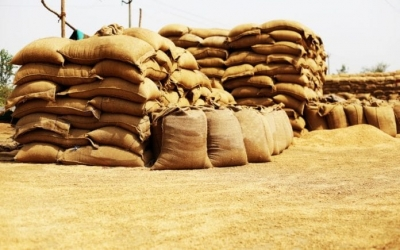
New Delhi, Feb 13 (IANS) In a farmer-centric step to stabilise domestic markets and ensure remunerative returns to producers, the Centre on Friday approved the export of 25 lakh metric tonnes (LMT) of wheat, along with an additional 5 LMT of wheat products.
According to a Consumer Affairs Ministry statement, wheat stock availability with private entities during 2025–26 stands at approximately 75 LMT, which is nearly 32 LMT higher compared to the corresponding period last year.
"This substantial year-on-year increase indicates a comfortable supply position in the country. Furthermore, as on April 1, 2026, total wheat availability in the central pool with FCI is projected at around 182 LMT, thus ensuring that export permissions will not impact domestic food security requirements," it said.
Moreover, wheat acreage in Rabi 2026 has also increased to about 334.17 lakh hectares compared to 328.04 lakh hectares last year.
This reflects strong farmer confidence in wheat cultivation supported by assured MSP and procurement mechanisms, and signals the likelihood of another robust harvest, the official statement further added.
The decision to permit export of 25 LMT of wheat and 5 LMT wheat products will help stabilise domestic prices, improve market liquidity, ensure efficient stock rotation, and further strengthen farmers’ income while ensuring national food security.
Meanwhile, to facilitate sugar exports, the government decided to allow export of an additional 5 LMT of sugar to willing sugar mills during the current Sugar Season 2025–26.
Earlier, the government had permitted the export of 15 LMT of sugar during the current Sugar Season 2025–26. This decision is expected to facilitate higher sugar exports and help in managing surplus sugar availability in the country.
As per data, only about 1.97 LMT of sugar has been exported up to January 31, 2026.
In addition, approximately 2.72 LMT of sugar has been contracted for export by sugar mills to date.
The ministry said that the additional export quantity of 5 LMT shall be made available to willing sugar mills, subject to the condition that at least 70 per cent of their allocated quantity is exported by June 30, 2026.
--IANS
na/vd
ShowBiz
When Nana Patekar said that Anil Kapoor bullied him on ‘Parinda’
Mumbai, Oct 14 (IANS) The late actor Nana Patekar once shared that his friend, and actor Anil Kapoor bullied him a lot during the making of ‘Parinda’.
An old video from the promotions of the film ‘Vanvaas’ has resurfaced in which he can be seen having a conversation with Anil Kapoor.
He said in the video, “You have bullied me a lot in ‘Parinda’. I was doing Jackie Shroff’s role, his elder brother's role. We rehearsed, we did this, we did that. Later, Jackie came because of him. But I want to thank him because I got to play Anna. No, the reason was that he couldn't see me as a brother. As per you, Jackie could be your brother in the film but not me”.
Anil responded, as he said, “I might be wrong, but I felt that for my brother's role, I felt Jackie would be the best choice. I'm being very honest with you. But your honesty has ruined my role. No, but what happens is that you give suggestions to a director. Ultimately, decisions are always made by a director. A director is a director, a filmmaker is a filmmaker. He must have felt that Jackie is a better choice”.
Nana Patekar said, “Jackie did a good job. He got a Filmfare Award”.
Anil said, “So, what I mean to say is that sometimes, there are some things which are very, very important. I will never deceive you with a film”.
Nana Patekar passed away at the age of 75 in Goa. The actor suffered cardiac arrest. The actor was taken to hospital where doctors attempted CPR and resuscitation for about 45 minutes. However, he was later declared dead on arrival.
The late actor Nana Patekar was cremated with full state honours at his farmhouse in Donje in Pune district on Thursday. The actor was given a 3-gun salute.
The late actor’s friends and members of the film fraternity including Jackie Shroff, directors Anil Sharma, Aneez Bazmee, and producer Firoz nadiadwala arrived at Donje village to attend the last rites of Nana Patekar.
A huge crowd also turned up to bid adieu to the departed soul. Maharashtra Chief Minister Devendra Fadnavis also paid his last respects to Nana Patekar at Pune airport before leaving for Mumbai. Maharashtra Deputy Chief Minister Eknath Shinde went to the actor’s Pune farmhouse to pay his respects.
--IANS
aa/
Ranvir Shorey registers complaint with Mumbai Police after receiving death threats
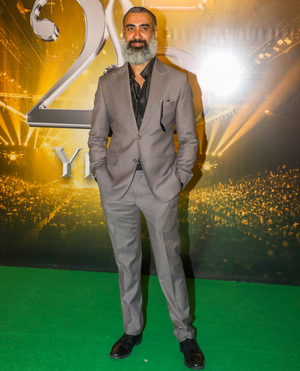
Mumbai, Oct 13 (IANS) Actor Ranvir Shorey, who often engages in a tussle with social media users over political differences, has shared an update with regards to threats received from his ideological opponents in his email inbox.
On Tuesday, the actor took to his X, formerly Twitter, and penned a long note in which he shared that he submitted an official complaint with the cops.
He wrote, “Official complaint has been filed. Now it’s over to @MumbaiPolice. Thanks to everyone who has shown concern”.
Prior to this, the actor expressed his gratitude to Mumbai Police for reaching out after he was doxed on social media, and received threats.
The actor had heated exchange with the users on social media in the light of the ongoing protests in the country over the alleged irregularities in the electoral system of India.
It comes after, the online party, Cockroach Janta Party (CJP) intensified its agitation demanding the resignation of Chief Election Commissioner Gyanesh Kumar, with protests in Delhi entering their 4th day on October 13, 2026. The youth-led movement is opposing the Election Commission’s Special Intensive Revision (SIR) of electoral rolls, alleging that the exercise has disenfranchised millions of voters. The Election Commission and the BJP have denied allegations of manipulation.
On October 10, CJP founder Abhijeet Dipke and fellow leaders Saurav Das and Ashutosh Ranka were detained after arriving in Delhi for a planned demonstration at Jantar Mantar. Many protesters were also detained as authorities imposed extensive security restrictions. The three leaders were released on October 11, reportedly subject to a condition to maintain public peace for one year. Dipke subsequently vowed to continue the agitation.
The CJP has also called for electoral reforms and an independent inquiry into alleged irregularities in voter-list revisions. The Apex Court during its special hearing on Sunday noted that there will be no detention of the protestors, and the public transport will return to normalcy.
--IANS
aa/
Samantha Sloyan says Mike Flanagan crafts fully-rounded, imperfect human beings

Los Angeles, Oct 13 (IANS) Hollywood actress Samantha Sloyan, who is receiving a lot of positive response to her work in the recently released streaming miniseries ‘Carrie’, and heaped praise on the show’s director Mike Flanagan.
The actress spoke with IANS along with her co-actress Summer H. Howell during the promotions of the series.
She told IANS, “I keep saying that I feel like he just writes people that we recognize. He writes fully-rounded human beings that are imperfect and that that kind of allows us to let them in and see ourselves in that. And then also, he's just he comes from such a place of real hope for the world”.
“So even though he's dealing with these dark subjects, it's always like aiming towards a light place. And I really appreciate that in him, because I feel like we could use a lot more of that”, she added.
Earlier, the actress had shared her experience of working with the show’s director Mike Flanagan. She said that Mike and the author Stephen King, on whose eponymous novel the series is based, are “kindred spirits”.
She earlier said, “I've worked through this, my seventh project with him, and it's always a joy. And I think what you had mentioned, Stephen King, that they just, they're so kindred spirits in so many ways”.
Talking about ‘Carrie’, the series follows the socially isolated teenager as she navigates high school, bullying and the oppressive influence of her mother, Margaret, while discovering her telekinetic abilities. Flanagan updates the story for the social-media era, bringing cyberbullying, online humiliation and modern teenage pressures into the narrative.
The series expands several characters and explores the psychological roots of cruelty, victimhood and revenge more deeply than earlier adaptations. While Brian De Palma’s 1976 film remains the iconic version, the series format gives the story considerably more room to explore its characters and themes.
The series is available to stream on Prime Video.
--IANS
aa/
When Mithun Chakraborty revealed why he would always be grateful to Zeenat Aman
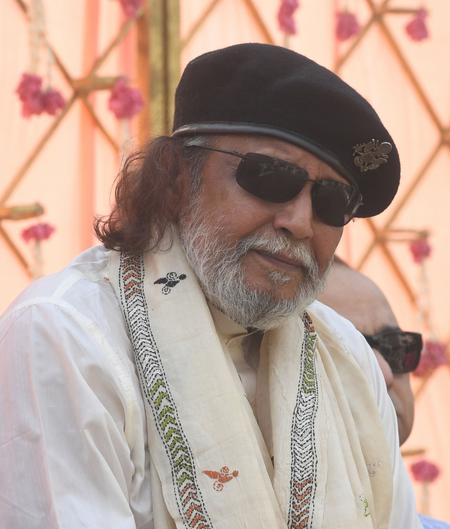
Mumbai, Oct 13 (IANS) Veteran actor Mithun Chakraborty holds gratitude for Zeenat Aman for supporting him at a time when no one else believed in him.
During his appearance on the singing reality show 'Sa Re Ga Ma Pa' back in 2023, Mithun shared how everyone thought he would never be a big star.
"They thought I was a 'chota star.' 'Yeh kabhi kya hero banega?' (He can never become a hero). Who will make him a hero? Kya kya bolte they mere baare mein'. (They said a lot of things about me). I don't even want to say it. Phir dard hota hai (It only hurts me)."
Mithun shared that actresses would sometimes walk out of the project even after it had been announced.
Recalling those struggling days, he shared, "There was a time when I thought I wouldn't transition from B-grade films to A-grade films. There were times when the actresses walked out even after the film was announced. There was pressure, and other actors were insecure that I would make it big someday. So they may have warned those heroines, 'Iske saath kaam karogi toh hamare saath kaam nahin kar sakti' (If you work with Mithun, we will work with you)."
Mithun said that Zeenat Aman was the only one who showed faith in him. He added that her support ended up changing the course of his career.
"Zeenat ji said, 'What a good-looking man he is!' I will do the film with him. It was Zeenat ji who broke the jinx. Zeenat ji had a status of the number 1 heroine of that time, so following her footsteps, every other actress started saying yes to the films that I worked in. With Taqdeer's release, I became an A-category actor," he shared.
Mithun thanked Zeenat Aman, saying, "I will forever be grateful to Zeenat ji for helping me attain that. Zeenat ji, if you are listening to me, I offer my 'pranaam' to you."
--IANS
pm/
Anupam Kher’s ‘Khosla Ka Ghosla 2’ gets a new release date, to be out on 5th March 2027

Mumbai, Oct 13 (IANS) Anupam Kher and Boman Irani's much anticiapted laughter ride, 'Khosla Ka Ghosla 2' has got a new release date.
The makers, T-Series, took to their official handle on Tuesday and announced that the sequel will now be reaching the audience on March 5th, next year.
"Deal Pakki ! The Khoslas are ready to take possession of cinemas with #KhoslaKaGhosla2, arriving on the big screen on 5th March 2027! (sic)," the post read.
The announcement poster featured the primary cast wrapped in a bomb, made from what seemed to be property agreements, with Boman aka Khurana ready to set them all on fire.
Earlier, 'Khosla Ka Ghosla 2' was slated to be out in the cinema halls on 28th August 2026.
Directed by Umesh Bisht, "Khosla Ka Ghosla 2" has been produced by Bhushan Kumar, Krishan Kumar, Savita Raj Hiremath, and Raj Hiremath. The project will also see Kiran Juneja, Ranvir Shorey and Tara Sharma reprising their roles from the original drama.
In August, as Boman wrapped up his portion, Kher reflected on their off-screen bond
The veteran actor wrote on his account, “Our relationship in the film couldn’t be more different from our relationship off screen. In the film, he is the intimidating, ruthless and unforgettable #KhuranaSaab. In real life, he is one of the warmest, kindest and most generous friends one could ask for.”
Sharing his experience of working with Boman, he added, “His understanding of cinema, his preparation, his attention to detail and his ability to make every scene richer are simply extraordinary. Even between takes, whether we were discussing films, life or playing world building or a game of chess, every moment with him was a joy.”
Released in 2006, 'Khosla Ka Ghosla' shares the journey of Kamal Kishore Khosla (Kher), a middle-class Delhiite, and his family who wish to reclaim their land seized by a builder, Khurana.
--IANS
pm/
When Aditya Chopra told Anushka Sharma ‘you’re not the most goodlooking girl’

Mumbai, Oct 13 (IANS) Did you know that actress Anushka Sharma was once given a brutal reality check by filmmaker Aditya Chopra during the initial days of her career?
As she appeared on 'Koffee With Karan', Anushka opened up about the blunt advice from Aditya Chopra.
Recalling the incident, the 'NH 10' actress said, “I was on the fourth floor, in Aditya Chopra’s office. He just said, ‘Listen, I have a lot of belief in your talent. I think you are a very talented actress, but I don’t think you are very good-looking. You’re not the most good-looking girl, so you have to make sure that you work really hard. You’re on for Taani (her character in Rab Ne Bana Di Jodi).”
Anushka shared that before this, she used to believe she was extremely good-looking.
Sharing how she reacted to the feedback, Anushka added, “When I left the office, I was very cool. I said 'thank you', and I was very proper. At one point, I stopped the car because I realised I was crying. I was crying so much. My parents were not in town, so I called my mom and I said, ‘I can’t believe this is happening right now'.”
She further admitted that she had faced several rejections before she bagged 'Rab Ne Bana Di Jodi' opposite Shah Rukh Khan.
“I used to think I am very, very good-looking. Like, ‘Haan, haan, aise toh main bhi lag sakti hoon (Yeah, yeah, even I can look like this).’ If I just have the right make-up and the right hair and all that. It’s only after I met Aditya Chopra that I saw myself on the monitor for the first time while shooting… I was in the dulhan ka joda (bridal attire). I saw myself the first time on screen, and I was like, ‘He is right. I am not that good-looking,” Anushka asserted.
--IANS
pm/
Lifestyle
Govt unveils standard treatment protocols for dermatological disorders

New Delhi, Oct 13 (IANS) The Ministry of Ayush on Tuesday released Standard Treatment Guidelines (STGs) on the management of dermatological disorders across Ayurveda, Siddha, Unani and Homoeopathy systems, with the inclusion of Yoga, in a move aimed at promoting greater uniformity, quality assurance and evidence-based clinical practice in Ayush healthcare.
Prepared by the Ayush Vertical under the Directorate General of Health Services (DGHS) of the Ministry of Health and Family Welfare, the guidelines are designed to strengthen clinical care for skin-related conditions while supporting the integration of Ayush systems within the country's broader healthcare framework.
Union Minister of State (Independent Charge) for Ayush and Minister of State for Health and Family Welfare Prataprao Jadhav said the guidelines combine system-specific clinical approaches with contemporary scientific evidence to support safe, effective and holistic management of common dermatological conditions.
He noted that the initiative would help improve patient care and enhance the contribution of Ayush systems to public health by encouraging standardized and evidence-informed treatment practices.
Ayush Secretary Vaidya Rajesh Kotecha said the guidelines represent a significant step towards strengthening standardisation, quality and evidence-based practice across Ayush systems.
Developed through expert consultations and assessment of contemporary scientific evidence, the document provides practical recommendations for the prevention, diagnosis, treatment and follow-up of patients while preserving the core principles of each traditional medical system, he added.
Director General of Health Services Dr. Loveneesh G. Krishna said the guidelines would promote quality assurance and greater uniformity in healthcare delivery across Ayush systems.
He emphasised that multidisciplinary collaboration would support practitioners in providing safe, effective and patient-centric care.
The guidelines were unveiled on the occasion of the 11th Ayurveda Day and cover common skin disorders such as psoriasis, dermatitis, vitiligo, urticaria and dermatophytosis.
For each Ayush discipline, the document outlines system-specific approaches to prevention, diagnosis, treatment, follow-up care and rehabilitation.
According to the Ministry, the development of the guidelines involved an extensive interdisciplinary effort bringing together experts from Ayush research councils, senior academicians from Ayurveda, Siddha, Unani and Homoeopathy, Yoga specialists and experts from modern medicine.
The process included reviews of classical texts, evaluation of scientific evidence, expert consultations and consensus-based discussions.
--IANS
pk
High-altitude centre will help Himalayan health challenges: JP Nadda
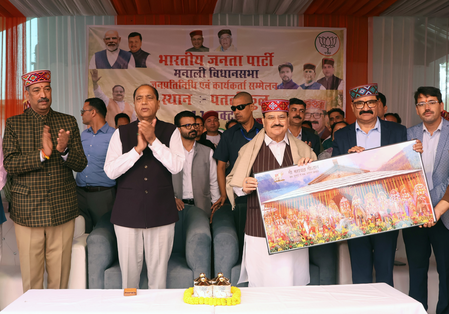
Keylong, Oct 12 (IANS) Union Minister for Health and Family Welfare Jagat Prakash Nadda on Monday laid the foundation stone of the ICMR Centre for High Altitude Medicine and Public Health Research, saying the Centre would establish a strong institutional foundation for health research and advance scientific understanding of the unique health challenges faced by people living in the Himalayan region.
Speaking on the occasion, Nadda emphasised the importance of dedicated scientific research to understand the health implications of low oxygen levels, extreme cold, changing climatic conditions and the distinctive lifestyles of tribal communities.
He highlighted the need for systematic studies of these region-specific challenges to identify health risks, develop appropriate interventions and strengthen preventive healthcare.
Referring to Prime Minister Narendra Modi’s vision of strengthening healthcare infrastructure and ensuring access to quality healthcare, the Union minister said the establishment of the Centre reflected the importance accorded to addressing the distinct healthcare needs of people living in remote Himalayan and border regions.
He emphasised that research-based interventions would help improve health outcomes and enhance the wellbeing of local communities and armed forces personnel serving in these challenging environments.
Nadda appreciated the collaboration between ICMR and the Armed Forces Medical Services in establishing the Centre.
He also acknowledged the contribution of AIIMS Bilaspur, which would participate in studying the health impact of high-altitude conditions on patients visiting the region. The collaboration would bring together scientific expertise and clinical experience to deepen understanding of high-altitude health challenges and support evidence-based healthcare interventions.
Emphasising the long-term significance of the initiative, Nadda said that the Centre would contribute to improving healthcare for tribal communities and armed personnel deployed in high-altitude areas. The research undertaken would support the development of appropriate preventive and promotive healthcare strategies, helping address the distinctive medical challenges associated with extreme environmental conditions and strengthening health services in the Himalayan region.
Nadda also appreciated ICMR’s role in developing the COVID-19 vaccine, which helped fight the pandemic not only in India but also in other countries around the world.
Union Minister of State for Defence Sanjay Seth, who was the guest of honour, highlighted the significance of the collaboration in establishing the High Altitude Research Centre in Keylong in Lahaul-Spiti district.
Drawing on the armed forces’ experience of operating in high-altitude environments, he expressed confidence that the joint research initiative would help deepen scientific understanding of the health challenges associated with extreme altitudes and contribute to the development of effective medical solutions.
Seth emphasised the importance of combining ICMR’s scientific research capabilities with the practical experience of the Armed Forces Medical Services to address the health challenges posed by high-altitude conditions. The research undertaken at the centre is expected to support a better understanding of the effects of altitude on the human body, with potential benefits for personnel serving in challenging environments as well as local communities living in the high-altitude regions of Himachal Pradesh.
--IANS
vg/dan
Bihar CM inaugurates new OPD tower at PMCH, registration counters increased to 15
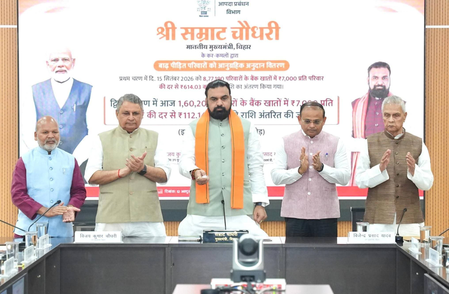
Patna, Oct 12 (IANS) Bihar Chief Minister Samrat Choudhary inaugurated the new OPD tower at Patna Medical College and Hospital (PMCH) on Monday in the presence of Health Minister Nishant Kumar.
An OPD registration facility was also launched in the building to improve convenience for patients visiting the state’s premier government medical institution.
The new facility is part of PMCH’s ongoing redevelopment programme, which aims to modernise hospital infrastructure, expand patient capacity and improve healthcare services.
Patients from Patna and other districts of Bihar regularly visit the hospital for treatment.
Addressing the inauguration ceremony, Choudhary said the new OPD tower marked an important milestone in PMCH’s redevelopment.
He said the growing number of patients had made it necessary to expand the hospital’s infrastructure and upgrade its medical facilities.
He added that the NDA government had undertaken the redevelopment project with the aim of transforming PMCH into the country’s largest hospital and the second-largest in Asia.
Choudhary said the new registration system would make obtaining OPD slips easier, particularly for patients travelling from remote areas, women and elderly people.
The new OPD registration counters have been established on the first floor of the building.
The number of counters has been increased from 10 to 15 to manage patient flow more efficiently and reduce waiting times.
Health Minister Nishant Kumar said three counters had been reserved specifically for women, while a separate counter had been provided for elderly patients and persons with disabilities.
The registration area is air-conditioned and equipped with seating arrangements for patients waiting for their turn.
Kumar also reviewed the arrangements with the PMCH superintendent.
He said the new facility would offer relief to patients waiting for registration slips, particularly during hot or rainy weather.
He added that the government was focused on improving healthcare facilities for the public.
PMCH Superintendent Dr Rajiv Kumar Singh said patients would be able to consult the relevant doctors at the OPD on the third floor after completing registration on the first floor.
The arrangement is intended to streamline registration and consultation services within the same building, making the process more convenient for patients and their attendants.
According to the PMCH superintendent, the newly inaugurated Tower 3 was completed under Phase 1 of the hospital’s redevelopment project.
The building includes escalators, a modern waiting lounge, a surgical ward with 150 air-conditioned beds, four modular operation theatres and a rooftop helipad intended for air ambulance services.
--IANS
ajk/dan
Centre asks states, UTs to ensure hospitals display treatment charges prominently
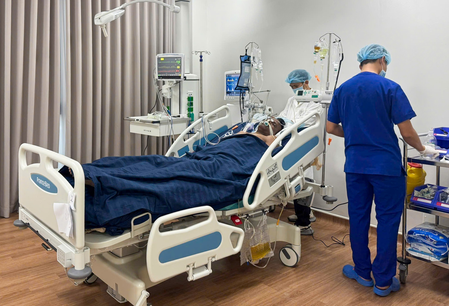
New Delhi, Oct 12 (IANS) The Union Ministry of Health and Family Welfare on Monday asked all States and Union Territories (UTs) to ensure that clinical establishments prominently display the rates charged for healthcare services and facilities, in a move aimed at enhancing transparency, accountability and patient-centric healthcare delivery.
In a letter addressed to Chief Secretaries of States and UTs, Union Health Secretary Punya Salila Srivastava urged authorities to review compliance with applicable regulations and take necessary steps to ensure that information on healthcare charges is clearly visible and easily accessible to patients and their attendants.
The ministry said transparent display of treatment costs would help patients and their families understand the likely expenditure involved in medical care, enabling them to make informed decisions and plan their finances better.
It added that greater transparency could reduce confusion over billing, minimise disputes and strengthen public trust in the healthcare system.
"In a significant step towards strengthening transparency, accountability and patient-centric healthcare delivery, the Union Ministry of Health and Family Welfare has urged all States and Union Territories (UTs) to ensure the prominent display of rates charged for services and facilities offered by Clinical Establishments," according to the official statement.
The communication referred to the Clinical Establishments (Registration and Regulation) Act, 2010, and the Clinical Establishments (Central Government) Rules, 2012, which require clinical establishments in States and UTs where the law is applicable to display charges for all services and facilities at a conspicuous place. The rates must be displayed in both English and the local language for the benefit of patients and their attendants.
The ministry noted that States and UTs where the central law is not applicable regulate healthcare facilities under their respective frameworks, many of which also contain provisions related to the display of service charges.
Highlighting that health is a State subject, the Health Secretary said the responsibility for implementing and enforcing the relevant regulations rests with State and UT authorities.
The ministry has also sought greater transparency for international patients seeking treatment in India. States and UTs have been requested to encourage hospitals and healthcare institutions to prominently display package rates offered to foreign patients travelling on Medical or Ayush Visas.
According to the ministry, such measures would enable overseas patients to make informed choices, reduce pricing-related grievances and further strengthen India's position as a preferred destination for medical and Ayush care.
--IANS
pk
Devotional