
FSSAI initiates three adjudication cases against Nestle India over infant nutrition products

New Delhi, Sep 18 (IANS) The Food Safety and Standards Authority of India (FSSAI) on Friday said that it has initiated three separate adjudication cases against Nestlé India over alleged regulatory non-compliance involving its infant nutrition products, including NAN Excella Pro Stage 1 and Lactogen Pro 1.
According to a notice shared by the food regulator on Instagram, FSSAI examined the products and promotional material listed on e-commerce platforms and flagged certain claims associated with the infant nutrition products.
In the case of NAN Excella Pro Stage 1, the regulator raised concerns over claims related to “5 HMOS” and “Whey Protein”. For Lactogen Pro 1, FSSAI flagged a claim describing whey protein as being easy to digest.
The food regulator said it had sought clarifications from Nestlé India regarding the claims. Following its examination, FSSAI said the products were found to be in contravention of Regulation 4(2) of the Food Safety and Standards (Foods for Infant Nutrition) Regulations, 2020.
The regulation places restrictions on promotional claims and material intended to increase the saleability of infant foods. FSSAI also referred to Section 3 of the Infant Milk Substitutes, Feeding Bottles and Infant Foods (Regulation of Production, Supply and Distribution) Act, 1992, which prohibits the advertisement and promotion of such products.
Separately, FSSAI said a sample of a Follow-up Formula manufactured by Nestlé India was found to be sub-standard for its biotin content during laboratory analysis.
The sample was subsequently sent to a Referral Laboratory for re-analysis. The second analysis also found the product to be non-conforming with the prescribed biotin requirement under the Foods for Infant Nutrition Regulations, 2020.
FSSAI said three separate adjudication cases have been filed against Nestlé India in connection with the regulatory issues involving the products.
The regulator's notice does not indicate that any final penalty has been imposed on Nestlé India. The cases concern the alleged promotional violations and the laboratory finding related to the biotin content.
Nestle India had not issued a response to the exchanges regarding the notice at the time of publication.
--IANS
pk
Strengthening patient safety critical in addressing burden of NCDs: Govt official
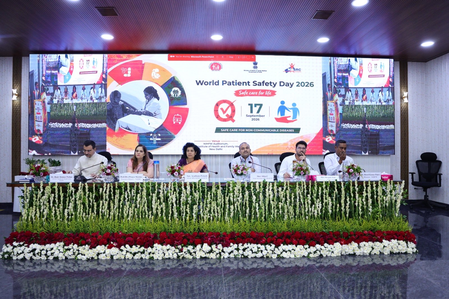
New Delhi, Sep 18 (IANS) Patient safety cannot be the responsibility of a single programme or department and needs to be embedded across the health system, particularly in the prevention, diagnosis, treatment and long-term management of noncommunicable diseases, a senior government official has said.
Aradhana Patnaik, Additional Secretary and Mission Director (NHM), Ministry of Health and Family Welfare, reiterated the government’s commitment to strengthening patient safety, improving quality of care and building safer health systems across the country.
The ministry, commemorated the ‘World Patient Safety Day 2026’ with the theme “Safe Care for Noncommunicable Diseases (NCDs)”.
Addressing the gathering, Patnaik said that nearly 63 per cent of all deaths in India are attributed to NCDs, making patient safety an important component of healthcare delivery.
Referring to recent achievements in public healthcare, she highlighted that 96 per cent of immunisations and 90.6 per cent of institutional deliveries, as reported under NFHS-6, are being conducted through public health facilities.
She stressed the need to further strengthen quality and safety practices within healthcare institutions, particularly in patient referrals and continuity of care, to ensure timely access to appropriate services and improved health outcomes, according to an official statement on Friday.
Patnaik also emphasised the need for a clear roadmap and action plan to achieve 100 per cent NQAS certification of Ayushman Aarogya Mandir–Sub Health Centres (AAM-SHCs) by March 2027, followed by certification of Ayushman Aarogya Mandir–Primary Health Centres (AAM-PHCs).
She underscored that a structured and time-bound approach to quality assurance would be critical for institutionalising a culture of patient safety across all levels of care.
India has also been strengthening the institutional framework for quality and patient safety through initiatives such as the National Quality Assurance Standards (NQAS) and the National Patient Safety Implementation Framework.
The observance of ‘World Patient Safety Day 2026’ provided an important platform for bringing together stakeholders, sharing experiences and best practices, and reinforcing a culture of patient safety across all levels of healthcare delivery.
—IANS
na/
Govt strengthens Schedule drugs regulation, recommends CCTV surveillance at medical stores
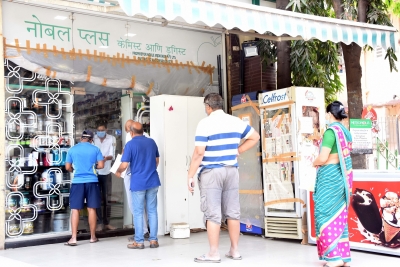
New Delhi, Sep 17 (IANS) The government on Thursday said it has proposed amendments to strengthen regulatory oversight over Schedule H, H1 and X drugs, along with recommending mandatory CCTV surveillance at medical stores as an additional regulatory safeguard.
Health Ministry proposed amendments to the “Drugs Rules, 1945,” through a draft gazette notification dated September 8. The proposed amendment seeks to address concerns relating to unauthorised access to and sale of Schedule H, H1 and X drugs.
After implementation, the amendments are expected to help strengthen monitoring of the sale and distribution of Schedule H, H1 and X drugs and curb their unauthorised access and sale without valid prescriptions.
“The proposed CCTV surveillance mechanism will also enhance transparency and accountability across the pharmaceutical supply chain, thereby strengthening safeguards for public health,” said Health Ministry.
The proposal was initially deliberated upon by the Drugs Consultative Committee (DCC) and was subsequently circulated among the members of the Drugs Technical Advisory Board (DTAB) for deliberation.
Following consideration of the proposal, the DTAB recommended its approval.
The Ministry has invited objections and suggestions from stakeholders and members of the public on the proposed amendment.
Last month, the government imposed restrictions on the manufacturing, sale and distribution of all fixed dose combinations (FDCs) containing Chlorpheniramine Maleate and Phenylephrine Hydrochloride for children below four years of age.
Health Ministry, in a notification, mandated a clear warning that these medicines shall not be used in children below four years of age, in a significant step to safeguard the health and safety of young children.
The government directed manufacturers to clearly display the warning, “Fixed Dose Combination shall not be used in children below four years of age,” on the label, package insert and promotional literature associated with these formulations.
The notification has been issued under Section 26A of the Drugs and Cosmetics Act, 1940, in the interest of public health and is effective from the date of its publication in the Official Gazette, said the ministry.
--IANS
na/
S. Korea announces plans to formally introduce abortion pills

Seoul, Sep 16 (IANS) The government on Wednesday announced plans to formally allow the use of abortion pills by women up to nine weeks pregnant, as related regulations remain unrevised following the Constitutional Court's 2019 striking down of the abortion ban.
The ministries of gender equality, health and food and drug safety reported the plans at a government policy coordination meeting, noting the institutional vacuum has created risks to women's health and safety.
Under the plan, abortion pills will be introduced in phases, with both prescription and dispensing taking place directly at hospitals for the first two years, reports Yonhap news agency.
When necessary conditions are fulfilled, the system will shift to doctors prescribing and pharmacies dispensing.
The food and drug safety ministry said it has received applications for approval of abortion pills for use by women up to nine weeks pregnant and that it will vet their safety and quality before proceeding.
Some women are resorting to "dangerous methods" and the problem should no longer be left unattended because it amounts to neglecting the people's lives and safety, Prime Minister Han Seong-sook said during the meeting.
"Safety is more important than anything else," she said. "We must come up with measures to help women in need to receive treatment within the safe medical system, rather than having to rely on unverified methods."
Han said the government is seriously taking "concerns regarding the value of life" too.
"This measure is aimed at protecting the people's health rather than encouraging abortion. We ask for your broad understanding of this intent," she said.
The formal introduction of abortion pills is one of the administrative tasks set by the Lee Jae Myung government. The initiative got a boost after Lee instructed the government in July to look into ways to allow women to safely take abortion pills even before the necessary legal framework is in place.
—IANS
na/
Measles outbreak in Bangladesh kills over 1,000 in 6 months as vaccination gaps persist: Report
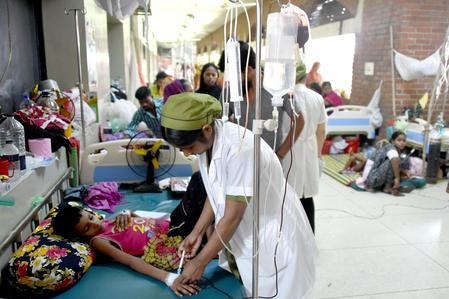
New Delhi, Sep 15 (IANS) Bangladesh is grappling with a severe measles outbreak that has killed over 1,000 people since mid‑March, exposing immunity gaps after years of declining routine vaccination coverage and disruptions to immunisation services, a new report has said.
The report from Al Jazeera cited health ministry data showing 1,009 deaths by September 9, including 100 laboratory‑confirmed measles fatalities and 909 classified as suspected measles deaths.
Authorities said 19.75 million children have been vaccinated in an emergency campaign that began in April, against an initial target of about 18 million children aged six months to under five years.
However, public health experts said that the original estimate of the children needing vaccines was too low.
Further, the national coverage figures can obscure pockets where large numbers of susceptible children remain, they said.
Bangladesh’s 2023 Coverage Evaluation Survey found first‑dose measles‑rubella coverage dropped to 86 per cent in 2023 from 88.6 per cent in 2019, while second‑dose coverage fell to 80.7 per cent from 89 per cent over the same period. Measles transmission typically requires roughly 95 per cent coverage to be interrupted.
Before 2026, Bangladesh had not conducted a nationwide supplementary measles-rubella campaign since the last one ran from December 2020 to January 2021.
“Coverage therefore remained below the approximately 95 percent level needed to interrupt measles transmission, allowing the number of susceptible children to grow over successive years,” the report noted.
Routine immunisation was disrupted during the COVID‑19 pandemic, and UNICEF has also cited misinformation and vaccine hesitancy among factors preventing children from receiving vaccinations.
Mushtuq Hussain, a former principal scientific officer at Bangladesh’s Institute of Epidemiology, Disease Control and Research (IEDCR) said that regime change in the country caused delays in vaccine procurement, and vaccine shortages in 2024 and 2025.
"Cases began rising markedly in January 2026 and surged through March, prompting Bangladesh to notify the World Health Organization (WHO) of a nationwide outbreak on April 4," the report said, adding that cases had been reported in 58 of the country’s 64 districts by mid-April.
—IANS
aar/ag
FSSAI directs Nilgiri Oil, Aquagri Processing to recall products over ‘unsafe’ concerns

New Delhi, Sep 12 (IANS) The Food Safety and Standards Authority of India (FSSAI) on Saturday said that it ordered the immediate recall of two food products of Nilgiri Oil & Allied Industries and Aquagri Processing Pvt Ltd after laboratory tests found them unsafe and non-compliant with food safety standards.
In the two separate recall notices, the food regulator directed Nilgiri Oil & Allied Industries to recall its product, Shalimar's Chef - Coriander Powder and Aquagri Processing Pvt Ltd to withdraw Carrageenan from the market.
According to FSSAI, a regulatory sample of Shalimar's Chef coriander powder was collected from the premises of Nilgiri Oil & Allied Industries under provisions of the Food Safety and Standards (FSS) Act, 2006. Laboratory analysis found the sample unsatisfactory with regard to pesticide residues and not conforming to prescribed standards under relevant food product and contaminant regulations.
The food analyst classified the sample as unsafe. Following an appeal by the food business operator (FBO), the second sample was sent for retesting. The retest also found the product non-compliant with standards relating to pesticide residues, leading authorities to reaffirm the product's unsafe status, according to the regulator.
In a separate case, FSSAI said a sample of carrageenan collected from Aquagri Processing Pvt Ltd was found non-compliant due to the presence of cadmium beyond permissible standards. The product was subsequently declared unsafe by the food analyst.
After the company exercised its right to appeal, the sample was retested by a Referral Food Laboratory, which also concluded that the product was unsafe under the provisions of the FSS Act.
FSSAI said both products were being manufactured in contravention of applicable food safety regulations. The regulator has directed the companies to immediately recall the affected products from the market and undertake all measures mandated under the Food Safety and Standards (Food Recall Procedure) Regulations, 2017.
---IANS
ag/
IRDAI imposes Rs 1 crore penalty on Canara HSBC Life over mis-selling policy to 88-year-old

New Delhi, Sep 11 (IANS) The Insurance Regulatory and Development Authority of India (IRDAI) has imposed a penalty of Rs 1 crore on Canara HSBC Life Insurance Company Limited for mis-selling a life insurance policy to an 88-year-old customer.
The regulator found several lapses in the sale of a deferred annuity policy, including deficiencies related to product suitability, solicitation, disclosures and the insurer’s internal controls.
The regulatory proceedings were initiated after IRDAI took suo motu cognizance of a social media post highlighting the sale of the policy to the senior citizen. The policy carried an annual premium of Rs 2 lakh payable for four years and was sold through Canara Bank, the insurer’s corporate agent. The customer’s daughter was named as the annuitant under the policy.
During its examination, IRDAI found that the approved product permitted entry only for customers between 30 and 80 years of age. However, the proposer was 88 years old when the policy was sold.
The regulator also observed that the insurer had failed to undertake an adequate assessment of the customer’s financial circumstances and the suitability of the product, particularly considering his age and the sizeable premium commitment.
IRDAI identified additional shortcomings in the sales process, including deficiencies in the verification call, proposal form and disclosure of key policy features. The benefit illustration did not contain a verifiable acknowledgement from the policyholder, while the Customer Information Sheet and proposal form were not provided to the customer at the time of sale.
The regulator also noted that the premium was collected before the policy was issued. It further found that the implications of the proposer’s death during the premium-paying period had not been adequately explained to the customer.
Separately, IRDAI has proposed the creation of a Public Insurance Registry (PIR), a digital public infrastructure intended to build a more connected, transparent and efficient insurance ecosystem.
According to the regulator, the proposed registry would help reduce information gaps and promote greater competition among insurers and other market participants. This, in turn, is expected to encourage innovation in insurance products, competitive pricing, improved services and a better customer experience.
--IANS
pk
India administers over 80 lakh HPV vaccine doses under national campaign since Feb

New Delhi, Sep 11 (IANS) India has crossed a significant milestone in its efforts to prevent cervical cancer, with over 80 lakh doses of Human Papillomavirus (HPV) vaccine administered under the National HPV Vaccination Campaign since its launch in February 2026, an official statement said on Friday.
Gujarat, Uttar Pradesh, Madhya Pradesh and Mizoram have achieved 100 per cent coverage of their respective identified target populations, the statement from Ministry of Health and Family Welfare said.
Bihar, Andhra Pradesh and Assam have crossed 90 per cent coverage, while Karnataka has achieved more than 85 per cent coverage. Chhattisgarh, Sikkim, Kerala, Telangana and Odisha have crossed 60 per cent coverage.
The nationwide drive, launched by Prime Minister Narendra Modi in February 2026, offers voluntary, single‑dose HPV vaccination free of cost to 14‑year‑old girls at government health facilities with parental consent.
As per Registrar General of India (RGI) 2021 estimates, approximately 1.2 crore girls constitute the annual cohort of 14-year-olds who are expected to benefit from the initiative each year.
The progress in Assam and other Northeastern States also demonstrated the role of integrated community health networks and coordinated field-level action in expanding access across geographically diverse areas.
Healthcare providers, including paediatricians, gynaecologists and experts from institutions such as AIIMS, along with teachers and frontline health workers including ASHAs and ANMs, have supported awareness and mobilisation efforts across states and districts.
The campaign has also leveraged India’s digital health infrastructure through the U-WIN platform, enabling programme managers to monitor vaccination coverage at the district level, identify coverage gaps and missed beneficiaries, and support more effective programme planning and resource allocation.
Currently, 87 per cent of upper-middle-income countries, 78 per cent of lower-middle-income countries and 54 per cent of low-income countries have adopted HPV vaccines in their National Immunization Programmes.
All vaccination sessions under the campaign are conducted under the supervision of trained medical officers at government health facilities.
Government health facilities are also linked with 24×7 healthcare facilities for appropriate management of rare Adverse Events Following Immunization (AEFI). This mechanism ensures timely assessment, monitoring and management of any vaccination-related adverse event.
With the campaign progressing towards its final phase, the focus remains on reaching the remaining eligible beneficiaries and ensuring that no eligible girl is left behind, the ministry said.
The Ministry of Health and Family Welfare continues to work closely with States and Union Territories, healthcare professionals, frontline health workers and communities to strengthen awareness, facilitate access and support effective implementation of the HPV Vaccination Campaign, the statement noted.
—IANS
aar/pk
Pharma racket: Karnataka SIT raids 10 locations across 6 states

Bengaluru, Sep 11 (IANS) The Karnataka Special Investigation Team (SIT), probing the fake pharmaceuticals racket that was recently unearthed in Dodderi on the outskirts of Bengaluru in Ramanagara district, conducted raids at 10 locations across India. The raids were conducted at multiple locations in Karnataka, Haryana, Maharashtra, Tamil Nadu, Himachal Pradesh and Telangana on Friday.
The operation was carried out jointly by the SIT and the Drugs Control Department as part of the ongoing investigation into the alleged counterfeit medicine network.
Raids were conducted at multiple locations in Karnataka, Himachal Pradesh, Haryana, Mumbai, Chennai and Telangana.
Around 80 to 100 officials and staff members are involved in the searches, which targeted offices, properties and other premises linked to companies allegedly involved in manufacturing, repackaging and supplying counterfeit medicines.
In Bengaluru, searches were conducted at the premises of pharmaceutical company at Minerva Circle near Lalbagh as part of the probe.
Officials are examining medicines allegedly sourced from different locations and subsequently repackaged or supplied through the network. The investigation has reportedly revealed an international connection, with counterfeit labels allegedly being sourced from foreign locations.
The raids were conducted in continuation of the investigation into the racket that came to light around two weeks ago. Investigators are examining the supply chain, sources of the medicines, manufacturing and repackaging facilities, as well as the distribution network.
The case came to light in August 2026 after the Food Safety and Drug Administration (FSDA) and local police busted a major counterfeit medicine racket near Bidadi in Ramanagara district. Authorities seized counterfeit medicines estimated to be worth around Rs 5 crore and uncovered an alleged unlicenced repackaging facility operating from a farmhouse in Kurubara Karenahalli, near the Bidadi toll gate.
According to the investigation, low-cost, substandard or expired medicines were allegedly sourced from different states. The medicines were reportedly transferred into new vials and repackaged using counterfeit labels bearing the names of expensive and prominent multinational pharmaceutical brands before being sold at substantially higher prices.
The racket assumed greater significance after authorities found that some of the counterfeit medicines were allegedly intended for use in hospital Intensive Care Units (ICUs). The drugs were reportedly supplied to private hospitals and pharmacies at prices nearly 50 per cent lower than the market rates.
Karnataka Health Minister, U.T. Khader, had described the case as a major drug mafia operation and ordered steps to investigate the suspected inter-state network. The formation of the SIT was aimed at identifying the wider network and tracing those involved in sourcing, repackaging, labelling and distribution of the medicines.
The latest raids across six states are expected to help investigators establish the extent of the alleged network and identify other individuals and companies involved in the supply of counterfeit pharmaceuticals.
Officials are also examining the alleged international links and the source of the counterfeit labels as part of the continuing investigation.
--IANS
mka/rad
Union Minister calls for people-centric delivery of Ayush healthcare services
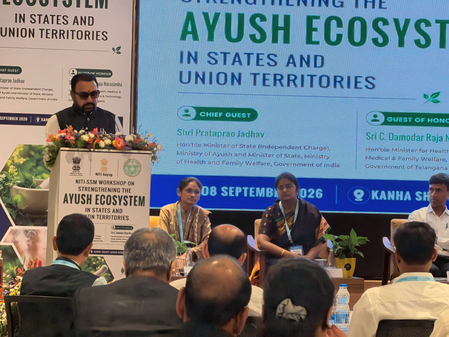
New Delhi, Sep 9 (IANS) Union Minister Prataprao Jadhav has emphasised the need for coordinated efforts by the Centre, states and Union Territories (UTs) to expand the reach and impact of Ayush systems, according to an official statement released on Wednesday.
He called for greater focus on quality, accessibility, and people-centric delivery of Ayush healthcare services to address the evolving health needs of the population.
Speaking at a national workshop organised by NITI Aayog in Hyderabad, Jadhav called upon states and UTs to strengthen the delivery of accessible, people-centric and quality Ayush services across the country.
It brought together senior officials from the Central Government, more than 30 states and Union Territories, and experts from various organisations to deliberate on strengthening the Ayush ecosystem through shared experiences, best practices and collaborative action.
The workshop provided a platform for States and UTs to share experiences, best practices and innovative approaches across key areas, including Ayush healthcare delivery, education, research, capacity building and integration with the broader healthcare system, the statement said.
Prof (Dr) M Srinivas, Member (Health), NITI Aayog highlighted the importance of technology-integrated and evidence-based approaches to integrative healthcare, with the potential to improve health outcomes in India and beyond.
Vaidya Rajesh Kotecha, Secretary, Ministry of Ayush, emphasised the pivotal role of States and UTs in strengthening the Ayush ecosystem and ensuring effective implementation and delivery of Ayush services at the grassroots level.
According to the statement, the deliberations reaffirmed the importance of Centre-State collaboration in building a stronger, accessible and people-centric Ayush ecosystem and in advancing the Government’s vision of holistic and integrated healthcare for all.
Incorporating standardised health terminologies will ensure Ayush interventions become an integral part of broader digital health ecosystems, matching modern health informatics standards, Kotecha said recently.
--IANS
na/