
NADCP contributing to more disease-secure livestock sector in India
New Delhi, Aug 22 (IANS) More than 39 crore livestock have been registered on the Bharat Pashudhan Portal, and 4,019 Mobile Veterinary Units have provided doorstep services to 136 lakh farmers and treated 276 lakh animals, a government factsheet said on Saturday.
The National Animal Disease Control Programme (NADCP) represents one of India's largest livestock health initiatives aimed at controlling and eradicating Foot and Mouth Disease (FMD) and Brucellosis through nationwide vaccination and surveillance.
The programme has administered 147.16 crore FMD vaccine doses, benefiting 8.04 crore farmers. Strengthened immunity has contributed to a significant reduction in disease incidence, with reported FMD outbreaks declining from 132 in 2019 to 40 by 2025 and Brucellosis outbreaks falling from 22 in 2019 to 15 in 2025, according to the factsheet.
“The NSP antibody prevalence has declined from 20.8 per cent in 2019 to 8.1 per cent in 2025, indicating reduced circulation of FMD through evidence-based surveillance and sustained disease control efforts.
“There has been no outbreak of FMD caused by Serotype Asia-1 for the last three years in the country. The programme is supported by strengthened veterinary infrastructure, digital livestock databases, research institutions, and One Health initiatives,” the official statement noted.
By integrating disease control, digital monitoring, and pandemic preparedness, the NADCP is contributing to a more disease-secure livestock sector in India.
The programme targets 100 per cent vaccination of all livestock against FMD twice a year and one time vaccination against Brucellosis in 4-8 months old female bovine calves in their lifetime.
As per the 20th Livestock Census 2019, the total livestock population is 535.78 million, including 302.79 million bovines.
The large livestock population underscores the importance of animal health and well-being.
However, infectious diseases such as Foot and Mouth Disease (FMD) and Brucellosis have historically caused substantial economic losses due to reduced milk yield, reproductive failure, and trade restrictions.
Moreover, the government has integrated disease control, veterinary services and animal healthcare under the Livestock Health and Disease Control Programme (LHDCP), enabling a more comprehensive and sustainable animal health framework.
Under the revised LHDCP, NADCP, the Livestock Health and Disease Control (LH&DC) component, and the Pashu Aushadhi initiative have been subsumed into a single umbrella scheme to facilitate integrated implementation and effective management of livestock health interventions.
The total budget outlay for the Livestock Health and Disease Control Programme (LHDCP) for the financial year 2026–27 is Rs 2,010 crore.
--IANS
na/
Hyderabad CGST busts illegal pan masala unit; Rs 160 crore tax evasion detected
New Delhi, Aug 22 (IANS) The Hyderabad CGST Zone has unearthed a clandestine pan masala and tobacco manufacturing unit in Telangana's Medchal-Malkajgiri district and detected duty and cess evasion of about Rs 160 crore and arrested a key accused, an official statement said on Saturday.
Acting on specific intelligence, CGST officers conducted a search at a tin-shed premises, leading to the discovery of an unregistered manufacturing facility engaged in the production and packing of pan masala and scented jarda.
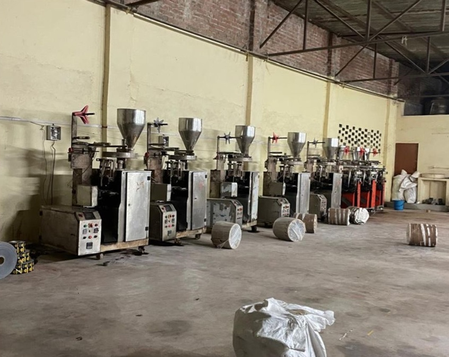
In addition, officials detected 40 undeclared Form-Fill-Seal (FFS) packing machines being used for packaging tobacco products during the operation.
Nearly 56 workers were found engaged in manufacturing activities at the premises.
The unit was producing and packing multiple branded as well as unbranded varieties of pan masala and scented jarda, the statement said.
The search resulted in the seizure of finished stock weighing about 5,500 kg and ready-to-dispatch consignments valued at approximately Rs 76 lakh.
Officials also seized around 2,015 kg of pan masala mixture, 810 kg of tobacco, packing materials, 40 FFS machines, two vehicles allegedly used for transporting illicit goods and other incriminating documents.
Moreover, preliminary investigations revealed that the unit was operating without registration and clearing finished goods without payment of applicable GST, Health Security and National Security (HSNS) Cess, and Central Excise duty.
Additionally, the person allegedly responsible for organising and managing the clandestine manufacturing and clearance operations was arrested on August 21. He was subsequently produced before the Special Judge for Economic Offences in Hyderabad, who remanded him to judicial custody for 14 days.
Based on physical stock verification, installed machinery, workforce strength and statements recorded during the investigation, officials estimated the total duty and cess evasion at around Rs 160 crore.
Earlier in August, the Directorate General of GST Intelligence (DGGI) uncovered a clandestine manufacturing operation involving pan masala, scented jarda and gutkha across six premises in Uttar Pradesh's Chitrakoot and Banda districts.
DGGI's Lucknow Zonal Unit officials detected 27 undeclared pouch-packing machines, including six machines used for scented jarda, nine for pan masala and 12 for dohara/desi gutkha, the ministry said, adding that mixing, areca nut crushing and drying machines were also found at the premises.
--IANS
ag/
Stakeholders explore measures to boost inclusivity across financial institutions
New Delhi, Aug 22 (IANS) In a bid to explore actionable measures to promote inclusivity across financial institutions, the Department of Financial Services (DFS), Ministry of Finance convened a two-day workshop, in association with Union Bank of India at its Staff College in Bengaluru.
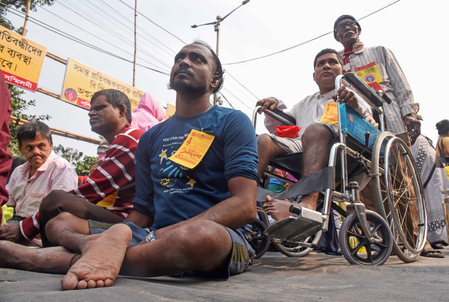
The discussions focused on measures to enhance the accessibility of financial services for Divyangjans (Persons with Disabilities) in Public Sector Banks (PSBs), Public Sector Insurance Companies (PSICs), Sectoral Regulators, and Public Financial Institutions (PFIs), according to an official statement.
A session, highlighting the ‘Sugamya Bharat’ initiative, was conducted on accessibility standards and compliance requirements.
This was followed by a roundtable discussion on legal provisions relating to accessibility, with participants deliberating on practical challenges, expectations versus ground realities, and sharing best practices for enhancing accessibility across institutions.
According to an official statement, eminent personalities working in the field of accessibility and several Divyangjan employees shared their perspectives and practical insights at the workshop.
The workshop also had an interactive question-and-answer session, allowing participants to deliberate on operational challenges and actionable measures to further strengthen institutional capacity to ensure inclusivity and accessibility across the financial services ecosystem.
The workshop reaffirmed the Government's commitment to promoting inclusivity and equitable access to financial services.
The workshop was attended by several Chief Technology Officers and senior HR functionaries from the Reserve Bank of India (RBI), Pension Fund Regulatory and Development Authority (PFRDA), Insurance Regulatory and Development Authority of India (IRDAI), all 12 Public Sector Banks, 7 Public Sector Insurance Companies, and 7 Public Sector Financial Institutions.
Meanwhile, Finance Minister Nirmala Sitharaman this week called upon public sector banks to undertake a focused, month-long campaign, commencing from October 2, for youth above 16 years, coordinated through the Indian Banks' Association (IBA), to strengthen engagement with young citizens entering the formal financial system.
—IANS
na/
India, ADB sign $230 million loan to modernise Chennai’s water supply, sanitation
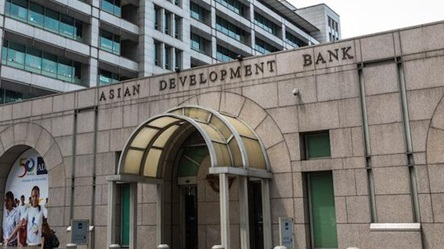
New Delhi, Aug 21 (IANS) In a bid to modernise and expand Chennai’s water supply and sanitation infrastructure, the government and the Asian Development Bank (ADB) on Friday signed a $230 million loan.
The project will construct over 170 km of water supply pipes and sewer pipes, upgrade seven water pumping stations and 38 sewer pumping stations and strengthen water utility assets and operations management through performance-based contracts, according to a Finance Ministry statement.
With this, Chennai will become the first Indian city to implement a comprehensive ring-main solution, a closed-loop plumbing system designed to maintain balanced water pressure and deliver water efficiently across service areas, improving reliability, equity, and resilience to natural hazards in its urban water supply system.
The official statement further said that ADB will help digitally transform water and sanitation services through real-time monitoring, data-driven decision-making, and improved customer responsiveness.
The project will introduce advanced technologies to eliminate hazardous manual sewer inspections, make blockage detection faster and safer, enhance worker safety, and prepare distribution networks in at least two Greater Chennai zones for future investments.
The Chennai Climate-Resilient Water Security and Sewerage Project will improve access to safe and reliable water supply and better sanitation services across Chennai.
It will also help strengthen the city’s resilience to climate change, improve public health and quality of life, and support a more efficient and financially sustainable urban water system, said the statement.
The latest investment by ADB builds on earlier projects in the city to expand access to safe and equitable water and waste management services, in line with the government’s flagship urban development interventions, such as the Atal Mission for Rejuvenation and Urban Transformation 2.0 and the Urban Challenge Fund.
The loan finalisation was done under the guidance of Baldeo Purushartha, Joint Secretary (ADB and Japan), Department of Economic Affairs (DEA), Ministry of Finance.
--IANS
na/
Gujarat emerges as wellness tourism hub, Ayurveda and naturopathy give impetus to health tourism
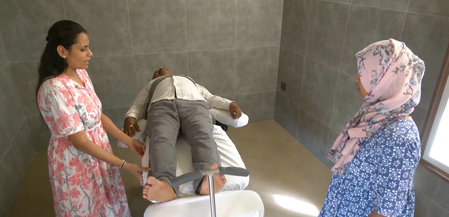
Gandhinagar, Aug 20 (IANS) Gujarat, being the leading state in Industries and manufacturing, is also fast emerging as a global hub for Ayurveda, Panchakarma, naturopathy, and wellness -- thereby brightening its prospects as the centre for health tourism.
Today, the state boasts of numerous natural wellness centres, where tourists from across the country and abroad are finding multiple ways of relaxation and rejuvenation.
Multiple wellness centres are mushrooming in the coastal regions, with congenial business environment and adequate assistance from the state government -- with many of them also disseminating the ideals of Mahatma Gandhi at the same time.
Navjivan Nature Cure Centre, spread over 40 hectares near Punadi Patiya village in Kutch region, is based on Mahatma Gandhi's philosophy of 'Nature Cure'.
Here, a wide range of ailments are treated using methods ranging from Ayurvedic and herbal therapies to Panchakarma, acupuncture, meditation, and yoga.
Gavani Shah of the Navjivan Nature Cure Centre said, "Patients receive Ayurvedic physiotherapy treatments tailored to their specific needs. A daily schedule is created for them—covering everything from what to eat and drink upon waking up to the specific yoga exercises and treatments required. Comprehensive care is provided, addressing everything from their health to their diet."
'Vedgarbh Vihar Wellness Resort and Eco Village', located in the Lakhvada area of Jamnagar spans an area of two acres and is dedicated to Ayurvedic education and research. Based on the 'Lok Ayurveda' model, this wellness centre promotes ancient concepts of preventive and promotive health that date back 5,000 years.
Pooja Der, a visitor from Jamnagar, shared her experience, "I faced complications during my pregnancy. I was also anxious about my baby's health, upbringing, and future well-being. I sought treatment at the Vedgarbh Vihar Wellness Centre. Today, my child is healthy, and I had a normal delivery."
Hitesh Jani, founder of Vedgarbha Vihar Wellness Resort, said, "I opened a wellness resort named Vedgarbha Vihar—meaning 'Rest and Regenerate' through Garbh Sanskar (prenatal care). Our aim is to ensure the unborn child becomes beautiful, radiant, intelligent, and possesses a high IQ."
"We can achieve this beforehand; in the past, too, we used to give birth to such exceptional children. We have revived a tradition that dates back thousands of years," he added.
In today's fast-paced world, as the people are constantly racing against team in all spheres, mental peace and emotional balance remains a far-fetched dream. It is this void that these wellness centres seek to fill and compensate for the cut-throat practices, with calm and serene environment.
The Gujarat government has been making conscious effort to develop and strengthen the health-tourism infrastructure by promoting Panchakarma, Ayurveda, and Naturopathy.
--IANS
mr/khz
Hygiene violations: Gujarat shuts 137 restaurants after five-year-old girl’s death
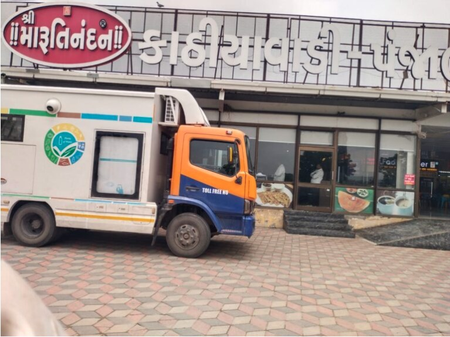
Gandhinagar, Aug 20 (IANS) Gujarat authorities have ordered the immediate closure of 137 restaurants after inspections found serious unhygienic and unhealthy conditions, in a statewide food-safety drive launched following the suspected food poisoning death of a five-year-old girl in Surat.
Health Minister Praful Pansheriya reviewed the enforcement drive with senior officials of the Food and Drug Regulatory Administration in Gandhinagar on Thursday.
Officials briefed him on surprise inspections carried out at 187 restaurants across the state.
Of the establishments inspected, 137 had serious cleanliness and hygiene deficiencies and were ordered to shut immediately in the interest of public health.
Authorities sealed six other restaurants for violations—two by the Rajkot Municipal Corporation, one in Rajkot district and three in Nadiad district.
Authorities also issued improvement notices to 40 restaurants, directing them to rectify deficiencies, while suspending the licences of four restaurants with immediate effect.
In Surat, the municipal corporation conducted a separate intensive inspection drive through joint teams of Food Safety Officers and sanitation staff across all zones.
The teams inspected 209 hotels and restaurants and 34 dhabas. The inspections covered kitchen cleanliness, stale food, medical fitness certificates and the display of information relating to dairy products.
Officials destroyed 548 kg of food deemed unfit for consumption and issued notices to 128 hotels and restaurants.
Administrative fines totalling Rs 4,43,800 were collected, while 43 hotels and restaurants with serious cleanliness and other deficiencies were shut down immediately.
The statewide action follows the death of a five-year-old girl in Surat's Varachha area after she and four family members fell ill following a meal ordered from a restaurant.
The incident occurred after the family ordered food from Sheetal Restaurant on the evening of August 15.
The following morning, all five members developed symptoms consistent with suspected food poisoning, including vomiting, according to the Surat Medical Health Officer.
The girl later lost consciousness and was taken to Sadvichar Hospital, where doctors declared her dead. Her father was subsequently discharged, while her mother and two other children remained under treatment, according to officials.
The Surat Municipal Corporation sealed the restaurant after finding lapses in cleanliness and hygiene and collected samples of ready-to-eat food and raw materials for testing.
The death prompted Pansheriya to direct authorities to conduct intensive checks of restaurants across Gujarat, focusing on food quality, cleanliness and hygiene standards.
The Food and Drug Regulatory Administration said it would continue strict legal action against establishments and individuals found compromising public health, engaging in food adulteration, or violating food-safety regulations.
--IANS
mys/dan
Gujarat govt suspends Surat medical college professor after resident doctor’s death
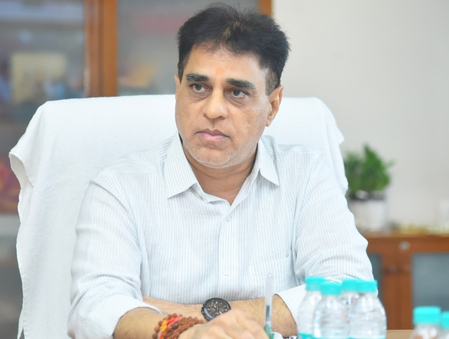
Gandhinagar, Aug 20 (IANS) The Gujarat government has suspended Dr Sumaiya Mulla, a Class-I professor and head of the Microbiology Department at Government Medical College in Surat, for 90 days over alleged negligence in preventing a ragging incident involving first-year postgraduate student Dr Harsh Pandya, who died by suicide earlier this month.
The Health and Family Welfare Department ordered the suspension following directions from Health Minister Praful Pansheriya.
The government said it took action for “serious negligence” in preventing the incident and discharging disciplinary responsibilities.
Dr Pandya, a first-year resident doctor in the Microbiology Department, was found dead in his postgraduate hostel room on August 9.
An inquiry by the college’s anti-ragging committee subsequently found that first-year residents, including Pandya, had been subjected to verbal abuse and humiliation by senior resident doctors.
The committee found no evidence of physical abuse. Four second-year resident doctors — Dr Nirali Vasave, Dr Anuj Maheshwari, Dr Dikshita Ghevariya and Dr Hina Bhut — were suspended for six months following the inquiry.
They were also directed to vacate the hostel and barred from academic activities during their suspension. Police subsequently registered a case against the four in connection with the alleged ragging.
According to the police complaint, the four seniors allegedly subjected 10 first-year residents in the Microbiology Department to humiliation and verbal abuse and made complaints to faculty members alleging that the juniors were not performing their duties.
On August 5, the seniors allegedly summoned the first-year residents to the department’s Serology Laboratory through WhatsApp messages, where they were allegedly kept for around two hours and subjected to mental harassment and insulting remarks.
The college initiated an inquiry after complaints from nine first-year resident doctors and Pandya’s father. The anti-ragging committee recorded statements from resident doctors, faculty members and other staff during an overnight inquiry.
The committee initially issued show-cause notices to four faculty members, including Dr Mulla, over their roles and responsibilities in relation to the incident.
The latest action places responsibility on Dr Mulla for failing to prevent the ragging incident and for failing to properly discharge her disciplinary duties.
During the suspension, Dr Mulla’s headquarters will be Government Medical College, Vadodara.
She will not be permitted to leave Vadodara without written permission from the competent controlling authority and will not be allowed to undertake private employment or business while under suspension.
The government said violating these conditions could result in stoppage of her subsistence allowance and further disciplinary action.
Health Minister Pansheriya said the state would maintain a “zero tolerance” policy towards ragging and mental harassment in educational and medical institutions.
“Ragging or mental harassment will not be tolerated in any educational or medical institution in Gujarat,” he said, adding that strict legal and disciplinary action would be taken against anyone who endangered students’ safety or showed serious negligence in performing their duties, irrespective of their position.
“No matter how high the position, an officer who plays with the safety of students will not be spared,” the minister said.
The government has also directed medical colleges to ensure students have a safe, disciplined, and fear-free environment on campus.
--IANS
mys/dan
Manipal Health Q1 net profit falls 7.7 pc to Rs 231 crore

Mumbai, Aug 20 (IANS) Manipal Health Enterprises Limited on Thursday reported a 7.7 per cent year-on-year decline in consolidated net profit to Rs 231 crore for the first quarter of FY27, compared with Rs 250 crore in the corresponding quarter last financial year (Q1 FY26).
Despite the decline in profit, the hospital chain recorded strong revenue growth during the quarter. Revenue rose 38.1 per cent year-on-year to Rs 3,091 crore from Rs 2,238 crore in Q1 FY26.
EBITDA increased 25.6 per cent to Rs 736.5 crore during the quarter, compared with Rs 586.5 crore a year ago. However, the EBITDA margin moderated to 23.8 per cent from 26.2 per cent in the year-ago quarter.
Manipal Health said patient-led growth and continued momentum in specialty care supported its performance across the network during the first quarter of FY27.
Inpatient and outpatient volumes grew 38.8 per cent and 26 per cent, respectively, during the quarter. Occupancy improved by 290 basis points year-on-year to 65 per cent as the network continued to absorb recently added capacity.
Average Revenue Per Occupied Bed (ARPOB), excluding Sahyadri, stood at Rs 77,200 per day, registering an 8.7 per cent year-on-year increase and reflecting improved revenue intensity across the existing network.
Sahyadri Hospitals continued to contribute to the overall network performance, with integration progressing across clinical and operational functions. The hospital business recorded 12.8 per cent revenue growth and 18.7 per cent EBITDA growth year-on-year, supported by higher ARPOB and improved operating efficiency.
The company said the integration of Sahyadri is expected to unlock further benefits through greater clinical integration, shared capabilities and operating scale.
Gross inpatient revenue from CONGO-R specialties grew 45 per cent year-on-year during the quarter, with the specialty mix increasing to 65.4 per cent. Oncology and Orthopedics remained key growth drivers, with inpatient revenue rising 62 per cent and 49 per cent, respectively, supported by broad-based momentum across the CONGO-R portfolio.
Meanwhile, Manipal Health has proposed the re-appointment of Dr Hebri Sudarshan Ballal as Director, who is liable to retire by rotation, at the company's 16th Annual General Meeting, subject to approval from the members.
The company has also proposed the re-appointment of Puneet Bhatia as Director, who is liable to retire by rotation, subject to members' approval at the 16th Annual General Meeting.
--IANS
pk
Govt opens national Mission Karmayogi conference to strengthen capacity building
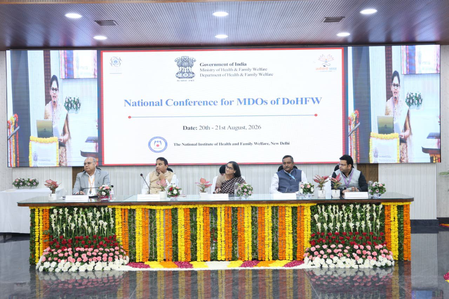
New Delhi, Aug 20 (IANS) The Union Ministry of Health and Family Welfare (MoHFW) on Thursday commenced a two‑day National Conference on Mission Karmayogi for Mission Karmayogi Development Officers (MDOs) to strengthen institutional capacity‑building mechanisms and their effectiveness across the health sector.
The conference aims to equip MDOs to plan, implement and sustain capacity-building initiatives under Mission Karmayogi, the MoHFW said.
The event provided a platform for institutional collaboration, peer learning and knowledge exchange among MDOs and stakeholders engaged in capacity building.
The conference held in collaboration with the National Institute of Health and Family Welfare (NIHFW), Capacity Building Commission (CBC) and Karmayogi Bharat (KB) focused its first day on aligning learning interventions with organisational needs, promoting competency‑based professional development and sharing best practices in implementation.
Rakesh Kumar, Director (Training), Ministry of Health and Family Welfare, highlighted that Mission Karmayogi represents a significant shift from the traditional rule-based approach towards a role-based, competency-driven and capacity-building-oriented approach to civil service development.
He emphasised that MDOs have a critical role in translating this vision into measurable institutional outcomes by identifying capacity-building requirements, facilitating appropriate learning interventions and strengthening a culture of continuous professional development within their respective organisations.
Highlighting the progress made under the Mission, Rakesh Kumar said that 21,927 course enrolments and 17,660 course completions had been recorded, reflecting the growing adoption of structured and technology-enabled learning across the Ministry.
He emphasised that the focus of capacity building should extend beyond completion of courses to enhancing competencies, improving workplace performance and creating tangible improvements in institutional functioning and public service delivery.
He urged MDOs to play an active role in ensuring that the learning acquired through Mission Karmayogi is effectively translated into improved performance and outcomes within the health system.
Rakesh Verma, Chief Operating Officer, Karmayogi Bharat, highlighted the growth of the iGOT Karmayogi platform into the world's largest capacity-building platform, providing a technology-driven ecosystem for continuous learning and professional development of government officials.
Verma also highlighted the growing international interest in the platform, noting that India has signed an MoU with Mauritius and is engaging with several Latin American and SAARC countries to share its experience and explore collaboration in capacity building.
—IANS
aar/ag
Complete probe into unauthorised sale of blood, plasma from blood banks within a week, orders Calcutta HC
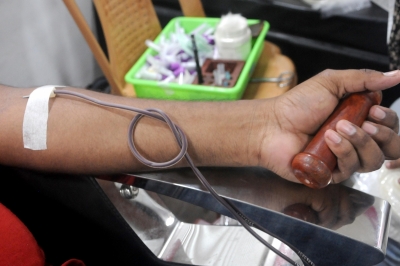
Kolkata, Aug 19 (IANS) The Calcutta High Court on Wednesday directed the West Bengal Health Department to complete, within a week, its ongoing probe against 11 private blood banks in the state accused of severe irregularities, including illegally selling blood and plasma to other states.
Earlier this month, the state Health Department had announced a ban on these 11 private banks from conducting blood donation camps anywhere in the state till further orders.
One of these 11 private banks approached the High Court challenging the order, and the matter came up for hearing before the single-judge bench of Justice Krishna Rao on Wednesday.
The single-judge bench did not interfere in the ongoing probe in the matter but set a timeline for the Health Department for the completion.
The Health Department launched its probe based on specific complaints against these 11 blood banks for collecting blood beyond permissible limits through blood donation camps and the unauthorised sale of blood and plasma collected from West Bengal in other states.
Several irregularities came to the notice of the Health Department officials in the probe, and subsequently, the restrictions were imposed on these blood banks, under the guidelines issued by the Blood Transfusion Council of the Health Department.
Later, on the basis of discussions and for practical reasons, the ban on the collection of blood by these blood banks was lifted, and the blood banks concerned were given some time to rectify past irregularities. However, the Health Department decided to continue with the probe in the matter.
--IANS
src/vd