
Iran‑linked operators used Claude AI to target US naval bases: Anthropic

New Delhi, Sep 11 (IANS) US-based AI company Anthropic said it had identified and disrupted an Iran‑linked account that used its Claude artificial intelligence model to collect and analyse publicly available information on US naval assets to develop targeting recommendations against them.
Iran-linked operators used Claude AI to compile "targeting handbooks" and identify and track naval positions through open-source information, the AI company said.
The report said the account used a Python pipeline built with Claude’s assistance to track naval positions from open‑source data.
The material contained names of US personnel gathered from captions on public military photographs, ship and aircraft transponder identifiers, commercial satellite-imagery query scripts and lists of public websites exposing US naval movements.
Anthropic said the account also used Claude to research potential vulnerabilities in shipboard systems, including maritime satellite terminals, Cisco communications equipment and industrial control products.
Claude was used for cataloguing known CVEs in maritime VSAT terminals, the AI company said.
The report said it is unclear whether intelligence generated with Claude had been used in any specific Iranian military operation.
The disclosure from the AI company came after Iranian forces recently targeted US naval assets, including guided‑missile destroyers and facilities in the Gulf region, incidents that Washington said caused damage but no US casualties.
Iran also targeted the headquarters of the US Navy's Fifth Fleet, Naval Support Activity Bahrain, in which US claims the warships evaded the attacks without casualties, but the strikes damaged the Bahrain facility.
The Anthropic report also mentioned that an account linked to the Islamic Culture and Communications Organization uploaded detailed organisational blueprints for erstwhile Iranian Supreme Leader Ayatollah Ali Khamenei's funeral and succession plans onto Claude.
Khamenei was buried in Mashhad on July 9, 2026, after a multi-day State funeral procession following his death in a US-Israeli strike on February 28, 2026.
—IANS
aar/pk
BRICS forum opens new opportunities for Indian businesses, strengthens trade ties: Experts

New Delhi, Sep 11 (IANS) Efforts within BRICS to ease trade barriers and strengthen business-to-business ties could open new markets and create fresh opportunities for Indian companies, industry and business representatives said on Friday as the grouping's business forum focused on boosting intra-BRICS commerce.
Speaking on the sidelines of the BRICS Business Forum, Evgeniy Zakharov, Managing Director of Kazakhstan-based Eurasia Motors said the forum was helping businesses establish direct connections and identify potential partners.
"Bilaterally, trade is not so big at the moment, but I think it will improve," Zakharov told IANS. He further noted that the forum was helping companies communicate directly and reduce dependence on intermediaries.
He said he had already met several potential partners at the forum and expected the interactions to lead to future cooperation.
"It has just started for me...This is the first time I participate in the forum, but I think it's quite great because many countries, lots of opportunities," Zakharov said.
Meanwhile, Dereje Walelign Mera, Chairman of the Ethiopian Solar Energy Development Association said the BRICS Business Council was working through sector-specific groups to identify and address barriers to doing business among member countries.
He said the working groups examine issues including tariffs and other hurdles that make cross-border business difficult, with recommendations aimed at removing such barriers.
"If all those kind of hurdles are removed, BRICS+ countries can do businesses very easily within each other," Dereje Walelign Mera told IANS.
He said easier trade and business flows could make BRICS a major platform for South-South cooperation.
The BRICS Business Forum brings together business representatives and policymakers to discuss trade, investment, finance, technology and other areas of economic cooperation.
For India, stronger intra-BRICS commercial ties could provide companies with greater access to new markets while helping diversify trade relationships and supply chains.
The forum is also expected to feed business recommendations into the broader BRICS agenda, including initiatives on intra-BRICS trade, investment, digital economy, MSMEs and value-chain integration.
--IANS
ag/
India’s electronics exports to BRICS jump nearly 50 pc, momentum to surge after 18th Summit: Industry

New Delhi, Sep 11 (IANS) India’s electronics exports to BRICS member nations rose 49.27 per cent in 2025–26, outpacing the country’s overall export growth of 26.53 per cent, an industry chamber said on Friday.
The statement from Electronics and Computer Software Export Promotion Council (ESC) said the surge strengthens the case for turning BRICS' 18th Summit proposals on digital infrastructure and trade facilitation into concrete gains for exporters.
ESC noted that the United Arab Emirates and China were the largest destinations within BRICS, together accounting for 88.50 per cent of India’s electronics exports to the grouping. Among the product categories, Telecom Equipment had the largest share of 74.60 per cent, the statement added.
The industry chamber highlighted that BRICS accounted for around 19.61 per cent of India’s total electronic exports globally and urged that deeper cooperation could translate into more demand for network equipment, device certification and the software that runs on shared digital infrastructure.
Gurmeet Singh, CEO & ED, ESC said several items on this year's agenda, under India's BRICS Chairship, could have a bearing on this trajectory, though the specific outcomes will depend on how these deliberations progress.
"Discussions around a BRICS Digital Public Infrastructure Repository, and a bilateral India-Brazil ICT memorandum covering 5G/6G, Open RAN and satellite connectivity signed in Pune last month, indicate the direction BRICS digital cooperation could take," Singh said.
The Council also pointed to the proposed BRICS Global Value Chains Action Plan 2026-2030 and the proposed MSME Cooperation Portal as mechanisms that could, if taken forward, support Indian electronics exporters, particularly smaller manufacturers, in plugging into cross-border supply chains.
ESC said the proposed BRICS invoice discounting mechanism, meant to address trade finance gaps for MSMEs, could be especially useful for exporters looking to grow in markets such as Saudi Arabia, Russia, Indonesia and South Africa.
The BRICS Global Value Chains Action Plan 2026–2030 and the proposed MSME Cooperation Portal can open new avenues for Indian electronics exporters, particularly MSMEs, to participate in emerging cross-border value chains, said Rajesh Revankar, Chairman, ESC.
—IANS
aar/ag
Stronger engagement among BRICS economies can unlock new opportunities: Assocham

New Delhi, Sep 11 (IANS) Assocham President Nirmal Kumar Minda said on Friday that India’s BRICS Chairship comes at a crucial juncture for the global economy amid geopolitical headwinds.
BRICS has emerged as a powerful platform for economic cooperation.
“The next phase should focus on deepening trade and investment through greater trust, transparency and business-to-business partnerships,” he said in a statement.
Stronger engagement among BRICS economies can unlock new opportunities, strengthen resilience, accelerate economic diversification and contribute significantly to shaping a more balanced and inclusive new world economic order, Minda noted.
Leaders from across the world are gathering in New Delhi over the next few days for the BRICS Summit 2026. As BRICS Chair 2026, India will host the Summit on September 12-13, bringing together leaders of BRICS Member and Partner Countries as well as Outreach Invitees.
During the summit, leaders are expected to exchange views on strengthening intra-BRICS cooperation on common priorities and share perspectives on global and regional matters of mutual importance.
The venue for the summit, Bharat Mandapam, was being readied to host the high-profile gathering.
BRICS, which began as a boardroom acronym for four emerging markets, has grown into a geopolitical bloc spanning four continents as successive waves of membership pulled in oil states, African economies and Southeast Asian partners.
At the centre of this expanding architecture sits India this year, chairing the grouping for a fourth time since its inception.
BRICS has emerged as a key platform for coordinating economic policy among major emerging economies. It serves as the principal forum where these nations shape a common position on global governance. Through sustained dialogue, it has become a channel for advancing the interests of the Global South within multilateral institutions.
India’s Chairship is guided by the theme “Building for Resilience, Innovation, Cooperation and Sustainability.” The theme reflects India’s focus on strengthening existing achievements and institutional effectiveness.
--IANS
na/
India Inc aligns ‘Viksit Bharat’ vision with business strategies, disclosures: Report

New Delhi, Sep 11 (IANS) India Inc is increasingly aligning the ‘Viksit Bharat 2047’ vision with their business strategies and disclosures, with aerospace and defence, automobiles and banking emerging as the strongest sectors to meet the national development agenda, according to a report released on Friday.
The State Bank of India (SBI) Research report said its NLP-based analysis of 66 annual reports of 33 companies shows that this ambition is also increasingly embedded in corporate disclosures, with governance and digital transformation emerging as prominent cross-cutting themes.
Its in-house ‘Viksit Bharat Disclosure Index’ ranked aerospace and defence highest, followed by automobiles and banking, indicating these sectors are most actively linking corporate priorities with the goal of building a developed, self-reliant and globally competitive India by 2047.
The sectoral analysis further revealed differentiated pathways towards development.
IT is particularly oriented towards Digital Transformation, Energy towards Innovation, Power towards Sustainability, while Banking combines Governance, Digital Transformation and Human Capital, said the report.
The ‘Sapta Dhara’ mapping reinforces this multidimensionality, with Technology and Innovation, Manufacturing, Connectivity and Infrastructure and Green and Blue Economy emerging as the strongest areas of corporate–national convergence, while Defence, Agriculture & Food Production and Soft Power retain more domain-specific relevance.
The future-oriented disclosures add a forward-looking dimension, signalling investment, expansion, technological upgrading, capacity creation and strategic transformation rather than merely reflecting current performance, with Banking, Automobiles and Aerospace & Defence showing the strongest future-oriented language, followed by Metals and Food Processing, said the report.
It further stated that corporates must move beyond broad thematic references and embed the ‘Viksit Bharat’ priorities into their business strategies, capital expenditure plans, technology adoption, supply chains, workforce development and measurable sustainability targets.
“Sectors such as Power and Electrical Equipment require stronger alignment. Greater emphasis is needed on renewable-energy integration, grid modernisation, energy storage, smart equipment, indigenous manufacturing, research and development, and workforce skilling,” it noted.
Banking, IT, automobiles, pharmaceuticals and other sectors must act as key enablers by providing finance, digital solutions, clean technologies, innovation and resilient supply chains to sectors where alignment remains relatively weak.
“Companies should establish time-bound targets, outcome-based indicators and transparent disclosures to demonstrate how their investments contribute to national development priorities,” said the SBI report.
—IANS
ag/
Google must take responsibility for any legal violations over data leak: S. Korea

Seoul, Sep 11 (IANS) Gender Equality Minister Won Min-kyong said on Friday that Google must take responsibility for any legal violations over an alleged leak of personal data of digital sex crime victims.
The personal information was earlier exposed from a foreign research project website collaborating with Google and deleted only after the government requested its removal.
The information contained personal details of victims who had requested the removal of illegally filmed videos, reports Yonhap news agency.
"A platform with significant influence globally, like Google, has an even heavier responsibility to protect and safely deal with sensitive information of victims," Won said during a press briefing. "If any legal violations are found, Google must take legal responsibility."
"This issue should not be passed over lightly as a simple system error or mistake. Google must take the gravity of the issue seriously and take a responsible stance in front of the victims and the public."
Won said her ministry is working with the Korea Media and Communications Commission to check for any legal violations, including to the sexual violence punishment law.
Google has apologised over the leak, saying it asked the operator to delete the information as soon as it was brought to their attention.
The company has also pledged not to share any deletion requests from South Korea with outside parties as part of follow-up measures, according to Won.
Meanwhile, South Korea plans to review allowing investigators to lawfully hack into websites distributing illegally filmed sexual material in a push to clamp down on digital sex crimes.
Under the proposed move, investigators will be able to directly access such websites to take down sexually exploitative material to minimise damage to victims and collect evidence, according to an inter-agency response plan.
The joint plan between the gender equality ministry, the Korea Media and Communications Commission and the National Police Agency comes in response to the growing number of such victims in the country in recent years.
Police investigated 17,716 digital sex crime cases between 2021 and 2025, with the number of victims who received support from authorities reaching 10,637 last year, sharply up from 2,087 in 2019.
Authorities said they would push to revise legislation to allow investigators such powers, noting that similar systems utilising warrants have already been introduced in Australia and Britain.
The joint plan also outlines introducing legislation to criminalise opening websites with sexually exploitative illegal material and creating a special investigation team to delete and track them down.
It also calls for banning advertisements on such websites and notifying the U.S. Fair Trade Commission of overseas-based websites that fail to take down sexually exploitative material involving Korean victims.
—IANS
na/
Minister Manohar Lal to attend ‘G20 Energy Ministerial’ in US

New Delhi, Sep 11 (IANS) Union Minister of Power and Housing & Urban Affairs Manohar Lal will participate in the G20 Energy Ministerial Meeting in Houston, United States, from September 14-16, an official statement said on Friday.
The minister will participate in sessions covering three key pillars -- energy security and affordable baseload, permitting and regulatory efficiency and critical minerals & resilient supply chains, the Ministry of Power said in a statement.
The meeting -- hosted under the US G20 Presidency -- will bring together energy ministers and senior representatives of G20 member countries to discuss global energy security, affordability, infrastructure development and resilient energy supply chains, it added.
Moreover, discussions will focus on strengthening energy security and affordability, facilitating timely development of energy infrastructure through efficient regulatory frameworks, and building secure, resilient and diversified supply chains for critical minerals.
The minister will also highlight India's approach to building a resilient and future-ready energy system to meet its rapidly growing energy needs, the ministry said.
He will also share India's experience in improving permitting and regulatory efficiency through institutional and policy reforms and highlight the country's focus on diversification, circularity and strengthening the entire critical-minerals value chain.
India's participation will reaffirm its commitment to international cooperation and collective action in addressing emerging global energy challenges, the ministry said.
In addition, India will advocate pragmatic, inclusive and technology-neutral approaches that take into account diverse national circumstances and seek to advance secure, affordable, reliable, resilient and sustainable energy systems, it added.
Earlier in September, the minister stated that India may overtake the United States in terms of metro rail network length in the upcoming years.
After inauguration of the extended metro rail service in Indore, he said India's metro network had reached 1,170 km across 26 cities compared with 1,386 km in the US.
--IANS
ag/
Sensex, Nifty open lower tracking global cues, crude oil prices

Mumbai, Sep 11 (IANS) Domestic equity benchmarks opened sharply lower on Friday tracking weak global markets as escalating Middle East tensions pushed oil prices higher and raised concerns over inflation and interest rates.
Sensex started nearly 600 points or 0.79 per cent lower at 74,309.16, while Nifty opened 207.50 points or 0.88 per cent down at 23,270.30.
Among sectors, Nifty Metal fell more than 3 per cent, making it the biggest decliner in early deals, followed by Nifty Realty which lost over 2 per cent.
Consumer durables, financial services, banking, auto and cement sector indices fell up to 1 per cent.
However, Nifty IT was the only sectoral index in positive territory and was trading 0.10 per cent up.
"Headwinds for the market are getting stronger with the escalation in the Middle East conflict. Brent crude has shot up to around $108," according to the market experts.
If elevated crude prices sustain or rise further, the impact on India's economic growth and corporate earnings could be significant, they said and added that rising US bond yields were another major headwind.
The US 10-year Treasury yield was around 4.96 per cent, approaching the 5 per cent level that is widely viewed as a potential inflection point for global equities, according to them.
Analysts said the Indian IPO market was currently attracting significant investor interest with heavy oversubscription and listing gains drawing funds away from the secondary market.
On the technical front, analysts said the Nifty could find the next downside targets at 23,260-23,000, while yesterday's long lower wick suggested that a base formation could be underway, despite weak recovery attempts. The upside marker remains at 23,520.
Investors should remain cautious given the challenging global and domestic environment, the experts said.
Additionally, Asian markets traded lower after rising oil prices sparked a Wall Street selloff. US stocks closed lower in the last session as stronger producer inflation data and rising oil prices fuelled concerns over another Fed rate hike.
--IANS
ag/
Technology to be key driver in expanding pension coverage: PFRDA chief

Mumbai, Sep 10 (IANS) Technology will play a central role in expanding pension coverage in India, particularly among workers in the unorganised sector who do not have regular salaried employment, PFRDA Chairman Shivsubramanyam Raman said on Thursday.
Speaking on the sidelines of the Global Fintech Fest (GFF) 2026 in Mumbai, Raman said the Pension Fund Regulatory and Development Authority (PFRDA) is developing simpler digital mechanisms to bring millions of workers into the formal pension system.
He said the regulator has developed the NPS Instant platform, which is designed around a UPI-based digital framework. The platform will allow users to open a pension account through a few clicks on their mobile phones and subsequently make contributions directly through UPI.
Raman said the initiative follows Prime Minister Narendra Modi's emphasis on making pension access as simple and convenient as digital payments through UPI.
The e-Shram database maintained by the Ministry of Labour is expected to be an important enabler in this effort, he said. The database contains verified information on a large number of workers, much of which can be used for opening pension accounts.
"The idea is to use technology to make the process simple enough for workers to join the pension system digitally," Raman said, adding that PFRDA is working on multilingual and user-friendly solutions to ensure wider adoption across the country.
On guaranteed-return pension products, Raman said developing such products is part of PFRDA's statutory mandate. While the government has incorporated a guarantee mechanism under the Unified Pension Scheme (UPS) for government employees, creating a similar institutional framework for the non-government sector remains a major challenge.
An expert committee is examining the issue and evaluating various options, he said. PFRDA is also working on several products that could eventually form the foundation for guaranteed-return pension schemes.
Raman also announced that PFRDA has developed an innovative product called 'Swastya', for which the proof of concept has been successfully completed.
Final guidelines for the product are expected shortly, with a formal launch likely within the next 30 days, he said.
Meanwhile, SEBI Executive Director Maninder Cheema told IANS that India's bond market is gradually gaining traction among retail investors, with Online Bond Platform Providers (OBPPs) playing an important role in widening access.
--IANS
pk
Samudra Manthan Mission can open new frontiers in energy exploration: Oil India CMD
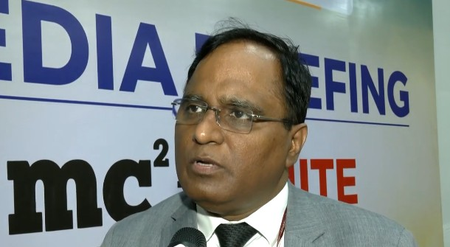
Guwahati, Sep 10 (IANS) State-owned Oil India Limited (OIL) is stepping up its focus on research, innovation and startups to unlock new opportunities across the energy sector, with its collaboration with the Indian Institute of Technology (IIT) Guwahati emerging as an important part of the initiative.
OIL Chairman and Managing Director Dr Ranjit Rath said the company is working with IIT Guwahati on several innovation-driven projects and startups aimed at developing technologies with potential applications in the energy sector.
One of the projects being pursued with the institute is of particular importance to OIL and involves the development of enzymes that could improve the productivity and production efficiency of ethanol and other bio-based products derived from bamboo. The initiative could help advance the use of locally available biomass as a feedstock for alternative fuels and other value-added products.
Rath also highlighted programmes such as the MC2 + Ignite Challenge, which are designed to strengthen the startup ecosystem and encourage the development of new technologies. Such initiatives, he said, can provide a platform for innovation while deepening collaboration between industry and academic institutions.
The OIL chief also described Prime Minister Narendra Modi's recently announced 'Samudra Manthan Mission' as a significant initiative for India's energy sector, particularly in expanding exploration for oil and gas in deepwater and ultra-deepwater areas.
The mission is aimed at opening up large areas of India's offshore territory for exploration. Around one million square kilometres of Indian maritime territory is being made available for exploration, covering strategically important areas along the country's eastern and western coasts, its exclusive economic zone and the Andaman Basin.
According to Rath, the government has drawn up a comprehensive plan involving an allocation of around $8 billion to support exploration in deep-sea areas. Of this, approximately $2.4 billion is earmarked for data acquisition.
High-quality geological and geophysical data is critical for assessing the potential of deepwater areas and identifying prospective oil and gas resources. The proposed investment in data acquisition is therefore expected to provide a stronger foundation for future exploration campaigns and help improve understanding of India's offshore hydrocarbon potential.
--IANS
pk