
India should create millions of small businesses to “AI‑proof” jobs: Nandan Nilekani
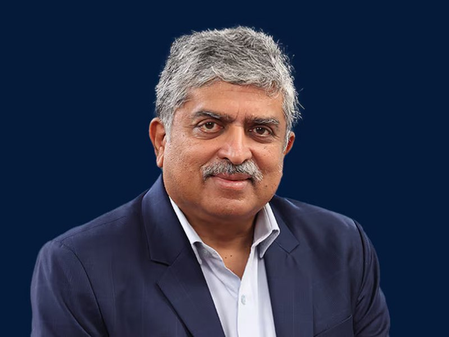
New Delhi, Sep 10 (IANS) Infosys Chairman Nandan Nilekani said on Thursday at the Global Fintech Fest (GFF) that India’s best defence against job disruption from artificial intelligence may not be creating more large firms but enabling millions of small businesses to grow.
Nilekani said when large corporations use AI to improve efficiency and reduce headcount, a broader base of small enterprises would spread employment and make the economy more resilient to automation.
“If you want to create an economy that’s generating jobs, it’s not necessarily done by having a few big companies. It’s going to come from having millions of small companies,” he said.
He said jobs created by smaller businesses could be “safer” and help “AI-proof an economy”.
Further, Nilekani also mentioned potential for AI and digital infrastructure to give small businesses capabilities that were earlier largely associated with bigger companies.
“You can have a small business with a 24/7 agent, the best analysis on the Internet, a token that talks to itself and a marketplace, and sell it or give a loan against it,” he said.
He forecasted that technology could ease the process for smaller enterprises to participate in markets on an equal footing with larger businesses. “If you want businesses to have access, you should be able to make it easy for a small business to participate as if it's a large business,” Nilekani said.
Nilekani also stressed that digital systems should be designed on an inclusive basis to serve a broad section of the population. “We must build systems that can reach everybody. It's not for a few that we do this,” he said.
On infrastructure necessary to build global markets for tokenised assets with enough demand and liquidity, he said that they should be placed “on a public chain.”
“You have to think through the ecosystem design of the organisation of regulated assets on how it's used and to get liquidity,” Nilekani said.
—IANS
aar/pk
RBI recognises Unified Fintech Forum as 2nd self-regulatory organisation for fintech sector
Mumbai, Sep 10 (IANS) The Reserve Bank of India (RBI) on Thursday recognised the Unified Fintech Forum (UFF) as a self-regulatory organisation for the fintech sector (SRO-FT), making it the second industry body to receive such approval from the central bank.
The RBI said that it had examined UFF’s application against the eligibility and other requirements prescribed under its framework for recognising self-regulatory organisations in the fintech sector. Following the assessment, the central bank decided to grant the forum SRO-FT status.
The recognition comes after the RBI established its framework for recognising fintech self-regulatory organisations in May 2024. The Fintech Association for Consumer Empowerment (FACE) became the first SRO-FT recognised by the RBI in August 2024.
Self-regulatory organisations are expected to play a key role in strengthening governance within the fintech ecosystem by establishing and enforcing industry standards, encouraging ethical business practices and promoting market integrity. They are also responsible for facilitating dispute resolution while improving transparency and accountability among their members.
UFF, which was previously known as the Digital Lenders Association of India (DLAI), had 118 members as of the end of June, according to information on its website. Its membership spans a wide range of fintech entities, including non-banking finance companies, loan service providers, technology service providers, credit bureaus and account aggregators.
The forum is headed by Manish Lunia, co-founder of FlexiLoans, as its president, while Upasana Taku, co-founder and executive director of MobiKwik, serves as vice president of UFF’s executive committee. Other members of the executive committee include Shachindra Nath of UGRO Capital, Harshvardhan Lunia of Lendingkart, Sujith Narayanan Kutty of Fi Money and Nalin Negi of BharatPe.
The RBI’s move is part of its broader approach of encouraging industry-led mechanisms to support responsible growth and strengthen governance in the rapidly evolving fintech sector. The recognition of UFF is expected to further institutionalise self-regulation within the industry while providing a framework for fintech companies to align their practices with evolving regulatory and consumer protection expectations.
--IANS
pk
India’s telecom revenue to grow 12-14 pc in FY27 as ARPU Rises 10 pc

New Delhi, Sep 10 (IANS) A tariff hike is likely in India’s telecom sector, alongside continued premiumisation, to support 10 per cent ARPU growth and 12-14 per cent revenue growth in FY27, even as subscriber additions remain moderate, a report said on Thursday.
The report from CareEdge Ratings forecasted EBITDA margins to improve from 55 per cent in FY26 to 57 per cent in FY27, and capex intensity to moderate to 19 per cent from 22 per cent.
“India's telecom market continues to exhibit one of the widest gaps between data consumption and monetisation. Despite having among the world’s highest mobile data usage levels, mobile ARPU remains at only $2.5, highlighting significant headroom for further tariff rationalisation,” the report said.
The firm said that nearly two years have elapsed since the last industry-wide tariff hike, and hence another calibrated increase appears likely in FY27.
The completion of the peak 5G investment cycle should drive a structural improvement in the sector’s financial profile.
Collectively, these factors should support stronger free cash flow generation and deleveraging, with net debt-to-EBITDA declining from 3-fold in FY26 to 2.3-fold in FY27.
“India's telecom sector has entered a fundamentally different growth phase, with earnings increasingly driven by ARPU-led monetisation of the existing subscriber base rather than subscriber additions,” said Maulesh Desai, Director, CareEdge Ratings.
The continued rise in ARPU, despite no tariff hike since July 2024, highlighted the strength of ongoing premiumisation, 2G-to-4G/5G migration, rising smartphone penetration, and improving subscriber quality.
“India's monthly data consumption of 26.7 GB per user is among the highest globally, while its ARPU of $2.5 remains significantly lower than that of other major telecom markets. This combination underscores significant headroom for further tariff rationalisation, making another calibrated tariff hike in FY27 a key catalyst for the next phase of growth,” the report noted.
As India's wireless market approaches maturity, telecom subscriber growth is moderating to 3-4 per cent per annum, reducing the contribution of subscriber additions to industry growth and shifting the focus towards ARPU-led monetisation of the existing subscriber base, the firm said.
--IANS
pk
India’s growth momentum resilient, constructive on equities: Report

New Delhi, Sep 10 (IANS) India’s growth momentum remains resilient, supported by a strong Q1FY27 GDP print, returning foreign portfolio investor flows, among other positive factors, a report said on Thursday, going overweight on Banks, Capital Goods and Defence, Diversified Financials, Metals, Healthcare, Telecom and Ports.
The report from PL Wealth also cited robust domestic liquidity and a healthy capital expenditure cycle as positive macro factors for India.
The firm maintained a selective approach across sectors and market capitalisations, while remaining underweight on IT Services, Auto, Consumer and Oil & Gas.
The foreign portfolio investors turned net buyers for two consecutive months and domestic institutional investors continued to supply strong liquidity, the report said, while remaining selectively constructive on Indian equities for a short term (0-6 months).
Valuations remain reasonable relative to historical averages, limiting meaningful downside. The report favoured staggered deployment into quality large-cap and diversified equity strategies, with a preference for stock-picking over passive index exposure.
The firm favoured large private banks, capital goods and consumer durables, alongside selective exposure to quality small-cap, flexi-cap and multi-cap strategies over medium term (6 to 24 months).
Over long term (above 24 months), the firm remained overweight on India, with the structural investment case supported by demographics, financial deepening, domestic capex, defence indigenisation and Make in India. The report also highlighted emerging high-growth areas such as EVs, defence, renewables, capital markets and digital businesses as potential sources of long-term alpha.
The firm flagged that a persistent monsoon deficit, rising El Niño risks, elevated crude prices and the possibility of a 25–50 bps policy rate hike in H2FY27 could create near-term volatility.
"We believe investors should focus on quality businesses, diversify across market capitalisations and deploy capital in a staggered manner rather than take broad-based market exposure,” said Inderbir Jolly, CEO, PL Wealth.
On fixed income, the firm remained overweight on the 3-month to 3-year segment, where attractive accrual and limited duration risk provide a favourable risk-adjusted opportunity.
—IANS
aar/pk
Fintechs should not outrun regulation, transparency can enable faster, durable scale: RBI Guv
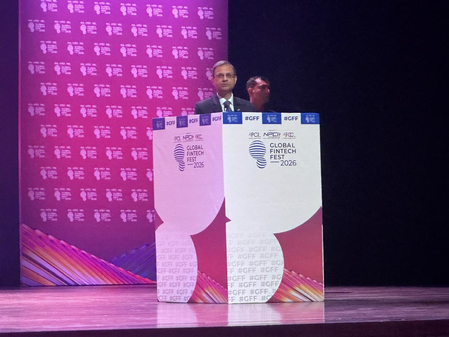
Mumbai, Sep 10 (IANS) Fintech companies should not build businesses by exploiting gaps between regulatory categories and then seek regulatory clarity after scaling, Reserve Bank of India Governor Sanjay Malhotra said on Thursday, stressing that transparency and early engagement with regulators can help firms achieve faster and more durable growth.
Speaking at the Global Fintech Fest 2026 in Mumbai, Malhotra said fintech firms should use regulatory sandboxes and pilot mechanisms to engage with regulators at an early stage, test their assumptions under supervision and contribute to the development of workable regulations.
He cautioned companies against adopting a strategy of scaling first and seeking regulatory forgiveness later, saying that firms attempting to outrun regulations could eventually face regulatory intervention at a much higher cost, while also risking consumer trust.
Malhotra said fintechs that engage transparently with regulators can build regulatory goodwill and create a more sustainable path to scale. He emphasised that responsible innovation should remain central to the expansion of India's financial technology ecosystem.
The RBI Governor also stressed the importance of responsible data management in financial services, saying fintech companies should treat customer data as a fiduciary responsibility rather than as a business asset. The approach, he said, is important for maintaining trust as digital financial services expand.
Highlighting India's position in the global fintech landscape, Malhotra said the country's fintech ecosystem ranks third globally by funding, attracting $2.4 billion last year, and is home to 30 fintech unicorns.
He said the first phase of India's fintech journey was primarily focused on building solutions for the domestic market, while the next phase presents an opportunity to build solutions for the world.
According to Malhotra, innovations developed in areas such as financial inclusion, affordable payments, digital identity, interoperable infrastructure and trusted innovation can be adapted for wider global adoption, particularly in emerging economies facing challenges similar to those India has addressed.
He said India's contribution to the future of global finance would extend beyond exporting fintech products, with the country also having an opportunity to share its approaches, digital public infrastructure, governance frameworks and experience with other nations.
“India has the opportunity to become a trusted partner in shaping the future architecture of global finance,” Malhotra said.
--IANS
pk
SEBI reworking CAS expiry-day closing price methodology for derivatives, system faced liquidity issues initially: Chairman
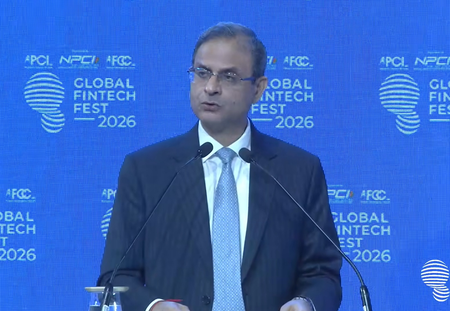
Mumbai, Sep 10 (IANS) Securities and Exchange Board of India (SEBI) Chairman Tuhin Kanta Pandey said on Thursday that the market regulator is reworking the methodology for determining the closing prices under the recently launched closing auction session (CAS) for derivatives contracts on expiry days, while acknowledging that the rollout of CAS across jurisdictions faced initial challenges, particularly around liquidity.
Speaking on the second day of the Global Fintech Fest 2026 here, Pandey clarified that the CAS framework is here to stay, citing smooth implementation and positive feedback from global index provider MSCI and emphasising the need for robust guardrails as artificial intelligence becomes more deeply embedded in financial markets.
Pandey said MSCI had acknowledged that recent index rebalancing exercises were carried out smoothly under the CAS framework.
He acknowledged that the rollout of CAS across jurisdictions had faced initial challenges, particularly around liquidity.
"Initial liquidity was an issue after implementation. However, liquidity builds up over time," he said.
On artificial intelligence, the SEBI chief said the emergence of agentic AI systems requires regulators and market participants to establish clear boundaries around their use.
"Agentic AI raises the bar, so we need to define access, autonomy, admissible action and perceptibility. Agentic AI also needs hard boundaries on what we cannot do," he said.
According to Pandey, every production-level AI system should have mechanisms that allow for auditability, research validation and change logging to ensure accountability and transparency.
He stressed that innovation and safety should advance together.
"Growing fast and growing safe are not competing ambitions," Pandey said.
"A market can grow sustainably when innovation is accompanied by trust, and trust is sustained by resilience."
He said the regulatory challenge is to create a framework that enables technological innovation while preserving the core principles of investor protection, market integrity and financial stability.
--IANS
ag/
NSE IPO: Declining options share, derivatives curbs pose growth challenges
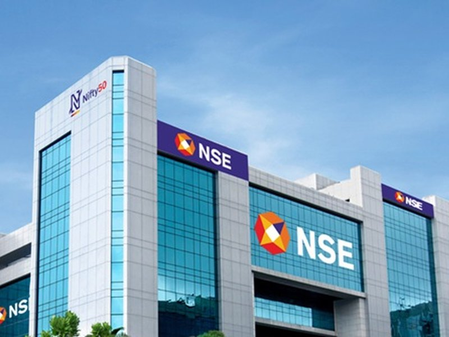
Mumbai, Sep 10 (IANS) The National Stock Exchange (NSE) is heading towards its much-awaited initial public offering (IPO) at a time when the exchange is facing several challenges, including a sharp decline in its market share in equity options, tighter regulations governing derivatives trading and limited room for growth in its dominant cash market segment.
According to data disclosed by NSE in its Red Herring Prospectus (RHP), the exchange's market share in the equity options segment, measured by premium value, has declined significantly over the past three financial years.
NSE's share stood at 96.9 per cent in FY24, before falling to 87.4 per cent in FY25 and further to 74.71 per cent in FY26. This represents a decline of around 22.2 percentage points over the three-year period.
The decline highlights the increasing competitive pressure in one of NSE's key revenue-generating segments, even as the exchange continues to maintain a strong position across other market segments.
In the equity cash segment, NSE's market share has remained above 90 per cent during the same period. Its share stood at 92.7 per cent in FY24, increased to 93.6 per cent in FY25 and remained largely stable at 92.99 per cent in FY26.
While the high market share reflects NSE's strong position in the cash market, it also points to limited headroom for significant expansion in the segment.
At the same time, regulatory tightening around derivatives trading has emerged as another challenge for the exchange. Authorities have taken several measures in recent years to curb excessive participation in derivatives, particularly amid concerns over retail investors suffering substantial losses in futures and options (F&O) trading.
These measures include an increase in the Securities Transaction Tax (STT), changes relating to margins and greater investor awareness initiatives by the Securities and Exchange Board of India (SEBI).
Data provided by Minister of State for Finance Pankaj Chaudhary in the Rajya Sabha showed that the number of unique retail investors participating in the F&O segment fell by around 20 per cent to 78.6 lakh in FY26 from 98.1 lakh in FY25.
The decline in retail participation comes against the backdrop of regulatory efforts to reduce excessive speculative activity in derivatives and strengthen investor protection.
NSE has itself cautioned in its RHP that a decline in trading volumes, particularly in the derivatives and F&O segments, could adversely affect its business. Lower volumes could, in turn, put pressure on the exchange's revenues and profitability.
--IANS
pk
Sensex, Nifty snap 3-day losing streak as bank shares lend support

Mumbai, Sep 10 (IANS) Indian benchmark equity indices snapped their three-day losing streak on Thursday, supported by gains in banking and financial stocks even as persistent volatility in oil prices kept investors cautious.
The Sensex rose 138.36 points, or 0.19 per cent, to settle at 74,902.59, while the Nifty gained 46.30 points, or 0.20 per cent, to close at 23,477.80.
Commenting on Nifty technical outlook, experts said that the on the technical front, the Nifty continues to trade below its key daily moving averages, keeping the near-term structure under pressure.
"Immediate support is placed at 23,400, followed by 23,300, while the 23,550-23,600 zone remains the first meaningful resistance," market watchers said.
Among the Nifty constituents, HDFC Life Insurance Company, Power Grid Corporation of India and Oil & Natural Gas Corporation (ONGC) emerged as the top gainers.
In the broader market, however, the trend remained subdued. The Nifty MidCap index declined 0.38 per cent, while the Nifty SmallCap index ended 0.07 per cent lower.
Sectorally, financial stocks led the gains, with Nifty Financial Services, Nifty PSU Bank and Nifty Private Bank emerging as the best-performing indices. On the other hand, Nifty Auto and Nifty Metal were among the key sectoral laggards.
Experts said that the market's recovery came despite continued fluctuations in crude oil prices, with investors closely tracking developments in the oil market and their potential impact on domestic inflation and corporate earnings.
"Consequently, the domestic market endured a choppy session on expiry day amid weak Asian cues, as investor focus remained closely tethered to the volatility in crude prices," analysts stated.
"Although the strong August equity fund flow data and the moderation in the SIP stoppage ratio lent support to the markets, sentiment was tempered by the depreciating rupee and firming domestic bond yields," market watchers mentioned.
--IANS
pk
India’s early entry into 6G leadership coalition to help it set standards for next‑gen networks
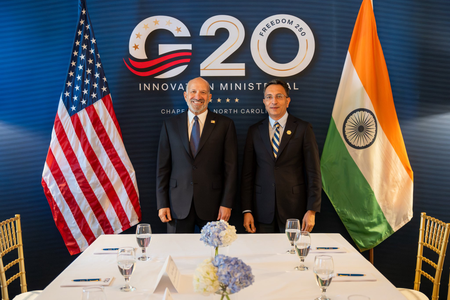
New Delhi, Sep 10 (IANS) India joining the US and 24 other countries to shape standards and security for next‑generation 6G networks will place New Delhi at the table where rules, spectrum policy and trust frameworks for the 2030s will be written, a new report has said.
The report from India Narrative said that "India is moving from being a large consumer of mobile technology to a co-author of the rules, architectures and trust frameworks" that will define the next decade.
The decision, announced after Union Minister of State Jitin Prasada met US Commerce Secretary Howard Lutnick on the sidelines of the G20 Innovation Ministerial, will help Indian researchers, operators, chip designers and startups influence spectrum thinking, security baselines and interoperability rather than retrofit later.
Early participation of India is important because wireless communication is an area where countries that help write the standards typically capture a larger share of patents and equipment markets.
India has joined the Call to Action for 6G Leadership and Security, a framework covering network security, interoperability, resilience and trusted AI.
The publication found the language from Washington "unusually clear," as it highlighted the goal to ensure that 6G reflects “shared security interests,” along with strengthening competitiveness and driving innovation.
As formal 6G technical work is expected to accelerate from 2027 and India’s 'Bharat 6G Alliance' targets deployment by 2030, the timing of this coalition is also critical, the report added.
6G will transmit far more than voice and video, acting as foundation for industrial control systems, autonomous logistics, defence-adjacent sensing, and the AI workloads that already run on Indian data centres.
“Aligning with partners who treat trusted vendors, supply-chain integrity and AI-in-the-loop as first-order design questions is a form of strategic hygiene,” the report noted.
Prasada, in the meeting with Lutnick, pressed for greater US participation in India Semiconductor Mission 2.0, a stronger AI technology partnership, and a practical mechanism for AI safeguards.
India’s scale in digital public infrastructure, its growing fab and design ambitions, and its software talent ensures it can bring capability to the table, not just a large market that can absorb products.
—IANS
aar/na
ISRO successfully conducts 220 kN hot test of CE20 engine for upcoming LVM3 mission

New Delhi, Sep 10 (IANS) The Indian Space Research Organisation (ISRO) on Thursday said that it has successfully conducted the flight acceptance hot test of its CE20 cryogenic engine at uprated thrust conditions of 220 kN, marking another step towards the upcoming LVM3 mission.
The test was carried out at the ISRO Propulsion Complex (IPRC) in Mahendragiri, Tamil Nadu, according to a post shared by the space agency on social media platform X.
The CE20 engine tested is earmarked for the C32 upper stage of the upcoming LVM3 mission. The test at 220 kN represents the uprated thrust condition for the cryogenic engine and is aimed at validating its performance ahead of its flight assignment.
"Flight acceptance hot test of CE20 cryogenic engine earmarked for the C32 upper stage of upcoming LVM3 mission at uprated thrust conditions of 220kN is successfully carried out at ISRO Propulsion Complex, Mahendragiri on September 09, 2026," ISRO said.
"Performance of the LOX Tank Pressurization Module (LTPM) meant for the C32 stages for Gaganyaan missions was also successfully demonstrated in this test," it added.
During the same test, ISRO also successfully demonstrated the performance of the LOX Tank Pressurization Module (LTPM), which is designed for the C32 stages intended for the Gaganyaan missions.
The successful hot test comes as ISRO continues to develop and qualify advanced propulsion and launch systems for India’s expanding space programme. The LVM3 remains a key launch vehicle for the country’s heavier missions and is also central to India’s human spaceflight ambitions.
The space agency has been pursuing a broader expansion of India’s space capabilities, with a focus on next-generation launch systems, human spaceflight, lunar and planetary exploration and the planned Bharatiya Antariksh Station.
ISRO has previously said that India’s space-sector reforms are aimed at building a larger national space ecosystem in which private industry, startups and academia complement the agency’s work, while ISRO focuses increasingly on advanced research, frontier technologies and complex national missions.
--IANS
pk