
India could account for one-fifth of global smartphone production within 1-2 years: Report

New Delhi, Aug 21 (IANS) India is rapidly emerging as a key alternative manufacturing hub in the global electronics supply chain and could account for nearly one-fifth of the world’s smartphone production within the next one to two years, according to a report.
The shift reflects a broader transformation in the global electronics manufacturing landscape, as companies seek to reduce their dependence on China and diversify production across multiple countries, according to One World Outlook report.
The strategy, widely described as “China plus one”, has gained momentum amid supply-chain disruptions, rising geopolitical tensions, tariffs and tighter controls on critical technologies.
For more than a decade, China dominated the global electronics manufacturing industry, supported by its vast supplier ecosystem, infrastructure, ports, power networks and skilled workforce. At its peak, more than two-thirds of the world’s smartphones were produced in China, making the country the centre of the global smartphone supply chain.
However, the Covid-19 pandemic exposed the vulnerabilities of concentrating production in a single geography. Factory shutdowns and disruptions at ports affected manufacturers and consumers across the world, while subsequent tariff measures and export restrictions further encouraged companies to reassess their supply-chain strategies.
As companies began adopting the China-plus-one approach, production started expanding into other Asian economies, particularly India and Vietnam. By 2025, China, India and Vietnam together accounted for more than 90 per cent of global smartphone production, highlighting the growing concentration of manufacturing within these three markets, as per the report.
China continued to dominate global production with an estimated 63 per cent share, but India had increased its share to around 18 per cent. Analysts expect India's share to rise further and potentially reach 20 per cent, or one-fifth of global smartphone production, within the next year or two, the report stated.
The development marks a significant change in India's role in the global electronics industry. The country was traditionally known more for its services, information technology and software capabilities, but has increasingly positioned itself as a major destination for electronics and smartphone manufacturing.
--IANS
pk
India-EU FTA to open new avenues for businesses: Finland Trade Counsellor

New Delhi, Aug 21 (IANS) The India-European Union Free Trade Agreement (FTA) will open new avenues for businesses and deepen commercial cooperation between India and European countries, Trade Counsellor at the Embassy of Finland Antti Herlevi said on Friday, adding that European businesses are looking forward to working more closely with Indian companies.
“This year is very important. As you know, the FTA has been signed, and Europeans are very much looking forward to working with India and Indian companies. There is a lot of excitement, and we hope that all the practicalities will be worked out soon,” Herlevi said.
He said businesses are looking forward to the agreement becoming operational, which could provide greater opportunities for companies from both sides to expand trade and commercial partnerships.
India can benefit significantly from Finland’s experience in developing circular economy models, with businesses in the two countries having scope to collaborate on reducing material consumption, improving product design and strengthening recycling systems, Trade Counsellor at the Embassy of Finland Antti Herlevi said on Friday.
Herlevi said European countries, particularly Finland, have a long tradition of adopting circular economy principles and have developed business models aimed at replacing linear systems with more sustainable circular models.
On ways to reduce waste and resource consumption, he said cutting material use could have an impact across the entire value chain. Lower material consumption would also reduce the use of energy and water, while reducing dependence on virgin materials, which are often highly energy- and carbon-intensive.
“Simply put, we should use fewer materials and recycle as much as possible. That can be a major game changer,” Herlevi said.
He also stressed that the transition towards a circular economy needs to begin at the product design stage. According to him, companies need to develop products that use minimal material, have longer lifespans and are designed in a way that allows the materials used in them to be recycled.
“It starts with upstream solutions,” Herlevi said, adding that better planning and design from the outset would be critical to creating products suited to a circular economy.
--IANS
pk
IndiGo website faces disruption again, passengers report booking issues

New Delhi, Aug 21 (IANS) IndiGo's website faced another technical disruption on Friday, leaving several passengers unable to book flights, complete web check-ins or access certain online services. Some users also reported difficulties logging into the airline's mobile application.
The airline acknowledged the issue through a service advisory, stating that it was experiencing intermittent problems with its core reservation platform. IndiGo said the disruption could make it difficult for some customers to access its online services.
"We are currently experiencing intermittent issues with our core reservation platform, which may make it difficult for some customers to access our online services," the low-cost airline said.
"Our teams are working on priority, along with our partner, to resolve the issue as quickly as possible," it added.
During the disruption, IndiGo's website displayed a “no data available” message when users attempted to access flight booking services. Several passengers also raised complaints through the airline's official X account, citing failed bookings, problems with web check-ins and delays or failures in receiving payment confirmations.
The airline has not yet disclosed the specific cause of the latest disruption or identified the technology partner involved in addressing the reservation platform issue.
The incident comes just two days after IndiGo reported a similar problem with its core reservation system. On Wednesday, the airline said it was facing “intermittent issues” with the platform that could affect customers' access to online services.
The recurrence of the technical problem within the same week has raised concerns among passengers who rely on IndiGo's digital platforms for booking, check-in and payment-related services.
IndiGo is India's largest airline by domestic market share and accounted for around 67 per cent of the country's domestic aviation market in July. Given its dominant position, disruptions to its reservation and booking systems can affect a large number of passengers across the country.
The airline's latest advisory did not provide a timeline for the complete restoration of its online services.
--IANS
pk
PM-AASHA boosts procurement, digital reforms to raise farmer incomes

New Delhi, Aug 21 (IANS) Pradhan Mantri Annadata Aay Sanrakshan Abhiyan (PM-AASHA) emerged as a structured mechanism assuring agricultural procurement, price stabilisation and market interventions to ensure better price realisation for farmers, reduce distress sales, and promote a stable and resilient agricultural economy in the country, an official factsheet said on Friday.
The programme has enabled timely purchase of pulses, oilseeds and copra through agencies such as NAFED (National Agricultural Cooperative Marketing Federation of India) and NCCF (National Cooperative Consumers' Federation of India).
It has established additional procurement centres to strengthen market access and led to collective empowerment of farmers, the statement said.
PM-AASHA is the government’s flagship price support framework which along with digital reforms and infrastructure support have improved transparency, efficiency and reach of procurement operations across states.
Digital reforms, including Aadhaar-enabled authentication, e-NAM, e-Samriddhi, and e-Samyukti, have improved transparency and procurement efficiency. Support from the Agriculture Infrastructure Fund and expanded procurement coverage have further strengthened the scheme.
The budget allocation for PM-AASHA has steadily increased over the years. In 2024–25, the actual expenditure under the scheme was Rs 5437.99 crore. The budget increased to Rs 6,941.36 crore in 2025–26 and was further raised to Rs 7,200.00 crore in 2026-27. This reflects the government's focus on ensuring income support for farmers and strengthening price assurance mechanisms.
Paddy (common) cultivation incurred a cost of Rs 1,627 per quintal in 2026–27, while its MSP was Rs 2,441 per quintal, yielding a margin of Rs 814. Soybean (yellow) cultivation cost Rs 3,805 per quintal, while its MSP was Rs 5,708 per quintal, yielding a margin of Rs 1,903.
Wheat had a production cost of Rs 1,239 per quintal and an MSP of Rs 2,585 per quintal in 2026–27, ensuring a Rs 1,346 margin. Meanwhile, jute has a production cost of Rs 3,662 per quintal and an MSP of Rs 5,925 per quintal, providing the highest margin of Rs 2,293.
—IANS
aar/ag
Tata Motors to raise car, SUV prices by up to Rs 25,000 from Sept 1
New Delhi, Aug 21 (IANS) Tata Motors Passenger Vehicles Ltd on Friday announced a price hike of up to Rs 25,000 across its passenger vehicle portfolio, including internal combustion engine and electric models, effective September 1, 2026.
The company said the extent of the increase would vary across models and variants.
The price revision is aimed at partially offsetting rising input costs and sustained inflationary pressures, it added.
The company further said that it continues to absorb a significant portion of the cost increases.
The hike comes after other major carmakers also announced price increases citing elevated costs.
Hyundai Motor India had earlier this month announced a price increase of up to 1 per cent across its portfolio, effective the same month citing rising input and commodity costs, higher operating expenses and continuing geopolitical and macroeconomic uncertainties.
Maruti Suzuki had also raised prices across its Arena and Nexa models from August. Its latest increase ranged from Rs 2,500 to Rs 30,000 depending on the model and variant.
The successive price revisions come amid persistent cost pressures facing the automobile industry, with manufacturers seeking to pass on part of the higher expenses to customers while limiting the impact through cost optimisation.
In Q1FY27, the TMPV’s net profit declined 79 per cent to Rs 859 crore against Rs 4,003 crore in Q1FY26. Similarly, PAT plunged 85 per cent on a quarter-on-quarter basis.
Moreover, shares of TMPV on Friday traded flat at Rs 320.50, up 0.17 per cent in the morning trade on the BSE. The stock has touched a 52-week high of Rs 457.04 and a 52-week low of Rs 294.15, as per the exchange data.
In the last one-year the stock has declined more than 5 per cent and nearly 9 per cent year-to-date.
--IANS
ag/
Starlink would help least-served in India, especially rural areas: Elon Musk
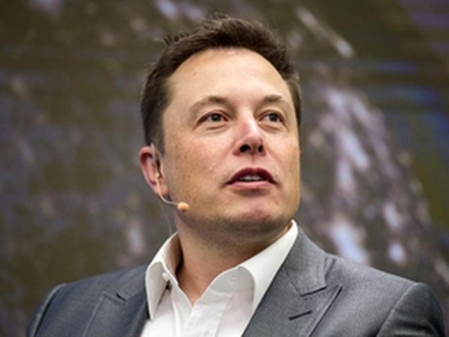
New Delhi, Aug 21 (IANS) Elon Musk on Friday said Starlink would help the ‘least served’ areas of India -- particularly in rural areas -- as the satellite internet service awaits commercial rollout in the country.
Taking to social media platform X, Musk said, “Starlink would help the least served in India, especially in rural areas.”
Musk replied to a post that pointed to the continued digital connectivity gap in India noting that 11,256 listed villages still had no 4G coverage as of May 2026.
The post on X highlighted the disparity in internet subscription density between rural and urban India.
India had 1.093 billion internet subscriptions in March 2026 of which 440.87 million were rural. While rural internet subscription density stood at 48.31 per 100 people, compared with 126.80 in urban areas.
The post said BharatNet had laid more than 850,000 route-km of fibre and made around 221,000 Gram Panchayats service-ready.
However, only 80,472 Gram Panchayat Points of Presence were reported operational as of June 2026.
It further stated that satellite connectivity could help bridge gaps in remote villages, mountainous regions, islands and areas affected by disasters, where conventional telecom infrastructure faces challenges related to terrain, commercial viability and infrastructure constraints.
The post also called for the completion of regulatory clearances, spectrum allocation and approval for Starlink's commercial launch in India.
Earlier in August, a government official said that Elon Musk's X will have to follow the law when it comes to the social media platform's new rule that makes content takedown requests by any public government.
In addition, Musk has claimed that "any censorship required by the governments is now clearly visible" after revealing a new algorithm included in X.
--IANS
ag/
Markets open higher for second straight session despite elevated crude oil prices

Mumbai, Aug 21 (IANS) Indian equity benchmarks opened higher for a second straight session on Friday, extending their recovery from recent losses with gains led by realty, metal and pharmaceutical stocks amid elevated crude oil prices.
Sensex started the session jumping 163.35 points or 0.21 per cent to 77,701.07, while Nifty opened 52.20 points or 0.22 per cent higher at 24,284.05.
Sectorally, Nifty Realty was top gainer in early trade and rose 0.7 per cent, followed by Nifty Metal at 0.48 per cent and Nifty Pharma at 0.32 per cent. Nifty MidSmall Healthcare and Nifty REITS & Realty also were trading in green zone and gained 0.32 per cent and 0.28 per cent, respectively.
In contrast, Nifty IT index was biggest laggard and declined 0.6 per cent, followed by MidSmall IT & Telecom at 0.17 per cent and Nifty Auto which slipped 0.19 per cent.
However, analysts cautioned that the previous session's rally may struggle to sustain amid rising crude prices and higher US bond yields.
Brent crude approaching $94 per barrel and renewed pressure from US yields could weigh on large-cap stocks and trigger profit booking, they said.
At the same time, the broader market is expected to retain momentum, supported by institutional buying and improving fundamentals.
Analysts further noted that NBFCs remain on a strong footing while digital platforms, pharma and CDMO stocks continue to attract buying interest despite elevated valuations, adding that the market is likely to remain rangebound as long as crude prices stay elevated.
“Technically, Nifty formed a bullish Doji after seven consecutive sessions of decline, indicating easing selling pressure. The index could move towards 24,317-24,380 and subsequently 24,400-24,545, provided it sustains above the 24,060-24,000 support zone,” according to the experts.
In Asian markets, major indices were trading lower following Wall Street's weakness as longer-term US Treasury yields rose.
Furthermore, crude oil prices also traded higher with Brent crude trading at $93.96 per barrel after US Treasury Secretary Scott Bessent indicated that Washington could impose some of the most stringent sanctions on Iran which raised concerns about potential supply disruptions.
--IANS
ag/
Chip boom: S. Korea to launch ‘Future Fund’ with windfall revenue
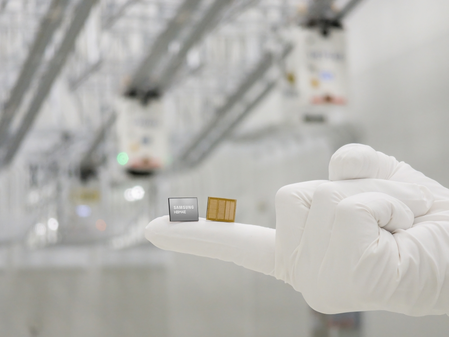
Seoul, Aug 21 (IANS) South Korea will launch the "Future Fund" to promote long-term economic growth, using what the government calls "windfall revenue" from increased tax collection driven by the recent artificial intelligence (AI) boom, the budget ministry said on Friday.
The Ministry of Planning and Budget unveiled the plan in partnership with relevant government agencies, saying the AI industry has sparked a major transition across various areas, from the economy to social systems, beyond just a technological revolution, reports Yonhap news agency.
"Amid the global chip boom, domestic tax revenue is expected to rise sharply, driven by an increase in corporate tax revenue," the budget ministry said.
"We need to use the fiscal capacity secured under the current circumstances as valuable ammunition to take the lead in the global competition for technological supremacy," it added.
"Rather than spending these precious resources on one-off expenditures or using them to maintain fiscal soundness in a passive manner, we need to use them proactively to lay the groundwork for future growth," Budget Minister Park Hong-geun also said during a press conference.
"We need to change the way we manage public finances in line with the characteristics of our economy and the evolving fiscal environment," Park added.
"The government will set aside the sharply increasing tax revenue to establish the Future Fund and use it as a strategic investment platform to raise the country's potential growth rate and mitigate the effects of tax revenue volatility," he said.
The budget ministry introduced the concept of "windfall revenue," referring to tax revenue exceeding its long-term trend due to structural economic changes or significant economic fluctuations, such as an industrial supercycle.
The government said the concept differs from surplus tax revenue, which refers to tax receipts exceeding official forecasts due to unexpected short-term economic fluctuations or forecasting errors.
The windfall revenue will be used to finance the Future Fund, while surplus revenue will be used to fund supplementary budgets, repay government debt or make contributions to the fund.
The budget ministry said the fund will serve as a strategic investment platform aimed at boosting the country's potential economic growth.
The fund will also serve as a platform for fiscal stability, contributing to greater stability and efficiency in the country's budget management, the ministry said.
—IANS
na/
Hyundai Motor workers stage full-scale strike over wage disputes

Seoul, Aug 21 (IANS) The labour union of Hyundai Motor launched a full-day strike on Friday after failing to reach an agreement with management over wages, raising concerns about further production disruptions amid sluggish vehicle sales.
It marks the first time in 10 years that the automaker's union has staged an eight-hour strike, reports Yonhap news agency.
Production lines at Hyundai Motor's plants in Ulsan, Jeonju and Asan are set to be halted for a combined 16 hours across two work shifts, with about 39,000 union members participating in the walkout.
Including Friday's walkout, the union has staged a combined 60 hours of strikes since wage talks with management began in May.
The continued strikes are estimated to result in cumulative production losses of around 55,200 vehicles, with lost sales exceeding 2.3 trillion won (US$1.64 billion), according to industry sources.
Production disruptions are expected to worsen as the union plans additional four-hour walkouts Monday and Tuesday.
The latest labour action comes after management and the union failed to narrow their differences over wages, a proposed 50 percent increase in performance-based pay, the reinstatement of union members dismissed over illegal activities and an extension of the retirement age.
The continued strikes are expected to bring cumulative production losses from last month through August 25 to around 62,000 vehicles, with lost sales estimated at 2.6 trillion won (US$1.85 billion), according to industry sources familiar with the matter.
The labour dispute is adding pressure on Hyundai Motor as the automaker grapples with weakening global sales.
Its worldwide sales fell 5.1 percent on-year to 318,454 vehicles in July, marking the 10th consecutive month of on-year declines, said an earlier report.
—IANS
na/
CM Patel pitches GIFT City, emerging sectors to Gujarati diaspora in Washington
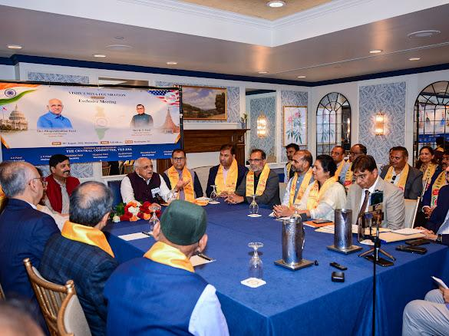
Washington, Aug 20 (IANS) Gujarat Chief Minister Bhupendra Patel on Thursday urged the global Gujarati community to participate in the state's development by investing in emerging sectors including GIFT City, semiconductors, artificial intelligence, data centres and biotechnology, as he sought greater investment ahead of the Vibrant Gujarat Global Investors Summit 2027.
Patel made the pitch while interacting with members of the Gujarati diaspora at an event organised by the Vishv Umiya Foundation in Washington on the fourth day of his US-Canada visit.
He presented Gujarat as a destination for new investment, highlighting its infrastructure, financial discipline, governance and policies for emerging industries.
The outreach comes as the state delegation continues meetings with investors and technology companies ahead of the 2027 summit.
Explaining the purpose of the delegation's visit, Chief Minister Patel said that business meetings were being held to attract investment, establish new industries and promote emerging sectors in Gujarat.
He added that the meetings held in Silicon Valley had been successful.
"Various business meetings are being held to attract more investment to Gujarat, establish new industries and promote the development of emerging sectors," CM Patel said.
He added that Gujarat had secured an important position in India's economic development and that efforts were now focused on expanding investment into new sectors.
Chief Minister Patel also stressed that the state's development strategy extended beyond economic indicators to basic infrastructure and the quality of life of citizens.
The Chief Minister said the state government is working to improve water supply, electricity, urban amenities and other essential services alongside economic growth.
In a democracy, CM Patel said, governments are assessed not only through economic figures but also by the changes people experienced in their daily lives.
"Gujarat had made significant progress in areas such as electricity, water and employment," he added.
Patel specifically called on overseas Gujaratis to invest in GIFT City, saying the community had created wealth and capital through its hard work across the world.
Investment in GIFT City, he said, would allow that capital to contribute to Gujarat's development while also benefiting investors and strengthening the state's financial economy.
He cited financial discipline and a robust administrative system as among Gujarat's strengths, saying the state had pursued development on the foundations of good governance, discipline and transparency under the guidance of Prime Minister Narendra Modi.
The Chief Minister also highlighted Gujarat's growing focus on new-age industries.
"The state is building a strong presence in semiconductors and data centres, with infrastructure, an industry-friendly environment, a financial ecosystem and supportive government policies creating opportunities for large-scale investment and employment," he noted.
Biotechnology and artificial intelligence were also identified as sectors with significant potential.
Patel's emphasis on these industries follows the state government's wider efforts to position the state as a destination for advanced technology and manufacturing investment.
The hospitality sector also featured in his pitch to the diaspora.
"Gujarat has considerable scope for investment in tourism, hotels and hospitality, with increasing industrial and business activity expected to generate demand for additional infrastructure and employment," he assured.
The Washington interaction formed part of Chief Minister Patel's week-long US-Canada visit, during which he is leading a high-level delegation to engage with businesses, investors and members of the Gujarati community and invite participation in the Vibrant Gujarat Global Investors Summit 2027.
Earlier on Thursday, the Chief Minister also met Walmart Executive Vice-President Dan Bryant in Washington to discuss opportunities for Gujarat's MSMEs and small artisans to access global markets.
"Gujarat's financial and administrative strengths, combined with opportunities in technology, finance, manufacturing, tourism and hospitality, can provide a broader platform for investment as the state prepares for the next edition of the Vibrant Gujarat summit," he noted.
--IANS
mys/khz