
Govt empowering farmers, food manufacturers to expand global presence: Piyush Goyal

New Delhi, Aug 20 (IANS) Commerce and Industry Minister Piyush Goyal on Thursday said that new avenues are being created for Indian farmers and processed food manufacturers to expand presence in the Singapore market and further to the whole ASEAN region and Australian market.
Goyal met Gan Siow Huang, Minister of State for Foreign Affairs and Trade and Industry, Singapore, and other dignitaries at the APEDA-FairPrice roadshow-cum-instore promotion being organised for expansion of exports of diverse range of India’s agricultural & processed food products.
“Organic products, fresh fruits and vegetables, frozen fruits and vegetables, dairy products, cashew, rice, millet-based products, and products sourced from different regions of India are being promoted through this engagement,” the minister posted on X.
He also held a meeting with Sopnendu Mohanty, Group CEO, Global Finance and Technology Network, a global advisory and investment firm based in Singapore.
They discussed opportunities to deepen India-Singapore cooperation in financial innovation, technology, and emerging areas of the digital economy.
“We also exchanged views on how India's dynamic financial ecosystem and Singapore's global financial and technology network offer significant opportunities for greater collaboration,” said Goyal.
The minister also met Cindy Lim, CEO of Keppel Infrastructure, in Singapore.
“We discussed opportunities for greater collaboration in infrastructure and sustainable development, building on the strong economic partnership between India and Singapore. India remains committed to enabling investments and partnerships that support resilient infrastructure and sustainable growth,” Goyal highlighted.
Goyal earlier joined Finance Minister Nirmala Sitharaman, External Affairs Minister Dr S. Jaishankar and Minister of State for Commerce and Industry, Jitin Prasada, in engaging “with our Singaporean counterparts at the 4th India-Singapore Ministerial Roundtable”.
“We discussed deepening the Comprehensive Strategic Partnership (CSP) across advanced manufacturing, fintech, digitalisation, healthcare, and sustainability,” the Commerce Minister informed.
—IANS
na/
88.5 pc of traders under 30 lost money in F&O trading in FY26: SEBI study
Mumbai, Aug 20 (IANS) Around 88.5 per cent of individual traders below the age of 30 incurred losses in futures and options (F&O) trading in FY26, highlighting the significant risks faced by young investors in the equity derivatives market, according to a study by capital markets regulator SEBI.
The study found that traders under 30 accounted for 43 per cent of the individual trader base in FY26. At the same time, 73 per cent of individual traders had annual incomes of less than Rs 5 lakh, and this group accounted for 53 per cent of the aggregate losses incurred during the year.
SEBI said low-income traders remained particularly active in the derivatives market, with their trading intensity reaching 75 times their portfolio value. The findings underline the extent to which retail investors, particularly those with lower incomes, are participating in a highly leveraged and volatile segment of the capital market.
The study also showed that traders from B30 cities, or locations beyond India's top 30 financial centres, constituted 67 per cent of individual derivatives traders and accounted for 58 per cent of total retail derivatives losses.
At the state level, Maharashtra, Gujarat and Uttar Pradesh together contributed 41 per cent of the total net losses incurred by individual traders.
Overall, individual participation in India's equity derivatives market declined sharply in FY26, with the number of new traders falling even as the pace of exits accelerated. While aggregate net losses declined during the year, the average loss per trader increased, pointing to persistent risks associated with derivatives trading.
Aggregate net losses incurred by individual traders fell 18 per cent to Rs 91,685 crore in FY26 from Rs 1.12 lakh crore in FY25. However, the average loss per individual trader increased 2.4 per cent to Rs 1.17 lakh during the year.
Over the five-year period from FY22 to FY26, individual traders cumulatively incurred losses of Rs 3.85 lakh crore in the equity derivatives segment.
The Equity Derivatives Segment (EDS) also recorded its first year-on-year decline in active individual traders since FY16. The number of active individual traders fell 18 per cent to 87.5 lakh in FY26 from 106.2 lakh in FY25.
--IANS
pk
SEBI eases FPI onboarding, allows digitally signed power of attorney to custodians
New Delhi, Aug 20 (IANS) The Securities and Exchange Board of India (SEBI) on Thursday eased the onboarding process for foreign portfolio investors (FPIs), allowing them to submit a digitally signed Power of Attorney (PoA) to their custodians.
Under the revised framework, an FPI can issue a PoA to its custodian by specifying its address and execute the document using a digital signature in accordance with the Information Technology Act, 2000, SEBI said.
"Towards SEBI’s continued digitalisation efforts, FPIs are now permitted to execute a Power of Attorney (PoA) through digital signatures in accordance with the Information Technology Act, 2000," the market regulator said.
A PoA authorises an FPI's custodian to act on its behalf. Custodians are financial institutions responsible for holding and managing investors' securities and assets, while also performing functions such as processing FPI registrations, clearing trades, managing settlements and reporting compliance to regulators.
"Digitally signed PoA is envisaged to
bring down the time taken in onboarding considerably as it eliminates the need for notarisation, apostillisation or consularisation of PoA," it added.
SEBI said the revised process will eliminate the requirement for notarisation, apostillisation or consularisation of the PoA. This is expected to reduce the time required for FPI onboarding and further improve ease of doing business for foreign investors.
The capital markets regulator said the move is part of its continued efforts to digitalise and simplify the FPI onboarding process.
Over the years, SEBI has introduced several measures to streamline the registration process, including a Common Application Form for FPI registration, PAN, bank and demat accounts. It has also permitted the use of Indian digital signatures for executing the CAF and other registration documents, introduced digital signature functionality within the CAF portal and allowed registration based on scanned copies.
The latest provisions will come into force with effect from August 20, 2026, SEBI said.
--IANS
pk
India closes advertising technology gap with US adopting AI-native formats

New Delhi, Aug 20 (IANS) India is picking up new advertising formats more quickly than in the past, with AI‑native formats expected to become mainstream in the country within three years, a report said on Thursday.
Programmatic advertising took roughly five to seven years to become mainstream in India after the United States and connected TV lagged by four to five years.
However, AI‑native formats should close that gap to three years as India’s large digital consumer base and adaptable ecosystem speed adoption, the report from Redseer Strategy Consultants said.
India’s digital advertising market is expected to grow from nearly $11 billion in 2025 to $19–22 billion by 2030 at 10–15 per cent annual growth, outpacing the global digital advertising market.
Digital advertising overtook traditional advertising in India in 2023 and is expected to account for 70 per cent of total ad spend by 2027.
"Mobile still anchors the market, while connected TV and retail media are drawing more advertiser interest. Quick commerce adds a distinct opportunity because the distance between seeing a product and buying it can be unusually small," the report said.
“India is becoming a market where global advertising ideas can find commercial scale much sooner. The shift matters because advertisers are getting access to richer consumer signals, stronger commerce linkages and new surfaces at the same time," said Mukesh Kumar, Associate Partner, Redseer Strategy Consultants.
The trend makes advertising more measurable for brands and closer to the point of purchase. It creates a stronger case for platforms to invest in first-party data, distribution and monetisation capabilities before the next format becomes mainstream, Kumar added.
The report forecasted the global advertising market to transition into a space driven by AI-native consumer experiences and new advertising formats.
Integrated platforms that combine demand-and-supply reach with owned consumer surfaces, SDK distribution and first-party (1P) surfaces will be best positioned to capture the next generation of advertising value as budgets increasingly follow high-intent consumer interactions.
Conversational AI advertising delivered more than twice the click-through rate of traditional search, while lower-funnel formats recorded over 70 per cent higher conversion, the report noted.
—IANS
aar/pk
India must retain zero MDR for small merchants to protect UPI’s inclusion gains: Industry experts

New Delhi, Aug 20 (IANS) India must retain zero Merchant Discount Rate on UPI transactions for small merchants and low‑value payments, as affordability has been central to UPI’s rapid adoption and resultant financial inclusion, industry experts said on Thursday.
The report from Policy Watch India Foundation cited experts warning that a user fee could adversely affect poor and informal economy participants, adding that affordability has also been central to UPI's emergence as a key component of India's digital public infrastructure.
“Zero MDR has been a defining policy intervention in democratising digital payments in India. It has lowered barriers to adoption, accelerated merchant acceptance, and reinforced UPI’s position as a globally admired digital public infrastructure,” said Dharmender Jhamb, Partner, Grant Thornton Bharat.
Jhamb said the future challenge is not to choose between inclusion and sustainability, but to achieve both.
The discussion comes amid the evolving policy framework for digital payments following Parliament's amendment to the Payment and Settlement Systems Act, 2007, which enables the government to notify electronic payment modes and transactions on which charges may be levied.
The experts stressed that any future MDR framework should balance the sustainability of the payments ecosystem with affordability and continued merchant adoption.
Dharmendra Kumar, Founding Secretary, Janpahal, said UPI had emerged as an important public good for small businesses and low-income families, particularly those operating in the informal economy.
“UPI has supported small businesses including street vendors increase their income and any user fee may impact the poor adversely,” Kumar said.
Bikash Narayan Mishra, Former Senior Advisor, Indian Banks’ Association, said zero MDR had helped make digital payments accessible to small merchants and had also supported wider access to formal financial services and credit.
“It encouraged businesses to adopt digital payment acceptance and, over time, enabled wider access to digital bookkeeping, formal financial services and credit," Mishra said.
Change to such a framework must be evaluated on its impact on merchant behaviour, financial inclusion and the broader digital economy rather than in terms of the cost.
As India's digital payments journey expands into Tier-3 and Tier-4 cities and rural India, affordability and trust will remain critical, he added.
National Payments Corporation of India (NPCI) data showed that UPI clocked highest-ever monthly transaction volume in July 2026 at 23.66 billion transactions worth Rs 29.88 lakh crore.
Transaction volume rose 22 per cent year-on-year and 4.1 per cent from June, while transaction value increased 19 per cent year-on-year. UPI processed an average of Rs 96,383 crore worth of payments every day during the month.
—IANS
aar/pk
IRDAI bars Niva Bupa from opening new business locations for 6 months over expense limit breach
New Delhi, Aug 20 (IANS) Insurance regulator IRDAI has barred Niva Bupa Health Insurance from opening new places of business for six months after the insurer breached prescribed limits on expenses of management during the financial year 2024-25, the insurer said on Thursday.
Niva Bupa, in a statement, said the breach related to expenses of management, which include operating costs as well as commissions paid to agents and distributors.
"IRDAI had sought explanation from the Company on Expense of Management EoM limits for financial year 2024-25. The
Company had made submissions to IRDAI" it said in its exchange filing.
The health insurer said it has complied with the prescribed expense limits for the financial year 2025-26 and remains on track to stay within the regulatory limits during the current fiscal year.
Niva Bupa is backed by UK-based international healthcare group Bupa and is among the major standalone health insurers operating in India.
The regulatory action weighed on the company's stock. Shares of Niva Bupa extended their losses during the session and closed 1.3 per cent lower following the announcement.
"In this regard, IRDAI issued an order on August 19, 2026, whereby the Company has been warned for not complying with the applicable EoM limits for the FY 2024-25 and has directed not to open new place of business for a period of six months from the date of order," it stated.
"The Company is evaluating the order and will take appropriate steps to safeguard the interest of stakeholder," it added.
The six-month restriction on opening new places of business comes as the insurer seeks to maintain compliance with regulatory norms governing management expenses and distribution costs.
"Further, it may be noted that the company is in compliance with the IRDAI (Expenses of Management, including Commission of Insurers) Regulations, 2024 (“EoM Regulations, 2024”) for the full Financial Year ended March 31, 2026 as well as for the period Q1 ended June 30, 2026 and is on track to ensure compliance with the said EoM Regulations, 2024 for the full Financial Year ending March 31, 2027," it mentioned .
--IANS
pk
Digital public infrastructure key to sustainable development across Global South: Minister
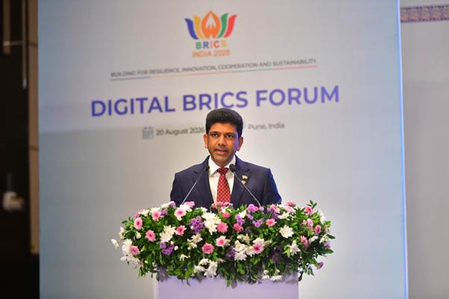
New Delhi, Aug 20 (IANS) India is offering a transformative growth story built on population‑scale digital rails that link identity, banking, payments and verifiable documents, Union MoS Communications, Dr Chandra Sekhar Pemmasani, said at the BRICS ICT Track on Thursday.
Minister Pemmasani told the international delegation that digital public infrastructure is a necessity, not a luxury, for sustainable development across the Global South.
He urged stronger BRICS digital partnership anchored in sharing modular, open-source technology frameworks to eliminate prohibitive licensing costs, alongside joint capacity-building initiatives to ensure fair representation in international ICT standard-setting bodies.
The minister outlined India’s strategic vision for open, inclusive, and resilient digital architectures designed to empower citizens and accelerate economic progress, to the international delegation of ministers, policymakers, academicians, and industry leaders from BRICS nations.
Highlighting India’s transformative journey, Dr Pemmasani said that India has demonstrated a modern paradigm built on population-scale digital rails encompassing identity, banking, payments, verifiable documents, and consented data.
He noted that the true innovation lies in establishing an open, interoperable foundational public layer upon which banks, fintech enterprises, and government departments can build diverse consumer services.
Elaborating on the core pillars of India’s Digital Public Infrastructure (DPI), the Union MoS detailed how the foundational identity layer enables low-cost remote verification across billions of authentications, SIM issuances, and banking access.
In the payments sphere, the Unified Payments Interface (UPI) has democratised finance, linking 720 banks, processing 85 per cent of India’s digital transactions, and contributing to nearly 49 per cent of global real-time payment volumes while expanding to nine partner nations.
He also emphasised the role of the Direct Benefit Transfer (DBT) portal, which integrates 318 schemes across 56 ministries to eliminate intermediaries, alongside DigiLocker’s ecosystem of over 700 million users and 9 billion issued verifiable credentials.
Newer initiatives such as the Open Network for Digital Commerce (ONDC), Government e-Marketplace (GeM), and Account Aggregator framework are further democratizing market access and individual data sovereignty.
—IANS
aar/pk
Can NSE trade its shares on its own platform?
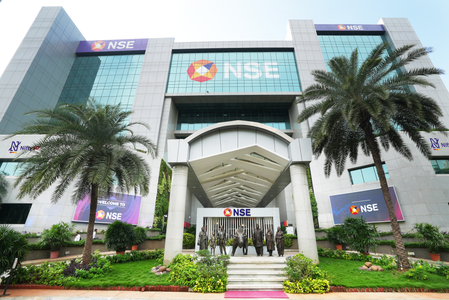
New Delhi, Aug 20 (IANS) Can the National Stock Exchange (NSE) allow trading in its own shares on its platform? The question has gained prominence after a report suggests that NSE is exploring the 'Permitted to Trade' (PTT) route to allow its shares to be traded on NSE while remaining formally listed on the BSE.
NDTV Profit -- citing sources -- reported that the National Stock Exchange (NSE) is looking to trade its shares on its own platform, while remaining formally listed only on the BSE.
Under the existing regulatory framework, self-listing of a stock exchange is not permitted, it added.
It further noted that the exchange would therefore need approval from the market regulator -- the Securities and Exchange Board of India (SEBI) -- for its shares to be admitted for trading on its own platform.
However, the PTT framework allows securities to be traded on NSE without being formally listed on the exchange. Companies admitted under the mechanism continue to remain listed on their primary stock exchange.
Earlier in May, NSE had issued FAQs and clarified the framework for securities admitted under the PTT category on its mainboard segment. Under the framework, companies are not required to execute a separate listing agreement with NSE, while existing disclosures made to the primary exchange are considered sufficient.
However, trading in PTT securities remains subject to NSE's surveillance and regulatory mechanisms.
Securities admitted under PTT can subsequently seek full listing on the exchange, subject to applicable eligibility conditions, while the exchange retains the authority to suspend or prohibit dealings, it added.
If approved for NSE, the arrangement would mean the exchange remains formally listed on the BSE while its shares could also be traded on NSE, giving investors an additional trading venue.
The development comes ahead of NSE's proposed initial public offering. The exchange filed its draft red herring prospectus with SEBI in June for an IPO comprising an offer for sale of 14.89 crore equity shares.
NSE's listing plans were first initiated in 2016 but were delayed amid regulatory scrutiny related to the co-location controversy.
Separately, NSE reported an 8.2 per cent sequential decline in consolidated revenue from operations to Rs 4,560 crore for the quarter ended June 30, while net profit rose 8.7 per cent to Rs 3,120 crore.
--IANS
ag/
Alibaba profit plunges more than 75 pc as AI spending weighs on bottom line
New Delhi, Aug 20 (IANS) Alibaba Group Holding Limited has reported a sharp decline in profit as the Chinese e-commerce giant ramps up spending on artificial intelligence and computing infrastructure while its core online retail business faces a broader slowdown in consumer demand.
The company reported a 9 per cent increase in revenue, broadly in line with market expectations, driven in part by strong demand for computing capacity from its cloud business. However, net income plunged more than 75 per cent to 10.5 billion yuan ($1.6 billion). Alibaba also recorded a free-cash outflow of more than $6.6 billion, underscoring the growing financial burden of its aggressive investment in AI projects and infrastructure.
Alibaba's US-listed shares fell about 4 per cent in pre-market trading following the results.
The Hangzhou-based company has emerged as one of China's leading AI players, with its Qwen family of models gaining global attention. Alibaba has committed tens of billions of dollars toward AI infrastructure, including chips, data centres and the development of AI agents, as it seeks to compete with leading US firms such as OpenAI and Anthropic.
The rapid expansion of its AI operations, however, is putting pressure on margins at a time when China's consumer spending remains subdued. The company's traditional e-commerce operations continue to face a challenging environment, increasing the importance of its cloud and AI businesses as future growth engines.
Under Chief Executive Officer Eddie Wu, Alibaba has accelerated its shift towards AI. The company has consolidated most of its AI-related research and product teams under Alibaba Token Hub, a new business unit directly overseen by Wu. It has also been selling non-core assets as part of a broader restructuring, including the disposal of its gaming unit Lingxi Games earlier this month.
Alibaba's AI push has made it one of China's largest corporate spenders on AI infrastructure. Wu has indicated that the company is prepared to prioritise long-term AI expansion over near-term profitability. The investment is expected to go beyond the previously announced 380 billion yuan three-year spending plan, with Alibaba targeting a fivefold increase in cloud and AI revenue to $100 billion over five years.
--IANS
pk
SAIL welcomes Mines and Minerals Amendment Act, says reform will boost mining viability

New Delhi, Aug 20 (IANS) Steel Authority of India Limited (SAIL) on Thursday welcomed the Mines and Minerals (Development and Regulation) Amendment Act, 2026, notified by the Central Government on August 17, saying the reform will bring greater predictability to the fiscal regime and provide long-term policy certainty to the mineral sector.
SAIL said the amendment provides greater clarity and uniformity in mineral taxation and levies while addressing pending retrospective levies.
The move is expected to provide greater certainty and confidence to the mining industry and encourage investment in the sector.
"It also addresses pending retrospective levies, thereby providing greater certainty and confidence to the mining industry," it said.
For SAIL, which operates substantial captive iron ore and coal mines, the reform is expected to improve the viability of its mining operations and facilitate investment and development of mines.
The company said greater predictability in the fiscal regime would support efficient utilisation of its mineral resources and strengthen long-term raw-material security.
"Greater predictability in the fiscal regime will support efficient utilisation and development of SAIL’s mineral resources and will boost iron ore mining," it added.
The reform is also expected to boost iron ore mining and increase the availability of the key raw material in the domestic market.
With improved viability and development of its captive mines, SAIL said it would be able to make additional iron ore available for sale in the market, subject to the applicable regulatory framework.
According to the company, higher availability of domestically produced iron ore would strengthen domestic supply chains and support the Indian steel industry by improving access to indigenous raw materials.
SAIL said the reforms are expected to encourage higher investment and production, reduce dependence on imports, strengthen India's mineral and energy security, and improve the competitiveness of mineral-based industries.
The steel major reaffirmed its commitment to the responsible and sustainable development of its mineral resources, strengthening captive raw-material security and making greater quantities of iron ore available to the domestic market in support of the vision of an Atmanirbhar and Viksit Bharat.
--IANS
pk