
Sensex, Nifty snap losing streak as realty, private bank and IT stocks rally
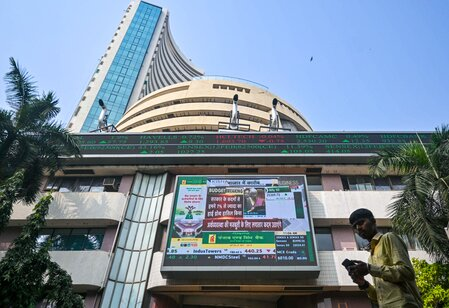
Mumbai , Aug 20 (IANS) The benchmark equity indices snapped their recent losing streak on Thursday, with the Nifty ending a seven-session decline and the Sensex reversing a four-day fall, supported by gains in realty, private banking and IT stocks.
The Sensex rose 628.04 points, or 0.82 per cent, to close at 77,537.72, while the Nifty gained 153.55 points, or 0.64 per cent, to settle at 24,231.85.
Commenting on Nifty technical outlook, experts said that for the next session, immediate support is placed at 24,100, followed by 24,000, while resistance is seen at 24,300 and 24,575.
"The preferred strategy remains to buy on dips in the 24,100-24,000 zone with a stop-loss below 24,000. The unfilled gap between 23,890 and 23,820 remains relevant only if the index decisively breaks below the 24,000 support," a market expert stated.
Among the Nifty constituents, Eternal, Kotak Mahindra Bank and Bajaj Finance emerged as the top gainers, providing a strong boost to the benchmark indices.
Sectorally, realty stocks led the market recovery, with the Nifty Realty index rising nearly 2 per cent. Private banking and IT stocks also witnessed buying interest. Meanwhile, the Nifty PSU Bank and Nifty Metal indices posted the least gains among the major sectoral indices.
Experts said that the broader market sentiment improved as investors stepped in to buy beaten-down stocks following the recent correction, helping the benchmark indices regain some of their lost ground.
"The near-term outlook is likely to hinge on the direction of global yields, energy prices and geopolitical developments, with sustained stability needed to keep earnings momentum and foreign inflows intact," as per the expert.
Meanwhile, commenting on Bank Nifty a sustained breakout above 57,700–57,800 could strengthen buying momentum and pave the way for an advance towards the 58,000 region, which remains the next major resistance zone.
"On the downside, the 57,200–57,000 region remains the stronger support zone. Holding above this area will be important to sustain the prevailing recovery structure, while a decisive break below 57,000 could weaken the near-term bias and invite fresh selling pressure," a market expert stated.
--IANS
pk
India’s passenger EV market surges 102 pc in Q2

New Delhi, Aug 20 (IANS) India’s Electric Passenger Vehicle (EPV) market surged an impressive 102 per cent year-on-year (YoY) in Q2 2026, significantly outpacing the broader passenger vehicle market’s 26 per cent growth, a report said on Thursday.
The report from CyberMedia Research (CMR) said sharp acceleration was driven by an expanded product portfolio, improved vehicle availability, and compelling total-cost-of-ownership economics.
The firm forecasted that EVs will make up 7–8 per cent of India’s PV market by end-2026, while connected vehicles are projected to capture 40–45 per cent of market share
“India's passenger vehicle market is poised for steady growth in H2 2026, supported by the festive season, a strong pipeline of new launches, and sustained demand for SUVs and feature rich vehicles," said Amit Sharma, Senior Analyst – Smart Mobility Practice, CyberMedia Research (CMR).
New model launches from OEMs widened consumer choice, while elevated petrol prices amplified the running-cost advantage of EVs and these factors pulled many ICE buyers into the electric segment.
“Electrification, safety, and digitalisation are rapidly shifting from niche features to mainstream growth drivers, and connected vehicles are leading this transformation,” said Shipra Sinha, Senior Analyst – Smart Mobility Practice, CyberMedia Research (CMR).
Sinha said that SUVs captured a commanding 58 per cent market share, rising 33 per cent YoY, driven by superior ground clearance, aspirational road presence, and the concentration of advanced technology and safety innovations in SUV lineups.
Connected PVs grew 60 per cent YoY, with penetration rising from 34 per cent to 43 per cent, driven by demand for OTA updates, EV software integration, and expanding 4G/5G infrastructure for real-time safety and diagnostics.
Passenger vehicles with digital clusters grew 63 per cent YoY, with penetration up from 35 per cent to 46 per cent, as OEMs pushed the feature into mass-market trims and EVs.
Passenger vehicles with digital cockpits grew 58 per cent YoY, with penetration rising to 38 per cent, on rising demand for premium, connected in-cabin experiences and wider adoption of large touchscreens and integrated infotainment.
Vehicles with touchscreen displays grew 45 per cent YoY, while those equipped with ADAS grew 57 per cent YoY, with Level 2 systems accounting for 88 per cent of equipped vehicles, the report noted.
India’s PV market continued to remain predominantly value-driven, with 98 per cent of volumes concentrated in the sub-Rs 30 lakh segment.
—IANS
aar/ag
Corporate bond market needs wider participation for better liquidity: Broker body chief

New Delhi, Aug 20 (IANS) The corporate bond market needs wider participation and greater awareness among retail investors to improve liquidity and price discovery, a brokers' association president said on Thursday.
Kamlesh Shroff, President of the Association of NSE Members of India (ANMI), said the equity investment culture in India has developed significantly over the past three decades, while the debt market has been slower to gain traction among investors.
He said greater awareness about the availability of corporate bond products and the volumes being generated in the market would gradually encourage retail investors to participate.
“Predominantly, the equity cult in our market is far more superior and has built up in the last three decades. The debt market has been very slow in picking it up,” Shroff said, adding that increased awareness would slowly and steadily bring the retail market into the segment.
On liquidity in the corporate bond market, Shroff said greater market breadth would be crucial for improving liquidity and ensuring better price discovery.
“If you have liquidity, it is when you have a proper market. So, if you don’t have liquidity, your downside is then your prices, price discovery comes into play,” he said.
He added that higher participation and breadth would lead to better liquidity, which in turn would help improve price discovery.
Commenting on the cash market and price discovery, Shroff said increasing the breadth and depth of the market would allow more orders to enter the system and improve the overall matching process.
“The market will get a larger breadth and depth. So, when those 320 trades get into orders, go into the system, it will have a larger depth from that perspective. The matching will also have a better price discovery,” he said.
Shroff also welcomed the proposed role of fixed income channel partners, saying they could play an important role in creating awareness and advising investors across the country.
“They are the ones who can actually advise, create awareness to all the people across all the pin codes. So, it’s a good system and a way forward,” he said.
On the role of riskometers in corporate bonds, Shroff said investors have different risk appetites and such mechanisms can help them understand the risk associated with different instruments.
--IANS
pk
SBI revises BSBD cash withdrawal charges; Rs 15 per transaction applicable from Oct 1
New Delhi, Aug 20 (IANS) State Bank of India (SBI) has revised cash withdrawal charges for Basic Savings Bank Deposit (BSBD) accounts opened through the branch channel, with the changes coming into effect from October 1, the largest lender said in a public notice on Thursday.
Taking to the social media platform X, the state-owned bank stated under the revised rules, customers will continue to get four free cash withdrawals per month, while cash withdrawal transactions beyond the free limit will be charged Rs 15 plus applicable GST per transaction.
However, all digital transactions will continue to remain free without any restriction, according to the bank.
In addition, the bank also revised the treatment of Aadhaar Enabled Payment System (AePS) transactions. Earlier, AePS transactions under digital transactions were excluded while calculating the four free monthly transactions. Under the revised rule, this exclusion has been removed.
In its Q1FY27 earnings, SBI reported a 10.23 per cent year-on-year (YoY) increase in net profit for the first quarter of FY27, owing to strong growth in interest income, robust loan expansion and a sharp decline in bad loan provisions.
The bank posted a net profit of Rs 21,121 crore for the April-June quarter, compared with Rs 19,160 crore in the corresponding period of the previous financial year (Q1FY26), according to its stock exchange filing.
According to the public sector lender's regulatory filing, operating profit rose 9.8 per cent to Rs 33,529 crore, while net interest income (NII) increased 14.9 per cent to Rs 46,992 crore.
Shares of SBI on Thursday traded on a flat note at Rs 1048.05, an increase of 0.2 per cent on the BSE. The stock has touched a 52-week high of Rs 1,234.80 and a 52-week low of Rs 798.60, as per the exchange data.
--IANS
ag/
India’s REITs remain resilient as 150 mn sq ft set to become eligible by 2031

New Delhi, Aug 20 (IANS) Indian REITs have remained resilient despite the ongoing geopolitical crisis, supported by long-term lease contracts, contracted rental income and a diversified tenant portfolio, a report said on Thursday.
The report from CareEdge Ratings said India’s REIT sector has substantial room to grow, with over 150 million sq. ft. of office space expected to become REIT-eligible by CY2031.
This could increase the sector’s asset value from approximately $33 billion to more than $50 billion, it forecasted.
Growth is likely to be supported by robust office demand, improved access to funding, and continued asset additions, while stable cash flows and prudent leverage strengthen the sector’s credit profile.
The ratings agency noted that office leasing remained strong despite the impact of the ongoing geopolitical crisis, with transactions reaching a record 29.9 million sq. ft. in Q1 2026, up 6 per cent year-on-year.
“While the geopolitical situation in West Asia remains a key monitorable, the near-term impact on the Indian real estate sector is expected to remain limited. Healthy demand, and stable leasing activity across commercial real estate should support the sector's overall performance,” said Rajashree Murkute, Senior Director, CareEdge Ratings.
As demand continued to outpace supply, vacancy declined over the period while rent escalation supported healthy rental income in the sector.
“Moving ahead the continued GCC expansion and India’s growing role in global supply chains are expected to support a positive medium-term outlook despite ongoing global uncertainty,” the report forecasted.
Six listed REITs have a combined GAV of nearly Rs 3.13 lakh crore and a market capitalisation of more than Rs 2 lakh crore as of May 2026.
Combined debt level increased to Rs 68,000 crore, largely for portfolio acquisitions and expansions. However, rental income growth of nearly 20 per cent CAGR kept leverage under control with Net Debt/EBITDA below 4.8 times and Net Debt/GAV below 30 per cent.
Grade A buildings accounted for the majority of the deals as GCCs were the main growth driver, contributing 48 per cent of total transactions, up from 44 per cent a year earlier, with Bengaluru recording the highest volume.
The report noted that flex space operators added further momentum in office leasing, with India’s flex stock at roughly 100 million sq. ft. in 2026.
Despite recent rent gains, Indian offices remain far cheaper than global hubs, keeping India attractive for occupiers.
Average occupancy across India’s listed office REITs climbed steadily from roughly 84 per cent in FY24 to 89 per cent in FY25, to about 92 per cent in FY26.
—IANS
aar/pk
HDFC Securities users report mutual fund NAV glitch; portfolios show losses of up to 70 pc

New Delhi, Aug 20 (IANS) HDFC Securities platform on Thursday witnessed discrepancies in the Net Asset Values (NAVs) displayed for their mutual fund holdings with customers' portfolios showing losses of up to 70 per cent.
Speaking to IANS, an investor said that upon checking their mutual fund portfolio in the morning, it showed a loss of around 30 per cent, amounting to nearly Rs 1 lakh. The entire portfolio had been in profit until Wednesday.
The investor said the portfolio consisted of two mutual funds. While the NAV of one fund was displayed normally, the NAV of the other had fallen by around 50 per cent, resulting in the overall portfolio showing a loss of around 30 per cent.
The investor also said that upon opening the HDFC Securities app, a message appeared stating that the company was working on an issue related to mutual fund NAVs.
"Important Update...We are working on the MF NAV issue...Thanks for your patience," showed on the platform, according to HDFC Securities customers.
However, several HDFC Securities customers also reported similar problems on social media platform X. One user said the NAV of their Nippon Multicap Fund held through HDFC Securities had fallen by 71 per cent.
Similarly, another social media user reported that the NAV of Nippon India Small Cap Fund - Growth in their HDFC Securities portfolio had suddenly fallen to 111.1869 from around 185, causing the portfolio to show a return of nearly minus 30 per cent.
The user questioned whether the decline was due to a technical issue or a problem with the NAV being displayed and sought clarification from the brokerage.
HDFC Securities is among India's leading brokerage firms. According to information available on the company's website, its platform has more than 5 million customers.
--IANS
ag/
Festive hiring in India set to rise 15-20 pc, generate up to 2.5 lakh seasonal jobs: Report

New Delhi, Aug 20 (IANS) Festive hiring in India is expected to grow 15-20 per cent in the second half of 2026, generating around 2-2.5 lakh seasonal and gig opportunities across e-commerce, quick commerce, retail, logistics, hospitality, travel and consumer services, a report said on Thursday.
The data compiled by NLB Services said the key shift this year is not merely the increase in hiring but the way companies are preparing for the seasonal surge. Businesses are increasingly moving away from last-minute, volume-driven recruitment towards structured workforce planning, with employers beginning preparations nearly 12-14 weeks before the festive peak.
Varun Sachdeva, SVP and APAC Head, NLB Services, said the festive season was becoming a real-time stress test for India's workforce and pointed to a fundamental shift in employer behaviour.
“The festive season is becoming a real-time stress test for India's workforce-and the results are pointing to a fundamental shift. Employers are hiring earlier, looking beyond traditional talent hubs and increasingly relying on technology-enabled, flexible and ready-to-deploy talent," he stated.
"What was once a short-term response to seasonal demand is becoming a strategic opportunity to access new talent pools, assess capabilities at scale and create pathways to longer-term employment. The real impact of festive hiring, therefore, may extend well beyond the festive season itself," Sachdeva mentioned.
management, field operations and hospitality will continue to account for a large share of hiring, demand is also rising for dark-store inventory controllers, returns and refunds specialists, customer-resolution executives, marketplace operations professionals, fraud and transaction-support personnel, catalogue management executives and order-management specialists.
The changing hiring pattern reflects the increasing role of technology in India's consumption economy. Roles that were traditionally viewed as purely operational are becoming more dependent on digital platforms, data, automation and real-time decision-making.
Festive hiring is also becoming increasingly distributed beyond major metropolitan centres. Tier-II and Tier-III cities are expected to account for around 45 per cent of total festive hiring demand, with recruitment in these markets projected to grow 25-30 per cent.
Cities including Jaipur, Lucknow, Indore, Surat, Nagpur, Bhubaneswar, Coimbatore, Chandigarh and Kochi are expected to see stronger demand as e-commerce, quick commerce, organised retail and regional fulfilment networks expand.
--IANS
pk
India competitive on battery costs, must scale manufacturing: Report
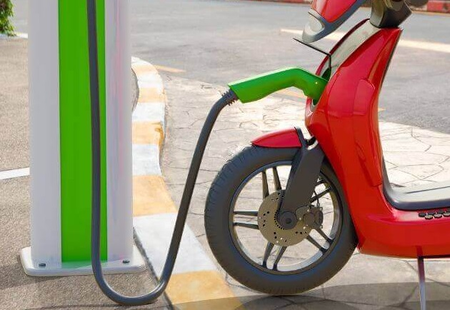
New Delhi, Aug 20 (IANS) India’s battery manufacturing is competitively positioned globally but remains structurally dependent on imports and must rapidly scale cell manufacturing to meet demand, a report said on Thursday.
The report from Wood Mackenzie said India offers a 154 per cent cost advantage over Japan and a 9 per cent advantage over South Korea, placing it second only to China among major manufacturing destinations.
However, locally manufactured cells are expected to cost 25–40 per cent more than imported ones in the near term because of limited scale, higher financing costs and an underdeveloped supplier ecosystem.
"Cell manufacturing is expected to develop progressively with imported inputs over the next two to five years, while full refining capabilities will take more than ten years to establish," the report forecasted.
India’s domestic cell manufacturing currently accounts for less than 1 per cent of its approximately 260 GWh demand pipeline from competitive tenders in 2026, the report added.
The shortfall in supply leaves the country structurally dependent on imports even as policy ambition accelerates.
Despite more than 226 GWh of cell manufacturing capacity announced for construction through 2035, execution delays, financial viability challenges and deep technology dependence on Chinese and Korean licensors mean India remains 10 to 15 years from a globally competitive, self-sufficient cell industry.
India has just 2 GWh of commissioned cell manufacturing capacity as of 2026, against China's cumulative capacity of 2,695 GWh.
China controls between 85 per cent and 98 per cent of global capacity across every major supply chain component, from cathode to anode, separator and electrolyte. Bridging that gap will require India to fundamentally restructure its manufacturing ecosystem, the report noted.
"India's battery storage ambitions are credible, but the gap between policy intent and operational capacity is wide," said Ankita Chauhan, director, Wood Mackenzie.
"The near-term opportunity lies in downstream components such as containers, EMS, and battery packs, where localisation is both technically feasible and commercially attractive," Chauhan added.
—IANS
aar/ag
India needs structural transformation to achieve $2 trillion export target by FY31: Commerce Ministry official
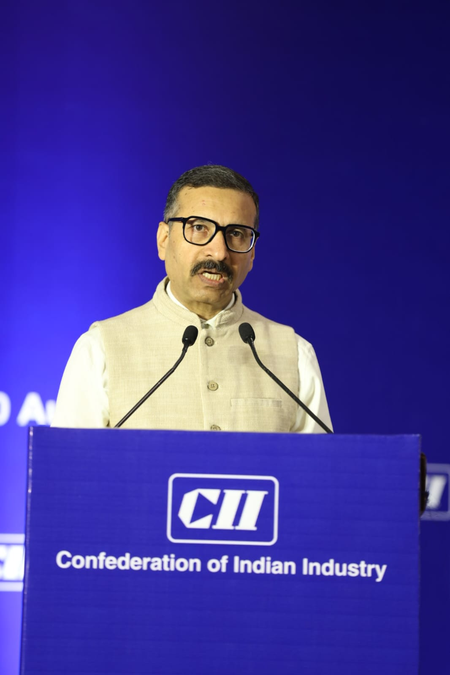
New Delhi, Aug 20 (IANS) India will need to more than double its current export trajectory to achieve its ambitious target of $2 trillion in total exports by FY31, requiring a structural transformation of the country's manufacturing and trade ecosystem, Commerce Ministry Additional Secretary Yashvir Singh said on Thursday.
Addressing the CII Manufacturing Conclave here, Singh said India's total exports had reached an all-time high of $863 billion in FY26, compared with $468 billion in 2014-15. However, he stressed that achieving the $2 trillion target would require more than incremental improvements.
“The ambition of $2 trillion of total exports by 2030 demands that we more than double our current trajectory. That acceleration will not come from incremental improvements. It requires structural transformation,” Singh said.
He said the ongoing global debate around the China-plus-one strategy should not be limited to replacing one supply-chain dependency with another. Instead, India should position itself as a trusted and resilient manufacturing partner capable of offering transparent and reliable supply networks.
“Let us not be China plus one. Let us be India, the trusted partner, the resilient manufacturer and the next great engine of global growth,” he said.
Singh's remarks come amid growing strains in the global trading system, with trade increasingly being used as an instrument of geopolitical policy. He said the multilateral trade order that supported decades of shared prosperity was undergoing significant structural realignment.
Referring to developments at the World Trade Organisation, he pointed to differences at the WTO's 14th Ministerial Conference and the continued paralysis of its appellate body as signs of the challenges facing the multilateral trading system.
He also said the most-favoured-nation principle, a key pillar of global trade, was increasingly being tested by reciprocal tariffs and the unilateral expansion of security exceptions.
“Export restrictions on critical minerals are being weaponised. Technology choke points are being deliberately engineered. Trade is no longer just an economic instrument. It has become a tool of geographic statecraft,” Singh said.
According to Singh, the increasing concentration of manufacturing and critical supply chains has emerged as a major economic security concern. China's share of global manufacturing value added increased from around 3 per cent in 1990 to nearly 28 per cent in 2024, while the country has also established a dominant position in the processing and refining of several critical minerals, including rare earths, graphite and magnesium.
--IANS
pk
India to host BRICS Communications Ministers meet to build resilient digital infrastructure
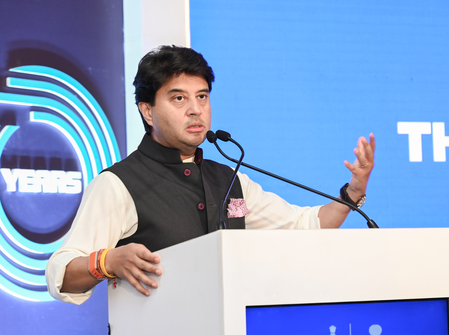
New Delhi, Aug 20 (IANS) India will host the 12th BRICS Communications Ministers Meeting on Friday to deliberate on strengthening cooperation in Information and Communication Technologies (ICTs), digital transformation, innovation and resilient digital infrastructure.
The meeting is being organised under India’s overarching BRICS Chairship theme, “Building for Resilience, Innovation, Cooperation and Sustainability”, and the ICT Track theme, “Innovate, Cooperate and Transform (ICT) for a Resilient Future.”
These priorities underline India’s commitment to fostering inclusive, secure and sustainable digital development and strengthening technology cooperation among BRICS countries, according to an official statement issued on Thursday.
The BRICS meeting, to be chaired by Union Minister of Communications Jyotiraditya Scindia, will provide an important platform for member countries to exchange views on emerging technologies, digital public infrastructure, future networks, cybersecurity, capacity building and inclusive digital connectivity.
The deliberations will also focus on advancing practical cooperation and sharing best practices to support digital transformation across BRICS countries and the wider Global South, the statement said.
India has, during its BRICS Chairship, placed strong emphasis on strengthening cooperation in ICTs through initiatives focused on resilient digital infrastructure, future networks, cybersecurity, Digital Public Infrastructure (DPI), innovation and capacity building.
The Department of Telecommunications has also been leading discussions under the BRICS Working Group for Cooperation in ICTs, including on the proposed BRICS Capacity Building Centres and enhanced cooperation in emerging technologies.
The meeting will also build upon the outcomes and areas of cooperation identified during the 11th BRICS Communications Ministers Meeting held under Brazil’s BRICS Chairship in 2025. The previous meeting reaffirmed the importance of continued cooperation among BRICS members in ICTs, digital public infrastructure and global digital governance.
The Union Minister will further visit the 'Digital BRICS Forum Expo', which will showcase digital technologies, innovations and solutions relevant to the BRICS ecosystem. The Expo will provide an opportunity to highlight India’s technological capabilities and facilitate greater interaction and knowledge exchange among participating countries and stakeholders.
The 12th BRICS Communications Ministers meeting marks another significant milestone in India’s BRICS Chairship and reflects India’s commitment to building stronger partnerships in the digital domain. Through greater cooperation in ICTs, BRICS countries can contribute towards a more resilient, inclusive, secure and sustainable digital future, the statement added.
--IANS
sps/na