
RBI imposes Rs 27.30 lakh penalty on ACRE for management fee violations

Mumbai, Sep 11 (IANS) The Reserve Bank of India (RBI) has imposed a monetary penalty of Rs 27.30 lakh on Asset Care & Reconstruction Enterprise Limited (ACRE) for non-compliance with regulatory requirements related to the charging of management fees.
The central bank said the penalty was imposed through an order dated September 8, 2026, following its statutory inspection of ACRE, an asset reconstruction company (ARC), with reference to its financial position as of March 31, 2025.
"RBI has imposed a monetary penalty of Rs 27.30 lakh on Asset Care & Reconstruction Enterprise Limited for
non-compliance with certain provisions of the directions issued by RBI on income recognition," the central bank said.
"This penalty has been imposed in exercise of powers conferred on RBI
under the provisions of section 12 read with section 30A(1) of the Securitisation and Reconstruction of Financial Assets and Enforcement of Security Interest Act, 2002," it added.
According to the RBI, its supervisory examination found that ACRE had not complied with regulatory directions relating to income recognition. The regulator subsequently issued a show-cause notice to the company seeking an explanation on the matter.
After considering ACRE’s response to the notice, its subsequent submissions and representations made during a personal hearing, the RBI concluded that the charge relating to management fees was established.
The penalty has been imposed under the provisions of the Securitisation and Reconstruction of Financial Assets and Enforcement of Security Interest Act, 2002.
The RBI clarified that the action was taken specifically for regulatory compliance deficiencies and should not be interpreted as a determination on the validity of any transaction or agreement entered into by ACRE with its customers.
The central bank further said that the monetary penalty does not prevent it from initiating any other action against the company in the future, if warranted.
--IANS
pk
FM Sitharaman urges RBI to ‘sharpen capability’ of digital Rupee platform

Mumbai, Sep 11 (IANS) Union Finance Minister Nirmala Sitharaman on Friday urged the Reserve Bank of India to bolster the country’s digital rupee platform and boost both wholesale and retail central bank digital currencies.
Addressing the Global Fintech Fest here, FM Sitharaman said the central bank should “sharpen capability with digital rupee.”
Reflecting on the theme of GFF, the finance minister warned THAT Artificial Intelligence acts as "a double-edged sword" as it helps "detect and perpetrate fraud.”
The seventh edition of the Global Fintech Fest (GFF) 2026 was conducted in Mumbai from September 8-11 with the theme “Potential to Impact: Agentic AI, Tokenisation, Quantum – Trusted, Connected, Global Systems for Inclusive Finance.”
FM Sitharaman lauded India's growth leveraging its demographic dividend. "From building the world's most powerful digital public infrastructure with UPI processing billions of transactions, to standing tall as the fastest-growing major economy and breaking frontiers in space exploration, India is experiencing its demographic dividend in real time," the minister said.
FM Sitharaman reminded financial regulators, competition authorities, data-protection authorities and cyber-security agencies to have a “clear understanding of their respective responsibilities and a reliable mechanism for coordination.”
The minister said that financial activities should not escape appropriate oversight merely because it sits at the boundary between sectors or is delivered through a technology platform rather than a conventional financial institution.
“It is our responsibility to build the right guardrails so that greater speed also builds greater trust. Efficiency and safety should not be competing objectives; good institutional design must make them mutually reinforcing,” the minister said.
“We all collectively need to ensure that innovation expands efficiency without bringing new forms of systemic fragility. AI may assist judgment, but responsibility must remain human and institutional,” FM Sitharaman added.
—IANS
aar/pk
RBI announces OMO bond sales worth Rs 1 lakh crore to absorb excess liquidity

Mumbai, Sep 11 (IANS) The Reserve Bank of India on Friday announced an open market sale of bonds maturing in fiscal 2029 to fiscal 2032 worth Rs 1 lakh crore, and the move aims to drain excess liquidity in the economy.
The sale will be done in three tranches of Rs 50,000 crore, Rs 25,000 crore, and Rs 25,000 crore to be held on September 17, 2026, September 21, 2026, and September 28, 2026, respectively.
It will be done through a multi-security auction using the multiple price method, the central bank said in a statement.
The OMS of bonds is the first net sale of bonds in two years, after it sold notes in the secondary market in September 2024. The central bank had conducted simultaneous purchase and sale of bonds in fiscal 2021 and 2022.
"Eligible participants should submit their bids in electronic format on the Reserve Bank of India Core Banking Solution (E-Kuber) system between 9:30 am and 10:30 am on September 17, 2026. The result of the auction will be announced on the same day," said RBI.
Indian bonds extended their declines after the news of debt sale, with yields touching their highest levels in over three months.
The benchmark 10-year bond yield rose to 7.035 per cent, up 6 bps on the day, while its 5-year bond rose nearly 10 bps to 6.6222 per cent.
India's banking system is experiencing surplus cash after lenders raised a much larger-than-expected $127 billion under the RBI's special forex mobilisation scheme, which boosted central bank reserves to an all-time high.
The excess rupee liquidity has pushed overnight rates below the policy repo rate, leading the central bank to take liquidity absorption measures even as elevated oil prices threaten to add to inflationary pressures.
In order to absorb excess liquidity, markets had expected a combination of temporary and permanent measures including FX swaps, MSS bonds, OMO sales, and possible CRR hikes, a recent report had said.
—IANS
aar/pk
India’s digital payment system among most advanced in the world: Paytm CEO

New Delhi, Sep 11 (IANS) Paytm Founder and CEO Vijay Shekhar Sharma on Friday said that the country’s digital payment system is among the most advanced in the world.
Speaking to IANS on the sidelines of the BRICS Summit 2026 here, he said the Summit is taking place in India when the whole world has seen our country as an able, capable, self-reliant and self-dependent country.
“Be it our payment system, financial services, AI capability or technology, our country has created is a contribution towards BRICS from our side,” he noted.
Sharma further stated that over the last 10 years, Prime Minister Narendra Modi has taken up the mission of making the country self-reliant.
“Many entrepreneurs like me, along with fellow entrepreneurs and businesses, have contributed to this mission and embraced it as an opportunity. Today, the country’s payment system is among the most advanced in the world,” he told IANS.
Vamsi Udayagiri, Founder and CEO of unified commerce platform Hesa, said a new global leadership is emerging because with the evolving global situation, large nations like India, China and Russia coming together will be a great opportunity to actually position where there will be a lot of, you know, “cross-border changes in the world and I see a lot of positive changes and especially with our leadership of PM Narendra Modi, where they're focusing on Startup India, Make in India and more”.
He said this is a great way of positioning India from Global South to the entire world.
“I think the kind of leadership that India has taken in AI or digital transformation or economy transformation, especially in terms of GDP growth and the focus on startups, there is a lot that India can position, especially with India driving the MSME cooperation portal for the BRICS economies or invoice discounting for them,” Udayagiri said at the event in the national capital.
--IANS
pk
NSE defends IPO pricing process, says derivatives revenue to remain sustainable

Mumbai, Sep 11 (IANS) The National Stock Exchange (NSE) said on Friday that its premium valuation was determined by merchant bankers and that the exchange had followed the pricing process recommended by them, while derivatives revenue is expected to remain sustainable as India’s capital markets continue to evolve.
Responding to IANS questions on the sidelines of an IPO conference in Mumbai, NSE officials said the exchange itself had not determined or provided a separate justification for the premium valuation.
“Premium valuation, we don't know. We have not given the justification. Everything has been decided through the merchant bankers and we have priced it accordingly,” the exchange said.
On the sustainability of revenue from derivatives in the coming years, NSE pointed to the evolution of India's capital markets and regulatory framework over the past three decades. The exchange said several measures introduced by the Securities and Exchange Board of India (SEBI), including stringent rules, have strengthened investor protection and encouraged greater participation by retail investors.
“What we have seen over the last 30 to 35 years will continue to be repeated,” the exchange said, indicating that the expansion of India's investor base and the development of the capital market could support its business going forward.
NSE Managing Director and CEO Ashishkumar Chauhan said that the IPO-bound exchange has not applied to SEBI for permission to trade its own shares on its platform.
NSE has fixed a price band of Rs 1,700 to Rs 1,785 per share for its initial public offering. The issue will open for subscription on September 17 and close on September 21, while bidding by anchor investors is scheduled for September 16. The shares are expected to be listed on September 24.
Chauhan said the exchange has played a significant role in channelising domestic savings into the capital markets since its establishment.
“NSE is India’s largest exchange and by many counts, it’s one of the largest in the world. The purpose of NSE was also to channel savings into capital. It’s a testament that NSE has fulfilled the mandate its founders started with,” Chauhan said at a press conference in Mumbai.
He also highlighted NSE’s vertically integrated business model and its presence across multiple asset classes. “We are among the largest vertically integrated exchanges in the sense that we own our technology. Some exchanges focus on commodities or equities. We are across asset classes, commodities, currencies, electricity, even charity,” he said.
--IANS
pk
Indian equities expected to see re‑rating as H2 earnings pick up: Report

New Delhi, Sep 11 (IANS) Indian equities could be set for a re‑rating as second‑half earnings accelerate and domestic institutional capital returns, a report said on Friday.
The report from Omniscience Capital said that the consolidation phase should be treated as an accumulation window rather than as an opportunity to chase recent performance.
The firm said that opportunities lie in businesses benefiting from structural capital expenditure, energy transition and infrastructure development.
The report cautioned that pockets of the mid‑ and small‑cap segments remain richly valued and urged selective deployment into high‑quality growth businesses available at discounted valuations.
Opportunities are concentrated in businesses exposed to sustained growth and operating leverage but available at favourable valuations, the report noted.
Key areas include banking and financial services, infrastructure and power, and business services, supported by resilient credit growth, rising electricity demand and a recovery in corporate capex.
The moderation in Indian equity valuations has led to renewed institutional interest, with foreign investors turning net buyers on multiple occasions after a two-year moderation in valuations.
Domestic fundamentals remain supportive, with FY27 real GDP growth estimated at around 7 per cent even though crude oil prices call for caution.
With direct, retaliatory military actions between the US and Iran, the hope for a diplomatic resolution through a longer-term peace deal has taken a severe blow, the report forecasted.
“Multi-year forward earnings execution is fully priced in, leaving prospective returns barely near the discount rate while exposing investors to severe de-rating risk,” said Ashwin K. Shami, President & Chief Portfolio Manager, OmniScience Capital.
The firm saw a valuation disconnect across market capitalisations, with Nifty Smallcap 250 and Midcap 150 trading at trailing P/E multiples of around 34-fold and 30-fold, respectively, compared with around 20-fold for Nifty 100.
Global equity markets continue to contend with elevated risk-free rates, with US 10-year Treasury yields near one-year highs of 4.6 per cent-4.7 per cent, while geopolitical tensions have added volatility to crude oil and commodities. The US Federal Reserve’s policy decision on September 16 remains a near-term factor for Treasury yields and global risk appetite.
—IANS
aar/ag
Fintech firms key partners in advancing financial inclusion: RBI Governor

Mumbai, Sep 10 (IANS) Reserve Bank of India (RBI) Governor Sanjay Malhotra has said fintech companies have emerged as important partners in India’s financial ecosystem and will play an increasingly significant role in expanding financial inclusion across the country.
Speaking to IANS on the sidelines of the Global Fintech Fest (GFF) 2026, Malhotra said the central bank is working closely with fintech firms and financial institutions to make financial services more accessible, reduce digital fraud and lower the cost of banking and financial services.
"Financial inclusion, customer-centricity and the development of a secure digital financial system remain key priorities for the RBI," he said.
"Technology can help take financial services beyond traditional banking channels and bring them closer to people in villages and households," he added.
“Fintech is a very important partner for us,” Malhotra said, stressing the need for greater collaboration between fintech companies and financial sector institutions to achieve wider financial inclusion and strengthen customer-focused services.
Addressing the GFF 2026 earlier, the RBI Governor highlighted the substantial progress India has made in financial inclusion in recent years. He said the country currently has around 57 crore Pradhan Mantri Jan Dhan accounts, 25 crore micro-insurance policies and 9 crore beneficiaries under the Atal Pension Yojana.
The rapid expansion of Unified Payments Interface (UPI) transactions has also made digital payments an integral part of everyday life for millions of Indians. Malhotra said the significance of this transformation lies not merely in the scale of these numbers, but in the extent to which digital financial services have become embedded in the daily lives of ordinary citizens.
Banking services are no longer confined to physical branches, he said, with mobile phones and digital platforms increasingly enabling people to access financial services directly.
Malhotra attributed much of the progress in financial inclusion to collaboration between the public and private sectors, but said the next phase should focus on making financial services truly universal and available everywhere.
Malhotra urged fintech companies to give the highest priority to cybersecurity, transparency and consumer protection as digital financial services continue to expand.
“A financial system that works at the speed of light but cannot earn people’s trust will not achieve widespread acceptance,” he said.
--IANS
pk
Govt pushes private sector to secure critical mineral assets overseas: Minister
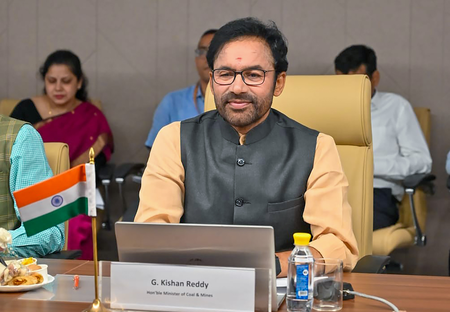
New Delhi, Sep 11 (IANS) The government is encouraging private companies to acquire critical mineral assets overseas and bring raw materials to India as part of a broader strategy to strengthen supply security and reduce import dependence, Union Coal Minister G Kishan Reddy said on Friday.
Speaking on the sidelines of the CII Global Summit on Advanced Minerals, Reddy said the government is increasingly relying on private sector participation to secure access to critical minerals that are essential for sectors ranging from electronics and clean energy to defence and space technology.
"We are giving encouragement to the private sector. Through Indian embassies and foreign embassies in India, companies can go to mineral-rich countries for land acquisition, mining and semi-processing and bring raw materials back to India," he said.
The minister stressed that private firms have a key role to play in expanding India's global footprint in critical minerals, describing overseas acquisitions as a pressing requirement for the country.
Reddy told reporters that critical minerals have become central to global economic and industrial development and further added that India has signed several agreements in the sector and is engaging with multiple resource-rich nations to strengthen supply chains.
While domestic exploration activities have intensified, lithium remains scarce within the country, he said. To address this gap, India has acquired five lithium blocks in Argentina where exploration work is underway.
The government is also in discussions with Australia and Chile and is encouraging private companies to pursue overseas lithium assets, according to him.
"Government-to-government and private-to-private efforts are both progressing simultaneously," the minister said.
On the domestic front, the minister highlighted the National Critical Mineral Mission, under which incentives worth Rs 36,000 crore have been announced to support the sector.
He said India is also focusing on urban mining and recycling of e-waste, estimating that 25-30 per cent of the country's critical mineral requirements could eventually be met through recycled materials.
According to him, the government has shortlisted 58 entities from 125 applicants in the first phase of a recycling initiative backed by an outlay of Rs 1,500 crore.
He added that four mineral processing plants are being established in Maharashtra, Gujarat, Andhra Pradesh and Odisha to process imported minerals, domestic resources and recycled material.
--IANS
ag/
India’s BRICS trade doubles to $417 bn in five years; exports seen reaching $200 bn by 2030

New Delhi, Sep 10 (IANS) India’s trade with BRICS countries has more than doubled over the past five years, rising from $203 billion in 2020-21 to $417 billion in 2025-26, a new report said on Friday.
According to ASSOCHAM Global Research and Strategy Centre report titled “The Rise of BRICS Nations: An opportunity to scale Indian Exports to $200 Bn to BRICS by 2030”, India’s exports to BRICS partner countries stood at $96 billion in 2025-26 and projected that the country could raise its exports to the bloc to $200 billion by 2030 by strengthening South-South cooperation and diversifying beyond traditional export markets.
According to ASSOCHAM, the expanding BRICS+ economic landscape offers significant opportunities for Indian companies across engineering goods, pharmaceuticals, chemicals, textiles and apparel, automobiles, electronics, minerals and metal products, gems and jewellery, agricultural and marine products, renewable energy, healthcare and digital services.
The report noted that the trade dynamics within BRICS+ will continue to be shaped by the economic performance of member economies, trade policies and the broader global economic environment. For India, the opportunity extends beyond increasing merchandise exports to strengthening production and sourcing networks, value chains, technology cooperation and settlement systems, while also learning from ecosystems and best practices developed across member economies.
India has maintained an average GDP growth of more than 7 per cent over the last five financial years from 2021-22 to 2025-26. The economy also recorded 7.8 per cent growth in the first quarter of the current fiscal year, reinforcing its position as one of the fastest-growing major economies globally.
ASSOCHAM President Nirmal K. Minda said the growing global significance of developing and emerging economies within BRICS reflects the potential for sustained growth through resilience, innovation, cooperation and sustainability. He said recent initiatives aimed at enhancing trade and cross-border investment under the BRICS framework could act as a catalyst for several high-growth sectors.
The report said stronger BRICS trade cooperation could become particularly important amid ongoing geopolitical realignments. Deeper economic engagement could improve India’s access to critical minerals, energy, technology and capital, while also creating new opportunities for manufacturing and strengthening resilient supply chains.
--IANS
pk
Power demand doubles in a decade in India, installed capacity climbs to 552 GW

New Delhi, Sep 11 (IANS) India’s power sector is undergoing a major expansion, driven by rapidly rising electricity demand, a sharp increase in generation capacity and the continued strengthening of the country’s transmission network and renewable energy base, the government said on Friday.
Peak power demand has nearly doubled over the past decade, rising from 135.9 GW in 2013-14 to a record 270.8 GW on May 21, 2026. The sharp increase reflects the expansion of economic activity as well as growing electricity consumption across households, industries and businesses, the Centre said.
To keep pace with the rising demand, India’s total installed power generation capacity has expanded significantly, increasing from 249 GW in March 2014 to 552 GW by July 2026. The substantial addition in capacity has strengthened the country’s ability to meet present electricity requirements while preparing the power system for future demand.
The transmission infrastructure has also witnessed significant growth during the period. India’s transmission network expanded from 2,91,336 circuit kilometres (ckm) in April 2014 to 5,10,594 ckm by July 2026. The wider network is helping build a more integrated national grid and improve the movement of electricity between regions, supporting more reliable power supply.
Alongside the expansion of conventional power infrastructure, India has accelerated its transition towards renewable and other non-fossil sources. The country has emerged as the world’s third-largest nation in terms of renewable energy installed capacity, behind China and the United States, according to the Renewable Energy Statistics 2026 released by the International Renewable Energy Agency (IRENA).
As of March 31, 2026, India’s total non-fossil fuel installed capacity stood at 283.46 GW. This included 274.68 GW of renewable energy capacity and 8.78 GW of nuclear power capacity. During 2025-26, India added a record 55.3 GW of non-fossil fuel capacity, marking the highest annual addition so far and nearly double the increase recorded in the previous year.
The country has also achieved a significant milestone in its climate and energy transition. In June 2025, non-fossil fuel sources accounted for 50% of India’s cumulative installed power capacity, enabling the country to reach its Paris Agreement target five years ahead of the 2030 deadline.
--IANS
pk