
S. Korea announces plans to formally introduce abortion pills

Seoul, Sep 16 (IANS) The government on Wednesday announced plans to formally allow the use of abortion pills by women up to nine weeks pregnant, as related regulations remain unrevised following the Constitutional Court's 2019 striking down of the abortion ban.
The ministries of gender equality, health and food and drug safety reported the plans at a government policy coordination meeting, noting the institutional vacuum has created risks to women's health and safety.
Under the plan, abortion pills will be introduced in phases, with both prescription and dispensing taking place directly at hospitals for the first two years, reports Yonhap news agency.
When necessary conditions are fulfilled, the system will shift to doctors prescribing and pharmacies dispensing.
The food and drug safety ministry said it has received applications for approval of abortion pills for use by women up to nine weeks pregnant and that it will vet their safety and quality before proceeding.
Some women are resorting to "dangerous methods" and the problem should no longer be left unattended because it amounts to neglecting the people's lives and safety, Prime Minister Han Seong-sook said during the meeting.
"Safety is more important than anything else," she said. "We must come up with measures to help women in need to receive treatment within the safe medical system, rather than having to rely on unverified methods."
Han said the government is seriously taking "concerns regarding the value of life" too.
"This measure is aimed at protecting the people's health rather than encouraging abortion. We ask for your broad understanding of this intent," she said.
The formal introduction of abortion pills is one of the administrative tasks set by the Lee Jae Myung government. The initiative got a boost after Lee instructed the government in July to look into ways to allow women to safely take abortion pills even before the necessary legal framework is in place.
—IANS
na/
Measles outbreak in Bangladesh kills over 1,000 in 6 months as vaccination gaps persist: Report
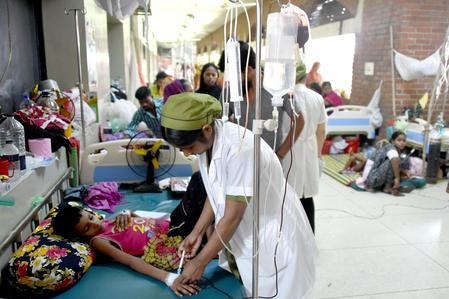
New Delhi, Sep 15 (IANS) Bangladesh is grappling with a severe measles outbreak that has killed over 1,000 people since mid‑March, exposing immunity gaps after years of declining routine vaccination coverage and disruptions to immunisation services, a new report has said.
The report from Al Jazeera cited health ministry data showing 1,009 deaths by September 9, including 100 laboratory‑confirmed measles fatalities and 909 classified as suspected measles deaths.
Authorities said 19.75 million children have been vaccinated in an emergency campaign that began in April, against an initial target of about 18 million children aged six months to under five years.
However, public health experts said that the original estimate of the children needing vaccines was too low.
Further, the national coverage figures can obscure pockets where large numbers of susceptible children remain, they said.
Bangladesh’s 2023 Coverage Evaluation Survey found first‑dose measles‑rubella coverage dropped to 86 per cent in 2023 from 88.6 per cent in 2019, while second‑dose coverage fell to 80.7 per cent from 89 per cent over the same period. Measles transmission typically requires roughly 95 per cent coverage to be interrupted.
Before 2026, Bangladesh had not conducted a nationwide supplementary measles-rubella campaign since the last one ran from December 2020 to January 2021.
“Coverage therefore remained below the approximately 95 percent level needed to interrupt measles transmission, allowing the number of susceptible children to grow over successive years,” the report noted.
Routine immunisation was disrupted during the COVID‑19 pandemic, and UNICEF has also cited misinformation and vaccine hesitancy among factors preventing children from receiving vaccinations.
Mushtuq Hussain, a former principal scientific officer at Bangladesh’s Institute of Epidemiology, Disease Control and Research (IEDCR) said that regime change in the country caused delays in vaccine procurement, and vaccine shortages in 2024 and 2025.
"Cases began rising markedly in January 2026 and surged through March, prompting Bangladesh to notify the World Health Organization (WHO) of a nationwide outbreak on April 4," the report said, adding that cases had been reported in 58 of the country’s 64 districts by mid-April.
—IANS
aar/ag
FSSAI directs Nilgiri Oil, Aquagri Processing to recall products over ‘unsafe’ concerns

New Delhi, Sep 12 (IANS) The Food Safety and Standards Authority of India (FSSAI) on Saturday said that it ordered the immediate recall of two food products of Nilgiri Oil & Allied Industries and Aquagri Processing Pvt Ltd after laboratory tests found them unsafe and non-compliant with food safety standards.
In the two separate recall notices, the food regulator directed Nilgiri Oil & Allied Industries to recall its product, Shalimar's Chef - Coriander Powder and Aquagri Processing Pvt Ltd to withdraw Carrageenan from the market.
According to FSSAI, a regulatory sample of Shalimar's Chef coriander powder was collected from the premises of Nilgiri Oil & Allied Industries under provisions of the Food Safety and Standards (FSS) Act, 2006. Laboratory analysis found the sample unsatisfactory with regard to pesticide residues and not conforming to prescribed standards under relevant food product and contaminant regulations.
The food analyst classified the sample as unsafe. Following an appeal by the food business operator (FBO), the second sample was sent for retesting. The retest also found the product non-compliant with standards relating to pesticide residues, leading authorities to reaffirm the product's unsafe status, according to the regulator.
In a separate case, FSSAI said a sample of carrageenan collected from Aquagri Processing Pvt Ltd was found non-compliant due to the presence of cadmium beyond permissible standards. The product was subsequently declared unsafe by the food analyst.
After the company exercised its right to appeal, the sample was retested by a Referral Food Laboratory, which also concluded that the product was unsafe under the provisions of the FSS Act.
FSSAI said both products were being manufactured in contravention of applicable food safety regulations. The regulator has directed the companies to immediately recall the affected products from the market and undertake all measures mandated under the Food Safety and Standards (Food Recall Procedure) Regulations, 2017.
---IANS
ag/
IRDAI imposes Rs 1 crore penalty on Canara HSBC Life over mis-selling policy to 88-year-old

New Delhi, Sep 11 (IANS) The Insurance Regulatory and Development Authority of India (IRDAI) has imposed a penalty of Rs 1 crore on Canara HSBC Life Insurance Company Limited for mis-selling a life insurance policy to an 88-year-old customer.
The regulator found several lapses in the sale of a deferred annuity policy, including deficiencies related to product suitability, solicitation, disclosures and the insurer’s internal controls.
The regulatory proceedings were initiated after IRDAI took suo motu cognizance of a social media post highlighting the sale of the policy to the senior citizen. The policy carried an annual premium of Rs 2 lakh payable for four years and was sold through Canara Bank, the insurer’s corporate agent. The customer’s daughter was named as the annuitant under the policy.
During its examination, IRDAI found that the approved product permitted entry only for customers between 30 and 80 years of age. However, the proposer was 88 years old when the policy was sold.
The regulator also observed that the insurer had failed to undertake an adequate assessment of the customer’s financial circumstances and the suitability of the product, particularly considering his age and the sizeable premium commitment.
IRDAI identified additional shortcomings in the sales process, including deficiencies in the verification call, proposal form and disclosure of key policy features. The benefit illustration did not contain a verifiable acknowledgement from the policyholder, while the Customer Information Sheet and proposal form were not provided to the customer at the time of sale.
The regulator also noted that the premium was collected before the policy was issued. It further found that the implications of the proposer’s death during the premium-paying period had not been adequately explained to the customer.
Separately, IRDAI has proposed the creation of a Public Insurance Registry (PIR), a digital public infrastructure intended to build a more connected, transparent and efficient insurance ecosystem.
According to the regulator, the proposed registry would help reduce information gaps and promote greater competition among insurers and other market participants. This, in turn, is expected to encourage innovation in insurance products, competitive pricing, improved services and a better customer experience.
--IANS
pk
India administers over 80 lakh HPV vaccine doses under national campaign since Feb

New Delhi, Sep 11 (IANS) India has crossed a significant milestone in its efforts to prevent cervical cancer, with over 80 lakh doses of Human Papillomavirus (HPV) vaccine administered under the National HPV Vaccination Campaign since its launch in February 2026, an official statement said on Friday.
Gujarat, Uttar Pradesh, Madhya Pradesh and Mizoram have achieved 100 per cent coverage of their respective identified target populations, the statement from Ministry of Health and Family Welfare said.
Bihar, Andhra Pradesh and Assam have crossed 90 per cent coverage, while Karnataka has achieved more than 85 per cent coverage. Chhattisgarh, Sikkim, Kerala, Telangana and Odisha have crossed 60 per cent coverage.
The nationwide drive, launched by Prime Minister Narendra Modi in February 2026, offers voluntary, single‑dose HPV vaccination free of cost to 14‑year‑old girls at government health facilities with parental consent.
As per Registrar General of India (RGI) 2021 estimates, approximately 1.2 crore girls constitute the annual cohort of 14-year-olds who are expected to benefit from the initiative each year.
The progress in Assam and other Northeastern States also demonstrated the role of integrated community health networks and coordinated field-level action in expanding access across geographically diverse areas.
Healthcare providers, including paediatricians, gynaecologists and experts from institutions such as AIIMS, along with teachers and frontline health workers including ASHAs and ANMs, have supported awareness and mobilisation efforts across states and districts.
The campaign has also leveraged India’s digital health infrastructure through the U-WIN platform, enabling programme managers to monitor vaccination coverage at the district level, identify coverage gaps and missed beneficiaries, and support more effective programme planning and resource allocation.
Currently, 87 per cent of upper-middle-income countries, 78 per cent of lower-middle-income countries and 54 per cent of low-income countries have adopted HPV vaccines in their National Immunization Programmes.
All vaccination sessions under the campaign are conducted under the supervision of trained medical officers at government health facilities.
Government health facilities are also linked with 24×7 healthcare facilities for appropriate management of rare Adverse Events Following Immunization (AEFI). This mechanism ensures timely assessment, monitoring and management of any vaccination-related adverse event.
With the campaign progressing towards its final phase, the focus remains on reaching the remaining eligible beneficiaries and ensuring that no eligible girl is left behind, the ministry said.
The Ministry of Health and Family Welfare continues to work closely with States and Union Territories, healthcare professionals, frontline health workers and communities to strengthen awareness, facilitate access and support effective implementation of the HPV Vaccination Campaign, the statement noted.
—IANS
aar/pk
Pharma racket: Karnataka SIT raids 10 locations across 6 states

Bengaluru, Sep 11 (IANS) The Karnataka Special Investigation Team (SIT), probing the fake pharmaceuticals racket that was recently unearthed in Dodderi on the outskirts of Bengaluru in Ramanagara district, conducted raids at 10 locations across India. The raids were conducted at multiple locations in Karnataka, Haryana, Maharashtra, Tamil Nadu, Himachal Pradesh and Telangana on Friday.
The operation was carried out jointly by the SIT and the Drugs Control Department as part of the ongoing investigation into the alleged counterfeit medicine network.
Raids were conducted at multiple locations in Karnataka, Himachal Pradesh, Haryana, Mumbai, Chennai and Telangana.
Around 80 to 100 officials and staff members are involved in the searches, which targeted offices, properties and other premises linked to companies allegedly involved in manufacturing, repackaging and supplying counterfeit medicines.
In Bengaluru, searches were conducted at the premises of pharmaceutical company at Minerva Circle near Lalbagh as part of the probe.
Officials are examining medicines allegedly sourced from different locations and subsequently repackaged or supplied through the network. The investigation has reportedly revealed an international connection, with counterfeit labels allegedly being sourced from foreign locations.
The raids were conducted in continuation of the investigation into the racket that came to light around two weeks ago. Investigators are examining the supply chain, sources of the medicines, manufacturing and repackaging facilities, as well as the distribution network.
The case came to light in August 2026 after the Food Safety and Drug Administration (FSDA) and local police busted a major counterfeit medicine racket near Bidadi in Ramanagara district. Authorities seized counterfeit medicines estimated to be worth around Rs 5 crore and uncovered an alleged unlicenced repackaging facility operating from a farmhouse in Kurubara Karenahalli, near the Bidadi toll gate.
According to the investigation, low-cost, substandard or expired medicines were allegedly sourced from different states. The medicines were reportedly transferred into new vials and repackaged using counterfeit labels bearing the names of expensive and prominent multinational pharmaceutical brands before being sold at substantially higher prices.
The racket assumed greater significance after authorities found that some of the counterfeit medicines were allegedly intended for use in hospital Intensive Care Units (ICUs). The drugs were reportedly supplied to private hospitals and pharmacies at prices nearly 50 per cent lower than the market rates.
Karnataka Health Minister, U.T. Khader, had described the case as a major drug mafia operation and ordered steps to investigate the suspected inter-state network. The formation of the SIT was aimed at identifying the wider network and tracing those involved in sourcing, repackaging, labelling and distribution of the medicines.
The latest raids across six states are expected to help investigators establish the extent of the alleged network and identify other individuals and companies involved in the supply of counterfeit pharmaceuticals.
Officials are also examining the alleged international links and the source of the counterfeit labels as part of the continuing investigation.
--IANS
mka/rad
Union Minister calls for people-centric delivery of Ayush healthcare services
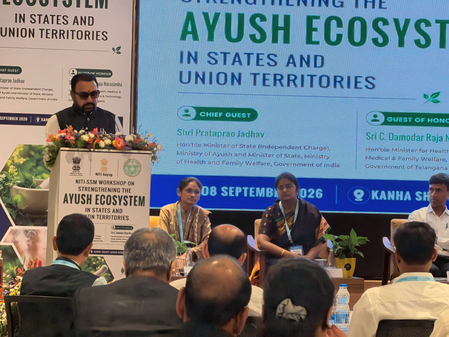
New Delhi, Sep 9 (IANS) Union Minister Prataprao Jadhav has emphasised the need for coordinated efforts by the Centre, states and Union Territories (UTs) to expand the reach and impact of Ayush systems, according to an official statement released on Wednesday.
He called for greater focus on quality, accessibility, and people-centric delivery of Ayush healthcare services to address the evolving health needs of the population.
Speaking at a national workshop organised by NITI Aayog in Hyderabad, Jadhav called upon states and UTs to strengthen the delivery of accessible, people-centric and quality Ayush services across the country.
It brought together senior officials from the Central Government, more than 30 states and Union Territories, and experts from various organisations to deliberate on strengthening the Ayush ecosystem through shared experiences, best practices and collaborative action.
The workshop provided a platform for States and UTs to share experiences, best practices and innovative approaches across key areas, including Ayush healthcare delivery, education, research, capacity building and integration with the broader healthcare system, the statement said.
Prof (Dr) M Srinivas, Member (Health), NITI Aayog highlighted the importance of technology-integrated and evidence-based approaches to integrative healthcare, with the potential to improve health outcomes in India and beyond.
Vaidya Rajesh Kotecha, Secretary, Ministry of Ayush, emphasised the pivotal role of States and UTs in strengthening the Ayush ecosystem and ensuring effective implementation and delivery of Ayush services at the grassroots level.
According to the statement, the deliberations reaffirmed the importance of Centre-State collaboration in building a stronger, accessible and people-centric Ayush ecosystem and in advancing the Government’s vision of holistic and integrated healthcare for all.
Incorporating standardised health terminologies will ensure Ayush interventions become an integral part of broader digital health ecosystems, matching modern health informatics standards, Kotecha said recently.
--IANS
na/
When a failing heart left no option but transplant, help came from Gujarat minister
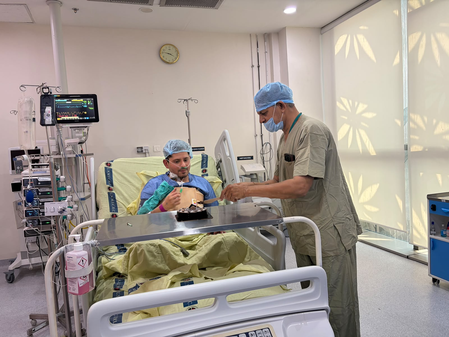
Surat, Sep 6 (IANS) A 37-year-old Surat resident has received a new lease of life after undergoing a free heart transplant at Ahmedabad’s U.N. Mehta Heart Hospital, following efforts by state Health Minister Praful Pansheriya and the hospital’s transplant team.
Kishan Pethani, originally from Amreli and now living in Surat, had been suffering from a serious heart condition for nearly two years. His condition deteriorated despite treatment in Mumbai, Ahmedabad and Surat, including the insertion of two stents at a private hospital in Surat.
Doctors eventually advised that a heart transplant was his only option. According to Kishan, his financial condition made the prospect of a transplant particularly difficult.
He approached Pansheriya, explaining his medical condition and financial circumstances, following which the minister recommended his case to U.N. Mehta Hospital.
“My heart was damaged over time, and there was no option other than a heart transplant. When I brought my illness and weak financial condition to the attention of Minister Praful Pansheriya, he recommended me to U.N. Mehta Hospital. Through his efforts, my heart transplant was successfully performed on June 27, and today I am completely healthy,” he said.
The transplant was carried out, under the supervision of Dr Vishal Sharma, by Dr Chirag Doshi and Dr Pratik Manek. Kishan said the treatment had given him what he described as a "new life".
He also recalled an emotional moment during his recovery. His birthday fell on July 3, shortly after the transplant, and doctors and nursing staff at U.N. Mehta Hospital joined him in cutting a cake to mark the occasion.
“It became a memorable moment for me and a lifelong cherished memory,” he said.
After recovering, Kishan met Pansheriya personally to express his gratitude. Speaking about organ donation, Pansheriya said organs donated by a single brain-dead person could potentially save the lives of seven to eight people.
He added that donated tissues, including skin, eye corneas, bones and heart valves, could benefit around another 50 to 75 needy people.
"Government institutions including Ahmedabad Civil Hospital, the Kidney Hospital and Surat Civil Hospital had carried out significant work in organ donation and transplantation, with support from doctors and NGOs working to raise awareness about the process," Pansheriya noted.
He also praised families who agree to donate the organs of deceased relatives despite the grief of losing a loved one. Such decisions, he said, represented a humanitarian act that could give others a chance at life.
“Such collective efforts towards organ donation have given a new lease of life to several needy patients,” Pansheriya said, adding that Kishan had now regained the ability to walk and run as before.
The minister appealed to citizens to come forward and participate in organ donation, particularly in brain-dead cases, so that donated organs and tissues could help more patients awaiting transplants.
Gujarat has continued to focus on organ donation and transplantation as part of its public healthcare system, with government hospitals and transplant centres playing a key role in facilitating treatment for patients who otherwise may not be able to afford such procedures.
Recent discussions on Gujarat’s healthcare system have also highlighted the state's efforts to expand access to transplantation and improve coordination in organ donation.
--IANS
mys/uk
FSSAI suspends licences of two food businesses in South 24 Parganas over major safety violations
New Delhi , Sep 6 (IANS) The Food Safety and Standards Authority of India (FSSAI) on Sunday said that it has suspended the licences of two food businesses in West Bengal’s South 24 Parganas district following enforcement action that found severe violations of food safety, hygiene and sanitation requirements.
The licences of Kailash Formulation and Sanecure Water Project have been suspended in the interest of public health and will remain suspended until further orders, according to FSSAI.
"Enforcement drives in South 24 Parganas, West Bengal, lead to the suspension of FSSAI licenses for Kailash Formulation and Sanecure Water Project due to severe violations of hygiene, sanitation, and compliance standards," it said.
In the case of Kailash Formulation, authorities found the overall cleaning, hygiene and sanitation of the premises to be unsatisfactory.
The inspection also found inadequate hand-washing, changing and hygiene facilities, along with missing medical examination, inoculation and personal hygiene records for food handlers.
The company was also found to have failed to maintain mandatory laboratory test reports, calibration records, certificates of analysis (COAs), product control-sample records and other required documentation. Inspectors further noted inadequate lighting, flaking plaster and paint, improper waste and old-stock management, and the absence of preventive maintenance records and sewage-disposal records.
The enforcement assessment also found non-compliance related to packaging, raw materials and training. Food-grade certificates and migration reports for packaging materials, including PET bottles and caps, were not available. Based on the detailed assessment, inspection report and relevant documents, FSSAI concluded that the premises showed severe non-conformance with stipulated sanitary, hygienic and food safety requirements.
At Sanecure Water Project, inspectors observed poor hygiene and sanitation, inadequate pest-proofing and significant pest infestation, raising serious concerns over food safety. The inspection also found inadequate personal hygiene facilities, including hand-washing facilities and washrooms, as well as a lack of preventive maintenance of equipment and machinery. Rust and corrosion were observed on equipment.
Several key compliance documents were also found missing at Sanecure Water Project, including a pest-control agreement, food-handler medical and inoculation records, control-sample records, customer complaint and corrective and preventive action (CAPA) records, and vehicle hygiene checklists.
The inspection further found that potable water testing reports and certificates of analysis for raw materials and chemicals were unavailable, along with approved-vendor documentation. FSSAI said a copy of the water test laboratory record was also found to have been digitally edited or altered.
--IANS
pk
Affordable healthcare tech hub at IIT Kharagpur shifts to self sustaining model
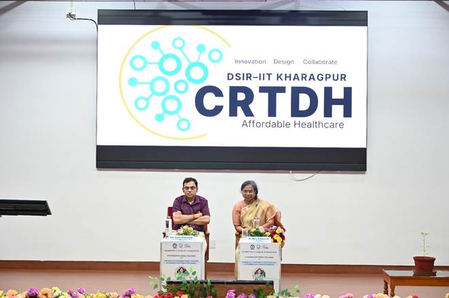
New Delhi, Sep 5 (IANS) The Common Research and Technology Development Hub on Affordable Healthcare at IIT Kharagpur has entered a sustainable phase, transitioning from grant support to a self‑sustaining national facility that will continue to develop and commercialise low‑cost medical technologies, an official statement said on Saturday.
The hub will meet operational costs through user fees, industry sponsorships and translational partnerships while continuing to provide infrastructure and technical support to MSMEs, start‑ups and innovators.
The facility will continue to provide state-of-the-art infrastructure, technical expertise, and technology development support to MSMEs, startups, innovators, and other stakeholders.
The Sustainable Phase of the DSIR‑CRTDH was inaugurated by Dr. N. Kalaiselvi, Secretary, Department of Scientific and Industrial Research and Director General (DSIR), Council of Scientific and Industrial Research, the statement from the Ministry of Science & Technology said.
"The transition of the CRTDH to a self-sustaining model marks an important milestone in strengthening industry–academia collaboration, technology translation, and innovation-led healthcare solutions, while ensuring the continued availability of shared research and technology development infrastructure," the statement noted.
CRTDH has facilitated over 20 technology transfers, many already commercialised, and has partnered with clinical and non-governmental organisations to establish rural health units to support the deployment of affordable healthcare technologies through rural health units.
Kalaiselvi emphasised the role of DSIR and the network of CRTDHs in enabling MSMEs, start-ups and individual innovators to strengthen indigenous capability in medical technology.
The continued functioning of a CRTDH beyond the period of DSIR support demonstrates the intended outcome of the programme to serve industry and innovators in a self-sustaining mode, Kalaiselvi said.
She emphasised that wider utilisation of these facilities would contribute to strengthening the country's indigenous technological capabilities and advancing self-reliance in medical device technologies.
Suman Chakraborty, Director, IIT Kharagpur highlighted the importance of frugal innovation in addressing the constraints faced in real-world healthcare delivery.
He said that designing technologies for use in settings without sophisticated infrastructure and by frontline health workers requires engineering solutions that are robust and accessible.
—IANS
aar/ag