
Tripura tribal bodies’ poll results prove people reject CPI (M)-Congress ideology: CM Saha
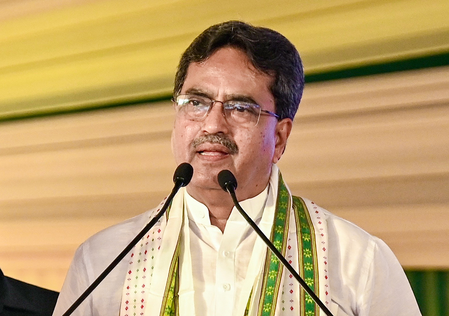
Agartala, Oct 6 (IANS) Tripura Chief Minister Manik Saha said on Tuesday that the people of the state were not ready to accept the CPI-M, Congress or their ideology, which, he said, had once again been proved by the results of the recent Village Committee (VC) elections.
Saha said he had earlier predicted that the Bharatiya Janata Party (BJP)-led National Democratic Alliance (NDA) would win more than 90 per cent of the seats in the elections, and the results had proved his assessment correct.
"We are being told repeatedly here that we have worked as we have done before. We went to the elections and got more than what we expected. This is good for Tripura, and in the future, we hope that we will work together in the plains and hills and for the development of Tripura," he told the media.
He added that the opposition parties should introspect and understand why they had suffered such a setback in the elections.
"I will tell the Opposition the same thing again and again: they need to think about why this is happening to them. So, of course, their thinking or the ideology they believe in -- that people will not accept you in any situation -- has been proven. It is being proven again and again. So, it is their business; they will understand," CM Saha said.
The Chief Minister added that people were clear about what they wanted, what they needed and what they expected from the government and various levels of government institutions.
"So, the Opposition does not understand them. They are talking about the traditional hopes that they have been talking about. These are already backdated now. These will not be able to come in the future under any circumstances," he said.
Chief Minister Saha also criticised the Opposition for questioning the electronic voting machines (EVMs) and the Election Commission (EC) after electoral defeats.
"I said yesterday that whenever they lose, they will only lose after losing. Whenever they lose, they blame the EVMs and Election Commission. And they have repeated the same in the aftermath of the declaration of the VC elections," he added.
Meanwhile, of the total 4,594 seats in 587 Village Committees, BJP's tribal-based ally Tipra Motha Party (TMP) won 3,428 seats (74.61 per cent), while the BJP bagged 859 seats (18.70 per cent). Their other tribal-based ally, the Indigenous People's Front of Tripura (IPFT), secured 33 seats (0.72 per cent).
The Opposition CPI-M bagged 87 seats (1.89 per cent), the Congress secured 14 seats (0.30 per cent), while Independents won 173 seats (3.77 per cent).
The elections were held on September 28, with the final results declared early on Tuesday.
--IANS
sc/khz
NPP ‘very upset’ over Nagaland setback, will emerge stronger: Meghalaya CM Sangma
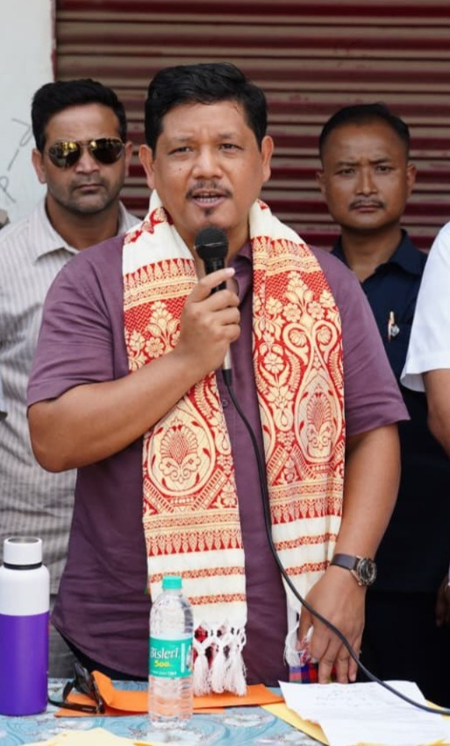
Shillong/Kohima, Oct 6 (IANS) Meghalaya Chief Minister and National People’s Party (NPP) national president Conrad K Sangma on Tuesday admitted that the party was “very upset” after its five MLAs in Nagaland merged with the ruling Naga People’s Front (NPF), leaving the NPP without representation in the state Assembly.
Describing the development as part of the political process, Sangma said the setback would not weaken the NPP and urged party workers in Nagaland to remain united. “We are definitely very upset with this, but we accept that in politics we have to face such situations,” the NPP supremo told the media.
Sangma said the development should instead strengthen the party’s resolve to rebuild its organisation in Nagaland and across the Northeast. “This situation must ensure we come out stronger because of such challenges and not allow such challenges to break us down. NPP will move forward, recover from this and come out stronger,” he said.
Reaffirming the NPP’s position as part of the BJP-led National Democratic Alliance (NDA), Sangma said the party continued to support NDA governments across the Northeast, while noting that the nature of political arrangements varied from state to state.
Meanwhile, a day after all five NPP MLAs joined the ruling NPF, Nagaland Assembly Speaker Sharingain Longkumer on October 1 formally recognised the merger, officials said.
Nagaland Legislative Assembly Secretary Khruohituonuo Rio, in a notification, said that in accordance with the provisions of the Tenth Schedule of the Constitution of India and in consonance with the Members of Nagaland Legislative Assembly (Disqualification on Ground of Defection) Rules, 2019, the Speaker had declared the merger of the five NPP MLAs with the NPF.
The five NPP MLAs joined the NPF at an event held in Dimapur on the evening of October 1 in the presence of Chief Minister and NPF President Neiphiu Rio, NPF Secretary General Achumbemo Kikon and other senior party leaders.
The five legislators subsequently appeared before Nagaland Assembly Speaker Sharingain Longkumer and submitted the documents pertaining to their merger with the NPF.
--IANS
sc/uk
Manipur Cabinet thanks PM Modi for ‘special attention’ to state, Northeast region
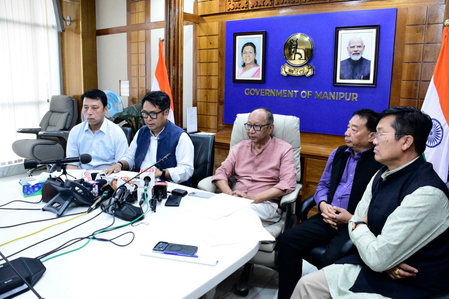
Imphal, Oct 6 (IANS) Manipur Chief Minister Yumnam Khemchand Singh said on Tuesday that the state Cabinet placed on record its deep gratitude to Prime Minister Narendra Modi for his tireless service to the nation and appreciation for the special attention accorded to Manipur and the Northeast.
The Chief Minister told that the state Cabinet adopted a resolution expressing its heartfelt gratitude to Prime Minister Modi for his selfless work for the development of the country and the welfare of its citizens in his 25 years of public service.
Chief Minister Singh while talking to the media said that the state Cabinet expressed confidence that India will achieve the goal of Viksit Bharat by 2047 with the vision of Prime Minister.
Chief Minister Singh said that the state government reaffirmed its commitment to work with the Union government for peace, progress and prosperity of Manipur and the nation.
He also highlighted the 25 years of uninterrupted public service of Prime Minister Modi and the development initiatives in the country undertaken under his leadership.
The Chief Minister said that the Prime Minister would complete 25 years of uninterrupted public service as an elected head of the government on October 7, beginning with his tenure as Chief Minister of Gujarat in 2001 and subsequently serving as the country's Prime Minister since 2014.
He added that the remarkable journey reflected Prime Minister Modi's commitment to public service, good governance and the welfare of the people.
The state Cabinet's resolution also records gratitude for his visionary leadership and dedicated service to the nation.
Speaking on the Prime Minister's tenure from 2014 till now, the Chief Minister said that India has witnessed significant economic growth, with the country emerging as one of the fastest-growing major economies.
He recalled that India was ranked 11th among the world's largest economies before Narendra Modi became the country's Prime Minister and said that under his leadership, India had risen to the fourth position among the world's largest economies.
Recalling the Prime Minister's tenure as Chief Minister of Gujarat, state government Spokesperson Radheshyam Singh said that several initiatives were undertaken during the period from 2001 to 2014, including the rebuilding of Kutch following the 2001 earthquake and the expansion of electricity supply to villages through the Jyotigram Yojana.
He also highlighted initiatives such as Krishi Mahotsav, Soil Health Cards and check dams, which contributed to agricultural development.
The Spokesperson also said that initiatives such as the Vibrant Gujarat Summit, GIFT City and Charanka Solar Park helped attract investment, while programmes such as Kanya Kelavani Yojana and Chiranjeevi Yojana focused on education and safe deliveries.
Radheshyam Singh also referred to SWAGAT as an initiative that enabled citizens to directly raise their grievances with the Chief Minister.
He said that the Union government's welfare initiatives had contributed to lifting around 25 crore people out of poverty, while free foodgrains are being provided to around 80 crore citizens.
He also highlighted the expansion of housing, sanitation and LPG connections under various welfare programmes.
The Spokesperson added that the transformation in banking and digital payments had also been significant, with more than 59 crore Jan Dhan accounts and the rapid expansion of UPI transactions.
He also highlighted the expansion of Ayushman Bharat, drinking-water connections and other basic services.
Referring to the Covid-19 pandemic, the Spokesperson said that more than 220 crore vaccine doses were provided free of cost in the country and that vaccines were also supplied to around 100 countries.
He also pointed to the expansion of national highways and airports as evidence of the country's infrastructure development.
The Spokesperson said that India's firm approach towards terrorism had also been demonstrated through Operation Sindoor, launched following the Pahalgam terror attack, reflecting the country's policy of zero tolerance towards terrorism.
He also highlighted the Union government's initiatives for women and farmers, including reservation for women in the Lok Sabha and state Assemblies and income support to farmers through PM-KISAN.
Radheshyam Singh said India's growing global stature was also reflected in the successful G20 Presidency in 2023 and the achievement of Chandrayaan-3, which landed near the Moon's South Pole.
Highlighting major developmental initiatives taken under the visionary leadership of Prime Minister Modi, he added that the state has witnessed major development in connectivity and infrastructure under the leadership of Prime Minister.
He said that railway services reached Manipur in 2022, marking a historic milestone in the state's connectivity.
He also highlighted the ongoing Jiribam-Imphal railway line, including the Noney Bridge, described as the world's tallest railway pier bridge.
The Spokesperson said that around 1,100 km of National Highways, involving an investment of around Rs 16,000 crore, have been sanctioned for Manipur.
He added that these projects would further improve connectivity and support economic development in the state.
He also highlighted the signing of the peace agreement with the United National Liberation Front (UNLF-P) on November 29, 2023, describing it as an important development in the efforts towards peace and stability in Manipur.
Another government Spokesperson S. Ranjan Singh said that for the protection of the indigenous people, the Inner Line Permit system was extended to Manipur in December 2019, while around 240 km of the India-Myanmar border has been sanctioned for fencing, involving an estimated cost of Rs 3,223 crore.
He also added that rural tap-water coverage in Manipur has increased substantially, from around six per cent to 80 per cent, reflecting the impact of efforts to improve access to drinking water.
Highlighting developments in education, sports and healthcare, he said that India's first National Sports University was established at Imphal, while Churachandpur Medical College was set up as the first medical college in the hill districts of the state.
S. Ranjan Singh said that more than 14 lakh people in Manipur have been covered under Ayushman Bharat, while Externally Aided Projects worth more than Rs 11,000 crore have been approved, with around Rs 6,400 crore received for capital investment.
He added that these investments are in addition to various Centrally Sponsored Schemes, including Pradhan Mantri Gram Sadak Yojana (PMGSY) and Pradhan Mantri Awas Yojana (PMAY).
S. Ranjan Singh said that the special attention given by Prime Minister Modi to Manipur and the Northeastern region has contributed to the region's development and greater integration with the national mainstream.
He added that the state government remains committed to carrying forward the Prime Minister's vision of Seva, Sushasan and Antyodaya.
Deputy Chief Minister Losii Dikho and the Art and Culture Minister Loken Singh were also present during the media briefing.
--IANS
sc/khz
Telangana CM orders notices to KCR, family over ‘missing’ land
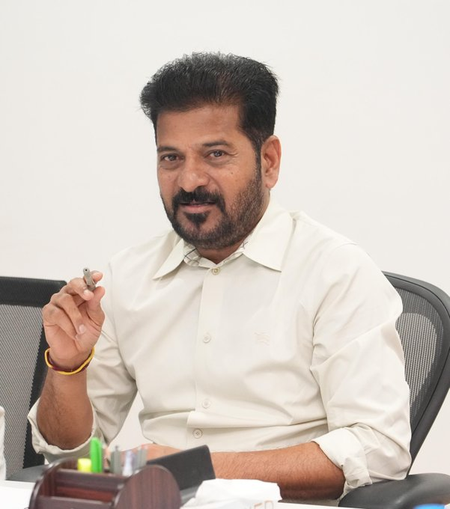
Hyderabad, Oct 6 (IANS) Telangana Chief Minister A. Revanth Reddy on Tuesday directed officials to issue notices to former Chief Minister K. Chandrasekhar Rao and his family members over 45 acres of ‘missing’ land
Chief Minister Revanth Reddy on Tuesday ordered officials to identify ‘missing’ 45 acres of land in survey number 325 at Erravalli village in Siddipet district, where former Chief Minister and Bharat Rashtra Samithi (BRS) president K. Chandrasekhar Rao (KCR) has his farmhouse.
The Chief Minister held a review of the lands concerning Erravalli and the adjacent Venkatapuram villages in Markook Mandal, Siddipet district
As per the official records, a total of 388 acres of land is recorded under survey number 325 in Erravalli village.
The officials briefed the Chief Minister on the survey details for both villages and the details of the survey, which identified only 343 acres.
According to a statement from the Chief Minister’s Office (CMO), 45 acres of land are missing from the records for the particular survey number.
The Chief Minister instructed the officials to issue notices to former Chief Minister KCR and his family members, whose lands adjoin the area and submit their revenue records to the government.
CM Revanth Reddy said that the government is planning to distribute the land in survey number 325 to eligible local farmers.
He also ordered the construction of a "Telangana Martyrs' Colony" within survey number 325 for the families of those who sacrificed their lives during the Telangana movement.
The officials were also directed to allot housing plots to the martyrs' families and develop a colony with all necessary amenities.
The Chief Minister suggested that the responsibility of constructing the colony be entrusted to the Housing Department. Orders were also issued to complete the construction of the Martyrs' Colony by June 2.
The Revenue Department officials had taken up a survey of the lands in Erravalli village last month after the Chief Minister ordered a probe into KCR’s landholding, including his farmhouse at Erravalli.
The Chief Minister had said in the State Legislative Assembly on September 16 that the inquiry will be conducted within a month.
He said the inquiry will be conducted to find out if KCR’s farmhouse is spread over 700 acres or not. He questioned why KCR did not reveal that out of 700 acres, 388 acres are government land.
The CM announced that the government would reclaim 388 acres of government land in KCR’s farmhouse and distribute the same among 800 Dalit families.
Alleging that the KCR family holds 439 acres of land, far in excess of the legal ceiling, he demanded that the Leader of the Opposition explain how he mobilised these lands.
CM Revanth Reddy alleged that the KCR family owns 439.30 acres of land in 31 villages across nine districts.
--IANS
ms/uk
Uttarakhand shaken by 4.9-magnitude earthquake, Delhi-NCR feels tremors

New Delhi, Oct 6 (IANS) An earthquake of magnitude 4.9 struck Uttarakhand's Chamoli district on Tuesday night, sending tremors across several parts of the state and Delhi-National Capital Region (NCR).
According to the National Centre for Seismology (NCS), the earthquake occurred at around 10:24 p.m., with its epicentre located in Chamoli at a depth of around 13 km below the earth's surface.
Tremors were reported from several districts across Uttarakhand, including Bageshwar, Pithoragarh, Champawat, Rudraprayag and Chamoli.
People in Bhowali, Haldwani, Khatima, Rishikesh, Gopeshwar and Badrinath also reportedly felt the shaking.
The tremors were strong enough to be noticed in parts of Delhi and the adjoining NCR.
The NCS confirmed the earthquake at around 10:40 p.m.
Before the official confirmation, several residents took to social media to ask whether others had experienced the tremors.
A resident of Safdarjung in South Delhi reportedly said that they felt their couch move during the earthquake.
The epicentre of an earthquake refers to the point on the earth's surface directly above the underground location where seismic energy is released due to movement within the earth's crust.
The intensity of shaking generally decreases as seismic waves travel farther from the source, although the impact can vary depending on the depth of the earthquake, local geological conditions and the direction in which the seismic energy travels, officials said.
It is also important to distinguish between magnitude and intensity.
Magnitude measures the amount of energy released by an earthquake at its source, while intensity describes how strongly the earthquake is felt at a particular location.
A magnitude 4.9 earthquake is generally considered moderate and may be felt over a relatively wide area, but the level of shaking and potential damage depends on several local factors, experts said.
According to officials, the latest tremors once again highlight the seismic vulnerability of Uttarakhand and the wider Himalayan region, which lies in an earthquake-prone zone due to the ongoing movement of tectonic plates.
--IANS
brt/khz
Meghalaya: CM Sangma opposes foreign intervention in FCRA debate
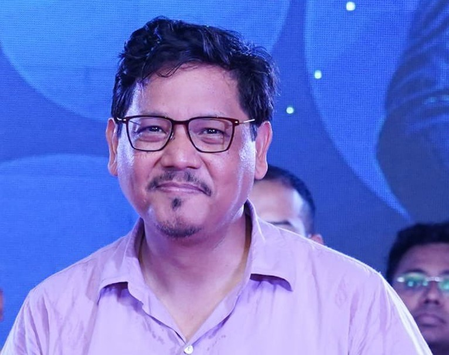
Shillong, Oct 6 (IANS) Meghalaya Chief Minister Conrad K. Sangma on Tuesday strongly criticised an appeal seeking foreign intervention in India's ongoing debate over proposed amendments to the Foreign Contribution (Regulation) Act (FCRA), calling the move "very, very inappropriate".
Sangma said matters concerning India's laws and legislative processes should be dealt with within the country and through democratic and constitutional institutions, asserting that external agencies should not be allowed to influence India's internal affairs.
"Seeking intervention from outside agencies in our internal matters is very, very inappropriate," the Chief Minister said.
He acknowledged that the appeal was a mistake but said the focus should now be on finding a constructive way forward rather than turning the issue into a political confrontation.
Sangma also expressed hope that such incidents would not be repeated and cautioned elected representatives against using sensitive issues for political gains.
On the proposed changes to the FCRA, the Meghalaya Chief Minister called for dialogue and a balanced approach that addresses the concerns of different stakeholders while recognising the government's responsibility to regulate foreign contributions.
He said a "middle path" should be found through discussions, representations and democratic processes within India.
Sangma particularly emphasised the need to ensure that Christian institutions and other organisations receiving legitimate foreign contributions do not feel insecure because of the proposed amendments.
At the same time, he acknowledged the need for the Centre to have an effective regulatory mechanism to monitor foreign funding and ensure compliance with the law.
The Chief Minister said the concerns surrounding the FCRA should therefore be addressed through dialogue rather than through appeals to foreign entities or organisations.
Reiterating his position on the issue, Sangma urged political leaders across party lines to work together and find a solution within the country's constitutional framework.
He stressed that while legitimate concerns over the proposed FCRA amendments should be heard and addressed, seeking external intervention was not the appropriate way to resolve a matter concerning India's domestic legislation.
Sangma's remarks come amid a wider debate over the proposed FCRA changes and concerns expressed by sections of civil society and religious organisations over their potential impact on institutions dependent on legitimate foreign contributions.
--IANS
tdr/dan
MP to hold special voter enrolment camps
Bhopal, Oct 6 (IANS) Madhya Pradesh will hold special voter enrolment camps at every polling station from October 7 to 9 to facilitate the registration of eligible voters, Chief Electoral Officer Sanjeev Kumar Jha said on Tuesday.
Jha directed election officials to ensure that only Form 6 is collected from voters during the camps and that no additional declaration form is sought from them.
The Chief Electoral Officer issued the directions during a virtual meeting with Deputy District Election Officers from Nirvachan Sadan in Bhopal.
He also asked officials to widely publicise the three-day exercise so that eligible people can make use of the facility.
Jha said applications would be accepted from people who had completed 18 years of age by October 1.
He also directed officials to collect applications in advance from those who will turn 18 by January 1, 2027, for their inclusion in the electoral roll under the prescribed procedure.
"The Election Commission has also provided an online facility for voter registration," Jha said in a statement, adding that eligible voters can apply through the official website or the ECINET mobile application.
He asked District Election Officers to give wide publicity to the online registration facility and specifically encourage young people to register as voters.
Jha also reviewed the progress of voter enrolment work in various districts.
He appreciated the work being done in Indore and Vidisha and directed districts lagging behind to improve their performance.
The special camps are being held amid the Special Intensive Revision (SIR) of electoral rolls being conducted by the Election Commission of India.
The exercise involves verification and updating of voter lists.
Chief Minister Mohan Yadav on Monday said an updated, transparent and reliable voter list was important for strengthening democracy.
He urged people not to pay attention to rumours or confusion regarding the SIR and to rely only on the official information and procedure prescribed by the Election Commission.
Yadav also appealed to young people who have completed 18 years of age to get their names registered in the voter list.
He appealed to every citizen of Madhya Pradesh to verify their name in the electoral roll.
"Let us fulfil our responsibility and become participants in the creation of a reliable voter list," Yadav wrote on X.
--IANS
pd/dan
ED secures convictions of four in Lucknow PMLA case linked to ganja trafficking

Lucknow, Oct 6 (IANS) The Enforcement Directorate (ED), Lucknow Zonal Office, has secured the conviction of four accused—Shahid, Harswaroop, Brij Kishore alias Birju and Deepak Rana—in a money laundering case under the Prevention of Money Laundering Act (PMLA), 2002.
The case stems from the illicit trafficking of narcotic substances, an ED statement said on Tuesday.
The Special Court (PMLA), Lucknow, convicted Shahid, Harswaroop and Brij Kishore under Section 3 of the PMLA, punishable under Section 4. The judgment was passed on September 28, 2026, and the order on sentence was pronounced on October 5, 2026.
Each was sentenced to rigorous imprisonment for four years along with a fine of Rs 50,000. Separately, co-accused Deepak Rana, whose case was separated after he admitted his guilt before the Court, was convicted on September 9, 2026, in a "Session Case", the statement said.
He too received a sentence of rigorous imprisonment for four years and a fine of Rs 50,000. Thus, all four—Deepak Rana, Shahid, Harswaroop and Brij Kishore alias Birju—have been convicted in the PMLA case.
The ED investigation was initiated on the basis of a case registered by the Directorate of Revenue Intelligence (DRI), Lucknow. It is related to the interception of a truck carrying 237.40 kg of ganja, valued at approximately Rs 14.24 lakh, which was seized as narcotic contraband.
The accused persons were subsequently convicted for the scheduled offence under the provisions of the NDPS Act.
The DRI had earlier filed a complaint in respect of the seizure and transportation of the contraband.
ED investigation revealed that the accused were involved in the concealment, possession and transportation of the proceeds of crime generated from the illicit trafficking of narcotic substances. The probe established their involvement in the process connected with the proceeds of crime, thereby attracting the provisions of the PMLA, 2002.
The conviction indicates that ED makes persistent efforts to detect, disrupt and dismantle the financial networks sustaining the drug menace.
By targeting not only narcotics-related offences but also the proceeds generated from such criminal activities, the agency aims to strike at the economic foundations of illicit drug trafficking.
--IANS
sktr/uk
Violence impacts tourism, Meghalaya CM vows efforts to restore confidence
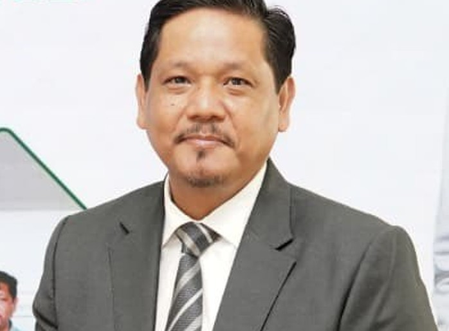
Shillong, Oct 6 (IANS) Meghalaya Chief Minister Conrad K. Sangma on Tuesday said the violence witnessed in the state on August 19 had dealt a major blow to the tourism sector, affecting local businesses, young people and thousands of stakeholders dependent on visitor footfall.
Sangma said the government was stepping up efforts to restore confidence among tourists and tourism stakeholders, while acknowledging that the sector had suffered a significant setback following the violence.
"The impact has been there, and tourism has definitely been affected," the Chief Minister said. He stressed that rebuilding confidence would require sustained efforts.
The disruption was particularly severe in the immediate aftermath of the violence, with tourism stakeholders reporting cancellations of nearly 80-90 per cent and a sharp decline in fresh bookings.
The impact was felt across hotels, homestays, tour operators, taxis, restaurants, tourist guides and other businesses dependent on the sector.
Sangma, however, said the situation was gradually improving and expressed confidence that tourism would return to normalcy with continued efforts by the government and stakeholders.
The Chief Minister's remarks came as Meghalaya seeks to reassure visitors that the state remains a safe and attractive destination.
Tourism is a key contributor to the state's economy and provides direct and indirect livelihood opportunities to a large number of young people.
He said restoring tourist confidence was important not only for the hospitality industry but also for the wider local economy, particularly communities and small businesses whose incomes are closely linked to tourism.
The August 19 violence had triggered widespread concern among tourism operators, with several visitors cancelling planned trips and travel-related businesses facing losses during what is otherwise a crucial period for the sector.
The government has been working to normalise the situation and project Meghalaya as a welcoming destination for domestic and international tourists.
Sangma said the recovery would take time but emphasised the need for coordinated efforts to rebuild confidence and ensure that visitors once again feel comfortable travelling to the state.
The Chief Minister also underlined the importance of maintaining peace and stability, saying a secure environment was essential for tourism, investment and employment.
With the sector now showing early signs of recovery, the government is expected to intensify its outreach and promotional efforts to bring tourism back to pre-violence levels.
--IANS
tdr/dan
PM Narendra Modi at 25 years in governance: What sets him apart
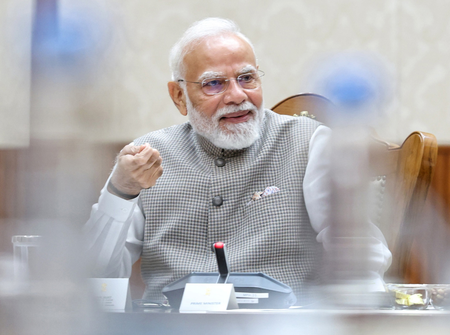
New Delhi, Oct 6 (IANS) From Gandhinagar to New Delhi, Prime Minister Narendra Modi's quarter-century in executive office is unusual not only for the uninterrupted time span, but also for his distinctive style of leadership. What makes him stand out as a leader is the combination of centralised decision-making, an emphasis on delivery-driven governance, and an ability to maintain a direct connection with voters across the spectrum, raising his political durability.
As documented, the journey began in modest surroundings, where he helped at his family's tea stall during his childhood while pursuing his education. At 17, he left home and spent nearly two years travelling across India. He later joined the Rashtriya Swayamsevak Sangh (RSS) in Ahmedabad and decided to dedicate his life to the organisation.
Over the following years, he rose through RSS ranks, with increasing responsibilities in Gujarat, where the years shaped his organisational abilities, discipline, and grassroots approach to politics. A part of his formative political life lay during the then Prime Minister Indira Gandhi-imposed Emergency, when, according to the Bharatiya Janata Party (BJP) Gujarat account, he worked underground, building resistance and evading government crackdowns.
Since 1987, organisational success in the state BJP made him quickly emerge as one of its key strategists, bringing national attention within the party. In 1995, after the BJP’s victory in Gujarat, Narendra Modi was moved to New Delhi as the party's National Secretary, where he was given responsibility for several northern states. In 1998, he was elevated to the post of National General Secretary (Organisation), among the BJP's most important positions. In October 2001, the party leadership chose him to replace Keshubhai Patel as Chief Minister of Gujarat.
The decision came at a difficult time for the state, which was recovering from the devastating Bhuj earthquake and facing political and administrative challenges. He served as Chief Minister from 2001 to 2014 and Prime Minister since May 2014, where, in a democracy as diverse and competitive as India, sustaining popularity and public support over such a long period is rare.
Another defining feature has been his focus on governance as measurable delivery, while PM Modi's political messaging has consistently emphasised implementation beyond policy announcement.
Meanwhile, the country achieved broader economic and social changes where World Bank noted extreme poverty falling from 16.2 per cent in 2011-12 to 2.3 per cent in 2022-23, while it reported substantial progress in infrastructure and access to basic services. Technology may be considered another pillar of the Modi-model. Even critics acknowledge that digital governance has become central to public administration under his leadership.
The expansion of Direct Benefit Transfer mechanisms and digital identity systems has transformed India's payment ecosystem, reducing leakage, increasing transparency, and improving efficiency in public service delivery. Another factor is his ability to blend welfare politics with economic growth narratives. His years in Gujarat were associated with infrastructure expansion, industrial investment, irrigation projects and administrative reforms, creating what supporters called the “Gujarat model”.
After moving to New Delhi, he sought to scale aspects of that approach nationally through infrastructure spending, manufacturing initiatives, and reforms such as the Goods and Services Tax (GST) and the Insolvency and Bankruptcy Code (IBC). India's economic performance strengthened, with the International Monetary Fund projecting the country to remain the world's fastest-growing major economy, highlighting resilience and strong domestic demand amidst an uncertain global environment.
Additionally, it is his communication skills, where through public rallies, social media engagement, radio broadcasts such as “Mann Ki Baat”, and highly personalised political campaigns, he speaks directly to the masses in their language, often bypassing conventional political intermediaries.
In foreign policy, under PM Modi’s leadership, India has pursued a more visible international profile, expanded diplomatic engagement, and positioned itself as a key voice of the Global South while simultaneously strengthening ties with major world powers.
Analysts frequently cite this more assertive international posture as one of the defining characteristics of the Modi era. While critics have argued, his supporters claim that strong leadership and decisive decision-making were necessary to execute long-pending reforms and large-scale development initiatives. Thus, while marking another milestone, the Prime Minister has undeniably shaped India's political and governance landscape in ways few leaders have done since Independence.
-- IANS
jb/uk