
Students protest over dead rat in mid-day meal at West Champaran school
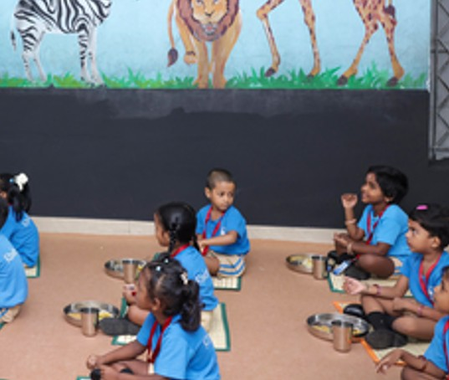
Patna, Oct 6 (IANS) Students at Government Middle School (Hindi) in Shivganj, Ward No. 7 of Narkatiaganj town in West Champaran staged a protest on Tuesday over the quality of the Mid-Day Meal (MDM), alleging that a dead rat was found in the rice served to them.
According to the students, the meal was not properly prepared and emitted a foul smell.
They alleged that when they went to eat the MDM, they noticed the rice appeared unclean and, upon closer inspection, found what they claimed was a dead rat in it.
The allegation triggered an uproar on the school premises, with a large number of students gathering to protest against the food arrangements.
The students also levelled allegations of negligence in teaching and misconduct against some teachers, further escalating the situation.
As tensions rose, a team from Shikarpur Police Station reached the school.
Sub-Inspectors Ramji Paswan and Khurshid Alam, accompanied by other police personnel, intervened and persuaded the students to remain calm.
During the commotion, teacher Sanjay Pandey was taken to the police station.
The exact circumstances that led to his removal from the school were not immediately clear.
Police subsequently brought the situation under control and took steps to restore normalcy on the school premises.
Meanwhile, headmistress Shakuntala Devi rejected the students’ allegations and described the claim that a dead rat was found in the MDM rice as false.
She stated that a dispute had arisen between students and teachers over the issue and categorically denied that any rat had been found in the food.
The conflicting claims have raised questions regarding the incident.
The allegations made by the students, the school administration’s response and the quality of the Mid-Day Meal require independent verification to establish the facts.
Further action is expected to depend on the findings of any inquiry initiated by the Education Department.
--IANS
ajk/dan
Kumaraswamy seeks Lokayukta probe into Siddhartha Trust, targets Kharge family
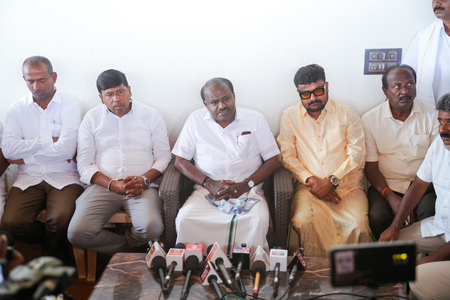
Kolar, Oct 6 (IANS) Union Minister for Heavy Industries and Steel H.D. Kumaraswamy on Tuesday questioned why the Karnataka government had not proceeded with a Lokayukta investigation into the Siddhartha Trust over allegations relating to the allotment of government land.
He also criticised the Congress government and targeted State Home, IT and BT Minister Priyank Kharge and his family over the issue.
Priyank Kharge is the son of Congress President Mallikarjun Kharge.
Speaking to the media in Mulbagal, Kumaraswamy referred to a High Court order in the matter and questioned why the government had not initiated a Lokayukta investigation into the trust.
He alleged that those invoking the names of Buddha, Siddhartha and Babasaheb Ambedkar should first address issues concerning their own families before criticising others.
The Siddhartha Vihar Trust is managed by Mallikarjun Kharge, his wife, Minister Priyank Kharge and other family members.
Complainant Vijayraghava Marathe has alleged irregularities in the Bengaluru Development Authority (BDA) allotment of an 8,002-square-metre civic amenity site in Banashankari, Bengaluru.
The complaint alleges that the trust secured a 50 per cent concession by claiming Scheduled Caste (SC) status and colluded with officials.
The Kharge family and their associates have denied the allegations.
Priyank Kharge has previously described the allegations as baseless and politically motivated attempts to tarnish the family’s reputation.
He has also stated that the aerospace land allotment referred to in the allegations had already been returned to the authorities.
Meanwhile, Kumaraswamy alleged that the Congress government was misusing the police department by registering false FIRs against opposition leaders and workers.
He claimed that matters that should be addressed before the Election Commission were instead being converted into criminal cases.
Commenting on the Bharatiya Janata Party (BJP)-JD(S) alliance, Kumaraswamy said minor disagreements at the grassroots level were natural in any political alliance.
He welcomed BJP State President B.Y. Vijayendra’s view that discussions regarding seat-sharing could commence at this stage.
Kumaraswamy said the final decision on alliance matters would be taken by the party leadership.
He also dismissed suggestions that there would be no BJP-JD(S) alliance in Kolar district.
Kumaraswamy further criticised the state government over the Peripheral Ring Road (PRR) project and alleged that its policies favoured vested interests.
He also alleged that the government was attempting to raise funds through the sale of vacant BDA sites while failing to protect the interests of ordinary citizens.
Turning to the drought situation, Kumaraswamy said farmers across Karnataka were facing severe hardships and alleged that many were migrating in search of employment.
He questioned how many beneficiaries had actually received the Rs 2,000-Rs 2,500 drought-relief assistance announced by the state government.
The Union Minister also criticised what he described as inconsistencies in the Karnataka government's estimates of drought-related losses.
According to Kumaraswamy, different figures had been submitted to the Centre at different times, creating confusion regarding the actual extent of losses.
He urged the government to prepare a comprehensive action plan and submit a consistent assessment to the Centre.
Kumaraswamy said the priority should be ensuring timely relief for affected farmers.
MP Mallesh Babu, MLA Samruddhi Manjunath and former MLA Chowdareddy Thoopalli, among others, were present during the interaction with the media.
--IANS
mka/dan
Odisha: BJP defends SIR, questions Congress and BJD over protest against CEC
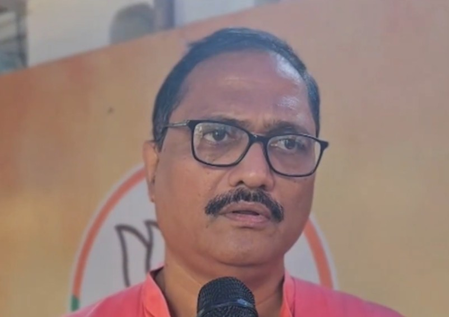
Bhubaneswar, Oct 6 (IANS) The Bharatiya Janata Party (BJP) on Tuesday criticised the Opposition over its protest against the Election Commission of India (ECI) and the Special Intensive Revision (SIR) of electoral rolls, asserting that the Opposition lacked substantive issues against the BJP governments at the Centre and in Odisha.
In a statement, BJP state General Secretary Biranchi Narayan Tripathy said the Opposition had no major issue to raise against the BJP governments either at the Centre or in Odisha.
He noted that Prime Minister Narendra Modi had completed 12 years in office at the Centre, while the BJP government in Odisha had completed two-and-a-half years.
Tripathy claimed that people continued to support the BJP because of its development initiatives and welfare programmes.
He also criticised the Biju Janata Dal (BJD), alleging a disconnect between its statements and actions.
Tripathy claimed that the BJD had maintained links with the INDIA bloc for a considerable period.
He further alleged that the BJD’s parliamentary party leader had attended a meeting of the Opposition alliance.
According to him, the BJD was attempting to maintain its political relevance by seeking support from different political formations.
He alleged that, at different times, the party had moved closer to both the BJP and the INDIA Bloc.
Referring to the Congress protest outside the office of the Chief Electoral Officer in Bhubaneswar and its demand for the resignation of Chief Election Commissioner Gyanesh Kumar, Tripathy questioned the party’s stance on the Election Commission.
He claimed that the SIR exercise had been conducted 10 times in the country, including nine times during Congress-led governments.
Tripathy also alleged that the Congress had previously appointed a former Election Commissioner to a Council of Ministers and had fielded a former Election Commissioner as a candidate against BJP leader L.K. Advani.
On the legal aspects of the electoral roll revision exercise, Tripathy said the matter was already under consideration before the Supreme Court.
He stated that if the Opposition possessed evidence of deliberate deletion of voters’ names, it should place the details in the public domain and pursue available legal remedies.
Tripathy reiterated that the BJP believed in the Constitution, democracy and the rule of law.
He added that people in Odisha and across the country continued to support PM Modi and the BJP government in the state.
--IANS
grm/dan
K’taka Minister seeks CID, SIT probe into Form-7 row
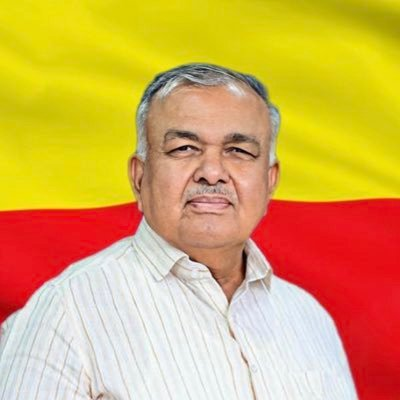
Bengaluru, Oct 6 (IANS) Karnataka Forest Minister Ramalinga Reddy on Tuesday called for a Criminal Investigation Department (CID) probe and the formation of a Special Investigation Team (SIT) to investigate the alleged misuse of Form-7 applications during the Special Intensive Revision (SIR) of electoral rolls across the state.
Speaking to reporters in Bengaluru, Reddy said the alleged misuse of Form-7 was not limited to a single constituency or Bengaluru and warranted a comprehensive investigation.
He said the Karnataka CID should investigate the matter and added that a new SIT should be constituted as the issue allegedly extended across the state.
The Minister also alleged that there was a conspiracy to remove names from electoral rolls.
The demand comes amid an ongoing political confrontation between the Congress and the Bharatiya Janata Party (BJP) over allegations of misuse of Form-7, which is used to seek the deletion of names from electoral rolls.
So far, three FIRs have been registered at the Vyalikaval, Yeshwanthpur and Jayanagar police stations based on complaints filed by Congress leaders.
In the latest case, an FIR was registered at Yeshwanthpur Police Station based on a complaint by Congress leader Anoop Iyengar against BJP Booth Level Agent (BLA) Deepak Singh.
The complaint pertains to Form-7 applications submitted in Ward No. 76 of the Malleshwaram Assembly constituency, allegedly claiming that voters were absent despite residing at the addresses mentioned.
At Jayanagar, an FIR was registered against BJP workers Yogesh and Ramakrishna based on a complaint filed by KPCC Mahila Congress President and former Jayanagar MLA Sowmya Reddy.
The complaint alleged that Form-7 applications had been submitted seeking the deletion of 5,698 voters on the ground that they had permanently shifted from the constituency.
Sowmya Reddy is the daughter of Minister Ramalinga Reddy.
However, Jayanagar BJP MLA C.K. Ramamurthy criticised the registration of FIRs and questioned the legal basis for police action in the matter.
He argued that complaints related to Form-7 applications should be submitted before election authorities and the Election Commission rather than the police.
Ramamurthy said BJP workers had earlier raised concerns regarding duplicate entries in the electoral rolls and claimed that 7,650 duplicate entries existed in the Jayanagar constituency.
He said complaints had been filed seeking correction of duplicate and deceased voters' entries and questioned why requesting the removal of alleged fake votes should attract criminal proceedings.
Ramamurthy further alleged that the FIRs against BJP workers were unlawful and said he would challenge them through legal and political means.
Notably, BJP candidate C.K. Ramamurthy had defeated Congress candidate Sowmya Reddy by a narrow margin of 16 votes in the Jayanagar Assembly constituency.
Meanwhile, the Congress has alleged that Form-7 applications were being misused to target voters belonging to a particular community and has demanded action against those allegedly submitting false applications.
--IANS
mka/dan
Bihar: 15 detained in Patna guest house raid, police probe ‘immoral’ activities

Patna, Oct 6 (IANS) Bihar Police on Tuesday detained 15 persons, including nine women and six men, during a raid at a guest house in the Naubatpur Police Station area of Patna district following suspicion of alleged immoral activities.
Acting on a tip-off, a police team raided the guest house located northeast of the Bihta-Sarmera Road after receiving information that several young men and women were staying in different rooms.
All the individuals found on the premises were brought to the police station for questioning.
Police said the purpose of their stay and the circumstances surrounding their presence at the guest house are being examined.
Officials said complete details would emerge only after the ongoing questioning and investigation are concluded.
As part of the probe, police are examining the guest house register and questioning the manager.
Preliminary scrutiny reportedly revealed discrepancies in the recording of guests’ details and addresses.
Police are also investigating whether the mandatory procedures for verification of the identities and addresses of visitors staying at the guest house were properly followed.
A Sub-Inspector from Naubatpur Police Station said the nine women and six men were detained following the tip-off.
The women are reportedly aged between 22 and 30 years, while the men are between 21 and 25 years of age.
Police are questioning the detained individuals separately.
Naubatpur Police have also begun contacting the families of the detained women to gather additional information.
Family members of the detained persons have been asked to visit the police station and submit their responses and undertakings.
Meanwhile, the guest house’s operations and visitor records are being scrutinised as part of the inquiry.
Umeshwar Chaudhary, SDPO-1, Phulwari Sharif, said all the individuals were being questioned, and the matter remained under investigation.
Police said no conclusions could be drawn regarding the purpose of the group’s stay until the inquiry is completed.
Any further action will depend on the findings of the investigation.
--IANS
ajk/dan
ED arrests Pune firm’s CEO in online gaming and cyber fraud money laundering case

Mumbai, Oct 6 (IANS) The Enforcement Directorate (ED), Mumbai Zonal Office, arrested Ram U Ramdhani, Founder and CEO of Pune-based Edsom Fintech Pvt Ltd, on September 28 under the Prevention of Money Laundering Act (PMLA), 2002, in connection with an online gaming and betting scam operated through All Panel Exchange (APX) and related cyber-fraud activities, the agency said in a statement on Tuesday.
Special Court (PMLA), Mumbai, remanded him to ED custody for seven days before placing him in judicial custody. The agency initiated the investigation based on two FIRs registered regarding online gaming, betting and cyber frauds in which complainants were defrauded of crores of rupees, it said.
ED probe revealed that the proceeds were routed through multiple mule accounts and subsequently transferred to Edsom Fintech Pvt Ltd, a company founded and controlled by Ramdhani. Evidence gathered shows he exercised management and control over the company’s business activities and overall operations.
Investigation further established that Edsom Fintech’s bank accounts were linked to multiple cybercrime activities, including online gaming, investment fraud, online task fraud, digital arrest scams and crypto/USDT-related frauds. Funds amounting to hundreds of crores were routed and layered through the company’s bank accounts.
Edsom Fintech provided pay-In/pay-out services through various payment gateways such as Easebuzz, Cashfree and PineLabs, as well as payment channels of banks including Muslim Cooperative Bank. Funds related to the gaming, betting and cyber-fraud activities were channelled through multiple entities and ultimately through Edsom Fintech’s banking and payment network.
The arrest followed detailed analysis of bank transactions, statements recorded under PMLA, and other documentary and digital evidence.
Earlier, ED conducted searches at various premises in Pune, Mumbai and Bengaluru. During these operations, incriminating documents were recovered and approximately Rs 60 lakh lying in various bank accounts was frozen.
The Enforcement Directorate stated it remains committed to tracing and dismantling illicit financial networks and ensuring strict enforcement of the PMLA, 2002. Further investigation in the case is under progress.
--IANS
sktr/uk
MOSPI floats paper on expanding coverage of Index of Services Production
New Delhi, Oct 6 (IANS) The Ministry of Statistics and Programme Implementation (MOSPI) said on Tuesday that it plans to expand the scope of the newly launched Index of Services Production (ISP).
The ministry has published an ‘Approach paper on Expanding the scope and coverage for the Index of Services Production’ to expand the coverage of the earlier ISP, which covers 19 broad service sub-sectors, relying on high-frequency administrative data sources and data on outward supplies from GST.
These collectively accounted for approximately 60 per cent of services-sector GVA. However, core government tasks, non-market activities, and GST-exempt services are excluded from the present framework. To bridge these gaps, the approach paper has been published to build a truly comprehensive Index of Services Sector, the MOSPI said.
The approach paper details methodologies to onboard three major service areas that were previously left out: Education, Human Health & Residential Care, and Public Administration & Defence. Together, these three vital sectors represent nearly 21 per cent of services GVA for the 2024–25 period. By successfully incorporating them, the MoSPI will elevate the total coverage of the monthly ISP to approximately 78.4 per cent of the entire services-sector GVA.
This expanded framework will enable aggregation of the sub-sectoral indices into a unified, all-encompassing Index of Services Production that provides a representative reflection of short-term movements of India's services sector.
The MoSPI has invited views and comments from experts, academicians, central government ministries, state governments, financial institutions and other stakeholders on the proposed methodology. The Approach Paper is available on the MoSPI’s website www.mospi.gov.in. Comments and suggestions may be sent to the email address: ddgec.esd@mospi.gov.in by October 16.
The services sector has firmly established itself as the primary engine of India's economic growth, driving more than half of the national Gross Value Added (GVA). To monitor this vital performance accurately, MoSPI initiated a monthly compilation of the ISP for the formal sector with 2024–25 as the base year, on a trial basis in July 2026.
The initial framework tracks 19 broad service sub-sectors—relying on high-frequency administrative data sources and data on outward supplies from GST, which collectively accounted for approximately 60 per cent of services-sector GVA. However, core government tasks, non-market activities and GST-exempt services are excluded from the present framework.
--IANS
sps/vd
Andhra constable injured as gun misfires during Defence Minister’s Vizag visit

Visakhapatnam, Oct 6 (IANS) An Andhra Pradesh Police constable was injured after his service rifle misfired while he was deployed on security duty during Defence Minister Rajnath Singh’s visit to Visakhapatnam on Tuesday.
The incident occurred at INS Dega when the Armed Reserve (AR) constable was on duty for the security of Rajnath Singh’s aircraft.
Appalakonda, the AR constable attached to the Andhra Pradesh Special Police Battalion, sustained serious injuries to the lower left side of his chest.
According to police, the Self-Loading Rifle (SLR), which the constable was carrying, accidentally went off.
On hearing the loud sound, police and security personnel rushed to the spot. The constable was found unconscious. He was rushed to a nearby hospital, where he was undergoing treatment. Doctors were closely monitoring his condition.
Senior officials visited the spot. Authorities have launched an investigation to ascertain the circumstances that led to the misfire.
The Defence Minister was in Visakhapatnam on Tuesday to launch Fleet Support Ship-1 (FSS-1) at Hindustan Shipyard Limited (HSL).
He also laid the keel of Fleet Support Ship-5 (FSS-5) and inaugurated the upgraded Slipway-4 and 300-tonne Goliath Crane.
Rajnath Singh, who arrived in Visakhapatnam on Monday, interacted with the Navy personnel during ‘Badakhana’.
After the launch of FSS-1, laying the keel of FSS-5 and inaugurating upgraded Slipway-4 and the 300-tonne Goliath Crane, he left for Koraput in Odisha, where he inaugurated the second Shakti Engine Manufacturing Unit at Hindustan Aeronautics Limited.
He inaugurated the milestone event marking the delivery of the 2,000th aero-engine by Hindustan Aeronautics Limited (HAL), Koraput Division.
The event at Visakhapatnam was attended by Navy chief, Admiral Krishna Swaminathan, Andhra Roads, Buildings, Infrastructure & Development Minister Janardhan Reddy, Visakhapatnam MP Sribharat Mathukumilli, Secretary (Defence Production) Sanjeev Kumar, Eastern Naval Command chief, Vice Admiral Sanjay Bhalla, Coast Guard Commander, Eastern Seaboard, Additional Director General Donny Michael, HSL Chairman and Managing Director Rear Admiral C Raghuram (retd), and senior officers of the Indian Navy and Ministry of Defence.
--IANS
ms/vd
Breakfast for 27 lakh school children in Telangana is world’s largest initiative: DyCM
Hyderabad, Oct 6 (IANS) The breakfast scheme for 27 lakh students in government schools in Telangana is the world’s largest initiative, Deputy Chief Minister Mallu Bhatti Vikramarka said on Tuesday.
He said that providing breakfast every day to 27 lakh students is an initiative that does not exist anywhere else in the world and that Telangana is the first to implement such an innovative programme.
The Deputy CM said the nutritious food being provided to students should not be viewed as free, but as an investment in the state’s future human resources. He noted that only when children remain healthy and study well can they contribute significantly to the state’s future production and thereby support the growth of the GSDP.
Vikramarka and Irrigation Minister Uttam Kumar Reddy laid the foundation stone for a centralised community kitchen to be constructed at a cost of Rs 9.6 crore at Munagala village in Kodad Assembly constituency of Suryapet district for school students.
Addressing a public meeting organised on the occasion, Vikramarka said the greenfield kitchen at Munagala would be equipped with modern technology and hygienic facilities to provide hot breakfast from a single kitchen to nearly 60,000 students studying in 1,020 schools.
He said breakfast was being provided six days a week to students studying in government schools across the state. Milk is being served on three days and ragi porridge on the other three days.
He said that while preparing food even for 100 people at home is difficult, providing breakfast simultaneously to 27 million students is an initiative that does not exist anywhere else in the world and is a reflection of the Telangana government’s humane approach.
The Deputy CM stated that children can grow into healthy human resources only when they receive adequate nutrition during their formative years. Therefore, the government has taken responsibility for providing quality food to children from poor and middle-class families from an early age and helping them reach higher levels in life.
Vikramarka, who is also the Finance Minister, said the welfare programmes being implemented by the government should not be viewed as freebies. He described the expenditure on the poor, farmers, women, and students as an investment that would ultimately benefit the state’s economy.
He said that when people remain healthy, children receive education, women achieve economic empowerment and farmers receive investment support, the productivity of the state increases. He stated that programmes such as Rythu Bharosa, free electricity, supply of fine rice, Rajiv Aarogyasri, free RTC bus travel for women, interest-free loans, fee reimbursement and Indiramma Houses are all aimed at enabling poor families to achieve economic progress.
He said that when people’s purchasing power increases, economic activity also grows, thereby contributing to the growth of the state’s GSDP.
--IANS
ms/vd
Andhra Pradesh Police arrest two, including Naval employee, for spying for Pakistan

Vijayawada, Oct 6 (IANS) The Andhra Pradesh Counter Intelligence Cell has arrested two persons, including a Naval employee, for allegedly sharing sensitive information about Naval and defence establishments with Pakistan-based intelligence operatives.
Annam Sai Varaprasad, a civilian contract driver engaged for Naval officers, was arrested in Visakhapatnam, while Pradeep Mukherjee, a Naval employee at the Visakhapatnam Naval base, was arrested in Coimbatore, Tamil Nadu.
The AP Counter Intelligence Cell made the arrests after launching a coordinated operation on October 1 against an alleged espionage module involving 18 suspects, including 13 Naval personnel.
Code-named “Operation Firewall–2026”, the operation involved 12 Counter Intelligence teams deployed across 10 states and union territory -- Andhra Pradesh, Kerala, Maharashtra, Karnataka, Gujarat, Goa, Delhi, Tamil Nadu, Chhattisgarh and Bihar.
The Counter Intelligence Cell said in a statement on Tuesday that it received credible information that certain people in India were allegedly in direct contact with Pakistan Intelligence Operatives (PIOs) and their suspected involvement in an espionage conspiracy prejudicial to national security. The suspects were allegedly collecting and sharing the sensitive/classified information relating to defence establishments and strategic locations in Visakhapatnam and other parts of the country was collected and shared through encrypted communication channels.
The Counter Intelligence Police Station in Vijayawada registered a case on September 2 under Sections 61(2), 147 and 148 read with Section 3(5) of the Bharatiya Nyaya Sanhita, 2023, Sections 17 and 18 of the Unlawful Activities (Prevention) Act, 1967, and Section 3 of the Official Secrets Act, 1923.
Counter Intelligence teams worked in coordination with the concerned state Anti-Terrorism Squads, Naval officials and local police. They examined the alleged involvement of the 18 suspects and seized electronic gadgets following legal procedures. Two of the suspects were arrested after their role was established prima facie in this case, while investigation into the remaining suspects is continuing.
Annam Sai Varaprasad, a civilian contract driver engaged for Naval officers, was arrested for his involvement in sharing sensitive/classified information relating to Naval/Defence establishments with a Pakistan-based intelligence operative and received money in connection with it. He was sent to judicial remand until October 14 and is currently lodged in District Jail, Visakhapatnam.
Pradeep Mukherjee, a Naval employee at the Visakhapatnam Naval base, allegedly shared an OTP to activate a WhatsApp account used by a PIO, communicated with PIOs and shared sensitive information relating to Naval and defence establishments. After obtaining a transit warrant from a local court in Coimbatore, the Counter Intelligence Cell produced Mukherjee before the jurisdictional court in Vijayawada. He was sent to judicial custody until October 14 and is currently lodged in District Jail, Vijayawada.
The Counter Intelligence Cell said the investigation into the remaining suspects was continuing and that further details would be disclosed at an appropriate time, keeping in view the requirements of the investigation and national security.
--IANS
ms/uk