
Bangladesh exporters losing ground amid rising energy, financing costs: Report
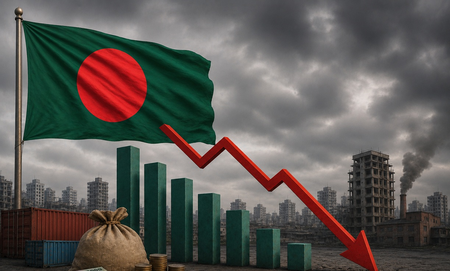
New Delhi, Sep 21 (IANS) Bangladesh’s exporters are losing market share to regional rivals such as India, Vietnam and China as rising energy, financing and logistics costs erode profit margins, a report has said.
The report from Bangladesh-based The Daily Star said exporters find it hard to absorb such a pressure because of limited scope to pass higher costs on to overseas buyers, raising the risk of lost orders and shrinking market share.
Industry estimates showed production costs surged nearly 30-40 percent over the past several years, driven by higher gas and electricity prices, wages, interest rates and exchange-rate depreciation.
Bangladesh’s merchandise exports fell nearly 5 per cent in 2025 to $47.74 billion, official data showed, while Vietnam’s exports rose 16.8 per cent and China’s 5.5 per cent over the same period.
Industry estimates showed production costs surged nearly 30-40 percent over the past several years, driven by higher gas and electricity prices, wages, interest rates and exchange-rate depreciation.
Even a small difference in price can shift an order to competitors, industry leaders said, adding that escalating conflict in the Middle East and the US administration’s additional 10 percent tariff are now adding to the pressure on exporters.
Buyers may shift orders when Bangladesh’s free-on-board (FOB) price – the price before shipping and insurance – is just 1-2 percent higher than that of a competitor, the report cited an industry expert.
Such a price gap on a $4 garment would add up to a difference of $40,000-$80,000 on a one-million-piece order, said a former director of the Bangladesh Garment Manufacturers and Exporters Association (BGMEA).
Chattogram Port’s tariff revision in 2025 amounted to an average 41 per cent in service charge hike, while charges for a 20-foot container increased 37 per cent to Tk 16,243 from Tk 11,849, according to Fazlee Shamim Ehsan, executive president of the Bangladesh Knitwear Manufacturers and Exporters Association (BKMEA).
Banks refrain from providing sufficient working capital or they take too long to process financing, despite government calls for support, the report noted.
—IANS
aar/pk
155 children killed, more than 15,000 reported missing in Bangladesh this year
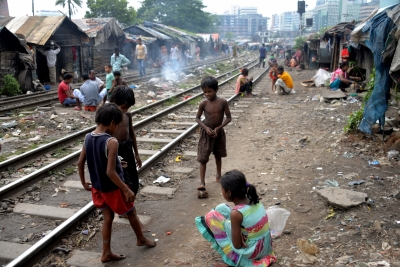
Dhaka, Sep 21 (IANS) Amid escalating violence against children in Bangladesh, as many as 155 children were killed between January and August this year in incidents involving murder following disappearance, rape, physical abuse and other forms of violence across the country, local media reported, citing a human rights organisation.
Dhaka-based rights organisation Ain o Salish Kendra (ASK) said the bodies of 36 children reported missing were recovered during the first eight months of this year, while 68 children died due to physical abuse and 49 in incidents of family-related violence. Another 26 children, including two boys, were killed after being raped.
The rights body said that four children lost their lives following attempted rape, while three were shot dead. Two domestic workers died as a result of physical abuse, two children were killed by stalkers, and another was killed following abduction. During the same period, ASK recorded 99 cases of suicide, mysterious deaths, and recovery of children’s bodies, Bangladeshi daily Dhaka Tribune reported.
Reports suggest that the recovery of dead bodies of missing children forms part of a wider pattern of violence against minors in Bangladesh, with recent cases involving rape and murder, fatal physical abuse and the killing of children alongside their family members.
In multiple instances, the accused were reportedly known to the victims.
Several cases involving the killing of children across Bangladesh have emerged in recent weeks.
A 10-year-old child who went missing in Pabna Sadar on September 9 was found dead in a ditch seven days later. Police said the child had been raped and killed, with two people arrested over the incident.
In another case, the body of a seven-year-old child who disappeared after going to school in Madarganj, Jamalpur, on September 10 was found buried beneath the floor of a classmate’s house the next day.
According to the Police, the classmate’s father had raped and killed the child, with two people arrested in connection with the case.
Citing reports, Dhaka Tribune reported that seven children were also killed alongside other family members in four separate incidents.
The killings of children have unfolded alongside a continuing crisis of children going missing across Bangladesh. Various media reported that over 15,000 children disappeared nationwide between January and July this year, highlighting the scale of the problem.
Earlier this month, Bangladeshi police headquarters in a press release said that 15,717 children had gone missing during the first seven months of the year. Although 13,679 were traced, 2,038 remained missing, accounting for nearly 13 per cent of the total.
--IANS
scor/rs
India can turn AI into global gains, must create more entrepreneurs: Industry leaders

Seattle, Sep 21 (IANS) India's strong digital foundation and vast pool of engineering talent position the country to become a global leader in artificial intelligence-driven innovation while creating a new generation of entrepreneurs, according to technology executives on Monday.
Speaking in separate interviews with IANS in Seattle, Rhythm CEO and co-founder Vetri Valor and Veeam CEO Anand Eswaran stressed that the country should focus not only on job creation but also on building an innovation-driven ecosystem that enables millions of Indians to launch and scale businesses.
Eswaran said India has already established the building blocks required for large-scale technological transformation through its digital identity and digital payments infrastructure.
“India has the opportunity right now to apply AI and show, demonstrate outcomes which the world, you know, can use to get the outcomes of AI to a better place for humanity,” he stated.
He credited Prime Minister Narendra Modi’s leadership with strengthening India’s position in global innovation. "Building digital infrastructure that operated across more than a billion people was an especially difficult achievement," he noted.
Eswaran argued that India has the capability to develop AI-driven solutions in areas such as agriculture, healthcare and public services, creating applications that can increase crop yields, combat infectious diseases and deliver measurable benefits to society.
According to him, the country's technological ecosystem presents an opportunity not only to serve domestic needs but also to build solutions that can be adopted globally.
Valor echoed many of these views but argued that India should place greater emphasis on creating entrepreneurs alongside generating employment opportunities.
Valor said discussions around economic development often focus on job creation, but the country should also work toward building an ecosystem that enables individuals to become business creators. With access to technology, talent and artificial intelligence, India has the potential to produce millions of entrepreneurs, he said.
According to Valor, the Indian-American community can play a valuable role in this transformation by sharing technical expertise, mentoring founders and contributing policy ideas that help India navigate emerging technological shifts.
Beyond technology, he said, lessons learned from the entrepreneurial journeys of Indians in the United States can provide useful insights for policymakers and aspiring founders in India.
Discussing artificial intelligence, Valor described AI as a powerful equaliser that can democratise access to information and knowledge. He said information gaps have historically prevented many individuals from realising their full potential, and AI is helping bridge those gaps by making expertise and insights more accessible.
--IANS
lkj/pk
Open display of anti-Ahmadi banners in Pakistan sparks concern over safety of religious minority
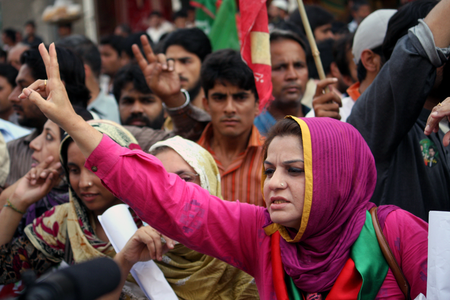
London, Sep 21 (IANS) A leading international human rights organisation expressed grave concern over the open display of hostile and discriminatory banners targeting the Ahmadiyya Muslim Community across Sargodha district in Pakistan’s Punjab province.
The rights group warned that such incidents could fuel further hostility against the already persecuted religious minority community.
Citing reports, the UK-based International Human Rights Committee (IHRC) said that several such banners were put up along Sargodha University Road, with some portraying Ahmadis as disloyal to Pakistan, demanding their removal from positions of responsibility and calling for their complete boycott. One prominently displayed banner carried the English words: “We hate Qadianiyat” ( a religious slur).
Video footage from Sargodha also showed anti-Ahmadi banners erected prominently along public roads.
“The banners are not merely expressions of theological disagreement. Calls for people to boycott an identifiable religious community, exclude its members from society and remove them from positions of responsibility contribute to an environment in which Ahmadis can face discrimination in their everyday lives. The fact that such material has reportedly been displayed openly along a major public road raises serious questions about the response of local and provincial authorities,” the IHRC stated.
Highlighting that such anti-Ahmadi calls are not without precedent in the Sargodha region, the rights body noted that previous documented incidents in the Silwanwali region of Sargodha district included anti-Ahmadi rallies, calls for members of the public to refrain from doing business with Ahmadis, and demands for their social boycott.
The IHRC cited Pakistan's National Commission for Human Rights, which documented incidents of boycott campaigns against Ahmadis, including calls to deny them groceries and medical treatment, expel Ahmadi students and teachers, and terminate land leases. The Commission also documented interference with Ahmadi religious worship in Sargodha.
“These documented examples demonstrate the potentially serious consequences when campaigns of religious exclusion move beyond rhetoric and begin affecting education, employment, commerce, healthcare and religious life,” the IHRC stated.
The rights body referred to UN human-rights mechanisms that have repeatedly raised concerns over violence, harassment, hate speech and attacks against religious minorities, including Ahmadis across Pakistan.
“Whatever an individual's religious beliefs may be, no citizen should face violence, intimidation, discrimination or exclusion because of their faith. The authorities have a responsibility to ensure that Ahmadis and all other religious communities are afforded effective protection and that credible allegations of unlawful incitement, threats or discrimination are properly investigated,” it stressed.
The IHRC urged the international community to scrutinise Pakistan's implementation of its international human-rights commitments and ensure that the safety and fundamental rights of vulnerable religious communities remain part of bilateral and multilateral engagement.
“Hatred displayed openly in public spaces must not be allowed to develop into discrimination, intimidation or violence,” it added.
--IANS
scor/rs
Chinese govt goes into cover-up mode as economy falters: Report
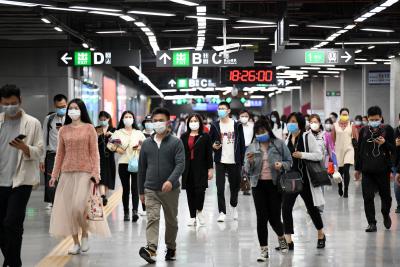
New Delhi, Sep 21 (IANS) While China has been viewed as the world’s manufacturing hub, the country’s economy, that was once growing at a robust pace, has hit a rough patch with key sectors in contraction mode and unemployment on the rise, according to a new report.
The Chinese economy is faltering, and the government is working tirelessly to conceal the depth of its crisis. Official GDP growth figures continue to hover around 4.5–5 per cent, but independent analysts and institutions suggest the real number is far lower, closer to 2–3 per cent, according to an article in the Kathmandu-based hamrakura.com news website.
“The Chinese Communist Party (CCP) has long relied on economic performance as a cornerstone of its legitimacy. Growth figures are celebrated as proof of competence, while dissenting voices are silenced. But the cracks are now too wide to ignore. The property sector, once the engine of household wealth, has collapsed,” the article states.
It underscores that real estate investment fell by nearly 18 per cent in 2026, leaving millions of apartments unsold and families unable to build financial security. Retail sales, a measure of consumer confidence, grew by barely 1 per cent in June 2026, reflecting a population that is saving rather than spending. Debt levels, particularly among local governments, have soared to unsustainable heights.
The CCP’s has cracked down with more control instead of economic reforms to revive the weak consumer demand in the country. Official statements describe the economy as “within a reasonable range,” but this is merely a part of a political cover-up. Independent economists, including those at the IMF, warn that China’s slowdown is structural, not cyclical. By inflating figures, local Chinese officials secure funding, and the central leadership maintains the illusion of prosperity. But this facade is cracking. Satellite imagery of night-time lights, a proxy for real economic activity, shows stagnation in industrial zones once thought to be booming. Social media is filled with stories of shuttered factories, unpaid wages, and workers protesting outside locked gates," the article points out.
It highlights that China’s GDP growth is declining due to several reasons which include the property crisis that has destroyed household wealth, leaving consumers cautious and unwilling to spend. Debt has ballooned, particularly in local governments, that borrowed heavily to fund infrastructure projects with little return.
Exports, once a reliable engine of growth, are now under pressure as global demand slows and trade tensions rise. Even in sectors where China appears strong, such as electric vehicles, the reality is grim: price wars have eroded margins, and more than half of major automakers are reporting losses, the article states.
It further points out that the situation is worsening rapidly as even civil servants and teachers in secure government jobs now face delayed salaries and unpaid benefits. In Shenzhen, a city long portrayed as China’s success story, homelessness is rising. Elderly citizens line up at dawn to secure spots in markets to sell vegetables, a stark symbol of shrinking opportunity. The middle class is cutting back on essentials, signalling a collapse in confidence which can make only matters worse.
--IANS
sps/na
Pakistan: Imran Khan’s sisters Uzma, Noreen detained for 30 days, after Aleema’s arrest
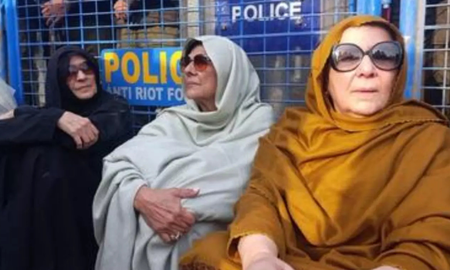
Islamabad, Sep 21 (IANS) Former Pakistan Prime Minister Imran Khan’s sisters, Uzma Khan and Noreen Niazi, were detained for 30 days on Monday, a day after his other sister, Aleema Khan, was arrested following a Lahore Deputy Commissioner’s order for her 30-day detention, local media reported.
The detention of Imran Khan's three sisters comes before PTI's protest and march to Islamabad set to be held on September 27. In an order issued on September 20, the Lahore DC office ordered the detention of Uzma Khan and Noreen Niazi for 30 days under the Punjab Maintenance of Public Order Ordinance, 1960 and stated that the two were "prejudicial to the public safety and maintenance of public order," Pakistan-based daily Dawn reported. It stated that Noreen Niazi and Uzma Khan will remain in custody under the superintendent, Central Jail, Kot Lakhpat.
On Sunday, the PTI chairman Barrister Gohar Ali Khan condemned the arrest of Aleema Khan, terming it the "first step towards worsening the situation." Gohar Ali Khan called for Aleema Khan's release and said PTI will soon announce its course of action.
In a post on X, Khan stated, "Noreen Niazi Sahiba informed me over the phone about the arrest of Aleema Khan Sahiba - We have always made it clear that our march will be peaceful and political. We aim to wage a peaceful struggle for our constitutional and political demands; we do not want any confrontation or violence. In such a situation, arresting Aleema Khan Sahiba or keeping her under house arrest under MPO is tantamount to fueling violence and tension."
"We strongly condemn this - This is the first step towards worsening the situation - All such measures should be stopped immediately. We demand the immediate release of Alima Khan Sahiba - The party will soon announce its course of action against such measures," he added.
Gohar Ali Khan's statement comes after the Lahore deputy commissioner's order on Sunday confirmed that Aleema Khan had been detained for 30 days under the Punjab Maintenance of Public Order (MPO) Ordinance, 1960. The Lahore DC also ordered the detention of Aleema Khan's driver, Muhammad Ameer, for 30 days, Pakistan-based another daily, The Express Tribune, reported.
Aleema Khan's son, Shahrez Khan, alleged that his mother was abducted after she left home on Sunday morning. He said that she has been granted bail in all cases against her in Lahore and urged the government to disclose her whereabouts and ensure her release immediately.
"My mother, Aleema Khan, was abducted after leaving home this morning. Our family has had no contact or news of her whereabouts. She is on bail in all cases against her in Lahore. We demand the government immediately disclose her whereabouts and ensure her safe return," Shahrez Khan posted on X.
Imran Khan's son, Kasim Khan, alleged that police have abducted his aunt Aleema Khan and described it as the "behaviour of a fascist government." He urged the authorities to allow Aleema Khan's family and lawyers to meet her and demanded her immediate release.
"Today, my aunt, Aleema Khan, has been abducted by police in Lahore. Our family has been told nothing about where she has been taken. Her family and lawyers cannot reach her. This is the behaviour of a fascist government - abducting people, terrorising families and trampling human rights, due process and the rule of law while pretending to stand for democracy," Kasim Khan wrote on X.
"First they imprisoned my father. Now they are coming after his family. We demand immediate access to her for her family and lawyers, full disclosure of where she is being held, and her immediate release. The world cannot keep looking away from what is happening in Pakistan," he added.
--IANS
akl/rs
Bangladesh Tribunal accepts crimes against humanity charges against 8 over July 2024 protests

Dhaka, Sep 21 (IANS) Bangladesh’s International Crimes Tribunal has formally accepted charges against eight individuals, including prominent academic Muhammed Zafar Iqbal, former Dhaka University Vice-Chancellor ASM Maksud Kamal and former Supreme Court judge AHM Shamsuddin Chowdhury Manik, in a case involving alleged crimes against humanity linked to the July 2024 demonstrations, local media reported.
A three-member tribunal, led by Justice Md Golam Mortuza Mozumder, took cognisance of the charges on Sunday, submitted by the prosecution.
The tribunal also issued arrest warrants against five accused— Zafar Iqbal, Maksud Kamal, the Awami League’s student wing Chhatra League former President Saddam Hussain, its then General Secretary Sheikh Wali Asif Enan, and then Dhaka University Chhatra League president Mazharul Kabir Shayan.
The other three individuals, Manik, DU sociology teacher AKM Jamal Uddin and former Dhaka University Chhatra League General Secretary Tanbir Hasan Shaikat, are in custody. The ICT directed the authorities to produce them before the tribunal on October 22, The Daily Star reported.
Meanwhile, a leading international human rights organisation strongly condemned the ICT proceedings against eight individuals, saying that the investigation was conducted in a “politically motivated and biased manner” without adhering to the minimum standards of an independent, impartial, objective, and internationally recognised investigation.
Justice Makers Bangladesh in France (JMBF) said that the initiation of judicial proceedings on the basis of such a “questionable investigation” raises serious concerns regarding the Tribunal’s independence, impartiality, and freedom from political influence.
“Crimes against humanity are among the most serious crimes under international law. Turning such allegations into an instrument of political retaliation against political opponents, dissenting voices, academics, writers, teachers, or judges constitutes a grave abuse of justice. An individual’s political ideology, statements, professional identity, or actual or perceived relationship with a previous government cannot substitute for individual criminal responsibility. Specific conduct, criminal intent, and a legally established connection between each accused person and the alleged crimes must be demonstrated through credible evidence,” the rights body noted.
JMBF warned that turning allegations against university teachers and professors over their academic activities, expression or professional roles into crimes-against-humanity charges and subjecting them to judicial proceedings poses a grave risk to academic freedom and freedom of expression.
It said that prosecuting an academic for serious crimes without specific and credible evidence of individual criminal responsibility, and instead relying on their opinions, statements, academic position or institutional identity, is a “grave violation of academic freedom.”
JMBF called on the United Nations Human Rights Council, the United Nations High Commissioner for Human Rights, the relevant Special Rapporteurs, the European Union, and the wider international community to closely monitor this case and all ongoing cases and to take the necessary diplomatic measures to ensure impartial and transparent trials in accordance with international standards.
--IANS
scor/rs
Pakistani strikes hit Afghanistan’s Kunar, Paktika; Taliban vows ‘appropriate response’
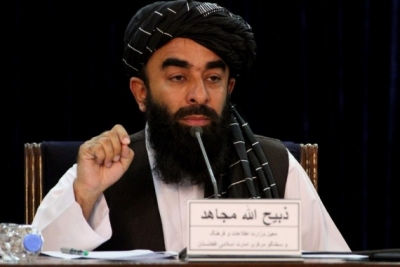
Kabul, Sep 21 (IANS) Taliban chief spokesperson Zabihullah Mujahid on Monday condemned Pakistan's airstrikes on Kunar and Paktika provinces of Afghanistan, which claimed three lives, and warned that they would give an "appropriate response" to the attacks.
Mujahid said that Pakistan's attacks carried out on Monday targeted Afghan territory and civilians. He claimed that one woman and two men were killed while two women and two men were injured in Pakistan's bombing in Kunar. He said that a local shop and a house were targeted in the airstrike in Paktika. He accused Pakistani military leadership of launching strikes on Afghan territory to divert people's attention from security failures within their country.
"Crime and Aggression: Last night, the invading Pakistani army bombarded civilian areas of Afghanistan in Kunar and Paktika provinces. In Kunar, one woman and two men were martyred, and two women and two men were wounded; all of them are local civilian residents. In Paktika, one house and one local shop were bombed, with no casualties reported," Mujahid posted on X.
"We condemn this aggression and oppression and consider it a repetition of crimes. Pakistan's military establishment, in order to divert attention from its own internal security failures, has once again committed such a crime. Afghans will give an appropriate response to this aggression, God willing," he added.
The latest attacks come amid escalating tensions between Pakistan and Afghanistan over the past few months, with repeated exchanges of fire and growing concerns over civilian casualties. Pakistan has repeatedly accused the Taliban of failing to stop armed groups, especially the TTP, from operating on Afghan soil, a claim rejected by Afghan authorities.
On July 28, the United Nations Assistance Mission in Afghanistan (UNAMA) said that 57 people have been killed and 342 others injured in cross-border armed violence in Afghanistan between April 1 and June 30.
In a report, UNAMA said airstrikes and ground engagements were the primary causes of civilian harm. It attributed all cross-border civilian casualties recorded during this period to Pakistani security forces.
According to UNAMA's update on civilian casualties in Afghanistan from April-June, 26 children were killed, and 86 were injured, while six women were killed and 34 were injured.
In the statement, the UN agency stated, "The largest number of civilian casualties were caused by airstrikes carried out by Pakistani security forces in Paktia, Paktika and Kunar provinces on June 28, followed by shelling in Kunar province between April 27 to 29 April."
On July 15, US-based advocacy group Human Rights Watch (HRW) called for an impartial investigation into possible war crimes following Pakistan's recent strikes in Afghanistan, expressing grave concern over civilian casualties.
The rights body noted that although civilian casualties alone are not conclusive evidence of "laws-of-war violations", such reports of civilian deaths heightened the urgent need for independent probes of "possible war crimes by either attacking or defending forces."
“International humanitarian law requires warring parties to take all feasible precautions to minimise civilian harm. Attacking forces must at all times distinguish between civilians and civilian objects on the one hand, and combatants and military objectives on the other, and only target the latter,” the HRW stated.
“Defending forces must, to the extent feasible, protect civilians under their control from the effects of attack, including by avoiding locating military objectives near densely populated areas. However, violations by one side do not relieve the other of its own obligations,” it added.
--IANS
akl/sd/
Heavy rain, strong winds batter Japan as typhoon nears eastern coast
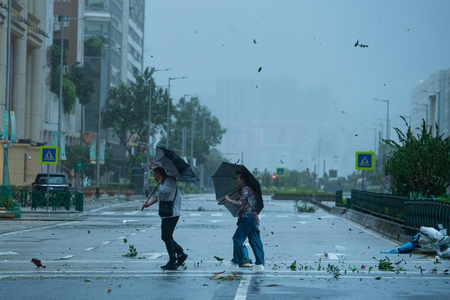
Tokyo, Sep 21 (IANS) Japan's weather agency warned of heavy rain, strong winds, flooding and landslides as a large and powerful typhoon moves toward the country's eastern Pacific coast on Monday.
As of 10 a.m. local time, Typhoon Dujuan, located about 100 km west-southwest of Hachijo Island in the Izu Island chain near Tokyo, was moving north at a speed of 25 km per hour (kph).
It had a central atmospheric pressure of 960 hectopascals, packing maximum gusts of 198 kph, according to the Japan Meteorological Agency (JMA).
The year's 25th typhoon is expected to pass near the Boso Peninsula in Chiba Prefecture, east of Tokyo, from the evening to late on Monday.
On Monday morning, heavy downpours have already battered the Kanto-Koshin region in eastern Japan as well as the Tokai region in central Japan, reports Xinhua news agency.
There have been reports of road inundation in multiple cities in Chiba, and the JMA has also issued a level 4 landslide alert for parts of the prefecture.
The weather agency forecast up to 350 mm of rain in the Tokai region, 300 mm in the Kanto region and the Izu Island chain, and 200 mm in the Tohoku region in northeastern Japan in the 24 hours through 6 a.m. Tuesday.
The typhoon's approach coincides with a five-day holiday period in Japan. Residents have been urged to check the latest weather information and take precautions, including considering rescheduling their plans during extreme weather.
The typhoon has disrupted transportation, forcing the closure of parts of highways, and may also cause delays and cancellations of bullet train services connecting Tokyo and western Japan on Monday afternoon.
Earlier in August, Typhoon Chan-hom made landfall in the eastern Japanese prefecture of Ibaraki.
Seven people sustained minor injuries -- two in Iwate Prefecture, northeastern Japan, as well as four in Ibaraki Prefecture and one in Tochigi Prefecture, both near Tokyo, Jiji Press reported Wednesday, citing the Fire and Disaster Management Agency.
--IANS
sd/
Bangladesh reports 87 dengue deaths in September, highest monthly toll this year
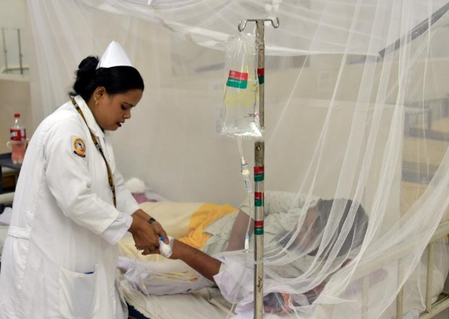
Dhaka, Sep 21 (IANS) Bangladesh has logged 87 dengue-related deaths so far in September, representing the highest monthly death toll due to dengue this year.
Six more dengue deaths were confirmed in the 24 hours ending at 8:00 a.m. local time on Sunday in Bangladesh, bringing the total number of fatalities in the country so far this year to 184, said the Directorate General of Health Services (DGHS).
With 1,593 new cases reported in the last 24 hours, confirmed dengue cases have risen to 61,972 since January, according to DGHS figures from the Ministry of Health and Family Welfare.
Deaths this year include 87 so far in September, 43 in August, 36 in July and 13 in June, reports Xinhua news agency.
During the first 20 days in September, 26,126 more dengue cases were recorded after 20,536 people were infected with the mosquito-borne disease last month, according to DGHS data.
The Bangladeshi government rolled out a three-month campaign earlier this month to prevent the disease.
Dengue fever, a viral disease transmitted by Aedes mosquitoes, causes an acute illness that usually develops symptoms such as headache, high fever, exhaustion, severe muscle and joint pain, swollen glands, vomiting, and rash.
Meanwhile, according to a recent report in Bangladeshi daily Prothom Alo, dengue has spread across all 64 districts of the country, with several hundred people being hospitalised every day after contracting the mosquito-borne disease. Deaths from the largely preventable illness are also being reported almost daily.
Speaking at an event at the Dhaka Reporters Unity on September 9, Bangladesh's State Minister for Health and Family Welfare MA Muhit said that dengue infections had already begun to rise, with the peak period expected in the last week of September and early October.
Despite years of media reports and discussions over rising dengue infections and deaths, the government's lack of commitment to dengue prevention has remained evident. The most glaring weakness has been the lack of coordination, Prothom Alo reported.
--IANS
sd/