



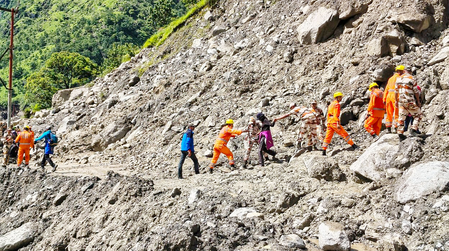
Gangtok, June 12 (IANS) Preparations are in full swing for the 2026 Kailash Mansarovar Yatra through the Nathula Pass route, with the first batch of pilgrims scheduled to arrive in Sikkim on June 15 before crossing into China’s Tibet Autonomous Region (TAR) on June 20, officials said on Friday.
Sikkim Tourism Development Corporation (STDC) Chairman Lukendra Rasaily said the first batch of pilgrims had already reported in New Delhi on June 11 and is currently undergoing mandatory medical examinations, fitness assessments, visa processing and other formalities coordinated by the Ministry of External Affairs (MEA).
“The first batch has started its journey. Pilgrims are completing medical and documentation procedures in Delhi and are expected to reach Gangtok on June 15 before proceeding to Tibet through Nathula on June 20,” Rasaily told reporters.
The Kailash Mansarovar Yatra via Nathula was launched in 2015 as an alternative route to the revered pilgrimage site. This year, 500 pilgrims have been selected through a computerised lottery conducted by the MEA from nearly 1,500 applicants across the country. The selected pilgrims will travel in 10 batches of 50 yatris each, with the final batch expected to commence its journey in August.
After arriving in Gangtok, pilgrims will undergo a carefully planned acclimatisation programme to prepare for the high-altitude conditions. They will spend two nights at the First Acclimatisation Centre at 18th Mile, at an altitude of around 10,500 feet, followed by another two nights at Hangu Lake, at approximately 13,000 feet.
The acclimatisation phase includes local excursions, medical monitoring and a final health assessment by the Indo-Tibetan Border Police (ITBP) before pilgrims are cleared to cross Nathula Pass, which stands at an elevation of 14,140 feet.
Once inside Tibet, the pilgrims will travel through Kangma, Lazi, Zhongba, and Darchen, the gateway to Mount Kailash. The sacred pilgrimage includes the revered Kailash Parikrama, which covers key halts such as Dirapuk and Zuthulpuk, before returning to India via the same route.
Rasaily said infrastructure and accommodation facilities at the acclimatisation centres have been significantly upgraded following the successful resumption of the Yatra in 2025 after several years of suspension due to the COVID-19 pandemic and other disruptions.
“Last year was effectively a restart after a long gap. This year, we are better prepared with improved facilities, enhanced connectivity and stronger medical support systems,” he said.
The 22-day pilgrimage includes four days in Delhi for documentation and health checks, several days in Sikkim for acclimatisation and nearly 12 days in Tibet. Medical teams, liaison officers, and officials from the MEA, ITBP, the Ministry of Ayush, and the Sikkim government will oversee the pilgrimage.
Considered one of the holiest pilgrimages in Asia, the Kailash Mansarovar Yatra holds deep spiritual significance for Hindus, Buddhists, Jains and followers of the Bon faith. Beyond its religious importance, the pilgrimage is also regarded as a symbol of people-to-people engagement and growing cooperation between India and China through the strategically important Nathula corridor.
–IANS
tdr/dan