
L&T wins order for setting up 6 GWh BESS projects in Middle East
Mumbai, Aug 25 (IANS) Engineering and construction major Larsen & Toubro (L&T) announced on Tuesday that its renewable energy business has won a mega order to develop three battery energy storage system (BESS) projects for a notable client in the Middle East.
The company said it classifies mega orders as those valued between Rs 5,000 crore and Rs 10,000 crore.
The three projects will collectively contribute to 6 gigawatt-hour (GWh) of storage capacity, marking one of the most impactful advancements in grid modernisation and renewable energy integration across the Middle East region. This positions L&T as a key EPC player in the fast-growing energy storage sector.
In addition to the storage facilities, the scope of the packages also involves grid interconnections, including pooling substations and underground cables, L & T said in a regulatory filing with the stock exchanges.
This enables effective energy shifting, allowing surplus clean energy generated during off-peak periods to be stored and delivered during peak demand hours, the company said.
Each project features a 4-hour battery energy storage system (BESS), capable of storing and dispatching energy, to support grid stability and renewable energy integration. This enables effective energy shifting, allowing surplus clean energy generated during off-peak periods to be stored and delivered during peak demand hours. The advanced BESS solution will incorporate liquid cooling technology, ensuring higher power density, enhanced safety and extended operational life.
Such projects entail stringent requirements with respect to plant performance, workforce mobilisation, safety, quality and timeline. The order stands as a testament to the enduring trust and confidence that clients place in L&T, backed by proven engineering excellence and project management expertise, the statement added.
The company has also signed an ultra-mega contract worth more than Rs 15,000 crore to build gas compression facilities and related infrastructure for a big client in the Middle East. The key components include gas inlet facilities, compression systems, condensate and produced-water handling systems, and propane refrigeration systems for processing sour gas.
--IANS
sps/vd
H-1B visa fee hike: Nasscom says actively engaged with all key stakeholders

New Delhi, Aug 25 (IANS) IT industry’s apex body Nasscom said on Tuesday that a proposed increase in visa fees in the US must be viewed in the context of the programme’s original purpose of enabling access to temporary skills, where there is a shortage in the US.
Nasscom said it remains actively engaged with all key stakeholders on this matter.
The new $103,265 H-1B executive rule is a proposed US Department of Homeland Security regulation where the public has 30 days to comment.
The administration says the fee would recover immigration-system costs and encourage employers to hire and train American workers instead of relying on foreign labour.
Nasscom said the H-1B visa programme has long served an important purpose in addressing short-term skill gaps in the US.
“It is also important to recognise that, over the past 5 years, the number of H-1B employees of Indian technology companies operating has reduced significantly, as companies have steadily expanded local hiring,” said the industry body.
The industry has also spent more than $1.1 billion for strengthening STEM pipeline in the US working with more than 130 universities and colleges in the US impacting 2.9 million students and upskilling more than 255,000 employees, according to a Nasscom statement.
The Donald Trump administration has proposed imposing an additional $103,265 fee on employers filing cap-subject H-1B petitions, a sweeping increase that could sharply raise the cost of recruiting skilled foreign workers, including professionals from India.
The Department of Homeland Security said the fee would apply to every cap-subject petition, including filings for workers eligible under the advanced degree exemption. Employers would pay it when filing the petition and in addition to all other applicable fees or payments.
DHS estimated that the fee would raise about $8.8 billion annually, based on a projected 85,000 cap-subject petitions each year.
The money would be used to recover part of the federal government’s costs of operating the legal immigration system. DHS listed immigration benefit adjudications, fraud detection, national security screening, modernisation of government systems and record collection among those expenses.
The annual H-1B allocation is limited to 65,000 visas, with a further 20,000 places available to foreign nationals who have earned a master’s degree or higher qualification from a US institution.
--IANS
na/
Centre grants 4-month extension to green energy projects delayed due to West Asia crisis

New Delhi, Aug 24 (IANS) The Ministry of New and Renewable Energy has issued an advisory to state governments and power sector PSUs to grant up to four months’ extension to renewable energy projects affected by disruptions due to the West Asia situation under the Force Majeure provisions.
Generally, the force majeure clause in PPAs includes "war" as a force majeure event. The Department of Expenditure, Ministry of Finance, in its order dated 29th April 2026, has clarified that the West Asia situation should be treated as war and provided for time-extension on this account of up to four months, the advisory states.
The relief applies to projects whose scheduled supply or commissioning dates (including past extensions) fall on or after February 28, states the advisory issued on August 21.
Renewable energy implementing agencies (REIAs), including Solar Energy Corporation of India (SECI), NTPC, NHPC and SJVN, as well as power, energy and renewable energy departments of state and union territory governments, may grant extensions in the “Scheduled Commencement of Supply Date (SCSD)” or “Scheduled Commissioning Date (SCD)” for affected projects.
The extension can be granted under the force majeure provisions contained in the power purchase agreements (PPAs), with the concerned agencies following the applicable contractual procedure.
While dealing with requests from renewable power developers seeking time extension for implementation of their renewable power projects, citing delay in implementation of renewable power projects due to disruptions on account of West Asia situation, the Renewable Energy Implementing Agencies (REIAs) and State/UT Governments and Agencies thereunder, are hereby advised to duly take into consideration, the order dated 29th April 2026 issued by Department of Expenditure, Ministry of Finance, and decide on such requests accordingly, it further stated.
Subsequently, further representations have been received in MNRE, seeking blanket extension of project timelines for affected Renewable Energy projects, citing advisory issued by the Ministry of Housing and Urban Affairs (MoHUA) dated July 31, 2026 to Chairpersons of all Real Estate Regulatory Authorities, wherein Regulatory Authorities have been advised that they may issue suitable orders or directions for grant of extension of registration and corresponding completion timelines of registered real estate projects whose completion date, revised completion date or extended completion date falls on or after 28 February 2026, for a period of four months, the advisory said.
The matter has been examined in MNRE and it has been decided that the Standard Bidding Guidelines for procurement of renewable power (solar, wind, hybrid, FDRE), issued under Section 63 of the Electricity Act, 2003, provide that Power Purchase Agreement (PPA) shall contain provisions with regard to Force Majeure definitions, exclusions, applicability and available relief on account of force majeure as per the Industry Standards, the advisory said.
--IANS
sps/na
Sugar price rise linked to lower cane output and recovery, not ethanol diversion: Experts

New Delhi, Aug 22 (IANS) Amid a debate over rising sugar prices across India, agriculture and sugar industry experts on Saturday said that the surge is primarily the result of lower sugarcane production and reduced sugar recovery rates, rather than the diversion of sugar for ethanol production.
They also stressed that the government closely monitors sugar availability and maintains a balance between domestic consumption, ethanol production and exports, while ensuring that consumer requirements are met first.
Speaking to IANS, Prof. Narendra Mohan Agrawal, former Director of the National Sugar Institute, Kanpur, said the recent rise in sugar prices may be somewhat unexpected but it would be incorrect to attribute it solely to ethanol production.
"The government annually assesses sugar production and ensures that sufficient quantities are available for domestic consumption before permitting diversion for ethanol production or exports," he said.
According to Prof. Agrawal, India's annual sugar requirement is around 280 lakh tonnes. Only surplus sugar is allowed to be used for ethanol production or exports. In the current year, sugar equivalent to about 31 lakh tonnes was diverted for ethanol production, while roughly 7 lakh tonnes was exported.
Despite this, the country continues to maintain adequate buffer stocks, he said.
"This year, India produced around 306 lakh tonnes of sugar and also had carry-over stocks from the previous year. Under normal conditions, the country maintains buffer stocks of 50 lakh tonnes or more to ensure supply stability during unforeseen situations. Therefore, it would not be appropriate to blame ethanol diversion alone for higher sugar prices," he told IANS.
Agrawal described ethanol as a game changer for the Indian sugar industry. Earlier, when sugar production exceeded domestic demand, market prices would decline sharply, affecting the financial health of sugar mills and delaying payments to farmers. He noted that while exports were once the primary route for managing surplus sugar, fluctuating international prices and global competition often limited profitability.
Moreover, he said the ethanol blending programme has provided stability to the industry while contributing to energy security, reducing petroleum imports and promoting cleaner fuel alternatives.
The expert added that the government regularly reviews production estimates and accordingly determines the quantity of sugar that can be diverted towards ethanol production. If production is expected to fall, restrictions can be imposed on both ethanol diversion and exports.
Meanwhile, Dr Hari Om, Prof.-cum-Junior Scientist at Bihar Agricultural University (BAU), Sabour, said the current situation is also linked to a decline in quality sugarcane production.
He noted that states such as Maharashtra and Tamil Nadu record higher sugar recovery rates because sugarcane remains in the field for a longer duration compared to northern states, where harvesting and crushing take place over a relatively shorter crop cycle.
According to him, North India is currently passing through a lean crushing season. As the main harvesting and crushing season begins, sugar production is expected to increase, improving market supplies and easing pressure on prices.
Dr Hari Om explained that most farmers in northern India sow sugarcane during April and May and harvest the crop after about 10 to 11 months.
In contrast, farmers in Maharashtra generally plant sugarcane in October-November and allow the crop to remain in the field for 13 to 14 months, resulting in greater sugar accumulation and better recovery rates.
In Tamil Nadu, sugarcane is typically planted during July-August and has a crop duration of up to 18 months, contributing to some of the highest per-hectare productivity levels in the country, he said. Maharashtra's sugar recovery rates, at around 13-14 per cent, are among the highest in India.
BAU's professor suggested that farmers in northern India could improve cane quality by opting for October-November planting after paddy harvest and adopting intercropping practices with crops such as wheat, mustard, lentils, gram and vegetables.
--IANS
ag/
Paytm’s unused Rs 1,686 crore IPO funds signal operating discipline, seeks flexibility to deploy across growth plans
Mumbai, Aug 21 (IANS) Nearly five years after its IPO, Paytm still has Rs 1,686 crore of IPO proceeds unutilised and is now seeking shareholder approval to broaden the permitted use of the funds and extend the utilisation timeline, reflecting a measured approach to capital deployment and operational discipline.
According to One 97 Communications Limited’s 26th Annual General Meeting (AGM) notice, Rs 2,000 crore from the IPO was originally earmarked for investing in new business initiatives, acquisitions and strategic partnerships. As of July 20, 2026, the company had deployed Rs 314 crore, leaving Rs 1,686 crore unutilised.
The mobile payments company said it has focused its investments so far in the core business over this period with a focus on acquiring customers and merchants, while building technology across payments and financial services including lending, insurance and wealth management. The company said these businesses have developed “strong momentum and attractive unit economics through organic investment.”
The company added that the approach has been validated by the full-year profitability it achieved in FY26, and that the core ecosystem should remain a priority area for investment going forward.
Paytm now proposes to channel a portion of the remaining Rs 1,686 crore towards these core business priorities, while continuing to use some of the funds for new business initiatives, acquisitions and strategic partnerships. The proposed change would allow the company to deploy the funds across these existing purposes without maintaining separate allocations, while ensuring the funds are deployed productively in support of “sustained, profitable growth.”
Importantly, Paytm is not seeking to introduce a new purpose for utilisation. The company said the overall amount remains unchanged and the purposes for which the IPO funds were originally raised continue to remain relevant to its business.
Paytm is also seeking an additional two years, until March 2029, to utilise the remaining funds. The company said the extended timeline would give management the flexibility to pursue opportunities that “maximise shareholder value.” The proposed variation does not introduce any new object unrelated to the purposes disclosed in the IPO prospectus.
Paytm had received net IPO proceeds of Rs 8,119.4 crore. As of July 20, 2026, Rs 6,433.4 crore had been utilised, leaving Rs 1,686 crore.
The proposal requires shareholder approval through a special resolution and will be considered at Paytm’s AGM on September 15, 2026.
--IANS
pk
Domestic air passenger traffic falls nearly 5 pc in July

New Delhi, Aug 20 (IANS) Domestic air passenger traffic declined nearly 5 per cent year-on-year in July 2026, with airlines carrying around 1.2 crore passengers during the month, according to data released by the Directorate General of Civil Aviation (DGCA).
IndiGo continued to dominate the domestic aviation market, retaining a 67.4 per cent market share. The airline carried 80.82 lakh passengers in July, maintaining a sizeable lead over its competitors.
The Air India Group remained the second-largest airline group in the domestic market, with a 24 per cent share and 28.75 lakh passengers during the month. Akasa Air ranked third with a 5.5 per cent market share, carrying 6.65 lakh passengers.
SpiceJet's market share stood at 1.6 per cent in July, with the airline carrying 1.87 lakh passengers. The overall decline in domestic passenger traffic came despite IndiGo continuing to account for more than two-thirds of the market.
Airlines also reported significant differences in their on-time performance during the month. IndiGo recorded the highest on-time performance at 91.2 per cent, followed closely by Akasa Air at 90.8 per cent.
Air India's on-time performance stood at 86.5 per cent in July. In contrast, SpiceJet recorded an on-time performance of 34.5 per cent, substantially lower than that of the other major domestic carriers.
The on-time performance assessment covered 10 major airports, including Bengaluru, Delhi, Hyderabad, Mumbai, Chennai, Kolkata, Ahmedabad, Cochin, Guwahati and Lucknow. Under the DGCA's criteria, a flight is considered delayed if its departure is more than 15 minutes behind the scheduled time.
The overall cancellation rate among scheduled domestic airlines stood at 0.62 per cent in July. Technical issues were the leading reason for cancellations, accounting for 39.9 per cent, followed by operational factors at 27.4 per cent and adverse weather conditions at 22.7 per cent.
The data also showed that around 1.26 per cent of flights were delayed by more than two hours during the month.
--IANS
pk
India’s 3rd-party logistics leads warehouse market with 110 mn sq. ft absorption
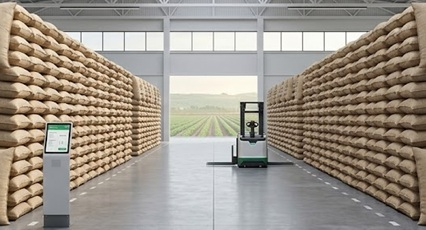
New Delhi, Aug 19 (IANS) India’s third‑party (3PL) logistics sector became the dominant occupier in the country’s warehousing market, recording cumulative gross absorption exceeding 110 million sq. ft between 2021 and the first half of 2026, a report said on Wednesday.
The report from JLL said the sector maintained a consistent share of gross warehousing demand, ranging between 28 per cent and 42 per cent across the period, and accounted for 11.1 million sq. ft of absorption in H1 2026 alone.
Grade A facilities have raised their share from 50 per cent in 2021 to 57 per cent in 2025, while average deal sizes expanded 25 per cent from 1 lakh sq. ft in 2021 to 1,25,000 sq. ft in 2025, the report added.
“India's 3PL sector consistently captures the highest share of gross warehousing demand, thus establishing itself as one of the market's most consistent growth engines,” Yogesh Shevade, Managing Director, Industrial & Logistics, India, JLL.
The 25 per cent expansion in average deal sizes is not just about scale but it signals a long‑term trajectory of growth and appetite for future‑ready infrastructure, he added.
"This is about India's manufacturing and logistics sector becoming globally competitive through strategic infrastructure investment that supports automation, sustainability, and technology integration,” he added.
The report said that overall 3PL facility rents rose at a compound annual growth rate of 3.9 per cent from 2021 to 2025, reaching Rs 21 per sq. ft, while Grade A rents grew at 4.9 per cent CAGR to Rs 23 per sq. ft in 2025.
The report noted a pronounced shift toward institutional-grade warehousing infrastructure that reflects the systematic prioritization of operational efficiency and modern specifications supporting technology integration and automation readiness.
The rental premium for Grade A facilities accelerated notably in H1 2026, rising to Rs 23.7 per square foot marking a 7.7 per cent year-on-year increase that outpaced overall market growth. This widening differential underscores occupiers' willingness to absorb higher costs in exchange for enhanced operational capabilities, the report noted.
—IANS
aar/ag
Meta steps up measures to curb child abuse content in India after govt discussions

New Delhi, Aug 18 (IANS) US-based technology firm Meta is intensifying efforts to curb the spread and reappearance of child sexual abuse material (CSAM) across its platforms in India amid ongoing discussions with the government, according to a report.
NDTV Profit reported that the engagement between the social media company and the Ministry of Electronics and Information Technology (MeitY) has focused on Meta’s handling of illegal content and the broader responsibility of digital platforms to prevent harmful material from resurfacing after it has been identified and removed.
The tech company is taking steps to address the proliferation of such content and remains particularly cautious because CSAM constitutes a clear violation of Indian law, it added.
In addition, the company is also working to tackle instances where previously flagged material reappears on its platforms.
According to sources -- cited in the report -- the government has reiterated that platforms will not be entitled to safe harbour protection if they fail to comply with applicable legal requirements. However, officials are not seeking to censor social media platforms and are instead focused on ensuring adherence to Indian laws.
“Platforms need to strike the right balance between social good and harms,” the report said.
It further noted that issues such as addiction and the circulation of exploitative content remain key concerns associated with social media services.
The government has also stressed the importance of cultural context in the formulation and enforcement of content moderation policies in India, sources said.
Moreover, the ministry is exercising its statutory powers sparingly and remains focused on ensuring that platforms fulfil their legal obligations, according to sources.
While intermediaries can potentially lose safe harbour protections for hosting prohibited content, whether such protections apply in any specific case is ultimately a matter for courts to determine based on compliance with prescribed legal conditions.
The discussions come as regulators worldwide increase scrutiny of online platforms over content moderation practices, user safety and compliance with local laws.
--IANS
ag/
Bharat Taxi signs up nearly 8 lakh drivers, 41 lakh customers; targets nationwide expansion by 2029
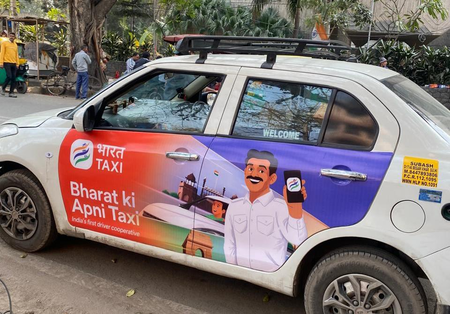
New Delhi, Aug 17 (IANS) Bharat Taxi -- India's first cooperative-led ride-hailing platform -- has registered nearly 8 lakh drivers and around 41 lakh customers by July 25 since its launch and is targeting a nationwide expansion by 2029, an official fact-sheet said on Monday.
Established under the Multi-State Cooperative Societies Act, 2002, Bharat Taxi was founded by eight national cooperative institutions, including NABARD, IFFCO, Amul, NAFED and the National Cooperative Development Corporation (NCDC).
The platform operates on a zero-commission model, allowing drivers, referred to as Sarathis to retain their fare earnings while participating as member-owners of the cooperative.
According to the government, Bharat Taxi is currently operational in Delhi-NCR, Gujarat, Mumbai, Lucknow, Chandigarh, Jaipur, Kanpur and Pune.
In addition, the platform plans to expand operations to Ranchi, Patna, Guwahati, Bhopal, Kolkata, Indore and Nagpur in the coming months as part of its phased national rollout.
Bharat Taxi has been structured to give drivers a stake in ownership and governance which means Sarathis can become member-owners by purchasing shares in the cooperative and are represented in its leadership structure through reserved seats on the board.
It offers multiple ride categories, including bike taxis, autos, economy cabs, premium sedans, SUVs, rentals, outstation travel and scheduled rides.
The platform said it follows a transparent pricing system without surge pricing and additional platform charges. It also introduced women-focused mobility initiatives, including 'Sarathi Didi' which allows women passengers to opt for women drivers, and Bike Didi to increase women's participation in the transport sector.
Bharat Taxi has integrated its services with government digital platforms including DigiLocker, UMANG and API Setu through collaboration with the National e-Governance Division under the Digital India programme, according to the government.
The platform also entered into partnerships with institutions including the Delhi Traffic Police, Delhi Metro Rail Corporation, State Bank of India, Paytm and IFFCO Tokio Insurance to strengthen service delivery, digital payments and insurance coverage.
Bharat Taxi said drivers associated with the platform are facilitated to register on the e-Shram portal, enabling access to social security benefits, while additional accident and health insurance support is available through partner institutions.
The platform is supported by the Ministry of Cooperation's broader push to promote cooperative-based business models and seeks to combine digital mobility services with democratic ownership and economic participation.
--IANS
ag/
AI aspiration drives 50 pc mergers and acquisitions deals at top Indian IT firms

New Delhi, Aug 17 (IANS) Nearly half of acquisitions by India’s top 26 IT companies over the past two fiscals were driven by considerations around artificial intelligence and allied technologies, a report said on Monday.
Capability-led, largely low-leverage deals should keep the credit profiles of acquirers resilient, the report from Crisil Ratings said.
The ratings agency said that AI has become the acquisition thesis as clients move from pilots to enterprise‑scale deployment and service providers seek to rapidly acquire AI, cloud, data engineering and domain capabilities.
"The objective is not merely to add scale but also to enhance relevance through specialist talent, domain-ready platforms, marquee clients and sharper go-to-market capabilities," said Aditya Jhaver, Director, Crisil Ratings.
In a rapidly evolving technology cycle, acquisitions can shorten capability build-out timelines from years to months and help companies remain competitive, he added.
Out of nearly 90 M&A deals assessed by the firm, many earlier transactions aimed at augmenting digital capabilities such as cloud computing, process automation and analytics, or expanding geographical reach.
However, over the past two fiscals, AI and related capabilities such as data engineering, digital engineering, ER&D and enterprise platforms have dominated deal rationales.
Softer discretionary technology spending, pressure on traditional services growth and rising demand for AI-led transformation are prompting IT companies to sharpen their portfolios, deepen vertical expertise and acquire differentiated platforms or specialist talent in priority markets.
"Importantly, this inorganic push has not materially weakened balance sheets. Most transactions have been funded through internal accruals, cash reserves or share swaps, with limited reliance on debt, preserving financial flexibility even as companies reposition for an AI-first demand cycle," the firm said.
Most acquisitions over the past two fiscals were outbound, with over 70 per cent of targets based in the United States and Europe, as these markets offered deeper pools of AI talent, proprietary platforms and sector-specific intellectual property.
—IANS
aar/ag