
India must promote electric trucks to speed up shift to alternative energy: PM Advisor Tarun Kapoor

New Delhi, Sep 3 (IANS) India needs to accelerate its transition towards alternative energy sources available domestically and promote electric trucks as part of this shift, Tarun Kapoor, Advisor to the Prime Minister, said at the 66th SIAM Annual Convention on Thursday.
“We need to transition to alternative energy sources available in India as quickly as possible. For this, we must promote electric trucks,” Kapoor said.
He noted that electric trucks have already started being manufactured in India, indicating that the country has begun building capabilities in the segment. However, he stressed the need to further strengthen domestic manufacturing to make such vehicles more affordable and competitive.
"If we want to set a timeline for ourselves then we should see very major transition in the next 5 years we want that the whole landscape should change and those incremental changes will not really help us," he said.
Kapoor said greater local value addition, particularly through domestic battery manufacturing, could help bring down the cost of electric trucks and make them available at competitive prices.
"The main change which is happening is that everyone is moving towards sustainability, towards energy efficiency, towards electric, towards fuels which are more environment friendly and we also have to do that," Kapoor said.
“If we add more value—such as manufacturing batteries locally in India—these trucks can potentially be available at a good, competitive price,” he said.
Beyond electric mobility, Kapoor stressed the need to strengthen domestic manufacturing of semiconductors and other critical automotive components. Citing recent disruptions in the supply of rare-earth magnets, he warned that heavy reliance on concentrated global supply chains can expose the industry to significant vulnerabilities.
"Please expect some major things to come from our side and the industry has to be prepared for that," Kapoor said.
--IANS
pk
AI will not wipe out jobs: Nvidia CEO
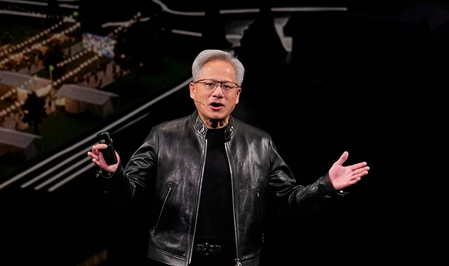
Chapel Hill (North Carolina), Sep 2 (IANS) Nvidia chief executive Jensen Huang has rejected fears that artificial intelligence will eliminate employment, arguing that the technology will automate tasks while allowing people and companies to pursue far greater ambitions.
“The idea that somehow all the jobs are going to be eliminated, removed, that's just nonsense,” Huang said during a fireside chat with US Commerce Secretary Howard Lutnick.
Huang said jobs were defined by their purpose, context and meaning, even though some of the skills used to perform them would change.
“Those skills are gonna be automated by AI. The tasks are gonna be automated, but our jobs purpose remain,” he said. “And so I think what's gonna happen was that we're all just gonna be supercharged.”
Huang said Nvidia already uses AI throughout its operations, combining readily available products with systems developed internally.
“You should use AI off-the-shelf wherever you can, but don't forget, you have to invest in building your own intelligence, every country, every company,” he said. “You can't outsource all of your intelligence to somebody else.”
Huang predicted that the world could achieve what is commonly called artificial general intelligence within the next few years. He argued that elements of it had effectively arrived already, but cautioned that such a breakthrough would not automatically solve every company’s problems.
“It's not as if all of a sudden in two years time, I say, okay, let me connect it to this AI service and I just sit back and all of a sudden my company becomes more and more productive overnight,” he said. “That's just not gonna happen at all.”
Companies would still need to provide AI systems with purpose, context, relevant information and access to the tools required for productive work, Huang said.
He described AI as a “five-layer cake” comprising energy, chips, infrastructure, models, and data and applications. Countries did not need to dominate every layer, he said, but should determine where to invest and encourage AI adoption across education, healthcare, manufacturing and science.
“Every single country needs to build infrastructure so that you could support your own local economy,” Huang said. “It becomes the capacity, the intellectual capacity, the digital intellectual capacity for you to support your researchers and students and society and industries and startups.”
The Nvidia chief said the United States was expected to invest close to $1 trillion in AI infrastructure this year, generating economic growth and hundreds of thousands of jobs across semiconductor fabrication, computer production and AI data centres.
Huang urged governments to balance discussions about AI safety with its potential contribution to prosperity. The greatest risk for a country, he said, was failing to adopt the technology.
“The worst outcome is that you don't take advantage of it. that you are left behind. That is the single worst outcome,” he said.
He also called for regulation to address demonstrated risks rather than speculative threats.
“Don't regulate hypothetical, theoretical harm. Regulate actual and pragmatic harm,” Huang said.
Lutnick said countries would need to invest in data centres and domestic AI infrastructure to ensure their citizens and economies benefited from the technology.
“They've got to harness the AI for themselves,” Lutnick said. “Because what you've said is that education has been democratized.”
Nvidia was founded in 1993 by Huang, Chris Malachowsky and Curtis Priem. Its graphics processing units, initially closely associated with computer gaming, have become central to the data centres used to train and operate advanced artificial intelligence systems.
--IANS
lkj/na
Circular economy, clean energy to be key drivers of next industrial revolution: Dr. Jitendra Singh
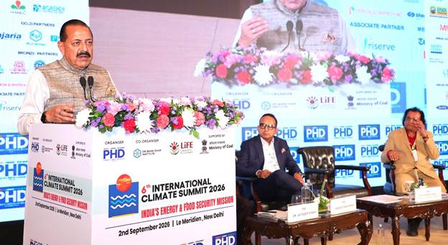
New Delhi, Sep 2 (IANS) Union Minister Dr. Jitendra Singh said on Wednesday that India must accelerate its transition to secure, clean, sustainable and self‑reliant energy systems amid geopolitical uncertainty and volatile markets.
Dr Singh was addressing the 6th International Climate Summit 2026 here, while he warned that energy security is inseparable from national security, strategic autonomy and economic resilience, the statement from the Ministry of Science & Technology said.
The Union Minister said that technological advancement and self-reliance are closely interlinked, and affordability is equally important for ensuring that the benefits of emerging technologies reach their full potential. The minister said that India would require affordable as well as clean sources of energy to derive maximum outcomes amidst emergence of an AI-driven data-centre era.
The minister said that India seeks to assume a greater global role, and hence has to keep pace with global trends and technological developments in the energy sector.
On the government’s approach of pursuing energy security through multiple pathways, Dr. Singh said that nuclear energy is a key area being pursued.
He highlighted the nuclear energy mission with a target of 100 GW by 2047, describing the opening up of the nuclear sector to private players as a significant development. An integrated approach and an enlarged resource pool would be necessary to meet the country's ambitious energy targets.
The minister also referred to the aim of establishing five Small Modular Reactors by 2033, and the ongoing efforts in the green hydrogen sector, including the recently flagged-off green hydrogen train.
Dr. Singh emphasised that biofuels and the circular economy would form an important part of India's clean-energy transition. He further mentioned that the next industrial revolution would be driven significantly by the circular economy and new technology pathways, including biofuels, ethanol and sustainable fuels.
The minister stressed that India's growing requirements in sectors such as agriculture, health, irrigation, fertiliser and transport make it imperative to accelerate the pace of development and adoption of clean-energy technologies.
—IANS
aar/pk
Union Ministers credit people’s hard work, reforms for India’s robust GDP growth
New Delhi, Aug 31 (IANS) Union Ministers on Monday credited the hard work and resilience of the people of India, along with economic reforms and policy measures undertaken by the NDA government, for the country's robust economic performance in the first quarter of fiscal 2026-27.
Finance Minister Nirmala Sitharaman said India's real GDP is estimated to have grown by 7.8 per cent in Q1 FY2026-27, underlining the strength and resilience of the economy.
FM Sitharaman said nominal GDP growth during the quarter is estimated at 10.3 per cent, while real Gross Value Added (GVA) recorded a growth of 8.2 per cent.
The finance minister attributed the strong performance to the hard work of the people of India and said the reforms undertaken by the NDA government, combined with agile management of the economy, were delivering results.
FM Sitharaman said the government, under the leadership of Prime Minister Narendra Modi, remains committed to expanding economic opportunities for citizens and creating the conditions for sustained growth.
Commerce and Industry Minister Piyush Goyal also welcomed the GDP figures, describing them as evidence of India's growing economic strength.
He said the country's 7.8 per cent real GDP growth in Q1 FY2026-27 reflected the resilience of the Indian economy and the commitment of its people.
Goyal said the performance was supported by the hard work of Indians and complemented by the government's reform-oriented policies.
He added that under Prime Minister Modi's leadership, India was steadily moving towards a stronger and more aspirational economy while seeking to create greater prosperity for its citizens.
Petroleum and Natural Gas Minister Hardeep Singh Puri said the growth was particularly significant against the backdrop of global uncertainties, oil price shocks and supply-chain disruptions.
Puri attributed India's economic resilience to the collective strength of different sectors and the enterprise of its 1.4 billion people. He also highlighted the role of India's energy diplomacy in helping the country navigate global challenges.
--IANS
pk
Semicon 2.0 can attract over Rs 5 lakh crore private investment: Industry
New Delhi, Aug 31 (IANS) The electronic system design and manufacturing (ESDM) industry on Monday welcomed the government's notification of Rs 1.27 lakh crore Semicon 2.0 programme, saying the scheme has the potential to catalyse more than Rs 5 lakh crore of cumulative investment over the next five to seven years and significantly strengthen India's semiconductor ecosystem.
According to an apex body, the India Electronics and Semiconductor Association (IESA), the programme builds upon the Semicon India Programme and marks a significant step towards strengthening India's semiconductor design and manufacturing capabilities through an end-to-end approach covering six pillars across the value chain.
"The official notification of Semicon 2.0 is a very significant milestone. The speed with which the government has moved from Cabinet approval to official notification sends a strong message of policy continuity, execution and commitment," IESA President Ashok Chandak said.
According to Chandak, policy continuity is critical for an industry where investments are made with a horizon of 10-15 years and the latest move would provide confidence to domestic and global investors planning long-term projects in India.
IESA noted that the first phase of the semiconductor programme had already helped create confidence in the ecosystem through 12 approved projects, support for more than 100 design startups and wider access to electronic design automation tools across educational institutions.
The association said Semicon 2.0's significance lies in its comprehensive coverage of the semiconductor value chain, spanning chip design, fabrication plants, assembly, testing, packaging facilities, equipment and materials, research and development and workforce development.
It also welcomed the government's proposal to identify strategically important semiconductor products through a high-level committee to be jointly chaired by the Principal Scientific Adviser and the National Security Adviser.
Chandak said that based on the current investment pipeline and the expanded scope of the scheme, IESA expects Semicon 2.0 to catalyse over Rs 5 lakh crore in cumulative industry investment across fabrication units, ATMP and OSAT facilities, equipment and materials manufacturing, research and development, chip design and supply-chain activities.
The industry body said the government's fiscal support should be viewed as a catalyst for significantly larger private investment, with semiconductor projects creating demand across equipment, materials, specialty chemicals, packaging, logistics and skilled talent.
IESA further said Semicon 2.0, along with electronics manufacturing schemes such as the Electronics Components Manufacturing Scheme (ECMS), Mobile Phone Manufacturing Scheme (MPMS) and Electronics Manufacturing Clusters (EMC), could help create an integrated ecosystem that boosts domestic value addition and technology development. PTI
It also congratulated Union Minister Ashwini Vaishnaw and MeitY Secretary S. Krishnan, CEO, India Semiconductor Mission Amitesh Kumar Sinha and the entire MeitY–ISM team for their leadership, continued industry engagement and speed of execution.
The government earlier in the day notified Semicon 2.0 to support semiconductor design, fabrication, packaging, testing, equipment manufacturing, research and talent development.
--IANS
ag/
Seoul shares end higher despite hawkish Fed chief
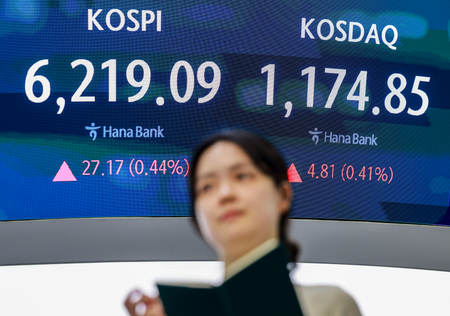
Seoul, Aug 31 (IANS) Seoul shares ended higher on Monday on a rebound in tech stocks, as investors remained cautious about a possible interest rate hike following US Federal Reserve Chair Kevin Warsh's speech at the Jackson Hole symposium.
The Korean won rose against the U.S. dollar. After opening 2.58 percent lower, the benchmark Korea Composite Stock Price Index (KOSPI) erased its earlier losses to close up 31.14 points, or 0.46 percent, at 6,820.02, reports Yonhap news agency.
The advance bucked losses on Wall Street on Friday (U.S. time). The Dow Jones Industrial Average fell 0.02 percent, while the tech-heavy Nasdaq Composite declined 0.52 percent.
Institutions, foreign investors and retail investors were all net sellers, offloading 793.12 billion won (US$579 million), 639.86 billion won and 144.33 billion won worth of stocks, respectively. Their net selling limited the main index's gains.
In his first major speech since taking the helm of the U.S. central bank, Warsh warned that inflation remains a concern, leaving the door open to further rate hikes this year.
In addition to increased expectations of a U.S. rate hike, investors remained on alert over escalating tensions in the Middle East following renewed U.S. strikes in the Strait of Hormuz.
In Seoul, tech stocks led the gains. Market bellwether Samsung Electronics rose 1.17 percent to 260,000 won, while its chipmaking rival SK hynix climbed 1.27 percent to 1.67 million won.
Top carmaker Hyundai Motor gained 1 percent to 403,500 won, and leading battery maker LG Energy Solution advanced 2.16 percent to 378,000 won.
Among decliners, defence giant Hanwha Aerospace fell 4.75 percent to 1.1 million won, and national flag carrier Korean Air shed 2.09 percent to 28,100 won.
The Korean won was quoted at 1,368.6 won against the U.S. dollar, up 3.9 won from the previous stock trading session.
Bond prices, which move inversely to yields, closed lower. The yield on three-year Treasurys rose 5 basis points to 3.838 percent, and the return on the benchmark five-year government bonds added 3.2 percentage points to 4.053 percent.
--IANS
na/
ENDOCON 2026: Three-day national conference on Endoscopy, over 1,000 delegates and experts to attend
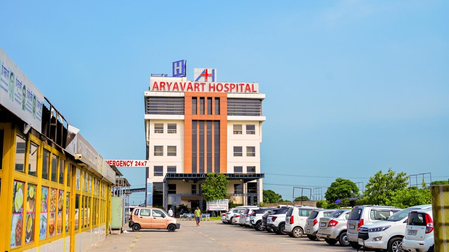
New Delhi, Aug 27 (IANS) ENDOCON 2026, the 26th National Conference of Society of Gastrointestinal Endoscopy of India (SGEI) is set to begin at Aryavart Hospital in the capital from Friday, which will see participation of leading endoscopists, gastroenterologists, surgeons, physicians, researchers, nurses, technicians, and healthcare innovators from across India and around the world.
The landmark conference is set to bring together widely acclaimed national and international experts, who have shaped the future of gastrointestinal endoscopy through groundbreaking clinical work, research, innovation, and education.
The event is being hosted by Aryavart Hospital - a multi-speciality center with committed focus on gastrointestinal endoscpy, in New Delhi’s Andaz Aerocity from August 28-30.
The three-day conference -- one of the most anticipated events of the year, has been designed to inspire and educate hundreds of healthcare professionals by giving them a rare opportunity to witness the advanced procedures as they happened.
This year, the spotlight of the event is on Endoscopy for Young Innovators – a dedicated platform to celebrate fresh ideas, cutting-edge techniques, and bold new approaches that will shape the future of endoscopic practice.
“Beyond innovation, ENDOCON 2026 offers holistic learning across the entire spectrum of Gastroenterology and Hepatology. From advanced interventional endoscopy to luminal diseases, motility disorders, pancreato-biliary challenges, liver transplantation, and emerging frontiers in microbiome and oncology – our scientific program is comprehensive, evidence-based, and thoughtfully curated to benefit every attendee, regardless of experience level,” said the organisers in an official statement.
It also added, “This is not just another conference. This is a movement. A gathering where knowledge meets inspiration, where tradition meets disruption, and where every participant – student, trainee, practitioner, or thought leader – leaves transformed.”
Starting from Friday to Sunday, the conference is set to witness gathering of more than 1,200 delegates and healthcare professionals, with more than 45 international faculty and around 500 national faculty sharing their insights and expertise, along with leading gastroenterologists, endoscopists, surgeons, physicians and allied healthcare professionals.
The conference will provide a platform for academic exchange, knowledge sharing and discussion on the latest developments in gastroenterology and gastrointestinal endoscopy.
It will also facilitate participants in exploring cutting-edge technology and refining their procedural skills through expert guidance.
--IANS
mr/
Skyways IPO gets ready for listing as key risks remain for investors disclosed in RHP

New Delhi, Aug 27 (IANS) The Rs 582.8 crore IPO of Skyways Air Services, which is set to get listed soon, has seen grey market premium (GMP) gain of around 33 per cent on the last day of bidding on Thursday. However, key risks still remain for investors to watch out.
GMP is an unofficial market indicator and can change before listing. It does not guarantee the actual listing price or returns. The company has fixed a price band of Rs 131-138 per equity share for the IPO. The issue comprises a fresh issue of up to 2.89 crore equity shares and an offer-for-sale of up to 1.33 crore shares by existing shareholders.
In its Red Herring Prospectus (RHP), Skyways Air Services Limited has disclosed an ongoing Economic Offences Wing (EOW) investigation involving the company and its material subsidiary Brace Port Logistics Limited in connection with allegations of fraud, over-invoicing, forgery and criminal conspiracy, according to the company’s offer documents and a representation submitted to SEBI.
The risk stems from FIR No. 0172 of 2025, registered by the EOW, Delhi, on December 12, 2025, pursuant to a complaint by UK-based PG Paper Company Limited. The FIR names Skyways Air Services as Accused No. 3 and its subsidiary Brace Port Logistics Limited as Accused No. 2. The RHP filed on August 11, 2026 discloses the FIR as an outstanding criminal proceeding against the company and its subsidiary.
According to the allegations cited in the RHP and the representation, PG Paper has alleged that Skyways group entities, including Brace Port, RIV Worldwide Ltd. UK and Skyways SLS Logistik GmbH, secured freight business through coordinated actions involving inflated freight invoices, alleged bribery, fraud and misrepresentation. The complainant has alleged that business exceeding Rs 800 crore was conducted through the three subsidiaries since 2021 and estimated its direct loss at not less than Rs 44.20 crore.
The representation submitted to SEBI by PG Paper further alleges that Brace Port and Skyways collectively over-invoiced the company by approximately Rs 44.20 crore.
It alleges that freight charges were artificially inflated, in some cases by around 40 per cent to as much as 300 per cent over prevailing market rates, and that internal checks were allegedly bypassed through inducements to an employee involved in freight procurement.
The FIR invokes provisions relating to criminal breach of trust, cheating, forgery, use of forged documents and criminal conspiracy under the Indian Penal Code and the Bharatiya Nyaya Sanhita.
Another significant risk highlighted in the documents is regulatory action following the FIR. The Central Board of Indirect Taxes and Customs (CBIC) issued a notice on May 14, 2026 for suspension and proposed revocation of Skyways’ Authorised Economic Operator-LO certificate.
The company’s AEO-LO status has remained suspended from May 4, 2026 pending the outcome of the investigation. Skyways submitted its response to the competent authority on July 28, 2026, and the matter remains pending.
When reached earlier, the company did not comment on IANS queries.
--IANS
pk/
Apple schedules new iPhone 18 Pro, foldable launch event on Sep 9

New Delhi, Aug 27 (IANS) US technology giant Apple has scheduled its annual event for September 9 at its Steve Jobs Theater in Cupertino, California where the company is set to unveil the iPhone 18 Pro models and its first foldable iPhone.
The presentation will be the first major product launch under John Ternus, who is due to take over as chief executive on September 1, succeeding Tim Cook.
The company is expected to announce the new iPhone 18 Pro and iPhone 18 Pro Max, but the two models are reported to be relatively iterative upgrades rather than a major redesign.
Reports indicated that the company won’t be announcing the standard iPhone 18 until next year. The standard iPhone 18, iPhone 18e and iPhone Air 2 are expected to be unveiled in the first half of 2027.
"Surprise and shine! It's almost time for the #AppleEvent, on Wednesday, September 9!" said Apple's Senior Vice President of Worldwide Marketing, Greg Joswiak in a post on X.
The foldable device, which could be called the “iPhone Ultra” name, may use a book‑style foldable design with an internal display of roughly 7.8 inches and an external screen of about 5.5 inches.
The phone may feature an under‑display camera on the inner screen and a punch‑hole camera on the outer display. Early pricing estimates put the device above Apple’s current lineup, with some reports suggesting a starting price around $2,000.
Reports said that the foldable iPhone could feature a dual-camera setup on the rear, comprising primary and ultra-wide-angle cameras and will likely bring Touch ID back to the iPhone.
The September event is likely to see the launches of iPhone 18 Pro and iPhone 18 Pro Max. The devices will likely be powered by the new A20 Pro chip, based on a 2nm manufacturing process, along with Apple's C2 modem.
Camera upgrades are anticipated, including a possible variable‑aperture main camera on the iPhone 18 Pro Max. Apple is also reportedly working on under-display Face ID technology.
The company is also expected to refresh its smartwatch lineup at the September event. The new generation of AirPods Pro likely to be unveiled in September may have camera-equipped earbuds, which could work with Apple's Visual Intelligence features, allowing the system to interpret objects and surroundings.
—IANS
aar/na
Meta to pay up to $16.68 billion over Facebook, Instagram child safety claims
New Delhi, Aug 26 (IANS) Meta Platforms has agreed to pay up to $16.68 billion to settle claims brought by US states alleging that Facebook and Instagram were designed to be addictive for children, misled users about platform safety and improperly collected personal data from minors, according to court filings.
The settlement was reached during a federal trial in California involving claims brought by 29 states, bringing an end to one of the most closely watched legal challenges over the impact of social media on children and teenagers.
As part of the agreement, Meta will also introduce changes for teenage users of Facebook and Instagram across the US, including daily usage limits and restrictions on access during nighttime hours. The company, however, denied wrongdoing and liability as part of the settlement.
Meta shares rose 4.4 per cent in pre-market trading following news of the agreement.
The case included allegations that Meta violated consumer protection laws in California, Colorado, Kentucky and New Jersey. The states also alleged that Meta violated the federal Children's Online Privacy Protection Act by collecting personal information from users it knew were children without obtaining parental notification or consent.
The states further alleged that the company used children's data to train machine-learning and generative artificial intelligence models.
Meta has consistently denied the allegations and said it has taken extensive measures to protect young users on its platforms. The company had also argued that it could not have misled consumers by describing its services as addictive because "social media addiction" is not formally recognised as a psychiatric condition.
Before the trial, Meta said the four states were seeking as much as $1.4 trillion in penalties, although the states had indicated that the figure could be closer to $200 billion. They were also seeking additional damages and court orders requiring significant changes to Meta's platforms, including potentially preventing children from creating accounts.
The settlement comes amid a broader legal battle over the impact of social media on youth mental health. Meta, Snap, YouTube parent Alphabet and TikTok parent ByteDance continue to face thousands of lawsuits alleging that their platforms were deliberately designed with features that encourage excessive use among children and teenagers.
--IANS
pk