
FSSAI trains food businesses on labelling, advertising rules amid scrutiny over food warnings
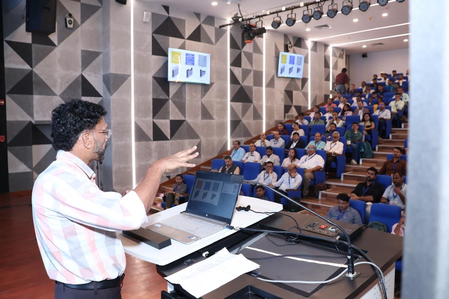
New Delhi, Aug 14 (IANS) The Food Safety and Standards Authority of India (FSSAI) on Friday said that it conducted a training session for food business operators (FBOs) on regulations governing food labelling, display, advertising and claims, amid heightened focus on consumer awareness and public health safeguards for packaged food products.
The session -- 'Understanding Labelling & Display and Advertising & Claims Regulations -- witnessed participation from a large number of food businesses, reflecting the industry's focus on compliance with food labelling and advertising requirements, FSSAI said on a social media platform X.
The training comes amid ongoing scrutiny over the need for stronger nutritional information and warning labels on packaged foods containing high levels of sugar, salt and saturated fat.
In addition, the Supreme Court has recently questioned the Centre and FSSAI over delays in implementing front-of-pack warning labels, stressing that public health -- particularly that of children-- cannot be compromised.
A bench of Justices J.B. Pardiwala and K. Vinod Chandran had asked the government to explain the steps taken towards implementing stronger nutritional warnings and questioned whether consumer health considerations were being adequately prioritised.
The court has also emphasised that clear warnings on the front of food packages could help consumers make informed choices before purchasing products.
It had questioned concerns that stronger warning labels could affect manufacturers' businesses, observing that the final decision on whether to purchase a product rests with consumers and that commercial interests cannot override public health considerations.
The apex court had sought details from the Centre on the proposed labelling framework and granted the government time to respond warning that it could issue further directions if concrete action was not taken.
Moreover, during an earlier hearing, the government had argued that aligning with international standards on packaging and nutritional warnings posed practical challenges. However, the court dismissed the submission and said that India cannot rely on foreign standards as a reason to delay stronger public health safeguards.
--IANS
ag/
Gujarat expands ESIC healthcare network with six new super-speciality hospital MoUs
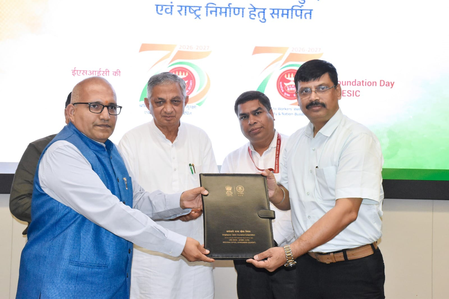
Gandhinagar, Aug 13 (IANS) Workers covered under the Employees’ State Insurance Corporation (ESIC) in Gujarat and their dependent family members will have access to tertiary and super-speciality treatment at six more healthcare institutions under newly signed agreements, as the state government moves to expand specialised medical care under the workers’ health insurance network.
The Labour and Employment Department and ESIC-Gujarat signed MoUs with the six institutions in Gandhinagar on Thursday in the presence of Labour and Employment Minister Kunvarji Bavaliya.
The agreements are intended to provide insured workers and their dependent beneficiaries with access to treatment for serious illnesses and emergencies, with expenditure covered under the scheme without a prescribed financial ceiling, subject to ESIC rules and eligibility.
The six institutions are Shrimad Rajchandra Hospital and Research Centre in Dharampur, Valsad; Shrimad Rajchandra Sarvamangal Hospital and C. U. Shah Medical College in Surendranagar; Shri Giriraj Hospital, a unit of Shri Giriraj Lifecare Private Limited, in Rajkot; Gokul Lifecare Private Limited in Rajkot; N. M. Virani Wockhardt Hospital Limited; and Dr Bhatt Pathology Laboratory in Rajkot. Bavaliya said the health of workers was central to both economic activity and nation-building.
“Healthy workers are the foundation of a strong economy and nation-building,” he said, adding that the initiative would provide workers and their families with easier access to quality healthcare while reducing the financial burden associated with serious medical treatment.
He said ESIC-registered workers and their families would be able to avail themselves of treatment at super-speciality hospitals according to their healthcare requirements.
The minister also urged hospital administrators, doctors, pathologists and officials to give priority to the welfare of workers and provide treatment with the same sensitivity and care they would extend to a family member.
Bavaliya further directed officials to ensure that ESIC funds were used appropriately and solely for the benefit of workers, with safeguards against misuse at any level.
Joint Secretary of the Labour, Skill Development and Employment Department, Tejas Soni, said the state government was working towards the socio-economic welfare of more than 1.25 crore workers across the organised, unorganised and agricultural sectors.
"Gujarat had undertaken several worker-centric initiatives, and the new agreements would strengthen the ESIC healthcare network across the state," he said.
ESIC Gujarat Regional Director Hemantkumar Pandey said the organisation was working to expand its network of tertiary and super-speciality healthcare services.
With six agreements, ESIC Gujarat has signed 32 MoUs with healthcare institutions, including 26 agreements signed earlier covering 13 government hospitals and healthcare institutions.
The existing network includes institutions such as the U. N. Mehta Institute of Cardiology and Research Centre, GMERS hospitals, the Gujarat Cancer and Research Institute (GCRI), the Institute of Kidney Diseases and Research Centre and AIIMS Rajkot.
The expansion comes as Gujarat’s ESIC healthcare network continues to grow. The state currently has ESIC hospitals at Bapunagar, Ankleshwar, Naroda and Vapi, according to ESIC records.
The 220-bed ESIC Hospital in Surat was also inaugurated in June this year and is expected to serve around 3.20 lakh insured persons and 12.16 lakh beneficiaries in the region.
The state government said the process of signing MoUs with another 45 hospitals and healthcare institutions across Gujarat was under way.
Once completed, the agreements are expected to further increase the availability of specialised treatment for ESIC beneficiaries in different parts of the state.
ESIC State Medical Officer Vijay Dhanak, along with ESIC officials, representatives of empanelled healthcare institutions, doctors, pathologists and hospital administrators, attended the MoU exchange ceremony.
--IANS
mys/dan
Nurse found dead mysteriously in Kolkata hospital toilet, husband seeks autopsy at another facility (Lead)
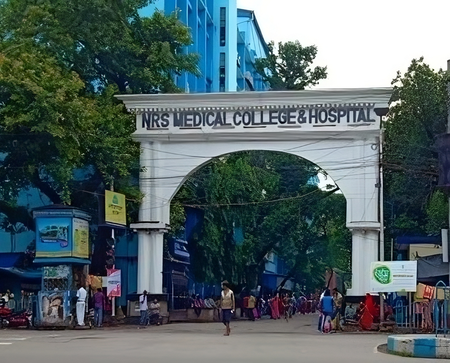
Kolkata, Aug 13 (IANS) The West Bengal police have launched a probe into the mysterious death of a female nursing staff member whose body was found inside a toilet at the state-run NRS Medical College and Hospital (NRSMCH) in Kolkata on Thursday morning.
The deceased woman’s husband has raised questions over the circumstances surrounding her death and demanded that the autopsy be conducted at a different hospital.
The death of the nursing staff member has triggered a major controversy in the state, evoking memories of the rape and murder of a junior doctor at RG Kar Medical College and Hospital two years ago.
The victim was on night duty at the High Dependency Unit (HDU) of the hospital's gynaecology department on Wednesday. Her colleagues initiated a search after she went missing from her seat and subsequently found her body early Thursday morning.
According to her husband, there were no visible injury marks on his wife’s body. He also pointed out that no suicide note was found and that her mobile phone was lying beside her body when it was recovered. He said these circumstances raised suspicion over the cause of her death.
The husband of the deceased nurse appealed to the NRSMCH authorities to arrange the post-mortem at another hospital. The hospital authorities accepted his request and said the autopsy would be conducted at a government hospital of his choice.
State Health Minister Dr Sharadwat Mukherjee visited NRSMCH and held discussions with hospital authorities. Senior Kolkata Police officers, including Joint Commissioner of Police (Crime) Kunal Agarwal and Deputy Commissioner of Police (Eastern Suburban Division) Subimal Paul, also reached the hospital.
Agarwal said three locations inside the hospital premises had been sealed and the Homicide Branch of Kolkata Police had taken up the investigation. He said the post-mortem venue had not yet been decided and that the police would proceed according to the wishes of the deceased woman’s family.
“The place where the autopsy will be conducted has not been decided yet. We will take action as per the wishes of the family. A total of three places within the hospital premises have been sealed. The police have also seized a stretcher for now. The investigators are examining the CCTV cameras,” Agarwal said.
The incident has brought back memories of the August 2024 rape and murder of a junior doctor at state-run R.G. Kar Medical College and Hospital in north Kolkata. Her body was recovered from the emergency department’s seminar room.
--IANS
src/snj/skp
FSSAI suspends licences of AB Enterprise, Zaiqaa Organixs, Narayani Foods over misleading claims, hygiene lapses
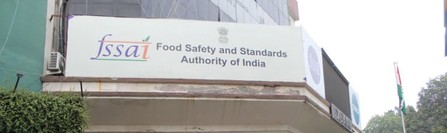
New Delhi, Aug 13 (IANS) The Food Safety and Standards Authority of India (FSSAI) on Thursday said that it suspended the licences of three food business operators, citing misleading claims, unhygienic manufacturing conditions and serious food safety violations that could pose risks to public health.
Taking to the social media platform X, the regulator said licences of A.B. Enterprise in Meghalaya, Zaiqaa Organixs (OPC) Private Limited and Narayani Foods and Beverages in Odisha had been suspended with immediate effect following inspections and regulatory proceedings.
In the case of A.B. Enterprise, FSSAI said the company was found making health benefit claims on product labels and promotional material in violation of the Food Safety and Standards (Advertising and Claims) Regulations, 2018. The authority also found that food business activities were being carried out without the required manufacturing endorsement in its FSSAI licence.
According to FSSAI, an improvement notice and subsequent personal hearing were issued, providing the firm an opportunity to present its case. However, no reply or further communication was received from the food business operator.
"The violations were found to be serious in nature and the claims had the potential to mislead and influence consumer behaviour," the regulator said, directing the firm to stop all food business activities until further orders.
In a separate action, Zaiqaa Organixs (OPC) Private Limited had its licence suspended after FSSAI reported extensive hygiene and sanitation deficiencies at its facility.
The inspection found food being manufactured, packed and stored under unhygienic conditions, poor housekeeping, pest-control concerns, rusted equipment, improper storage of raw materials and finished products and inadequate process controls.
The regulator also said labels carrying key details such as manufacturing dates, batch numbers and use-by dates were missing on certain materials and products.
FSSAI noted that the unit scored only 12 per cent (10 out of 90) in its compliance assessment, falling under the non-Compliance category.
"The presence of physical, chemical and biological hazards in food to an extent that poses serious public-health risks may render the food unsafe," the authority said while ordering suspension of the licence forthwith in the interest of public health.
Additionally, the regulator also suspended the licence of Narayani Foods and Beverages, citing grossly unhygienic processing conditions and significant shortcomings in its food safety management system.
During inspection, FSSAI found poor sanitation, pest-entry points, algae contamination near water facilities, flies and cobwebs in processing and storage areas, corroded equipment, improper storage of finished goods, accumulation of waste materials in food-handling areas and inadequate record-keeping.
The authority further observed the absence of key food-safety training records and documentation related to retained control samples.
Narayani Foods and Beverages received a compliance score of 25 per cent (20 out of 80), which also fell within the non-compliance category.
"In view of the severe non-compliance with mandatory sanitary and hygienic requirements and the consequential food-safety risk, the licence has been suspended with immediate effect in the interest of public health and food safety," FSSAI said.
--IANS
ag/
Punjab and Haryana HC stays appointment of 454 pharmacists

Chandigarh, Aug 12 (IANS) The Punjab and Haryana High Court has directed that the appointment of 454 pharmacists advertised by state‑run Baba Farid University of Health Sciences will remain stayed till September 17, the next date for hearing the petition challenging the recruitment process.
Passing the order, Justice Sandeep Moudgil acted on a petition filed by Keshav Kamboj and others, who sought cancellation of the written examination conducted for recruitment over allegations that an organised inter‑state cheating racket vitiated it.
During the hearing, counsel pleaded that the appointment had been stalled because of the pendency of the writ petition. The petition sought the quashing of the written examination held on July 19 for recruitment of pharmacists (Group C) under the Punjab Department of Health and Family Welfare, relating to an advertisement of June 11.
The petitioners also prayed for quashing all consequential steps taken or proposed to be taken on its basis, including evaluation of answer sheets and preparation or declaration of the result. They argued that the examination had been vitiated in its entirety by the organised, hi‑tech, inter‑state cheating racket, as recorded in the press release dated July 19 and FIR dated July 20, “in complete negation of Articles 14 and 16 of the Constitution of India.”
Meanwhile, state Education Minister Harjot Singh Bains told the Assembly on August 3 that a Haryana‑based cheating syndicate used modified mobile phones, hidden wireless earpieces and other advanced gadgets to facilitate cheating during the Baba Farid University pharmacy examination.
Participating in the discussion on the censure motion in the House over repeated paper leaks across the country and atrocities against protesting students, Bains said Punjab had emerged as India’s number one state in school education. On how the racket operated in the university, he said this was not a paper leak but a technology‑driven cheating operation busted by Punjab Police. He alleged that for years the Haryana government looked away while the syndicate destroyed the future of thousands of students.
--IANS
vg/dan
Bangladesh measles outbreak claims five more lives, death toll nears 900
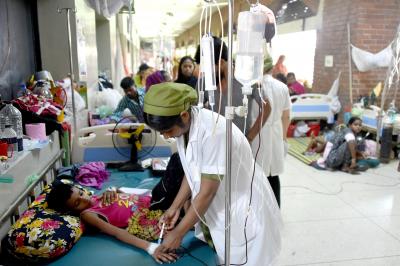
Dhaka, Aug 12 (IANS) At least five children died from the measles outbreak in Bangladesh on Wednesday, raising the total number of confirmed and suspected deaths to 885 this year, amid an escalating health crisis in the country, local media reported.
According to the Directorate General of Health Services (DGHS), the deaths were reported in the 24 hours leading up to Wednesday morning.
Among the latest fatalities from the disease, one was identified as a confirmed measles death while the remaining four were classified as suspected deaths, Bangladeshi media outlet UNB reported.
Reports suggest that while the number of confirmed deaths has risen to 99, the total number of suspected deaths climbed to 786.
The DGHS recorded a total of 941 new suspected measles cases during the 24-hour period, bringing the overall tally of suspected cases to 139,125.
Additionally, 84 new confirmed cases were reported, increasing the total to 17,469 during the same period.
As Bangladesh continues to witness a sharp increase in measles cases, a leading international advocacy group recently described the 2026 outbreak as one of the country’s worst public health crises in recent history, highlighting the concern that the disease is preventable through vaccination.
In its latest report titled ‘Preventable Tragedy: Bangladesh's 2026 Measles Outbreak’, Canada-based Global Centre for Democratic Governance (GCDG) said that although the measles outbreak appeared sudden to the public, it was not an unexpected event from an "epidemiological perspective".
The report noted that the crisis resulted from a combination of disruptions to vaccine supply and health programs in 2024-2025 during the former interim government led by Muhammad Yunus, along with missed routine vaccinations, cancellations of scheduled supplementary immunisation programmes, administrative delays in vaccine procurement, and a failure to promptly identify at-risk populations.
According to GCDG, Bangladesh had long procured WHO-approved vaccines through the United Nations Children's Fund (UNICEF)'s international supply chain; however, the interim government replaced this system with an open tender procurement process. Citing UNICEF, the report said the agency repeatedly warned the interim government of a potential vaccine shortage through five to six formal letters and around 10 meetings held between 2024 and 2026.
Referring to Expanded Programme on Immunisation (EPI) data reported by Bangladeshi daily Samakal, the GCDG noted that measles vaccination coverage fell to 56.2 per cent in 2025, the lowest level recorded between 2017 and 2025.
It added that WHO later identified the nationwide stock-out of the Measles-Rubella (MR) vaccine in Bangladesh during 2024-2025 and the lack of regular vaccination as the main contributors to the decline in immunity among children and the 2026 outbreak.
--IANS
scor/as
Meghalaya govt to intensify HIV awareness campaign statewide

Shillong, Aug 11 (IANS) Meghalaya is set to strengthen its fight against HIV and sexually transmitted infections (STIs) with the launch of the Intensified IEC Campaign 3.0, with a special focus on young people, early testing, treatment and reducing stigma surrounding the disease, officials said on Tuesday.
The two‑month statewide campaign will be launched on Wednesday, alongside International Youth Day programmes at Lady Keane College, with Health and Family Welfare Minister Wailadmiki Shylla attending the event as the Chief Guest.
The campaign comes amid concerns over the continuing HIV burden in the state and the social barriers that often discourage people from undergoing testing or seeking treatment. According to data compiled by the Meghalaya AIDS Control Society in November 2025, more than 10,000 people, including nearly 500 children, had been diagnosed with HIV/AIDS in the state. A senior official stated that East Jaintia Hills has emerged as a major area of concern. National HIV estimates have also indicated that Meghalaya’s adult HIV prevalence remains significantly above the national average.
The campaign will seek to take awareness activities beyond conventional messaging by reaching communities through educational institutions, villages and digital platforms. Its target groups include adolescents and young people, students, pregnant women, vulnerable communities, healthcare workers, government officials, community representatives, media professionals and social‑media influencers.
Authorities plan to organise rallies, roadshows, village meetings, awareness programmes in schools and colleges, screening and counselling camps and door‑to‑door outreach. Community radio, digital campaigns, folk performances and flash mobs will also be used to make HIV and STI‑related information more accessible, particularly among young people.
The campaign will address issues including HIV transmission and prevention, safer sexual practices, STI prevention, early diagnosis and treatment, and misconceptions surrounding HIV. It will also highlight the connection between substance use and HIV transmission.
A key component of the initiative will be efforts to tackle stigma and discrimination against people living with HIV, which health authorities say remain major obstacles to timely testing and treatment. The campaign will promote the National AIDS Helpline 1097 and the online HIV Risk Assessment Tool to help people access information and services.
Meghalaya has previously adopted community‑based approaches to HIV awareness, particularly in Jaintia Hills, where youth‑focused campaigns have stressed testing, accurate information and compassion towards people living with HIV. Officials hope the latest statewide campaign will encourage more people to seek testing early and access treatment, while creating a more informed and supportive environment for those affected by HIV.
--IANS
tdr/dan
Zydus Lifesciences Q1 profit slides 36 pc to Rs 940 crore
Mumbai, Aug 11 (IANS) Zydus Lifesciences on Tuesday reported a 36 per cent year-on-year (YoY) decline in its consolidated net profit for the first quarter of the current financial year (Q1 FY27).
The Ahmedabad-based drugmaker said its net profit fell 35.9 per cent year-on-year to Rs 940 crore in the June quarter, compared with Rs 1,467 crore in the corresponding period last financial year (Q1 FY26), according to its stock exchange filing.
The pharmaceutical major’s revenue from operations rose 22 per cent to Rs 8,017 crore during the quarter, up from Rs 6,574 crore a year ago.
However, profitability came under pressure. Earnings before interest, taxes, depreciation and amortisation (EBITDA) slipped 7.6 per cent to Rs 1,930 crore from Rs 2,089 crore in the year-ago period.
Consequently, the EBITDA margin contracted significantly to 24.1 per cent from 31.8 per cent in the corresponding quarter of the previous financial year.
Despite the weaker earnings performance, investors appeared largely unfazed. Following the results announcement, shares of Zydus Lifesciences were trading at Rs 1,126, up 0.63 per cent, or Rs 7, from the previous close.
The stock has delivered mixed performance across different time frames. Over the past five trading sessions, it gained 1.41 per cent, or Rs 15.70.
On a one-month basis, however, the stock was down 0.52 per cent, or Rs 5.90. Over the last six months, Zydus shares have rallied 25.43 per cent, adding Rs 228.40 in value.
On a year-to-date basis, the stock has risen 23.20 per cent, or Rs 212.25.
Zydus Lifesciences, formerly known as Cadila Healthcare, is one of India's leading pharmaceutical companies.
Founded in 1952 and headquartered in Ahmedabad, the company rebranded itself as Zydus Lifesciences in 2022.
Led by Chairman Pankaj R. Patel, the company has a presence in more than 50 countries and operates over 30 manufacturing facilities worldwide.
The company has a diversified business spanning generic medicines, active pharmaceutical ingredients (APIs), vaccines, biosimilars and specialty products.
Through its subsidiary Zydus Wellness, it also owns several consumer brands including Glucon-D, Sugar Free, Complan, Nycil and Everyuth.
--IANS
pk
FSSAI proposes stricter thresholds for fat, sugar and salt foods sold in schools
New Delhi, Aug 11 (IANS) The Food Safety and Standards Authority of India (FSSAI) has proposed quantitative thresholds to classify food products as high in added fat, added sugar or sodium to tighten norms governing foods sold to children in schools.
In a draft notification published in the Gazette of India, the food regulator proposed amendments to the Food Safety and Standards (Safe Food and Balanced Diets for Children in School) Regulations, 2020.
The draft seeks to introduce a new regulation setting benchmarks for identifying foods high in added fat, sugar or salt, drawing on the Indian Council of Medical Research's (ICMR) Dietary Guidelines for Indians-2024.
Under the proposal, a solid food item will be classified as high in added fat if it contains more than 4.2 grams of added fat per 100 grams, while the threshold for liquid products has been fixed at more than 1.5 grams per 100 millilitres.
For added sugar, the proposed limits are more than 3 grams per 100 grams for solid foods and more than 2 grams per 100 millilitres for liquid products.
Foods will be categorised as high in sodium if they contain more than 0.625 grams of salt per 100 grams in the case of solids and more than 0.175 grams per 100 millilitres for liquids.
The proposed amendment seeks to insert the new provision after the existing regulation on monitoring and surveillance in schools.
According to the notification, the draft regulations have been framed under provisions of the Food Safety and Standards Act, 2006, with prior approval of the Central government.
FSSAI has invited comments and objections from stakeholders and the public. Suggestions can be submitted within 60 days from the date the gazette notification is made available to the public.
In addition, the regulator said all representations received within the stipulated period would be considered before the rules are finalised.
--IANS
ag/
Gujarat targets 1.84 crore children, adolescents in statewide deworming drive
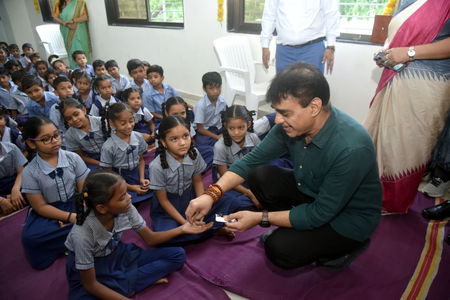
Gandhinagar, Aug 10 (IANS) More than 1.84 crore children and adolescents up to the age of 19 across Gujarat will be administered deworming medicine as part of the state’s 'National Deworming Day' campaign, with the programme aimed at preventing worm-related anaemia among young people.
The state-level observance of 'National Deworming Day' was held at the Government Primary School in Gandhinagar, in the presence of Minister of State for Health, Praful Pansheriya.
The minister, along with other officials, distributed deworming tablets to schoolchildren during the programme.
Addressing the gathering, Pansheriya said: "The state had set a target of providing deworming medicine to more than 1.84 crore children and adolescents up to the age of 19."
He also interacted with the students and encouraged them to develop healthy habits in their daily lives, maintain cleanliness and respect their parents.
The minister also planted a tree on the school premises. Health Commissioner (Rural) Dr Ratankanwar Gadhvi Charan, said the campaign was important for preventing anaemia caused by intestinal worms among children aged one to 19.
"The Health Department, Education Department and Anganwadi workers were working together to ensure that no child in the state was left without access to the deworming medicine," she said.
Gandhinagar Mayor Meera Patel; Children's University Vice-Chancellor Dr Joshi; Additional Director of the Health Department, Dr Nayan Jani; and Deputy Director of Information, Dr Shailesh Parmar, were among those present.
Senior officials, teaching staff and students also attended the programme.
The Minister’s remarks came a day after he ordered a high-level enquiry into the suicide of a resident doctor at Surat New Civil Hospital.
On August 9, Pansheriya directed officials to complete a swift investigation into possible ragging, mental or physical harassment or negligence and submit a report within 24 hours.
The enquiry is being conducted jointly by the Civil Hospital Dean and Superintendent under the direct supervision of the Additional Director of Medical Education, Gandhinagar, with statements of fellow students and resident doctors also being recorded.
"Strict legal and administrative action would be taken against anyone found responsible," he had said.
--IANS
mys/rad