
SC permits Abhishek Banerjee’s foreign travel for eye treatment
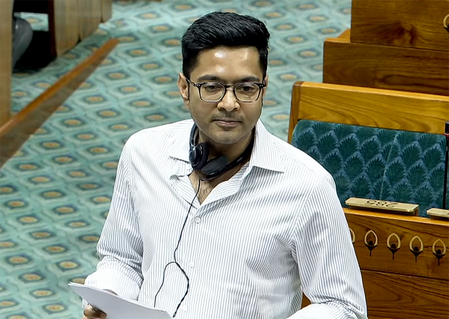
New Delhi, Aug 10 (IANS) The Supreme Court on Monday allowed Trinamool Congress general secretary and Lok Sabha member Abhishek Banerjee to travel abroad for three weeks for medical treatment of his eye, setting aside the Calcutta High Court's refusal to relax the restriction on his foreign travel.
A Bench of Chief Justice of India (CJI) Surya Kant and Justices Joymalya Bagchi and V. Mohana allowed Banerjee's appeal subject to certain conditions, including that he would travel only on his diplomatic passport and share his itinerary and place of stay abroad with the investigating agency.
The CJI Kant-led Bench expressed its disinclination to entertain the objections raised by the West Bengal government against Banerjee's overseas travel, observing that every individual has a right to travel abroad and choose his medical treatment.
During the hearing, Additional Solicitor General S.V. Raju, appearing for the West Bengal government, opposed the plea, submitting that there were several cases registered against Banerjee and expressing apprehension that he might not return if permitted to travel abroad.
ASG Raju said the state government had no objection to Banerjee receiving medical treatment abroad, but contended that it first needed to be ascertained whether the overseas treatment was genuinely required through a medical evaluation.
He argued that since Banerjee had declined to appear for a medical evaluation before a board constituted by the Calcutta High Court, an adverse inference should be drawn against him.
On the other hand, senior advocate Gopal Sankaranarayanan, appearing for Banerjee, submitted that his client presently had only a diplomatic passport, issued to him in connection with Operation Sindoor outreach, and that the embassies concerned would be able to monitor his movements during the foreign visit.
He also submitted that there was no possibility of Banerjee absconding as he was a Lok Sabha member, general secretary of a national political party and had his family in India.
After hearing the submissions, the Supreme Court directed Banerjee to furnish details of his itinerary, including his place of residence in the foreign country, the doctors or hospital where he proposes to undergo treatment, the period of his stay and flight details.
The CJI Kant-led Bench said the details furnished by Banerjee could be used by the investigating agencies for their purposes but would remain confidential.
The Diamond Harbour MP had approached the Supreme Court after the Calcutta High Court on August 5 dismissed his application seeking permission to travel abroad for ophthalmic treatment.
The High Court had declined permission after Banerjee's counsel informed the court that he would not appear before a medical board constituted at the state-run S.S.K.M. Medical College and Hospital in Kolkata to assess his eye condition and determine whether treatment abroad was required.
Earlier, on August 3, the Supreme Court had disposed of Banerjee's plea challenging the High Court's refusal to immediately permit his foreign travel, requesting the High Court to decide the matter expeditiously.
The matter relates to a criminal case in which Banerjee has been accused of making provocative and violence-inciting remarks during campaigning for the 2026 West Bengal Assembly elections.
The restriction on his foreign travel had been imposed as a condition attached to interim protection from arrest.
Banerjee had first approached the Calcutta High Court on June 23, seeking permission to travel abroad for seven days for ophthalmic treatment. He stated that he had been undergoing treatment in the United States for nearly a decade following a serious eye injury suffered in a road accident in October 2016.
The accident occurred while Banerjee was returning to Kolkata from a political programme in Murshidabad district. He subsequently underwent treatment at hospitals in India and abroad.
--IANS
pds/dpb
Measles outbreak in Bangladesh claims six more lives, death toll crosses 870
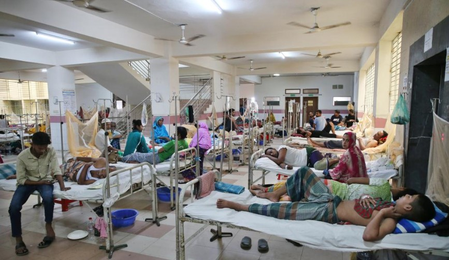
Dhaka, Aug 9 (IANS) As many as six children died with measles-like symptoms in Bangladesh in 24 hours until 8 a.m. (local time) on Sunday, raising the total number of confirmed and suspected measles-related fatalities in 2026 to 873, local media reported.
All the latest deaths were suspected measles fatalities in Bangladesh, according to the statement released by the Directorate General of Health Services (DGHS). Following the latest update, the number of laboratory-confirmed measles fatalities remained unchanged at 98, while the number of suspected measles-related fatalities rose to 775, the United News of Bangladesh (UNB) reported.
During the 24-hour period, 988 new suspected measles cases were reported in Bangladesh, raising the total number of suspected measles cases nationwide to 136,320. During the same period, 75 new confirmed measles cases were reported, raising the cumulative number of laboratory-confirmed infections to 17,115.
As Bangladesh continues to witness a sharp increase in measles cases, a leading international advocacy group has described the 2026 outbreak as one of the country’s worst public health crises in recent history, highlighting the concern that the disease is preventable through vaccination.
In its latest report titled ‘Preventable Tragedy: Bangladesh's 2026 Measles Outbreak’, Canada-based Global Centre for Democratic Governance (GCDG) said that although the measles outbreak appeared sudden to the public, it was not an unexpected event from an "epidemiological perspective".
The report noted that the crisis resulted from a combination of disruptions to vaccine supply and health programs in 2024-2025 during the former interim government led by Muhammad Yunus, along with missed routine vaccinations, cancellations of scheduled supplementary immunisation programmes, administrative delays in vaccine procurement, and a failure to promptly identify at-risk populations.
According to GCDG, Bangladesh had long procured WHO-approved vaccines through the United Nations Children's Fund (UNICEF)'s international supply chain; however, the interim government replaced this system with an open tender procurement process. Citing UNICEF, the report said the agency repeatedly warned the interim government of a potential vaccine shortage through five to six formal letters and around 10 meetings held between 2024 and 2026.
Referring to Expanded Programme on Immunisation (EPI) data reported by Bangladeshi daily Samakal, the GCDG noted that measles vaccination coverage fell to 56.2 per cent in 2025, the lowest level recorded between 2017 and 2025.
It added that WHO later identified the nationwide stock-out of the measles-rubella (MR) vaccine in Bangladesh during 2024-2025 and the lack of regular vaccination as the main contributors to the decline in immunity among children and the 2026 outbreak
"Overall, the nationwide spread of measles resulted from a combination of administrative and health-system failures, including the programmatic vacuum created under the interim government; disruptions in vaccine procurement, transportation, and supply; vaccine stock-outs and canceled EPI sessions; declining MR1 and MR2 coverage; an increasing number of children missing scheduled vaccinations; the absence of supplementary immunization programs; and the current government’s inadequate and inefficient medical response," the GCDG said.
The organisation further said that the current Bangladesh Nationalist Party (BNP) government failed to respond swiftly to "known and measurable risks" after coming to power earlier this year.
Criticising the lack of transparency, the GCDG described "information opacity" as a distinct and serious failure of the current government's medical response during the measles outbreak.
--IANS
akl/vd
FSSAI suspends licences of VKC Nuts, Chheda Specialities over food safety violations
New Delhi, Aug 8 (IANS) The Food Safety and Standards Authority of India (FSSAI) on Saturday said that it suspended the licences of VKC Nuts Private Ltd in Uttar Pradesh and Chheda Specialities Foods Pvt Ltd in Maharashtra with immediate effect after inspections revealed serious food safety and hygiene violations.
Taking to the social media platform X, the food regulator said the action was taken in the interest of public health and food safety following the detection of critical non-compliances at the two facilities.
At VKC Nuts, inspectors found live insects in pistachios stored in the finished goods area, extensive mould and fungal growth in the raw material storage section, rodent droppings across the premises and signs of pest damage to stored food products.
The inspection also revealed the use of rusted and damaged machinery, poor sanitation conditions, ineffective pest-control measures and inadequate segregation of raw materials, work-in-progress inventory and finished goods.
According to the FSSAI, some raw material cartons lacked batch numbers and manufacturing or expiry details, while expired cranberry stock was found stored in a finished goods area.
The regulator said the overall compliance score of the unit was recorded at 38 per cent, indicating significant deficiencies in its food safety management system that could pose a grave risk to public health.
"The FSSAI Licence of VKC Nuts Private Limited has been partially suspended with immediate effect under the FSS Act, 2006, in the interest of public health and food safety, until further orders," it said.
In the case of Chheda Specialities Foods, the regulator cited unhygienic food handling practices, including workers mixing besan dough with bare hands and handling food near decomposing waste.
The inspection also found fungal growth around edible oil storage tanks, inadequate waste management systems, roof leakages, stagnant water, damaged flooring and ineffective pest-control arrangements.
FSSAI said raw materials and packaging materials were being stored directly on wet and dusty floors, while several food containers lacked proper labels and traceability details.
The regulator further noted that multiple food samples collected during earlier inspections had been declared "unsafe" or "misbranded", with legal proceedings in those cases still ongoing.
The facility recorded a compliance score of 42 per cent, reflecting significant shortcomings in food safety and hygiene practices, it added.
FSSAI said the licence of Chheda Specialities Foods has been suspended until the company undertakes comprehensive corrective measures, including improvements in sanitation, pest control, waste management, infrastructure maintenance and staff training, and demonstrates compliance with food safety regulations.
The regulator said it will continue strict enforcement across food sectors to safeguard consumer health and ensure compliance with food safety standards.
--IANS
ag/
Heat-related illness patients in late summer up 3-fold over past decade: Data

Seoul, Aug 8 (IANS) The number of heat-related illness cases reported in late summer nearly tripled in the past 10 years in South Korea, government data showed on Saturday.
An annual average of 215 heat-related patients were reported from "ipchu" to the end of August during the 2011-2015 period, according to an analysis by a research institute under the interior ministry using data from the Korea Disease Control and Prevention Agency (KDCA).
Ipchu, which falls on Aug. 7 this year, marks the beginning of autumn on the traditional calendar, reports Yonhap news agency.
The figure rose to an annual average of 658 cases in 2016-2020 and to 638 cases in 2021-2025. Deaths linked to heat-related illnesses also increased during the same period, rising from an annual average of 3.3 patients in 2012-2015 to more than four patients over the past decade from 2016 to 2025.
In 2024 alone, 1,299 people suffered from heat-related illnesses and 12 died from ipchu to late-August. Heat waves are expected to continue until late August this year, with daytime highs expected to range from 31-35 C across the country.
On Friday alone, 202 people were treated at emergency rooms nationwide for heat-related illnesses, three of whom died, according to the Korea Disease Control and Prevention Agency (KDCA).
The government has operated a heat-related illness monitoring system since May 15. Under the system, 3,089 heat-related illness cases have been reported, including 26 deaths.
Meanwhile, President Lee Jae Myung vowed on Saturday to review government policies that may place young married couples at a disadvantage in housing loans and welfare benefits.
Lee's remarks came amid concerns that some couples delay or avoid registering their marriage because combining their income and assets could leave them at a disadvantage when applying for loans, housing programs and welfare benefits.
"Young people should never be discouraged from getting married because of government policies," Lee wrote in a post on X. "I have ordered a thorough review of any disadvantages they may face as a result of marriage."
--IANS
na/
BRICS members pool expertise for universal health coverage: Report
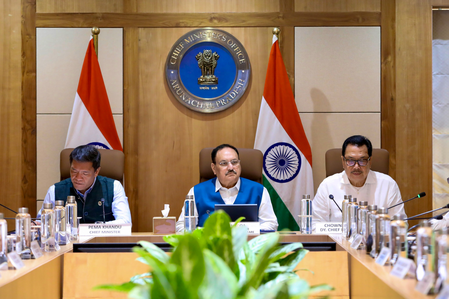
New Delhi, Aug 8 (IANS) BRICS health ministers’ recent declaration committed the bloc to deeper cooperation in health care, and pooled expertise for collectively working towards achieving universal health coverage (UHC), a new report has said.
"By pooling expertise, BRICS is laying the foundations for more accessible, affordable and resilient health care for billions of people across the global south," the report from South Africa-based publication The Citizen said.
With delegates from over 70 representatives and partner organisations endorsing nine priority areas including mental health, tuberculosis control, pandemic preparedness, traditional medicine and nuclear medicine, the 16th BRICS health ministers’ declaration saw measurable outcomes.
At the gathering chaired by India in Chandigarh, the adoption of the 16th BRICS health ministers’ declaration builds on an earlier pledge by member states to work collectively towards achieving UHC.
Minister of Health and Family Welfare, Jagat Prakash Nadda, stressed strengthening collective action as "enhanced cooperation would strengthen public health systems, accelerate digital health care solutions and improve access to medical services across member states."
He noted India’s experience had shown resilient health systems and equitable health care access to be essential pillars of sustainable development.
Among the bloc, Brazil has made the most progress with free health care under its Unified Health System, the report said, while India's Ayushman Bharat remains one of the world's largest publicly funded insurance schemes.
Brazil provides free health care to all residents and visitors through its Unified Health System. Russia operates a state-backed mandatory health insurance model built around an extensive public health care network. China has achieved near-universal basic health coverage through government-supported insurance schemes.
“India has also made significant advances through sustained policy reforms, infrastructure investment and increased public health expenditure,” the South-African media house said.
Programmes such as the National Rural Health Mission have strengthened primary healthcare, while government-funded insurance schemes support economically disadvantaged citizens at accredited public and private hospitals, it added.
—IANS
aar/na
Watching cancer cells live could transform drug discovery

New Delhi, Aug 8 (IANS) A platform that lets researchers observe living cells on a continuous basis could transform drug discovery, reshape cancer research and precision medicine, according to experts on Saturday.
Dr. Shyam Aggarwal, Chairperson, Department of Medical Oncology at Sir Ganga Ram Hospital, New Delhi, said that real-time observation technologies could help researchers better understand how cells respond to candidate drugs.
It could help fast track detection of subtle biochemical changes, and identify promising therapies more efficiently during preclinical research, he added.
"Understanding precision oncology with comprehensive genome profiling (CGP) and minimal residual disease detection (MRD) will help physicians improve targeted personalised medicine for cancer patients," Aggarwal said.
An Indian-origin biotech entrepreneur Parmita Mishra, Founder and CEO of San Francisco-based Precigenetics that runs a platform to generate real-time biochemical information from living cells, said that "when researchers continuously measure how cells behave instead of relying on biological 'autopsies,' they may uncover insights that were previously impossible to observe."
"That has implications far beyond cancer, extending into immunology, neuroscience, rare diseases and regenerative medicine," Mishra said.
"Unlike conventional laboratory techniques that often require cells to be stained, fixed or broken apart before analysis, the platform seeks to monitor living biology continuously, allowing scientists to study cellular behaviour over time rather than relying on isolated end-point measurements," the statement said.
Cancer drug development remains one of the most difficult areas of pharmaceutical research. Industry studies have consistently shown that the vast majority of oncology drug candidates entering clinical development ultimately fail before reaching patients.
Scientists increasingly attribute many failures to the inability of existing laboratory models to fully capture the complexity and dynamic behaviour of living cells.
India reported an estimated 1.4 million new cancer cases in 2022 as per International Agency for Research on Cancer (IARC) data.
The Indian Council of Medical Research (ICMR) projected that the country's cancer burden will continue to rise over the coming decade.
—IANS
aar/na
Railways imposes Rs 5.13 crore penalty on caterers, terminates 6 contracts for food violations: Govt
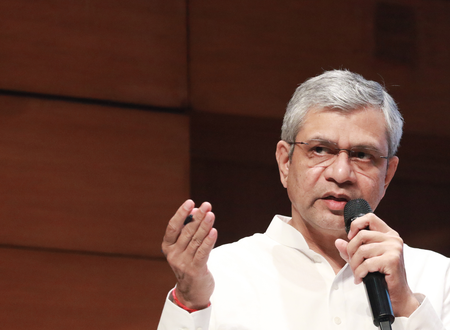
New Delhi, Aug 7 (IANS) Indian Railways has imposed penalties totalling Rs 5.13 crore on caterers and terminated six contracts over food quality and hygiene violations during the last three years, the government informed the Parliament on Friday.
In a reply to a question, Union Minister for Railways, Information & Broadcasting and Electronics & Information Technology Ashwini Vaishnaw said in the Rajya Sabha that the punitive action also included issuance of 54 show-cause notices and debarment of several licensees found violating prescribed food safety and hygiene standards, according to the minister.
The action comes even as food-related complaints remain a tiny fraction of overall catering services provided by the national transporter.
Vaishnaw said Indian Railways serves about 58 crore meals annually on average and receives food quality-related complaints for only around 0.0008 per cent of the meals served.
"The list of debarred licensees is published on the IRCTC website," the minister said.
To strengthen food safety and improve passenger confidence, Indian Railways and the Indian Railway Catering and Tourism Corporation (IRCTC) have adopted a series of measures, including regular and surprise inspections by railway officials and Food Safety Officers.
The inspections cover food quality, hygiene, staff deployment, equipment maintenance and compliance with regulatory standards.
Railways has also expanded the use of designated base kitchens and commissioned modern kitchens at identified locations. CCTV cameras have been installed in base kitchens for real-time monitoring of food preparation activities, while Food Safety Supervisors have been deployed to oversee hygiene practices.
The minister said QR codes have been introduced on meal packets supplied on trains to enhance transparency and food safety. Passengers can scan the code to access details such as the date of packing, name of the licensee and FSSAI licence number.
Other initiatives include the use of branded raw materials, regular food sampling, periodic pest control and deep cleaning of pantry cars and kitchens, mandatory FSSAI certification, third-party audits and customer satisfaction surveys.
According to Vaishnaw, IRCTC also conducts regular training programmes for catering staff, focusing on customer service, communication skills, personal grooming and hygiene standards.
He said Indian Railways continues to take necessary steps to ensure passengers receive safe, hygienic and quality food during their journeys.
--IANS
ag/
FSSAI directs PIE Foods to halt sale of monk fruit sweetener products over regulatory violations

New Delhi, Aug 7 (IANS) The Food Safety and Standards Authority of India (FSSAI) on Friday said that it issued a prohibition order directing PIE Foods to immediately stop the sale of its Monk Fruit Extract Sweetener and Monk Fruit Sweetener Drops after finding multiple violations of licensing and food safety regulations.
According to the food regulator, an inspection found that the products were being marketed by PIE Foods without a valid relabeller endorsement in its FSSAI licence.
Taking to the social media platform X, it noted that the company was operating an e-commerce website without the required e-commerce business endorsement in its licence.
FSSAI said the product labels lacked mandatory declarations and carried claims such as ‘100 per cent Monk Fruit Extract’ and ‘Natural Ingredients’.
In addition, the company's e-commerce platform displayed the claim ‘Doctor Recommended’, which the regulator said appeared to be in violation of the Food Safety and Standards (Labelling and Display) Regulations, 2020 and the Food Safety and Standards (Advertising and Claims) Regulations, 2018.
In view of the violations, the regulator directed the company under the Food Safety and Standards Act, 2006 to immediately discontinue the sale of the two monk fruit sweetener products until it obtains a valid FSSAI Central Licence with the required endorsements.
FSSAI also said the company must secure the necessary regulatory approval for the use of monk fruit extract which is treated as a non-specified food ingredient under the applicable provisions of the Food Safety and Standards Act, before resuming sales.
The prohibition order is part of the regulator's enforcement action to ensure that food businesses comply with licensing, labelling, advertising and food safety requirements before marketing products to consumers.
Earlier, the food regulator suspended the food business licence of Switz Foods Private Limited after an inspection of its manufacturing facility uncovered serious violations of food safety and hygiene norms.
--IANS
ag/
India can become global leader in affordable caregiving: NITI Aayog
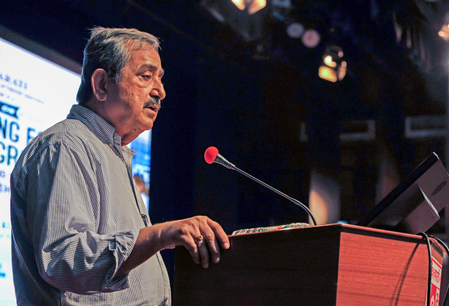
New Delhi, Aug 6 (IANS) There is a growing need to develop a cadre of trained caregivers to address the current and future demand of care services in the country and also the potential opportunities for Indian caregiver professionals at the global platform, according to a new NITI Aayog report.
The report positions caregivers at the centre of the care ecosystem, recognising caregiving as a skilled, dignified and valued profession, while emphasising quality of care, professional recognition, workforce welfare, institutional support, and enabling families and communities to access reliable and affordable care.
Ashok Kumar Lahiri, Vice Chairperson, NITI Aayog, said the global demand for caregivers presents a unique opportunity to establish India as a global leader in traditional caregiving, unlock substantial economic value, create employment, strengthen recognition and social security for caregivers, as well as reinforce India's cultural and knowledge-based soft power.
He emphasised that the report provides a comprehensive roadmap to strengthen institutional convergence, empower family and professional caregivers, and position India as a global hub for skilled caregiving services.
The report presents India’s caregiving ecosystem and outlines a comprehensive roadmap for building an organised, professional, accessible and future-ready system of care.
According to Dr R Balasubramaniam, Member, NITI Aayog, ‘Seva and Samvedana’ have always been at the heart of India's civilisational ethos, and caregiving reflects these timeless values.
He highlighted that a robust caregiving ecosystem would strengthen social inclusion, develop a caring society, empower communities, create quality livelihoods and contribute significantly to the vision of Viksit Bharat at 2047.
The report organises its recommendations across several strategic pillars, including policy, professional recognition of caregivers, workforce development, global cooperation, social security, family and community-based care, etc.
It also presents a roadmap for an organised, professional caregiving ecosystem through a National Policy on Caregiving, and a National Caregiver Council, said NITI Aayog.
--IANS
na/
Cohance Lifesciences slips into Rs 24 crore loss in Q1
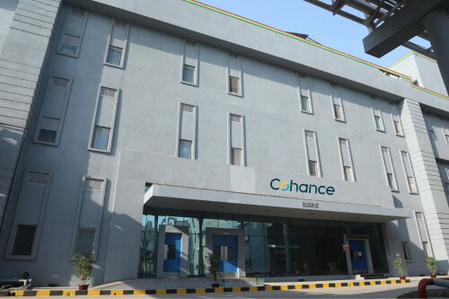
Mumbai, Aug 5 (IANS) Cohance Lifesciences Limited on Wednesday reported a consolidated net loss of Rs 24.1 crore for the first quarter of FY27, compared to a net profit of Rs 48.9 crore in the corresponding quarter of the previous fiscal (Q1 FY26).
The company's revenue from operations declined 23.1 per cent year-on-year to Rs 422 crore in the April-June quarter, from Rs 549 crore in the same period last financial year, as per its stock exchange filing.
Its operating performance also weakened significantly, with EBITDA plunging 99 per cent to Rs 1.2 crore from Rs 112 crore a year ago.
Consequently, the EBITDA margin contracted sharply to 0.3 per cent from 20.4 per cent in the year-ago quarter.
Despite the weak quarterly performance, the company's shares ended the day marginally higher. The stock closed at Rs 428.40 on the BSE, up Rs 3.50, or 0.82 per cent.
Over the last five days, the company's shares have remained almost flat, rising by just 0.34 per cent. Over the past month, the stock has declined by 5.42 per cent. However, over the last six months, it has gained 20.07 per cent.
Hyderabad-headquartered Cohance Lifesciences is a technology-driven global Contract Development and Manufacturing Organization (CDMO) and active pharmaceutical ingredient (API) platform.
The company was formed following key corporate developments, including its merger with Suven Pharmaceuticals.
Cohance provides end-to-end lifecycle solutions across small molecules, antibody-drug conjugates (ADCs), and oligonucleotides.
Its business spans pharma CDMO services, high-value complex APIs under its API+ platform, and specialty chemicals.
The company serves global pharmaceutical innovators in more than 60 countries through multiple manufacturing facilities and specialised research and development centres.
It also has expertise in advanced modalities, including ADC payloads and oligonucleotide building blocks.
--IANS
pk