
GLP-1 drugs: India’s regulatory authorities take firm steps to prevent unsupervised use
New Delhi, April 1 (IANS) The Drug Controller General of India has stepped up regulatory surveillance against unauthorised sale and promotion of type 2 diabetes drugs also known as GLP-1 drugs, the government said on Wednesday.
In recent weeks, 49 businesses were audited and inspected across the country, including online pharmacy warehouses, drug wholesalers, retailers, and weight loss clinics, an official statement said.
These inspections spanned multiple regions across India and focused on identifying violations related to unauthorised sale, improper prescription practices, and misleading marketing.
The government also issued notices to those found breaking the rules. Stricter inspections and surveillance will continue in the coming weeks. Businesses that break the rules will face license cancellation, fines, and legal action, the statement said.
The government also mentioned that only endocrinologists, internal medicine specialists and cardiologists can prescribe them.
It had issued an advisory on March 10, 2026, directing manufacturers to stop misleading advertisements or any promotion that could encourage use without a prescription.
GLP-1 drugs (glucagon‑like peptide‑1 receptor agonists) treat type 2 diabetes and obesity but carry risks ranging from nausea and vomiting to severe complications such as pancreatitis, kidney injury and bowel obstruction.
Due to these side effects, the government urged patients to consult qualified medical specialists and obtain these medications only with a prescription through legitimate, regulated channels.
Multiple variants of GLP-1 drugs have been recently introduced in the Indian market, and concerns have emerged regarding their on-demand availability through retail pharmacies, online platforms, wholesalers, and wellness clinics.
GLP-1 drugs (glucagon-like peptide-1 receptor agonists) are medications stimulating insulin release and suppressing excess glucagon, to bring blood sugar back under control. GLP-1 triggers the pancreas to release insulin, which moves glucose out of the bloodstream and into cells, where it is used for energy.
The drug slows down the gastric emptying, increasing the feeling of fullness and decreases patients’ appetites and thereby leads to their weight loss.
—IANS
aar/pk
National Mental Health Programme to boost services: Minister

New Delhi, April 1 (IANS) In a bid to strengthen mental health services, the government has implemented National Mental Health Programme (NMHP), which includes postpartum mothers, the Parliament was informed on Wednesday.
The District Mental Health Programme (DMHP) component of the NMHP has been sanctioned for implementation in 767 districts for which support is provided to States/UTs through the National Health Mission, said Minister of State for Women and Child Development, Savitri Thakur, in Rajya Sabha in reply to a question.
Facilities made available under DMHP at the Community Health Centre (CHC) and Primary Health Centre (PHC) levels, inter-alia, include outpatient services, assessment, counselling/psycho-social interventions, continuing care and support to persons with severe mental disorders, drugs, outreach services, ambulance services etc.
In addition to above services, there is a provision of 10 bedded in-patient facility at the district level, the minister informed.
The government has upgraded more than 1.83 lakh Sub Health Centres (SHCs) and Primary Health Centres (PHCs) to Ayushman Arogya Mandirs.
Mental health services have been added in the packages of services under Comprehensive Primary Health Care provided at these Ayushman Arogya Mandirs, said Thakur.
Operational guidelines and training manuals for various cadres on Mental, Neurological, and substance use disorders (MNS) at Ayushman Arogya Mandirs have been released under the ambit of Ayushman Bharat.
Under the tertiary care component of NMHP, 25 Centres of Excellence have been sanctioned to increase the intake of students in PG departments in mental health specialties as well as to provide tertiary level treatment facilities.
Further, the Government has also supported 19 government medical colleges/institutions to strengthen 47 PG Departments in mental health specialties.
There are 47 government run mental hospitals in the country, including three Central Mental Health Institutions -- National Institute of Mental Health and Neuro Sciences, Bengaluru, Lokopriya Gopinath Bordoloi Regional Institute of Mental Health, Tezpur, Assam and Central Institute of Psychiatry, Ranchi. Mental Health Services are also provisioned in all AIIMS.
The government has also launched a “National Tele Mental Health Programme” to further improve access to quality mental health counselling and care services in the country.
--IANS
na/
UP govt likely to declare cancer as a notifiable disease
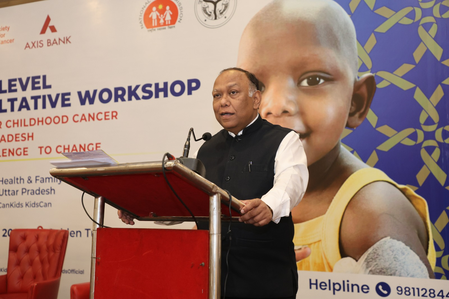
Lucknow, March 31 (IANS) The Yogi Adityanath government in Uttar Pradesh is considering a proposal to include cancer, especially among children, among the list of notifiable diseases to facilitate early detection and cure, said a senior health department official on Tuesday.
A notifiable disease is one that is required by law to be reported to government authorities (health departments) by healthcare providers, laboratories, and veterinarians.
The official said that compulsory reporting of childhood cancer and other patients will allow officials to track disease prevalence and intervene to protect public health.
Amit Kumar Ghosh, Additional Chief Secretary and Principal Secretary, Department of Health and Family Welfare and Medical Education, Uttar Pradesh, reiterated the State’s commitment to strengthening cancer care systems, including the possibility of making cancer a notifiable disease.
“Uttar Pradesh is building a model where systems, institutions, and stakeholders come together to ensure that every child with cancer is identified, treated, and supported,” said Ghosh.
“Through convergence across departments and partnerships, we are working towards ensuring access, financial protection, and improved outcomes at scale,” he said on the sidelines of a state consultation workshop held in Lucknow on Monday.
Poonam Bagai, Member, ICMR Central Ethics Committee on Human Research, Cankids founder and Childhood Cancer International's WHO South East Asia Region Representative, said Uttar Pradesh has also emerged as a leader in financial protection, with schemes that follow the child across state borders, ensuring continuity of care irrespective of where treatment is accessed.
“Uttar Pradesh has the potential to become the world’s leading model for childhood cancer care at scale, demonstrating how large, high-burden regions can deliver on 100 per cent access, 100 per cent financial protection, and 60 per cent survival,” said Bagai, herself a survivor.
Uttar Pradesh is home to nearly 20 per cent of India’s children with cancer and approximately 4 per cent of the global childhood cancer burden. The state has an annual childhood cancer burden of 14,700, with 52 per cent currently accessing care.
The Yogi Adityanath government is also considering a proposal to set up a task force on childhood cancer with the help of other stakeholders, said an official.
“A structured Paediatric Oncology Task Force will enable regular review, coordination, and integration of childhood cancer care within the state’s broader cancer strategy,” he said.
Since the signing of the State MoU with National Society Cankids Kidscan, Uttar Pradesh has demonstrated measurable progress in strengthening childhood cancer systems. Access to care has increased from 25 per cent in 2019 to 52 per cent in March 2026, reflecting the impact of coordinated action between government, paediatric oncology institutions, and civil society partners.
A campaign has also been rolled out across all the 75 districts for health information dissemination and capacity building of health care professionals, workers and institutions through four childhood cancer divisions – Gautam Buddha Nagar, Lucknow, Gorakhpur and Varanasi, said an official.
Soon, the State Tumour and Teleconsultation Board with specialists from all tertiary cancer centres in the State will support clinical decision-making and train professionals and service delivery teams, ensuring high standard of care in paediatric oncology treatment, said a statement.
Soniya Nityanand, Vice Chancellor KGMU, Lucknow, said the Uttar Pradesh government’s initiative to deliver on 100 per cent access, 100 per cent financial protection, and 60 per cent survival of childhood cancer patients aligns with the WHO Global Initiative for Childhood Cancer (GICC) and UNGA 80 commitments, positioning Uttar Pradesh as a potential national and global model for large-scale childhood cancer systems transformation.
--IANS
rch/uk
Govt targets expanded health allied workforce, global push for Ayush
New Delhi, March 30 (IANS) The Union Budget lays the framework to expand the allied health workforce, strengthen infrastructure and elevate Ayush on the global stage, the government said on Monday.
The recent budget raised allocations for the Ministry of Health and Family Welfare by 10 per cent from 2025-26 to over Rs. 1,06,530 crore, and initiatives span global AYUSH integration, NIMHANS-2 establishment in North India etc, an official statement said.
The allocation for the ministry also marks a 194 per cent rise over 12 years, while The Department of Health Research has been allocated Rs 4,821.21 crore. This rising government expenditure demonstrates strong commitment toward universal healthcare and medical research innovation, the statement noted.
The government highlighted 100 per cent customs duty exemption on 17 new cancer drugs adding that the budget targets training 1 lakh allied health professionals and 1.5 lakh caregivers over the next five years.
Further, Budget proposed establishing three new All India Institutes of Ayurveda to meet growing global demand and upgrade the WHO Global Traditional Medicine Centre in Jamnagar.
The initiatives for AYUSH sector aim to strengthen education, clinical training, and research capacity for both domestic healthcare delivery and international engagement, while raising regulatory standards and certification ecosystems to position Indian AYUSH products in global markets that demand scientifically validated solutions.
Funding for Ayushman Bharat Pradhan Mantri‑Jan Arogya Yojana has been rising, with the scheme providing up to Rs. 5 lakh annually per eligible household and covering over 12 crore vulnerable families.
"While the nation has achieved significant progress in tackling maternal and child health and increasing life expectancy from 49.7 years in 1973 to 70.3 years in 2023, it now faces a rising health challenge: Non-communicable diseases (NCDs) such as cardiovascular diseases, diabetes, obesity and cancers," the statement noted.
NCDs accounted for 57 per cent of deaths in the country in 2021-23. To counter this, the government runs the National Programme for Prevention and Control of Non-Communicable Diseases to systematically identify high-risk individuals and link them to appropriate care and treatment.
—IANS
aar/pk
CCRAS joins Anuvadini AI to make ayurveda research accessible in 13 languages
New Delhi, March 30 (IANS) The Central Council for Research in Ayurvedic Sciences (CCRAS) under Ayush Ministry on Monday signed a memorandum of understanding with Anuvadini AI, a platform designed by the All India Council for Technical Education (AICTE) under the Ministry of Education.
In a significant step toward making information about evidence-based Ayurveda accessible across linguistic barriers, the initiative aims to expand public access to evidence-based Ayurveda knowledge across India.
Under this MoU, Anuvadini AI will facilitate the translation of CCRAS's research outputs and educational materials into 13 regional languages, including Hindi, ensuring that evidence-based Ayurveda knowledge reaches every corner of the country.
Professor Rabinarayan Acharya, Director General, CCRAS, stated that the collaboration reflects CCRAS's commitment to ensuring that the outcomes of Ayurveda research benefit not only the academic community but also citizens across the country in respective languages.
Anuvadini AI focuses on translating technical, scientific, and governance-related knowledge into various Indian and foreign languages through artificial intelligence.
Its objective is to ensure that credible, research-based information is accessible to citizens regardless of linguistic or regional background.
Dr. Buddha Chandrasekhar, CEO of Anuvadini AI, emphasised that the platform was developed specifically to support such collaborations, where technology helps make knowledge more accessible, equitable, and empowering for society.
In the future, the initiative may also extend to foreign languages, beginning with languages of countries where the Ministry of Ayush and CCRAS have established Ayush Chairs, thereby expanding the global accessibility of authentic Ayurveda knowledge, according to an official statement.
CCRAS, with its network of 30 institutes across 25 states in India, conducts and publishes scientific research in Ayurveda sciences.
Under the MoU, Anuvadini AI will facilitate translation of these research outputs and educational resources into 13 regional languages, helping extend the reach of authentic Ayurveda knowledge to a wider range of the population and reduce the risk of misinformation.
--IANS
na/
India pharma 2026 to push shift from volume to innovation-led growth
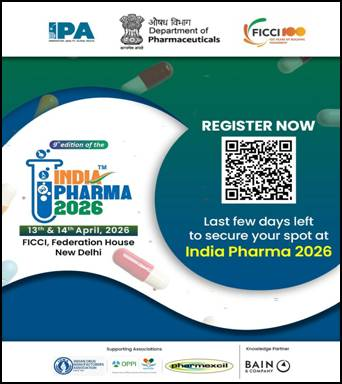
New Delhi, March 30 (IANS) India’s pharmaceutical sector is set to take a major step towards becoming an innovation-driven global powerhouse, as India Pharma 2026 aims to accelerate the industry’s transition from volume-based growth to value and research-led expansion, the government said on Monday.
The Department of Pharmaceuticals under the Ministry of Chemicals and Fertilisers, in association with the Federation of Indian Chambers of Commerce and Industry (FICCI) and the Indian Pharmaceutical Alliance (IPA), will organise the 9th edition of India Pharma 2026 on April 13-14 at Federation House in the national capital.
The conference will act as a key platform for discussions on how India’s pharma industry can move beyond being a volume-driven market to becoming a value- and innovation-led global leader.
It will bring together policymakers, global industry leaders, researchers and innovators to explore new opportunities and strategies.
With the theme “Discover in India: Leapfrogging Life-Sciences Innovation,” the event aims to position India as a global hub for cutting-edge research and innovation in pharmaceuticals and life sciences.
The focus will be on improving healthcare access, speeding up innovation, and strengthening global health security.
Experts at the conference will discuss emerging areas such as drug discovery, complex generics and biosimilars.
The event will also highlight India’s strong manufacturing base and its fast-growing research and development ecosystem, which are helping the country strengthen its position in the global pharmaceutical value chain.
India Pharma 2026 is a flagship initiative designed to showcase India’s pharmaceutical capabilities, encourage innovation, and build stronger global supply chains through collaboration and policy discussions.
FICCI, established in 1927, is one of India’s oldest and largest business organisations, representing over 2.5 lakh companies across sectors.
Meanwhile, the Department of Pharmaceuticals continues to support the pharma and medtech sectors through policy measures, infrastructure development and industry-academia partnerships, in line with the vision of Viksit Bharat 2047.
--IANS
pk
Over 80 pc of S. Korean teens, adults concerned over AI-based online abuse

Seoul, March 30 (IANS) More than 80 per cent of South Korea's teenagers and adults expressed concerns over online abuse involving the misuse of generative artificial intelligence (AI) tools, such as the creation of deepfake videos and disinformation, a poll here showed on Monday.
According to the poll conducted from September to November last year on teenagers and adults by the Korea Media and Communications Commission (KMCC), 89.4 percent of teenagers said they recognise the seriousness of AI-driven cyber violence, while 87.6 percent of adults said the same.
The survey was conducted on 9,296 students from fourth-grade elementary school to third-year high school, and 7,521 adults aged 19 to 69, reports Yonhap news agency.
Teenage respondents cited the ease of creating content with AI tools as their top concern, while adults expressed fears over the potential for repeated harm from AI-generated materials.
The poll additionally showed 42.3 percent of teenagers experienced some form of cyber abuse in 2025, down 0.5 percentage point from a year earlier. The figure for adults came to 15.8 percent, up 2.3 percentage points over the same period, said the report.
By channel, teenagers said they were mainly exposed to cyber abuse via text messages and online gaming platforms, while adults reported similar experiences primarily through text messages or social media.
For both teenagers and adults, strangers accounted for the largest share of abusers, followed by friends.
"Cyber abuse is not just an ethical issue online, but an issue that can harm people's dignity and violate the right to happiness as guaranteed by the Constitution," said KMCC Chair Kim Jong-cheol, noting the government will make efforts to promote the healthy use of digital platforms, the report mentioned.
—IANS
na/
PLI scheme for food processing industries sees Rs 9,207 crore investment
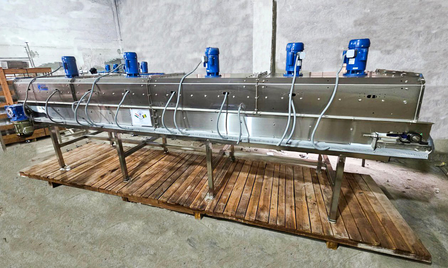
New Delhi, March 28 (IANS) A cumulative investment of about Rs 9,207 crore has been made by the approved applicants under the production-linked incentive (PLI) scheme for Food Processing Industries (PLISFPI) till December 31, 2025, according to the government.
Around 35 lakh metric tonnes per annum of processing and preservation capacity has been created under the scheme. Total incentive amount of Rs 2,714.79 crore has been disbursed till date, according to Minister of State for Food Processing Industries, Ravneet Singh.
Out of 168 applicants approved under PLISFPI Scheme, 69 applicants are under Micro, Small and Medium Enterprises (MSMEs) category.
In addition, 40 contract manufacturing units of main approved applicants are also from MSME.
Out of 168 applicants approved under PLISFPI, 2 applicants are cooperatives, 2 applicants are under the sector for innovative food products and 13 applicants are under organic sector, informed the minister.
The objectives of the scheme are to support the creation of global food manufacturing champions, promote Indian brands of food products abroad. Increase employment opportunities for off-farm jobs, ensure remunerative prices of farm produce and higher income to the farmers.
The incentives under the PLISFPI are admissible where the entire chain of manufacturing processes, including primary processing, of the food products applied for coverage under the scheme takes place in India. The incentives are also provided to promote branding and marketing abroad by approved beneficiaries/applicants, said the minister.
Meanwhile, the total export value of the processed food products from India in the last three years has been increasing. Major food export destination countries for India are the US, the UAE, Bangladesh, State of Libya, Sudan, Nepal, Sri Lanka, Somalia, Thailand and Tanzania, etc.
The government has approved the Scheme for Export Promotion Mission (EPM) with the objective of strengthening India’s export competitiveness and providing targeted support to exporters.
According to the Economic Survey 2025-26, the country has the potential to reach $100 billion of combined exports of agriculture, marine products and food and beverage in the next four years.
—IANS
na/
India health insurance sector grows 9 pc, premiums cross Rs 1.2 lakh crore in FY25: Govt

New Delhi, March 26 (IANS) India’s health insurance sector has recorded strong growth, with total premiums crossing Rs 1.2 lakh crore in 2024-25, the government said on Thursday.
India’s health insurance sector continues to expand steadily, growing at around 9 per cent annually, driven by increasing awareness, better access to healthcare financing and a rising need for financial protection against medical expenses.
To improve efficiency and ensure faster support to policyholders, the Insurance Regulatory and Development Authority of India has set strict timelines for processing cashless health insurance claims.
As per the norms, insurers must approve cashless pre-authorisation requests within one hour, while final approval must be completed within three hours.
These measures are aimed at reducing delays and ensuring patients get timely treatment, the government stated.
The rise in health insurance premiums has been attributed to multiple factors, including ageing policyholders, higher coverage amounts and improved policy features.
The regulator’s 2024 guidelines also ensure that insurance products are priced fairly based on risk factors, with regular reviews using data and customer feedback.
In terms of claims settlement, the sector has shown improvement. The claims paid ratio stood at 87.5 per cent in 2024-25, compared to 82.46 per cent in 2023-24 and 85.66 per cent in 2022-23.
Data from the IRDAI’s Bima Bharosa portal shows that 1,37,361 grievances related to general and health insurance were reported in FY25.
Of these, about 93 per cent were resolved within the same financial year, it added.
However, some claims continue to be rejected due to policy-related conditions such as exceeding the sum insured, co-payment clauses, sub-limits, deductibles, room rent caps and non-medical expenses.
The regulator has taken several steps to improve transparency and streamline the claims process.
These efforts are aimed at building greater trust among policyholders and ensuring a more efficient and reliable health insurance system in the country.
--IANS
pk
India Book of Records recognised MP’s free health camp: Scindia
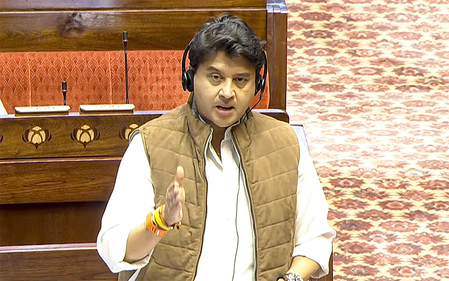
Shivpuri, March 25 (IANS) A week-long free health camp organised in Madhya Pradesh’s Shivpuri district has been officially recognised by the India Book of Records, Union Minister Jyotiraditya Scindia said on Wednesday.
The multi-speciality health camp was organised from March 17 to March 24 at Shivpuri district hospital under the joint aegis of the Madhavrao Scindia Health Service Mission, the Rotary Regional Medical Mission, and the Madhya Pradesh government.
Facilities ranging from the diagnosis of complex ailments such as eye, dental, and bone conditions to advanced medical consultations and high-tech robotic surgeries were made available at the camp.
Equipped with state-of-the-art technology, the medical camp ensured that every patient received timely and high-quality treatment.
The initiative not only strengthened access to healthcare services but also opened new avenues for medical care for people residing in rural and remote areas.
Physicians were enrolled in consultations, both in person and virtually, who conducted diagnostic tests and provided complex treatment services to patients at the camp, thereby directly benefiting thousands of families in the region.
Notably, Shivpuri district under the Gwalior region falls under the Guna Lok Sabha constituency, which is represented by Union Minister for Communication and Development of the North Eastern Region, Jyotiraditya Scindia.
Expressing his delight at this achievement, Scindia stated that this record represents not just a statistical milestone, but the fulfilment of a resolve centred on the ethos that service to humanity is service to God.
He said their objective was to ensure that no poor or needy individual in the region remains deprived of access to superior healthcare facilities.
The Union Minister also extended his heartfelt congratulations to the Rotary Club, all the physicians, the paramedical staff, and the volunteers for this historic accomplishment.
He said in a statement that this record stands not merely as an event, but as a symbol of a collective spirit of service, exemplary management, and an unwavering commitment to public welfare, adding that at this massive camp, thousands of patients were provided with high-quality healthcare services completely free of cost, all under one roof.
--IANS
pd/dan