
India’s pharma, healthcare sector sees steady deal volumes as investors prefer scalable assets: Report

New Delhi, April 29 (IANS) India’s pharma and healthcare sector recorded 78 deals worth $1.9 billion in Q1 2026, with deal volumes holding steady even as overall values moderated in the absence of large‑ticket transactions, a report said on Wednesday.
The report from Grant Thornton Bharat said mergers and acquisitions accounted for 30 deals worth $915 million during the quarter, with volumes remaining broadly stable and values moderating about 40 per cent sequentially.
The moderation in the deals landscape was primarily driven by softer M&A values, even as private equity activity remained resilient in terms of participation, albeit with smaller ticket sizes.
The overall trend indicated a more selective investment environment, with sustained interest in mid-market and growth-stage opportunities despite cautious capital deployment.
"Investor focus is clearly shifting toward scalable, capability-led assets, particularly across digital health, specialised care, and consumer health segments. Meanwhile, outbound expansion and portfolio realignment by pharmaceutical companies reflect a strategic pivot toward long-term value creation and global competitiveness,” said Bhanu Prakash Kalmath S.J., Partner and Healthcare Industry Leader, Grant Thornton Bharat.
Domestic transactions continued to dominate in terms of volume in the M & A landscape, the report noted. Deal sizes remained relatively small, with most transactions under $50 million, particularly across hospitals and pharma and biotech segments, pointing to sustained mid-market consolidation driven by regional hospital acquisitions and pharma deals.
Private equity and venture capital activity comprised 45 deals worth $456 million, marking the segment's highest deal volumes since Q2 2022 and up around 22 per cent rise sequentially.
Investment activity was particularly robust across health tech and wellness segments, including AI-led diagnostics, preventive healthcare, and digital care platforms, highlighting continued interest in scalable, tech-enabled healthcare models.
Early‑stage rounds dominated PE/VC volumes, with pre‑seed to Series A accounting for about 69 per cent of deal volumes and nearly 95 per cent of deals sized below $50 million.
IPO and QIP activity remained selective during the quarter, as one IPO raised $18 million, marking a sharp decline in issuances, and QIP activity picked up modestly with two issuances totalling $500 million.
--IANS
aar/vd
India’s sex ratio improves, govt unveils gender-disaggregated data to boost policy outcome
New Delhi, April 29 (IANS) India's sex ratio at birth has increased at the all-India level, indicating improved survival of females reaching from 904 in 2017-19 to 917 in 2021-23, the government said on Wednesday.
The government released the “Women and Men in India 2025: Selected Indicators and Data” publication in Bhubaneswar, Odisha to provide gender-disaggregated data across a wide range of themes to "enable a deeper understanding of evolving gender disparities and development trends," an official statement said.
Infant mortality rate for both female and male infants has recorded a pronounced and sustained decline between 2008 and 2023, the publication said.
Gross Enrolment Ratio at Higher Education has improved from 28.5 to 30.2 for females and 28.3 to 28.9 for males between 2021-22 and 2022-23.
Labour force participation for those aged 15 and above rose for both sexes, with rural females seeing the highest increase, going from 37.5 per cent to 45.9 per cent during the period 2022 to 2025.
Men engaged in managerial positions between 2017 and 2025 rose 73.80 per cent, while women engaged in managerial positions rose 102.54 per cent during the same time period.
The statement from Ministry of Statistics & Programme Implementation said the publication compiles gender‑disaggregated indicators across population, education, health, economic participation, decision‑making and violence against women and other gender-related issues, drawing upon inputs from various Ministries, Departments and organisations.
By presenting an analysis of key socio-economic indicators and highlighting emerging trends, the publication equips policymakers, researchers and other stakeholders with valuable evidence to inform the formulation of gender-responsive policies and programs for inclusive and sustainable development.
Further, it adds metadata for 50 key indicators to clarify concepts, definitions, sources and methodology. The publication is available on the official website of MoSPI.
—IANS
aar/pk
Citizens’ access to India’s health facilities rise as median costs remain low, insurance coverage improves
New Delhi, April 29 (IANS) The National Statistical Office’s 80th Round household health survey found substantial gains in access to public healthcare and a sharp expansion in government‑financed insurance coverage, the government said on Wednesday.
The Ministry of Health and Family Welfare said the survey found that median out‑of‑pocket costs for many patients per hospitalisation stood at Rs 11,285, while over half of hospitalisations in public facilities incur only Rs 1,100.
Only a small number of high-cost cases have been observed to push up the average (mean value). This showed that high expenditure is not widespread but limited to specific cases requiring specialised treatment, an official statement said.
The survey analysed responses of 1,39,732 households including 76,296 in rural areas and 63,436 in urban areas.
Importantly, for non-hospitalisation (outpatient) care, the median OOPE in public health facilities is Zero, reflecting that a large proportion of citizens are able to access essential healthcare services entirely free of cost.
The government's Free Drugs Service Initiative (FDSI) and Free Diagnostics Initiative (FDI) launched in 2015 has ensured availability of free medicines and diagnostic services to people even in the remotest areas of the country.
Health‑seeking behaviour has strengthened as the proportion of population reporting ailments (PPRA) nearly doubled to 12.2 per cent in rural areas from 6.8 per cent in 2017‑18 and to 14.9 per cent in urban areas from 9.1 per cent.
The survey noted utilisation of public outpatient services in rural areas increased from 28 per cent in 2014 to 35 per cent in 2025.
Over 1.84 lakh Ayushman Arogya Mandirs (AAMs) across the country significantly expanded the scope of comprehensive primary healthcare by delivering preventive, promotive, and curative services closer to communities. These centres are also leveraging digital health innovations to improve access.
Financial risk protection has expanded significantly with the rapid scaling up of Government-financed health insurance coverage, under Ayushman Bharat – Pradhan Mantri Jan Arogya Yojana (PM-JAY) and various state schemes. Percentage of population covered under these schemes has nearly tripled from 12.9 per cent to 45.5 per cent in rural areas and from 8.9 per cent to 31.8 per cent in urban areas.
The statement also noted a declining trajectory of out-of-pocket expenditure among the bottom two consumption quintiles, demonstrating that economically weaker sections are deriving the greatest benefit from government interventions.
The survey also highlights continued progress in maternal and child health outcomes, with institutional deliveries increasing from 90.5 per cent in 2017-18 to 95.6 per cent in 2025 in rural areas and from 96.1 per cent to 97.8 per cent in urban areas.
—IANS
aar/pk
Sun Pharma to acquire US-based Organon in nearly $11.75 billion deal
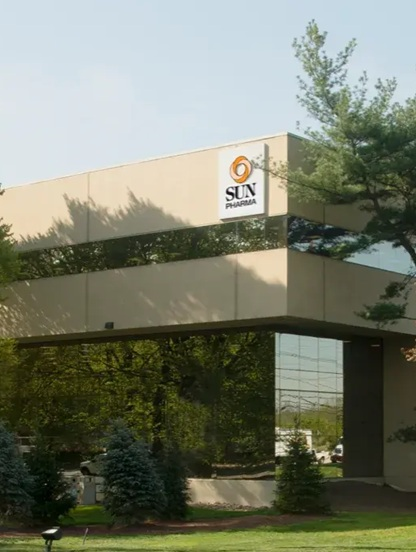
New Delhi, April 27 (IANS) India’s major drugmaker Sun Pharmaceutical Industries on Monday announced that it will acquire New York-listed Organon & Co in an all-cash deal valued at $11.75 billion, its biggest overseas acquisition to date.
Under the agreement, the pharmaceutical firm will acquire 100 per cent of Organon’s outstanding shares at $14 per share, translating into an enterprise valuation of $11.75 billion and an equity value of around $3.99 billion, the company said in an exchange filing.
The company said the acquisition is aligned with its strategy to scale up its innovative medicines business while strengthening its presence in established brands and branded generics.
The deal will also enable Sun Pharma to enter the biosimilars segment as a top global player.
Following the acquisition, the combined entity is expected to be among the top 25 global pharmaceutical companies, with revenues of around $12.4 billion, while strengthening its position in women’s health and biosimilars.
New Jersey-based Organon operates across women’s health, biosimilars, and established medicines, with a portfolio of over 70 products and a presence in more than 140 countries.
The transaction, approved by the boards of both companies, expected to close in early 2027, subject to regulatory approvals and Organon shareholders’ approval.
Sun Pharma plans to fund the deal through a mix of internal accruals and debt financing.
For the year ended December 2025, Organon reported revenue of $6.2 billion and adjusted EBITDA of $1.9 billion.
Commenting on the deal, Sun Pharma Executive Chairman Dilip Shanghvi said the acquisition would help build a stronger and more diversified platform, while Managing Director Kirti Ganorkar highlighted synergy and growth opportunities from the integration.
Shares of Sun Pharma rose as much as 6.71 per cent to hit an intraday high of Rs 1,728.65 on the BSE in early trade on Monday.
--IANS
ag/
Govt launches two mobile apps to strengthen drug control, beggar rehabilitation

New Delhi, April 25 (IANS) The Ministry of Social Justice and Empowerment on Saturday launched two upgraded digital tools at the Chintan Shivir in Chandigarh to strengthen India’s drug control and beggary‑rehabilitation programmes.
The applications are namely, the Nasha Mukt Bharat Abhiyaan (NMBA) 2.0 App and the SMILE–Beggary Survey Mobile Application.
The enhanced application, NMBA 2.0 App, is designed as a centralised digital tool for states or districts and other stakeholders to facilitate real-time reporting, monitoring, and coordination among implementing agencies at the National, State, District, and institutional levels.
The upgraded version builds upon existing capabilities while introducing new features aimed at enhancing transparency, accountability, and data-driven governance.
The NMBA App, currently accessible to authorised users, supports states, districts, spiritual organisations and other stakeholders in uploading and tracking activities under the Nasha Mukt Bharat Abhiyaan through a consolidated dashboard with near real-time visibility.
It also serves as a resource platform by providing Information, Education and Communication (IEC) materials along with basic communication support for Nasha Mukti Mitras to facilitate awareness efforts.
The application enables onboarding and managing master volunteers and enables institutions to organise pledge-taking activities as part of their outreach.
It also offers access to key helpline numbers i.e. de addiction helpline and MANAS helpline, including de-addiction and mental health support services, along with basic technical assistance contacts.
SMILE–Beggary Survey Mobile Application will strengthen field-level implementation through real-time data collection and improved monitoring. The application will enable implementing agencies and district authorities to capture survey data digitally, ensuring accuracy, transparency, and timely reporting.
The launch of the mobile application will help address challenges such as delayed and inconsistent data reporting, while enhancing the ministry’s capacity for real-time monitoring, data analytics, and performance tracking across cities.
—IANS
aar/pk
India’s bio-economy projected to touch $1 trillion by 2047: Minister
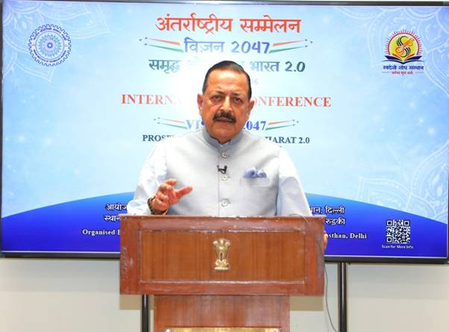
New Delhi, April 24 (IANS) Union Minister Dr Jitendra Singh on Friday said that India’s bio-economy is projected to grow to $1 trillion by 2047, emerging as one of the top three global bio-economies.
The twenty-first century will be "India’s century" driven by a biology-led economy, the minister told an international conference at IIT Roorkee.
India is advancing towards full-spectrum technological capability “from gene to qubit, from ocean depths to outer space,” supported by policy reforms, strong institutional frameworks and a rapidly expanding innovation ecosystem, an official statement cited the minister as saying.
Referring to developments in emerging technologies, he said the National Quantum Mission has achieved key milestones ahead of schedule, while India has entered the top ranks globally in several critical technology domains. He noted that India’s Global Innovation Index ranking has improved from 81 to 39, and that research and development expenditure has more than doubled over the past decade, reflecting sustained national prioritisation of science and innovation.
India’s bio-economy has expanded from $10 billion in 2014 to over $165 billion today, growing at nearly 18 per cent annually, with a target of $300 billion by 2030, he said.
The number of biotech startups jumped from around 50 to more than 11,000, the statement from the Ministry of Science & Technology said.
He also referred to the Anusandhan National Research Foundation (ANRF) with a Rs 50,000 crore corpus and the Rs 1 lakh crore Research, Development and Innovation (RDI) Fund, designed to provide long-term, low-cost financing for deep-tech innovation.
Dr. Jitendra Singh presented a series of major scientific advances achieved in recent years, including progress under Genome India, indigenous CAR-T cell therapy, development of mRNA vaccine platforms, India’s first indigenously developed antibiotic, etc.
He also highlighted the expansion of nuclear medicine facilities to deliver affordable cancer care and progress in deep ocean exploration through missions such as Samudrayaan.
—IANS
aar/na
First ESIC hospital in Jammu and Kashmir opened at Ompora to benefit over 50,000 workers
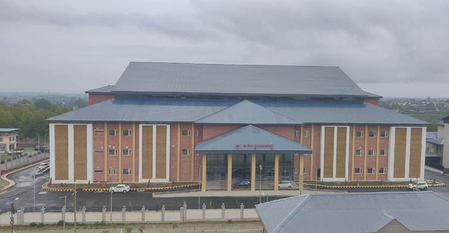
New Delhi, April 24 (IANS) The first Employees’ State Insurance Corporation hospital in Kashmir was inaugurated at Ompora, Budgam, Srinagar, a 30‑bedded facility expected to directly benefit over 50,000 workers and their family members, an official statement said on Friday.
The hospital was built at a cost of Rs 165 crores with provision for expansion up to 100 beds, and the inauguration marks a milestone expansion of worker welfare services in the region, the Ministry of Labour & Employment said in a statement.
Currently, the ESI Scheme is implemented across all districts of J&K UT serving approximately 1,83,119 insured persons and about 7 lakh beneficiaries and is administered through the ESIC Regional Office at Jammu and the Jammu-Kashmir Employees’ State Insurance Society (JKESIS).
“The new Labour Codes guarantee several long-awaited protections for workers, including annual health check-ups, mandatory appointment letters, and minimum wages. The provision for annual health checks through ESIC hospitals will allow early detection of diseases, ensure preventive healthcare for workers, and secure their future,” said Dr. Mansukh Mandaviya, Union Minister for Labour & Employment and Youth Affairs & Sports inaugurating the hospital.
The minister noted that ESIC has evolved into one of the strongest pillars of worker welfare in the country since its inception in 1952. Today, the scheme provides healthcare and social security benefits to 3.84 crore insured persons and nearly 15 crore beneficiaries across India.
He also noted that the convergence of ESIC with Ayushman Bharat Pradhan Mantri Jan Arogya Yojana has further expanded access to cashless treatment for beneficiaries across empanelled hospitals.
Highlighting the transformative impact of the four Labour Codes that were brought into effect last year, the Union Minister said these reforms have modernised India’s labour ecosystem and made it more worker-centric, transparent and future-ready.
“India’s commitment to worker welfare has received global recognition. In 2025, the International Social Security Association honoured our country with the ‘Excellence in Social Security’ Award,” the minister said.
He cited data published by the International Labour Organisation showing India's social security coverage has risen from 19 per cent in 2015 to 64.3 per cent in 2025.
—IANS
aar/pk
Indian Pharmacopoeia Commission signs MoUs to boost quality checks, pharmacovigilance

New Delhi, April 24 (IANS) The Central government's Indian Pharmacopoeia Commission has signed two memoranda of understandings (MoU) with two government institutes to strengthen quality assurance, ensure rational use of medicines, pharmacovigilance and collaborative research, an official statement said on Friday.
One MoU with the Pharmaceuticals & Medical Devices Bureau of India aims to enhance the quality assurance framework for medicines made available through Pradhan Mantri Bhartiya Janaushadhi Kendras (PMBJKs).
It will allow PMBI to submit randomly selected batches of Jan Aushadhi medicines to IPC for quality testing. The partnership will further promote the use of the National Formulary of India (NFI) across Pradhan Mantri Bhartiya Janaushadhi Kendras (PMBJKs) to ensure rational use of medicines.
It also seeks to strengthen pharmacovigilance activities by displaying the Pharmacovigilance Programme of India (PvPI) QR code and toll-free helpline number (1800-180-3024) at PMBJKs across the country, thereby encouraging adverse drug reaction (ADR) reporting and improving patient safety.
Further, IPC and PMBI will jointly organize sensitization, awareness, and training programmes for pharmacists and stakeholders on rational use of medicines, pharmacovigilance, ADR reporting tools, and the role of pharmacists in safeguarding public health.
Another MoU with the National Institute of Pharmaceutical Education and Research, Hajipur focuses on collaborative research, academic exchange, and capacity building in the area of pharmaceutical science and healthcare products.
NIPER Hajipur, an Institute of National Importance, possesses advanced expertise in pharmaceutical analysis, biologics, and clinical research, making it a valuable partner in strengthening pharmacopoeial science and patient safety, the statement said..
The collaboration will include joint research on impurity profiling, including genotoxic impurities such as nitrosamines and their correlation with adverse drug reaction data to establish evidence-based pharmacopoeial limits.
It will also focus on the development of analytical methods, quality control protocols, and reference standards for biologics, biosimilars, and emerging cell and gene therapy products for inclusion in the Indian Pharmacopoeia.
Both institutions will also collaborate in organizing training programmes, workshops, seminars, and conferences, along with faculty exchange initiatives and sharing of advanced analytical instrumentation facilities.
Internship and fellowship opportunities for pharmacy graduates and postgraduates, as well as joint publication of research papers, training manuals, and educational materials, will further strengthen scientific engagement and institutional capacity building.
—IANS
aar/pk
Delhi CM Rekha Gupta flags gaps during surprise visit to Aruna Asaf Ali Hospital
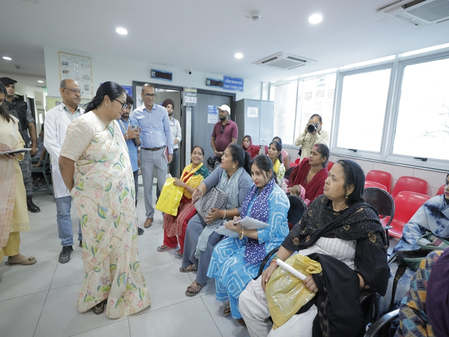
New Delhi, April 23 (IANS) Delhi Chief Minister Rekha Gupta on Thursday carried out a surprise inspection at Aruna Asaf Ali Hospital and directed the administration to improve the availability of medicines, sanitation, and seating facilities for senior citizens in the waiting area.
The inspection also revealed gaps in doctor availability, overcrowding in the OPD, and flaws in the online appointment and token systems, a statement said.
During the visit, several elderly patients told the Chief Minister that they had been standing in queues since 8 a.m. without being attended to. Taking serious note, Gupta expressed strong displeasure with the hospital administration, calling the situation “completely unacceptable”.
She directed officials to immediately ensure adequate seating arrangements and implement a streamlined token system so that patients, especially the elderly, are not forced to wait for hours.
She toured the OPD, wards, pharmacy counters, sanitation systems, water supply, digital services, and other key departments. Interacting directly with patients and their attendants, the Chief Minister sought first-hand feedback on the hospital’s functioning and ordered immediate corrective measures based on the complaints received.
She noted that despite the existence of an online booking mechanism, patients continued to face long queues.
Pulling up officials, the Chief Minister ordered better integration of online and offline systems to minimise waiting time. Noting heavy footfall in the orthopaedics department, she discussed workflow with doctors and stressed the need to maintain quality treatment amid the rush.
Several patients complained about the unavailability of medicines, forcing them to purchase drugs from outside.
The Chief Minister immediately ordered a check of stock registers and announced a zero-tolerance policy on shortages of medicines and vaccines. “If a medicine is needed today, it must be provided today,” she said, terming it a serious lapse to inconvenience citizens over basic healthcare needs.
Officials informed her that a large number of patients visit the vaccination unit daily for rabies and other injections. She directed the authorities to ensure an uninterrupted supply of medicines and vaccines.
Patients and their families also raised concerns about poor sanitation, water supply issues, and a lack of basic amenities. On hearing repeated complaints about unhygienic conditions and dysfunctional toilets, the Chief Minister sharply reprimanded officials, saying that ignoring such issues despite clear feedback from patients and staff amounted to gross negligence.
She made it clear that deficiencies in cleanliness, medicines, and basic facilities would not be tolerated under any circumstances.
--IANS
rch/pgh
Sharad Pawar discharged from hospital, condition stable
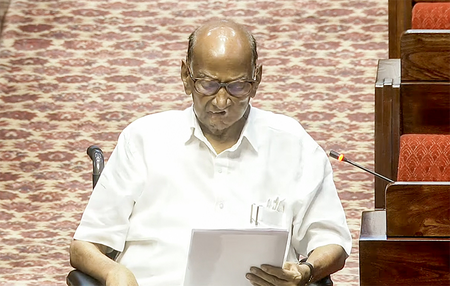
Mumbai, April 23 (IANS) Veteran leader and Nationalist Congress Party (Sharad Pawar) chief Sharad Pawar, who was admitted to Breach Candy Hospital in Mumbai due to ill health, was discharged on Thursday.
Pawar had been admitted to the hospital on Tuesday, where he underwent various medical tests. After being kept under observation for two days, he was sent home on Thursday following the doctors' advice, said the party in a press release.
On Thursday, amid rumours about Sharad Pawar's health, his grand-nephew and Nationalist Congress Party (Sharad Pawar) legislator Rohit Pawar issued a clarification.
In his post on X, Rohit Pawar said that many party workers had called out of concern regarding Pawar Saheb's health; however, Saheb’s health is excellent.
He added that he has been discharged from the hospital and is resting at his Mumbai residence, and that he had recently spoken with him regarding some work. He also said that no one should be worried about his health.
Further, former minister and Nationalist Congress Party (Sharad Pawar) legislator Jitendra Awhad also said that party chief Sharad Pawar’s condition is stable.
He stated in his post on X that the condition of the esteemed Sharadchandra Pawar Saheb is stable and that, having been discharged from the hospital, he is resting at his residence.
He added that everyone should pray for his full recovery and that the veteran leader returns to the political landscape of Maharashtra.
Earlier, Sharad Pawar on April 21 said that he would not participate in voting during the Baramati by-election held that day due to his hospitalisation. This marks the first time since he contested his first election in 1967 that the senior leader will miss exercising his franchise in his home bastion.
Addressing the citizens of Baramati from a hospital in Mumbai, Pawar expressed deep regret over his physical absence.
He said that he has consistently exercised his right to vote in Baramati since 1967 and had fully intended to travel there to maintain this tradition.
However, due to sudden health issues, he had been hospitalised, and doctors had strictly advised against travel, citing the need for treatment and mandatory rest.
Pawar further clarified that he explored all alternative voting methods, including postal ballots and digital options provided by the Election Commission, but was informed by state election officials that these facilities were not available to him under the current circumstances.
--IANS
sj/dan