
Samsung Biologics labour union to resume talks with management on Monday
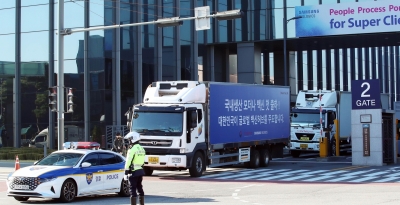
Seoul, May 3 (IANS) Samsung Biologics, the biotech arm of Samsung Group, has agreed to return to the negotiation table this week, a corporate official said on Sunday.
The two sides will renegotiate on Monday under the mediation of the Jungbu regional employment and labor office, after the first round of talks fell through on Thursday.
The strike is the first ever for the union, with the walkout entering its third day on Sunday, reports Yonhap news agency.
"Our decision to respond to the labor ministry's arbitration request during the walkout was part of our sincere efforts to sort the issue out through dialogue," a company source said.
The representative urged the labor union to stop its "irrational" demands and collective action and return to the negotiation table.
During the first arbitration meeting held last week, the labor union reportedly demanded the company change all of its bargaining committee members as a prerequisite for talks.
Unionized workers of Samsung Biologics have been staging a strike since Friday. They have demanded a 14 percent increase in both base and performance-related pay, a one-off cash incentive of 30 million won (US$20,389.9) per worker, and bonuses equivalent to 20 percent of annual operating profit.
The company has proposed a combined 6.2 percent increase in base and performance pay.
Around 2,800 of 4,000 unionized members have participated in the collective action, according to the company's labour union.
The company claims the walkout could cause at least 640 billion won worth of damage, which is equivalent to around half of the company's sales for the first quarter.
The union said it plans to continue the strike until Tuesday.
Unionized workers of Samsung Biologics called for the company to establish "fair and transparent" personnel management standards.
"What the labour union demands is that the management should exercise personnel and management authority in a transparent manner so that the employees can work while trusting the company," the labor union said in a release.
The labour union is said to have proposed a collective bargaining agreement that includes clauses requiring prior consent by the union in regard to new hiring, personnel evaluations and decisions on mergers and acquisitions.
—IANS
na/
Alkem Labs gets 7 USFDA observations at Daman Plant after inspection
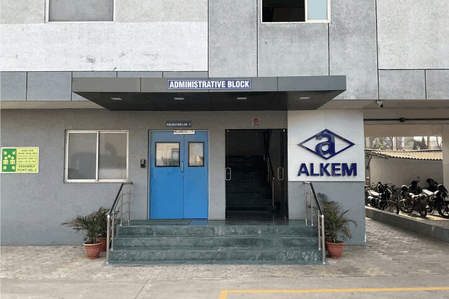
New Delhi, May 3 (IANS) Pharmaceutical major Alkem Laboratories has come under regulatory scrutiny after the United States Food and Drug Administration (USFDA) issued inspectional observations at its manufacturing facility in Amaliya, Daman, following a recent audit.
The inspection, conducted over 12 days from April 20 to May 1, concluded with the issuance of a Form 483, in which the US regulator flagged seven observations.
A Form 483, formally known as a “Notice of Inspectional Observations,” is issued when investigators identify conditions that may potentially violate provisions of the Food, Drug and Cosmetic Act, particularly those related to manufacturing practices, quality systems, or product safety.
While the company acknowledged receiving the observations, it did not disclose specific details about the issues raised by the regulator.
Alkem Laboratories said it would respond to all seven observations within the stipulated timeline.
The development was formally communicated to the BSE Limited and the National Stock Exchange of India on May 2, 2026, in line with regulatory disclosure requirements.
The latest scrutiny comes weeks after a positive regulatory milestone for the company. In March, Alkem Laboratories announced that its Daman facility had received a Good Manufacturing Practice (GMP) compliance certificate from the Malta Medicines Authority.
The certification followed an inspection conducted on December 9, 2025, and confirmed that the facility met European Union GMP standards. The certificate is valid for a period of three years.
Meanwhile, last month, US health regulator issued a 'Form 483' with three observations to drug maker Lupin.
In a regulatory filing, the pharmaceutical company said that the inspection by the US Food and Drug Administration (USFDA) was conducted this week between April 13 and April 17.
"The inspection was completed with the issuance of a Form 483 carrying three observations," the drug maker said.
--IANS
pk
No cause for panic over May heat forecast, follow IMD forecasts: Dr Jitendra Singh
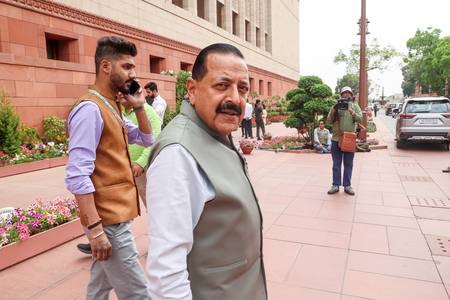
New Delhi, May 2 (IANS) Union Minister of State for Science and Technology, Dr. Jitendra Singh, said on Saturday that there is no cause for panic over predicted heat conditions in May and unwarranted reactions can be avoided by following weather forecasts and simple precautions.
Southern peninsular India, parts of the northeast and northwest India may see above‑normal temperatures and heat‑wave conditions, but most of the country is likely to experience normal to below‑normal temperatures during the month, an official statement said.
Dr Singh urged citizens to stay hydrated, avoid prolonged exposure during peak heat hours, and remain attentive to the needs of vulnerable individuals in their surroundings. He said that following IMD’s daily updates and impact-based forecasts will help minimise any potential health risks.
Minimum temperatures in several regions are also likely to remain above normal, he added, referring to the latest monthly outlook and extended-range forecast issued by India Meteorological Department (IMD).
Heat wave conditions can be effectively managed through timely preparedness and adherence to advisories issued, he said.
IMD's forecast indicated that heat wave conditions are expected over the Himalayan foothills, parts of the east coast including Odisha, Coastal Andhra Pradesh and adjoining Tamil Nadu, as well as Gujarat and Maharashtra, with an increase of about 2-4 heatwave days above normal in these regions.
Relatively higher temperatures are expected during the second and the fourth weeks of May, which may lead to heat wave conditions across parts of Northwest, Central and West India, along with the East Coast.
The Minister said that higher nighttime temperatures during certain periods may add to heat discomfort, particularly in urban and coastal areas. Hot and humid weather conditions are also likely along the East Coast, Gujarat and Maharashtra.
The prevailing conditions remain generally favourable for harvesting of late Rabi crops in northern and northwestern regions, the minister said.
However, localised heat stress in parts of southern and northeastern India may affect certain summer crops such as rice (Boro), maize and pulses.
Farmers have been advised to carry out field operations during morning and evening hours, ensure light and frequent irrigation, and take protective measures for livestock.
The minister said that the government is fully prepared to deal with heat-related conditions. He emphasized coordinated efforts at the state and district levels to ensure availability of drinking water, functional cooling arrangements and uninterrupted power supply, with special attention to vulnerable groups including infants, the elderly and outdoor workers.
--IANS
aar/na
India’s medical tourism market to nearly double to 16.2 bn by 2030: Govt
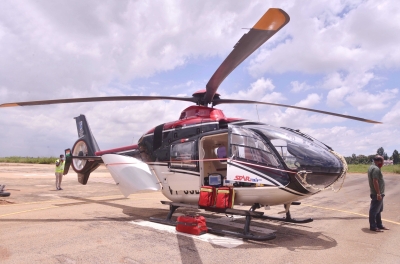
New Delhi, May 2 (IANS) India is emerging as a leading hub for 'Medical Value Travel' (MVT), with the medical tourism market estimated at about $8.7 billion in 2025 to nearly double to $16.2 billion by 2030, the government said on Saturday.
The global MVT market is valued at about $115.6 billion in 2022 and is estimated to reach around $286.1 billion by 2030 at a compound annual growth rate (CAGR) of about 10.8 per cent.
"Across the world, rising healthcare costs, long waiting times, and the growing burden of lifestyle diseases are driving patients to seek treatment abroad," an official statement said.
India's rise in MVT is driven by integration of advanced medical infrastructure with traditional wellness systems such as AYUSH. Strong policy support, digital facilitation, and initiatives like AYUSH Visa and Regional Medical Hubs are strengthening the ecosystem.
India’s MVT ecosystem comprises medical tourism for curative interventions and wellness tourism centred on AYUSH systems such as Yoga and Ayurveda.
These two pillars address both advanced clinical treatment needs and the rising global demand for preventive healthcare, the statement noted.
India recorded 9.15 million foreign tourist arrivals in 2025, of which 5,07,244 were for medical treatment. The data showed that medical tourism constitutes approximately 5.5 per cent of total foreign tourist arrivals.
India's top source countries for medical tourists in 2025 were Bangladesh (325,127 arrivals), Iraq (30,989), Uzbekistan (13,699), Somalia (11,506), Turkmenistan (10,231), Oman (9738), and Kenya (9,357).
According to the Medical Tourism Index 2020–21, India ranked 10th among the top 46 medical tourism destinations globally, and fifth among the top 10 wellness destinations in the Asia-Pacific region.
India’s healthcare system is supported by robust quality assurance mechanisms and internationally recognised accreditation standards.
Hospitals and healthcare providers across the country obtain accreditation from the National Accreditation Board for Hospitals and Healthcare Providers (NABH) which has rigorous benchmarks for patient safety and quality of care.
Looking ahead, the government highlighted that the Union Budget 2026–27 proposed five Regional Medical Hubs with integrated medical, educational and research facilities. Each hub will include AYUSH centres and MVT facilitation centres, the statement noted.
—IANS
aar/na
Unionized workers of Samsung Biologics continue strike for 2nd day
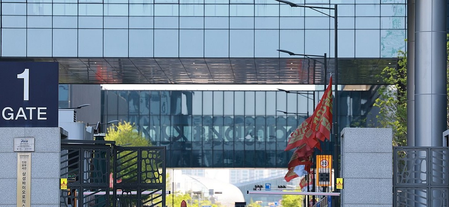
Seoul, May 2 (IANS) Unionized workers at Samsung Biologics, the biotech arm of Samsung Group, continued to stage a strike on Saturday for a second day, according to union officials, with the union and the company showing little signs of bridging gaps over wages and other issues.
The union of Samsung Biologics began the strike on Friday, marking the first walkout since the company's establishment in 2011, reports Yonhap news agency.
The union is seeking a 14 percent increase in both base and performance-related pay, a one-off cash incentive of 30 million won per worker and bonuses equivalent to 20 percent of annual operating profit.
The company has proposed a combined 6.2 percent increase in base and performance pay.
Samsung Biologics said earlier it was deploying all available personnel to minimise disruption but acknowledged that some impact to operations may be unavoidable.
The company estimated that losses from a full-scale strike could exceed 640 billion won (US$433 million), roughly half of its first-quarter sales of 1.26 trillion won.
In a message to employees released Friday, the company's President and Chief Executive Officer John Rim urged them to carefully consider whether to participate in the strike, warning it could lead to irreversible losses for both the company and its employees.
"The company will continue sincere dialogue with the union to help stabilise labor-management relations and build a workplace based on mutual trust and respect," he said.
Negotiations between the two sides have failed to bridge significant differences despite 13 rounds of talks held between December and March.
Last month, Samsung Biologics filed for a court injunction to block the planned strike. The court partially upheld the request, restricting industrial action across three of the company's nine production stages while allowing strike activities to proceed in the remaining six. The company immediately appealed the ruling.
Samsung Biologics and its union are scheduled to meet again on Monday under mediation by a regional labour office of the labour ministry to discuss the direction of future negotiations.
—IANS
na/
6 new BIS standards for medical assistive tech to help policymakers, healthcare providers
New Delhi, May 1 (IANS) The six new Bureau of Indian Standards (BIS) for medical assistive technologies, part of the NLEAP (National List of Essential Assistive Products) initiative brought about by Indian Council of Medical Research (ICMR), aim to serve as a guideline for policymakers, healthcare providers, and the concerned stakeholders for provision of assistive products as well as support the development of assistive technologies across the country, the government said on Friday.
Standards for ‘elbow crutches’ specifies requirements and test methods, fully equipped with handgrip and tip including requirements relating to safety, ergonomics, performance, and information to be supplied by the manufacturer, including marking and labelling.
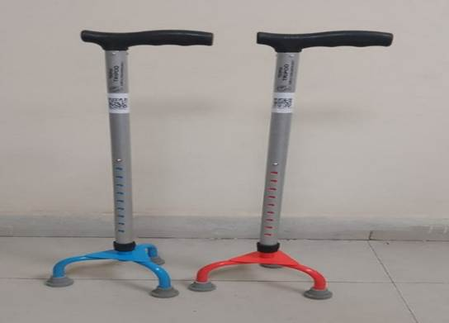
New Standards for ‘walking sticks’ covers the requirements pertaining to material, shape, dimensions, workmanship, finish and performance of walking sticks (including wooden, cane, aluminium, plastic and rubber).
This is an indigenous standard developed after consultation with the technical experts from the Indian industry, said Ministry of Consumer Affairs, Food and Public Distribution.
Moreover, the Standards for ‘Walking sticks’ specifies requirements and methods of walking sticks with three or more legs and fully equipped with handle and tips. It also gives the requirements relating to safety, ergonomics, performance, marking and labelling.
The Standards for ‘Accessible Design’ explains what information tactile guide maps should include and how they should be designed and displayed. These maps help people who are blind or have low vision understand buildings (like public places, transport areas, and parks) and nearby routes, so they can move around safely and easily, according to the ministry.
Another ‘Accessible Design’ Standards specifies the fundamental requirements for braille used on signage, equipment and appliances, including the dimensional parameters of braille and the characteristics of materials used, and the guidelines for practical implementation.
The ‘portable ramps’ Standard specifies the requirement for ramps for wheelchair users, as well as people pushing strollers, carts, or other wheeled objects, to more easily access steps, buildings, and other transportation systems.
This standard is applicable to portable ramps used for people with a range of mobility problems using powered or manual wheelchairs, mobility aids, older people, and children on with or without assistance of a caregiver to improve freedom of movement around a variety of environments, including the home, place of work, or local community.
“There is a growing need for standards in the area of Assistive Products that are crucial for enhancing the quality of life and promoting independence among individuals with functional impairments. By developing standards aligning with the global practices and their compliance would ensure that products of Indian Domestic Manufacturers meet international quality benchmarks and eligible for export to international markets,” said the statement.
--IANS
na/
Dr Lal PathLabs clocks 15.2 pc drop in Q4 net profit
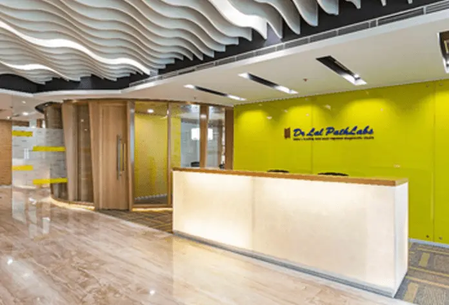
Mumbai, April 30 (IANS) Dr Lal PathLabs on Thursday reported a decline of 15.2 per cent in its net profit for the fourth quarter ended March 31 (Q4 FY26).
The diagnostic chain posted a net profit of Rs 131.3 crore for Q4, compared to Rs 154.8 crore in the corresponding period previous financial year (Q4 FY25), according to its stock exchange filing.
The drop in profit came despite a healthy rise in revenue, which grew 16.6 per cent year-on-year to Rs 702.7 crore compared to Rs 602.6 crore, driven by steady demand and higher test volumes across its portfolio.
Operating performance showed moderate growth, with EBITDA increasing 11 per cent to Rs 186.8 crore from Rs 169 crore a year ago, as per its regulatory filing.
However, margins came under pressure during the quarter, with EBITDA margin slipping to 26.6 per cent from 28 per cent in the year-ago period.
In a shareholder-friendly move, the board has recommended a final dividend of Rs 4 per equity share, equivalent to 40 per cent on a face value of Rs 10, for FY26.
The dividend payout is subject to approval at the upcoming annual general meeting, and the record date to determine eligible shareholders has been set as June 26, 2026.
Following the earnings announcement, shares of Dr Lal PathLabs ended 1.7 per cent lower at Rs 1,374 on the NSE on April 30.
In last five days, the shares of the firm were dropped by Rs 41 or 2.90 per cent. The stock has delivered a positive return of Rs 50.40 or 3.81 per cent in last one month.
In last six months, it has dropped nearly Rs 194 or 12.36 per cent. On year-to-date (YTD) basis, it gave negative return of Rs 135.80 or 8.99 per cent to its investors.
--IANS
pk
India Post Payments Bank’s SHG savings account to boost financial inclusion
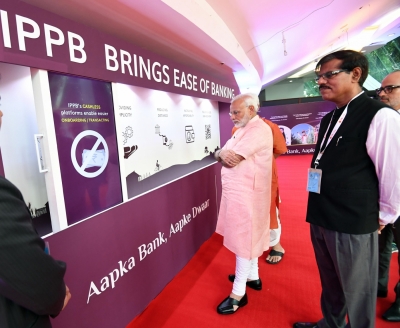
New Delhi, April 30 (IANS) India Post Payments Bank (IPPB), under the Department of Posts, on Thursday announced the launch of its Self Help Group (SHG) Savings Account, aimed at advancing financial inclusion and empowering women-led SHGs across rural India.
The IPPB SHG Savings Account is designed to be zero balance, zero charges account to ensure affordability; digitally enabled for simplified on-boarding; and delivered through the vast network of Post Offices and Postmen/Gramin Dak Sevaks.
Key Features include no minimum initial deposit requirement, no Monthly Average Balance (MAB) requirement, maximum balance limit of Rs 2,00,000, quarterly interest pay-outs as per applicable savings rates, nil charges for cash deposits and withdrawals, one free physical account statement per month, no account closure charges and no QR card issuance charges.
“At IPPB, our mission is to make banking simple, accessible, and inclusive for every Indian. The SHG Savings Account is a step forward in empowering women-led SHGs by providing them with a reliable and cost-effective banking solution,” said R Viswesvaran, MD and CEO, IPPB.
“By leveraging our doorstep banking model and digital infrastructure, we aim to enable SHGs to participate more actively in the formal financial ecosystem and drive sustainable economic growth,” said Viswesvaran.
Self Help Groups have been pivotal in driving rural economic transformation in India and are closely linked with flagship initiatives such as the National Rural Livelihoods Mission under Ministry of Rural Development (MoRD) and programs supported by National Bank for Agriculture and Rural Development (NABARD).
Leveraging unmatched Postal Network of Department of Posts (DoP) and its own digital capabilities, IPPB aims to deepen financial access for SHGs by combining doorstep banking services with digital on-boarding, assisted by extensive network of Postmen and Gramin Dak Sevaks (GDS).
--IANS
na/
Deepfakes, online violence driving women from public life: Study

New Delhi, April 30 (IANS) A team of global researchers on Thursday said that deepfakes, AI-assisted rape and unwanted advances are pushing women out of public life.
The report by UN Women, City St George’s (University of London) and data forensic company TheNerve found that online violence against women in public life is becoming increasingly technologically sophisticated.
“AI-assisted ‘virtual rape’ is now at the fingertips of perpetrators. This phenomenon accelerates the harm from online violence inflicted on women in public life. This violence serves to fuel the reversal of women’s hard-won rights in a climate of rising authoritarianism, democratic backsliding and networked misogyny,” said Julie Posetti, Professor of Journalism and Chair of the Centre for Journalism and Democracy at City St George’s.
“The rollback of women’s rights is enabled and exacerbated by technologies which – by design –amplify misogynistic hate speech for profit,” added Posetti, project’s principal researcher and the report’s lead author.
The report analysed the experiences of 641 women journalists and media workers, activists, and human rights’ defenders from 119 countries.
The women were surveyed in late 2025, and the researchers concluded that 27 per cent of women respondents were targeted with unsolicited sexual advances via direct message, receiving unwanted intimate images, “cyberflashing”, sexual innuendos or nonconsensual sexting.
About 12 per cent of respondents had their personal images, including those of an intimate nature, shared without their consent, and 6 per cent of respondents have been subjected to deepfakes or manipulated images and videos.
These attacks were often deliberate and coordinated, aiming to silence women in public life while undermining their professional credibility and personal reputations, found the study.
The impacts include an alarming rate of mental health diagnoses and self-censorship: Nearly one-quarter (24 per cent) of respondents have experienced anxiety and/or depression linked to online violence; 13 per cent reported being diagnosed with Post-Traumatic Stress Disorder (PTSD); and 41 per cent of respondents said they self-censored on social media to avoid being abused, and 19 per cent were self-censoring at work as a result.
The study found that while 25 per cent of respondents had reported incidents of online violence to the police and 15 per cent had taken legal action, justice still eludes them.
“The chilling effect of online violence is pushing women out of public life. Law enforcement is outsourcing the responsibility for protection to the survivors by telling women to remove themselves from social media, to avoid speaking publicly about controversial issues, to move into less visible roles at work, or to take leave from their respective careers,” said Co-author Lea Hellmueller, Associate Professor of Journalism, and Associate Dean for Research and Innovation at City St George’s.
--IANS
na/
Urgent appeal for A-positive blood as Afghan cricketer Shapoor Zadran fights a rare disease
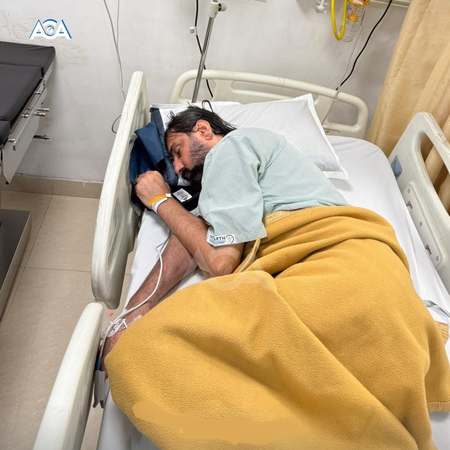
New Delhi, April 29 (IANS) Former Afghanistan pacer Shapoor Zadran, who is fighting for his life at a hospital in New Delhi is in urgent need of blood and Zadran's family has appealed A-positive blood donors to help the 30-year-old as he battles a rare with Hemophagocytic Lymphohistiocytosis (HLH), a rare and life-threatening immune disorder.
Zadran, who played 44 ODIs and 36 T20Is for Afghanistan from 2009 to 2020, is currently in the intensive care unit (ICU) with stage four HLH. Under this condition, a person suffers from hyper-inflammation, which leads to damage in tissues, including the bone marrow, liver, spleen, and lymph nodes.
Zadran's younger brother, Ghamai Zadran, shared an emotional message on Instagram appealing to everyone to help the former player and donate the required blood, which will assist in recovery.
“My brother, national hero Shapoor Zadran, is currently in a concerning health condition,” Ghamai wrote. “With your prayers, we stand by our national hero. Due to a deficiency and urgent need, he is in critical need of blood”.
Shapoor first felt unwell in October last year and was advised to seek treatment in India. With support from Rashid Khan and Afghanistan Cricket Board (ACB) chairman Mirwais Ashraf, Shapoor’s visa was fast-tracked, and he was admitted to the hospital in New Delhi on January 18.
A bone marrow test in late March confirmed stage four HLH for Shapoor. "The doctor said we could drop in for the check-ups frequently. He (Shapoor) was feeling good for about 20 days before he got the infection again. Then we admitted him to the hospital," Ghamai told ESPNcricinfo.
"He started getting a fever, and then he tested positive for dengue. His immunity was very weak as the red blood cell count was severely depleted. He doesn't have much vitality. We have hope that he will improve day by day. The steroids Shapoor has been given recently seem to be working, and that has given us hope," added Ghamai.
--IANS
sds/bsk/