
Hantavirus unlikely to reach pandemic scale, no cases in India so far: Report
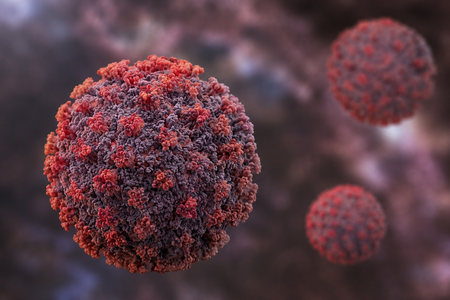
New Delhi, May 8 (IANS) Hantavirus has a low rate of person‑to‑person spread and is unlikely to reach pandemic scale, and there are no widely reported or officially confirmed deaths in India linked to the current virus outbreak, a report said on Friday.
The report from Elara Capital said that the low transmissibility of hantavirus means that even though individual hantavirus infections can be severe, outbreaks tend to be localised and self-limiting.
Hantavirus infections remain rare globally, with no specific USFDA-approved vaccines or antiviral treatments available.
Hantaviruses are rodent‑borne RNA viruses that infect humans primarily through inhalation of aerosolised particles from rodent urine, droppings or saliva. The report added that only certain strains of Hantavirus, notably the Andes strain, have shown rare person‑to‑person transmission.
The report pointed out the stark difference between Hantavirus and SARS‑CoV‑2, causing COVID-19, which spread very fast and became a pandemic.
Two major clinical syndromes of Hantavirus have been noted globally. The first one is Hantavirus Pulmonary Syndrome in America, which leads to severe respiratory failure with mortality rates reaching 40–50 per cent.
Hemorrhagic Fever with Renal Syndrome (HFRS) in Europe and Asia, which affects the kidneys and blood vessels, has up to 15 per cent mortality rates in severe cases.
A recent 2026 cluster aboard the cruise ship MV Hondius linked to the Andes strain has resulted in a small number of cases and three deaths, drawing attention to the disease but remaining limited in spread.
The first recognised outbreak of HPS occurred in 1993 in the Four Corners region of the US (Arizona, New Mexico, Colorado & Utah) and was caused by the Sin Nombre virus. There were 53 cases during that outbreak, with 32 deaths, reflecting a high fatality rate.
China has reported 2.1 lakh HFRS cases from 2004 to 2019, and around 1,855 related deaths.
In the United States, a total of 864 Hantavirus infections were reported between 1993 and 2022, with approximately 302 deaths.
—IANS
aar/ag
IndiaAI, ICMR join hands to boost responsible AI adoption in healthcare
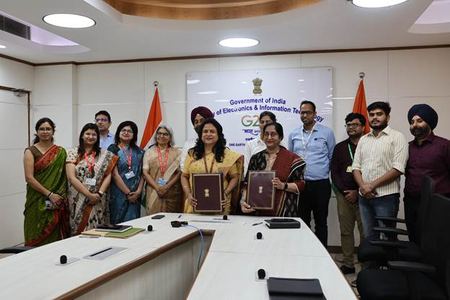
New Delhi, May 7 (IANS) IndiaAI on Thursday signed a memorandum of understanding (MoU) with the Indian Council of Medical Research (ICMR) towards advancing healthcare outcomes through the responsible and scalable application of artificial intelligence (AI).
The collaboration is expected to catalyse innovation at the intersection of technology and public health, while ensuring adherence to ethical standards, data privacy, and regulatory frameworks.
Both the institutions will leverage their complementary strengths, IndiaAI’s compute infrastructure, dataset platforms, and AI skilling initiatives, alongside ICMR’s biomedical research expertise and its Medical Information Data for AI Solutions (MIDAS) framework to enable innovation, research, and deployment of AI-driven healthcare solutions.
According to IT Ministry, the MoU establishes a structured framework for collaboration, bringing together IndiaAI’s technology infrastructure and AI ecosystem capabilities with ICMR’s deep domain expertise in biomedical research and public health.
The partnership aims to create a nationally coherent and interoperable AI ecosystem for healthcare in India.
ICMR will contribute anonymised and ethics-approved health research datasets, AI models, and toolkits developed under the MIDAS framework to the AIKosh platform.
This will enable broader access to high-quality biomedical datasets for researchers, startups, and innovators across India.
On the other hand, IndiaAI will provide ICMR with access to GPU-based and high-performance computing infrastructure at subsidised rates, subject to defined service-level agreements. This is expected to address a critical infrastructure gap in scaling advanced AI research in healthcare.
The partnership will support the co-development of AI-powered solutions addressing priority public health challenges in India.
These solutions will be informed by ICMR’s disease burden data and enabled by IndiaAI’s technology stack, said the official statement.
In September 2025, IndiaAI and ICMR’s National Institute for Research in Digital Health and Data Sciences (NIRDHDS) were recognised as Pioneer Countries under the HealthAI Global Regulatory Network (GRN), a multilateral initiative co-founded with the United Kingdom and Singapore to advance responsible governance of AI in healthcare.
--IANS
na/
Govt launches JANANI platform to strengthen maternal, child healthcare
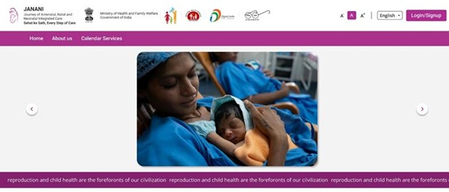
New Delhi, May 7 (IANS) The government has launched JANANI (Journey of Antenatal, Natal and Neonatal Integrated Care), a QR-enabled digital healthcare platform to track maternal and child health services, an official statement said on Thursday.
According to the government, the platform will comprehensively monitor and maintain digital health records of women during their reproductive years, including antenatal care, delivery preparedness, delivery, postnatal care, newborn care, home-based newborn and young child care and family planning.
The new system is developed as an upgraded version of the existing RCH portal and creates a longitudinal health record by capturing key service delivery events across the continuum of care.
The platform enables continuous monitoring, timely interventions and strengthens service delivery at every stage of child care, the government said.
A key feature of the platform is QR‑enabled digital Mother and Child Health cards that make records portable and easily accessible.
The platform also incorporates automated alerts for high-risk pregnancies, real-time dashboards for supervisory review, and due-list generation, enabling timely tracking, monitoring, and targeted interventions.
JANANI also enables integration with national platforms such as U-WIN and POSHAN, thereby facilitating seamless data exchange, improved coordination across programmes, and comprehensive monitoring of beneficiaries across sectors.
The platform enables registration of beneficiaries using unique identifiers such as ABHA, Aadhaar (OTP and biometric), and mobile number, along with pan-India search functionality.
The new portal ensures continuity of care for migratory populations and prevents duplication of records. It also provides self-registration facilities through web and mobile platforms, empowering beneficiaries to actively engage with their healthcare journey.
JANANI supports citizens by enabling timely scheduling and monitoring of antenatal care visits and immunizations, along with alerts and reminders to ensure that no critical health milestone is missed.
Moreover, it provides access to digital MCH cards, information on nearby healthcare facilities, expected place of delivery, and supports decision-making through health education and nutritional guidance, the statement noted.
Till date, JANANI has achieved 1.34 crore beneficiary registrations, over 30 lakh pregnant women registrations, more than 30 lakh MCH cards generated, and over 1 lakh biometric verifications, according to the government.
—IANS
aar/ag
India, Japan ink pacts on health research, quantum technologies
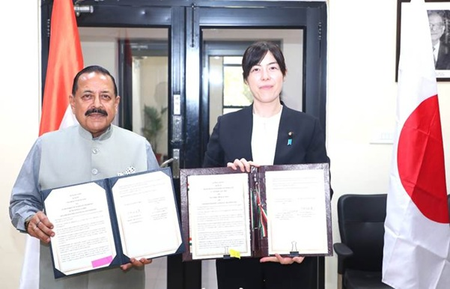
New Delhi, May 6 (IANS) India and Japan have signed agreements to strengthen cooperation in health research and quantum technologies, further deepening their strategic partnership in science, technology and innovation, the Ministry of Science & Technology said on Wednesday.
The agreements were exchanged during a high-level meeting between Union Minister Dr Jitendra Singh and Japan’s Minister for Science and Technology Policy and Minister of State for Space Policy, Kimi Onoda, who is on a visit to India with a high-level delegation.
Moreover, a Memorandum of Cooperation (MoC) in the field of health and medical devices was exchanged among the Japan Agency for Medical Research and Development (AMED), the Indian Council of Medical Research (ICMR) and the Department of Science and Technology (DST), the ministry said.
In addition, a Letter of Intent (LoI) on cooperation in quantum science and technology was signed between the Cabinet Office of Japan and the Department of Science and Technology, opening new avenues for collaboration in next-generation technologies.
The government has highlighted that engagement builds on the outcomes of Prime Minister Narendra Modi’s visit to Japan in August 2025, during which both sides agreed to expand cooperation under the India-Japan Science, Technology and Innovation Partnership across sectors, including industry and startups.
Addressing the meeting, Singh said that India and Japan share a natural synergy in science and technology, with Japan’s advanced technological capabilities complementing India’s vast pool of skilled human resources.
He noted that India’s expanding national missions in quantum technologies, cyber-physical systems, electric mobility, clean energy and advanced computing are creating new opportunities for joint research, co-development and industrial partnerships.
Meanwhile, Japanese Minister Onoda appreciated India’s rapid economic growth and its growing focus on innovation, particularly the large-scale adoption of artificial intelligence across sectors.
However, in the health sector, both sides deliberated on expanding joint research programmes, capacity building and structured funding mechanisms to support collaborative projects.
--IANS
ag/
Govt to host Ayushman Bharat PM-JAY hackathon finale in Bengaluru
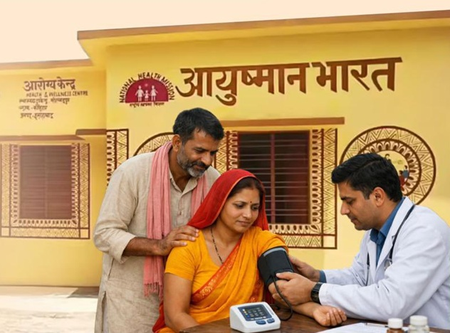
New Delhi, May 6 (IANS) The government will host the grand finale and showcase of the Ayushman Bharat Pradhan Mantri Jan Arogya Yojana (AB PM-JAY) Auto-Adjudication Hackathon in Bengaluru on May 8-9, aimed at leveraging artificial intelligence to strengthen health claims processing, the Ministry of Health and Family Welfare said on Wednesday.
The ministry said that the event will be organised by the National Health Authority (NHA) in collaboration with the IndiaAI Mission and IISc Bengaluru.
Moreover, the nationwide hackathon has received an overwhelming response, with over 3,500 participants registering through the official portal, reflecting growing interest among innovators, technologists and researchers in applying AI to public health systems.
According to the government, the two-day event will serve as a platform to showcase cutting-edge solutions designed to enhance the efficiency, accuracy and transparency of claims adjudication under AB PM-JAY.
It also noted that finalist teams will present advanced AI and machine learning-based solutions addressing key challenges such as clinical document classification, compliance with Standard Treatment Guidelines (STGs), radiological image-based validation, and detection of forged or AI-generated medical documents.
These solutions are expected to have strong potential for real-world deployment, improving the speed and integrity of claims processing.
Moreover, the programme will also feature panel discussions with experts from government, industry, startups and academia on themes such as ‘Building AI for Indian Healthcare’ and the ‘Future of Claims Adjudication’.
In addition, another session will focus on ‘Fraud, Waste and Abuse in the Era of AI’, examining the responsible use of technology in fraud detection while addressing concerns related to transparency, accountability and data privacy.
The government has highlighted that with nearly 40,000 claims processed daily across more than 1,900 treatment packages, Ayushman Bharat is among the world’s largest publicly funded health assurance schemes and is increasingly adopting AI-driven approaches for claims management.
--IANS
ag/
India launches Swasth Bharat Portal to integrate multiple digital health systems
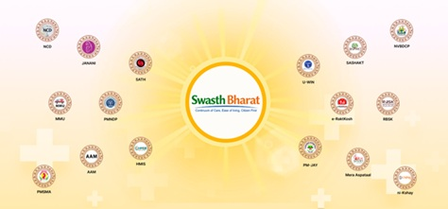
New Delhi, May 6 (IANS) The government launched Swasth Bharat Portal to integrate multiple national health program applications into a single interoperable platform, an official statement said on Wednesday.
The application has been designed as an API‑based aggregator platform to eliminate siloed systems, fragmented datasets, sub-optimal utilisation of resources and duplication of efforts. It will reduce duplicate data entry and ease administrative burdens on frontline health workers.
It enables interoperability and convergence, creating a unified digital layer across programmes.
Envisioned as a one-stop integrated platform, it brings multiple national health programmes onto a single interface, eliminating the need for multiple logins and repetitive data entry, while enhancing efficiency at all levels.
India’s frontline health workers, including accredited social health activists (ASHAs), auxiliary nurse midwifes (ANMs), community health officers (CHOs), and medical officers (MOs), often spend considerable time navigating multiple applications for program reporting.
The newly launched portal addresses this issue by providing a single platform for easy access, along with data visualisation tools and the use of data at the local level for monitoring and evidence-based planning.
The platform is Ayushman Bharat Digital Mission (ABDM)‑compliant and supports integration with Ayushman Bharat Health Account for seamless and secure exchange of patient health records.
It is designed to evolve into a comprehensive and interoperable digital health ecosystem, further integrating with national registries such as the Healthcare Professionals Registry (HPR) and Health Facility Registry (HFR).
The ministry estimated that efficiency gains from consolidation will extend to an infrastructure savings of about 20-30 per cent, reductions in repetitive data entry of roughly up to 40 per cent and similar declines in human‑resource duplication.
The statement from the Ministry of Health and Family Welfare said that Union Health Minister Jagat Prakash Nadda unveiled the application during the 10th National Summit on Innovation and Inclusivity.
As the system is designed on a federated architecture via APIs, the interoperability will be higher.
Currently, independent hosting, storage, and compute resources are maintained across programs, which can be cut down due to aggregation through the system.
Decision‑making speed is also expected to increase, the statement said, adding that portal marked a transformative step towards convergence, efficiency, and data-driven governance in India’s public health system.
—IANS
aar/ag
Who Is Claire Mazumdar? Know all about the woman set to take over Biocon in future

New Delhi, May 5 (IANS) Claire Mazumdar, a US-based biotech entrepreneur and CEO of a Nasdaq-listed firm, on Tuesday identified as the future successor to Kiran Mazumdar-Shaw at Biocon, marking a key step in the company’s long-term leadership transition.
Kiran Mazumdar-Shaw, founder and chairperson of Biocon, said she has formally charted a succession plan and chosen her niece Claire to eventually take over the reins of the company.
She noted that as the sole owner of Biocon, it was important to ensure that the business is placed in capable hands, adding that Claire has demonstrated her ability to lead and manage a company effectively.
However, Mazumdar-Shaw clarified that the transition will not be immediate. In a social media post, she said she does not plan to step down anytime soon and that Claire will gradually move into the leadership role over time.
Claire Mazumdar, 37, is currently the founding Chief Executive Officer of Bicara Therapeutics, a Boston-based clinical-stage biotechnology firm focused on developing anti-cancer therapies.
Under her leadership, the company has grown significantly, with its market capitalisation crossing $1.6 billion.
Academically, Claire brings a strong scientific and business background. She holds a degree in Biological Engineering from the Massachusetts Institute of Technology, an MBA from Stanford Graduate School of Business, and a PhD in Cancer Biology from Stanford School of Medicine.
Before becoming CEO of Bicara in 2020, she worked at Third Rock Ventures and led business development and corporate strategy at Rheos Medicines.
She is also actively involved in the non-profit sector as a board member of Noora Health, which focuses on improving healthcare outcomes through patient and caregiver education.
Mazumdar-Shaw added that Claire will be supported by a broader family-led leadership ecosystem, including her brother Eric Mazumdar, an artificial intelligence expert and professor at the California Institute of Technology, and her husband Thomas Roberts, a noted oncologist at Massachusetts General Hospital in the US.
--IANS
pk
India, Japan commit to stronger healthcare systems, resilient supply chains
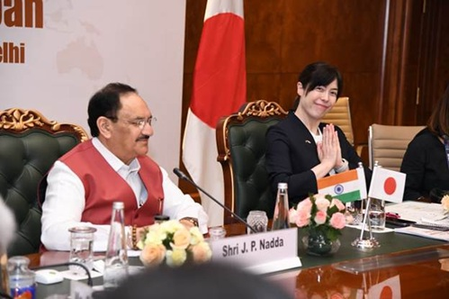
New Delhi, May 5 (IANS) The third Joint Committee Meeting (JCM) on Healthcare between India and Japan was held here on Tuesday, with both sides committing to deepen cooperation for stronger healthcare systems, resilient medical supply chains and enhanced collaboration in digital health, medical innovation and workforce development.
The meeting was co-chaired by Union Minister of Health and Family Welfare, Jagat Prakash Nadda and Japan’s Minister in charge of Healthcare Policy, Kimi Onoda.
Nadda said the meeting reflected the shared commitment of both countries to strengthen cooperation in the health sector.
He noted that India-Japan collaboration in healthcare is guided by the Memorandum of Cooperation in Healthcare and Wellness and a shared vision of improving accessibility, strengthening health systems and promoting innovation for better health outcomes.
The long-standing and multifaceted relationship between India and Japan reiterated India’s commitment to inclusive development under the guiding principle of 'Sabka Saath, Sabka Vikas', according to the minister.
According to him, the JCM serves as a vital platform to advance bilateral healthcare cooperation.
Meanwhile, Onoda said Japan remains committed to strengthening engagement in healthcare cooperation through innovation, technology and research, and expressed readiness to further deepen bilateral collaboration.
Additionally, welcoming the Japanese delegation, Union Health Secretary Punya Salila Srivastava said India and Japan share a partnership built on mutual respect, trust and a common vision for the future.
During the meeting, both sides held detailed discussions across major priority areas such as supply chain, digital health, and human resource.
On non-communicable diseases (NCDs), India highlighted its growing disease burden and presented its response framework based on screening, continuum of care and health promotion aligned with the Sustainable Development Goals.
While Japan shared its ongoing cooperation initiatives, including cancer screening, early diagnosis and capacity-building projects.
On supply chain resilience and access to medical products, India highlighted its pharmaceutical and medical devices manufacturing capabilities and efforts to strengthen domestic production and ensure affordable access. Japan shared its model of public-private collaboration to enhance medical supply chains and technology deployment.
On digital health, India has outlined its 'Ayushman Bharat Digital Mission', which is enabling an interoperable and citizen-centric digital health ecosystem. Similarly, Japan shared its experience in digitalisation, AI-enabled medical technologies and collaborative research.
On human resource development, India highlighted its skilled healthcare workforce ecosystem and exchange programmes, while Japan outlined ongoing cooperation in joint research and personnel exchange initiatives.
--IANS
ag/
India among countries with comprehensive national framework for rare diseases: Govt
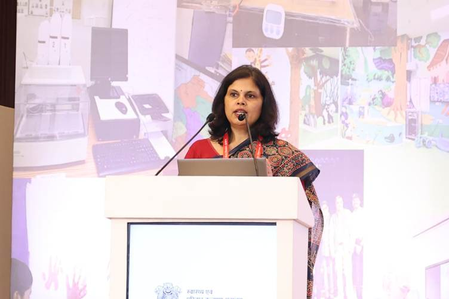
New Delhi, May 5 (IANS) The government on Tuesday said that the need for addressing rare diseases was first highlighted in the National Health Policy, 2017, and was subsequently institutionalized through the launch of the National Policy for Rare Diseases, 2021, which has positioned India among countries with a comprehensive national framework for rare diseases.
Addressing a conference here, Union Health Secretary Punya Salila Srivastava said the core objective is to understand the challenges faced by stakeholders, encourage innovations, and generate new ideas for strengthening the management of rare diseases in the country.
She highlighted that the policy is implemented through Centres of Excellence (CoEs) , which are premier tertiary hospitals across the country.
The number of CoEs expanded from 8 to 15 over the years, including two CoEs in the north-east India, strengthening the national architecture for clinical care and support.
The Union Health Secretary also informed that the financial assistance under the policy has been progressively enhanced to Rs 50 lakh, enabling improved access to treatment for patients suffering from identified rare diseases.
Acknowledging the rising cost of therapies, she informed that the government has taken proactive steps to exempt life-saving drugs from basic customs duty, with further expansion announced in the recent Union Budget.
She also encouraged stakeholders to suggest additional drugs that may be considered for such exemptions.
Expressing appreciation for the contributions of the Indian Council of Medical Research, she highlighted its role in advancing indigenous research and development of therapies for rare diseases.
Dr Rajiv Bahl, Secretary, Department of Health Research (DHR) and Director General, Indian Council of Medical Research, reflected on the significant progress made in the field of rare diseases over the past three decades.
He noted that in the 1990s, identifying a patient with a suspected rare disease often led to a sense of helplessness, as diagnosis was extremely difficult and treatment options were virtually unavailable.
He emphasized that this evolution reflects a broader shift in healthcare priorities, where attention is not only given to common diseases but also to those affected by rare, often genetic conditions.
Dr. Bahl underscored the need for India to develop its own context-specific model for diagnosis, treatment, and prevention of rare diseases, rather than relying solely on Western frameworks.
Highlighting ongoing efforts by ICMR, Dr. Bahl stated that the Council is actively working to expand the range of tools available for managing rare diseases.
Dr. Sunita Sharma, Director General of Health Services, emphasised the importance of strengthening health systems for early diagnosis and comprehensive management of rare diseases. She highlighted the need to integrate rare disease services across different levels of healthcare, ensuring timely referral and continuity of care through an efficient network of facilities.
--IANS
na/
Samsung Biologics’ strike enters 5th day
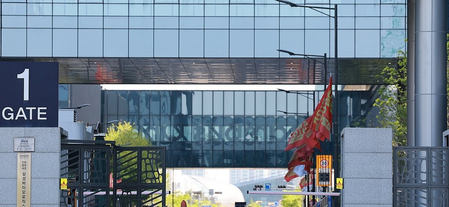
Seoul, May 5 (IANS) Unionised workers at Samsung Biologics, the biotech arm of Samsung Group, continued their first general strike for a fifth day on Tuesday, demanding higher wages and expanded performance-based compensation.
The walkout began on Friday, with about 2,800 members out of the union's 4,000 members taking part, according to the union.
It marks the first strike since the company's establishment in 2011, reports Yonhap news agency.
After wrapping up the five-day strike, the union plans to shift to a work-to-rule campaign on Wednesday.
The unionised workers are demanding a 14 percent increase in base pay and performance-related pay, a one-time cash incentive of 30 million won (US$20,390) per worker, and bonuses equivalent to 20 percent of annual operating profit.
The company has proposed a combined 6.2 percent increase in base and performance pay.
The two sides resumed talks on Monday but failed to reach an agreement. They plan to hold two more meetings later this week to narrow their differences.
The unionised workers staged a three-day partial strike last month, which the company said caused at least 150 billion won (US$101.5 million) in losses.
"Our decision to respond to the labour ministry's arbitration request during the walkout was part of our sincere efforts to sort the issue out through dialogue," a company source said.
The representative urged the labour union to stop its "irrational" demands and collective action and return to the negotiation table.
During the first arbitration meeting held last week, the labour union reportedly demanded the company change all of its bargaining committee members as a prerequisite for talks.
Around 2,800 of 4,000 unionised members have participated in the collective action, according to the company's labour union.
The company claims the walkout could cause at least 640 billion won worth of damage, which is equivalent to around half of the company's sales for the first quarter.
—IANS
na/