
IIT Madras unveils world’s most detailed 3D Atlas of human brainstem
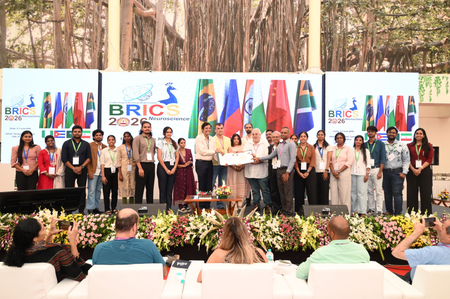
New Delhi, June 12 (IANS) The Indian Institute of Technology Madras (IIT Madras) on Friday said it has released ANCHOR (Atlas of Neurochemical Characterisation of the human brainstem with 3D Reconstruction), the world’s most detailed three‑dimensional atlas of the human brainstem.
ANCHOR was developed by the Sudha Gopalakrishnan Brain Centre through its high throughput brain imaging and computing platform that transforms whole human brains into 3D cell-resolution atlases, the statement from IIT Madras said.
ANCHOR comprises the most comprehensive, multimodal, 3D maps and atlases of the human brainstem to date spanning from prenatal period to childhood and adult brains.
The researchers have made ANCHOR publicly available through a website to ensure that this cutting-edge research benefits researchers, clinicians and patients around the world.
The statement noted that the publicly available atlas encompasses over 200 brainstem nuclei and fibre tracts reconstructed from hundreds of serial sections, using eight complementary immunostains overlaid across more than 500 sections, enabling detailed mapping.
ANCHOR was released at the 3rd BRICS Neuroscience Symposium, held from June 5-7, 2026, at the IIT Madras campus.
SGBC aims to build the most comprehensive set of cell resolution human brain maps across life span and diseases.
The centre aims to image over 100 whole brains across human lifespan and neurological diseases.
The centre has become a truly global interdisciplinary team featuring over 200 researchers, engineers and technicians working with 20 collaborators from different countries, the statement added.
“This is a significant accomplishment in the field of neurobiology. This is a multimodal framework integrating MRI, histology and detailed chemo‑architecture,” said Prof. Ajay Kumar Sood, Principal Scientific Adviser to the Government of India.
These maps will help in identifying specific cell populations affected in brain stem lesions which could be critical for clinical applications, he added.
"The centre is a unique example of how risk taking by a public agency led to an advanced technology platform for doing big science and that was then scaled by private and philanthropic support to produce world-class results in frontier areas of human brain sciences,” Sood noted.
—IANS
aar/pk
Rohit Sharma joins FITTR as investor and equity partner

New Delhi, June 12 (IANS) FITTR on Friday announced that Indian cricketer Rohit Sharma has joined the company as an investor and equity partner, deepening his association with the health and fitness platform after earlier becoming its first brand ambassador.
However, the company did not disclose the size of the investment.
According to FITTR, the partnership is built around a shared focus on promoting sustainable health habits, consistency and informed lifestyle choices, with the aim of making fitness and preventive health more accessible to a wider population.
Sharma spent several months engaging with founder and CEO Jitendra Chouksey and the leadership team to understand the business, its long-term growth plans and broader mission before deciding to come on board as an investor, the company said.
Jitendra Chouksey, founder and CEO of FITTR, said the world is witnessing a sharp rise in lifestyle-related health concerns and stressed the need to return to fundamentals such as movement, nutrition and consistency.
“At FITTR, we have always believed there are no shortcuts to good health. Rohit not only shares this belief but also lives it every day. We are delighted that our discussions have now evolved into him joining us as an investor and partner,” Chouksey said.
Rohit Sharma said his decision followed a close assessment of the company’s business model and growth trajectory.
“I have spent time with the team, understood the business and seen the growth opportunity first hand. The fundamentals are strong, the mission is clear and there is an opportunity to create meaningful and lasting impact by helping people adopt healthier lifestyles. Doubling down was an easy decision,” Sharma said.
The partnership marks another milestone in FITTR’s growth journey as it looks to expand its preventive health ecosystem and encourage individuals to take greater control of their long-term health and wellbeing, according to the company.
--IANS
ag/
WHO releases updated heat-health action plans guidance
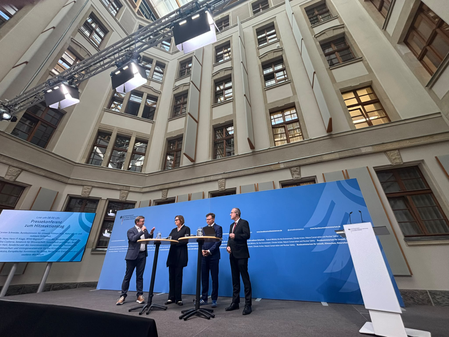
Berlin, June 11 (IANS) The World Health Organisation Regional Office for Europe (WHO/Europe) on Thursday released its updated Heat-Health Action Plans Guidance, providing a scientific framework for governments worldwide to organise heat protection measures effectively.
In a press release, WHO/Europe said the new guidance provides evidence-based recommendations around eight core elements, including improving local heat-warning systems and strengthening risk communication with vulnerable groups, Xinhua news agency reported.
Compared with the first WHO guidance published in 2008, the new version incorporates the latest findings from research and practice, it said.
According to the press release, extreme heat is contributing to a rising number of heat-related health problems and premature deaths worldwide each year. Cardiovascular diseases, in particular, occur more frequently or worsen under the influence of heat. Meanwhile, urbanisation and the growing proportion of people at increased risk, including older people and those with pre-existing health conditions, are making prolonged heatwaves a growing threat to public health.
"Europe is warming faster than any other continent ... More than 200,000 people across Europe have died from heat in just the last four years. We can prevent these deaths with the right systems in place," said WHO Regional Director for Europe, Hans Henri P Kluge wrote on X.
"Heat is a silent killer, but it is not an inevitable one," he said, adding that the new guidance provides authorities with a clear roadmap for building heat preparedness systems that save lives.
“Our ambition is bold: zero heat-related deaths. We have the knowledge. We have the roadmap. Together, we can achieve it, he noted.
WHO/Europe said that most premature deaths due to extreme heat in Europe have occurred in Italy, followed by Spain, Germany and Greece, while Greece has recorded the highest number per million inhabitants. Data from Germany's Robert Koch Institute showed that Germany recorded about 2,500 heat-related deaths in 2025, with older people and those with pre-existing conditions particularly affected.
–IANS
ksk/as
India’s pharma market likely to reach $120-130 bn by 2030: Report

New Delhi, June 11 (IANS) India’s pharmaceutical market is expected to grow to $120-130 billion by 2030 from an estimated $55 billion in 2025, and pharmaceutical exports have crossed $30 billion in FY25, a report said on Thursday.
The report from ASSOCHAM said India supplies around 20 per cent of the world’s generic medicines by volume and contributes over half of UNICEF's vaccine procurement requirements, underlining the country's role in global healthcare supply chains.
The next phase of growth will be driven by innovation, advanced therapies, artificial intelligence‑led drug discovery, biosimilars and regulatory excellence, according to ASSOCHAM Secretary General Saurabh Sanyal.
Sanyal said that India has built a strong reputation as a global supplier of affordable medicines and vaccines, due to its strong manufacturing capabilities, scientific talent and policy ecosystem.
He also emphasised the need for higher investment in research and development, stronger industry-academia collaboration, future-ready talent and globally aligned regulatory standards.
The industry chamber expects future growth to be driven by a global patent cliff on biologics, accelerating demand for affordable advanced therapies, advances in artificial intelligence-driven drug discovery, and geopolitical realignment of pharmaceutical supply chains.
The report highlighted that biologics generating over $40 billion in annual revenues are expected to lose exclusivity between 2025 and 2029, creating significant opportunities for biosimilar manufacturers. The global biosimilars market, valued at $39.6 billion in 2025, is projected to reach $151.6 billion by 2033.
India's bioeconomy has exceeded $150 billion and is projected to reach $300 billion by 2030, with biologics and biopharma expected to be key growth drivers.
Government initiatives such as Biopharma SHAKTI, Bio-RIDE and the BioE3 Policy are helping create an integrated ecosystem linking research, manufacturing and commercialisation, the report noted.
The report outlined five strategic priorities for India Pharma 2030 — global regulatory alignment and quality leadership; translational science and innovation financing; biologics and cell and gene therapy manufacturing leadership; pharma talent and research capability development; and domestic access, innovation adoption and Global South leadership.
India’s pharmaceutical exports will expand to $75-80 billion by 2030 if these priority areas are focused, the industry body noted.
—IANS
aar/pk
India ready to lead next wave of biopharma innovation: Anupriya Patel
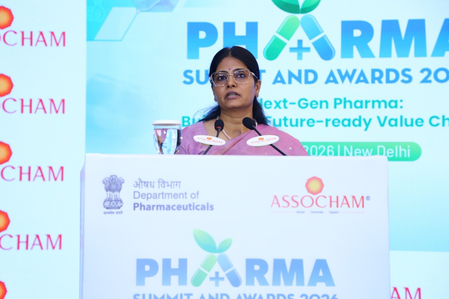
New Delhi, June 11 (IANS) India is rapidly emerging as a global pharmaceutical powerhouse and is well-positioned to lead the next wave of biopharmaceutical innovation, Union Minister of State for Health & Family Welfare and Chemicals & Fertilisers Anupriya Patel said on Thursday.
While addressing ASSOCHAM's Pharma Summit & Awards 2026, she highlighted the government's efforts to strengthen domestic manufacturing, promote innovation, and build a resilient healthcare ecosystem capable of driving the country's long-term growth in pharmaceuticals and biotechnology.
“India is rapidly strengthening its position as a global pharmaceutical powerhouse while preparing to lead the next wave of biopharmaceutical innovation,” she stated.
“India's journey towards becoming Atmanirbhar in pharmaceuticals and biotechnology is not only an economic objective but also a strategic necessity,” the minister mentioned.
Highlighting the impact of the Production Linked Incentive (PLI) schemes, she noted that India has significantly enhanced domestic manufacturing of active pharmaceutical ingredients (APIs) and critical drugs, reducing dependence on imports across key pharmaceutical inputs.
The minister described biopharmaceuticals as India's next strategic frontier and said the recently announced Rs 10,000 crore Biopharma Shakti Mission reflects the government's strong commitment to innovation-led healthcare.
“The mission aims to facilitate the development of at least 100 biologics by 2047 and position India as a global hub for advanced therapies, novel biologics and next-generation healthcare solutions while strengthening its leadership in affordable generic medicines,” Patel stated.
"The future of pharma will belong to those who innovate, collaborate and build for the world, and India is ready to lead," she added.
She called for stronger collaboration among government agencies, industry, academia, startups, investors, regulators and healthcare institutions to enhance research capabilities, manufacturing strength, supply chain resilience and global quality standards.
Addressing the gathering, Manoj Joshi, Secretary, Department of Pharmaceuticals, Ministry of Chemicals & Fertilizers, said the Indian pharmaceutical industry is entering a new phase of growth driven by innovation, quality, regulatory excellence and global competitiveness.
ASSOCHAM Past President Anil K. Agarwal said the pharmaceutical sector is at a defining moment where innovation, regulatory excellence and collaborative partnerships can help establish India as a global leader in advanced healthcare solutions.
--IANS
pk
Govt holds scientific conclave to boost pharma quality compliance
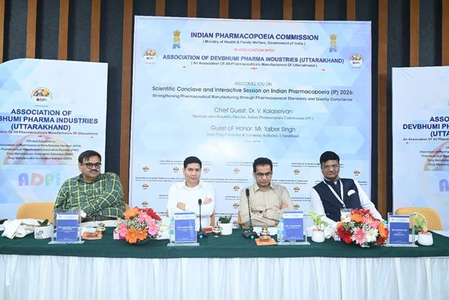
New Delhi, June 11 (IANS) A scientific conclave and interactive session on the Indian Pharmacopoeia (IP) 2026 was held in Haridwar to raise awareness of new provisions under IP and promote quality compliance across the pharmaceutical manufacturing sector, the government said on Thursday.
Indian Pharmacopoeia Commission (IPC), an autonomous institution under the Ministry of Health and Family Welfare, organised the conclave, in collaboration with the Association of Devbhumi Pharma Industries and affiliated Uttarakhand pharmaceutical associations.
The event brought together manufacturers, quality control and assurance professionals, regulatory authorities, analytical scientists and drug testing laboratory personnel to discuss recent developments in pharmacopoeial standards and their implementation in the pharmaceutical industry.
Uttarakhand is one of India’s leading pharmaceutical manufacturing hubs and has been among the states effectively utilising the IP and Indian Pharmacopoeia Reference Substances for ensuring the quality, safety, and efficacy of medicines.
The conclave was organised in the state to further strengthen industry awareness, support compliance with pharmacopoeial requirements, and promote the consistent adoption of IP standards across the pharmaceutical sector, thereby providing handholding support to pharmaceutical manufacturers and other stakeholders in the state.
Dr V Kalaiselvan, Secretary‑cum‑Scientific Director, IPC, underscored the role of the IP in establishing scientifically validated quality standards for medicines and supporting India’s growing stature as a global pharmaceutical leader.
He highlighted the key advancements incorporated in IP 2026 and stressed industry participation in ensuring the effective implementation of pharmacopoeial requirements.
Technical deliberations and knowledge-sharing interactions were conducted on key aspects of the IP, including recent developments in pharmacopoeial standards, reference substances, microbiological quality requirements, quality management systems, analytical investigations and biological standards.
The sessions provided participants with practical insights into the application of IP standards in pharmaceutical manufacturing and quality control.
The event concluded with a networking session, enabling continued dialogue among regulators, industry representatives, and scientific experts on advancing pharmaceutical quality and compliance in Uttarakhand and across the country.
—IANS
aar/pk
NCH warns against misleading statements on Homoeopathy, urges factual and responsible public discourse

New Delhi, June 10 (IANS) The National Commission for Homoeopathy (NCH) on Wednesday issued an advisory calling on media organisations, institutions and the public to exercise responsibility and ensure factual accuracy while making statements about Homoeopathy and registered homoeopathic practitioners.
In an advisory issued through a circular, the Commission called upon media organisations, healthcare institutions, professional bodies and social media users to ensure factual accuracy before making public statements regarding Homoeopathy or registered homoeopathic practitioners.
NCH Chairperson Dr. Tarkeshwar Jain said the Commission had taken serious cognisance of instances where defamatory and unsubstantiated remarks about Homoeopathy were being circulated across print, electronic, digital and social media platforms.
He stressed the importance of responsible communication and fact-based discussions concerning the medical system.
Dr. Jain noted that Homoeopathy is a legally recognised system of medicine under the National Commission for Homoeopathy Act, 2020.
He also pointed out that homoeopathic medicines are regulated under the Drugs and Cosmetics Act, 1940, and that education in the field is conducted through a structured academic framework prescribed by the Commission.
According to the NCH chief, admissions to undergraduate and postgraduate Homoeopathy programmes are made through candidates who qualify the National Eligibility-cum-Entrance Test (NEET).
He added that registered homoeopathic practitioners undergo prescribed education and training and are authorised to practise in accordance with applicable laws and regulatory provisions.
The advisory emphasised that any complaints, allegations or concerns regarding the conduct of an individual practitioner should be addressed through established statutory, regulatory, disciplinary or judicial channels rather than through broad generalisations against the profession as a whole.
The Commission reiterated its commitment to maintaining standards of education, professional conduct and ethical practice in Homoeopathy while safeguarding the dignity and lawful standing of registered practitioners.
Dr. Jain further stated that the Commission may pursue appropriate action, including legal recourse where necessary, against deliberate attempts to spread baseless, misleading or defamatory information about Homoeopathy and its practitioners.
The NCH said the advisory was issued as part of its mandate to regulate and uphold standards in Homoeopathy and to promote informed and responsible public discourse on the subject.
--IANS
pk
Five women suffer kidney failure after delivery in Bikaner hospital; govt orders probe
Jaipur, June 9 (IANS) Close on the heels of maternal deaths in Kota, a serious medical concern has surfaced at PBM Hospital in Bikaner, where five women developed severe complications, including kidney failure, after giving birth.
The affected women experienced a deterioration in their health days after delivery, prompting concern among hospital authorities and the state government. Following reports of the incident, Rajasthan Health Minister Gajendra Singh Khimsar convened a high-level meeting at Swasthya Bhawan on Tuesday to review the situation. Senior health department officials attended the meeting, during which the minister sought a detailed report on the circumstances surrounding the cases.
Addressing the media after the meeting, Khimsar emphasised that the Bikaner incident should not be linked to the Kota case, stating that the two situations are distinct and occurred under different circumstances. He noted that the Bikaner cases emerged over different periods and involved both Caesarean and normal deliveries. A comprehensive inquiry has been ordered, and officials have been directed to submit a detailed report.
The minister acknowledged that infection-control systems and hospital monitoring mechanisms require strengthening. He said the government is exploring the possibility of engaging third-party agencies to conduct regular inspections of hospitals and assess operational standards across the state.
According to hospital officials, five women became critically ill 10 to 15 days after delivery. Of them, two had undergone Caesarean sections, while three delivered normally. All five women are currently admitted to the Intensive Care Unit (ICU) and are undergoing dialysis. A 20-year-old woman from Phalodi remains in critical condition and is receiving treatment on a ventilator.
Preliminary reports indicate that the women suffered complications, including urinary retention, infections, low platelet counts, and kidney failure. PBM Hospital Superintendent B.C. Ghiya said that while pregnancy-related complications are not uncommon, there has been a noticeable increase in such cases over the past week. A team of specialists has been assigned to monitor and treat the patients.
The hospital administration has constituted a committee of specialist doctors to investigate the possible causes behind the complications, including infection, excessive bleeding, and other medical factors. Officials said the findings of the inquiry will be shared with the state government once the report is completed.
Meanwhile, family members of the affected women have alleged that they were not provided adequate information about the patients’ condition and treatment. The investigation is ongoing, said officials.
Khimsar directed officials to ensure that all affected patients receive the best possible medical care and that a comprehensive medical and administrative inquiry is conducted into each case. He stated that, at first glance, the incident does not appear to involve negligence. However, if any lapse or negligence is found during the investigation, strict action will be taken against those responsible in accordance with the rules.
The minister said an impartial inquiry covering all aspects of the matter is underway and that conclusions will be drawn only after a thorough examination of the facts. He urged the public to rely solely on verified and official information regarding the case.
He also said that instructions have been issued to strengthen infection-control measures, ensure strict adherence to treatment protocols, and maintain quality standards in hospitals. He emphasised that the state government is closely monitoring the situation and that no compromise will be tolerated in patient care.
Senior officials present at the meeting included Principal Secretary, Medical and Health Department, Gayatri Rathore; Commissioner, Medical Education, Babulal Goyal; RMSCL Managing Director, Pukhraj Sen; Drugs Controller, T. Shubhamangala; and SMS Medical College Principal, Deepak Maheshwari.
--IANS
arc/dan
Apple’s parental control enhancements to strengthen child privacy on devices: Analysts

New Delhi, June 9 (IANS) At a time when regulatory scrutiny around children's online safety is intensifying globally, Apple's new parental control enhancements are consistent with its privacy-first positioning, analysts said on Tuesday.
At the ‘WWDC 26’ annual conference, Apple unveiled its upcoming software releases that bring powerful and intuitive new features to help parents create safe digital experiences for kids.
By setting up a child's account, parents can immediately enable age-appropriate protections across the system, and with Setup Assistant, parents can choose exactly which apps to make available and stay in control of what gets added over time.
With communication safety features, parents can require approval for each new contact their kids connect with and enable automatic interventions if explicit or violent content is being shared.
“More broadly, digital wellbeing is emerging as a genuine platform differentiator. The platform most credibly positioned as a safe environment for children holds a meaningful structural advantage,” said Prabhu Ram, VP–Industry Research Group, CMR.
Apple’s vertically integrated hardware and software model enables a more consistent, deeply integrated parental control experience, whereas delivering the same level of uniformity across the broader Android ecosystem remains structurally more challenging.
“Apple is repositioning its AI value proposition around privacy, utility, and deep ecosystem integration — with a more capable, context-aware, and deeply personal Siri AI at the centre,” said Ram.
While ‘WWDC 25’ was defined by Liquid Glass, 2026 is all about Siri.
“Apple, though late to the party, has lived up to expectations with Siri AI, thanks to the Gemini partnership. The implementation looks extremely promising. Apple is viewing AI with the user at the centre of it. The usage of world knowledge, personal context, and on-screen awareness combined with app actions creates an end-to-end implementation,” said Counterpoint Research Director Tarun Pathak.
If iOS 27 delivers a genuinely conversational Siri as promised, Apple will reset the narrative and enter the iPhone 18 supercycle with its most compelling upgrade story in years.
“As AI builds a more personal context, the advent of Siri AI, could be the ultimate Apple ecosystem lock-in,” he noted.
Besides Siri AI, the second most important highlight from the event was the child privacy.
“Higher screen time and what a child has access to in their phones in private is one of the key anxiety points of a parent. Apple has worked a lot towards solving this by building multiple guardrails and giving greater control to a parent on what their child can see, access and even who they can talk to,” said Pathak.
—IANS
na/
Piyush Goyal invites global pharmaceutical firms to join India’s innovation journey
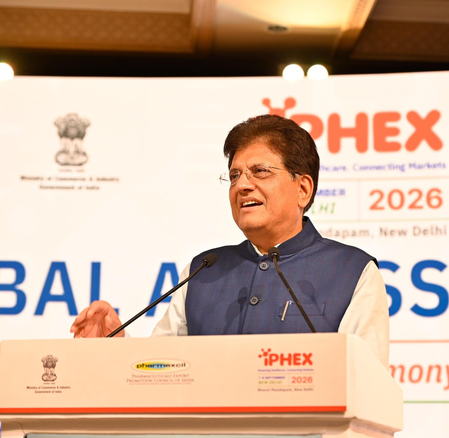
New Delhi, June 8 (IANS) India is looking to move beyond generics into innovation-driven pharmaceutical products while continuing to provide affordable medicines to patients across the world, Commerce Minister Piyush Goyal said on Monday.
He invited global pharmaceutical companies to partner with India in its journey towards innovation-led and inclusive healthcare, stating that India's pharmaceutical industry, currently valued at around $60 billion, can double in size over the next five years.
Addressing the Global Ambassador Meet on Pharmaceutical Sector and Curtain Raiser Ceremony of GDRC (Global Drug Regulatory Conclave) 2026 and IPHEX (International Pharmaceuticals and Healthcare Exhibition) 2026 here, Goyal said India sees itself as an integral part of global pharmaceutical supply chains and a trusted partner for countries across the world, whether as a customer, innovator, technology partner, clinical trial destination, or manufacturing hub.
India remains the world's fastest-growing large economy even amid global turbulence, including conflicts in Ukraine and West Asia and the imposition of 50 per cent tariffs by the United States.
He noted that India's economy grew by 7.7 per cent at constant prices during the year ended March 2026.
The minister further said that India is prepared to provide market access to high-quality innovative pharmaceutical products from partner countries, noting that India has received preferential market access, including zero-duty access for many pharmaceutical products, under its free trade agreements.
Over the past 12 years, under the leadership of Prime Minister Narendra Modi, expanding the international footprint of Indian industry has been a key priority.
He noted that India has entered into nine Free Trade Agreements in recent years and now has trade agreements covering more than 50 countries, with preferential market access available across most of the developed world.
Goyal said millions of patients worldwide benefit from affordable medicines supplied by India. He noted that while generic medicines account for 80-90 per cent of the volume of medicines sold in the United States, they represent only about 10-15 per cent of the value, underlining the affordability and societal value of generic medicines.
He said India has aligned its Good Manufacturing Practices framework with global benchmarks. He noted that approximately 65-70 per cent of World Health Organisation vaccine requirements are sourced from India and that 10 of the world's 25 largest generic pharmaceutical companies operate from India.
He further stated that India has the highest number of US FDA-approved pharmaceutical manufacturing plants outside the United States.
On innovation, Goyal said India's patent filings have increased by nearly 100 per cent in recent years.
—IANS
na/