
Dalai Lama undergoes successful left knee replacement surgery

Dharamsala, June 8 (IANS) His Holiness the Dalai Lama underwent a successful left knee replacement surgery at Apollo Hospital in New Delhi on Monday, said a medical bulletin.
It recalled that in June 2024, His Holiness underwent a successful right knee replacement at the Hospital for Special Surgery in New York City and made an excellent recovery.
“Following today’s procedure, His Holiness returned to his hospital room in stable condition. His recovery is progressing well, and he remains in good spirits,” his personal physicians Tsetan D. Sadutshang, Tamdin Tsewang, Tsering Lhadon, and Tenzin Tsundue said in a statement.
They added that the medical, nursing, and administrative teams at Apollo Hospital had been providing exceptional care, support, and attention, and expressed gratitude for their professionalism, dedication, and kindness.
After recovery, he is scheduled to visit Ladakh toward the end of June for an extended stay, his office said.
The 90-year-old Tibetan monk lives in exile in McLeodganj, a hill station in the suburbs of Dharamsala, Himachal Pradesh. The spiritual leader, a symbol of Buddhism, loves travelling across the remote, mountainous Ladakh region bordering Tibet to give audiences to people of all faiths, often drawing criticism from China.
One of his aides told IANS that the Dalai Lama has been visiting Ladakh for over 50 years, as locals share a special bond with him based on their faith and kindness. His last visit was in July 2025.
His Holiness will also attend a public programme in honour of his 91st birthday on July 6, likely in Leh.
The Dalai Lama, who fled Tibet in March 1959 after a failed uprising against Chinese rule, advocates a “middle-way” approach, seeking greater autonomy for Tibet rather than outright independence.
Beijing regards him as a “separatist” and is sensitive to his meetings with international leaders, attendance at official functions, or visits at the invitation of the Indian government.
--IANS
vg/dan
West Bengal set to become 36th state/UT to implement Ayushman Bharat PM-JAY
New Delhi, June 7 (IANS) West Bengal is poised to become the 36th State/Union Territory in the country to implement the Ayushman Bharat Pradhan Mantri Jan Arogya Yojana (AB PM-JAY), marking a major milestone in India's journey towards universal health coverage and equitable healthcare access, the Ministry of Health and Family Welfare said on Sunday.
The formal induction of the state into the flagship health insurance scheme will take place on Monday through the signing of a Memorandum of Understanding (MoU) between the National Health Authority (NHA), under the Ministry of Health and Family Welfare, and the Department of Health and Family Welfare, Government of West Bengal.
The MoU signing ceremony will be presided over by Union Health Minister J.P. Nadda and attended by senior leaders and officials from both the Centre and the state. Among those expected to be present are West Bengal Chief Minister Suvendu Adhikari, Union Ministers of State Pratap Rao Jadhav and Anupriya Patel, Union Health Secretary Punya Salila Srivastava, and West Bengal Chief Secretary Manoj Kumar Agarwal.
The inclusion of West Bengal under AB PM-JAY is expected to significantly expand healthcare coverage in the state by providing eligible families with health insurance coverage of up to Rs 5 lakh per year for secondary and tertiary hospitalisation.
The scheme aims to reduce the financial burden of medical expenses on vulnerable households and improve access to quality healthcare services through a vast network of empanelled public and private hospitals.
Since its launch, Ayushman Bharat PM-JAY has emerged as a key pillar of India's healthcare system, offering financial protection against catastrophic health expenditures and enabling millions of beneficiaries to access treatment without worrying about the cost of care.
With West Bengal joining the programme, eligible residents of the state will also benefit from the portability feature of the scheme, allowing them to avail cashless treatment at empanelled hospitals across the country. Officials believe the move will not only strengthen healthcare delivery in the state but also contribute to the broader goal of ensuring affordable and accessible healthcare for every citizen.
--IANS
pk
Elon Musk flags India’s falling birth rate as fertility drops below replacement level

New Delhi, June 7 (IANS) SpaceX CEO Elon Musk has drawn attention to India's declining birth rate, highlighting that the country's fertility rate has fallen below the replacement level required to maintain population stability.
In a post on social media platform X, Musk said, "India's birth rate has fallen below replacement. Among those most educated, India's birth rate fell below replacement many years ago."
Musk was responding to data shared by media outlet AF Post, which noted that India's total fertility rate (TFR) has dropped below the replacement threshold of 2.1 children per woman for the first time in the country's history. According to the post, India's fertility rate declined from 2.3 to 1.9 over the past decade.
It also highlighted that Delhi's fertility rate has fallen to 1.2, lower than that of Finland.
The AF Post report cited a June 4 article published by The Economist, which argued that India's population could begin shrinking in the coming years and may decline at a faster pace than previously anticipated.
The trend was also highlighted in the United Nations Population Fund's (UNFPA) 2025 State of World Population Report.
The report stated that India's total fertility rate has fallen to 1.9 births per woman, below the replacement level of 2.1. A fertility rate below replacement level means that, in the absence of migration, a population will eventually begin to decline as each generation becomes smaller than the one before it.
Despite the decline in fertility, India remains the world's most populous nation with a population exceeding 1.46 billion. The country overtook China in 2023 to claim the top position globally.
The UNFPA noted that while India has made significant progress in healthcare and education, major challenges remain. According to the agency, wide social and economic inequalities persist, while maternal mortality and gender discrimination continue to pose concerns in several parts of the country.
The organisation also pointed to early marriage and teenage pregnancies as key factors contributing to maternal deaths among women under the age of 24.
Experts have long observed that rising education levels, urbanisation, increased workforce participation among women and changing family preferences have contributed to declining fertility rates across many regions of India.
--IANS
pk
Sakina Itoo, Sajad Lone criticise Mehbooba Mufti for chairing AIIMS Awantipora review meeting
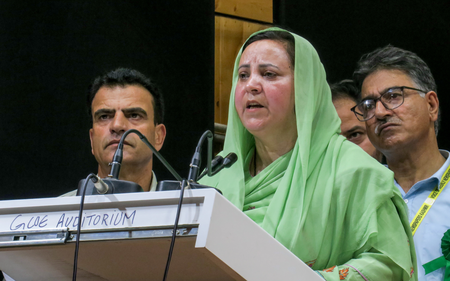
Srinagar, June 6 (IANS) J&K Health Minister Sakina Itoo and sitting MLA Sajad Lone criticised former chief minister and opposition Peoples Democratic Party (PDP) president Mehbooba Mufti for chairing a review meeting of the developmental works of AIIMS in Awantipora town of Anantnag district.
J&K Health and Medical Education Minister Sakina Itoo took on Mufti for her decision to chair the review meeting of AIIMS Awantipora.
Sakina Itoo said on X that some people seemed to be suffering from political amnesia, behaving as if they were still in power despite losing office in 2018 and being repeatedly rejected by the people.
She added that the elected government today was led by Chief Minister Omar Abdullah, and questioned in what capacity former rulers were conducting reviews of the AIIMS Awantipora project.
She asked which power centre in Delhi was directing such actions.
Itoo remarked that it was ironic that those responsible for the AIIMS project's slow pace were now trying to claim ownership of its progress. She stressed that the project was moving towards completion due to the focused efforts, monitoring, and commitment of the present government under Omar Abdullah.
Sajad Lone also criticised Mehbooba Mufti on X, questioning her authority to chair a review meeting of a central institution without being an MLA. He argued that if she could do so, then RSS or BJP non-MLA functionaries could also claim similar rights, given their larger representation.
He asked what stopped leaders like Farooq Abdullah, Ghulam Nabi Azad, or Nirmal Singh from chairing such meetings, and whether such political entitlement existed elsewhere in India. Lone said Mehbooba Mufti may have opened the door for unelected and politically undesirable individuals to chair similar meetings in Kashmir.
He urged the Chief Minister to clarify these issues, stating that the event amounted to constitutional impropriety. Lone emphasised that even the Union health minister could not redesign constitutional roles, and that Mehbooba Mufti’s action remained an unconstitutional trespass.
Earlier, Lone had said that irony had died a thousand deaths in Kashmiri politics during Mufti's chairmanship of the review meeting. He described it as a constitutional crisis and a direct hit at the competencies of the elected government.
He questioned in what capacity she chaired a meeting of an institution under the BJP-led central government, asking whether there was any notification, government order, or special authorisation. He warned that such actions could lead to a third power centre in J&K, further disempowering institutions.
The controversy began when Mehbooba Mufti chaired the review meeting of AIIMS in Awantipora on Thursday. She told reporters that setting up the institution was her father, late Mufti Mohammad Sayeed's, dream, and she was happy to see it realised.
--IANS
sq/dan
Over 1.20 crore senior citizens enrolled under ABVV scheme

New Delhi, June 6 (IANS) More than 1.20 crore senior citizens have been enrolled under the Ayushman Bharat Vay Vandana scheme, which has delivered over 13.84 lakh treatments worth Rs 3,000 crore, the government said on Saturday.
The Mission Indradhanush drive vaccinated 5.46 crore children and 1.32 crore pregnant women who had not been immunised earlier, the statement noted.
The share of zero-dose children -- those who have received no vaccines at all -- fell from 0.11 per cent of the population in 2023 to 0.06 per cent in 2024.
The government runs the Universal Immunisation Programme (UIP), which targets 2.67 crore newborns and 2.9 crore pregnant women annually, offering free vaccines against 12 diseases.
Highlighting broader health system gains over the past 12 years, the government said over 44 crore families have been insured under government schemes and over 1.86 lakh primary care centres have been operationalised.
Generic medicines are now available at prices 50–90 per cent below market rates through over 18,000 Jan Aushadhi Kendras.
"Over 47 crore telemedicine consultations have been delivered. Medical colleges in India have more than doubled. 12 new AIIMS have been functional since 2014.
Traditional medicine has been formally integrated into the public health system," the statement said.
The government has more than doubled capacity to train doctors and nurses to meet rising healthcare demand, it added.
Ayushman Bharat Pradhan Mantri Jan Arogya Yojana (AB PM-JAY) provides free public health insurance up to Rs 5 lakh per family per year to socio-economically deprived families.
Such families make up about 40 per cent of the population, or about 12 crore families. The insurance saves these families from catastrophic healthcare bills.
Under the scheme, over 44.14 crore Ayushman Cards were created, 12.03 crore hospitalisations were covered along with treatment worth Rs. 1,80,435 crore. Around 36,218 hospitals were empanelled including 19,659 public hospitals and 16,559 private hospitals.
—IANS
aar/ag
Gujarat govt reviews statewide expansion of cardiac care
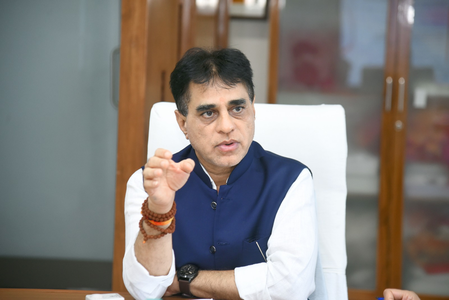
Gandhinagar, June 3 (IANS) Gujarat's health authorities have reviewed plans to expand specialised cardiac treatment across the state, with the U.N. Mehta Cardiac Institute reporting 8,504 successful heart surgeries and more than 3.94 lakh outpatient consultations during 2025.
A high-level review meeting on the expansion of cardiac services was held in Gandhinagar under the chairmanship of the state Health Minister Praful Pansheriya on Wednesday.
The meeting examined the state's cardiac healthcare infrastructure, the progress of new treatment centres, and measures to strengthen access to specialised heart care.
Addressing the meeting, Pansheriya said the state government was continuing its efforts to ensure that citizens receive advanced, high-quality healthcare services across Gujarat.
"With the objective of ensuring that citizens of Gujarat receive advanced and quality healthcare services within the state, the state government is continuously working in the health sector under the guidance of Chief Minister Bhupendra Patel and Deputy Chief Minister Harsh Sanghavi," he said.
Reviewing the U.N. Mehta Cardiac Institute's performance in 2025, the minister highlighted what he described as an exceptional year for the institution.
"During the year 2025, the institute carried out 8,504 successful cardiac surgeries. In addition, more than 3.94 lakh patients were examined through OPD services, and around 52,167 critically ill patients received treatment under IPD services," Pansheriya said.
The meeting included a detailed review of construction work on the satellite centres of the U.N. Mehta Cardiac Institute, planned to become operational in Porbandar, Bhavnagar, Surat, and Sola in Ahmedabad.
The minister assessed the progress of the projects and issued directions to expedite their completion.
Pansheriya also reviewed the functioning of the institute's existing centres in Gandhinagar and Rajkot, including the facilities and services currently available at both locations.
According to officials, discussions focused on the planned and systematic expansion of cardiac services across Gujarat to improve access to specialised treatment closer to patients' homes.
The minister said Gujarat was increasingly attracting patients from outside the state due to its healthcare infrastructure.
"Gujarat today is emerging not only as a highly reliable and modern healthcare hub for the citizens of the state, but also for patients coming from other states of the country and from abroad," he said.
He added that the government remained committed to ensuring access to quality treatment for all sections of society.
"The state government is fully committed to ensuring that every poor and middle-class patient receives quality, accessible, and modern treatment along with a humane touch," Pansheriya said.
The meeting was held as part of efforts to further strengthen the government's "Healthcare with Humanity" approach.
--IANS
mys/dan
Rajasthan ranks second nationally as ABHA accounts cross 7.19 crore
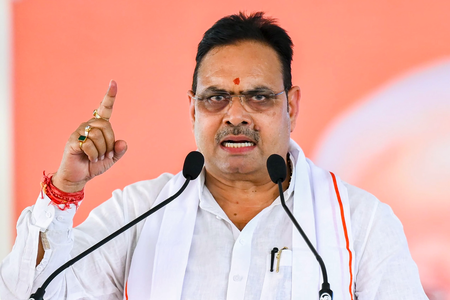
Jaipur, June 2 (IANS) Rajasthan has emerged as one of the leading states in India's digital healthcare transformation, securing the second position nationwide with more than 7.19 crore Ayushman Bharat Health Account (ABHA) IDs created under the Ayushman Bharat Digital Mission (ABDM).
The achievement comes as the country crossed the landmark figure of 90 crore ABHA accounts in 2026, marking a major milestone in the government's efforts to build a citizen-centric digital healthcare ecosystem.
Officials said the initiative is helping strengthen healthcare delivery by enabling citizens to securely access, store and share their health records digitally.
Under the leadership of Prime Minister Narendra Modi and Chief Minister Bhajanlal Sharma, Rajasthan has been expanding healthcare services while simultaneously adopting digital technologies to improve accessibility, transparency and efficiency in the health sector.
The ABHA ID serves as a unique digital health identity that allows individuals to securely link and manage their medical records with their consent.
The system ensures that patients can access their health information through their mobile phones while facilitating seamless healthcare services across hospitals and healthcare providers.
Data released under the Ayushman Bharat Digital Mission shows steady growth in ABHA account creation over the years. The number of accounts nationwide increased from 14.7 crore in 2021 to 30.4 crore in 2022 and 50.6 crore in 2023, 72.2 crore in 2024, 84.5 crore in 2025, and has now crossed the 90-crore mark in 2026.
Health officials said ABHA is a key pillar of India's digital health architecture, enabling the creation of longitudinal health records across hospitals, clinics, laboratories and digital health platforms.
The system gives citizens greater control over their healthcare information while ensuring data privacy and transparency. Under the Ayushman Bharat Digital Mission, every registered citizen receives a unique 14-digit ABHA Health ID, which acts as a digital repository for medical records. Laboratory reports, prescriptions, diagnostic records and information on pre-existing conditions can be securely stored and accessed through the platform.
The digital system reduces the need for patients to carry physical documents during hospital visits and allows healthcare providers to access past medical history after obtaining the patient's consent. Officials say this helps doctors make informed treatment decisions and improves continuity of care.
Supporting this initiative is the Integrated Hospital Management System (IHMS), an ABDM-compliant software platform that enables hospitals to link Electronic Health Records (EHRs) with ABHA IDs, creating a more integrated and efficient healthcare delivery system.
Officials believe the growing adoption of ABHA accounts will further strengthen Rajasthan's digital healthcare infrastructure and improve access to quality healthcare services across urban and rural areas alike.
--IANS
arc/rad
China’s ‘lying flat’ trend stems from one‑child policy, one-sided manufacturing growth

New Delhi, June 2 (IANS) Rejection of careerist competition among young Chinese popularly known as “lying flat” movement stemmed from China’s one‑child policy, a new report has said.
The report from Japan Times argued that the one‑child policy reduced the number of high‑consumption households and weakened household bargaining power.
One‑child policy pushed the share of household disposable income in GDP from about two-thirds in the 1980s down to about 44 per cent, Yi Fuxian, a senior scientist at the University of Wisconsin-Madison said in the report.
The drop in household disposable income pushed down Chinese domestic consumption and job creation. It also led to extensive industrial subsidies, which have produced a "pathological manufacturing boom."
"China now accounts for 17 per cent of global GDP and 28 per cent of global manufacturing value-added, but only 12 per cent of global household consumption," the report noted.
Further, the weakening social safety net, compelled workers to log longer hours to make ends meet.
"Competition for employment is so intense that those who hold a job feel pressure to work overtime just to keep it. The average Chinese work week has risen to around 49 hours — and as high as 60 hours in some cases — compared to 38 hours in the United States, 33 in Germany, 37 in Japan and 42 in Vietnam," the report said.
Long working hours also deprive young people of time to build relationships, marry or have kids further exacerbating China’s population decline.
The report highlighted a mismatch between surging higher‑educational attainment and an underdeveloped services sector that remains too small to absorb graduates.
Annual graduates rose from 1.01 million in 2000 to 12.22 million in 2025, but the services sector--the main employer for recent graduates-- accounts for roughly 47 per cent of jobs far below levels in advanced economies.
The report highlighted that millions of young Chinese don't have the "privilege of lying flat". They can neither find stable employment nor rely on family support, and are forced into the gig economy, as food deliverers, ride-hailing drivers, couriers or live-streamers.
—IANS
aar/pk
Govt issues Ebola advisory, says no cases detected yet
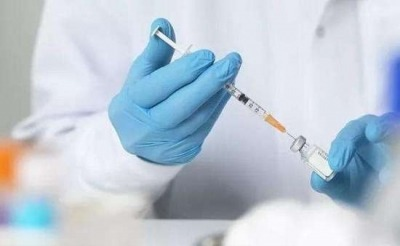
New Delhi, June 2 (IANS) The Ministry of Health and Family Welfare on Tuesday issued a public health advisory on Ebola virus disease, stating that no cases have been reported in India so far while urging heightened vigilance among individuals who have recently travelled through Ebola-affected countries.
The government stressed the importance of early reporting of symptoms.
“Health advisory on Ebola disease. As on June 2, 2026, there are no cases of Ebola disease reported in the country,” the ministry said in a post on X.
Stressing the importance of early reporting of symptoms, it noted that timely action could save lives and help prevent the spread of the disease.
The advisory comes amid a fresh outbreak of Ebola in parts of Africa, prompting health authorities worldwide to strengthen surveillance and issue precautionary guidelines.
The Ministry advised anyone who has travelled from or transited through an Ebola-affected country within the past 21 days to closely monitor their health.
Individuals developing symptoms such as fever, headache, muscle pain, vomiting, diarrhoea or unexplained bleeding have been asked to isolate themselves immediately and inform local health authorities.
“However, if you have travelled from or transited through an Ebola-affected country in the last 21 days and develop symptoms such as fever, headache, muscle pain, vomiting, diarrhoea, or unexplained bleeding, etc., isolate yourself and inform local health authorities,” it explained.
Authorities also urged the public to seek information and assistance through the government's 24x7 Health Helpline, 1075.
“Early reporting can save lives and help prevent the spread of disease,” the ministry mentioned.
Ebola virus disease is a severe and often fatal illness that affects humans. According to the World Health Organisation, the disease has an average fatality rate of around 50 per cent, although mortality rates have ranged from 25 per cent to as high as 90 per cent during previous outbreaks.
The virus spreads through direct contact with the blood, secretions, organs or other bodily fluids of infected people or animals.
Health experts emphasise that prompt identification and isolation of suspected cases are critical to containing transmission.
The Ministry's advisory highlights a 21-day monitoring period for travellers from affected regions, reflecting the maximum known incubation period of the Ebola virus -- the time between exposure and the onset of symptoms. The duration is widely used by global health agencies for surveillance and contact-tracing efforts.
--IANS
pk
ESIC launches centralised digital patient feedback system across hospitals
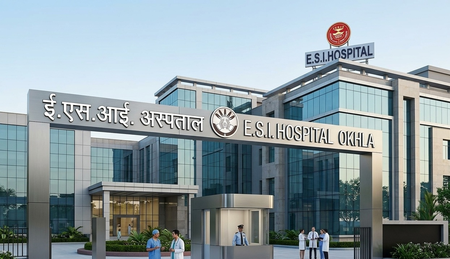
New Delhi, June 1 (IANS) The Employees' State Insurance Corporation has launched a centralised online patient feedback system across all hospitals and dispensaries nationwide to capture real‑time patient experience on cleanliness, staff behaviour and medicine availability, an official statement said on Monday.
The system is equipped with OTP validation, multilingual support, and real-time monitoring dashboards to instantly flag service ratings below 3 for immediate corrective action, the statement from the Ministry of Labour & Employment said.
The digital platform enables Insured Persons (IPs) and beneficiaries to seamlessly share their healthcare experiences, raise specific concerns, and provide actionable suggestions for institutional improvement.
To ensure wider participation and absolute ease of access, the system offers multiple feedback channels for the beneficiaries. After availing services through the ESIC HIS (Dhanwantri) Module beneficiaries receive a direct feedback link via SMS.
Beneficiaries can also quickly share their feedback by scanning QR codes displayed on customized, multilingual posters prominently placed at all OPDs and hospital locations.
Feedback can also be submitted directly through the official ESIC website, the statement noted.
The user-friendly interface requires patients to simply scan the QR code using their mobile devices, enter their IP Number, rate their experience, and submit their feedback in a matter of seconds.
To translate patient feedback into immediate administrative action, the system integrates robust, role-based digital dashboards, the ministry said.
It helps in continuous monitoring at headquarters, regional offices and local ESI health facilities.
The system validates IP details through OTP verification to ensure authenticity of feedback. Further it prevents duplicate submissions and supports multiple languages to widen participation.
Critical issues are automatically flagged when service ratings fall below 3, helping relevant authorities to take timely and targeted corrective actions.
Additionally, the platform supports the performance ranking of all healthcare facilities, thereby promoting a culture of continuous improvement, healthy competition, and strict institutional accountability, the statement said.
—IANS
aar/ag