
Indian Pharmaceutical Market records 12 pc growth in May: Report

New Delhi, June 17 (IANS) The Indian Pharmaceutical Market (IPM) posted 12.1 per cent year-on-year growth in May 2026, marking its sixth consecutive month of double-digit expansion and the most sustained high-growth run in over two years, a report said on Wednesday.
The report from Equirus Securities said Indian pharmaceutical companies, which account for 83 per cent of the IPM, registered growth of 11.9 per cent in May, while multinational companies grew 13.3 per cent during the month.
IPM growth improved to 10.7 per cent on a moving annual total (MAT) basis in May 2026, supported by a well-balanced growth mix of volume at over 3.2 per cent, price at over 4.5 per cent and new Introductions at over 3 per cent.
The report noted that all three growth levers improved simultaneously, indicating broad-based market expansion.
The firm highlighted simultaneous strength in both chronic and acute therapies during the month.
Chronic therapies reached a series-high growth of 14.6 per cent, with their share rising to 40.6 per cent of the market, led by cardiac segment at over 14.7 per cent and anti-diabetic at over 14.5 per cent.
Acute therapies also touched a series-high growth of 8.3 per cent, the report noted.
Therapy growth remained broad-based, with nine of the 10 key therapies recording double-digit growth during the month compared with six therapies in March.
Vitamins, Minerals, and Nutrients (VMN) therapy segment led growth at 15.6 per cent, followed by cardiac and anti-diabetic therapies.
Respiratory therapies rebounded to 10.9 per cent, while anti-infectives remained the only therapy below double-digit growth at 8.1 per cent, although this represented a recovery from earlier lows.
“Within anti-diabetics, Mounjaro (GLP-1) continued to drive growth, followed by the Dapagliflozin-Metformin-Sitagliptin combination. In the cardiac segment, Cilnidipine-Telmisartan recorded the highest growth of 28 per cent, followed by Sacubitril-Valsartan,” the report said.
—IANS
aar/ag
Women’s health and digital inclusion see sharp improvement in India: Report

New Delhi, June 17 (IANS) National Family Health Survey (NFHS)‑6 results released by the Health Ministry in May showed significant gains in women’s maternal healthcare access, reproductive health and financial and digital inclusion, a report said on Wednesday.
The report from SBI Research noted material progress over a period of 3 years in terms of child stunting, vaccination, improved health delivery across women and fertility transition.
However, it outlined the need to spend more on holistic healthcare for children as certain child nutritional indicators lagged.
The frequency of NFHS surveys (first initiated in 1992-93) used to happen at highly irregular intervals of roughly 7 years, which was even extended to 10 years.
Subsequently, the gap has been reduced to a fixed 3-year interval under the current government to have a better tracking of indicators.
The survey found that while stunting among children has declined sharply, wasting and underweight rates have shown modest improvement.
States with higher medical & health expenditure as a share of gross state domestic product tend to record larger reductions in underweight and stunting.
The report highlighted a major health transition as the share of women who are overweight or obese rose from 12.6 per cent in 2005–2006 to 30.7 per cent in 2023–2024, signalling growing non‑communicable disease risks such as obesity, diabetes and hypertension.
India’s total fertility rate remained at 2.0 in both NFHS‑5 and NFHS‑6, while contraceptive prevalence rose from 66.7 per cent to 69.1 per cent.
Child marriage has declined substantially, but it has not been eliminated. The proportion of women aged 20–24 who were married before legal age fell from 47.4 per cent in 2005–06 to 20.1 per cent in 2023–24.
This represents a major social and health gain, but the fact that one in five young women still enters marriage early continues to have implications for education, fertility, labour-force participation, and long-term health outcomes.
Women’s financial and digital inclusion is increasingly becoming a channel for health delivery. The proportion of women using their own bank or savings account increased from 78.6 per cent in NFHS-5 to 89 per cent in NFHS-6, while the share of women who had ever used the internet nearly doubled to 64.3 per cent.
—IANS
aar/ag
Kerala forms high-powered panel amid disease spike
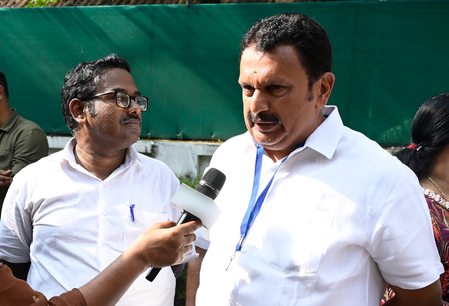
Thiruvananthapuram, June 16 (IANS) With communicable diseases continuing to spread across Kerala, the state government has stepped up its response by constituting a high-power committee of health experts to strengthen disease surveillance and containment measures, Health Minister K. Muraleedharan said on Tuesday.
Muraleedharan on Tuesday said the committee would assess the prevailing disease situation and submit recommendations on disease control, medicine availability, and stock management.
The minister stressed that the rise in infectious diseases was not due to any individual lapse and pointed out that expanded testing had led to greater detection of cases.
The committee will function under the chairmanship of public health expert Dr S.S. Lal, with Principal Secretary, Health, Dr Sharmila Mary Joseph serving as coordinator.
Lal has served at the WHO in the past. In the 2021 assembly polls, he contested as a Congress candidate from the Kazhakootam assembly constituency but lost.
The committee would also include senior professionals from the Indian Medical Association and experts from other sectors for effective coordination.
In addition, district-level action committees have been formed to coordinate preventive measures and public health interventions.
The minister said special monitoring would also be undertaken in areas vulnerable to diseases such as Nipah.
He added that adequate stocks of medicines were available across the state and that directions had been issued to close unhygienic food establishments and intensify inspections of packaged drinking water and mineral water units.
The government also attributed delays in pre-monsoon sanitation and cleaning drives to the election period, which affected the timely implementation of preventive measures in several areas.
Meanwhile, disease surveillance data indicate a worrying rise in Shigella infections.
From January to the middle of this month, Kerala has reported 146 Shigella cases, including 70 cases this month alone.
Five deaths linked to the infection have been recorded so far in Malappuram, Kozhikode, and Thrissur districts.
Kozhikode continues to report the highest number of infections in the state.
According to the minister, the district has recorded 74 cases, including 22 cases reported this month.
Fresh cases have also emerged elsewhere.
With the onset of the monsoon and a rise in disease incidence, health authorities are urging the public to maintain hygiene, ensure safe drinking water and seek medical attention promptly if symptoms develop.
--IANS
sg/vd
India’s insurance market gains global appeal amid regulatory reforms: Report

New Delhi, June 16 (IANS) Recent regulatory changes including higher foreign direct investment limits and relaxed governance requirements, increased allure of India's insurance market to international insurers and reinsurers, a report said on Tuesday.
Further, new players and rising reinsurance capacity are making India’s insurance market more competitive creating broader coverage options, higher limits and more favourable terms for buyers, the report from professional services firm Aon plc said.
Competition is accelerating, driving price reductions and offering more flexible coverage across multiple lines, it noted.
"Insurers continue to reduce pricing across most lines, with double-digit reductions observed in property, directors and officers and cyber, while casualty and automobile lines are experiencing more moderate decreases," the firm said.
Capacity remains abundant as reinsurers and insurers expand their appetite, supported by the growth of financial hubs such as Gujarat International Finance Tec‑City.
“India presents a compelling growth opportunity for insurers, driven by regulatory reform, expanding reinsurance capacity and increased competition,” said Sushant Sarin, managing director and head of Commercial Risk in India for Aon, said.
Meanwhile, insurers are evolving their underwriting approach with overall conditions remaining flexible, but greater discipline applied in casualty and directors and officers and maintaining rigorous standards in cyber as claims activity increases.
The report also showed that buyers in India are increasingly using favourable market conditions to strengthen their risk profile.
“Increased limits are widely available, and broader coverage is being offered across most lines except cyber, where insurers remain more cautious. Demand for liability and cyber solutions is also growing as organisations become more aware of emerging and evolving risks,” the report added.
“Clients are increasingly moving beyond price and taking a more strategic approach to insurance purchasing. This includes reinvesting savings into improved coverage, higher limits and programme structures aligned with evolving risk exposures,” said Shantanoo Saxena, chief broking officer in India for Aon.
—IANS
aar/pk
Doctor’s prescription now mandatory to buy cough syrups, say new Centre guidelines (Lead)
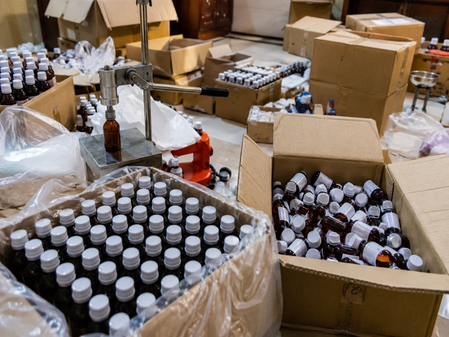
New Delhi, June 16 (IANS) The Centre on Tuesday prohibited the over-the-counter (OTC) sale of syrup-based medicines, including cough syrups, without a doctor's prescription by amending the Drugs Rules, 1945.
The move comes after the government removed the word "syrups" from a category of exempted drugs under Schedule K, tightening regulatory oversight of such formulations.
The change was notified through the Drugs (Fifth Amendment) Rules, 2026, and is aimed at strengthening regulatory control over the manufacture, sale and distribution of syrup formulations.
'Schedule K' of the Drugs Rules, 1945 contains categories of drugs that are exempt from certain provisions of the law governing their manufacture, sale and distribution, subject to specified conditions. These exemptions were originally introduced to facilitate easier access to certain medicines by relaxing some compliance requirements under defined circumstances.
Before the amendment, the provision allowed cough syrups to be sold in villages with a population of less than 1,000 without requiring compliance with certain retail sale licensing norms. With the latest change, the exemption will no longer apply to cough syrups.
Now, the sale and dispensing of cough syrups in such villages will now have to be carried out only through duly licensed pharmacies in accordance with the Drugs and Cosmetics Act, 1940, and the Drugs Rules, 1945.
In addition, the Health Ministry said the amendment has been introduced to strengthen regulatory oversight of syrup formulations and align the exemption framework with current public health and safety requirements.
According to the ministry, the measure is expected to promote responsible distribution and sale of cough syrups while ensuring greater compliance with regulatory standards across the country.
Moreover, the ministry advised manufacturers, distributors and retailers dealing in cough syrups to ensure strict adherence to all applicable licensing and regulatory requirements under the Drugs and Cosmetics Act and the Drugs Rules.
As a result, consumers will now need a valid prescription from a registered medical practitioner to purchase such medications.
--IANS
pk
Doctor’s prescription now mandatory to buy cough syrups, say Centre’s new guidelines (Lead)
New Delhi, June 16 (IANS) The Centre on Tuesday prohibited the over-the-counter (OTC) sale of syrup-based medicines, including cough syrups, without a doctor's prescription by amending the Drugs Rules, 1945.
The move comes after the government removed the word "syrups" from a category of exempted drugs under Schedule K, tightening regulatory oversight of such formulations.
The change was notified through the Drugs (Fifth Amendment) Rules, 2026, and is aimed at strengthening regulatory control over the manufacture, sale and distribution of syrup formulations.
'Schedule K' of the Drugs Rules, 1945 contains categories of drugs that are exempt from certain provisions of the law governing their manufacture, sale and distribution, subject to specified conditions. These exemptions were originally introduced to facilitate easier access to certain medicines by relaxing some compliance requirements under defined circumstances.
Before the amendment, the provision allowed cough syrups to be sold in villages with a population of less than 1,000 without requiring compliance with certain retail sale licensing norms. With the latest change, the exemption will no longer apply to cough syrups.
Now, the sale and dispensing of cough syrups in such villages will now have to be carried out only through duly licensed pharmacies in accordance with the Drugs and Cosmetics Act, 1940, and the Drugs Rules, 1945.
In addition, the Health Ministry said the amendment has been introduced to strengthen regulatory oversight of syrup formulations and align the exemption framework with current public health and safety requirements.
According to the ministry, the measure is expected to promote responsible distribution and sale of cough syrups while ensuring greater compliance with regulatory standards across the country.
Moreover, the ministry advised manufacturers, distributors, and retailers dealing in cough syrups to ensure strict adherence to all applicable licensing and regulatory requirements under the Drugs and Cosmetics Act and the Drugs Rules.
As a result, consumers will now need a valid prescription from a registered medical practitioner to purchase such medications.
--IANS
pk/
Better healthcare infrastructure reducing referrals outside Tripura, says CM
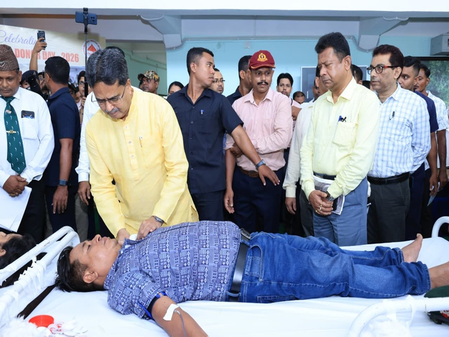
Agartala, June 14 (IANS) Tripura Chief Minister Manik Saha on Sunday said that blood donation is one of the greatest gifts to humanity and stressed the need to create greater awareness about voluntary blood donation to encourage more people to participate in the noble cause.
Inaugurating a blood donation camp organised by the Health Department at Pragya Bhavan here to mark World Blood Donor Day, the Chief Minister said that increased public awareness and participation in voluntary blood donation programmes would help ensure the availability of adequate blood supplies for patients in need across the state.
Saha, who also holds the Health and Family Welfare portfolio, said that blood donation not only saves lives but also provides donors with an opportunity to become more aware of their own health condition through regular medical screening.
“Everyone should come forward with a positive attitude towards all forms of donation, including blood donation. At the same time, a proper balance must be be maintained between blood collection and blood utilisation. At present, there are 14 blood banks functioning across the state. Blood component separation centres have also been established in various hospitals to strengthen transfusion services,” he said.
The Chief Minister said that continuous improvements in the state's healthcare infrastructure have significantly enhanced medical services and gradually reduced the number of patients being referred outside Tripura for treatment.
“Due to the steady development of health infrastructure in the state, referral cases are gradually declining. At present, kidney transplant procedures are being successfully conducted in Tripura. The government is also planning to introduce liver transplant facilities in the future,” said Saha, who is himself a dental surgeon.
He reiterated the state government's commitment to further strengthening and modernising the healthcare delivery system to provide advanced medical services to people within the state itself.
Highlighting the progress made in the medical education sector, the Chief Minister said that alongside infrastructure development, opportunities for medical education have expanded considerably in recent years.
“Currently, the state has around 550 MBBS seats and nearly 200 postgraduate medical seats in three medical colleges. The government is continuously working to improve medical education and healthcare services in a comprehensive manner,” he added.
During the programme, 48 voluntary blood donors who had donated blood on different occasions were felicitated in recognition of their service to society.
The Chief Minister also honoured seven individuals who have donated blood three to four times and unveiled the cover of the Health Department's quarterly magazine, 'Swasthya Sangbad'.
Among those present at the event were Dr Biswajit Debbarma, Secretary of the Tripura Blood Transfusion Society; Dr Debashree Debbarma, Director of Health Services; and B.K. Roy, President of the Tripura State Branch of the Indian Red Cross Society.
--IANS
sc/pgh
India to fast-track Ebola vaccine production amid Africa outbreak: Report

New Delhi, June 13 (IANS) India is set to play a key role in the global response to the ongoing Ebola outbreak in Central Africa, with the Serum Institute of India (SII) fast-tracking the development and production of a vaccine candidate targeting the Bundibugyo strain of the virus, according to a report.
A report by Modern Diplomacy showed that the initiative is being undertaken in collaboration with the University of Oxford and the Coalition for Epidemic Preparedness Innovations (CEPI), with support from the World Health Organization (WHO) and the Africa Centres for Disease Control and Prevention (Africa CDC).
The vaccine candidate -- known as ChAdOx1 BDBV -- is designed to protect against the Bundibugyo ebolavirus, a relatively rare strain currently linked to the outbreak in the Democratic Republic of Congo (DRC) and parts of Uganda, it said.
Unlike the more widely known Zaire strain of Ebola, there is currently no approved vaccine for the Bundibugyo variant, making the development effort particularly significant.
The vaccine uses the same viral vector technology platform that was deployed for the Oxford-AstraZeneca Covid-19 vaccine, enabling faster manufacturing and scale-up once clinical-grade doses are ready for testing.
WHO has accelerated the assessment process for the vaccine candidate as global health agencies seek to contain the outbreak and prevent further spread of the disease.
According to available reports, more than 1,500 suspected Ebola cases and over 650 deaths have been recorded in the DRC and Uganda since the outbreak began earlier this year.
WHO Director-General Tedros Adhanom Ghebreyesus recently said a vaccine against the Bundibugyo strain could help control the current epidemic and strengthen preparedness for future outbreaks.
Africa CDC Director-General Jean Kaseya has also confirmed that the vaccine will be manufactured by the Serum Institute of India.
Meanwhile, India has reported no active Ebola cases. However, health authorities and airports have heightened surveillance measures, including screening and isolation protocols for travellers arriving from affected regions.
Experts have described the Ebola outbreak as a global health concern, with governments and vaccine developers racing to strengthen preparedness and accelerate vaccine development efforts.
--IANS
ag/
US tightens licensing requirements for certain medical device exports to N. Korea
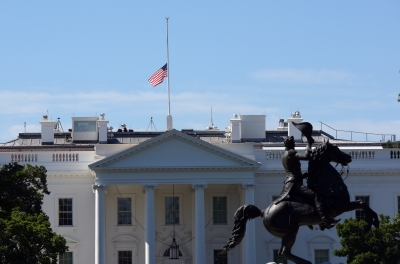
Washington, June 13 (IANS) The US Treasury Department has published a list of medical devices requiring "specific authorisation" for export to North Korea, a Federal Register notice showed, apparently tightening licensing requirements for the items amid North Korea's advancing nuclear and missile threats.
On Thursday, the department's Office of Foreign Assets Control (OFAC) released the list of medical devices that may not be exported or reexported to North Korea under a general license that authorises the exportation to the North of certain agricultural commodities, medicine and medical devices.
The items on the new list require specific authorisation from the OFAC for exports to North Korea, the office said. The list took effect on Thursday, reports Yonhap news agency.
The list includes oxygen generators, pumps with flow rates of more than one litre per minute and diagnostic medical imaging equipment, such as gamma imaging equipment, tactile imaging equipment and thermography equipment.
Also on the list are laboratory items, such as freeze-drying and spray-drying equipment, decontamination showers, laboratory shakers and incubator shakers, and carbon dioxide incubators.
The licensing requirements could curb the exportation of dual-use items that could be used for both civilian and military purposes at a time when Pyongyang has been doubling down on its weapons programs in the absence of dialogue with Washington or Seoul on its nuclear program.
Meanwhile, a senior South Korean official has said that it is "too early" to say whether President Lee Jae Myung would meet U.S. President Donald Trump for a summit on the sidelines of the Group of Seven (G7) summit in France next week.
The remarks by the presidential official on Thursday came as both Lee and Trump are expected to attend the G7 gathering set to take place in Evian from Monday to Wednesday.
Lee is scheduled to attend the G7 summit from Tuesday to Wednesday as the head of an invited partner, marking the second consecutive year South Korea has been invited to the event. "Dialogue can take place if opportunities are facilitated, but it is difficult to comment on the possibility of arranging it for now," the official noted.
--IANS
na/
State-specific roadmaps needed for achieving leprosy-free India: Health Ministry
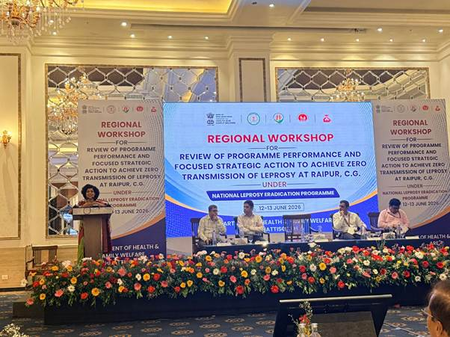
Nava Raipur, June 12 (IANS) Stressing the need for state-specific roadmaps to achieve a leprosy-free India, Additional Secretary, Health and Family Welfare, Aradhana Patnaik, said on Friday that intensified, targeted interventions are needed to completely interrupt transmission in hotspot areas.
Speaking at the two-day Regional Workshop on Review of Programme Performance and Focused Strategic Action for Achieving Zero Transmission of Leprosy in Nava Raipur, Patnaik highlighted India's achievements in reducing the burden of leprosy, according to an official statement.
She said the country had achieved elimination of the public health problem at the national level in 2005, cautioning that transmission persists in several endemic districts and hotspot areas, necessitating intensified, targeted interventions to completely interrupt transmission.
Highlighting the epidemiological landscape, Patnaik informed participants that five high-priority states — Maharashtra, Chhattisgarh, Jharkhand, Odisha, and Madhya Pradesh — together account for nearly 50 per cent of India's leprosy burden.
She noted that these states also have a substantial number of districts reporting prevalence rates above 1 case per 10,000 population, including 23 in Chhattisgarh, 21 in Jharkhand, 18 each in Maharashtra and Odisha, and 10 in Madhya Pradesh.
Underscoring the importance of early diagnosis and prompt treatment, she emphasized the need for periodic Leprosy Case Detection Campaigns in endemic areas, according to the statement.
She also called for strengthening contact tracing and expanding the coverage of Post-Exposure Prophylaxis (PEP) through Single-Dose Rifampicin (SDR) among eligible healthy contacts of index cases, particularly in vulnerable and hard-to-reach populations.
Encouraging states to increase contact screening and PEP coverage, she noted that these interventions are critical for reducing disease transmission and preventing new infections.
Patnaik emphasised that while substantial progress has been achieved, the challenge now lies in sustaining gains and accelerating action in the remaining endemic pockets.
Stressing accountability, timely decision-making, and effective programme implementation, she urged states to regularly review progress, identify implementation bottlenecks, and undertake corrective measures.
She highlighted the importance of capacity building, Information, Education and Communication (IEC) activities, and convergence under the National Health Mission framework to strengthen programme implementation.
She advocated leveraging Community-Based Assessment Checklists (CBAC), the Rashtriya Bal Swasthya Karyakram (RBSK), and the Rashtriya Kishor Swasthya Karyakram (RKSK) platforms to enhance screening and early detection of leprosy.
Patnaik also guided State and District Leprosy Officers on the effective utilisation of flexi-pool resources available under the National Health Mission and called upon all participating states to maintain momentum towards achieving zero transmission.
--IANS
rch/dan