
Over 65,000 NCC cadets perform yoga in Bengal, Sikkim ahead of International Yoga Day tomorrow
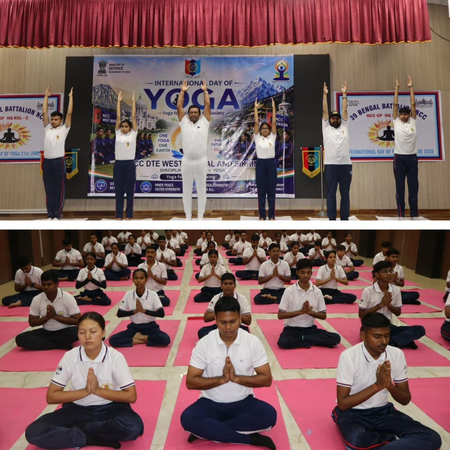
Kolkata, June 20 (IANS) More than 65,000 National Cadet Corps (NCC) cadets participated in yoga celebrations conducted across 215 locations in West Bengal and Sikkim till now since June 18, officials said on Saturday.
These events were held ahead of the upcoming International Yoga Day 2026 on Sunday.
This year's theme is "Yoga for Healthy Ageing" and the participation of the cadets highlighted the growing commitment of India's youth towards fitness, well-being and holistic living.
Prime Minister Narendra Modi has already reached Kolkata and will participate in the International Yoga Day celebrations at the Red Road in Kolkata on Sunday.
The flagship event for the cadets was organised at the NCC Training Institute in Kolkata under the aegis of the NCC West Bengal and Sikkim Directorate.
The Additional Director General of NCC West Bengal and Sikkim Directorate, Major General Amar Pal Singh Chahal, participated in the celebrations and was received on arrival by the Kolkata ‘B’ NCC Group Headquarters Group Commander Brigadier Krishnendu Das.
The yoga session was conducted by renowned yoga practitioner Visharad Anju Mishra, who guided cadets through a series of asanas, pranayama and meditation exercises designed to promote physical fitness, mental resilience and long-term wellness.
"Cadets, officers, associate NCC officers and staff members participated enthusiastically, reflecting the NCC's commitment to nurturing healthy and responsible citizens," an officer said.
Olympic medallist and Tennis legend Leander Paes, recipient of the Padma Bhushan, Padma Shri, Arjuna Award and Major Dhyan Chand Khel Ratna, participated in the session and addressed the cadets.
Paes spoke about the importance of discipline, determination and perseverance in overcoming challenges and achieving excellence.
"The harder the battle, the sweeter is the victory," he said, sharing a lesson from his illustrious sporting career.
This message resonated strongly with the young audience.
The tennis ace also expressed his support for future NCC initiatives in sports, fitness and wellness.
"The celebrations were conducted in the spirit of the vision of Prime Minister Narendra Modi, whose initiative at the United Nations led to the adoption of the International Day of Yoga and transformed it into a global movement promoting health, harmony and sustainable living," the officer added.
"The NCC continues to serve as a unique platform for fostering national integration by bringing together youth from diverse social, cultural and linguistic backgrounds," officials said.
The event also reflected the rich heritage and inclusive ethos of West Bengal, a land renowned for its contribution to India's freedom movement, intellectual renaissance and cultural legacy.
As thousands of cadets performed yoga in unison across the Directorate, the celebrations stood as a powerful symbol of a healthier, stronger and more cohesive India, inspired by the NCC motto of "Unity and Discipline".
--IANS
jayanta/khz
Ayush Ministry invites citizens for International Day of Yoga celebrations (Lead)
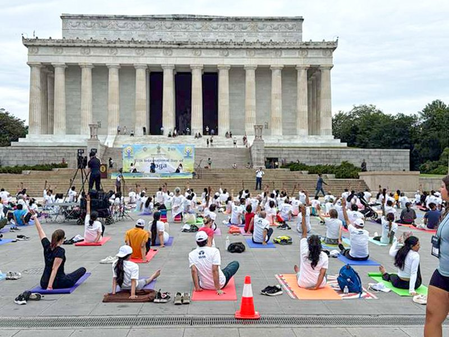
New Delhi, June 20 (IANS) The Ministry of Ayush has called on citizens across India to join the 12th International Day of Yoga celebrations on June 21 in large numbers to be part of "historic celebration of health, harmony and the country’s timeless yoga tradition," an official statement said on Saturday.
The ministry said that celebrations will be held across 23 States and Union Territories, with special events organised at prominent public locations in Delhi.
People can participate in yoga sessions at designated venues across the National Capital Region, including major parks, sports complexes, heritage sites and community spaces, it said.
The Ministry of Ayush called upon citizens, organisations, institutions and communities to reach their nearest yoga venue on time and practise the Common Yoga Protocol together.
“The main event will be held at the historic Red Road in Kolkata under the leadership of Prime Minister Narendra Modi. On this occasion, the entire nation will come together to practise the Common Yoga Protocol and share India’s message of yoga with the world,” said Union MoS Ayush Ministry Prataprao Jadhav.
The Ministry of Culture is also organising special IDY 2026 celebrations at 100 iconic locations across the country, bringing together India’s rich cultural heritage, historic landmarks and the timeless tradition of yoga.
The Archaeological Survey of India (ASI), under the Ministry of Culture, is organising IDY 2026 celebrations at 100 iconic locations across India, highlighting the unique connection between India’s rich civilisational heritage, historic monuments and the ancient tradition of yoga.
"Citizens are encouraged to arrive early, participate with enthusiasm and become part of this historic celebration that reflects the spirit of Jan Bhagidari and India’s commitment towards taking yoga’s message of health, harmony and well-being to the world," the ministry noted.
—IANS
aar/pk
Centre bans 16 fixed dose combination drugs over safety and efficacy concerns

New Delhi, June 20 (IANS) In a major move aimed at strengthening patient safety and ensuring the rational use of medicines, the Ministry of Health and Family Welfare on Saturday said that it has prohibited the manufacture, sale and distribution of 16 Fixed Dose Combination (FDC) drugs for human use across the country.
The ban has been imposed under Section 26A of the Drugs and Cosmetics Act, 1940, and has come into effect immediately.
The decision follows directions issued by the Supreme Court, which had called for a comprehensive review of Fixed Dose Combinations available in the Indian market.
Acting on these directions, the Drugs Technical Advisory Board (DTAB) constituted an Expert Committee to examine various FDCs and assess their safety, efficacy and therapeutic value.
After conducting a detailed scientific evaluation, the Expert Committee concluded that 16 FDCs lacked adequate therapeutic justification and that their continued use could pose potential health risks. Based on these findings, the government decided to prohibit these combinations, stating that the risks associated with their use outweighed any potential benefits.
The banned medicines belong to different therapeutic categories, including certain dermatological products, pain-relief and antispasmodic drugs, as well as some antibiotic-based formulations. The Ministry said that these combinations were found to be irrational and not supported by sufficient scientific evidence.
The Health Ministry emphasised that the action is part of the government's ongoing efforts to ensure that only safe, effective and scientifically validated medicines are available to the public. It noted that similar actions have been taken in the past against irrational drug combinations following extensive scientific reviews.
With the latest notifications now in force, the manufacture for sale, sale, distribution and supply of the identified 16 FDCs for human use stand prohibited nationwide with immediate effect.
The Ministry has directed all State Drug Controllers, regulatory authorities and enforcement agencies to strictly implement the ban and ensure compliance. Manufacturers, importers, distributors and other stakeholders have also been advised to take necessary steps to align with the provisions of the law and discontinue the affected products.
The government said the move reinforces its commitment to evidence-based healthcare and patient safety while promoting the rational use of medicines in the country.
--IANS
pk
From water yoga to marathon runs, India unites in wellness ahead of International Yoga Day

New Delhi, June 19 (IANS) As the country gears up for the 12th International Day of Yoga on June 21, a series of yoga-themed events, fitness drives and awareness programmes were organised across several states, reflecting the growing enthusiasm for the annual celebration of health and well-being.
In Prayagraj, Uttar Pradesh, a unique water yoga session was held at Bargad Ghat on the Yamuna River as part of the preparations for International Yoga Day. Participants performed yoga exercises in water, showcasing an innovative approach to combining fitness and aquatic activities.
Speaking to IANS, swimming coach Tribhuvan Nishad said that the initiative was inspired by Prime Minister Narendra Modi's call to promote yoga.
“At Navjeevan Swimming Academy, swimming has been taught for the past 40 years. After the Prime Minister's appeal for Yoga Day, we thought of introducing yoga to children as well. Since then, we have been organising water yoga every year. It helps boost immunity, improves stamina and contributes to overall physical well-being,” he said.
In Uttarakhand's capital, Dehradun, a 'Run for Yoga' event was organised to encourage fitness and spread awareness about the benefits of yoga. Chief Minister Pushkar Singh Dhami participated in the event and urged people to adopt healthy lifestyles through regular physical activity and yoga practices.
West Bengal also witnessed enthusiastic participation ahead of Yoga Day. In the South 24 Parganas district, Sonarpur North Assembly constituency MLA Debashish Dhar flagged off a two-kilometre Yoga Run and meditation walk. The event saw the participation of police personnel, local residents and wellness enthusiasts, all promoting the message of fitness, mindfulness and community well-being.
In Jammu, a three-day yoga programme was organised by Vishva Yoga Sansthan with the participation of students from various schools and local residents. BJP MLA Vikram Randhawa attended the programme as the chief guest and joined participants in performing yoga exercises.
A special yoga session was also conducted at Jammu Airport, where the Airport Director, CISF personnel, security staff and airport employees took part in various yoga activities. The event highlighted the growing adoption of yoga across workplaces and public institutions.
Meanwhile, in the Ramban district of Jammu and Kashmir, the Department of Youth Services and Sports organised a Yoga Day programme under the theme “Yoga for Healthy Ageing,” focusing on the role of yoga in maintaining physical and mental well-being among older adults.
In Srinagar, a floating yoga session was held for the first time on the Pokhribal waterbody.
In Haryana, a yoga camp was organised at Dera Baba Bhumanshah in Sirsa. Haryana Chief Minister Nayab Singh Saini attended the event as the chief guest and emphasised the importance of yoga in promoting a healthy and balanced lifestyle.
Rajasthan Chief Minister Bhajan Lal Sharma also participated in a yoga session in Jaipur ahead of the International Day of Yoga celebrations, encouraging citizens to incorporate yoga into their daily routines.
Observed annually on June 21, International Yoga Day brings together millions of people across the world to celebrate the ancient Indian practice. The word "Yoga" is derived from the Sanskrit root "yuj", meaning to join, unite or integrate. It symbolises harmony between mind and body, thought and action, and human beings and nature.
The theme for International Yoga Day 2026 is "Yoga for Healthy Ageing", highlighting yoga's role in enhancing vitality, resilience and independence among older adults while promoting preventive healthcare and holistic wellness.
This year marks the 12th edition of International Yoga Day. The proposal to observe the day globally was first put forward by Prime Minister Narendra Modi during his address to the United Nations General Assembly in September 2014, following which June 21 was officially designated as International Yoga Day by the United Nations.
--IANS
jk/uk
AIIMS Bhopal to mark International Yoga Day with focus on preventive healthcare
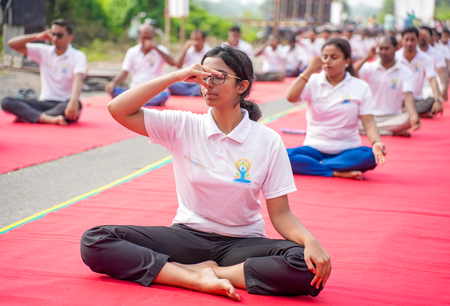
Bhopal, June 18 (IANS) AIIMS Bhopal will celebrate the International Day of Yoga on June 21 with a special programme centred on the theme “Yoga for Healthy Ageing”, underlining the growing importance of yoga in promoting physical, mental and emotional well-being across all stages of life.
The event will be organised by the Collaborative Centre for Mind Body Interventions through Yoga (CCMBIY–CCRYN) at AIIMS Bhopal.
As part of the observance, a mass yoga session will be conducted from 7 a.m. to 8 a.m. in front of Kautilya Bhawan on the institute’s campus, bringing together students, faculty members, healthcare professionals and members of the public.
According to AIIMS Bhopal, this year’s theme reflects the crucial role yoga can play in ensuring healthy and active ageing amid rising life expectancy and the growing burden of lifestyle-related diseases. The theme encourages people to adopt yoga as a lifelong practice that supports mobility, strength, mental clarity and emotional resilience in later years.
Executive Director of AIIMS Bhopal, Ajai Singh, said yoga is one of India’s most significant contributions to global health and wellness. He explained that yoga is not merely a form of physical exercise but a holistic system that harmonises the body, mind and spirit. Regular practice, he said, helps improve flexibility, balance, cardiovascular health and mental well-being while reducing stress and anxiety. In the context of healthy ageing, yoga can help individuals maintain independence, enhance quality of life and prevent many chronic health conditions.
He added that preventive healthcare is becoming increasingly important as non-communicable diseases such as diabetes, hypertension, obesity and cardiovascular ailments continue to rise. Yoga, he said, offers a simple, cost-effective and scientifically validated approach to disease prevention and health promotion. AIIMS Bhopal remains committed to encouraging healthy lifestyle practices through awareness campaigns, research and community outreach programmes.
The International Day of Yoga is observed globally on June 21, following the adoption of a United Nations resolution in 2014. Over the years, the annual event has evolved into a worldwide movement, with millions participating in yoga sessions to promote holistic health, harmony and well-being.
AIIMS Bhopal officials said participants in the June 21 programme will have the opportunity to practise yoga under expert guidance and gain insights into its role in managing stress, improving physical fitness and supporting healthy ageing. The institute expects the event to further strengthen awareness of preventive healthcare and inspire people of all ages to incorporate yoga into their daily routines.
The celebration forms part of AIIMS Bhopal’s broader efforts to promote wellness, disease prevention and community health through evidence-based interventions and public engagement initiatives.
--IANS
pd/dan
Japanese Encephalitis causes seven deaths in Assam; surveillance stepped up

Guwahati, June 18 (IANS) The National Health Mission (NHM), Assam, on Thursday clarified that Acute Encephalitis Syndrome (AES) and Japanese Encephalitis (JE) are distinct medical conditions and should not be reported interchangeably, while confirming that the state has recorded 35 Japanese Encephalitis cases and seven related deaths so far this year.
The clarification came amid reports that allegedly presented AES and JE figures together, leading to confusion over the actual disease burden in the state.
According to NHM Assam, Japanese Encephalitis is one of the causes of Acute Encephalitis Syndrome, but not all AES cases are JE cases.
The mission stressed that separate reporting of the two conditions is essential to ensure accurate public understanding of the disease situation.
Data available with the National Centre for Vector Borne Disease Control (NCVBDC) show that Assam has reported 35 confirmed JE cases and seven deaths due to the mosquito-borne disease up to June 17, 2026.
In contrast, the figures of 470 cases and 32 deaths that have appeared in some reports relate to Acute Encephalitis Syndrome and should not be interpreted as Japanese Encephalitis cases or fatalities, NHM Assam said.
"The reporting of AES and JE figures without proper distinction may create misunderstanding among the public. While JE is one of the important causes of AES, the two are not synonymous," an NHM Assam official said.
NHM Assam also highlighted the state government's preparedness measures ahead of the annual AES-JE season, which typically witnesses a rise in cases during the monsoon months.
Officials said surveillance activities have been intensified across districts, while healthcare facilities have been directed to strengthen case management and treatment protocols.
Efforts are also underway to enhance vaccination coverage in vulnerable areas and improve inter-departmental coordination for disease control.
The health mission appealed to media organisations, stakeholders and the public to rely on verified data and report AES and JE figures separately to avoid misinformation and unnecessary panic.
--IANS
tdr/pgh
Indian Pharmacopoeia standards comparable with leading global pharmacopoeias: Officials
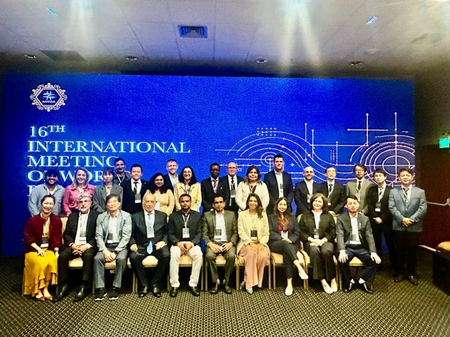
New Delhi, June 18 (IANS) The standards of the Indian Pharmacopoeia are comparable with leading international pharmacopoeias, and the country has been recognised for its leadership in developing and establishing quality standards for several medicines, the government said on Thursday.
A delegation from the Indian Pharmacopoeia Commission (IPC) led by Dr V Kalaiselvan, Secretary-cum-Scientific Director, along with Dr Pawan Saini and Dr Shruti Rastogi, participated in the 16th International Meeting of World Pharmacopoeias (IMWP) and the accompanying Stakeholders’ Meeting held in Brazil, from June 15-17. The meeting was coordinated by the World Health Organization (WHO).
Dr Kalaiselvan presented key updates on the Indian pharmacopoeia, highlighting recent advancements in pharmacopoeial standards, modernisation initiatives, and India's contributions towards global harmonisation of medicine quality standards.
India was also recognised for its leadership in developing and establishing quality standards for anti-tuberculosis medicines, anti-cancer therapeutics, blood and blood products, medicines used in the management of anaemia, and other complex pharmaceutical molecules, reflecting the country's growing scientific, regulatory, and pharmacopoeial capabilities.
According to Health Ministry, the Indian delegation contributed to discussions on modern microbiological methods, pharmacopoeial convergence, and environmental sustainability in pharmaceutical standards.
Dr Kalaiselvan showcased its role in strengthening public health through science-based standards and regulatory support, while emphasizing the importance of international cooperation in ensuring the quality, safety, and efficacy of medicines worldwide.
India’s participation at the 16th IMWP further strengthened collaboration with international pharmacopoeias and reaffirmed the country’s growing leadership in shaping global pharmaceutical quality standards for the benefit of patients worldwide.
The event brought together representatives from leading pharmacopoeias worldwide, including the Brazilian Pharmacopoeia (Brazil), European Pharmacopoeia (Europe), Indian Pharmacopoeia (India), Japanese Pharmacopoeia (Japan), Korean Pharmacopoeia (Republic of Korea), Mexican Pharmacopoeia (Mexico), Russian Pharmacopoeia (Russian Federation), British Pharmacopoeia (United Kingdom), United States Pharmacopeia (United States of America), State Pharmacopoeia of the Republic of Uzbekistan (Uzbekistan), Vietnamese Pharmacopoeia (Vietnam) and The International Pharmacopoeia of WHO.
--IANS
na/
FSSAI directs food businesses to replace rusted knives, warns of action for non-compliance
New Delhi, June 18 (IANS) The Food Safety and Standards Authority of India (FSSAI) on Thursday said that it has directed food business operators (FBOs) across the country to ensure the use of only food-grade and corrosion-resistant knives, blades, and other cutting equipment during food handling and processing activities.
In an advisory, the food regulator expressed concern over reports that some food businesses are using rusted, corroded, chipped, painted, damaged, or otherwise unsuitable cutting tools during food preparation, processing, slicing, packaging, and related operations.
According to FSSAI, the use of such equipment poses a serious food safety risk as it may lead to physical, chemical, and microbiological contamination of food products.
The authority said that the practice violates the sanitary and hygiene requirements laid down under Schedule 4 of the Food Safety and Standards (Licensing and Registration of Food Businesses) Regulations, 2011.
The regulator reiterated that existing food safety norms require all equipment, utensils, and food-contact surfaces involved in food handling, preparation, processing, packaging, and storage to be made from food-grade, non-toxic, and corrosion-resistant materials.
FSSAI has instructed food businesses to ensure that all knives, blades, and cutting equipment remain in sound hygienic condition and are free from rust, corrosion, cracks, chipping, paint, breakage, or any other defects that could contaminate food.
“FSSAI has directed all Food Business Operators (FBOs) across the country to ensure the use of only food-grade, corrosion-resistant knives, blades and other cutting equipment in food handling and processing operations,” it said.
It also emphasised the need for regular cleaning, sanitisation, and sterilisation of such equipment wherever applicable.
The authority further advised businesses to immediately remove and replace rusted, damaged, or otherwise unsuitable cutting tools to prevent contamination risks.
Adequate cleaning and disinfection procedures should be implemented at prescribed intervals to maintain food safety standards, it added.
Warning of strict action against violators, FSSAI said that non-compliance with the advisory could attract penalties under the provisions of the Food Safety and Standards Act, 2006.
The regulator has also asked Commissioners of Food Safety in all states and Union Territories, along with FSSAI Regional Directors, to ensure strict monitoring during inspections.
FSSAI has directed licensing authorities and food safety officers to maintain heightened vigilance and verify compliance with the prescribed standards during inspections.
The regulator said appropriate action should be initiated wherever violations are detected in accordance with the Food Safety and Standards Act and related regulations.
--IANS
pk
Govt set to launch Smart Warehousing System for foodgrain storage

New Delhi, June 17 (IANS) The government is set to launch the Smart Warehousing System for foodgrain storage, reflecting its continued emphasis on strengthening India’s food security architecture through modern, technology-enabled and efficient public storage infrastructure, it was announced on Wednesday.
The Department of Food and Public Distribution (DFPD) will launch the Smart Warehousing System on June 18 at Bharat Mandapam here, in the presence of Union Minister of Consumer Affairs Pralhad Joshi.
The Smart Warehousing System is being introduced as an integrated technology-led solution to strengthen warehouse management practices and enhance efficiency across foodgrain storage operations.
The initiative is expected to contribute towards creation of a modern warehousing ecosystem capable of supporting efficient foodgrain management and strengthening long-term food security outcomes.
The initiative aligns with the Government’s vision under Digital India, IndiaAI Mission, PM GatiShakti and Atmanirbhar Bharat, said the Ministry of Consumer Affairs.
During the programme, the Department will felicitate the Best Performing Warehouses of Central Warehousing Corporation (CWC) and Food Corporation of India (FCI) identified under the Depot Darpan assessment framework.
The system will incorporate advanced technologies including Artificial Intelligence (AI), Internet of Things (IoT), automation and analytics to improve warehouse operations and strengthen governance mechanisms.
According to an official statement, the proposed system will support automation of gate and weighbridge operations, digital access management, intelligent monitoring of warehouse conditions, enhanced inventory visibility and real-time operational oversight through integrated dashboards.
The initiative builds upon the Department’s broader reform agenda focused on digital transformation and modernisation across the foodgrain supply chain. In recent years, multiple initiatives have been undertaken to improve transparency, operational efficiency and service delivery across procurement, storage and distribution systems.
Notably, the programme will also recognise warehouses that have demonstrated excellence under Depot Darpan, a structured assessment and performance-monitoring framework introduced to encourage continuous improvement in infrastructure, operations, safety, hygiene and service readiness.
--IANS
na/
India among APAC’s most AI‑ready healthcare markets: Report

New Delhi, June 17 (IANS) India stands out as one of the Asia‑Pacific region’s most AI‑ready healthcare markets, with 78 per cent of consumers using generative AI (GenAI) to better understand diagnoses and treatment options, a report said on Wednesday.
The report from Bain & Company said 73 per cent of Indian consumers use it to prepare for appointments, and 72 per cent use it to navigate the healthcare system.
Gen Z’s are driving digital health adoption, with 66 per cent of Gen Z respondents using online pharmacies and demonstrating higher engagement with AI-enabled healthcare tools and services.
The report said rising expectations for convenience and coordination are colliding with a stretched clinical workforce in Asia-Pacific healthcare systems. This accelerates the shift toward new care models and AI-enabled support.
Consumers in India show particularly strong demand for easier access and responsiveness as 88 per cent respondents said they expect more convenient healthcare experiences, 79 per cent expect phone and messaging accessibility from doctors.
Around 93 per cent Indian respondents wanted a single point of coordination across their healthcare journey. The report added that healthcare affordability and access remain key challenges, with 43 per cent citing high costs, 42 per cent citing long wait times and 30 per cent mentioning delays in securing appointments.
Fragmentation compounds the burden, with more than 45 per cent of consumers reporting difficulties navigating the healthcare system, and 62 per cent citing they often need to consult multiple providers before receiving the right diagnosis or treatment plan, contributing to the strong demand for a more coordinated healthcare experience.
Around 59 per cent favoured an in-person clinic as their primary coordination point, reflecting continued trust in traditional healthcare providers such as primary care physicians (85 per cent) and hospitals (75 per cent).
While alternate care models are gaining traction across Asia-Pacific, India continues to lag the regional average in alternate site-of-care adoption at 42 per cent versus 57 per cent APAC average.
Telehealth remains largely complementary -- used for non-acute cases and not a substitute; limited payer-driven steerage in India's predominantly cash-pay market.
—IANS
aar/pk