
Govt to hold apex health council meet on NHM, food and drug reforms

New Delhi, June 27 (IANS) The government will convene the 16th Conference of the Central Council of Health and Family Welfare (CCHFW) on Monday to deliberate on key policy priorities, including the National Health Mission (NHM), food and drug reforms and allied health services, according to an official statement on Saturday.
The conference that will be held here will be chaired by Union Health and Family Welfare Minister J.P. Nadda, along with Ministers of State for Health and Family Welfare Anupriya Patel and Prataprao Jadhav, the Ministry of Health and Family Welfare (MoHFW) said.
According to the ministry, the meeting aims to strengthen centre-state collaboration in the health sector through discussions on policy priorities, review of ongoing programmes, and identification of emerging challenges.
The thematic sessions this year will focus on the National Health Mission and Sustainable Development Goal (SDG)-linked priorities, food and drug reforms, and allied health services.
Moreover, the conference will provide a platform for states and union territories to share best practices and deliberate on a coordinated roadmap to improve health outcomes across the country.
Constituted under Article 263 of the Constitution, the Central Council of Health and Family Welfare is the apex advisory body of the Ministry of Health and Family Welfare.
It reviews the implementation of policies and programmes related to medical and public health and recommends measures for their effective implementation in partnership with states and union territories.
The ministry said the conference serves as an important institutional mechanism for promoting cooperative federalism in the health sector by facilitating dialogue and policy consultations between the government and states on issues of national importance.
Apart from that, the MoHFW has proposed easing the residual shelf-life requirement for imported drugs by replacing the existing norm of more than 60 per cent remaining shelf life with a minimum shelf life of 12 months at the time of import on Friday.
--IANS
ag/
Govt simplifies procedure for import of drugs in small‑quantities for tests, analysis

New Delhi, June 26 (IANS) The Union Ministry of Health and Family Welfare on Friday said it has proposed amendments to the Drugs Rules, 1945 to simplify the procedure for obtaining permission for import of drugs for examination, test or analysis, commonly known as through Form 11.
The amendment introduces an acknowledgement-based system for import of all drugs in small quantities for analytical and non-clinical testing purposes.
The amendment is expected to significantly reduce the compliance burden on applicants by eliminating licensing requirements for importing small quantities of drugs for testing or R&D purposes.
The move will promote research and innovation along with enhancing ease of doing business in the pharmaceutical sector enabling start-ups and industries to quickly initiate testing or analysis, an official statement said.
Under the revised provisions, applicants seeking import of such drugs must submit a prior intimation form and may import the drug based on the acknowledgement generated upon submission of such intimation.
“The simplified procedure shall be applicable for import of drugs for analytical and non-clinical testing, except for certain drugs belonging to the categories of sex hormones, cytotoxic drugs, beta lactam drugs, biologics containing live microorganisms, and narcotic and psychotropic substances, which shall continue to require prior licensing,” the ministry said.
The Ministry of Health and Family Welfare had already carried out amendments to the New Drugs and Clinical Trials Rules, 2019 in January 2026 introducing a similar notification system for domestic test licences. The present proposed amendment expands it to imports also.
The online intimation system will offer a seamless and instant gateway for the stakeholders.
The amendment also aligns with the government's continued efforts to improve the regulatory ecosystem, promote ease of doing business and foster innovation in the pharmaceutical sector, the statement said.
Stakeholders can submit objections and suggestions on draft legislation to the Under Secretary (Drugs), Ministry of Health and Family Welfare, the statement noted.
--IANS
pk
Govt seeks comments on residual shelf-life requirement for imported drugs

New Delhi, June 26 (IANS) The government has proposed easing the residual shelf-life requirement for imported drugs by replacing the existing norm of more than 60 per cent remaining shelf life with a minimum shelf life of 12 months at the time of import -- a decision aimed at improving supply chain efficiency and promoting ease of doing business in the pharmaceutical sector -- according to an official statement on Friday.
The Ministry of Health and Family Welfare (MoHFW) has issued a draft notification proposing amendments to Rule 31 of the Drugs Rules, 1945, and invited comments and suggestions from stakeholders.
Under the proposed amendment, imported drugs would be required to have a minimum residual shelf life of 12 months when they enter the country instead of complying with the existing requirement of more than 60 per cent of their total shelf life remaining.
However, the government has proposed to retain the current norm for biological products and radiopharmaceuticals, considering their specialised nature and public health significance.
The proposed change is intended to rationalise import regulations while ensuring that patients continue to receive medicines with adequate usable shelf life, according to the ministry.
The ministry said the revised requirement would provide sufficient time for the distribution and consumption of imported medicines before their expiry, while improving the efficiency of pharmaceutical supply chains.
Moreover, the proposed amendment is expected to reduce avoidable wastage of medicines caused by restrictive residual shelf-life requirements, optimise inventory management and lower supply chain costs.
The ministry further noted that it is expected to strengthen the availability of essential medicines across the country.
In addition, the government has clarified that the proposed amendment relates only to the residual shelf-life requirement applicable at the time of import and does not alter any other regulatory provisions governing the quality, safety or efficacy of medicines under the Drugs and Cosmetics Act, 1940, and the Drugs Rules, 1945.
--IANS
ag/
Patanjali Foods shares extend fall for 5th day amid sorghum flour controversy
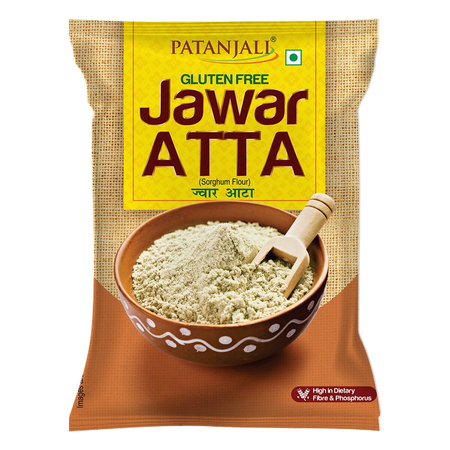
Mumbai, June 25 (IANS) Patanjali Foods Limited shares extended their losing streak for a fifth consecutive session on Thursday, with the stock coming under sustained selling pressure amid weak investor sentiment.
The stock opened at Rs 416.20 and touched an intra-day high of Rs 416.80 before slipping to a low of Rs 408.80 during the session. Over the past five trading sessions, the stock has declined by Rs 11.10, or 2.64 per cent.
The recent weakness has added to the broader decline in the stock price. Patanjali Foods shares have fallen about 12.45 per cent over the past month and have tumbled 25.13 per cent during the last one year.
The decline in the stock comes days after the company disclosed that food safety authorities in Kerala's Kannur district had prohibited the sale of a specific batch of its sorghum flour after pesticide residue levels were found to be above permissible limits.
In a regulatory filing, Patanjali Foods said it had received a communication from the Office of the Designated Officer (Food Safety), Kannur district, informing the company about the prohibition order relating to a particular batch of sorghum flour.
"Prohibition order of sale of Sorghum Flour of a Batch in Kannur District on account of presence of maximum level of Pesticide Residues of Chlorpyriphos," it said in its filing.
According to the company, the action was taken after chlorpyriphos pesticide residues in the affected batch exceeded the maximum prescribed limits. The company clarified that the prohibition order is restricted to the identified batch and is applicable only within Kannur district.
Patanjali Foods further stated that the restriction does not have any material impact on its overall financial or operational performance, except for the value of the affected batch.
"There is no material impact on financial or operational activities, except to the extent of value of the Sorghum Flour of a Batch," it added.
--IANS
pk
India’s 20 pc share in global generic exports provides strong platform for growth: Expert

New Delhi, June 24 (IANS) India can significantly strengthen its position in the global pharmaceutical industry by moving beyond volume-led exports and focusing on higher-value products such as biosimilars, speciality drugs and advanced therapies, according to Dr. Manoranjan Sharma, Chief Economist at Infomerics Ratings.
In an interaction with IANS, Sharma said India already enjoys a leadership position in the global generics market, accounting for around 20 per cent of generic medicine exports worldwide by volume.
However, sustaining the sector's growth momentum will require a shift towards value-added pharmaceutical products and greater investment in innovation, according to him.
"India is a global leader in generic medicines, with around 20 per cent of global exports coming from the country. To move to the next level, it is important to shift from volume-based exports to value-driven exports," Sharma said.
He also stressed the need for increased investments in research and development, complex generics, digital manufacturing, testing laboratories and export infrastructure.
Sharma said India should actively explore emerging opportunities in biosimilars, speciality drugs, cell and gene therapies as well as novel drug delivery systems to move up the pharmaceutical value chain.
"The government's Production Linked Incentive (PLI) scheme is delivering encouraging results on the ground," he told IANS.
In addition, the expert called for reducing dependence on imported active pharmaceutical ingredients (APIs) and strengthening domestic manufacturing capabilities.
He advocated diversification of sourcing, development of fermentation-based APIs and advanced intermediates, stronger public-private partnerships, regulatory harmonisation, talent development and greater venture capital support for the sector.
Moreover, he stated that reducing logistics costs, ensuring stable and predictable policy frameworks, and expanding manufacturing ecosystems across pharmaceuticals, electronics, semiconductors, renewable energy and defence would help create globally competitive industrial clusters.
On the export front, Sharma said India has demonstrated resilience despite global uncertainties, with overall exports reaching around $865 billion in FY25.
He added that free trade agreements (FTAs) are creating fresh opportunities for Indian exporters, including pharmaceutical companies.
"India has signed important trade agreements with countries and regions such as the UAE, Australia and the UK, while negotiations with the European Union are progressing. These initiatives will help diversify export markets, improve competitiveness and strengthen supply-chain reliability," Sharma said.
According to him, continued focus on innovation, quality standards, intellectual property protection and ease of doing business would be key to unlocking the next phase of growth for India's pharmaceutical industry.
--IANS
ag/
India needs quantum jump into manufacturing high-value pharma products: Economists

New Delhi, June 23 (IANS) India, which is one of the world’s largest suppliers of generic medicines and a major provider of vaccines and essential drugs, needs to make a quantum jump into manufacturing high-value pharmaceuticals and Active Pharmaceutical Ingredients (API), and there has to be strong Production Linked Incentive (PLI) schemes to achieve this, economists said on Tuesday.
Commenting on the NITI Aayog report on pharmaceutical trade that came out on Tuesday, economist Ved Jain told IANS that the time is ripe to make a jump into exporting high-value pharmaceutical products.
“We should invest in research innovation on basic drugs and facilities and for that, and I believe there has to be a strong PLI scheme for valued products, like high basic drugs and API products,” he mentioned.
According to the NITI Aayog report, India’s comparative advantage remains concentrated in formulations, particularly retail medicaments and generic drugs, where it remains highly competitive even in regulated markets such as the United States and Europe.
Jain said that we need to further remove regulatory barriers, ramp up production and, at the same time, increase the production of high-value pharmaceutical products which can be exported.
Various free trade agreements (FTAs) India has signed would definitely help in this direction once certain regulatory restrictions are addressed, he noted.
The PLI Scheme for pharmaceuticals supports the manufacturing of high-value products like biopharmaceuticals, complex generics, patented/off-patent drugs, orphan, and autoimmune drugs. It generated a total sale of Rs 3,08,408.60 crore, including Rs 1,98,509.49 crore in exports, since inception till September 2025.
Further, investment worth Rs 40,294 crore has also been made under the scheme till September 2025. The amount significantly exceeded the targeted investment of Rs 17,275 crore. The PLI scheme for the promotion of domestic manufacturing also helped reduce the import dependence for bulk drugs.
Meanwhile, the global pharmaceutical landscape has increasingly shifted towards high-value segments such as biologics, vaccines, immunologicals, and advanced therapeutics, where India’s export presence remains limited.
--IANS
na/
India records significant gains in maternal, child health, financial inclusion: Report

New Delhi, June 22 (IANS) India has seen significant improvements in maternal and child health, nutrition and financial protection, a new report has said, citing data from the National Family Health Survey 6 (NFHS‑6).
The report from Daily Finland said institutional deliveries in India surged notably to 90.6 per cent and antenatal care (ANC) coverage stood at 95.9 per cent, with first‑trimester ANC rising to 76.2 per cent from 70 per cent previously.
The survey found that all vaccine coverage for children aged 12–23 months remained consistently high above 96 percent and 95.6 percent of children have received most vaccinations through public health facilities as the preferred choice.
Rotavirus vaccine uptake jumped to 85.4 per cent from 36.4 per cent, and the second dose measles coverage also surged to 71.8 per cent from 58.6 per cent.
Child nutrition showed notable improvement, with stunting among under‑fives falling to 29.3 per cent from 35.5 per cent, and severe wasting dropping to 5.2 per cent from 7.7 per cent.
"Improvement has also been observed in infant and young child feeding practices. The number of children aged 6-8 months receiving solid or semi-solid food along with breastmilk has increased from 45.9 per cent to 59.5 per cent," the report said.
The survey also recorded gains in women’s empowerment as the number of women who have ever used the internet has nearly doubled from 33.3 per cent to to 64.3 per cent.
It found that 89 per cent women had a bank or savings account up from 78.6 per cent and the number of women having a mobile phone rose from 53.9 per cent to 63.6 per cent.
“Overall, the findings reaffirm India’s steady progress towards achieving the Sustainable Development Goals,” the Finland-based media house said.
“With a continued emphasis on convergence, last-mile delivery and inclusive growth, India is well-positioned to sustain these gains and further improve the health and well-being of its population,” it added.
—IANS
aar/pk
India’s vaccine support emerges as lifeline for Africa: Report
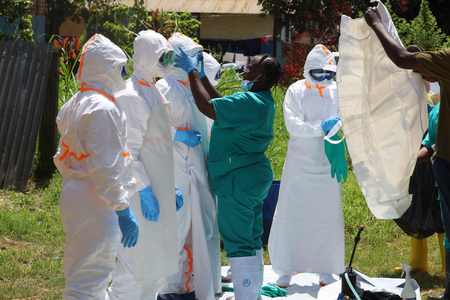
New Delhi, June 22 (IANS) The postponement of the India‑Africa Forum Summit IV -- originally scheduled for 28–31 May here -- over “emerging public health situation" from Bundibugyo Ebola outbreaks underscored India’s emerging role as a rapid vaccine manufacturer for Africa, a new report has said.
The postponement of the event spotlighted "India’s decisive role in fast-tracking the critical production of a vaccine via the Serum Institute of India (SII), positioning New Delhi as an indispensable partner which has made urgent and swift interventions", the report from South Africa-based IOL said.
Bundibugyo Ebola outbreaks in the Democratic Republic of Congo and Uganda caused worries about the safety and full participation of African leaders and delegations.
Partnering with CEPI, Oxford and African stakeholders, the Serum Institute of India's intervention mirrors India's responsible Covid-19 interventions. SII emerged as the world’s vaccine powerhouse, delivering billions of doses affordably for the Global South, including African nations, often at cost or low margins.
Serum Institute of India is leveraging ChAdOx1 technology to produce a vaccine for the Bundibugyo strain, with reports suggesting clinical‑grade doses could be ready for trials within two to three months.
“This swift intervention positions India as a reliable big brother to Africa, prioritising affordable access for affected nations while working closely with African counterparts on trial preparedness and distribution planning,” the report noted.
The African Union (AU) collaborates for the health intervention through the Africa Centres for Disease Control, declaring a Public Health Emergency and pushing for vaccines by year’s end.
However, core R&D and manufacturing for this candidate vaccine come from other countries.
The report noted that India’s support to African nations extends beyond vaccines, with 1,000 metric tons donated to Burkina Faso and aid to Malawi and Mozambique.
“Partnerships with India, CEPI, Oxford, and others are vital bridges, but true self-reliance demands sustained investment in local biotech, technology transfer, and unified regulatory frameworks,” the media house noted.
—IANS
aar/ag
Bangladesh measles outbreak claims three more lives, death toll rises to 680
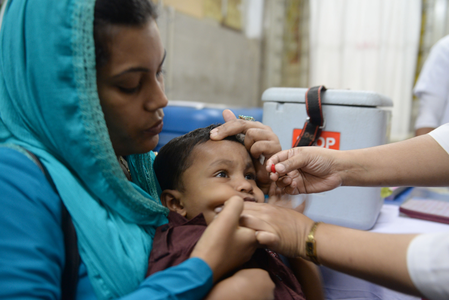
Dhaka, June 21 (IANS) Three more children died with measles-like symptoms in Bangladesh in 24 hours until 8 a.m. on Sunday, raising the country's confirmed and suspected measles-related fatalities to 680.
The latest fatalities were classified as suspected measles deaths, the Directorate General of Health Services (DGHS) said. With the latest fatalities, the number of suspected measles deaths in Bangladesh has reached 587, while the number of laboratory-confirmed measles fatalities remains unchanged at 93, United News of Bangladesh (UNB) reported.
As many as 1,001 new suspected measles cases were recorded in Bangladesh during the 24-hour period, raising the total number of suspected cases in the country to 92,790. Meanwhile, 62 new confirmed measles cases were reported, taking the cumulative number of laboratory-confirmed cases to 11,011.
Since March 15, 76,859 patients with suspected measles have been admitted to hospitals in Bangladesh. Among those, 72,849 patients have recovered, according to DGHS data.
Reports suggest that as the number of measles and suspected measles cases in Bangladesh crossed the one lakh mark, infections continued to rise despite a vaccination drive a month ago covering 1.84 crore children.
Health experts cited the possible gaps in vaccination coverage in certain areas, along with weak infection control and prevention measures, as contributing factors. They warned that the onset of dengue season could further endanger children already infected with measles, increasing the risk of severe complications, Bangladesh's The Daily Star reported.
Public health expert Mushtuq Husain said that measles cases are failing to decline for two main reasons: vaccination coverage not reaching the 95 per cent threshold in all areas and inadequate adherence to infection prevention and control measures in hospitals and communities.
On Monday, Bangladesh's former Prime Minister Sheikh Hasina slammed the previous Muhammad Yunus-led interim government for disrupting the country's vaccination programme while pursuing a new vaccine procurement system.
She further alleged that the current Bangladesh Nationalist Party (BNP) government’s incompetence and negligence have resulted in the disease spreading into an epidemic.
"Out of ill intentions and personal interests, the illegitimate interim government disrupted the vaccination program while attempting to introduce a new system for vaccine procurement. And due to the incompetence and negligence of the current government, this disease has spread into an epidemic,” read a statement issued by Hasina, which was posted on the Awami League's X handle.
"At present, nearly hundreds of thousands of children in 61 districts of the country are affected by this disease. According to official figures, more than six hundred children have died, although the actual number is much higher. The line of deaths is getting longer every day. This is not an accident; this is an administrative crime," the former PM added.
--IANS
akl/vd
Yoga is art of living, not merely exercise: Gujarat Governor on International Yoga Day

Gandhinagar, June 21 (IANS) Describing yoga as “an excellent art of living life” rather than merely a form of exercise, Gujarat Governor Acharya Devvrat on Sunday said the ancient Indian discipline continues to offer solutions to modern-day challenges ranging from mental stress to lifestyle-related illnesses.
The Governor was addressing participants during the celebration of the 12th International Yoga Day at Lok Bhavan in Gandhinagar, where officials, employees and local residents gathered for a mass yoga session.
Extending his greetings on the occasion, Acharya Devvrat highlighted the significance of yoga in maintaining both physical and mental well-being.
He said yoga is a thousands-year-old Indian science and tradition that has long been regarded as a foundation for health and spiritual advancement.
“Yoga is not merely an exercise, but an excellent art of living life. In today’s lifestyle, yoga is the best medium to protect ourselves from mental stress and various lifestyle-related diseases," he emphasised.
He said regular practice of yoga and pranayama not only helps keep the body healthy but also allows individuals to remain focused, calm and positive.
The Governor urged people to make yoga an integral part of their daily lives and work towards the goal of a “healthy body and healthy mind”.
The Governor also praised Prime Minister Narendra Modi’s efforts in promoting yoga globally.
"The Prime Minister’s commitment and initiatives had helped yoga gain international recognition and connected crores of people around the world with India’s cultural heritage," he said.
According to Acharya Devvrat, yoga is also helping foster the spirit of "Vasudhaiva Kutumbakam", the belief that the world is one family, by bringing people together across countries and cultures.
Following the programme, the Governor administered a pledge encouraging participants to adopt a healthy lifestyle.
Among those present were Dr Jayanti Ravi, Additional Chief Secretary of the Revenue Department; Ashok Sharma, Principal Secretary of Lok Bhavan; A.K. Joshi, Director of House Administration; along with other officials, employees of Lok Bhavan and citizens.
--IANS
mys/dpb