
Samsung to offer treasury shares worth $120 million as bonuses
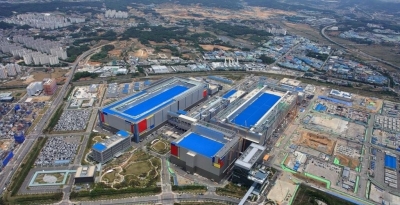
Seoul, Jan 26 (IANS) Samsung Electronics said on Monday it plans to provide treasury shares worth 175.2 billion won ($120 million) to its executives under its excess profit incentive (OPI) system.
The South Korean tech giant said in a regulatory filing that it will distribute a total of 1.15 million treasury shares to 1,051 executives under the incentive program, without selling the shares on the market.
Under Samsung Electronics' OPI system, employees can receive up to 50 percent of their annual salary as bonuses when their business division meets earnings targets. Part of the incentive is provided in shares after a one-year period, reports Yonhap news agency.
"The incentive programme aims to enhance responsible management and create long-term performance," Samsung Electronics said, adding the latest distribution relates to incentives for 2024.
"The shares to be distributed account for 0.019 percent of the company's outstanding shares and are expected to have a limited impact on share value," it added.
Meanwhile, Lee Jae-yong, chairman of Samsung Electronics, has urged the company's executives not to become complacent despite a sharp rebound in earnings, stressing that the company faces a "last chance" to restore its competitiveness, industry sources said.
Lee delivered the message during a recent seminar for Samsung Group executives, following the company's announcement of a record operating profit of 20 trillion won (US$13.8 billion) for the fourth quarter amid a semiconductor industry upcycle.
His remarks were aimed at warning some 2,000 executives against settling for short-term performance gains and calling for stepped-up efforts to fundamentally rebuild Samsung's technological edge, according to the sources, who asked not to be identified.
During the seminar, Lee shared key remarks by his late father and Samsung Group Chairman Lee Kun-hee, along with the company's core business strategies, including those related to artificial intelligence (AI).
—IANS
na/
S. Korea to build 2 new nuclear reactors by 2038 as planned

Seoul, Jan 26 (IANS) Seoul will construct two new nuclear reactors by 2038 at the latest as planned, the climate minister said on Monday, reflecting public support for the plan amid growing demand for clean energy.
Climate Minister Kim Sung-whan announced the plan in a press briefing on the envisioned 12th basic plan for electricity supply and demand, which outlines the country's power supply plan for the 2026-2040 period, reports Yonhap news agency.
The government will conduct necessary procedures to complete building two large-scale nuclear reactors between 2037-2038 as planned under the 11th basic plan devised by the previous administration, Kim said.
"To respond to climate change, carbon emissions must be reduced across all sectors, and to cut carbon emissions in the energy sector, it is necessary to reduce power generation through coal and liquefied natural gas," he told reporters.
"Therefore, we need power system operations centered on renewable energy and nuclear power."
Last week, two public opinion polls commissioned by the government showed that an average of 80 percent of respondents said nuclear power is needed, with 60 percent supporting the additional construction plan.
Under the plan, the state-run Korea Hydro & Nuclear Power Co. (KHNP) will soon begin a bidding process to select the host cities or towns for the two new reactors by 2027.
The KHNP aims to receive the nuclear safety watchdog's approval for the plan by 2031 to complete the construction between 2037-2038, according to the ministry.
Kim said the upcoming 12th power supply plan will include the country's response to rising electricity demand sparked by the growth of the artificial intelligence (AI) sector and expansion of electric vehicles.
It will also include an energy mix policy aimed at helping the country achieve carbon neutrality by 2050, he added.
--IANS
na/
Egypt aims to double trade with India to $12 billion

New Delhi, Jan 25 (IANS) Egypt has set a strong goal to nearly double its trade with India, aiming to reach $12 billion in the coming years.
Currently, trade between the two countries stands at around $5 billion, which Egypt believes is far below the real potential of the partnership.
Speaking at the Foreign Correspondents’ Club of South Asia here, Egypt’s Ambassador to India, Kamel Zayed Galal, said both nations have many opportunities to grow together, especially in sectors like energy, manufacturing, agriculture and connectivity.
He also shared that Indian investments in Egypt, which are now around $3.7 billion, are expected to cross $10 billion in the future.
The Ambassador encouraged Indian companies to see Egypt as a long-term strategic partner rather than just a short-term business destination.
Energy cooperation is becoming a major focus, especially in renewable energy and green hydrogen.
Galal explained that Egypt has strong solar and wind resources, along with growing infrastructure and easy access to major global shipping routes.
These advantages could help Egypt become an important hub for green energy production and exports. He also pointed to fertilisers, agriculture and industrial manufacturing as areas where closer supply chain links could quickly increase trade.
The Ambassador highlighted Egypt’s industrial zones and its free trade agreements with African and European countries as major benefits for Indian businesses.
He said Egypt is not just a market to sell products but also a base for production and exports to wider regions.
Egypt’s ports on the Red Sea and Mediterranean Sea, along with the Suez Canal -- which handles about 12 percent of global trade -- make it a key global trade gateway.
India and Egypt upgraded their relationship to a Strategic Partnership in 2023 after meetings between Prime Minister Narendra Modi and Egyptian President Abdel Fattah el-Sisi.
According to Galal, the focus has now moved from building ties on paper to delivering real economic results.
Talking about Egypt’s foreign policy, the Ambassador said the country supports strategic independence, cooperation among many nations and respect for national sovereignty. It avoids strict political blocs and believes this approach closely matches India’s views, especially on the need to reform global bodies like the United Nations.
--IANS
pk
India’s tax-to-GDP ratio reaches 19.6 pc, structural reforms key to further gains: Report
New Delhi, Jan 25 (IANS) India’s combined tax-to-GDP ratio has reached 19.6 per cent, placing the country at par with several major global economies and highlighting steady progress in tax collection efficiency, according to a report by Bank of Baroda.
The ratio includes both central and state tax collections and is higher than that of several emerging markets such as Hong Kong, Malaysia and Indonesia.
The report noted that while India’s central gross tax revenue stands lower at 11.7 per cent of GDP, the overall integrated figure reflects stronger participation by states and better compliance across the system.
However, India still trails advanced economies such as Germany, which has a tax-to-GDP ratio of around 38 per cent, and the United States, where the ratio is about 25.6 per cent.
Bank of Baroda said this gap presents a major policy opportunity for India, especially given its favourable demographic profile.
The report highlighted that the government is increasingly focusing on comprehensive tax reforms aimed at simplification, rationalisation and digitisation.
These efforts are expected to push the tax-to-GDP ratio higher in the coming years.
Key regulatory steps, including the introduction of the Income Tax Act, 2025, and the rationalisation of corporate tax structures, are expected to improve transparency and make compliance easier.
The new Income Tax Act, scheduled to come into effect from April 1, 2026, is also expected to widen the tax base by bringing more of the informal economy into the formal system.
The report’s historical analysis shows that tax collections and nominal GDP have started moving more closely together over time.
Between FY93 and FY02, this relationship was volatile due to a narrow tax base. However, from FY14 onwards, a clear convergence has emerged, becoming more pronounced from FY23.
Current data suggest that tax elasticity is around 1.1, which is higher than the long-term average. This indicates that tax collections are growing faster than the economy.
The report also found a strong positive link between various tax components and macroeconomic indicators.
Income tax collections show a strong correlation with both nominal GDP and per capita income -- reflecting rising incomes and better compliance.
Corporate tax collections have also benefited from improved profitability among companies, with buoyancy levels remaining strong compared to historical trends.
--IANS
pk
Bajaj Finance loses over Rs 14,000 crore in market value last week
Mumbai, Jan 25 (IANS) Bajaj Finance’s market capitalisation fell by over Rs 14,000 crore last week as weak market sentiment dragged down most of India’s top-valued companies.
The sharp fall came amid a broader sell-off in equities, driven by global uncertainties, foreign investor outflows and pressure on the rupee.
The combined market valuation of nine of the top-10 most valued companies declined by Rs 2.51 lakh crore last week -- reflecting a sharp downturn in the stock market.
Bajaj Finance was among the major losers, with its market capitalisation slipping by Rs 14,093.93 crore to Rs 5,77,353.23 crore.
The benchmark Sensex witnessed heavy selling pressure during the week and fell by 2,032.65 points, or 2.43 per cent.
Market experts said negative global cues, continuous selling by foreign institutional investors, a weakening rupee and muted corporate earnings weighed heavily on investor sentiment.
Ajit Mishra, Senior Vice President of Research at Religare Broking, said the markets saw a sharp sell-off with bears firmly in control throughout the week due to multiple domestic and global concerns.
Reliance Industries suffered the biggest blow among the top companies, with its market valuation plunging by Rs 96,960.17 crore to Rs 18,75,533.04 crore.
ICICI Bank’s valuation declined by Rs 48,644.99 crore to Rs 9,60,825.29 crore, while HDFC Bank lost Rs 22,923.02 crore, taking its market value to Rs 14,09,611.89 crore.
Bharti Airtel’s market capitalisation dropped by Rs 17,533.97 crore to Rs 11,32,010.46 crore. Tata Consultancy Services saw its valuation fall by Rs 16,588.93 crore to Rs 11,43,623.19 crore, and Larsen & Toubro lost Rs 15,248.32 crore to settle at Rs 5,15,161.91 crore.
State Bank of India’s market value slipped by Rs 11,907.5 crore to Rs 9,50,199.77 crore, while Infosys saw a decline of Rs 7,810.77 crore, taking its valuation to Rs 6,94,078.82 crore.
In contrast, Hindustan Unilever emerged as the only gainer among the top-10 firms, with its market capitalisation rising by Rs 12,311.86 crore to Rs 5,66,733.16 crore.
Despite the weekly losses, Reliance Industries remained India’s most valued company, followed by HDFC Bank, TCS, Bharti Airtel, ICICI Bank, State Bank of India, Infosys, Bajaj Finance, Hindustan Unilever and Larsen & Toubro.
--IANS
pk
RBI may cut rates further if India-US trade deal is delayed: Goldman Sachs
Mumbai, Jan 25 (IANS) India’s strong economic fundamentals continue to support a healthy growth outlook, but prolonged uncertainty over the India–US trade deal could push the Reserve Bank of India to step in with further rate cuts.
According to Goldman Sachs, if trade-related headwinds persist beyond the first quarter of FY27 and start weighing on growth, the RBI may use its remaining policy space to support the economy through additional monetary easing.
The brokerage said India’s mass consumption story, especially in rural areas and among lower-income households in cities, is still in the early stages of recovery.
This recovery is being supported by a good crop cycle, higher state-level transfer payments to women in lower-income families and GST cuts that benefited the bottom end of the consumption ladder.
Goldman Sachs believes these factors are helping demand gradually pick up, even though broader global uncertainties remain.
In an interaction with NDTV Profit, Santanu Sengupta, Chief India Economist at Goldman Sachs, said the India–US trade deal is expected to be finalised by the first quarter of FY27.
However, he warned that if the agreement is pushed beyond this period and into the second half of the next financial year, it could create growth headwinds.
In such a situation, the government and the Reserve Bank of India may need to use their policy space to support the economy.
Sengupta explained that while India’s overall consumption outlook remains positive, the picture is mixed across income groups.
The affluent segment of consumers, which includes the middle and top income groups, saw strong growth after the Covid-19 pandemic but is now showing signs of slowing.
He added that the middle-income segment faces challenges due to concerns around job creation and the increasing use of artificial intelligence.
On the policy front, the central government moderated its fiscal consolidation in FY26 and shifted focus towards supporting consumption through income tax and consumption tax cuts.
This helped India record a strong real GDP growth of 7.6 per cent year-on-year in calendar year 2025. However, nominal GDP growth fell to a six-year low, excluding the pandemic period, mainly because of very low inflation.
--IANS
pk
67 pc HNIs and UHNIs firmly bullish on India’s growth prospects despite global challenges: Report

New Delhi, Jan 25 (IANS) Nearly two-thirds of India’s high net-worth individuals (HNIs) and ultra high net-worth individuals (UHNIs) remain confident about the country’s economic future, even as global uncertainties continue to weigh on markets, a report said on Sunday.
According to the Luxury Residential Outlook Survey 2026 by India Sotheby’s International Realty (ISIR), around 67 per cent of wealthy investors are bullish on India’s growth story over the next 12 to 24 months.
The survey reflects steady optimism about the economy, with 72 per cent of respondents expecting India’s GDP growth to stabilise in the 6 to 7 per cent range in FY27.
While this signals a more moderate pace compared to earlier years, it points to a resilient and sustainable growth outlook supported by strong economic fundamentals and rising wealth creation.
Confidence also remains high in the real estate sector, particularly in the luxury housing segment, as per the report.
Most HNIs and UHNIs plan to continue investing in property, though with greater caution and selectivity.
Factors such as declining interest rates, better affordability and strong end-user demand are strengthening real estate’s appeal as a long-term investment option.
The report notes that wealthy investors expect real estate to deliver healthy returns, with nearly 67 per cent anticipating annualised gains of up to 15 per cent.
Luxury homes are being purchased both for investment and personal use, with 53 per cent of buyers looking at capital appreciation, while 47 per cent are buying for self-occupation.
City-based residential properties continue to be the top choice among affluent buyers. About 31 per cent prioritise primary homes in urban centres, while 30 per cent focus on residential assets purely for investment.
However, the tightening of quality inventory and rising prices have slightly softened interest in second homes over the past year.
Among those still considering second-home purchases, farmhouses near city outskirts are the most popular, preferred by 46 per cent of respondents.
Hill and mountain destinations follow, attracting 33 per cent of wealthy buyers seeking leisure properties.
Last year witnessed record sales by listed developers and several high-value property deals across markets such as Mumbai, Delhi-NCR, Goa and Alibaug.
“The year 2026 opened on a note of quiet confidence after a defining year for India’s luxury real estate market,” Amit Goyal, Managing Director of India Sotheby’s International Realty, said.
Goyal added that for these buyers, real estate offers stability along with lifestyle value and long-term wealth preservation, making quality-driven luxury homes increasingly attractive.
Ashwin Chadha, CEO of India Sotheby’s International Realty, said that India’s economic growth and wealth creation are moving together, driving a structural demand for premium residential assets.
--IANS
pk
Union Budget, Fed meeting and earnings likely to drive stock market next week
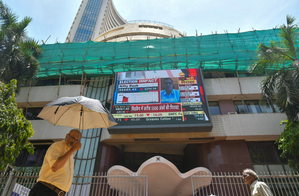
Mumbai, Jan 25 (IANS) The Indian stock market is expected to remain volatile in the coming week as investors keep a close eye on several major events, including the Union Budget 2026, the US Federal Reserve meeting, ongoing corporate earnings, and global developments.
After a choppy week marked by selling pressure and global worries, market participants are likely to trade cautiously while looking for clear signals from these key triggers.
The domestic equity market ended the week on a weak note after slipping sharply on Friday. Profit booking, continued foreign investor selling, and uncertainty over geopolitical issues pulled the benchmarks lower.
The Sensex dropped 770 points, or 0.94 percent, to close at 81,537.70, while the Nifty fell 241 points, or 0.95 percent, to end at 25,048.65.
"Immediate resistance is placed at 25,300, followed by 25,400 and 25,600 levels," an analyst said.
"On the downside, support is seen at 24,880 and 24,587. A breakdown below 24,350 could intensify downside pressure and accelerate corrective moves," the analyst stated.
One of the biggest drivers next week will be the Union Budget 2026, which Finance Minister Nirmala Sitharaman will present in Parliament on Sunday, (February 1).
Investors will watch closely for announcements related to taxes, government spending, infrastructure projects, and measures to boost economic growth.
The budget’s tone and priorities could decide the short-term direction of the stock market.
Global markets will also be influenced by the US Federal Reserve’s policy meeting scheduled from January 27 to January 28.
Experts believe the central bank is likely to keep interest rates unchanged. However, comments from Fed officials about future rate plans could impact global investor sentiment and capital flows.
The earnings season will continue to remain in focus as several major companies are set to announce their third-quarter results for FY26.
Developments related to a potential India-US trade deal will also be closely monitored. Union Minister Ashwini Vaishnaw recently said India is actively involved in global trade discussions, expressing confidence after US President Donald Trump spoke positively about reaching an agreement between the two countries.
Meanwhile, rising gold and silver prices are adding another layer of attention. Gold surged close to the $5,000 per ounce mark, hitting a new high above $4,967, driven by geopolitical tensions and a weaker US dollar.
Silver also touched an all-time high near $100 an ounce. The softer dollar has made precious metals cheaper for buyers worldwide, boosting demand.
--IANS
pk
Passenger traffic at Incheon airport reaches record high in 2025

Seoul, Jan 25 (IANS) Passenger traffic at Incheon International Airport exceeded 74 million in 2025, driven by increased flights to and from Japan and China, the airport's operator said on Sunday.
A total of 74.07 million passengers traveled through South Korea's main gateway last year, marking the highest annual figure since the airport opened in 2001, according to Incheon International Airport Corp. (IIAC), reports Yonhap news agency.
The 2025 total was up 4.1 percent from 71.15 million passengers recorded a year earlier.
"In particular, travel demand to Northeast Asian countries surged on the back of unusually long Lunar New Year and Chuseok holidays, China's temporary visa waiver program, and the weakness of the won, which boosted demand for alternative destinations such as Japan and China," the IIAC said.
On international routes, Southeast Asia accounted for 26.7 percent of passenger traffic last year, followed by Japan at 25.1 percent and China at 16.7 percent, with the remainder on other routes.
The share of Southeast Asian routes declined from 29.6 percent a year earlier, amid rising safety concerns following the death of a South Korean college student in Cambodia last August in a suspected employment scam.
Overall freight volumes rose 0.3 percent on-year to 2.95 million tons last year, supported by increased belly cargo, which uses excess space on passenger aircraft to transport freight.
The IIAC said it expects passenger traffic this year to grow 2 to 6 percent on-year to between 75.54 million and 78.55 million.
Meanwhile, the remains of a late South Korean university student allegedly tortured to death by a criminal organisation in Cambodia returned home Tuesday, 74 days after he was found dead in the Southeast Asian country.
A Korean Air flight carrying the cremated remains of the 20-something student, surnamed Park, arrived at Incheon International Airport, west of Seoul, a day after South Korean and Cambodian authorities conducted a joint autopsy on his body in Phnom Penh.
—IANS
na/
Lawsuit claims Meta can access WhatsApp chats; company calls it ‘frivolous’

New Delhi, Jan 25 (IANS) A lawsuit against Meta in the US has alleged that its privacy claims are false and Meta and WhatsApp “store, analyse, and can access virtually all of WhatsApp users’ ‘private’ communications” -- a claim that has been dismissed by the company as a "frivolous work of fiction".
A group of plaintiffs in the lawsuit, filed in US District Court in San Francisco, accused the social media giant and their leaders of “defrauding WhatsApp’s billions of users worldwide”.
The group includes plaintiffs from Australia, Brazil, India, Mexico and South Africa. Plaintiffs are now seeking the court to certify a class-action suit.
They alleged that Meta stores the substance of users’ communications and that workers can get access to them, according to reports.
Meta said that the lawsuit is “frivolous” and they will pursue sanctions against plaintiffs’ counsel.
“Any claim that people’s WhatsApp messages are not encrypted is categorically false and absurd. WhatsApp has been end-to-end encrypted using the Signal protocol for a decade. This lawsuit is a frivolous work of fiction,” according to a Meta spokesperson.
Founded by Ukrainian immigrants to America, Jan Koum and Brian Acton, in 2009, WhatsApp was acquired by social media giant Facebook (now Meta) for $19 billion in 2014.
At a keynote presentation at the Mobile World Congress in Barcelona, Spain in February 2014, Facebook CEO Mark Zuckerberg had said that the acquisition of WhatsApp was closely related to the Internet.org vision.
Famous for its ‘end-to-end’ encryption, WhatsApp was officially launched in November 2009 as a chat app service, initially just for iOS. In August 2010, WhatsApp released an app for Android users. It took 4 years for the messenger app to hit a milestone of 200 million monthly active users.
WhatsApp is reported to have more than 3 billion monthly active users globally, including 100 million in the US.
It is ranked as the most popular mobile messenger app in the world.
—IANS
na/