
Circular debt in Pakistan’s energy sector crosses alarming levels: Report

New Delhi, Jan 26 (IANS) Pakistan’s energy crisis is not the result of a lack of plans, but of persistent disregard for implementation, coordination and market-based principles, a new report has said.
The report in Business Recorder says that Pakistan’s circular debt in the energy sector continues to swell and policy fragmentation deepens institutional paralysis.
The Federation of Pakistan Chambers of Commerce and Industry’s Businessmen Panel (BMP) has slammed the government’s handling of the sector.
It warned that “repeated policy blunders and delayed structural reforms are pushing the economy towards prolonged instability”.
Circular debt, which has crossed alarming levels, is the clearest indicator of governance failure in the energy sector.
Years of politically motivated tariff controls, inefficient power procurement, overestimation of demand and unchecked capacity payments have created a vicious cycle in which liabilities are simply rolled over instead of resolved, said former FPCCI President and Chairman of the Businessmen Panel, Mian Anjum Nisar.
According to him, “interest payments to state-owned entities may temporarily ease balance sheets, but they do nothing to prevent the debt from resurfacing”.
The report further stated that power, petroleum, water resources and finance continue to operate in silos.
This lack of coordination has resulted in contradictory decisions that inflate costs, distort supply chains and weaken investor confidence, Nisar was quoted as saying.
Energy prices in Pakistan are now significantly higher than those in competing regional economies, eroding the competitiveness of local industry and exports.
Moreover, manufacturers are facing unpredictable tariffs, frequent fuel price adjustments and unreliable supply, forcing many to reduce operations or shut down entirely.
This trend is accelerating deindustrialisation and unemployment at a time when the country can least afford it.
Pakistan already suffers from excessive committee culture, where reports are produced but accountability remains absent. Without clear targets, timelines and consequences for failure, he added, structural changes will remain cosmetic, Nisar lamented.
—IANS
na/
Govt capex may cross Rs 12 lakh crore in FY27, fiscal deficit likely at 4.2 pc of GDP: SBI
New Delhi, Jan 26 (IANS) India continues to remain the bright spot supported by its strong macro fundamentals and the government capex may cross Rs 12 lakh crore in FY27, a year-on-year growth of 10 per cent, an SBI Research report said on Monday.
The nominal GDP growth relevant for Budget math is expected at 10.5-11 per cent with the uptrend in global commodity prices may percolate in a higher WPI.
A bit slower nominal growth may hurt tax revenues in FY27, requiring better expenditure planning. However, GST rationalisation and reduction in marginal tax rates for personal income tax is expected to cushion the impact of sluggishness in tax base, said Dr. Soumya Kanti Ghosh, Group Chief Economic Advisor, State Bank of India.
Based on the above nominal forecast, fiscal deficit is expected to be at 4.2 per cent of GDP for FY27. The cost of borrowing from the government is expected at 6.8-7.0 per cent for FY27 with risk evenly balanced, Ghosh added.
Estimated net Central borrowing for FY27 is expected at Rs 11.7 trillion (around 70 per cent of FD) and repayment of Rs 4.60 trillion including Rs 1 lakh crore expected buyback and Rs 1.5 trillion estimated switches while State gross borrowings may come at Rs 12.6 trillion and repayment of Rs 4.2 trillion.
“There is a possibility of scaling down SDLs and hence net state borrowings through meaningful reforms and net centre borrowings through higher borrowing through T-Bill issuance. With such large borrowings, the Government and the RBI may also have to work together to bring meaningful reforms in the SDL market,” said the report.
The presentation of the Union Budget 2026 comes against the domino effects of a new emerging order of realpolitik, still largely opaque, yet frightening, cascading down the annals of global financial markets with misplaced trust being the lynchpin of rout across stretched equities and bond markets.
The report further said that as states account for a significant share of general government debt, state budgets should explicitly chart medium-term, preferably scenario-based, debt-to-GSDP trajectories, aligned with realistic growth assumptions and development needs, rather than relying solely on annual deficit targets. The Union Budget may highlight this.
--IANS
na/
Seoul shares snap 3-day rise ahead of Fed rate decision
Seoul, Jan 26 (IANS) South Korean stocks closed lower on Monday to snap three consecutive days of rise ahead of a U.S. rate-setting meeting, with investors sitting on the sidelines amid geopolitical uncertainties in Iran.
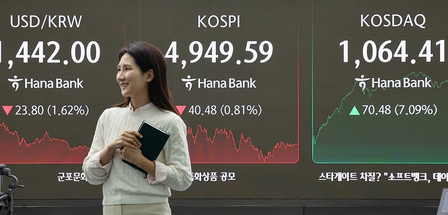
The Korean won sharply gained against the U.S. dollar, and the tech-laden KOSDAQ surged by more than 7 percent to land above 1,000 for the first time in more than four years, reports Yonhap news agency.
The benchmark Korea Composite Stock Price Index (KOSPI) fell 40.48 points, or 0.81 percent, to close at 4,949.59.
The KOSPI has been enjoying decent gains this year while moving above the 5,000-point threshold since Thursday last week, although the index has not yet closed above the mark.
Trade volume was moderate at 438 million shares worth 22.5 trillion won (US$15.6 billion), with winners far outpacing losers 502 to 391.
Institutions and foreigners sold 158.4 billion won and 1.54 trillion won, respectively, while individuals bought a net 1.71 billion won.
Analysts said investors took a wait-and-see approach to this week's events, such as the Federal Reserve's rate decision and the release of fourth-quarter earnings by major firms, including Samsung Electronics and SK hynix.
Looming geopolitical tensions between the United States and Iran, along with Washington's ambition over Greenland, weighed on investor sentiment as well.
"The rosy outlook for fourth-quarter earnings of semiconductor shares have already priced in recent gains," Han Ji-young, a researcher at Kiwoom Securities, said.
"Investors should focus on companies' conference calls, which will unveil their road map for HBM4 chips and supply of general-purpose memory," Han added.
Top tech giant Samsung Electronics closed unchanged at 152,100 won, while No. 2 chipmaker SK hynix moved down 4.04 percent to 736,000 won.
Leading carmaker Hyundai Motor fell 3.43 percent to 492,500 won, and its sister Kia shed 3.51 percent to 155,200 won.
Financial firms closed lower as well, with KB Financial falling 0.07 percent to 135,500 won and Shinhan Financial decreasing 1.79 percent to 82,400 won.
The secondary KOSDAQ index shot up 7.09 percent to close above 1,000 after more than four years.
—IANS
na/
Pakistan survives on bailouts and strategic support, reforms still elusive: Report
New Delhi, Jan 26 (IANS) Pakistan’s economy continues to survive on external support rather than real reform, as policymakers rely on foreign borrowing and strategic alliances to avoid repeated financial collapse, a report has said.
For decades, Pakistan has faced recurring economic crises, only to be rescued each time by foreign creditors, the International Monetary Fund (IMF), or friendly nations, according to an analysis by Sakariya Kareem.
Instead of building a competitive export-driven economy, the country has depended on rolling over debt and securing bailouts.
This pattern has created what analysts describe as “survival without reform,” where the system stays afloat but never fundamentally improves, as per report by Asian Lite.
A key issue is Pakistan’s currency policy. The government continues to artificially support the rupee to keep imports cheap, especially fuel and essential goods.
This approach requires borrowing foreign exchange rather than earning it through exports. As a result, the economy remains weak and unproductive.
Interest payments on public debt now consume nearly two-thirds of government revenue, leaving very little money for education, healthcare, or infrastructure.
Whenever oil prices rise or foreign funding slows, foreign exchange reserves fall sharply and the economy slips back into crisis.
The depth of the problem became clear in mid-2023, when Pakistan’s foreign exchange reserves dropped below $4 billion, barely enough to cover two weeks of imports.
The country needed around $30 billion in financing that year, while facing annual debt repayments of $15–20 billion for the next five years.
Inflation surged to 38 per cent, and fears of default grew. By late 2024, however, the situation appeared to improve.
Reserves rose to about $14.5 billion, inflation eased to just over 4 per cent, and economic pressure temporarily reduced.
This stability, however, was not driven by reform. Most of Pakistan’s creditors agreed to roll over debt repayments, delaying the crisis rather than resolving it.
Global oil prices also fell, reducing the import bill. In addition, Pakistan secured its 24th IMF bailout in September 2024.
While these steps provided breathing space, the underlying debt burden remains, according to the report.
--IANS
pk
Russia looks to hire more workers from India amid labour shortage

New Delhi, Jan 26 (IANS) As Russia looks to hire more workers from India to meet labour shortage in the country, a new report has said that at least 40,000 Indian citizens are expected to come to Russia as workers this year.
The report in www.dw.com says that between 70,000-80,000 Indian citizens were already working in Russia at the end of last year.
In December last year, India and Russia signed two agreements to boost the mobility of Indian semi-skilled and skilled workers to Russia. These are “Temporary Labour Activity of Citizens of one State in the Territory of the other State” and “Cooperation in Combating Irregular Migration”.
The mobility pacts will also provide a framework for employment of Indian workers in Russia and ensure that they do not face difficulties met by Indians who faced various frauds in the recent past.
Recent reports of a young Indian software professional working on the streets of Russia also drew public attention. He was among 17 Indian workers who arrived in St. Petersburg several months ago to address labour shortages in municipal road maintenance.
The workers were reportedly recruited by a Russian road-maintenance firm, Kolomyazhskoye, and relocated to the city for street-cleaning and winter road maintenance duties, according to the report by Russia’s app-based media platform Fontanka.
Labour shortages in parts of Russia have reportedly increased demand for migrant workers in manual and municipal services.
Meanwhile, Commerce and Industry Minister Piyush Goyal also highlighted recently the strength of India’s entrepreneurial ecosystem, pointing out that India has developed the world’s third-largest startup ecosystem.
The minister said that India’s young, skilled and committed workforce can help meet Russia’s projected shortfall of three million skilled professionals.
There is a reported demand for at least 5,00,000 semi-skilled workers in Russia, which is one of the factors that is propelling Moscow to reach out to friendly countries.
--IANS
na/
India plans major cut in import duties on EU cars as trade deal nears announcement

New Delhi, Jan 26 (IANS) India is preparing to sharply cut import duties on cars from the European Union as part of a long-pending free trade agreement, which could be announced as early as Tuesday, according to reports.
Under the proposed deal, India plans to bring down peak import tariffs on EU-made cars to 40 per cent from the current levels of up to 110 per cent.
This would be the biggest opening so far of India’s tightly protected automobile market.
Initially, the lower duty will apply to a limited number of fully built cars priced above 15,000 euros, which is around Rs 16.3 lakh.
Over the years, these duties are expected to be reduced further, possibly to as low as 10 per cent.
This move will make it easier for European carmakers like Volkswagen, Mercedes-Benz and BMW to sell their vehicles in India.
Sources said India has agreed to immediately cut duties on around 2 lakh internal combustion engine cars every year, though the final number may still change.
Electric vehicles will not get these benefits in the first five years, as the government wants to protect investments made by domestic manufacturers. Similar duty cuts for EVs are expected at a later stage.
India and the European Union are likely to announce the conclusion of negotiations for the comprehensive free trade agreement, ending years of stalled talks.
While the announcement will be a major milestone, the deal will still need to be finalised and approved by both sides before it comes into force.
India is currently the world’s third-largest car market after the US and China, but it remains one of the most protected.
Import duties on fully built cars range between 70 per cent and 110 per cent, a policy that global auto companies have often criticised.
Lower import taxes will allow European carmakers to price their imported models more competitively in India.
It will also help them test new vehicles in the Indian market before deciding on further local manufacturing investments, reports said.
The proposed tariff cuts come at a time when European Commission President Ursula von der Leyen is on a four-day visit to India.
The European leaders are expected to hold summit-level talks with Prime Minister Narendra Modi.
--IANS
pk
Over 30 million accounts affected by Coupang’s data leak
Seoul, Jan 26 (IANS) Personal information from more than 30 million Coupang customers is believed to have been leaked, a top police official said on Monday, leaving open the possibility that the detention of the company's interim CEO, Harold Rogers, who has ignored two police summonses, will be sought.
Park Jeong-bo, head of the Seoul Metropolitan Police Agency, made the remarks, refuting Coupang's own conclusion that the scope of the data leak was only 3,000 cases, reports Yonhap news agency.
"It is not yet confirmed how much data has been leaked, but we believe that data from more than 30 million accounts have been stolen," Park said in a media briefing.
He said it is necessary to check whether Coupang had intended to downplay the scope of its data breach.
Coupang announced the results of its own probe Dec. 25, stating that a former employee of Chinese nationality stole personal information from 33 million users but only saved the data of 3,000 individuals.
The police have sought to question Rogers to investigate the circumstances surrounding the company's own probe. Rogers was twice asked to appear before police on Jan. 5 and 14, respectively, but he failed to show up. The police have since sent him a third summons, whose date has not yet arrived.
Asked about the possibility of the police requesting an arrest warrant for Rogers if he fails to comply with the third summons, Park said it is difficult to make a blanket statement because of the need to check the reason behind his nonappearance.
But Park left open the possibility of seeking an arrest warrant for Rogers by saying that everyone will be treated in accordance with standard procedures and an arrest warrant request can be made if certain conditions are met. Police usually apply for an arrest warrant if someone ignores three or more summonses.
--IANS
na/
S. Korea’s FTC blocks Singapore-based PEF from acquiring Lotte Rental

Seoul, Jan 26 (IANS) South Korea's antitrust watchdog said on Monday that it has decided to block a Singapore-based private equity fund (PEF) from acquiring the country's largest vehicle rental company, citing concerns that the deal would significantly restrict market competition.
Careena Transportation Group Ltd., controlled by private equity firm Affinity Equity Partners, has been barred from buying a 63.5 percent stake in Lotte Rental Co., the Fair Trade Commission (FTC) said, noting that Affinity already owns SK Rent-a-Car Co., the nation's second-largest rental car operator, reports Yonhap news agency.
"It is determined that there is a significant risk of substantially restricting competition, including possible price increases in the domestic rental car market, and therefore imposed a prohibition on the merger," the FTC said in a statement.
The commission said the transaction would practically place the nation's top two car rental companies under the control of the same private equity firm, leading to increased market concentration.
The watchdog said the deal would harm competition in both the short-term car rental market, defined as rentals of less than one year, and the long-term rental market, where rental periods exceed one year.
As of the end of 2024, the two companies accounted for 29.3 percent of the short-term rental market on the mainland and 21.3 percent on the southern resort island of Jeju, while most remaining competitors are small operators.
In the long-term rental market, their combined market share has remained in the 30 percent range over the past five years, coming to 38.3 percent at the end of 2024 and showing an upward trend, the FTC said.
The commission warned that the elimination of competition between the two leading firms could result in anti-competitive effects, including higher rental fees.
The FTC said the decision would send a strong warning against private equity firm-led mergers that could distort fair competition by rapidly consolidating market power through the acquisition of leading competitors with the intent of reselling them at higher valuations.
—IANS
na/
Gold prices surpass $5,000 an ounce amid heightened global uncertainties
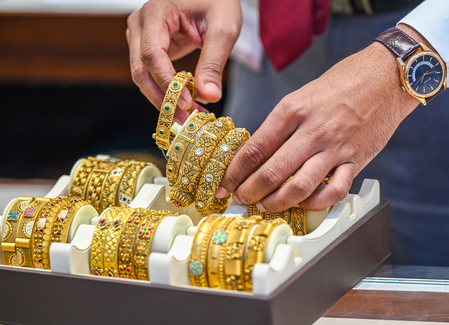
New Delhi, Jan 26 (IANS) In a dramatic rally, the gold prices have surpassed $5,000 an ounce, hitting another record high amid heightened global uncertainties.
The safe-haven metal reached $5,026 an ounce in trading, as silver reached $102 an ounce for the first time. In January 2024, Gold stood at just above $2,000 an ounce.
Precious metals continue to trade in a structurally strong bull market as we move deeper into 2026, with momentum firmly intact despite intermittent corrections and elevated price levels.
The current phase reflects healthy consolidation rather than exhaustion, with long-term fundamentals continuing to dominate short-term volatility, according to analysts.
Persistent safe-haven demand, steady central-bank accumulation, and expectations of accommodative global monetary conditions continue to underpin prices. Importantly, downside remains limited as former resistance zones have now turned into reliable demand areas, reinforcing the strength of the broader trend, said Ponmudi R, CEO of Enrich Money, a SEBI-registered online trading and wealthtech firm.
Silver continues to outperform decisively. COMEX Silver has surged beyond the $100 mark, registering fresh lifetime highs and highlighting the unique dual nature of the metal — part monetary hedge, part industrial commodity.
The relative strength of silver over gold reflects this powerful convergence of investment and industrial demand, said market watchers. This rally remains fundamentally driven rather than speculative, they added.
Looking ahead into the remainder of Q1 2026 and beyond, the outlook for precious metals stays decisively bullish.
“Tight supply, dual demand engines, and supportive global liquidity conditions favour continued medium-to-long-term upside. Near-term pullbacks, driven by overbought conditions or temporary dollar strength, are likely to remain shallow and should attract fresh accumulation, said analysts.
Silver, in particular, retains strong relative-performance potential, while gold continues to serve as the most reliable hedge against macro uncertainty.
Gold and silver have benefited from a combination of global factors, including sustained central bank demand, currency volatility and persistent geopolitical uncertainty.
—IANS
na/
Samsung to offer treasury shares worth $120 million as bonuses
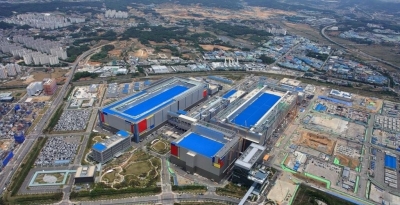
Seoul, Jan 26 (IANS) Samsung Electronics said on Monday it plans to provide treasury shares worth 175.2 billion won ($120 million) to its executives under its excess profit incentive (OPI) system.
The South Korean tech giant said in a regulatory filing that it will distribute a total of 1.15 million treasury shares to 1,051 executives under the incentive program, without selling the shares on the market.
Under Samsung Electronics' OPI system, employees can receive up to 50 percent of their annual salary as bonuses when their business division meets earnings targets. Part of the incentive is provided in shares after a one-year period, reports Yonhap news agency.
"The incentive programme aims to enhance responsible management and create long-term performance," Samsung Electronics said, adding the latest distribution relates to incentives for 2024.
"The shares to be distributed account for 0.019 percent of the company's outstanding shares and are expected to have a limited impact on share value," it added.
Meanwhile, Lee Jae-yong, chairman of Samsung Electronics, has urged the company's executives not to become complacent despite a sharp rebound in earnings, stressing that the company faces a "last chance" to restore its competitiveness, industry sources said.
Lee delivered the message during a recent seminar for Samsung Group executives, following the company's announcement of a record operating profit of 20 trillion won (US$13.8 billion) for the fourth quarter amid a semiconductor industry upcycle.
His remarks were aimed at warning some 2,000 executives against settling for short-term performance gains and calling for stepped-up efforts to fundamentally rebuild Samsung's technological edge, according to the sources, who asked not to be identified.
During the seminar, Lee shared key remarks by his late father and Samsung Group Chairman Lee Kun-hee, along with the company's core business strategies, including those related to artificial intelligence (AI).
—IANS
na/