
India’s plastics exports projected to double to $20 billion by 2030

New Delhi, Jan 27 (IANS) India’s plastics industry is projected to reach $44.5 billion by 2030 at a CAGR of 11 per cent, with exports surging from about $10 billion in 2025 to $20 billion by 2027, a report said on Tuesday.
Apex body of plastic industry, PlastIndia Foundation, said the growth of industry valued at $26.5 billion in 2025 will be driven by large-scale infrastructure programmes and accelerating consumer demand across packaging, automotive, construction, electronics and healthcare.
Packaging accounts for nearly 42 per cent of the market, supported by rapid e-commerce expansion, underlining the plastics industry’s critical role in modern commerce, said Ravish Kamath, President, PlastIndia Foundation.
‘PLASTINDIA 2026’ billed as the "world’s largest international plastics exhibition" and "India’s first 100 per cent zero‑waste" expo will be held at Bharat Mandapam here from February 5–10.
The event will feature over 2,000 exhibitors and an expected footfall of over 6 lakh, where the scale, strength and global competitiveness of the Indian plastics industry will be showcased, Kamath said.
The event will showcase plastic films, industrial parts and specialty polymers and aims to "further boost exports and position India as a global plastics leader" by connecting Indian manufacturers with global buyers, investors and technology partners.
The industry event includes a CEO Conclave, a reverse buyer‑seller meet and a Startup Search Initiative in collaboration with IIM Calcutta Innovation Park, the report said.
‘PLASTINDIA 2026’ will feature a 20,000 sq. ft. Open Air Museum, a first-of-its-kind initiative in India to showcase the positive and responsible role of plastics through towering sculptures, interactive installations and themed zones.
The exhibition will highlight innovation, sustainability and digital transformation across the entire plastics value chain, clearly demonstrating that Indian manufacturers are ready to meet global demand, said Alok Tibrewala, Chairman, National Executive Committee, 'PLASTINDIA 2026'.
—IANS
aar/na
Sensex, Nifty open lower as investors await India-EU FTA
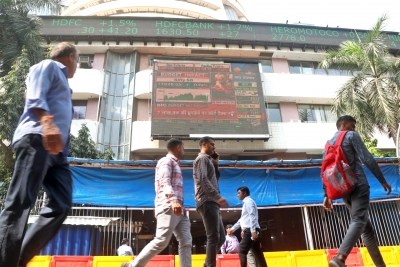
Mumbai, Jan 27 (IANS) The Indian equity markets opened the week lower on Tuesday amid persistent FII selling and mixed December quarter results.
As of 9.25 am, Sensex dipped 436 points, or 0.54 per cent, to reach 81,101, and Nifty declined 110 points, or 0.44 per cent to 24,938.
India and the European Union are set to announce the conclusion of negotiations on a Free Trade Agreement (FTA) at the India–EU Summit on Tuesday, that could boost the market sentiment later, especially in pharma, textiles, and chemicals sectors, analysts said.
Main broad-cap indices performed in line with the benchmark indices, as the Nifty Midcap 100 lost 0.53 per cent, and the Nifty Smallcap 100 eased 0.57 per cent.
All sectoral indices were trading in the red except metal and PSU bank. Nifty auto, realty and media were the largest losers, down 1.90 per cent, 2.15 per cent and 1.28 per cent, respectively.
Immediate support lies at 25,000 zone, while resistance is now anchored near 25,250–25,300 zone, market watchers said.
Meanwhile, the United States has indicated there may be a path to easing the 25 per cent tariff on India, imposed earlier over purchases of Russian oil, even as the levy remains in place for now.
China’s industrial profits surged 0.6 per cent in CY25 from the prior year, breaking the trend of decline for consecutive three years, as manufacturing output expanded despite weak domestic demand.
In Asian markets, China's Shanghai index advanced 0.03 per cent, and Shenzhen eased 0.38 per cent, Japan's Nikkei added 0.4 per cent, while Hong Kong's Hang Seng Index gained 1.17 per cent. South Korea's Kospi added 1.81 per cent.
The US markets ended in the green in the last trading session as Nasdaq advanced 0.43 per cent. The S&P 500 gained 0.5 per cent, and the Dow added 0.64 per cent.
Investors look for cues from over 200 quarterly corporate results to be reported in the week, and from the Union Budget scheduled to be tabled on Sunday (February 1).
On January 20, foreign institutional investors (FIIs) sold net equities worth Rs 4,113 crore, while domestic institutional investors (DIIs) were net buyers of equities worth Rs 4,103 crore.
—IANS
aar/na
Cybersecurity breaches up 26 pc in S. Korea in 2025 amid AI-based threats

Seoul, Jan 27 (IANS) The number of cybersecurity breaches reported to authorities rose 26 per cent from a year earlier in 2025, a government report here showed on Tuesday, as hackers continue to develop their attack tactics based on artificial intelligence (AI) technologies.
The total number of cybersecurity breaches came to 2,383 in 2025, compared with 1,887 tallied a year earlier, according to the report by the Ministry of Science and ICT, reports Yonhap news agency.
Of the cases, server intrusions accounted for 44.2 per cent, followed by distributed denial-of-service (DDoS) attacks at 24.7 per cent.
Cybersecurity breaches involving malicious code, including ransomware, accounted for 14.9 per cent of the reported intrusions, the science ministry said.
In 2025, South Korea experienced a series of cyberattacks on platforms closely connected to people's daily lives, including mobile networks and financial services, it noted.
"The scope of hackers' targets has expanded to the education and medical sectors, beyond previous targets that included research, manufacturing and energy institutions," the science ministry said in the report.
"Hacking tactics are becoming more advanced through AI-based automation and coordinated attacks," it added.
In 2026, hackers may even seek to infiltrate "trust-based communication methods," such as real-time voice calls for virtual meetings, using deepfake technology that generates voices and videos, according to the ministry.
They may also directly target existing AI models, the ministry said.
"Attackers may inject malicious information into chatbots, analysis programs or security platforms to cause malfunctions or information leaks," it said, calling on businesses to enhance their security readiness.
"The government will operate AI-based prevention and response programs and take preemptive actions to address security blind spots to create a reliable cyber environment.
Meanwhile, South Korean cybersecurity authorities estimate that around 9.6 million accounts may have been affected by a recent cyberattack at Kyowon Group, a local education service provider.
The estimate by a government investigation team that includes the Korea Internet and Security Agency comes after Kyowon Group reported a possible breach this month, saying it had detected traces of a ransomware attack.
—IANS
na/
Biz sentiment slips in Jan as non-manufacturing sector weakens: BOK
Seoul, Jan 27 (IANS) Business sentiment in South Korea fell slightly in January, despite strong exports, due mainly to worsening sentiment in the non-manufacturing sector following the dissipation of year-end base effects, a central bank survey showed on Tuesday.
The Composite Business Sentiment Index (CBSI) for all industries stood at 94 this month, down 0.2 point from December, according to the survey conducted by the Bank of Korea (BOK), reports Yonhap news agency.
The index had risen for two consecutive months to reach 94.2 in December, its highest level since July 2024, before slipping back in January.
The reading for nonmanufacturers fell 2.1 points to 91.7, while the index for manufacturers rose 2.8 points to 97.5.
A reading below 100 indicates that pessimists outnumber optimists.
"The sentiment among manufacturers improved on the back of increased exports, but that among nonmanufacturers deteriorated due to the fading of year-end seasonal factors," a BOK official said.
In December, Black Friday promotions and an increase in Chinese tourists during the winter holiday season, among other factors, helped boost retail sales and nonmanufacturing activity, the official added.
The survey, conducted earlier this month, covered 3,255 companies, including 1,815 manufacturers.
Meanwhile, South Korean stocks traded sharply higher late Tuesday morning in the face of U.S. President Donald Trump's threat to hike tariffs on Korean imports such as automobiles.
After opening lower, the benchmark Korea Composite Stock Price Index (KOSPI) shot up 67.56 points, or 1.36 percent, to 5,017.15 as of 11:20 a.m.
Trump said in a social media post that he's raising "reciprocal" tariffs and auto tariffs on South Korea to 25 percent from 15 percent, arguing that the South Korean legislature has not yet completed a domestic process to implement a bilateral trade deal.
Investors brushed off rekindled tariff uncertainties, expecting the issue would be a short-term jitter rather than lead to a long-term correction. Tech shares led the market advance.
—IANS
na/
Trump’s tariff hike aimed at expediting S Korea’s investment in US
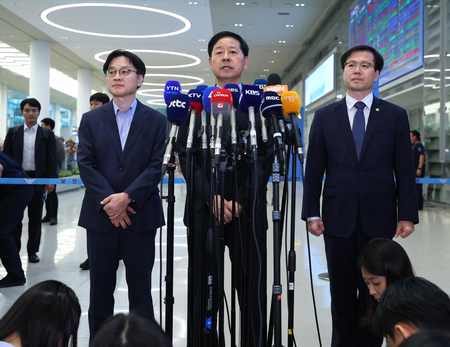
Seoul, Jan 27 (IANS) US President Donald Trump's surprise announcement to raise tariffs on South Korea appears to be aimed at pressuring the country to swiftly carry out its investment pledge to the United States amid domestic uncertainties, including the U.S. Supreme Court's planned ruling on the legality of the tariffs, experts here said on Tuesday.
Earlier in the day, Trump said in a social media post that he is raising "reciprocal" tariffs and auto duties on South Korea to 25 per cent from 15 per cent, arguing Seoul's National Assembly has not yet completed the domestic process to implement the countries' bilateral trade deal, finalised in October, reports Yonhap news agency.
Trump was apparently referring to a special bill submitted by Korea's ruling Democratic Party in November for supporting the country's US$350 billion investment pledge to the U.S., which was part of the tariff deal between the two countries.
The bill has yet to gain the Assembly's approval. "Trump's move seems to be fundamentally aimed at ensuring the passage of the special investment bill, which is being delayed at the National Assembly, rather than actually raising the tariffs," Kwon Nam-hoon, president of the Korea Institute for Industrial Economics and Trade, said.
"As there is a possibility of the U.S. Supreme Court striking down reciprocal tariffs, Trump may have acted out of a sense of urgency to secure a firm commitment (from Korea) before things get more delayed," he added, noting the U.S. might have felt Korea was "testing the waters."
Shin Won-kyu, a chief analyst at the Korea Economic Research Institute, said Trump's move could be stemming from heightened anxiety with an array of issues bursting out, including criticism over his immigration policy and ambitions over Greenland, as well as escalating tensions with the European Union and Canada.
Trade experts also said they cannot rule out the possibility that Korea's recent push for digital regulations, including an ongoing probe into U.S.-listed e-commerce giant Coupang Inc.'s massive data leakage incident, affected Trump's decision.
U.S. lawmakers and investors have called the investigation into Coupang "discriminatory," while the State Department expressed "significant concerns" last month over Seoul's regulatory moves that could affect online platform businesses.
The Coupang issue was also discussed during Korean Prime Minister Kim Min-seok's meeting with U.S. Vice President JD Vance last week, where the two agreed to manage the issue to ensure it will not cause misunderstandings between the two governments, according to Seoul officials.
"Unilaterally overturning agreed terms between the two countries via a social media post is not only undiplomatic, but also extremely difficult to comprehend from a diplomatic standpoint," Yoon Heo, economics professor at Sogang University, said.
Meanwhile, the Seoul government said it will closely communicate with Washington over the ongoing legislative progress on the U.S. investment bill, while devising a response strategy.
Korea has not received an official notice or explanation from the U.S. over Trump's tariff hike announcement, Cheong Wa Dae said earlier, adding it will soon hold an emergency interagency meeting, headed by presidential chief of staff for policy Kim Yong-beom, to discuss the government's response.
Industry Minister Kim Jung-kwan, who has been on a visit to Canada, was set to head for Washington, where he will discuss the matter with his U.S. counterparts, his office said, adding that a meeting with U.S. Commerce Secretary Howard Lutnick was being arranged.
—IANS
na/
Adoption of electric vehicles tied to real-world reductions in air pollution: Report

New Delhi, Jan 26 (IANS) The growing use of electric vehicles is already improving air quality in California neighborhoods, a new report said on Monday.
Using high-resolution satellite data, the team reported the first statistically significant drop in nitrogen dioxide pollution linked directly to zero-emissions vehicles, showing that cleaner transportation is delivering real benefits today, according to the study by researchers at the Keck School of Medicine of USC.
The study, published in The Lancet Planetary Health, analysed changes in air pollution levels between 2019 and 2023 as more Californians switched to zero-emissions vehicles, including fully electric and plug-in hybrid cars.
Researchers found that for every 200 electric vehicles added in a neighborhood, nitrogen dioxide levels fell by about 1.1 per cent.
Nitrogen dioxide is a harmful pollutant produced mainly by burning fossil fuels and is known to trigger asthma, bronchitis, heart disease and strokes.
While electric vehicles are often promoted as a way to fight climate change in the long run, this research shows they are also making the air cleaner in the short term.
Earlier studies using ground-based air monitors suggested a link between electric vehicle adoption and lower pollution, but limited coverage made the results uncertain.
By using satellite data from NASA’s TROPOMI instrument, which measures air pollutants across large areas daily, the USC team was able to track changes in nearly every neighborhood in California.
The researchers divided the state into 1,692 neighborhood-sized areas and compared electric vehicle registration data from the California Department of Motor Vehicles with annual nitrogen dioxide levels.
Over the five-year period, a typical neighborhood added around 272 zero-emissions vehicles. Many areas saw even bigger increases, leading to noticeable improvements in air quality.
Senior author Dr. Erika Garcia said the findings are important because air pollution affects health almost immediately.
Traffic-related pollution can harm the lungs and heart both in the short and long term, making reductions especially meaningful for community well-being.
Lead author Dr. Sandrah Eckel added that even though electric vehicles still make up a small share of all cars in California, their impact is already measurable.
During the study period, zero-emissions vehicles grew from about 2 per cent to 5 per cent of all light-duty vehicles -- showing that much more improvement is possible as adoption continues.
The study also highlights the power of satellite technology to track air pollution worldwide, opening new opportunities to study the environmental impact of clean energy policies.
The research was supported in part by the National Institutes of Health and NASA, with contributions from scientists across USC, George Washington University, UC San Diego and community partners in Los Angeles.
--IANS
pk
97 pc firms in India upgrade privacy frameworks to support responsible AI use: Report

New Delhi, Jan 26 (IANS) As artificial intelligence rapidly becomes part of everyday business, 97 per cent of companies have already expanded their privacy programmes, a new report said on Monday.
Data compiled by Cisco showed that nearly 96 per cent organisations plan to invest even more -- underlining how critical data protection has become in the AI era.
The study, which surveyed over 5,200 IT, technology, and security professionals across 12 countries, highlights that AI is the main force behind this transformation.
In India, nearly all organisations reported expanding their privacy programmes to keep up with the growing complexity of AI systems.
Globally too, spending on privacy initiatives has increased sharply, with many companies now investing millions of dollars annually to strengthen data protection frameworks.
The report showed that businesses clearly see the link between strong privacy practices and successful AI use.
A large majority believe that robust privacy frameworks help them innovate faster and build trust in AI-powered services.
In India, every organization surveyed said they experienced at least one business benefit from their privacy efforts, such as improved agility, better innovation, or stronger customer loyalty.
Many also pointed out that being transparent about how data is collected and used plays a major role in gaining customer confidence.
However, while privacy investments are rising, data governance is still evolving. Many companies are struggling with managing and accessing high-quality data needed to run AI systems effectively.
Around 70 per cent of organisations in India said they face challenges in efficiently using relevant and reliable data.
Although several companies have set up AI governance bodies, only a small number feel these structures are fully mature.
Cisco leaders emphasised that AI requires a more holistic approach to managing all types of data, not just personal information.
They noted that organizations must clearly understand and structure their data so that AI-driven decisions can be explained and trusted, making governance a critical part of scaling AI responsibly.
The report also highlights growing concerns around cross-border data flows. While there is increasing demand for data localisation in India, many organisations feel these requirements add cost and complexity and make it harder to deliver seamless services across countries.
A large number of companies support the idea of harmonised international data transfer rules to ensure secure and efficient global operations, as per the report.
--IANS
pk
SVAMITVA scheme enables nearly 3 crore property cards in over 1.84 lakh villages: Govt

New Delhi, Jan 26 (IANS) The SVAMITVA scheme has enabled the issuance of nearly three crore property cards in over 1.84 lakh villages to date, reducing land disputes and supporting planned rural development, the government said on Monday.
The 77th Republic Day Parade at Kartavya Path here saw the participation of around 450 elected representatives of Panchayati Raj Institutions and Rural Local Bodies as Special Guests, reflecting the government of India’s emphasis on strengthening grassroots democracy and people’s participation.
Among the 30 tableaux that rolled down the Kartavya Path, was also the Ministry of Panchayati Raj’s tableau on the theme “SVAMITVA Scheme: Aatmanirbhar Panchayat se Samriddh evam Aatmanirbhar Bharat”.
It highlighted how legal ownership of rural residential properties empowers citizens and strengthens Panchayats.
According to the ministry, citizens are invited to participate in the MyGov public poll for the Republic Day tableaux as an exercise in informed civic engagement.
Meanwhile, in sustained efforts to strengthen Panchayati Raj Institutions and enhance grassroots governance across rural India, the government has implemented a wide range of initiatives focused on capacity building, training, digital governance, institutional strengthening and community participation.
In 2025, aligned with the localisation of Sustainable Development Goals and the vision of Viksit Bharat, these initiatives reinforced the central role of Panchayats in sustainable rural development, according to Ministry of Panchayati Raj.
For example, Prime Minister Narendra Modi presided over the distribution of property cards under the SVAMITVA Scheme in January, providing 65 lakh rural citizens with legal ownership documents in a single day. The distribution covered more than 50,000 villages across 10 states and 2 Union Territories, bringing the total number of property cards distributed under SVAMITVA to 2.25 crore in January.
Moreover, the ministry undertook an initiative to leverage popular digital platforms for mass awareness on key issues relating to Panchayati Raj. It also launched ‘SabhaSaar’, an AI-powered meeting summariser tool that automatically generates structured minutes from video or audio recordings of Gram Sabhas.
—IANS
na/
IEW 2026 showcases strong growth in ethanol blending and CBG under PM Modi’s vision: Hardeep Puri
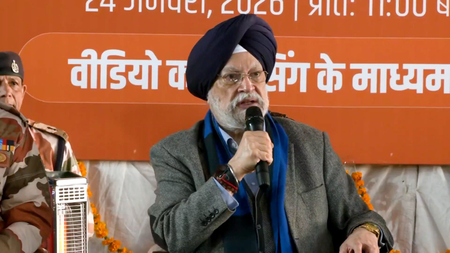
New Delhi, Jan 26 (IANS) Under the leadership of Prime Minister Narendra Modi, India is witnessing a major transformation in its energy sector, with strong focus on bio-energy, ethanol blending and circular economy solutions, Union Petroleum and Natural Gas Minister Hardeep Singh Puri said on Monday.
This vision is being prominently showcased at the India Energy Week (IEW) 2026, Puri added.
Speaking on the sidelines of IEW 2026, Puri highlighted that India has made remarkable progress in bio-fuels and waste-to-energy initiatives over the past few years.
"Under the leadership of PM Narendra Modi, IEW 2026 highlights higher bio-fuel blending, stronger CBG-CGD integration and circular energy growth," Puri stated.
He said the event reflects the government’s commitment to cleaner, greener and more sustainable energy pathways, while also strengthening energy security.
"The Bio-Energy, Ethanol and CBG Zone hosted by Indian Oil Corporation has emerged as a major attraction at the event," he mentioned.
"Waste-to-energy solutions have taken centre stage, demonstrating how agricultural residue, organic waste and other by-products are being converted into useful energy resources," he said.
Puri noted that ethanol blending in petrol has increased significantly from just 1.53 per cent earlier to 20 per cent now, marking a major milestone for India.
This shift has not only reduced dependence on fossil fuel imports but has also provided additional income opportunities for farmers and boosted the rural economy.
He further pointed out that the country now has 133 Compressed Bio-Gas (CBG) plants, producing around 926 tonnes of CBG per day.
The stronger integration of CBG with City Gas Distribution (CGD) networks is helping promote cleaner cooking fuel and transportation fuel across urban and rural areas.
According to the minister, IEW 2026 clearly reflects India’s move towards a circular energy model, where waste is treated as a resource rather than a burden.
He said such initiatives are crucial for achieving India’s climate goals while ensuring inclusive and sustainable growth.
India Energy Week 2026 is being held from January 27 to 30 at ONGC’s Advanced Training Institute (ATI) in Goa, bringing together policymakers, industry leaders and experts to shape the future of the country’s energy landscape.
--IANS
pk
India-EU FTA duty cuts could boost India’s small luxury car market: BMW India CEO

New Delhi, Jan 26 (IANS) Lower customs duties on imported cars under the proposed India-EU free trade agreement could help expand India’s small luxury car market, BMW Group India President and CEO Hardeep Singh Brar said on Monday.
Brar said the luxury car segment in India currently makes up only about one per cent of the overall passenger vehicle market, leaving significant room for growth if import duties are eased.
“There is a strong and positive signal of confidence in India’s long term growth story. India today is not just a large market, but a future ready economy backed by reforms and policies focused on building a globally competitive ecosystem,” he stated.
He said the India-EU Free Trade Agreement would be a historic step for both sides, as it would boost trade and encourage greater exchange of technology and innovation.
“The India EU Free Trade Agreement would be a historic milestone benefiting both sides by expanding trade and enabling deeper exchange of technology and innovation,” Brar mentioned.
From the automotive industry’s point of view, Brar said the agreement should include balanced and mutually beneficial provisions that support demand for luxury vehicles and strengthen supply chains, especially at a time of global geopolitical uncertainty.
Brar said a reduction in customs duties on completely built units, or CBUs, would make imported luxury cars more accessible and help widen the market in India.
At present, CBUs account for around five per cent of BMW’s total sales in the country.
“If customs duties on completely built units are reduced, it would help expand the luxury car market in India,” he added.
“While CBUs currently account for about 5 per cent of our sales, such a framework would allow us to broaden our product portfolio, introduce globally popular models and test new offerings,” Brar noted.
Brar noted that easing duties on luxury cars would benefit consumers without affecting mass-market carmakers, as luxury vehicles form only a small share of India’s passenger vehicle segment.
“This would make the policy a win-win for both India and the European Union,” he stated.
--IANS
pk