
India’s economy poised for steady growth, repo rate likely unchanged till 2027

New Delhi, Jan 27 (IANS) India’s GDP growth is forecasted at 6.5 per cent in 2026 and 6.4 per cent in 2027, keeping it among the fastest‑growing major economies, a report said on Tuesday.
The report from DBS Bank said that CPI inflation is expected to rise from 2.2 per cent in 2025 to 3.5 per cent in 2026 and 4.5 per cent in 2027, indicating gradual price normalisation.
It stated that the Reserve Bank of India is expected to keep policy rate steady at 5.25 per cent through 2026 and 2027, signalling a stable monetary stance.
"India’s 10‑year government bond yield is projected to ease from 6.60 per cent in early 2026 to 6.40 per cent by end‑2027 despite global rate volatility," the report said.
Recalling the major events in global bond markets last week, the bank said that bond yields in developed markets "marched higher last week to levels not seen in decades."
However, the DBS bank judged the sell‑off as a market normalisation rather than a harbinger of a crisis, the report said.
"The selloff may be disconcerting, but the developments are not harbingers of a crisis, in our view," it added.
In development markets other than Japan, the higher yields are also a reflection of market conditions normalising, it said, adding that "central bank credibility and fiscal monetary coordination could keep the bond boat steady."
The bank forecasted the US Federal Reserve to pause policy moves at its January 27-28 FOMC meeting, following three consecutive rate cuts.
"We expect the Fed to pause this month not to signal its intransigence against President Trump," the bank said, adding that the Central bank could assess the impact of earlier cuts and upside inflation risks.
Regarding the US economy, the report said that job growth may have softened, but the unemployment rate is low, and wages are growing in positive real terms.
--IANS
aar/rvt/
India’s oil & gas sector offers investment opportunities worth 500 billion dollars: PM Modi
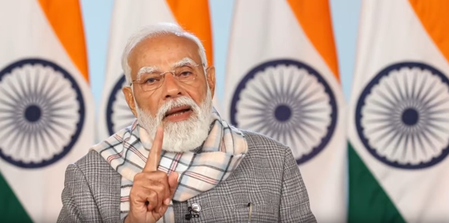
New Delhi, Jan 27 (IANS) Prime Minister Narendra Modi on Tuesday said that India’s energy sector offers investment opportunities worth 500 billion dollars as he urged global oil and gas majors to “Make in India, Innovate in India, Scale with India, Invest in India.”
Addressing the India Energy Week 2026, via video conferencing, being attended by representatives from nearly 125 countries in Goa, PM Modi said that the country’s energy sector has vast investment opportunities across different areas of the energy value chain.
He highlighted that India has significantly opened up its exploration sector and referred to the deep-sea exploration initiative known as the Samudra Manthan Mission. By the end of this decade, India aims to raise investments in the oil and gas sector to 100 billion dollars, with a target of expanding the scope of exploration to one million square km. More than 170 exploration blocks have already been awarded, and the Andaman and Nicobar basin “is emerging as the next hydrocarbon hope,” PM Modi said.
Underlining that several reforms have been undertaken in the exploration sector, including reducing the no-go areas, the Prime Minister added that suggestions received during previous editions of India Energy Week have been incorporated into changes in Acts and Rules. He affirmed that companies investing in the exploration sector are certain to see increased profitability.
PM Modi further stated that India possesses a very large refining capacity and currently ranks second in the world, and is poised to become the number one country globally in refining capacity. The country’s present refining capacity stands at around 260 million metric tonnes (MMT) per annum, and continuous efforts are underway to raise it beyond 300 MMT per annum, he added.
Highlighting that LNG demand in India is continuously rising, and the country has set a target to meet 15 per cent of its total energy demand through LNG, the Prime Minister emphasised the need to work across the entire LNG value chain and noted that India is undertaking large-scale efforts in transportation. India is working to build the vessels required for LNG transportation domestically, supported by a recently launched ship-building program worth Rs 70,000 crore. Numerous investment opportunities have also been created in constructing LNG terminals at Indian ports, as well as in regasification projects, he added.
The Prime Minister stressed that India requires a vast pipeline network for LNG transportation, where significant investments have already been made, but large-scale opportunities still remain. He pointed out that city gas distribution networks have already reached many Indian cities and are rapidly expanding to others, making this sector highly attractive for investment.
PM Modi observed that with India’s large population and steadily growing economy, the demand for petrochemical products will continue to rise, necessitating extensive energy infrastructure. He affirmed that investment in this area will yield substantial growth and added that there are also abundant opportunities in downstream activities for investors.
“Today’s India is riding on the Reforms Express and undertaking rapid reforms across every sector”, PM Modi remarked.
He emphasised that reforms are being carried out to strengthen domestic hydrocarbons while creating a transparent and investor-friendly environment for global collaborations. India is developing an energy sector ecosystem capable of meeting local demand and, through affordable refining and transportation solutions, making exports highly competitive for the world, he added.
--IANS
sks/skp
India’s retail sector hits 3-year high with 54 pc leasing growth in 2025

Mumbai, Jan 27 (IANS) The year 2025 delivered exceptional 54 per cent year-on-year growth in gross leasing volume in India as retail sector achieved a three-year peak in gross leasing activity, a report showed on Tuesday.
Brick and mortal retail in the top seven cities of India reached a three-year high as gross leasing volume hit a total of 12.5 million square feet in 2025, according to a JLL report.
This surge reflects unwavering retailer confidence across key metropolitan markets and aggressive expansion strategies, as India redefines its consumption narrative against an uncertain global backdrop.
A resilient economy, coupled with rising discretionary spending, is fuelling this leasing renaissance, with offline retail formats witnessing an influx of premium brands commanding strong consumer loyalty, said the report.
India's retail sector maintains its robust growth trajectory, driven by substantial supply additions of 6.3 million sq. ft that have facilitated aggressive retailer expansion.
Delhi NCR, Hyderabad, and Mumbai witnessed the launch of 15 shopping malls in 2025, collectively contributing to the nation's overall mall inventory. As of end of 2025, the mall stock in the top seven cities stood at nearly 92 million square feet.
Shopping malls captured 45 per cent of the total leasing activity in 2025, while high streets commanded a dominant 48 per cent share.
“While fashion and apparel (34 per cent) and food and beverage (20 per cent) together comprised more than half of the annual leasing, the share of Fashion and Apparel has moderated from 41 per cent in 2023 to 34 per cent in 2025 though it still retains the top slot due to demand emanating from renowned domestic and D2C brands,” said Dr Samantak Das, Chief Economist and Head of Research and REIS, India, JLL.
Another interesting trend that became more pronounced during the year was the direct-to-consumer (D2C) brands going full throttle in terms of setting up physical store footprint garnering 0.9 million sq. ft of gross leasing volume, Das informed.
Demand from domestic retailers continued to accelerate as they accounted for 82 per cent of 2025’s gross leasing activities. The Indian retail sector has witnessed $2.3 billion institutional investment during the last 5 years.
—IANS
na/
How realme is shaping future of comfortable listening with Buds Clip

New Delhi, Jan 27 (IANS) Wireless audio has become a constant companion in everyday life, with earbuds now used across work calls, entertainment, fitness, travel, and casual listening.
As daily usage hours continue to rise, the focus on personal audio is gradually expanding beyond sound quality alone to include comfort, long-term wear, and overall ear health and wellness.
Consumers today are increasingly aware of how devices feel over extended periods, especially since earbuds are worn continuously throughout the day rather than in short listening bursts.
Ear health specialists and audio researchers often point out that the ear is a sensitive and naturally balanced environment. Comfort during long listening sessions depends not just on fit, but also on airflow, pressure, and how the ear interacts with a device over time.
Listening formats that reduce continuous contact inside the ear canal can feel more breathable and relaxed for some users, particularly those who spend several hours a day on calls or music. This has led to growing interest in open-ear and ear-clip style audio, which offers a different way to experience sound without sitting inside the ear.
Ear-clip earbuds approach this by resting along the outer ears rather than sitting inside the ear canal. By keeping the ear open, they allow natural airflow to continue while still delivering sound clearly.
This design can feel lighter during long sessions and supports a more breathable wearing experience, particularly for users who prefer earbuds that feel unobtrusive throughout the day. Because the ear remains open, ear-clip designs can also suit situations where awareness of surroundings is important, such as walking, commuting, or working in shared environments.
This is where realme brings a thoughtful addition to its audio range with Buds Clip, created to support different listening preferences and daily routines. realme Buds Clip are shaped to follow the natural curves of the outer ear, helping them stay in place comfortably without relying on pressure inside the ear. The result is a natural wearing experience that remains comfortable even during extended use, making them suitable for long workdays, travel, or continuous media consumption.
The lightweight 5.3g build plays an important role in long-term comfort. Lighter earbuds place less strain on the ear, which can help reduce tiredness over time.
The use of titanium-based memory metal allows the structure to gently adapt to different ear shapes while remaining strong and reliable. This flexibility helps the earbuds stay secure during movement while maintaining a soft, pressure-free feel that supports all-day wear.
Sound performance has been tuned specifically for an open-ear listening experience. realme Buds Clip feature a large dual-driver setup supported by AI-based sound tuning that balances bass, vocals, and clarity.
Spatial audio adds depth and dimension, creating an immersive experience while maintaining a natural and open feel. This approach allows users to enjoy engaging sound without isolating the ear, aligning well with longer listening sessions and everyday comfort.
realme Buds Clip also reflects the brand’s broader philosophy of introducing meaningful innovation through thoughtful design. Rather than replacing existing earbud styles, the clip-style format adds another option to realme’s growing audio lineup, catering to different listening preferences and evolving habits.
The minimalist, easy-to-wear form factor is designed to blend seamlessly into daily life, from commuting and working to casual listening and leisure.
The upcoming launch further reinforces realme’s wider ecosystem vision, as the brand continues to build a diverse range of smart, connected audio and AIoT products tailored to young consumers and modern usage patterns.
As audio consumption becomes increasingly woven into everyday routines, realme Buds Clip represent an effort to offer users greater choice in how they experience sound.
With the launch expected soon, realme is set to bring clip-style audio to a wider audience, aligning comfort, usability, and everyday practicality with the way people listen today.
--IANS
rvt/
India’s plastics exports projected to double to $20 billion by 2030

New Delhi, Jan 27 (IANS) India’s plastics industry is projected to reach $44.5 billion by 2030 at a CAGR of 11 per cent, with exports surging from about $10 billion in 2025 to $20 billion by 2027, a report said on Tuesday.
Apex body of plastic industry, PlastIndia Foundation, said the growth of industry valued at $26.5 billion in 2025 will be driven by large-scale infrastructure programmes and accelerating consumer demand across packaging, automotive, construction, electronics and healthcare.
Packaging accounts for nearly 42 per cent of the market, supported by rapid e-commerce expansion, underlining the plastics industry’s critical role in modern commerce, said Ravish Kamath, President, PlastIndia Foundation.
‘PLASTINDIA 2026’ billed as the "world’s largest international plastics exhibition" and "India’s first 100 per cent zero‑waste" expo will be held at Bharat Mandapam here from February 5–10.
The event will feature over 2,000 exhibitors and an expected footfall of over 6 lakh, where the scale, strength and global competitiveness of the Indian plastics industry will be showcased, Kamath said.
The event will showcase plastic films, industrial parts and specialty polymers and aims to "further boost exports and position India as a global plastics leader" by connecting Indian manufacturers with global buyers, investors and technology partners.
The industry event includes a CEO Conclave, a reverse buyer‑seller meet and a Startup Search Initiative in collaboration with IIM Calcutta Innovation Park, the report said.
‘PLASTINDIA 2026’ will feature a 20,000 sq. ft. Open Air Museum, a first-of-its-kind initiative in India to showcase the positive and responsible role of plastics through towering sculptures, interactive installations and themed zones.
The exhibition will highlight innovation, sustainability and digital transformation across the entire plastics value chain, clearly demonstrating that Indian manufacturers are ready to meet global demand, said Alok Tibrewala, Chairman, National Executive Committee, 'PLASTINDIA 2026'.
—IANS
aar/na
Sensex, Nifty open lower as investors await India-EU FTA
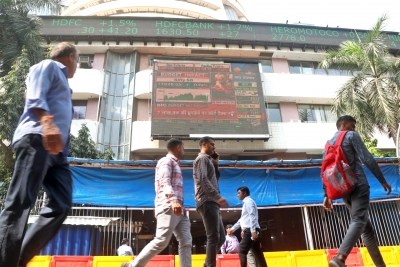
Mumbai, Jan 27 (IANS) The Indian equity markets opened the week lower on Tuesday amid persistent FII selling and mixed December quarter results.
As of 9.25 am, Sensex dipped 436 points, or 0.54 per cent, to reach 81,101, and Nifty declined 110 points, or 0.44 per cent to 24,938.
India and the European Union are set to announce the conclusion of negotiations on a Free Trade Agreement (FTA) at the India–EU Summit on Tuesday, that could boost the market sentiment later, especially in pharma, textiles, and chemicals sectors, analysts said.
Main broad-cap indices performed in line with the benchmark indices, as the Nifty Midcap 100 lost 0.53 per cent, and the Nifty Smallcap 100 eased 0.57 per cent.
All sectoral indices were trading in the red except metal and PSU bank. Nifty auto, realty and media were the largest losers, down 1.90 per cent, 2.15 per cent and 1.28 per cent, respectively.
Immediate support lies at 25,000 zone, while resistance is now anchored near 25,250–25,300 zone, market watchers said.
Meanwhile, the United States has indicated there may be a path to easing the 25 per cent tariff on India, imposed earlier over purchases of Russian oil, even as the levy remains in place for now.
China’s industrial profits surged 0.6 per cent in CY25 from the prior year, breaking the trend of decline for consecutive three years, as manufacturing output expanded despite weak domestic demand.
In Asian markets, China's Shanghai index advanced 0.03 per cent, and Shenzhen eased 0.38 per cent, Japan's Nikkei added 0.4 per cent, while Hong Kong's Hang Seng Index gained 1.17 per cent. South Korea's Kospi added 1.81 per cent.
The US markets ended in the green in the last trading session as Nasdaq advanced 0.43 per cent. The S&P 500 gained 0.5 per cent, and the Dow added 0.64 per cent.
Investors look for cues from over 200 quarterly corporate results to be reported in the week, and from the Union Budget scheduled to be tabled on Sunday (February 1).
On January 20, foreign institutional investors (FIIs) sold net equities worth Rs 4,113 crore, while domestic institutional investors (DIIs) were net buyers of equities worth Rs 4,103 crore.
—IANS
aar/na
Cybersecurity breaches up 26 pc in S. Korea in 2025 amid AI-based threats

Seoul, Jan 27 (IANS) The number of cybersecurity breaches reported to authorities rose 26 per cent from a year earlier in 2025, a government report here showed on Tuesday, as hackers continue to develop their attack tactics based on artificial intelligence (AI) technologies.
The total number of cybersecurity breaches came to 2,383 in 2025, compared with 1,887 tallied a year earlier, according to the report by the Ministry of Science and ICT, reports Yonhap news agency.
Of the cases, server intrusions accounted for 44.2 per cent, followed by distributed denial-of-service (DDoS) attacks at 24.7 per cent.
Cybersecurity breaches involving malicious code, including ransomware, accounted for 14.9 per cent of the reported intrusions, the science ministry said.
In 2025, South Korea experienced a series of cyberattacks on platforms closely connected to people's daily lives, including mobile networks and financial services, it noted.
"The scope of hackers' targets has expanded to the education and medical sectors, beyond previous targets that included research, manufacturing and energy institutions," the science ministry said in the report.
"Hacking tactics are becoming more advanced through AI-based automation and coordinated attacks," it added.
In 2026, hackers may even seek to infiltrate "trust-based communication methods," such as real-time voice calls for virtual meetings, using deepfake technology that generates voices and videos, according to the ministry.
They may also directly target existing AI models, the ministry said.
"Attackers may inject malicious information into chatbots, analysis programs or security platforms to cause malfunctions or information leaks," it said, calling on businesses to enhance their security readiness.
"The government will operate AI-based prevention and response programs and take preemptive actions to address security blind spots to create a reliable cyber environment.
Meanwhile, South Korean cybersecurity authorities estimate that around 9.6 million accounts may have been affected by a recent cyberattack at Kyowon Group, a local education service provider.
The estimate by a government investigation team that includes the Korea Internet and Security Agency comes after Kyowon Group reported a possible breach this month, saying it had detected traces of a ransomware attack.
—IANS
na/
Biz sentiment slips in Jan as non-manufacturing sector weakens: BOK
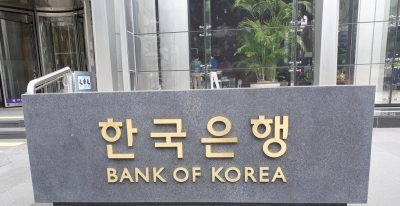
Seoul, Jan 27 (IANS) Business sentiment in South Korea fell slightly in January, despite strong exports, due mainly to worsening sentiment in the non-manufacturing sector following the dissipation of year-end base effects, a central bank survey showed on Tuesday.
The Composite Business Sentiment Index (CBSI) for all industries stood at 94 this month, down 0.2 point from December, according to the survey conducted by the Bank of Korea (BOK), reports Yonhap news agency.
The index had risen for two consecutive months to reach 94.2 in December, its highest level since July 2024, before slipping back in January.
The reading for nonmanufacturers fell 2.1 points to 91.7, while the index for manufacturers rose 2.8 points to 97.5.
A reading below 100 indicates that pessimists outnumber optimists.
"The sentiment among manufacturers improved on the back of increased exports, but that among nonmanufacturers deteriorated due to the fading of year-end seasonal factors," a BOK official said.
In December, Black Friday promotions and an increase in Chinese tourists during the winter holiday season, among other factors, helped boost retail sales and nonmanufacturing activity, the official added.
The survey, conducted earlier this month, covered 3,255 companies, including 1,815 manufacturers.
Meanwhile, South Korean stocks traded sharply higher late Tuesday morning in the face of U.S. President Donald Trump's threat to hike tariffs on Korean imports such as automobiles.
After opening lower, the benchmark Korea Composite Stock Price Index (KOSPI) shot up 67.56 points, or 1.36 percent, to 5,017.15 as of 11:20 a.m.
Trump said in a social media post that he's raising "reciprocal" tariffs and auto tariffs on South Korea to 25 percent from 15 percent, arguing that the South Korean legislature has not yet completed a domestic process to implement a bilateral trade deal.
Investors brushed off rekindled tariff uncertainties, expecting the issue would be a short-term jitter rather than lead to a long-term correction. Tech shares led the market advance.
—IANS
na/
Trump’s tariff hike aimed at expediting S Korea’s investment in US
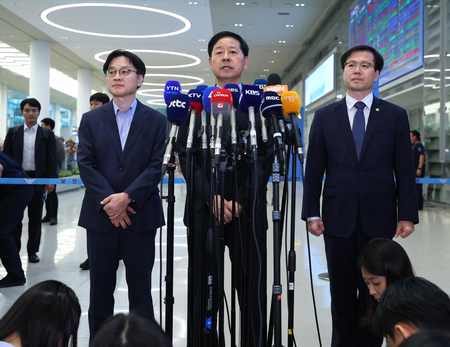
Seoul, Jan 27 (IANS) US President Donald Trump's surprise announcement to raise tariffs on South Korea appears to be aimed at pressuring the country to swiftly carry out its investment pledge to the United States amid domestic uncertainties, including the U.S. Supreme Court's planned ruling on the legality of the tariffs, experts here said on Tuesday.
Earlier in the day, Trump said in a social media post that he is raising "reciprocal" tariffs and auto duties on South Korea to 25 per cent from 15 per cent, arguing Seoul's National Assembly has not yet completed the domestic process to implement the countries' bilateral trade deal, finalised in October, reports Yonhap news agency.
Trump was apparently referring to a special bill submitted by Korea's ruling Democratic Party in November for supporting the country's US$350 billion investment pledge to the U.S., which was part of the tariff deal between the two countries.
The bill has yet to gain the Assembly's approval. "Trump's move seems to be fundamentally aimed at ensuring the passage of the special investment bill, which is being delayed at the National Assembly, rather than actually raising the tariffs," Kwon Nam-hoon, president of the Korea Institute for Industrial Economics and Trade, said.
"As there is a possibility of the U.S. Supreme Court striking down reciprocal tariffs, Trump may have acted out of a sense of urgency to secure a firm commitment (from Korea) before things get more delayed," he added, noting the U.S. might have felt Korea was "testing the waters."
Shin Won-kyu, a chief analyst at the Korea Economic Research Institute, said Trump's move could be stemming from heightened anxiety with an array of issues bursting out, including criticism over his immigration policy and ambitions over Greenland, as well as escalating tensions with the European Union and Canada.
Trade experts also said they cannot rule out the possibility that Korea's recent push for digital regulations, including an ongoing probe into U.S.-listed e-commerce giant Coupang Inc.'s massive data leakage incident, affected Trump's decision.
U.S. lawmakers and investors have called the investigation into Coupang "discriminatory," while the State Department expressed "significant concerns" last month over Seoul's regulatory moves that could affect online platform businesses.
The Coupang issue was also discussed during Korean Prime Minister Kim Min-seok's meeting with U.S. Vice President JD Vance last week, where the two agreed to manage the issue to ensure it will not cause misunderstandings between the two governments, according to Seoul officials.
"Unilaterally overturning agreed terms between the two countries via a social media post is not only undiplomatic, but also extremely difficult to comprehend from a diplomatic standpoint," Yoon Heo, economics professor at Sogang University, said.
Meanwhile, the Seoul government said it will closely communicate with Washington over the ongoing legislative progress on the U.S. investment bill, while devising a response strategy.
Korea has not received an official notice or explanation from the U.S. over Trump's tariff hike announcement, Cheong Wa Dae said earlier, adding it will soon hold an emergency interagency meeting, headed by presidential chief of staff for policy Kim Yong-beom, to discuss the government's response.
Industry Minister Kim Jung-kwan, who has been on a visit to Canada, was set to head for Washington, where he will discuss the matter with his U.S. counterparts, his office said, adding that a meeting with U.S. Commerce Secretary Howard Lutnick was being arranged.
—IANS
na/
Adoption of electric vehicles tied to real-world reductions in air pollution: Report

New Delhi, Jan 26 (IANS) The growing use of electric vehicles is already improving air quality in California neighborhoods, a new report said on Monday.
Using high-resolution satellite data, the team reported the first statistically significant drop in nitrogen dioxide pollution linked directly to zero-emissions vehicles, showing that cleaner transportation is delivering real benefits today, according to the study by researchers at the Keck School of Medicine of USC.
The study, published in The Lancet Planetary Health, analysed changes in air pollution levels between 2019 and 2023 as more Californians switched to zero-emissions vehicles, including fully electric and plug-in hybrid cars.
Researchers found that for every 200 electric vehicles added in a neighborhood, nitrogen dioxide levels fell by about 1.1 per cent.
Nitrogen dioxide is a harmful pollutant produced mainly by burning fossil fuels and is known to trigger asthma, bronchitis, heart disease and strokes.
While electric vehicles are often promoted as a way to fight climate change in the long run, this research shows they are also making the air cleaner in the short term.
Earlier studies using ground-based air monitors suggested a link between electric vehicle adoption and lower pollution, but limited coverage made the results uncertain.
By using satellite data from NASA’s TROPOMI instrument, which measures air pollutants across large areas daily, the USC team was able to track changes in nearly every neighborhood in California.
The researchers divided the state into 1,692 neighborhood-sized areas and compared electric vehicle registration data from the California Department of Motor Vehicles with annual nitrogen dioxide levels.
Over the five-year period, a typical neighborhood added around 272 zero-emissions vehicles. Many areas saw even bigger increases, leading to noticeable improvements in air quality.
Senior author Dr. Erika Garcia said the findings are important because air pollution affects health almost immediately.
Traffic-related pollution can harm the lungs and heart both in the short and long term, making reductions especially meaningful for community well-being.
Lead author Dr. Sandrah Eckel added that even though electric vehicles still make up a small share of all cars in California, their impact is already measurable.
During the study period, zero-emissions vehicles grew from about 2 per cent to 5 per cent of all light-duty vehicles -- showing that much more improvement is possible as adoption continues.
The study also highlights the power of satellite technology to track air pollution worldwide, opening new opportunities to study the environmental impact of clean energy policies.
The research was supported in part by the National Institutes of Health and NASA, with contributions from scientists across USC, George Washington University, UC San Diego and community partners in Los Angeles.
--IANS
pk