
Silver’s exceptional 200 pc rally boosts near term case for gold: Report
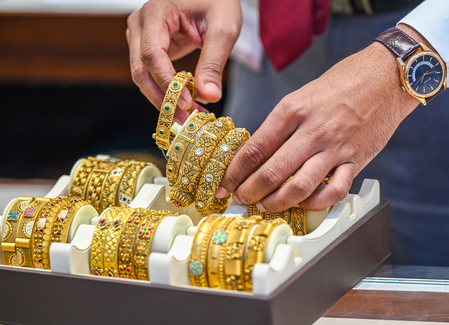
New Delhi, Jan 23 (IANS) Silver’s exceptional rally of over 200 per cent in the last 12 months sharply outperforming gold’s 80 per cent surge has created a condition in favour of yellow metal in the near term, a new report has said.
The report from Motilal Oswal Financial Services Ltd. (MOFSL) said that the current gold–silver ratio favours the yellow metal after silver’s outsized run.
The sharp outperformance of silver over has led to a "significant compression in the gold–silver ratio, which has fallen from pandemic highs of 127 to around 50 at the start of 2026," the report mentioned.
This reset suggests that while the long-term outlook for precious metals remains constructive, the near-term risk-reward equation may now be shifting in favour of gold after silver’s outsized run.
“While we remain positive on both metals and silver continues to have long-term upside backed by industrial demand and tight physical market conditions, the recent rally has also increased near-term volatility," said Navneet Damani, Head of Research Commodities and Manav Modi, Commodities Analyst, Motilal Oswal Financial Services Ltd.
Damani maintained that in this phase of silver's sharp outperformance, a higher allocation to gold can help manage fluctuations while staying invested in precious metals.
Silver showed more volatility with sharper price swings, while gold continues to offer relatively better stability—making it a preferred near-term hedge in uncertain market conditions, the report said.
Silver's sharp surge of over 200 per cent, from Rs 60,000 to Rs 3,20,000, could lead to a phase of consolidation at elevated levels or rebalancing by market participants becomes more likely.
The brokerage emphasised that the view is not a negative call on silver, but a risk-managed reallocation strategy after an aggressive up move.
Global silver ETFs saw outflows of over 3 million ounces in 2026, while gold ETFs experienced comparatively steadier inflows.
Global liquidity is expanding, the report said, citing an increase of money supply in the US and China, with the latter's money supply growing over 8 per cent YoY — conditions that historically boost demand for safe‑haven assets such as gold.
—IANS
aar/na
Growth picks up pace for both manufacturing, services in India in Jan: HSBC Flash PMI

New Delhi, Jan 23 (IANS) Growth picked up pace for both manufacturing and services in India in January as the HSBC Flash PMI figures on Friday showed quicker increases in new orders and output, alongside the reinstatement of job creation and a rebound in business confidence in the country.
Rising from 57.8 in December to 59.5 in January, the HSBC Flash India Composite Output Index – a seasonally adjusted index that measures the month-on-month change in the combined output of India’s manufacturing and service sectors – indicated a sharp rate of expansion that was above the long-run series average.
Trends improved at both manufacturers and service providers. Meanwhile, aggregate rates of input cost and output charge inflation remained moderate despite quickening since December, said the HSBC Flash India PMI by S&P Global.
“Growth, as signalled by the HSBC flash PMI, picked up pace for both manufacturing and services. Despite the rise in the manufacturing PMI, January’s figure remained below the 2025 average,” said Pranjul Bhandari, Chief India Economist at HSBC.
After losing some momentum at the end of 2025, new orders rose more rapidly – led by a faster pick up in domestic orders. Input cost pressures rose quickly, though more for goods producers than for service providers, Bhandari mentioned.
There were quicker increases in output at manufacturing companies and their services counterparts, with rates of growth broadly similar.
According to the report, underpinning the acceleration in growth of private sector activity was a faster expansion in overall new business intakes.
According to survey members, sales were fuelled by strengthening demand conditions and aggressive marketing campaigns. Manufacturers noted a quicker upturn than service providers, though growth picked up pace in both cases.
“January data showed a marked upturn in aggregate international orders, one that was the greatest in four months. Asia, Australia, Europe, Latin America and the Middle East featured in the qualitative part of the survey as the main destinations for Indian goods and services in the latest month,” said the report.
Hiring across India's private sector resumed in January, following no change in employment during December.
When assessing the 12-month outlook for business activity, Indian private sector companies were optimistic, the report mentioned.
—IANS
na/
Amazon’s 2nd round of 30,000-job cut plan likely next week: Report

New Delhi, Jan 23 (IANS) US e-commerce giant Amazon is likely to announce a second round of job cuts next week, in its plan to trim its workforce by 30,000, due to efficiency gains from artificial intelligence (AI), according to reports.
The new round of layoffs is expected to impact white collar roles across divisions including Amazon Web Services (AWS), the People Experience and Technology unit (human resources), Prime Video and retail, according to reports.
In October last year, Amazon reduced 14,000 white-collar employees from its workforce, around half of its total target 30,000. The magnitude of job cuts next week is expected to be of the same level, according to a Reuters report, citing sources.
The company was yet to comment on the report.
The e-commerce giant had linked the October round of job cuts to the rise of artificial intelligence (AI) software in an internal letter. “This generation of AI is the most transformative technology we’ve seen since the Internet, and it’s enabling companies to innovate much faster than ever before,” according to the letter.
Later, however, Amazon CEO Andy Jassy told analysts during the company’s third-quarter earnings call that the reduction was not "really financially driven" or "AI-driven." He said, “it’s culture," alluding that the company had too much bureaucracy.
“You end up with a lot more people than what you had before, and you end up with a lot more layers," he said.
Jassy had said earlier in 2025 that Amazon’s corporate workforce would get smaller over time from efficiencies gained through AI implementation.
Though the job cut affecting 30,000 employees would be the largest layoff in Amazon’s three-decade history after 27,000-job cuts in 2022, it would represent a small portion of Amazon’s 1.58 million employees.
Affected workers could remain on the payroll for 90 days, during which time they could apply for jobs internally or seek other employment, according to reports.
Leading business executives of tech companies at the World Economic Forum meeting in Davos said this week that artificial intelligence would not replace human jobs but can only reshape work by automating tasks.
—IANS
aar/na
Daily forex turnover hits record high in 2025: BOK
Seoul, Jan 23 (IANS) Daily foreign exchange (FX) trading by banks in South Korea hit an all-time high last year, driven by increased cross-border stock trading, central bank data showed on Friday.
Average daily FX turnover, including derivatives trading, came to US$80.71 billion in 2025, up 17 per cent from the previous year's $68.96 billion, according to the data from the Bank of Korea (BOK), reports Yonhap news agency.
It marked the highest annual level since the central bank began compiling such data under the current statistical standards in 2008.
"Amid extended foreign exchange market trading hours, stock investment-related trading by residents and foreign investors increased sharply," a BOK official said.
Average daily spot FX turnover climbed 26.1 per cent on-year to $32.38 billion last year, while derivatives trading increased 11.6 per cent to $48.33 billion over the cited period.
Residents' overseas stock investment amounted to $129.4 billion in the first 11 months of last year, already higher than the previous year's $72.2 billion, the data showed.
Foreign investors' investment in South Korean stocks also jumped 129 per cent on-year to $50.4 billion in 2025, according to the data from the BOK.
Meanwhile, more than one in four financial experts believe increased volatility in the foreign exchange (FX) market poses the biggest risk to the country's financial system, a central bank survey showed on Friday.
According to the survey conducted by the Bank of Korea (BOK) on 75 financial experts at home and abroad between November and December, 26.7 percent said heightened volatility in the local FX market is the biggest risk, among others, to the financial system in Asia's fourth-largest economy.
Some 16 per cent said high household debt poses the second-largest risk to the financial system.
The South Korean won has long traded below the multiyear low of 1,450 won to the greenback, in the face of capital outflows caused by increased overseas stock investment and geopolitical risks stemming from the Middle East and Europe.
The respondents cited uncertainties in economic and monetary policies among major economies, and an adjustment in the global asset market as major external factors that may hurt the financial system.
Some 12 per cent said there is a high possibility of a short-term shock occurring within a year undermining the financial system, the survey showed.
—IANS
na/
Sensex, Nifty open on positive note as geopolitical tensions ease

Mumbai, Jan 23 (IANS) The Indian stock market opened higher on Friday, extending gains for the second consecutive trading session while tracking positive global cues.
As of 9.30 am, the Sensex added 132 points, or 0.16 per cent to reach 82,440 and the Nifty advanced 52 points, or 0.21 per cent to 25,342.
Main broad-cap indices performed in line with benchmark indices, as Nifty Midcap 100 added 0.32 per cent, and the Nifty Smallcap 100 advanced 0.24 per cent.
All sectoral indices were trading in the green except Nifty media, PSU bank, realty as well as oil and gas.The top gainer was Nifty metal, up over 0.9 per cent. Nifty Media was the notable loser, down 0.74 per cent.
Immediate support for Nifty is placed at 25,100-25,150 zone, while key support is seen at 25,400–25,450 zone, market watchers said.
Asia-Pacific markets rose in the morning session, tracking Wall Street gains as geopolitical concerns moderated. Investor optimism rose as the Bank of Japan kept interest rates steady.
The pattern of sustained FII selling and DII buying, which dominated the market trend in 2025, have continued in 2026 so far. Investors look for a change in this pattern from cues in Budget 2026.
The FII's stance on India depends on growth in India’s corporate earnings as they can invest in other markets with cheaper valuations and better earnings, analysts said.
Since earnings growth may take some time, FII selling is expected to continue, pre-empting any healthy rally. FIIs are adding to the short positions on every rally triggered by some positive news, they added.
In Asian markets, China's Shanghai index added 0.27 per cent, and Shenzhen gained 0.24 per cent, Japan's Nikkei added 0.5 per cent, while Hong Kong's Hang Seng Index advanced 0.29 per cent. South Korea's Kospi added 0.92 per cent.
The US markets ended in the green overnight as Nasdaq advanced 0.91 per cent. The S&P 500 gained 0.55 per cent, and the Dow added 0.63 per cent.
On January 22, foreign institutional investors (FIIs) sold net equities worth Rs 2,550 crore, while domestic institutional investors (DIIs) were net buyers of equities worth Rs 4,223 crore.
—IANS
aar/na
FY27 likely to be a year of fiscal restraint after tax breaks in FY26: Report

New Delhi, Jan 23 (IANS) The next fiscal (FY27) is likely to be a year of fiscal restraint for the upcoming Union Budget 2026-27, after having given a lot of tax breaks in FY26, according to a new report.
As far as expenditure is concerned, at least a 10 per cent capex growth is assumed with limited room for revenue expenditure (as per our base case), according to the Budget Preview from HSBC Mutual Fund.
“In terms of deficit, the commitment to walk the fiscal glide path suggests a fiscal deficit of Rs 16.6 lakh crore (base case) — 4.2 per cent of GDP; translating into debt-to-GDP ratio of 55.6 per cent for FY27 (estimated),” the report projected.
Overall, the deficit targets would be met at 4.4 per cent of GDP even as Nominal GDP ‘growth rate’ is lower, the absolute level is still higher than that laid out at the time of FY26BE, the report said.
As of January, the FY27 redemptions stand at Rs 5.5 lakh crore.
Assuming some buyback/switches/retirement, the redemptions could be brought down to Rs 4.5 lakh crore, still higher than the Rs 3.3 lakh crore in FY26. This in itself takes the Gross Borrowing higher to Rs 16.3 lakh crore (base case), the report mentioned.
The Nominal growth is assumed at 10 per cent YoY and the rise in liabilities is assumed to rise at a slower clip of 8 per cent.
At the same time, the weighted average borrowing cost (as of FY25 was about 7 per cent and till Q2 FY26, it was somewhere in the region of 7.20 per cent, while Nominal GDP growth was just about 8 per cent YoY, which, in some way, makes it challenging to layout a rosy path for fiscal consolidation especially in terms of debt-to-GDP ratio, the report said.
—IANS
na/
Hyundai Motor union objects to deployment of humanoid robots
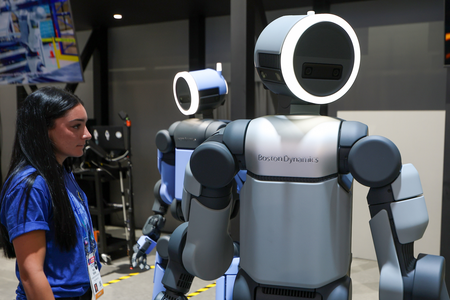
Seoul, Jan 23 (IANS) The labour union of Hyundai Motor, South Korea's leading automaker, said on Friday it will strongly oppose any deployment without prior consultation of physical artificial intelligence (AI) robots in automobile production.
"Not a single humanoid robot will be allowed on the production lines without a labor-management agreement," the automaker's 40,000-member union said on its website, reports Yonhap news agency.
The union said the company's new humanoid robot Atlas, unveiled at CES 2026 in Las Vegas on Jan. 6, sent shockwaves through the auto industry and heightened concerns over job security at the company's domestic plants.
"The company is apparently moving to introduce AI robots to reduce labor costs at production facilities," the union said. "Any deployment without the union's agreement will not be tolerated."
Boston Dynamics, owned by Hyundai Motor, publicly demonstrated the life-sized Atlas humanoid robot, featuring two arms and two legs, for the first time at the CES technology showcase.
Hyundai Motor said it plans to build a robot foundry in the United States by 2028 to mass-produce 30,000 Atlas robots and introduce them in manufacturing operations.
Separately, the union also raised concerns about employment instability stemming from production shifts to overseas plants.
"Two domestic plants are already suffering shortages in production volumes as output is being transferred to Hyundai Motor Group Metaplant America (HMGMA) in Georgia," the union said.
The company's plan to expand the Metaplant's annual output from less than 100,000 vehicles currently to 500,000 units by 2028 clearly indicates an intention to shift a substantial portion of domestic production overseas, it added.
Meanwhile, Hyundai Motor Group said its brands have won multiple honors across different vehicle segments at major automotive awards in Britain and the United States.
At the ‘2026 What Car?’ Awards, a major British automotive awards event, Hyundai Motor Co. and Kia Corp. won a total of seven honors spanning their sport utility vehicle (SUV) and electric vehicle (EV) lineups, the South Korean automotive giant said in a release.
—IANS
na/
Coupang’s US investors notify S. Korea of intent to file arbitration claims
Seoul, Jan 23 (IANS) Two US investors in e-commerce giant Coupang notified the South Korean government of their intent to bring arbitration claims against it over what they called "discriminatory" acts toward the US-listed firm, and requested a US government probe into the matter.
Greenoaks Capital Partners and Altimeter Capital Management took the actions, decrying South Korean authorities' investigations into Coupang following revelations in November about a massive customer data leak, according to documents that their legal representative, Covington & Burling LLP, submitted to the two governments, reports Yonhap news agency.
The Seoul government, along with experts, has been conducting a probe into the incident, in which about 33.7 million customers are believed to have been affected. Coupang has claimed a perpetrator accessed data from only about 3,000 of the accounts in question.
In a notice addressed to President Lee Jae Myung and Chung Hong-sik, the deputy minister for international legal affairs at Seoul's justice ministry, the U.S. investors expressed their intent to file arbitration claims under the South Korea-U.S. free trade agreement. They hold equity interests in Coupang valued at more than US$1.5 billion.
In a separate document sent to the Office of the U.S. Trade Representative (USTR), the investors requested that Washington investigate what they said were "unreasonable" and "discriminatory" acts by the Seoul government against Coupang, and impose "appropriate" trade remedies. They cited Section 301 of the Trade Act of 1974.
The two companies claimed that South Korea's policy enforcement and regulatory pressure regarding Coupang appear to "far exceed" the scrutiny imposed on its domestic Korean and Chinese competitors.
"As Coupang took increasing market share from Korean and Chinese competitors, enforcement actions across the Korea Fair Trade Commission, National Tax Service, Ministry of Employment and Labor, Financial Supervisory Service, and others increased, resulting in hundreds of audits, inspections, and raids and more penalties against Coupang than any other company in Korean history," they said in a joint press release.
Characterising the data breach as a "limited and constrained" incident, they accused the South Korean government of making "false and defamatory" claims, and senior ruling party officials of an "apparent attempt to inflame Korean public opinion and provide cover for efforts to eliminate Coupang and benefit domestic and Chinese competitors."
They also claimed that the Seoul government's "targeted and hostile interference" over the data breach has led to billions of dollars in lost market capitalisation.
"These losses have been borne directly by U.S. shareholders -- including individual investors and institutional funds holding the retirement savings of millions of American workers," they said.
In the notice to the Korean government, the investors claimed that as Coupang was threatening the historical dominance of its Korean and Chinese competitors, the Seoul government began "weaponising the administrative power of the state, and even acting outside its sovereign capacity, to disrupt Coupang's operations."
In the document to the USTR, the investors also pointed out that South Korean Prime Minister Kim Min-seok urged state regulators in December to approach enforcement against Coupang for the data breach "with the same determination used to wipe out mafias.
The company, founded by Korean American entrepreneur Kim Bom-suk, also known as Bom Kim, generates about 90 per cent of its sales in South Korea.
—IANS
na/
Global perception of India at Davos overwhelmingly positive: Ashwini Vaishnaw
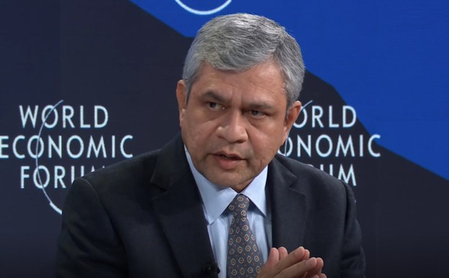
Davos, Jan 22 (IANS) India’s reform-driven growth story is firmly on track and is earning strong global trust, Union Minister Ashwini Vaishnaw said on Thursday.
Speaking on the sideline of World Economic Forum here, he said India’s economy has transformed into a high-growth and resilient system due to deep structural reforms personally led by Prime Minister Narendra Modi.
Speaking on the sidelines of the Davos meeting, the Minister said that a series of landmark reforms in recent years have strengthened investor confidence across sectors.
These include labour code reforms, simplification of the Goods and Services Tax, reforms in the energy sector and the opening up of nuclear energy to private players.
He said these changes have made India a more attractive and predictable destination for global investment.
Ashwini Vaishnaw said the reform process in India is continuous and covers all areas of the economy.
He added that investors are highly encouraged by the current policy environment and are expanding their presence in the country.
Citing examples, he said IKEA has announced plans to double its investment in India, while Qualcomm is significantly increasing its workforce.
"Companies across sectors see this period as the right time to invest in India," the minister stated.
Highlighting India’s strong economic fundamentals, the Minister said India is currently the fastest-growing major economy in the world.
He noted that the country is expected to grow at a steady rate of 6 to 8 per cent over the next five years.
He added that the combination of moderate inflation and strong growth reflects the economic transformation achieved over the past decade, which is now drawing global attention.
Referring to global uncertainties, Ashwini Vaishnaw stressed the importance of strengthening internal capabilities to deal with geopolitical, geoeconomic and technological challenges.
"The government is focused on ensuring that all key building blocks of the economy are in place so that India can remain resilient even during global disruptions," Vaishnaw mentioned.
The Minister said India is steadily building its own semiconductor ecosystem, developing a full artificial intelligence stack, scaling up defence manufacturing and helping Indian IT companies move from traditional software services to AI-based solutions.
"These efforts are strengthening the country’s economic resilience and future readiness," he added.
--IANS
pk
India emerging as global power hub with huge growth potential: Global experts at Davos

Davos, Jan 22 (IANS) India is fast emerging as a strong global power hub, driven by its large and young population, expanding economy and growing innovation ecosystem, global industry leaders said on Thursday.
Speaking to IANS on the sidelines of the World Economic Forum here, business leaders highlighted India’s rising importance in global economic development and its ability to attract long-term international investment.
Sharing a global perspective, Tu Chang, Founder of the Forum for Business, Taiwan, said India’s demographic advantage makes it one of the most important economic forces in the world today.
“India is emerging as a strong global power hub. With its large and young population, India offers immense potential for growth and innovation,” Chang stated.
Tu Chang said India is already being seen as one of the key powerhouses of global economic growth and will continue to play this role in the coming years.
He added that the World Economic Forum is addressing a wide range of issues this year, including sustainable development, capital flows, investments and political challenges, all of which are closely linked to economic progress.
“The country’s demographic advantage and expanding economy are key factors that will attract more global investment,” he explained.
He also praised Prime Minister Narendra Modi’s leadership, saying that the Indian government is making strong efforts to improve economic performance.
“India’s young workforce is a major strength and under Prime Minister Modi’s leadership, the country is well-positioned to perform even better in the years ahead,” Tu Chang said.
Milind Pimprikar, Founder of Caneus International, said discussions at the World Economic Forum this year are focused on scaling up technologies in a responsible manner.
He said Caneus is working with the Government of Maharashtra and the Government of India to create a new framework that helps startups and deep-tech innovations move from development to large-scale commercialization.
"Today at the World Economic Forum, the theme is how to scale up technologies responsibly,” he said.
“Through our partnership with the Government of Maharashtra and India, we are proposing to create a so-called mid-technology readiness level to scale up these technologies and startups to the next level,” Pimprikar told IANS.
Pimprikar said the partnership aims to introduce a “mid-technology readiness level” that will help promising technologies and startups reach the next stage of growth.
He added that an agreement was signed with the Maharashtra Chief Minister to establish an institute dedicated to the commercialization of deep technologies, which will support innovation-led growth in India.
"India’s strong economic momentum, expanding infrastructure, and mature business ecosystem make it an attractive destination for global investors," Frank Meehan, co founder, frontier one, Australia said.
--IANS
pk