



United Nations, July 2 (IANS) The world organisation is in danger of going broke by the end of next month despite a lifeline thrown to it by the General Assembly through a change in funding procedure, according to UN officials.
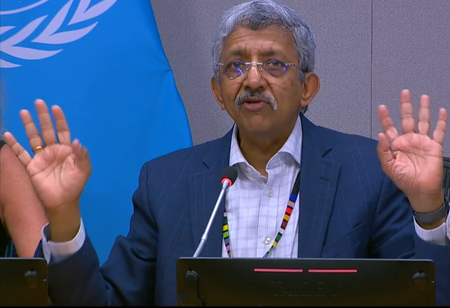
Assistant Secretary-General Chandramouli Ramanathan put it bluntly on Wednesday (local time): “We don’t have cash beyond August”.
That’s just before the UN’s annual high-level meeting that convenes in September with a parade of world leaders.
Come “September, money is gone”, he said.
But Ramanathan, who is the UN’s finance chief, hoped to save the meeting with accounting manoeuvres, rescuing the UN from an unprecedented embarrassment.
“We are going to make the high-level happen by scrounging around and stopping other payments,” he vowed.
Beyond that, continued operation after August will depend on contributions coming in, mainly from the US and China.
The UN is in a bind because its two biggest budget contributors, China, whose share of the budget is about $635 million or 20 per cent, and the US, accounting for $767 million or 22 per cent, have yet to fully pay up their dues.
China owes about $430 million for this year, while the US has run up a tab of about $2 billion in arrears from previous years.
US President Donald Trump is hypercritical of the UN, withdrawing from some of its programmes.
His administration is withholding contributions partly for ideological reasons even though it has agreed to pay some of it.
The UN’s regular budget, separate from that for peacekeeping operations, is $3.45 billion, a reduction of 7 per cent from last year’s.
India paid its share of $35 million, or 1.1 per cent, in February.
So far, only 119 countries of the 193 that make up the UN have sent in their dues.
To help ease the liquidity crisis, the General Assembly on Tuesday put on hold an irrational rule that required the UN to return to members amounts that fell short of what the budget had allocated, even if it was because there was no money for it.
Secretary-General Antonio Guterres, who welcomed the change, called it “a Kafkaesque cycle” where the UN was “expected to give back cash that did not exist”.
He explained that UN members do not always pay their assessed contributions in full and on time.
“Yet”, he said, “we were often required to return funds that we had not spent because we had not actually received them due to unpaid assessed contributions”.
“This means that we have been hamstrung by a double blow: on one side, unpaid contributions — and on the other side, an obligation to return funds that never arrived in the first place,” he said.
The biggest beneficiary of this was the US, which did not pay its share, but received refunds for what it had not contributed. (For 2024, the US got a credit of about $65 million.)
Ramanathan acknowledged that the Assembly temporarily putting the rule on hold would help mitigate the UN’s perilous financial condition.
(Arul Louis can be contacted at arul.l@ians.in)
–IANS
al/sd/