



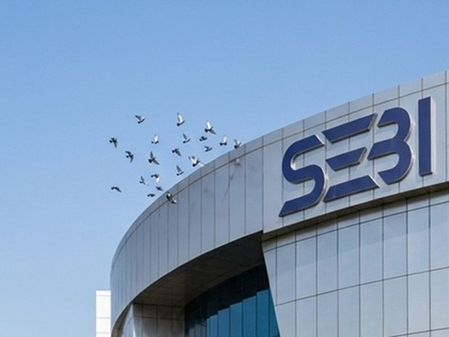
Mumbai , Aug 17 (IANS) The Securities and Exchange Board of India (SEBI) on Monday streamlined the registration process for mutual funds by replacing three existing application forms with a single consolidated form covering both the in-principle approval and final registration stages.
The capital markets regulator announced the change in a circular, following its overhaul of the regulatory framework governing mutual funds earlier this year.
SEBI has retained the existing two-stage registration process, while clarifying that other requirements prescribed under its March 20 Master Circular for Mutual Funds will continue to apply.
Under the existing system, an applicant first seeks in-principle approval to establish a mutual fund and subsequently applies for final registration. The first stage is currently covered through Form A, while Forms C and D are submitted at the final registration stage.
SEBI has now consolidated these requirements into a revised Form A, bringing the information required at both stages under a single application.
At the first stage, applicants will have to provide detailed information about the sponsor, including its constitution, registered and operating addresses, shareholding pattern, ultimate beneficial ownership, capital structure and the amount proposed to be contributed towards the net worth of the asset management company (AMC).
The revised form also requires applicants to submit the sponsor’s latest net worth along with audited balance sheets and profit and loss accounts for the preceding five financial years.
The consolidated application incorporates the two eligibility routes available to sponsors under the SEBI (Mutual Funds) Regulations, 2026.
Under the first route, a sponsor must have at least five years of experience in financial services and maintain a positive net worth in each of the preceding five years. Its positive liquid net worth must also be higher than the capital it proposes to contribute to the AMC.
In addition, the sponsor’s financial services business must have remained profitable during each of the preceding five years, with an average annual net profit of at least Rs 10 crore over the period.
The second route provides an alternative eligibility framework for sponsors that do not satisfy the requirements under the first route.
–IANS
pk