



Washington, June 4 (IANS) India and the United States have succeeded in stabilising their relationship after a difficult period in 2025, but rebuilding trust and restoring the ambition that characterised the partnership in recent years will take time, former senior US diplomat Nisha Desai Biswal has said.
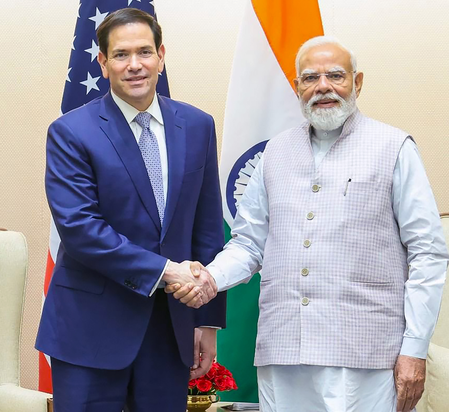
Speaking in an exclusive interview with IANS, Biswal said Secretary of State Marco Rubio’s recent visit to India helped reinforce ongoing cooperation but did not fundamentally alter some of the underlying tensions that remain between the two countries.
“What I would say is, you know, we’ve seen US-India relations kind of climb back after a very tough 2025,” Biswal said. “And there’s been, I think, concerted efforts by both sides to kinda improve the relationship and stabilise the relationship.”
She said Rubio’s trip “continued that trajectory of ensuring that there is strength and stability in the US India relationship”. However, she cautioned that some areas of concern remain unresolved.
“For example, I think that there is some concern in India, you know the US-Pakistan relationship and how the US is engaging with Pakistan. I don’t know that Secretary Rubio was able to materially address those concerns,” she said.
Despite those concerns, Biswal said the foundations of the relationship remain strong, and cooperation continues to deepen across several strategic sectors.
“I think that there are many, many areas where the US and India are gonna continue to do strong, solid work to deepen our ties,” she said, citing critical minerals, digital technologies and the TRUST partnership among areas where cooperation is expanding.
According to Biswal, one of the strongest drivers of convergence is the emerging competition over technology and digital infrastructure.
“I think that we have deep convergence on the kind of emerging dichotomy in the technology and AI and digital infrastructure space,” she said. She added that the United States, India, Europe and Japan would continue to work together on technology, critical supply chains, pharmaceuticals and other sensitive sectors.
Biswal rejected suggestions that recent developments had undone decades of progress in bilateral ties.
“I would say that it’s undone. I would say that, you know, the ambition on how high the relationship can go in the current context, that has changed,” she said.
“The aspiration is to stabilise the relationship and maintain the things that have been built up and keep those moving forward. But whether the relationship can break new ground, go higher, create more ambition and aspiration, I think that there’s some hesitation there and there’s some erosion of trust there.”
On trade negotiations, Biswal expressed confidence that both sides were approaching a breakthrough.
“I do think that they are in the final stretches,” she said. “So I’m confident that we’ll have a trade agreement in, in the near future.” She added that a first-phase agreement could pave the way for addressing broader issues involving manufacturing, digital ecosystems and non-tariff barriers.
Biswal served as Assistant Secretary of State for South and Central Asian Affairs from 2013 to 2017 and oversaw the US-India strategic partnership during a period of significant expansion. She currently serves as a partner at The Asia Group and advises companies on geopolitical and economic developments across the Indo-Pacific.
The United States and India have expanded cooperation over the past two decades across defence, trade, critical technologies, energy and people-to-people ties. The relationship has increasingly been viewed in Washington and New Delhi as a key pillar of stability in the Indo-Pacific region.
Both countries are also members of the Quadrilateral Security Dialogue, which focuses on promoting a free, open and inclusive Indo-Pacific amid growing strategic competition in the region.
–IANS
lkj/sd/