



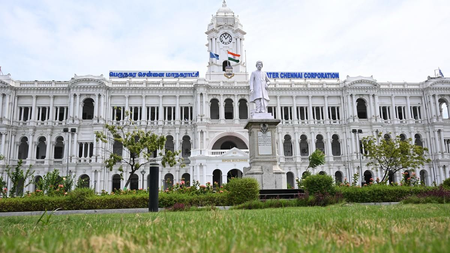
Chennai, May 20 (IANS) The Greater Chennai Corporation (GCC) in Tamil Nadu is planning to introduce a comprehensive biometric attendance system for its employees in an effort to improve workplace discipline and ensure staff complete their mandatory eight-hour work shifts.
The move comes in response to repeated complaints regarding employees not reporting to work on time and concerns over attendance monitoring, particularly among field-level staff. Corporation officials said complaints had surfaced from various zones, with the Ambattur zone witnessing recurring allegations involving conservancy sanitary inspectors and irregular attendance patterns.
The proposed system is expected to strengthen accountability and improve the monitoring of employee work schedules across the civic body. According to GCC records, the Corporation currently employs 36,381 workers, including 12,960 permanent employees and 23,421 contract staff members.
Given the size of the workforce and the nature of operations spread across multiple zones and departments, officials believe a technology-driven attendance system could help streamline administration and enhance efficiency.
GCC Commissioner G.S. Sameeran confirmed that preliminary discussions had been held regarding the feasibility of introducing biometric attendance for all categories of employees.
He stated that the proposal is still at an early stage and that detailed plans would be finalised only after further assessment of implementation requirements and operational progress.
As part of the proposed framework, employees may be required to record their attendance twice a day — once at the beginning of their shift and again at the end of the workday. Officials involved in field inspections and outdoor duties could also be brought under a mobile-based attendance mechanism integrated with geofencing technology. Such a system would capture the employee’s photograph and location details while marking attendance, enabling authorities to verify field presence in real time.
Former GCC Commissioner J. Kumaragurubaran said discussions on introducing face-recognition attendance systems had already taken place and that a mobile application for field staff attendance had been developed earlier.
Employee unions, however, claim similar systems introduced in the past were not implemented effectively and have raised concerns about enforcement gaps. At present, biometric attendance is operational only for administrative staff at the Ripon Building, while several senior officials remain exempt from the system.
–IANS
aal/dpb