



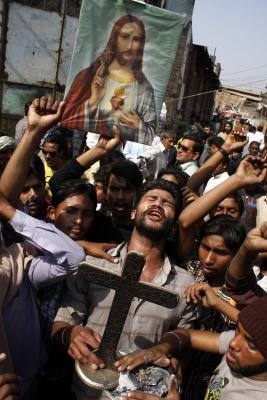
Washington, April 4 (IANS) Pakistan has witnessed a consistent exodus of minority populations – including the Christians, Hindus, and other communities – reflecting a broader pattern of fear and insecurity.
Since 1947, religious minorities have faced persistent atrocities across the country — including social prejudice, institutional discrimination and targetted violence, a report has revealed.
“In Pakistan today, many minority girls live in fear that, despite being born here, they are not fully recognised as daughters of their own land. Forced conversions, underage marriages, and inconsistent legal protections make them question whether the constitution truly safeguards their rights — underscoring that Pakistan’s promise of equality remains unfulfilled for its minorities,” a report in the US-based ‘Global Strat View’ detailed.
Citing previous reports by Human Rights Watch (HRW) and Amnesty International, it highlighted issues such as “forced conversions, underage marriages, and inadequate enforcement of laws”.
According to the report, several incidents of communal violence across Pakistan — including Shanti Nagar in 1997, Gojra, and Jaranwala — demonstrated a disturbing pattern of delayed or incomplete accountability.
It added that a recent ruling by Pakistan’s Federal Constitutional Court in the case of minor Christian girl Maria Shahbaz in March illustrated the existing vulnerabilities when the court upheld her marriage and rejected a petition seeking her recovery.
“While legally grounded in interpretations of personal and religious law, the ruling has raised concerns among human rights advocates, as it exposes how constitutional protections can fail when inconsistently applied. This case symbolises the broader insecurity many minorities face: despite being citizens, they feel they cannot rely on the state to protect their rights, safety, or dignity,” the report mentioned.
“Such vulnerabilities extend past individual cases. Minority women are particularly at risk, with reports by the United Nations Human Rights Council and the Movement for Solidarity and Peace estimating hundreds of forced conversions and marriages annually. Legal remedies, even though theoretically available, are often obstructed by administrative delays, social pressure, and systematic injustices. Combined with narrow political representation and structural economic gaps, these factors produce a pervasive sense of uncertainty,” it added.
The report questioned which groups would remain and who would inherit the country’s future if religious minorities are pushed to leave because the system fails to ensure equality, security, and dignity.
Pakistan’s credibility and strength, it said, depend on its ability to protect its most vulnerable citizens.
Unless questions on constitutional rights and inclusion of minorities are addressed, the report said, “Migration will continue—not simply as a choice, but as a response to systemic fear and exclusion.”
–IANS
scor/as