



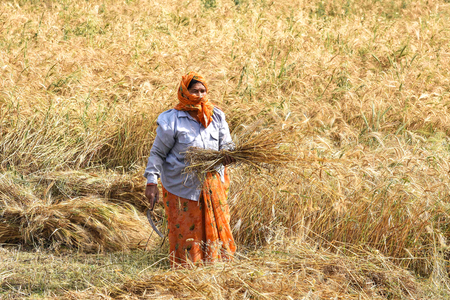
New Delhi, April 4 (IANS) India recorded an unprecedented foodgrain output of 357.73 million metric tonnes (MMT) in the agricultural year 2024-25, marking an increase of 25.43 million metric tonnes (MMT) over the preceding year, reflecting sustained gains in productivity, improved input management and strengthened institutional support to farmers, an official fact-sheet said on Saturday.
The increase was primarily driven by higher production of rice, wheat, maize, and coarse cereals (including millets, designated as Shree Anna).
Meanwhile, agricultural exports have grown steadily in recent years. Agricultural export earnings increased from $34.5 billion in FY20 to $51.1 billion in FY25, reflecting a CAGR of 8.2 per cent. In FY25, agri-food exports, including processed food products, amounted to $49.43 billion, accounting for about 11.2 per cent of total exports.
Notably, the share of processed food exports has also risen consistently, from 14.9 per cent in FY18 to 20.4 percent in FY25, indicating a progressive shift toward higher value-added within the agricultural export basket, according to the official statement.
The fact-sheet said that horticulture has simultaneously emerged as a major driver of agricultural transformation and value addition. Total horticulture production reached 362.08 million tonnes (MT) in 2024-25, indicating a structural shift towards high-value crops.
According to the second advance estimates, production increased from 280.70 million tonnes in 2013-14 to 367.72 million tonnes in 2024-25.
This output comprises approximately 114.51 million tonnes of fruits, 219.67 million tonnes of vegetables, and 33.54 million tonnes from other horticultural crops.
India ranks as the world’s second-largest producer of both rice and wheat, with output reaching 150.18 million tonnes of rice and 117.94 million tonnes of wheat during the agricultural year 2024-25.
Rice production is primarily concentrated in states such as Uttar Pradesh, Telangana, and West Bengal. At the same time, Uttar Pradesh, Madhya Pradesh, and Punjab constitute the leading wheat-producing regions, reflecting the geographic concentration of cereal production within the country.
The gradual scaling of both foodgrain and horticultural production underscores India’s strengthening domestic agricultural base and its growing prominence in global agri-food systems, according to the fact-sheet.
—IANS
na/