
Need to create space infrastructure for national security: IAF Group Captain Shukla
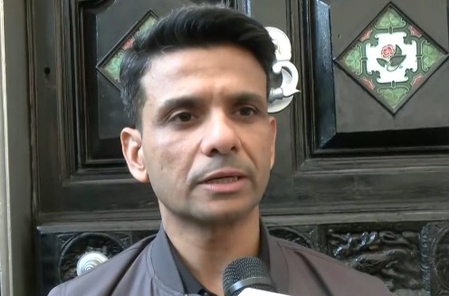
New Delhi, April 24 (IANS) Astronaut and Indian Air Force (IAF) Group Captain, Shubhanshu Shukla, on Friday urged for the creation of space infrastructure for national security. Further, dwelling on the preparations for the much-hyped Gaganyaan mission, he underlined that human space missions are "more complex".
Speaking to IANS, Shukla agreed that indigenous communication through satellites has been the backbone behind India successfully striking adversaries during surgical strikes like 'Operation Sindoor'.
He said, "Yes it is the backbone which we have to make stronger. We need to create a space infrastructure for national security. Our backbone should be strong."
"There are many initiatives, like the SBS-3, which has just been released. It is working in the same direction. I think very soon, our sovereign infrastructure for these things will be very strong and self-sufficient from the perspective of national security," he added.
Meanwhile, Shukla will be a part of the Indian Space Research Organisation's (ISRO) first human space flight programme, Gaganyaan.
About the mission, he emphasised that there is much difference between a satellite mission and a human space mission.
"A human space mission is much more complex. Many technologies need to be developed for this because in this case a human life needs to be preserved when he or she is sent into the space. That is why it takes time," he said.
"Especially in the developmental programme there is a period of great uncertainty for any astronaut about when will the mission take place, what will be it's duration or definition."
He explained that initially a mission begins with some concept but later on it gets modified into something else. "This is a part of the process. I am happy that work is being done on these things on a fast track basis," the astronaut mentioned.
However, he refused to comment on any particular timeline for the mission.
"Only after the test mission will we get the confidence level to know when exactly we will be able to carry out this mission," he added.
Group Captain Prasanth Balakrishnan Nair, another astronaut selected for the Gaganyaan mission, told reporters that in India "we are always prepared".
Describing the preparations for the mission, he said, "Everything is going on well. Like recently we had a prototype training in Leh. We will also have psychological and medical training with the Aerospace Medicine Department."
Apart from this, Nair added, "At ISRO, we are doing design reviews of the Gaganyaan capsule."
--IANS
cg/rad
CSIR-NIIST to celebrate National Technology Day with techno-fest cum customer meet
Thiruvananthapuram, April 24 (IANS) The CSIR-National Institute for Interdisciplinary Science and Technology (CSIR-NIIST), one of the country’s premier research institutions, located in the state capital, will host a Techno-Fest cum Customer Meet on May 11, to mark National Technology Day.
The initiative is aimed at strengthening engagement with industry stakeholders and customers while providing a dynamic platform for knowledge exchange and collaboration.
The event is expected to bring together representatives from industry, academia, and Micro, Small and Medium Enterprises (MSMEs), underscoring the institute’s growing role in bridging laboratory research with real-world applications.
According to Director Dr C. Anandharamakrishnan, the programme reflects the institute’s continued focus on translating cutting-edge research into technologies that deliver tangible societal and industrial impact.
“The Techno-Fest cum Customer Meet underscores our commitment to fostering stronger stakeholder engagement, promoting industry partnerships, and accelerating the deployment of sustainable and innovative solutions,” he said.
He added that the initiative would contribute significantly to strengthening India’s innovation ecosystem and advancing technological self-reliance.
As part of the event, heads of various research divisions at CSIR-NIIST will present brief overviews of their expertise and ongoing projects, highlighting key technological advancements and capabilities.
Participants will also have the opportunity to interact directly with scientists, tour research facilities, and witness live demonstrations of advanced equipment and technologies developed at the institute.
The programme is designed to encourage deeper collaboration, particularly with MSMEs, by opening avenues for technology transfer, commercialisation, and joint research initiatives.
By facilitating direct engagement between innovators and end-users, the institute aims to create a more responsive and industry-aligned research environment.
CSIR-NIIST has extended an open invitation to its customers and industry partners across the country to take part in the event, with expectations that the meeting will pave the way for new partnerships and meaningful collaborations in the technology sector.
National Technology Day commemorates the momentous events of May 11, 1998, when India conducted successful nuclear tests under 'Operation Shakti', and saw the maiden flight of the indigenously developed Hansa-3 aircraft. In recognition of these achievements, then Prime Minister Atal Bihari Vajpayee declared May 11 as National Technology Day. Over the years, the day has evolved into a flagship occasion for honouring scientific excellence, showcasing industrial innovations, and reinforcing the partnership between science, society, and industry.
--IANS
sg/dpb
US-bound engineering exports rise 2.3 pc to nearly $20 bn: Industry data
New Delhi, April 23 (IANS) India’s engineering exports to the United States witnessed a growth of 2.3 per cent year-on-year to $19.60 billion in FY26, maintaining its position as the top destination despite higher tariffs, according to industry data released on Thursday.
Data compiled by the Engineering Export Promotion Council (EEPC) India suggested that overall engineering exports touched a record high of $122.43 billion in FY26, an increase of almost 5 per cent compared to $116.75 billion in the previous fiscal.
However, shipments to the West Asia and North Africa (WANA) region declined sharply amid geopolitical disruptions, it said.
Exports to key WANA markets were hit hard, particularly in March, when shipments to the region dropped by as much as 50.7 per cent due to supply chain disruptions following the closure of the Strait of Hormuz.
Among major destinations, exports to the UAE and Saudi Arabia fell steeply by 67 per cent and 45 per cent, respectively, during the month.
Despite these setbacks, several major markets recorded positive growth during FY26, including Germany, the UK, China, Italy, South Africa, Vietnam, Sri Lanka, and Malaysia.
On a regional basis, engineering exports to North America rose 1.9 per cent, while shipments to the European Union increased by 8.6 per cent during the fiscal year.
In contrast, exports to WANA declined 8 per cent for the full year, while shipments to Other Europe and CIS fell by 4.5 per cent and 5.9 per cent, respectively.
In addition, engineering exports in March 2026 rose marginally by 1.13 per cent year-on-year to $10.94 billion, despite supply disruptions triggered by geopolitical tensions in West Asia.
EEPC India Chairman Pankaj Chadha said the sector demonstrated strong resilience, achieving record exports for the second consecutive year despite unprecedented global challenges.
"The export growth came at a time when global trade faced severe disruptions due to geopolitical tensions in West Asia, which impacted key shipping routes. Despite these pressures, India’s engineering exports remained positive across major regions, except WANA," he said.
He further noted that sustained growth would depend on a combination of market diversification, sectoral resilience and targeted policy support.
The government’s Resilience and Logistics Intervention for Export Facilitation (RELIEF) Scheme, aimed at addressing rising logistics and insurance costs during the crisis, helped maintain trade continuity, he noted.
According to government estimates, engineering goods remained the largest component of India’s merchandise exports in FY26, accounting for 27.71 per cent of the total.
--IANS
ag/vd
Renewable, EV sectors set to create massive green jobs in future: Dr. Jitendra Singh
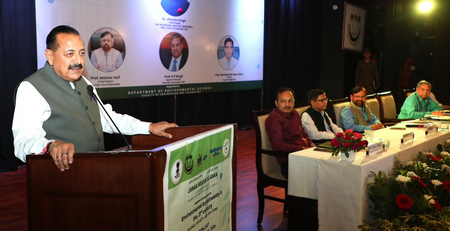
New Delhi, April 23 (IANS) The renewable energy and electric mobility sectors in India are set to generate large-scale employment opportunities in the coming years as India accelerates its transition towards a green economy, Union Minister Dr. Jitendra Singh said on Thursday.
Addressing a conference on environmental sustainability at Jamia Millia Islamia on the occasion of Earth Day, the minister said emerging green sectors such as renewable energy, electric mobility, green fuels and circular economy will play a pivotal role in job creation, particularly for the youth.
“Green jobs and green entrepreneurship are set to become the defining driver of the Green Economy of the future, with sectors such as renewable energy, electric mobility, green fuels and circular economy creating large-scale employment opportunities for the youth,” according to him,
He noted that the shift towards a low-carbon economy will not only create employment but also strengthen India’s sustainable growth trajectory.
Highlighting major initiatives, the minister said programmes like the National Green Hydrogen Mission, with an outlay of over Rs 19,000 crore, are laying the foundation for clean industrial transformation and decarbonisation of sectors such as steel and cement.
He said rapid technological advancements are opening new avenues in green innovation, citing examples from the electric mobility space where conventional vehicles are being converted into electric ones, making solutions more affordable and scalable.
The minister also pointed to emerging opportunities across solar manufacturing, battery production, grid management and biofuels, adding that circular economy practices such as converting used cooking oil into biofuel offer significant entrepreneurial potential.
Referring to new frontiers, the minister stated that ocean energy remains largely untapped despite India’s vast coastline and is expected to complement solar and wind energy in the future.
On energy security, he said the nation is expanding its nuclear power capacity and encouraging private sector participation in strategic sectors such as space and atomic energy to boost innovation and investment.
He also highlighted the Rs 1 lakh crore Research, Development and Innovation (RDI) Fund aimed at supporting startups and innovators through collaborative funding models.
On India’s global role in climate action, the minister said the country is well-positioned to lead the green transition, guided by the vision of ‘Lifestyle for Environment (LiFE)’.
Moreover, he urged students and young researchers to actively engage with sustainability-driven opportunities and noted that future growth will be shaped by innovation, adaptability and informed choices.
--IANS
ag/rad
Women hiring in India stable with 33 pc share in placements: Report

New Delhi, April 23 (IANS) Nearly one in three candidates placed in CY2025 were women, and overall women’s hiring remained stable compared to broader hiring trends, a report said on Thursday.
The report from Careernet said entry‑level roles accounted for the largest share of women’s placements at 36 per cent, while hiring for senior professionals with over 12 years of experience fell to 16 per cent from 19 per cent, underscoring a persistent leadership gap.
Hiring of women with 3-12 years’ experience increased by roughly 2 per cent year-on-year, indicating growing demand for experienced women professionals.
In CY2025, BFSI GCCs led with 40 per cent, followed by other GCCs at 38 per cent, indicating strong participation by women in GCC-led roles.
Domestic BFSI stood at 31 per cent, making it the top-performing core sector. IT services remained stable at 29 per cent, while domestic enterprises and product GCC were at 25 per cent and 22 per cent respectively.
Chennai (30 per cent) and Bengaluru (29 per cent) led women’s placements, while Mumbai (26 per cent) and Delhi/NCR (24 per cent) showed moderate involvement in women's placement.
Tier-II+ cities remained at 15 per cent, marking a dip by roughly 3 per cent from CY2024, highlighting the continued yet limited concentration of women’s employment opportunities in major urban centres.
"With one in three placements being women and strong momentum in BFSI GCCs hiring, along with gains at the mid-career level, targeted interventions are clearly delivering results," said Neelabh Shukla, Chief Business Officer, Careernet.
As hiring becomes more selective, women are increasingly represented in roles that demand experience and continuity, he added.
Another report by TeamLease Degree Apprenticeship and GAN Global said that a significant gender gap persists in specialised IT and tech roles. Women account for 35–38 per cent of overall IT professionals, but there remains a 20–25 per cent shortfall in job-ready women for niche technical skills.
Women represent 14 per cent to 16 per cent of niche technical roles, including Java, Python, Cloud, Cybersecurity, and AI/ML.
Women make up 43 per cent of STEM graduates but their share falls below 20 per cent in core engineering disciplines such as mechanical, electrical, and civil verticals, it said.
--IANS
aar/vd
RBI vigilant of evolving West Asia situation, economy resilient to withstand shocks: Sanjay Malhotra
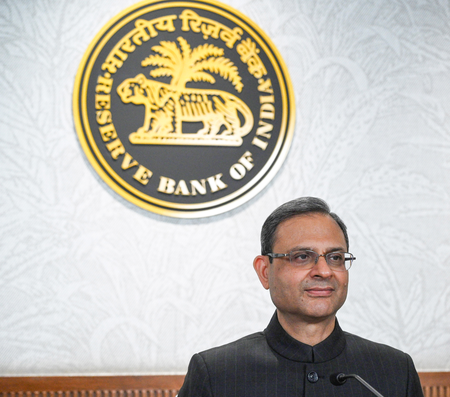
New Delhi, April 23 (IANS) Global economic conditions and sentiments have soured after the outbreak of the West Asia conflict, adversely impacting the growth-inflation outlook, Governor Sanjay Malhotra said in the latest RBI Bulletin on Thursday, adding that Central Bank would remain vigilant of the evolving situation and put in place policies that prioritise the best interest of the economy.
The conflict in West Asia has intensified pressures on the global supply chains in March with some easing observed in the first half of April.
Before the outbreak of the conflict, India’s macroeconomic fundamentals exuded confidence with buoyant growth and low inflation.
“Conditions turned adverse in March with the widening of the conflict zone and its intensification. The fundamentals of the Indian economy are on a stronger footing at the current juncture than in previous crisis episodes as well as relative to many other economies, providing it with greater resilience to withstand shocks,” Malhotra said in the first RBI Bulletin of FY27.
Global growth faces increasing downside risks as the sharp rise in energy prices and shortages of inputs for various industries have stoked inflation fears and pushed up the geopolitical risk premium in oil markets.
“Heightened uncertainty precipitated by the ongoing conflict is weighing on the outlook. Safe-haven flows have exerted depreciation pressure on currencies of major economies as the US dollar has strengthened. While commodity prices, such as of metal and gold, have moderated, financial markets have become more volatile,” the RBI Governor wrote.
Equities registered a broad-based correction. Sovereign bond yields, already elevated due to long-run fiscal sustainability concerns, driven by inflation fears, have hardened across major economies, he stated.
Meanwhile, domestic economic activity displayed resilience in many segments with slowdown in a few others.
“CPI inflation, driven by fuel and food, marginally edged up in March. The money market and bond yields moderated after the temporary ceasefire in West Asia. A slowdown in imports and expansion in exports narrowed trade deficit to a nine-month low. Foreign portfolio investment (FPI) flows remained volatile, although net foreign direct investment (FDI) turned positive in February,” he mentioned.
Overall, the initial supply shock can potentially transform into a demand shock over the medium term if the restoration of supply chains is delayed, said Malhotra.
--IANS
na/
Nasscom appoints Srikanth Velamakanni as Chairperson

New Delhi, April 23 (IANS) IT industry’s apex body Nasscom on Thursday appointed Srikanth Velamakanni, Co-Founder and Group Chief Executive of Fractal, as its Chairperson.
He succeeds Sindhu Gangadharan, Managing Director, SAP Labs India, who completes a distinguished term as Chairperson in April 2026.
Working closely with Rajesh Nambiar, President of Nasscom, and the Executive Council, Velamakanni will steer the industry's agenda across a set of interconnected priorities that reflect where the global technology landscape is headed.
“Velamakanni brings a rare combination of entrepreneurial drive and AI depth to this role. Under his leadership, and with the collective strength of our Executive Council, we will continue to position the tech industry as the world's most trusted AI-led transformation partner,” Nambiar said in a statement.
Velamakanni assumes the role after serving as Vice Chairperson of Nasscom and as an Executive Council member for over six years.
As co-founder of one of India's earliest and most prominent AI-first enterprises, he brings deep expertise in enterprise AI, analytics, responsible technology, and global go-to-market to the role, at a defining moment for the industry.
His focus will be on accelerating services transformation with AI while simultaneously catalysing product innovation and Agentic AI to position India as a leading source of autonomous, multiagent systems and vertical AI products for global markets.
“AI progress is unlocking unprecedented opportunities for enterprises, large and small, to reimagine their businesses. India will play a pivotal role in this AI-led transformation. Over the coming year, our focus will be to drive the next cycle of AI-powered growth across services and products and prepare our workforce to lead with AI,” said Velamakanni.
“As we step up to the AI moment with remarkable ambition, speed, and a deep sense of responsibility, I am confident that Srikanth will take this agenda to its next stage of impact, and I wish him every success as he takes this remarkable journey forward,” said Gangadharan.
The Nasscom Executive Council has also elected Kishor Patil, Co-Founder, CEO and Managing Director at KPIT as the new Vice Chairperson, according to a statement.
--IANS
na/
TN elections: Robots welcome voters at Vellore polling booths, add tech twist to voting

Vellore (Tamil Nadu), April 23 (IANS) In a unique blend of technology and democracy, voters in parts of Vellore district were greeted by robots as they arrived to cast their ballots in the Tamil Nadu Assembly elections on Thursday.
At select polling stations in Gudiyatham and Vellore Assembly constituencies, humanoid robots were deployed to assist and engage voters, offering a novel experience on polling day.
The initiative, introduced by election authorities on a pilot basis, aimed to enhance voter convenience while showcasing the integration of technology into public services.
At the Government Municipal Higher Secondary School in Gudiyatham town, a saree-clad robot welcomed voters in Tamil as they queued up outside the polling booth. Holding a tray with flowers and chocolates, the robot created a warm and festive atmosphere, surprising many first-time and regular voters alike.
"We were pleasantly surprised to see a robot greeting voters at the polling booth. It was speaking in Tamil and even gave tips on how to stay safe in the heat," a voter said.
Officials said that out of the 1,427 polling booths across Vellore district, two were selected for the experimental deployment of robots.
In Gudiyatham, the robot not only welcomed voters but also guided them through the facilities available inside the polling station, helping streamline the voting process.
A similar setup was introduced at the Government Muslim Higher Secondary School in the Vellore Assembly constituency. Here, the robot was equipped with sensors that enabled it to interact with voters, including offering a handshake as they approached. It also provided clear instructions on the voting procedure, including the mandatory deposit of mobile phones at designated counters before entering the booth.
In addition, the robot played an important role in voter awareness by making announcements about special arrangements. It encouraged senior citizens, pregnant women, and persons with disabilities to use separate queues to avoid long waiting times. It also informed voters about the availability of wheelchairs and other assistance facilities at the polling stations.
The initiative drew widespread attention and curiosity, with many voters stopping briefly to interact with the machines.
Election officials described the move as part of efforts to make polling more accessible, efficient, and engaging in an increasingly tech-driven environment.
--IANS
aal/vd
NASA unveils Roman space telescope to probe exoplanets, dark matter
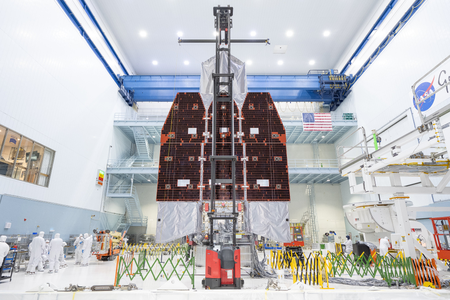
New Delhi, April 22 (IANS) US space agency National Aeronautics and Space Administration (NASA) unveiled the Nancy Grace Roman Space Telescope, a wide‑field observatory designed to scan the universe for planets outside the solar system and probe the mysteries of dark matter and dark energy.
NASA administrator Jared Isaacman said at a news conference at the Goddard Space Flight Center in Maryland that “Roman will give the Earth a new atlas of the universe.” The 12‑metre, silvery contraption with large solar panels will be moved to Florida for a launch into space by a SpaceX rocket in September at the earliest.
Named after NASA’s first chief astronomer, the ‘mother of the Hubble Space Telescope,’ the Nancy Grace Roman, the new telescope will have a field of view at least 100 times larger than Hubble's, potentially measuring light from a billion galaxies in its lifetime, NASA said.
This observatory will also be able to block starlight to directly see exoplanets and planet-forming disks, complete a statistical census of planetary systems in our galaxy, and settle essential questions in the areas of dark energy, exoplanets, and infrared astrophysics, it added.
The Roman telescope was built at a cost of over $4 billion in more than a decade and will be positioned 1.5 million kilometres from Earth to probe vast regions of space.
At this special place in space, called the second Sun-Earth Lagrange point, or L2, gravitational forces balance to keep objects in steady orbits with very little assistance, the agency said in a blog post.
The thermal stability of an observatory at L2 will provide a ten-fold improvement beyond Hubble in much of the data Roman will gather.
It will send 11 terabytes of data a day down to Earth, said Mark Melton, a systems engineer at Goddard Space Flight Center.
--IANS
aar/pk
Over 5.01 lakh new PNG connections gasified, LPG supply normal: Govt
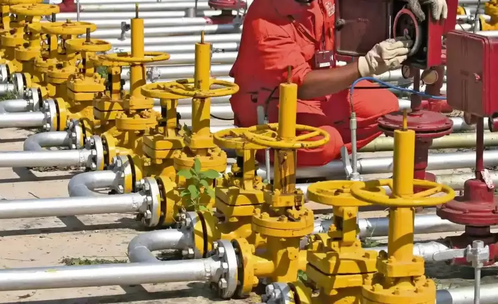
New Delhi, April 21 (IANS) The supply of LPG to domestic households has been prioritised and cylinders are being delivered normally with no reports of dry outs at LPG distributorships, according to an official update issued by Petroleum Ministry on Tuesday.
More than 5.01 lakh PNG connections have been gasified so far since March this year while over 5.68 lakh customers have been registered for new connections. Around 39,400 PNG consumers have surrendered their LPG connections via MYPNGD.in website, the statement said,
Over 19.28 lakh 5-kg LPG cylinders, used mainly by migrant workers, have also been sold since March 23.
A total of 1,23,680 metric tonnes (MT) (equivalent to more than 65 lakh of 19 Kg LPG cylinders) of commercial LPG has been sold during April so far. The equivalent of more than 4.64 lakh 19-Kg commercial LPG cylinders was sold on Monday.
A three-member committee of Executive Directors from IOCL, HPCL and BPCL is coordinating with state authorities and industry bodies to plan commercial LPG distribution in the states/UTs, said the statement.
Online LPG bookings have increased to about 98 per cent across the industry and delivery based on authentication code (DAC) received on the registered mobile number of the consumer has increased to around 93 per cent to prevent diversion.
The Ministry of Petroleum and Natural Gas said it is taking steps to ensure uninterrupted availability of petroleum products and LPG across the country, in the context of the ongoing situation involving the Strait of Hormuz.
Citizens are advised to avoid panic purchase of petrol, diesel and LPG and to beware of rumours and rely on official sources for correct information. LPG consumers are requested to use digital booking platforms and avoid visiting distributors.
All refineries are operating at high capacity with adequate crude inventories, while sufficient stocks of petrol and diesel are being maintained. Local LPG production from refineries has been increased to support domestic consumption, the statement said.
Despite the ongoing geopolitical situation, the government has ensured that 100 per cent supply is being made to domestic LPG, domestic PNG and CNG for fuelling vehicles, the statement said.
For commercial LPG, priority has been given to hospitals, educational institutions. Besides this, priority has also been given to pharma, steel, automobile, seed, agriculture, etc. In addition to this, supply of 5 Kg LPG to migrant labour is also doubled based on average daily supply on March 2-3, 2026.
The government has already implemented several rationalisation measures on both the supply and demand side, including enhancing refinery production, increasing the booking interval from 21 to 25 days in urban areas and up to 45 days in rural areas and prioritising sectors for supply.
Alternative fuels such as kerosene and coal have been made available to ease pressure on LPG demand.
The Ministry of Coal has directed Coal India and Singareni Collieries to supply additional coal to States for distribution to small and medium consumers, the statement added.
--IANS
sps/na