
SEBI mulls advisory on risks from next gen AI tools
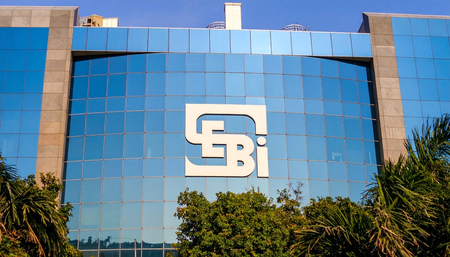
Mumbai, May 4 (IANS) Securities and Exchange Board of India (SEBI) Chairman Tuhin Kanta Pandey said on Monday that the market regulator will shortly issue an initial advisory on risks from next‑generation artificial intelligence models and AI‑led vulnerability‑scanning tools.
Speaking at the IMC Chamber of Commerce and Industry Capital Markets Conference here, Pandey said rapid technological advances in AI were reshaping capital markets by improving efficiency while creating new systemic vulnerabilities.
Pandey warned about increasing instances of sophisticated AI systems used to scan financial infrastructure for weaknesses. “While these tools can help identify weaknesses faster, they can also exploit vulnerabilities at speed and scale,” he said, adding that the risk management has become more difficult for regulators and market participants.
SEBI Chairman highlighted that the tightly connected nature of modern markets has magnified the threat.
He said technology-related risks should not be treated only at the individual‑entity level because a single weak link can pose wider market risks.
Regulated entities have been endowed with the responsibility to manage these risks, he said, urging them to proactively strengthen cyber resilience, implement continuous monitoring systems, and ensure faster remediation when vulnerabilities are identified.
Pandy stressed on preparedness and response, adding that the advisory will sit within SEBI's broader framework of responsible innovation rather than as a restriction on technology adoption.
SEBI will place the document as an early supervisory signal and remain in active engagement with market participants and stakeholders on emerging technology risks.
The regulator has neither specified a timeline for the advisory, nor indicated if it will be entity-specific or sector-wide.
SEBI's broader push for optimum and risk-based regulation has recently gained attention and the regulator maintained that innovation had played a key role in deepening markets through digital onboarding, faster settlement cycles and new financial products.
—IANS
aar/pk
Beyond labs, ANRF bets big on real-world research impact
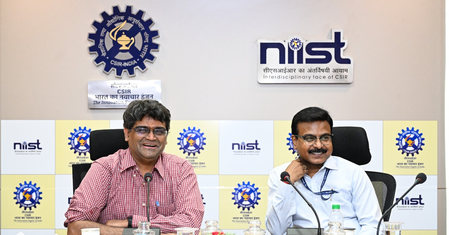
Thiruvananthapuram, May 2 (IANS) Shivkumar Kalyanaraman, Chief Executive Officer of the Anusandhan National Research Foundation (ANRF), has underscored a decisive shift towards outcome-oriented scientific research during his visit to the CSIR National Institute for Interdisciplinary Science and Technology (CSIR–NIIST), here.
Interacting with scientists at the Thiruvananthapuram-based institute, Kalyanaraman stressed that India’s evolving research ecosystem must prioritise measurable societal and national impact over purely academic outcomes.
He noted that ANRF is actively seeking to fund projects capable of scaling beyond laboratories into field-level implementation, signalling a clear pivot towards translational science.
With a career spanning global technology and research institutions, including leadership roles at Microsoft, GE Power, and IBM Research, Kalyanaraman highlighted the importance of integrating industry, academia and government efforts.
He encouraged researchers to pursue ambitious, mission-driven proposals, asserting that funding constraints would not be a barrier for projects demonstrating tangible impact.
The visit comes at a crucial juncture as ANRF, a newly established statutory body, begins operationalising large-scale funding programmes, including Research, Development and Innovation (RDI) initiatives.
The foundation aims to catalyse collaboration across sectors while strengthening India’s innovation pipeline.
At CSIR–NIIST, Kalyanaraman reviewed a range of interdisciplinary research programmes.
These included work in Carbon Capture, Utilisation and Storage (CCUS), which focuses on carbon management and climate mitigation, as well as advancements in sustainable food processing technologies.
He also visited the institute’s Designer Rice programme, which is developing nutritionally enhanced rice varieties with improved glycaemic response, an effort aligned with addressing public health and food security challenges.
C. Anandharamakrishnan, Director of CSIR–NIIST, said the interaction provided critical insights into national research priorities and opened avenues for collaborative, interdisciplinary work aligned with mission-oriented goals.
The visit reflects a broader policy direction in India’s science administration, one that seeks to bridge the gap between laboratory innovation and real-world application, positioning research as a key driver of economic growth and societal transformation.
--IANS
sg/uk
India’s organised live events sector to grow at 10 pc to Rs 196 billion by 2028

New Delhi, May 1 (IANS) India’s organised live events sector, valued at Rs 145 billion in 2025 as per industry estimates, has emerged as the highest growth segment in the media and entertainment sector and is projected to grow at 10 per cent to Rs 196 billion by 2028, the government said on Friday.
To promote this sector, the Ministry of Information & Broadcasting (MIB) has set up a Live Events Development Cell (LEDC), under the chairpersonship of the Secretary, I&B.
It includes representatives from Central Ministries, State Governments, industry bodies and other stakeholders.
At the fourth meeting of LEDC here, Chanchal Kumar, Secretary, MIB, highlighted the role of LEDC in creating a coordinated roadmap for the growth of India’s live events industry.
He noted that the Live Events sector is one of the fastest-growing segments of the Media and Entertainment industry, contributing significantly to employment generation, tourism promotion and economic multiplier across allied sectors.
“On behalf of the Government, both Centre and State, I assure that all necessary facilitation will be extended to make the processes for organising live events robust and transparent. There is complete alignment in the intent of all members of LEDC, the focus should now be on effective implementation,” said Kumar.
LEDC aims to position the concert economy as one of the key drivers of national growth and make India a global hub for live events by 2030 and generate 15-20 additional million jobs in this sector.
During the meeting, the Secretary highlighted the role of LEDC in creating a coordinated roadmap for the growth of India’s live events industry.
He noted that the Live Events sector is one of the fastest-growing segments of the Media and Entertainment industry, contributing significantly to employment generation, tourism promotion and economic multiplier across allied sectors.
It was informed that a single-window clearance system for live event permissions has been developed on the India Cine Hub (ICH) portal. The adoption of the ICH portal by States will help digitise the live event permissions process, and ensure timely, transparent, and efficient approvals.
--IANS
na/
India’s economy strong, dynamic and set to sustain momentum despite global shocks: Jeffrey Sachs (IANS Exclusive)

New Delhi, April 29 (IANS) Renowned American economist Jeffrey Sachs on Wednesday expressed confidence in India’s economic trajectory, stating that the country possesses strong underlying dynamism that is likely to continue despite ongoing geopolitical disruptions.
Speaking exclusively to IANS, Sachs said India’s economy remains fundamentally robust and resilient, even as the global system grapples with significant shocks arising from ongoing conflicts, particularly in West Asia.
“India has a lot of strength and dynamism, and it's going to continue in that way,” Sachs told IANS.
He described the current crisis as a “serious shock” to the world economy, adding that easing global tensions and removing blockades would be critical to restoring normalcy.
“The sooner that happens, the better for everybody -- India, the United States and the world,” Sachs noted, underlining that while India has managed to remain relatively insulated so far, prolonged conflict would inevitably have wider economic repercussions.
He emphasised that India’s internal economic strength has played a crucial role in maintaining stability for households and businesses during this period.
However, he cautioned that if the conflict continues, its impact will be felt across all economies, including India.
“While India has so far managed to shield itself from the worst impacts, prolonged conflict will inevitably have consequences everywhere,” he told IANS.
On the global response, Sachs called for coordinated efforts among major economies, including India, Russia and China, to push for de-escalation.
Referring to US President Donald Trump, he stressed the need for urgent steps to end the conflict, saying it is in the broader interest of the global economy.
“So, the main message that I believe is that India, Russia, China need to explain to Mr. Trump, time to end this, go home. It was not a good idea. And for the sake of the whole world economy, it should stop now.
--IANS
pk
Smartphones with satellite connectivity to touch 46 pc of global shipments by 2030: Report

New Delhi, April 29 (IANS) Satellite connectivity in smartphones will see significant growth as non-terrestrial networks (NTN)-capable devices are projected to account for 46 per cent of global smartphone shipments by 2030, a report said on Wednesday.
The report from Counterpoint Research said that nearly one in two smartphones is expected to support satellite connectivity by 2030.
Research Vice President Peter Richardson said that Apple, Google and Samsung will lead in terms of overall penetration, but Android brands targeting the entry and mid-price segments will see less penetration. Satellite offerings by more Android players and telecom operators beyond developed markets will play a key role in accelerating global adoption, he added.
The report forecasts proprietary solutions to drive the market in the near term as 3GPP NTN faces challenges around chipset readiness, operator certification and service maturity.
“Apple remains the leading smartphone OEM in terms of NTN-capable smartphone shipments, while Samsung leads the Android ecosystem. Similar to Apple, Huawei and Google follow the proprietary NTN approach,” said Principal Analyst Soumen Mandal.
"3GPP" will help expand mass adoption across brands in the premium segment, while mass adoption in the mid-price segment is expected only with Release 19, the report said.
The satellite smartphone market is mostly driven by the premium segment, but the lack of killer use cases is limiting mass adoption, it noted.
The recent acquisition of Globalstar by Amazon provides immediate scale and opens up a new revenue stream for Amazon around connectivity-as-a-service.
Regarding the satellite smartphone SoC market competitive landscape, Senior Analyst Shivani Parashar said that higher participation from chipset players will increase competition and help scalability.
“The partnerships entered into by North American telecom players have helped bring satellite connectivity to smartphones, making North America an early leader in the field,” the report said.
Though telecom operators in other regions, like Europe and China, are not rushing to offer satellite connectivity, satellite operators are increasing capacity to cater to the mass market, it added.
--IANS
na/
CBI files charge sheet against five in Kerala digital arrest case

Kochi, April 28 (IANS) The Central Bureau of Investigation (CBI) has filed a charge sheet against 5 accused, including a company, in connection with a ‘Digital Arrest’ case, an agency statement said on Tuesday.
The people accused, in the charge sheet filed on Saturday, are C.S.Saleeshkumar, Blessin Jacob Abraham, Mohammed Junaid Hussain, and Mohammad Mushtaque, while the company is JCSS Capital International Pvt Ltd.
Three of the charge-sheeted accused are currently in judicial custody.
This case was registered by CBI on November 24, 2025, on the directions of the Kerala High Court.
A senior citizen had been defrauded of over Rs 1.8 crore by intimidating her with fake notices purporting to be issued by law enforcement agencies and judicial authorities.
The cyber criminals were in contact with her over video calls.
The arrested persons include two persons who operated the accounts used for receiving the proceeds of crime in the case and an associated company.
It also includes an accused who sourced such accounts and provided them to cyber criminals.
Another accused played a key role in fraudulently issuing the SIM cards used by cyber criminals to contact the complainant.
Investigation so far points to the role of transnational organised groups involved in cybercrime against Indian citizens from scam compounds in South-East Asia.
Digital arrest fraud is rapidly emerging as a major cybercrime threat in the country, with scammers impersonating police or central agencies to intimidate victims into transferring money.
Cases have surged from about 39,000 in 2022 to over 1.2 lakh in 2024.
Victims are often held in virtual custody, highlighting a shift toward psychologically coercive, high-pressure scams targeting even educated individuals.
The CBI reiterated its firm commitment to taking stringent legal action against individuals and entities that assist cybercriminals by allowing the misuse of banking and telecom infrastructure.
The public is advised to remain vigilant against fraudulent schemes, particularly those involving so-called “digital arrest” tactics, it advised.
The CBI emphasised that there is no legal concept of a digital arrest.
Citizens are urged not to panic or comply with such calls.
Members of the public are further cautioned against fraudulent investment schemes and impersonation calls made in the name of law enforcement or regulatory agencies.
Any suspicious activity should be promptly reported to the appropriate authorities or cybercrime portal.
--IANS
sg/vd
OpenAI CEO apologises for not alerting police before Canada mass shooting
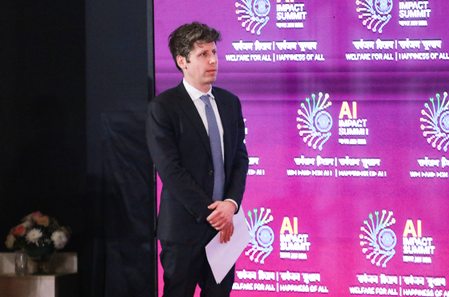
New Delhi, April 25 (IANS) OpenAI CEO Sam Altman has apologised for the AI company’s failure to alert law enforcement agencies about warning signs linked to a teenager who later carried out one of Canada’s recent deadliest mass shootings.
The apology came after more than two months of attack in which 18-year-old Jesse Van Rootselaar killed her mother and half-brother before opening fire at a secondary school in Tumbler Ridge, British Columbia, leaving five children and a teacher dead, according to multiple reports.
According to reports, Altman acknowledged in a letter shared by local news outlet Tumbler RidgeLines and British Columbia Premier David Eby that OpenAI should have informed authorities after flagging the attacker’s account.
However, the attacker later died of a self-inflicted gunshot wound.
Moreover, at least 25 people were injured in the shooting, which Canadian authorities have described as one of the country’s worst mass casualty incidents.
"I want to express my deepest condolences to the entire community. No one should ever have to endure a tragedy like this. I cannot imagine anything worse in this world than losing a child," Altman said in the letter.
"I am deeply sorry that we did not alert law enforcement to the account that was banned in June. While I know words can never be enough, I believe an apology is necessary to recognise the harm and irreversible loss your community has suffered,” he added.
OpenAI had earlier said that Rootselaar’s ChatGPT account was internally flagged in June 2025 for misuse 'in furtherance of violent activities' and was subsequently suspended.
However, the company did not notify authorities at the time, stating that the activity did not meet the threshold of posing a credible or imminent threat.
The company now says it is reviewing its policies and will work more closely with governments to prevent similar incidents. “Going forward, our focus will continue to be on working with all levels of government to help ensure something like this never happens again,” Altman said.
A lawsuit filed by the family of one of the victims has alleged that the teenager used ChatGPT as a 'trusted confidante' and discussed multiple gun violence scenarios in the days leading up to the attack.
The suit claimed that some OpenAI employees had flagged the conversations as indicating a potential risk of serious harm and recommended notifying law enforcement, but the suggestion was rejected as the threat was not deemed imminent. The account was only suspended.
It further alleged that the attacker was able to create a second account after the first was banned, allowing similar conversations to continue.
The company reportedly contacted Canadian authorities only after the shooting.
--IANS
ag/na
Technology is reshaping trading, distribution and advice: SEBI Chairman

Mumbai, April 25 (IANS) Tuhin Kanta Pandey, chairman, Securities and Exchange Board of India (SEBI) on Saturday said that technology is reshaping trading, distribution and advice as new generation of investors entering the market.
Addressing SEBI's 38th foundational day event here, Pandey said that capital flows are more global and risks are more interconnected.
"We are seeing a new generation of investors entering the market—digitally connected, informed, and aspirational. Technology is reshaping trading, distribution, and advice. Capital flows are more global, and risks more interconnected," Pandey said.
Underlining the transformation of India’s securities market, he described it as a powerful reflection of investor confidence rather than just a story of scale and numbers.
“What does the Indian securities market represent today? It is not just scale. It is not just numbers. It is a reflection of confidence,” he explained.
Speaking about the current state of the market, Pandey noted that India today has more than 5,900 listed companies and over 140 million unique investors.
“Over last decade, market capitalisation has grown at around 15 per cent CAGR. Mutual fund assets have expanded at over 20 per cent annually,” Pandey noted.
“The corporate bond market continues its steady growth. And each year, the primary market facilitates capital formation of nearly Rs 10 trillion,” he added.
At the same time, Pandey highlighted that Indian markets are becoming increasingly integrated with global capital flows, making them more dynamic but also exposing them to interconnected risks.
In such an evolving environment, he stressed, the role of regulation becomes even more critical.
“In many ways, our markets are more dynamic than ever before. And with that dynamism comes responsibility,” he said.
“Responsibility to ensure that innovation does not outpace safeguards; that access does not dilute awareness; and that growth remains sustainable. This is where thoughtful regulation becomes critical,” Pandey noted.
--IANS
pk
Institutional flows in Indian equities driven by global news, DIIs remain strong

New Delhi, April 25 (IANS) Institutional activity, in Indian equities is expected to be driven mainly by global news flows in coming days, with developments in US-Iran negotiations remaining a key monitorable due to their potential impact on geopolitical stability and global energy markets, experts said on Saturday.
Foreign institutional investors (FIIs) continues to offload Indian equities. It remained net sellers during last week as it sold Rs 171.4 billion based on provisional exchange data.
“On the other hand, domestic institutional investors (DIIs) provided strong support to the market, emerging as net buyers during last week with investments totalling Rs 97.8 billion based on provisional exchange data,” said Pabitro Mukherjee, Associate Vice President–Research, Bajaj Broking.
The month-to-date trend remain same for the 10th consecutive months with FIIs in the month of April till date have pulled out a substantial Rs 563.6 billion from Indian equities, while DIIs have infused Rs 394.8 billion during the same period, as per provisional exchange data.
According to Mukherjee, geo-political news continues to dominate Institutional flows with President Donald Trump extending the US–Iran ceasefire until Tehran presents a unified proposal to end the conflict with the US and Israel.
“It has briefly reduced concerns about geopolitical escalation but is likely to keep uncertainty elevated over a longer period. FIIs remained net sellers for all the five trading sessions last week, with quantum of selling increasing in the second half of the week,” said analysts.
Notably, US FOMC and Bank of Japan rate decision followed by central bank commentary are also scheduled for next week which will also have an impact on the global equity market and institutional activity.
On Friday, Indian equity benchmarks ended sharply lower as a surge in crude oil prices rattled investor sentiment amid rising geopolitical tensions linked to stalled US-Iran talks and disruption at the Strait of Hormuz.
The Sensex dropped 982.71 points, or 1.27 per cent, to close at 76,681.29, while the Nifty declined 275.10 points, or 1.14 per cent, to settle at 23,897.95.
—IANS
na/
Reliance Industries clocks Q4 net profit of Rs 20,589 crore, declares Rs 6 per share dividend

Mumbai, April 24 (IANS) Mukesh Ambani-led Reliance Industries Ltd on Friday declared a net profit of Rs 20,589 crore for the fourth quarter (January-March) of 2025-2026 and declared a dividend of Rs 6 per share.
The company’s profit after tax and share of profit/(loss) of associates & JVs decreased by 8.9 per cent year-on-year during the quarter, according to the company statement.
RIL’s gross revenue increased by 12.9 per cent year-on-year to Rs 325,290 crore during Q4. Strong business momentum across O2C, Digital Services and Retail delivered double-digit revenue growth in each of these segments. Oil and Gas segment revenue decreased in line with the natural decline in KG D6 gas production, the company said.
The capital expenditure for the quarter stood at Rs 40,560 crore.
Jio Platforms recorded a 17.9 per cent increase in EBITDA (earnings before interest, tax, depreciation and amortisation) at Rs 20,060 crore compared to the same quarter of the previous year, with the margin up 230 bps. Jio recorded a total subscriber base of over 524 million with 268 million Jio True 5G customers.
Reliance Retail recorded a 3.1 per cent year-on-year increase in EBITDA at Rs 6,921 crore for the quarter, while its store count crossed the 20,000 mark.
RIL closed the financial year 2025-26 with a record consolidated net profit of Rs 95,610 crore, which represents an 18.3 per cent increase over the corresponding figure for the previous year.
Capital Expenditure for the year ended March 31, 2026, stood at Rs 144,271 crore ($15.2 billion). The company continued to make significant progress on the execution of growth projects in O2C and New Energy business, while strengthening and expanding the Jio and Retail network and infrastructure.
Reliance Industries Limited Chairman and Managing Director Mukesh D. Ambani said: "I am happy to note that we are advancing steadily towards the listing of Jio Platforms. This will mark a defining milestone in its journey as it continues to scale new heights and contribute to India’s digital future. Robust full-year EBITDA growth of 19 per cent was driven by continuing traction in mobility, home broadband and enterprise services. As we work to democratise access to AI tools and next-generation technology platforms, Jio is well placed to shape how India communicates, computes and consumes content in the years ahead."
--IANS
sps/vd