
Piyush Goyal explores avenues to boost India’s beauty and personal care sector
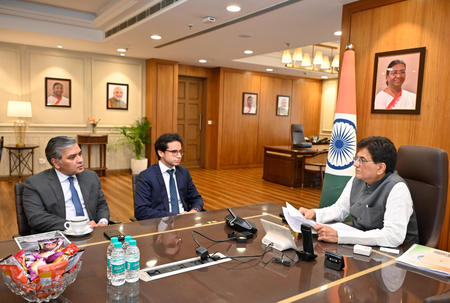
New Delhi, May 8 (IANS) Commerce and Industry Minister Piyush Goyal on Friday met senior officials from the French beauty and personal care major L'Oréal Groupe and discussed strengthening sourcing, manufacturing, and exports from the country.
“Held a meeting with a delegation led by Vismay Sharma, President–South Asia Pacific, Middle East and North Africa Zone, at @LOrealGroupe. Discussions focused on strengthening sourcing, manufacturing, and exports from India,” Goyal posted on X social media platform.
The minister further stated that “given that L’Oréal launched the world's largest Beauty Tech Global Capacity Centre in Hyderabad recently, explored avenues to unlock greater opportunities for India's beauty and personal care sector”.
In January this year, the French cosmetics giant announced to set up a beauty tech and innovation hub in Hyderabad with an initial investment of about $383.4 million. It aims to be a global base for AI‑driven beauty innovation and create 2,000 tech jobs through 2030.
The bilateral trade between India and France have remained steady between 9.17–12.50 billion euros range in five years, ending FY 2024-2025. The total trade for FY 2024-2025 was 12.67 billion euros, with exports from India at nearly 6.67 billion euros.
The new centre will function as a global innovation and capability hub, supporting the company’s technology, data, digital, and supply chain functions worldwide.
It is expected to play a key role in accelerating L’Oréal’s AI, analytics, and digital transformation initiatives across markets.
On Thursday, Goyal chaired a brainstorming session along with officials of the Department of Commerce (DoC) and Department for Promotion of Industry and Internal Trade (DPIIT), to explore measures to enhance global exposure for Indian businesses.
According to the minister, discussions focused on boosting exports and investments, unlocking opportunities for aspiring exporters, and tapping new global markets.
India's total exports of merchandise and services increased by 4.6 per cent to a record high of $863.11 billion during the financial year 2025-26, compared with the corresponding figure of $825.26 billion for the previous fiscal year, despite the US tariff turmoil and uncertainties triggered by geopolitical tensions, the latest figures compiled by the Commerce Ministry showed.
--IANS
na/
Human activity affecting tiger breeding in India’s tiger reserves, finds study
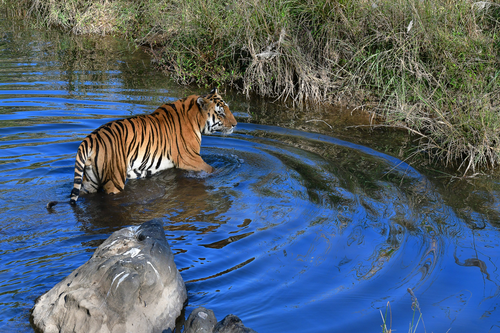
Hyderabad, May 8 (IANS) Tourism and human activity are pushing India’s tigers towards stress and affecting their breeding, reveals a new study at the CSIR-Centre for Cellular and Molecular Biology (CCMB).
The study, published in the Zoological Society of London journal Animal Conservation, is the first to combine non-invasive stress and reproductive hormone analyses from tigers across five major Indian tiger reserves: Corbett (Uttarakhand), Tadoba–Andhari (Maharashtra), Kanha and Bandhavgarh (Madhya Pradesh), and Periyar (Kerala).
The study highlights issues for each of these tiger reserves to inform better tiger management, the CSIR-CCMB said in a release on Friday.
Many previous studies by Dr G. Umapathy at the CSIR-CCMB had established that tourism and other anthropogenic activities in tiger reserves cause stress in tigers. This time, he led the team to systematically assess how human activities affect tiger breeding.
For the first time, scientists have tracked tigers across different parts of India through four seasons over two years to understand how human presence impacts tiger well-being.
The team analysed 610 genetically confirmed tiger scat samples, including 291 females and 185 males, collected between 2020 and 2023. They measured two key hormone markers in these samples -- faecal glucocorticoid metabolites (a biomarker of stress) and faecal progesterone metabolites (an indicator of breeding activity in females). Across all reserves, tigers ranging close to tourism roads and in areas with greater human disturbance consistently showed elevated stress hormone levels.
A particularly striking finding is that tigers in the strictly protected core zones showed higher stress response to human-caused disturbance than those in the multi-use buffer zones.
Buffer-zone tigers appear to have habituated to year-round human presence, whereas core-zone tigers register sharp spikes in stress when seasonal tourism enters these areas. This challenges the assumption that core zones are uniformly low-stress refuges. The effect was most pronounced in Tadoba and Bandhavgarh.
"Tigresses prefer to breed in the quiet parts of the forests. However, it is becoming difficult to find such suitable areas. In Tadoba and Corbett, the buffer zones already have high tiger populations. It is concerning if the core areas of the forests also become stressful for the tigresses,” said Dr Umapathy, Chief Scientist at CSIR-CCMB. "Not only is the reproductive success of tigers lower under stress, but the young ones will also grow up differently in such conditions."
"This study is a fine example of how molecular biology and physiology can be applied directly to one of India’s most important conservation priorities," CSIR-CCMB Director, Dr Vinay Nandicoori, said.
"CSIR-CCMB takes pride in housing the Laboratory for the Conservation of Endangered Species (LaCONES), which has grown into a national resource for non-invasive wildlife monitoring. We hope these findings will be useful to the National Tiger Conservation Authority and state forest departments as they continue to fine-tune the management of India’s tiger reserves," he said.
"We are not arguing against wildlife tourism, which plays a vital role in conservation funding and supports rural livelihoods," said Dr Umapathy. "But our findings make a clear scientific case that the regulation of tourism, including vehicle numbers, safari timings, road density, and the protection of breeding areas, needs to be informed by what the animals are actually telling us through their physiology."
The study suggests key management recommendations, including strict regulation of tourist vehicle numbers and prevention of vehicle crowding at tiger sightings; reduction of safari duration by approximately one hour in both morning and evening sessions; strengthened management of buffer zones, particularly in Tadoba and Bandhavgarh, to mitigate high anthropogenic disturbances; creation of additional water bodies along non-tourism routes to reduce dependence on roadside waterholes; and continuous, non-invasive physiological monitoring of known tigresses to identify and protect breeding hotspots.
The other authors who participated in this study are Aamer Shoel, Vinod Kumar, Gudimella Anusha, and Andre Ganswidt.
--IANS
ms/vd
Digital transformation to push India’s real estate sector reach $5.8 trillion by 2047: Report

New Delhi, May 7 (IANS) India’s real estate projects need end‑to‑end, enterprise‑led digital transformation due to increasing scale and complexity, as the market is projected to grow from $650 billion in 2025 to $5.8 trillion by 2047, a report said on Thursday.
A joint report by KPMG in India and FICCI said that the sector is at an inflection point and technology must move from a peripheral enabler to a foundational driver in a project’s entire lifecycle.
Technology must play a more pronounced role across all stages of project execution from land identification and design to construction, sales, transactions and asset management.
The report highlighted that accelerating digital adoption, supported by government-led reforms, is reshaping execution certainty, transparency and investor confidence in the real estate sector.
Institutional capital, heightened regulatory oversight and rising buyer awareness continue to raise the bar for governance, data transparency and delivery discipline, it added.
“India’s real estate sector is entering structural maturity, where technology is shaping execution certainty, transparency and capital efficiency. With asset monetisation through InvITs and REITs amounting to $15.8 billion and institutional investments of $4.3 billion in 2025, expectations around data integrity and governance are rising,” said Neeraj Bansal, Partner and Head – India Global, KPMG in India.
Government‑led initiatives such as Digital India Land Records Modernisation Programme, with over 97.3 per cent digitisation of land records and registrations, are lowering structural risk and strengthening investor confidence, he added.
Key recommendations include embedding technologies such as geographic information system (GIS) , building information modelling (BIM), digital twins, Internet of Things, artificial intelligence and blockchain across planning, execution, sales and asset operations.
BIM-led workflows can significantly reduce planning errors, rework and execution delays by enabling coordinated designs, clash detection and data continuity from design through operations, the report noted.
AI-enabled valuation models, demand forecasting and scenario analysis can improve pricing discipline, capital allocation and risk management, while reducing reliance on subjective judgement, it suggested.
—IANS
aar/na
Mphasis moves US court against Coforge over executive hiring, data misuse claims

New Delhi, May 7 (IANS) IT services provider Mphasis has approached a US court alleging that rival Coforge violated contractual obligations by hiring its former senior executives and gaining access to sensitive client-related information, according to multiple reports.
According to reports, legal documents filed in March show that Mphasis has sought an injunction restraining Coforge from deploying two former Mphasis executives on projects linked to Charles Schwab, a client serviced by both firms.
The company has also requested the court to prevent any use of confidential business information allegedly obtained through those hires.
Moreover, the lawsuit also names former Mphasis Vice President Brijesh Khergamker and seeks to prevent him from working on Charles Schwab outsourcing operations through Coforge for a period of one year. Mphasis has argued that such employment breaches the terms agreed upon in his earlier contract with the company.
Mphasis has further alleged that Coforge secured an unfair business advantage by recruiting multiple senior employees who had access to strategic and client-specific information.
Besides injunctive relief, the company has sought monetary compensation along with legal costs and attorney fees.
Additionally, Coforge denied all allegations and intends to vigorously defend itself and its employee in the matter, while also evaluating potential counterclaims, according to reports.
Notably, similar disputes have surfaced in recent years across the IT industry. In 2024, Infosys filed a counterclaim against Cognizant, alleging anti-competitive conduct and executive poaching.
Earlier, in 2023, Wipro initiated legal proceedings against former CFO Jatin Dalal after he joined Cognizant, citing alleged violations of contractual commitments.
--IANS
ag/
Zoho’s Sridhar Vembu seeks President rule, fresh elections in Tamil Nadu
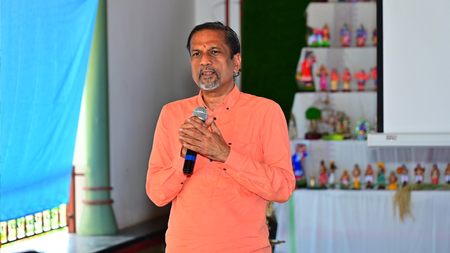
New Delhi, May 7 (IANS) Zoho co-founder and Chief Scientist Sridhar Vembu on Thursday called for the imposition of President’s Rule and fresh elections in Tamil Nadu, saying the current political situation in the state appears unstable.
In a post on microblogging platform X, Vembu said the “numbers do not seem to add up” and argued that any government formed under the present circumstances would likely face instability due to competing political pressures.
“Whatever government is cobbled together is likely to be unstable with various pulls and pressures. Tamil Nadu deserves better,” he wrote.
He further noted that President’s Rule followed by fresh elections with strict enforcement against “cash-for-votes” practices would be the best course of action.
“President's rule with fresh elections may be the best course, this time with a very strict ‘no cash for votes’ enforcement. Then we will see who has the real mandate,” he wrote on X.
The Zoho co-founder also expressed confidence that actor Vijay-led Tamilaga Vettri Kazhagam (TVK) could secure a ‘super majority’ if fresh elections are held.
“I think the TVK will come back with a super majority and if the DMK-AIADMK want to stop that, let them fight together,” he stated.
Vembu further said the BJP should contest independently in Tamil Nadu, even if it results in zero seats, calling it a “fresh start” for the party in the state.
“The BJP should fight alone, even if it leads to zero seats, time for a fresh start for the BJP in TN. Let the people decide afresh,” he added.
TVK had emerged as a major political force in the state in the recent Assembly polls, narrowly missing the majority mark in the 234-member House.
--IANS
ag/
Workers can do more with AI than organisations support: Report
New Delhi, May 6 (IANS) Organisations are failing to keep pace with workers using artificial intelligence to expand the scope of their work, creating a widening gap between AI-enabled capabilities and organisational structures, a report has said.
The report from US tech giant Microsoft noted that its 2026 Work Trend Index found that 58 per cent of users said they are producing work with AI that they could not have a year ago, and it rose to 80 per cent of respondents among Frontier Professionals.
It further stated that 49 per cent of conversations in Microsoft 365 Copilot involve cognitive work, analysing information, solving problems, evaluating and creative thinking.
The report said that AI is lifting individual potential, but that institutional factors determine whether that potential can be translated into impact.
The report further highlighted that human agency is the new competitive advantage, with quality control of AI output (50 per cent) and critical thinking (46 per cent) topping the list of capabilities workers see as most important.
"People thought AI was going to take away our critical thinking skills. But as AI takes on more execution, new research shows workers are gaining more control over decision-making, creativity, and outcomes. But most organisations aren’t built to take advantage of it," the report noted.
The tech company warned of a 'transformation paradox' in which 65 per cent of AI users feared falling behind if they do not adopt AI quickly, while 45 per cent said it feels safer to stick to current goals than to redesign work.
Moreover, factors such as culture, manager support and talent practices accounted for around 67 per cent of AI impact, more than double the influence of individual factors such as mindset and behaviour.
"The defining question is not whether individuals have the skills, but whether the organisation has built the culture, management practices, and talent systems that incentivise and support new ways of working," it added.
—IANS
aar/ag
BEL bags Rs 1,476 crore deal to make five Mobile Electronic Systems for Indian Army
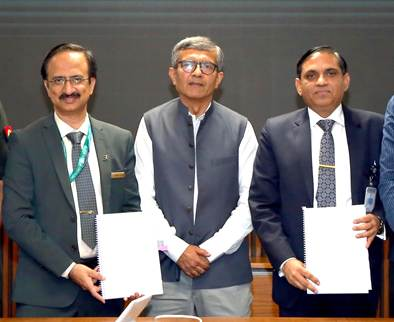
New Delhi, May 5 (IANS) The Ministry of Defence on Tuesday signed a contract with Bharat Electronics Limited (BEL), Hyderabad, for the procurement of five ground-based Mobile Electronic Systems, worth Rs 1,476 crore, for the Indian Army with a minimum 72 per cent indigenous content.
The contract, under the Buy (Indian-Indigenously Designed, Developed and Manufactured) category, was inked in the presence of Defence Secretary Kumar Singh at Kartavya Bhawan here.
BEL produces advanced, indigenous ground-based mobile electronic systems for the Indian Army, focusing on Electronic Warfare (EW), surveillance, and secure tactical communication.
The system will modernise the Indian Army units and strengthen the indigenous defence manufacturing ecosystem of the country. The contract reinforces Prime Minister Narendra Modi-led government's commitment to Aatmanirbhar Bharat and Make-in-India in the defence sector, according to a statement issued by the Ministry of Defence.
A ground-based mobile electronic system is a vehicle-mounted electronic intelligence platform designed to detect, analyse, locate, and monitor enemy radar and electronic emissions in real-time. Typically, these systems feature high-sensitivity receivers, 360-degree coverage, and 3D mapping for rapid battlefield situational awareness and surveillance.
Defence Minister Rajnath Singh on Monday said that the government has placed defence research at the centre of its priorities and the Defence Research and Development Organisation (DRDO) has already transferred 2,200 technologies to various industries.
Addressing the North Tech Symposium, organised here by the Indian Army, the minister underscored the importance of sustained focus on research and cultivating the element of surprise to stay future-ready in the present era of intense technological revolution.
He pointed out that 25 per cent of the Defence R&D budget has been allocated to the industry, academia, and start-ups, and to date, these entities have already utilised over Rs 4,500 crore of the budget.
He underlined that the Government’s self-reliance efforts are yielding positive results as the domestic defence production has reached a record high of Rs 1.54 lakh crore in Financial Year 2025-26, with defence exports touching an all-time high figure of Rs 38,424 crore.
--IANS
sps/vd
SEBI mulls advisory on risks from next gen AI tools
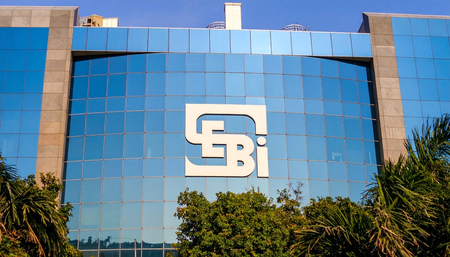
Mumbai, May 4 (IANS) Securities and Exchange Board of India (SEBI) Chairman Tuhin Kanta Pandey said on Monday that the market regulator will shortly issue an initial advisory on risks from next‑generation artificial intelligence models and AI‑led vulnerability‑scanning tools.
Speaking at the IMC Chamber of Commerce and Industry Capital Markets Conference here, Pandey said rapid technological advances in AI were reshaping capital markets by improving efficiency while creating new systemic vulnerabilities.
Pandey warned about increasing instances of sophisticated AI systems used to scan financial infrastructure for weaknesses. “While these tools can help identify weaknesses faster, they can also exploit vulnerabilities at speed and scale,” he said, adding that the risk management has become more difficult for regulators and market participants.
SEBI Chairman highlighted that the tightly connected nature of modern markets has magnified the threat.
He said technology-related risks should not be treated only at the individual‑entity level because a single weak link can pose wider market risks.
Regulated entities have been endowed with the responsibility to manage these risks, he said, urging them to proactively strengthen cyber resilience, implement continuous monitoring systems, and ensure faster remediation when vulnerabilities are identified.
Pandy stressed on preparedness and response, adding that the advisory will sit within SEBI's broader framework of responsible innovation rather than as a restriction on technology adoption.
SEBI will place the document as an early supervisory signal and remain in active engagement with market participants and stakeholders on emerging technology risks.
The regulator has neither specified a timeline for the advisory, nor indicated if it will be entity-specific or sector-wide.
SEBI's broader push for optimum and risk-based regulation has recently gained attention and the regulator maintained that innovation had played a key role in deepening markets through digital onboarding, faster settlement cycles and new financial products.
—IANS
aar/pk
Beyond labs, ANRF bets big on real-world research impact
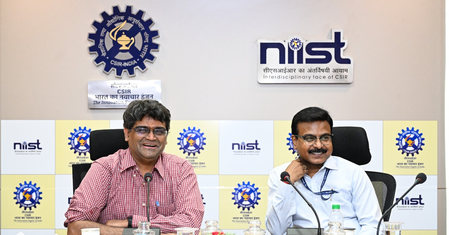
Thiruvananthapuram, May 2 (IANS) Shivkumar Kalyanaraman, Chief Executive Officer of the Anusandhan National Research Foundation (ANRF), has underscored a decisive shift towards outcome-oriented scientific research during his visit to the CSIR National Institute for Interdisciplinary Science and Technology (CSIR–NIIST), here.
Interacting with scientists at the Thiruvananthapuram-based institute, Kalyanaraman stressed that India’s evolving research ecosystem must prioritise measurable societal and national impact over purely academic outcomes.
He noted that ANRF is actively seeking to fund projects capable of scaling beyond laboratories into field-level implementation, signalling a clear pivot towards translational science.
With a career spanning global technology and research institutions, including leadership roles at Microsoft, GE Power, and IBM Research, Kalyanaraman highlighted the importance of integrating industry, academia and government efforts.
He encouraged researchers to pursue ambitious, mission-driven proposals, asserting that funding constraints would not be a barrier for projects demonstrating tangible impact.
The visit comes at a crucial juncture as ANRF, a newly established statutory body, begins operationalising large-scale funding programmes, including Research, Development and Innovation (RDI) initiatives.
The foundation aims to catalyse collaboration across sectors while strengthening India’s innovation pipeline.
At CSIR–NIIST, Kalyanaraman reviewed a range of interdisciplinary research programmes.
These included work in Carbon Capture, Utilisation and Storage (CCUS), which focuses on carbon management and climate mitigation, as well as advancements in sustainable food processing technologies.
He also visited the institute’s Designer Rice programme, which is developing nutritionally enhanced rice varieties with improved glycaemic response, an effort aligned with addressing public health and food security challenges.
C. Anandharamakrishnan, Director of CSIR–NIIST, said the interaction provided critical insights into national research priorities and opened avenues for collaborative, interdisciplinary work aligned with mission-oriented goals.
The visit reflects a broader policy direction in India’s science administration, one that seeks to bridge the gap between laboratory innovation and real-world application, positioning research as a key driver of economic growth and societal transformation.
--IANS
sg/uk
India’s organised live events sector to grow at 10 pc to Rs 196 billion by 2028

New Delhi, May 1 (IANS) India’s organised live events sector, valued at Rs 145 billion in 2025 as per industry estimates, has emerged as the highest growth segment in the media and entertainment sector and is projected to grow at 10 per cent to Rs 196 billion by 2028, the government said on Friday.
To promote this sector, the Ministry of Information & Broadcasting (MIB) has set up a Live Events Development Cell (LEDC), under the chairpersonship of the Secretary, I&B.
It includes representatives from Central Ministries, State Governments, industry bodies and other stakeholders.
At the fourth meeting of LEDC here, Chanchal Kumar, Secretary, MIB, highlighted the role of LEDC in creating a coordinated roadmap for the growth of India’s live events industry.
He noted that the Live Events sector is one of the fastest-growing segments of the Media and Entertainment industry, contributing significantly to employment generation, tourism promotion and economic multiplier across allied sectors.
“On behalf of the Government, both Centre and State, I assure that all necessary facilitation will be extended to make the processes for organising live events robust and transparent. There is complete alignment in the intent of all members of LEDC, the focus should now be on effective implementation,” said Kumar.
LEDC aims to position the concert economy as one of the key drivers of national growth and make India a global hub for live events by 2030 and generate 15-20 additional million jobs in this sector.
During the meeting, the Secretary highlighted the role of LEDC in creating a coordinated roadmap for the growth of India’s live events industry.
He noted that the Live Events sector is one of the fastest-growing segments of the Media and Entertainment industry, contributing significantly to employment generation, tourism promotion and economic multiplier across allied sectors.
It was informed that a single-window clearance system for live event permissions has been developed on the India Cine Hub (ICH) portal. The adoption of the ICH portal by States will help digitise the live event permissions process, and ensure timely, transparent, and efficient approvals.
--IANS
na/