
‘Those problems disappeared’: Bolt CEO Ryan Breslow defends eliminating HR department
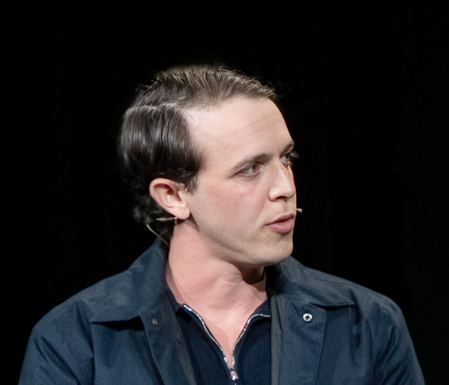
New Delhi, May 20 (IANS) At a time when many companies are doubling down on workplace culture and employee wellbeing, fintech startup Bolt is taking a sharply different path.
Bolt CEO Ryan Breslow has defended his controversial decision to eliminate the company’s entire human resources department, arguing that HR teams often create unnecessary complications instead of solving problems.
Speaking at Fortune’s Workforce Innovation Summit, the 31-year-old founder said the move was part of a broader effort to restore speed and efficiency at the once high-flying fintech company.
“We had an HR team, and that HR team was creating problems that didn’t exist,” Breslow said during a conversation with Fortune editorial director Kristin Stoller. “Those problems disappeared when I let them go.”
Founded in 2014, Bolt became one of the fastest-growing fintech startups during the pandemic-era tech boom, reaching a valuation of $11 billion in 2022. However, the company’s fortunes later reversed dramatically. After Breslow stepped down as CEO that same year, Bolt’s valuation reportedly fell to nearly $300 million by 2024 -- a decline of almost 97 per cent.
Breslow returned to lead the company in 2025 and described the current phase at Bolt as “wartime,” requiring a more aggressive operational approach. Earlier this year, the company laid off nearly 30 per cent of its workforce and dismantled its HR division altogether.
According to Breslow, traditional HR structures are better suited for large, stable companies rather than startups trying to move quickly in a competitive environment.
“We’re back in startup mode again, and those HR professionals have really important insights when you’re in a peacetime and when you’re at a larger company,” he said.
Instead of a conventional HR department, Bolt has introduced a leaner “people operations” team focused on employee training and support functions.
Breslow has repeatedly voiced skepticism about traditional HR practices. In a LinkedIn post earlier this year, he wrote that “HR is the wrong energy, format, and approach,” adding that people operations teams help companies “move at lightning speed” by empowering managers and streamlining decision-making.
At the Fortune summit, Breslow further criticized what he described as a culture of inefficiency inside HR teams.
“We need a group of people who are very oriented around getting things done,” he said. “There is just a culture of not getting things done and complaining a lot.”
--IANS
pk
Samsung strike could cut S. Korean economy by 0.5 pc point: BOK

Seoul, May 19 (IANS) The Bank of Korea (BOK) has estimated that a general strike at Samsung Electronics Co. could cut 0.5 percentage point off South Korea's economic growth this year, officials said on Tuesday.
The central bank recently compiled a closed-door report on the matter and submitted it to the finance ministry, according to the officials, reports Yonhap news agency.
The report estimated losses from the potential strike at around 30 trillion won (US$20 billion), noting it could take up to three weeks to restore production if the company's memory chip lines come to a complete halt.
Earlier, the BOK projected the South Korean economy would grow 2 percent in 2026. Asia's fourth-largest economy expanded 1.7 percent in the first quarter, marking the fastest growth in more than five years, driven by robust exports of semiconductors.
The report came as unionized workers announced plans to stage an 18-day large-scale strike starting Thursday, with more than 50,000 members expected to participate, demanding higher bonuses linked to the company's operating profit.
Meanwhile, Samsung and its largest labour union resumed government-led wage mediation on Tuesday, entering the final day of talks in a last-ditch effort to avert a strike at the world's largest memory chipmaker.
The two-day negotiations resumed days after the first round of mediation ended without a deal, as the two sides remained divided over performance-based bonuses ahead of an 18-day strike set to begin on Thursday.
Labor and management remain sharply split over performance-based bonuses tied to earnings from the tech giant's artificial intelligence (AI)-related semiconductor business, amid an ongoing global memory supercycle.
Park Soo-keun, chairman of the National Labor Relations Commission, hinted at the possibility of reaching an agreement, saying the two sides were narrowing some differences during the previous day's negotiations.
"Ultimately, we will see whether the two parties can reach a settlement, and if not, we will issue a mediation proposal," Park told reporters before entering the meeting. "There is still a possibility of a deal, so we will wait and see."
The company has proposed maintaining the current excess profit incentive system while allowing the bonus pool to be calculated based on 10 per cent of operating profit. It also proposed introducing a special compensation system, saying it would create a more flexible incentive structure.
In contrast, the union is demanding fixed performance bonuses equal to 15 per cent of the semiconductor division's operating profit, along with the removal of payout caps.
--IANS
na/
Meta to commence layoffs of 10 pc of workforce from May 20

New Delhi, May 19 (IANS) US-based tech giant Meta will begin laying off 10 per cent of its global workforce from Wednesday, May 20, and bolster its artificial intelligence initiatives as part of a sweeping reorganisation aimed at streamlining operations, as per multiple reports.
According to them, the company seeks to eliminate some managerial roles and reorganise teams to create “AI‑native” structures with smaller teams intended to speed up decision‑making, according to multiple reports.
The company reportedly indicated that it will close about 6,000 open positions and that the overall changes, including transfers, will affect roughly 20 per cent of its current workforce.
If implemented at that level, the job cuts could affect roughly 16,000 employees, based on Meta’s workforce of nearly 79,000 people as of December 31.
Some employees have reacted strongly to the overhaul, staging protests at company offices and posting complaints on Meta’s internal platform, Workplace.
Over 1,000 staff have signed a petition opposing new mouse-tracking software the company is using to train AI systems, citing privacy concerns.
Meanwhile, global tech layoffs are accelerating in 2026, with more than 80,000 jobs already cut in the first quarter and total losses likely to exceed 3 lakh this year, led by companies like Oracle, Amazon, and Meta, a report has said.
Another recent report by TradingPlatforms highlighted that the latest wave of layoffs builds on a broader post-pandemic correction, with over one million tech jobs lost globally since 2021 as companies recalibrate hiring after the Covid-era expansion.
AI and automation have emerged as key drivers of this transformation, with nearly half of all layoffs in 2026 linked to AI-related restructuring.
Moreover, the US remains the worst-hit market, accounting for nearly 77 per cent of global layoffs so far this year, with over 61,000 job cuts across 62 companies.
Among companies, Oracle has reported the highest number of layoffs globally in 2026, cutting more than 25,000 roles as part of a major restructuring tied to its AI infrastructure push.
—IANS
aar/ag
Nearly 40 pc govt organisations will likely establish TrustOps by 2028 to counter deepfake

New Delhi, May 18 (IANS) Nearly forty percent of government organisations across the globe will establish dedicated TrustOps functions by 2028 to combat deep fake identity impersonation and disinformation-as-a-service (DaaS), a report said on Monday.
The report from a business and technology insights company Gartner, Inc. urged government organisations to urgently establish trust capabilities, such as transitioning from reactive fact-checking to a proactive trust architecture, to defend against deepfakes.
"These threats manifest as public-facing disinformation campaigns, such as impersonating leaders to issue misleading public statements, and in attacks on internal systems," the report said.
Deepfakes aims to compromise automated biometric authentication (voice or face) or use social engineering to manipulate employees into harmful actions, typically by rapidly establishing authority and urgency.
“Deepfakes can undermine or even weaponize notions of digital identity, attacking the credibility of the State itself,” said Daniel Nieto, Sr. Director Analyst at Gartner.
Government organisations can consider implementing solutions such as the Coalition for Content Provenance and Authenticity (C2PA) protocol in the long term, he said.
“They should mandate outbound content grounding by adopting the C2PA protocol, embedding tamper-proof cryptographic metadata into all official digital media,” Nieto added.
The report called on organisations to orchestrate an oversight role in consultation with primary stakeholders
Another recommendation is to identify and audit high-risk administrative workflows, such as financial disbursements.
Implement security measures that require multiple approvers and application-level authentication to eliminate single-point-of-failure vulnerabilities exploitable by voice-cloned executives, the firm said.
To mitigate the existential risk of institutional irrelevance, CIOs must shift from reactive fact-checking to proactive trust architecture, the report said.
The implications of deepfakes at scale, resulting from the marriage of social media and synthetic content demand an orchestrated, rapid, enterprise wide defence.
Government organisations should avoid relying on reactive takedowns as they cannot outrun a deepfake once it is viral, the report said, adding that organisations must saturate the information space with the truth first.
—IANS
aar/pk
MeitY-backed ChipIN Centre inaugurated in Tamil Nadu to boost ‘Make in India’ chip push
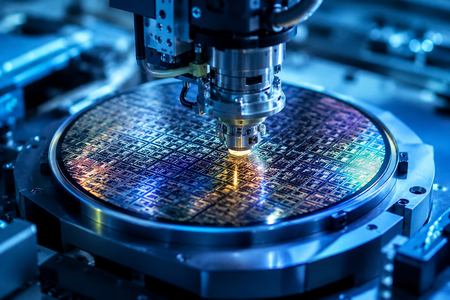
New Delhi, May 16 (IANS) The MeitY-backed ChipIN Centre -- focused on semiconductor design education and VLSI research -- has been inaugurated at Sona College of Technology in Tamil Nadu on Saturday to strengthen India’s semiconductor ecosystem and support the country’s ‘Make in India’ chip push.
The ‘Sona ChipIN Centre’, established at the Department of Electronics and Communication Engineering (ECE), has been set up under the Chips to Startup (C2S) programme supported by the Ministry of Electronics and Information Technology (MeitY), C-DAC and the ChipIN Centre initiative.
The facility is equipped with advanced Electronic Design Automation (EDA) tools valued at Rs 100 million, enabling students, researchers and faculty members to work on semiconductor design, VLSI research and industry-oriented innovation projects.
The centre was inaugurated by Dr V Veerappan, Chairman of the India Electronics and Semiconductor Association, and Shekar Viswanathan, former Vice-Chairman of Toyota Kirloskar Motor.
Sona Institutions Chairman C Valliappa said the Centre should work towards developing a ‘Made in India’ chip within the next 24-36 months in alignment with the government’s India Semiconductor Mission.
Meanwhile, Sona Institutions Vice Chairman Chocko Valliappa said the initiative assumes significance amid India’s rapidly growing semiconductor ecosystem and the country’s entry into advanced 3nm chip development capabilities.
He added that apart from indigenous chip development, the centre will help produce industry-ready semiconductor engineers.
According to the institution, the ECE Department will utilise the facility to train students across multiple programmes, including Electronics and Communication Engineering, Electrical and Electronics Engineering, Electronics Engineering VLSI Design and Technology, Electronics and Computer Engineering, and ME VLSI Design.
The software ecosystem at the centre includes semiconductor and chip design platforms from leading global technology firms.
The C2S Programme is a national capacity-building initiative launched by MeitY in 2022 with an outlay of Rs 250 crore over five years to strengthen India’s semiconductor and chip design ecosystem across academic institutions.
The programme aims to create 85,000 industry-ready professionals across undergraduate, postgraduate and doctoral levels in chip design and VLSI-related fields, according to the government.
--IANS
ag/
Petrol, diesel prices: Centre bearing huge burden through excise duty cut, says Piyush Goyal
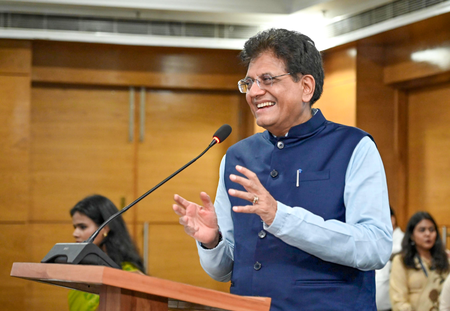
Mumbai, May 15 (IANS) Union Minister Piyush Goyal on Friday said the central government has taken a significant financial burden on itself by reducing excise duty on fuel and continuing heavy subsidies on fertilisers to protect farmers and consumers from rising global prices.
Speaking to IANS on the sidelines of an event here, Goyal said the Centre had reduced excise duty by Rs 10 to provide relief to citizens despite mounting fiscal pressure.
He added that the government was also bearing massive subsidy costs to ensure farmers do not face higher fertiliser prices.
“The central government has taken more burden on itself. The excise has been reduced by Rs 10. Similarly, the expense of Rs 3,000 crore in fertiliser, our farmers have to pay the same old price, no increase has been made. And because of this, 90 per cent subsidy has to be given by the central government by lakhs of crores,” Goyal said.
Commenting on Maharashtra’s government decision to cut VAT on aviation fuel, the Union Minister said sectors such as tourism and civil aviation would benefit from the government’s economic measures.
“Tourism will benefit a lot, the civil aviation sector which is in a lot of pressure will also be relieved, which is an important sector for the long term. I think all the opposition ruled states, only few are left now, there are not much, they will also learn something from this," Goyal told IANS.
Commenting on Prime Minister Narendra Modi’s security arrangements, Goyal said concerns over the Prime Minister’s safety remain paramount.
He said the reduction in security was not due to pressure from the opposition and urged that there should be no compromise on the Prime Minister’s protection.
“He is the Prime Minister of the country and a leader of the world. We are worried about every aspect of his security,” Goyal said.
--IANS
pk
Indian AI combat drone ‘Kaal Bhairava’ to enter European manufacturing network

New Delhi, May 15 (IANS) In a major boost to India’s ambitions of becoming a global defence manufacturing hub, Indian AI warfare company FWDA on Friday announced that its autonomous combat aircraft ‘Kaal Bhairava’ will now be manufactured in Europe through a strategic partnership with Portuguese defence technology firm SKETCHPIXEL.
The collaboration marks a significant milestone for India’s indigenous defence technology ecosystem, as Kaal Bhairava becomes one of the first Indian-designed AI combat aircraft platforms to enter the European manufacturing and defence network.
SKETCHPIXEL is known for developing advanced fighter jet simulation systems for aircraft such as the F-16 Fighting Falcon.
Under the agreement, the European company will contribute simulation technologies, AI integration systems, communications infrastructure and interoperability capabilities for the aircraft platform.
FWDA, however, will continue to retain intellectual property rights related to the aircraft’s autonomous systems and airframe design.
Kaal Bhairava has been designed as a medium-altitude long-endurance autonomous combat aircraft with a range of 3,000 kilometres and an operational endurance of more than 30 hours.
The aircraft is equipped with AI-driven target recognition systems, encrypted communications and swarm coordination capabilities, positioning it among next-generation autonomous warfare platforms.
Unlike traditional aerospace programmes that focus heavily on expensive manned platforms, FWDA is building an ecosystem centred around autonomous airpower, swarm technologies and advanced air defence systems.
Commenting on the development, FWDA founder and CEO Suhas Tejaskanda said the partnership reflects increasing global interest in Indian-designed autonomous warfare technologies and demonstrates how Indian defence innovation is beginning to integrate into global manufacturing ecosystems.
He added that Portugal’s strategic location and access to NATO-linked defence networks would help the company expand collaborative opportunities across Europe and support future global deployment pathways for its technologies.
“The larger objective is to help position India among the world’s leading defence exporters,” he stated.
SKETCHPIXEL CEO Miguel Abrue said the collaboration would combine FWDA’s expertise in engineering, electronics, AI systems and chip analysis with SKETCHPIXEL’s capabilities in simulation, interoperability and military integration.
He said that critical aspects of the aircraft programme -- including structural design, firmware development, communication systems, control mechanisms and validation processes -- would be jointly developed under strict technological and safety standards.
--IANS
pk
Cabinet okays coal, lignite gasification scheme with Rs 37,500 crore outlay, to create 50,000 jobs
New Delhi, May 13 (IANS) The Union Cabinet, chaired by Prime Minister Narendra Modi, on Wednesday approved a scheme for the promotion of surface coal/lignite gasification projects with a financial outlay of Rs 37,500 crore.
The scheme is projected to create around 50,000 (direct and indirect) jobs across 25 projects in coal-bearing regions, according to an official statement.
In a significant accompanying reform, the government has also extended coal linkage tenure up to 30 years under the “Production of Syngas leading to Coal Gasification” sub-sector in the Non-Regulated Sector (NRS) linkage auction framework, providing long-term policy certainty for investment in coal gasification projects.
The scheme marks a major step towards accelerating India’s coal/lignite gasification programme, advancing the national target of gasifying 100 million tonnes (MT) of coal by 2030, strengthening energy security, and reducing dependence on imports of key products such as LNG (more than 50 per cent imported), urea (20 per cent imported), ammonia (100 per cent imported), and methanol (80–90 per cent imported).
The scheme aims to incentivise new surface coal/lignite gasification projects for the production of syngas and its downstream products, targeting the gasification of approximately 75 million tonnes of coal/lignite.
Other features include financial incentives provided at a maximum of 20 per cent of the cost of plant and machinery; selection through a transparent and competitive bidding process, with an evaluation framework benchmarking project cost, coal input, and syngas output; and incentives disbursed in four equal instalments, linked to project milestones.
“Financial incentive for any single project capped at Rs 5,000 crore; for any single product (except Synthetic Natural Gas and Urea) capped at Rs.9,000 crore; and any single entity group capped at Rs.12,000 crore across all projects,” said the official statement.
Coal/lignite utilisation is expected to generate Rs 6,300 crore annually from 75 million tonnes of gasification envisaged under the scheme, plus downstream revenue from GST and other levies.
India holds one of the world’s largest coal reserves (401 billion tonnes) and lignite reserves (47 billion tonnes). Coal accounts for over 55 per cent of the country’s energy mix.
According to the statement, India's import bill for key substitutable products -- LNG, urea, ammonium nitrate, ammonia, coking coal, methanol, DME and others -- stood at approximately Rs 2.77 lakh crore in FY25, a vulnerability further exposed by the ongoing geopolitical situation in West Asia.
Building on the National Coal Gasification Mission (2021) and a Rs 8,500 crore scheme approved in January 2024 (under which eight projects worth Rs 6,233 crore are under implementation), the new scheme builds on this momentum with significantly enhanced support.
--IANS
na/vd
Samsung denies Dua Lipa’s claim of using her photo without permission
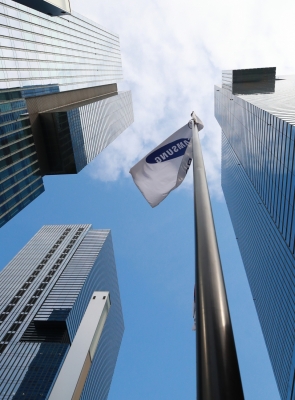
Seoul, May 12 (IANS) Samsung on Tuesday denied claims by British pop singer Dua Lipa that the South Korean tech giant used her image on television packaging without permission, saying the image was used with authorisation obtained through a content partner.
Lipa's legal team filed a lawsuit in the U.S. District Court for Central California last week seeking more than $15 million in damages, accusing Samsung of violating copyright, trademark and publicity rights laws.
Samsung Electronics rejected the allegations of "intentional misuse" of Lipa's image, reports Yonhap news agency.
"Ms. Lipa's image was used in 2025 to reflect the content of our third-party partners that is available on Samsung TVs and was originally provided by a content partner for our free streaming service, Samsung TV Plus," Samsung said in a statement.
"The image was used only after receiving explicit assurance from the content partner that permission had been secured, including for the retail boxes," it added.
Samsung said it has "great respect" for Lipa and the intellectual property rights of other artists, and pledged to continue negotiations with the pop star.
"We have actively sought and remain open to a constructive resolution with Ms. Lipa's team," the company said.
According to the lawsuit, Lipa's legal team argued that Samsung used a photograph taken backstage at a music festival in Austin in 2024 without permission on the packaging of televisions sold in the United States last year.
After Lipa raised the issue in July 2025, Samsung said it suspended production of the packaging, replaced it with a different version and entered mediation proceedings, but Lipa's team ultimately proceeded with the lawsuit.
The complaint alleged a copyright violation, a violation of the California right of publicity statute, a federal Lanham Act claim, and trademark claims.
—IANS
na/
Piyush Goyal explores avenues to boost India’s beauty and personal care sector
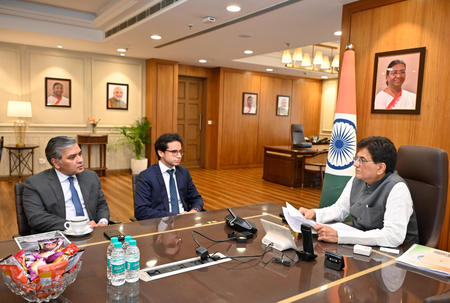
New Delhi, May 8 (IANS) Commerce and Industry Minister Piyush Goyal on Friday met senior officials from the French beauty and personal care major L'Oréal Groupe and discussed strengthening sourcing, manufacturing, and exports from the country.
“Held a meeting with a delegation led by Vismay Sharma, President–South Asia Pacific, Middle East and North Africa Zone, at @LOrealGroupe. Discussions focused on strengthening sourcing, manufacturing, and exports from India,” Goyal posted on X social media platform.
The minister further stated that “given that L’Oréal launched the world's largest Beauty Tech Global Capacity Centre in Hyderabad recently, explored avenues to unlock greater opportunities for India's beauty and personal care sector”.
In January this year, the French cosmetics giant announced to set up a beauty tech and innovation hub in Hyderabad with an initial investment of about $383.4 million. It aims to be a global base for AI‑driven beauty innovation and create 2,000 tech jobs through 2030.
The bilateral trade between India and France have remained steady between 9.17–12.50 billion euros range in five years, ending FY 2024-2025. The total trade for FY 2024-2025 was 12.67 billion euros, with exports from India at nearly 6.67 billion euros.
The new centre will function as a global innovation and capability hub, supporting the company’s technology, data, digital, and supply chain functions worldwide.
It is expected to play a key role in accelerating L’Oréal’s AI, analytics, and digital transformation initiatives across markets.
On Thursday, Goyal chaired a brainstorming session along with officials of the Department of Commerce (DoC) and Department for Promotion of Industry and Internal Trade (DPIIT), to explore measures to enhance global exposure for Indian businesses.
According to the minister, discussions focused on boosting exports and investments, unlocking opportunities for aspiring exporters, and tapping new global markets.
India's total exports of merchandise and services increased by 4.6 per cent to a record high of $863.11 billion during the financial year 2025-26, compared with the corresponding figure of $825.26 billion for the previous fiscal year, despite the US tariff turmoil and uncertainties triggered by geopolitical tensions, the latest figures compiled by the Commerce Ministry showed.
--IANS
na/