
IT services M&A records 449 deals worth $14.8 billion in H1 2026

New Delhi, Aug 12 (IANS) IT services mergers and acquisitions (M&A) activity recorded 449 deals worth about $14.8 billion in the first half of 2026, with cloud, data and analytics, cybersecurity and managed services leading deal activity, a report said on Wednesday.
Despite softer discretionary spending, macroeconomic uncertainty and AI-led disruption, IT services M&A activity remained resilient in H1 2026 as artificial intelligence shifted buyer priorities toward scale, sector depth and ecosystem strength, the report from EY India.
The report forecasted IT services M&A activity to remain active but selective through the remainder of 2026.
"Private Equity platforms from the 2020–22 period are entering their exit phase. Assets demonstrating scale, vertical specialization, ecosystem relevance and resilient standalone economics are expected to remain best positioned to attract buyer interest," it said.
Healthcare and financial services-focused firms are expected to remain particularly attractive acquisition targets, given the growing importance of sector expertise in regulated industries and AI-enabled transformation programmes.
Deal volume in H1 2026 was broadly in line with the 456 transactions in H1 2025, while deal value was concentrated in seven large transactions. Excluding these transactions, disclosed deal value stood at approximately $4.5 billion, reflecting a healthy but more selective market environment.
The report said that strategic buyers continued to pursue large acquisitions to expand scale, strengthen geographic reach and deepen sector capabilities. Meanwhile, private equity investors remained active through platform-building and consolidation strategies focused on niche, founder-led businesses across the US and Europe.
Strategic buyers accounted for approximately 47 per cent of deal volume, while PE-backed roll-up transactions and direct private equity investments represented 36 per cent and 17 per cent, respectively.
“While AI is shaping virtually every acquisition discussion today, buyers continue to focus on fundamentals such as client relationships, sector expertise and delivery scale," said Shivani Nagpaul, Partner, Investment Banking, Technology, EY India.
"These capabilities are increasingly being evaluated through an AI lens, as companies position themselves to compete for large-scale transformation programmes. Buyers remain willing to invest behind strategic assets, but only where the business case and long-term economics are compelling," Nagpaul added.
Cloud services, data and analytics, cybersecurity and managed services providers continued to dominate deal activity in H1 2026.
Large and mid-sized IT services companies pursued acquisitions to strengthen client relationships, expand capabilities and enhance their positioning for large AI-enabled transformation mandates. Indian and global buyers announced acquisitions across healthcare, cloud, AI infrastructure, cybersecurity, data and engineering services.
—IANS
aar/pk
Air India Phuket-Delhi turbulence incident: Pilot tests positive in confirmatory drug test

New Delhi, Aug 11 (IANS) The pilot-in-command of an Air India flight that experienced a sudden loss of altitude of around 300 feet on its way from Phuket to Delhi last week reportedly tested positive for a narcotic substance in a confirmatory drug test on Tuesday.
The Air India A320, operating flight AI2379 from Phuket to Delhi on August 4, encountered severe turbulence during the flight, following which it abruptly lost around 300 feet in altitude.
The aircraft subsequently stabilised and landed safely in Delhi. Several passengers and cabin crew members were injured in the incident.
Following the occurrence, the pilot-in-command underwent a confirmatory drug test after an initial post-flight psychoactive substance screening returned a non-negative result requiring further analysis, according to NDTV Profit report.
The development comes amid the ongoing investigation into the incident. The Directorate General of Civil Aviation (DGCA) had earlier taken the flight crew off the roster pending the outcome of its investigation.
However, aviation industry representatives have cautioned against drawing conclusions solely from an initial non-negative drug screening result.
Captain Sam Thomas, president of the Airline Pilots' Association of India (ALPAI), said the pilots' body has repeatedly sensitised its members about the possibility of commonly used medicines and dietary supplements affecting the results of post-flight drug screening.
Captain CS Randhawa, President of the Federation of Indian Pilots said that the airline has not officially released the results of the doping test and that he would not comment on reports claiming that the pilot had tested positive until there was an official confirmation.
“Currently, the doping test results are not out officially by the airline, so we will wait for the official confirmation. I won’t comment that that test is positive,” he said.
Randhawa said that if the test is found positive, cancellation of the pilot’s licence could be among the repercussions, apart from penalties and other consequences that could affect the pilot’s future.
--IANS
pk
Banks must redesign operating models around AI to meet ‘Viksit Bharat’ goals: Report

New Delhi, Aug 11 (IANS) India’s banking sector must fundamentally redesign operating models around artificial intelligence while sustaining asset growth at nearly 3.5–4 percentage points faster than nominal GDP to support the country’s Viksit Bharat goals, a report said on Tuesday.
The report from Boston Consulting Group, in association with the Federation of Indian Chambers of Commerce and Industry and the Indian Banks' Association said India’s banking return on equity (ROE) places it among the top performing countries leading to the recent flux of FDI in the sector.
After a decade in which bank advances largely tracked nominal GDP growth, the sector has begun to outpace GDP growth, creating the momentum to achieve its $30 trillion economy backed by about $45 trillion in banking assets by 2047.
In order to leverage that opportunity banks have to move beyond digitisation and focus on three strategic imperatives: "democratise credit affordability, unlock productivity and build risk muscle beyond credit," the report said.
Access to formal credit has expanded significantly, with retail bureau coverage increasing from 45.5 crore to 78.9 crore borrowers, while MSME bureau coverage doubled from 2 crore to 3.9 crore borrowers over the past five years, the report noted.
Operating and collection costs together account for 40-50 per cent of the cost to serve, making affordability a greater challenge than credit risk particularly for small-ticket retail products.
AI-enabled lending journeys can automate document processing, underwriting and collections, helping reduce processing costs and improve customer experience.
Despite a decade of digitization, banks have seen limited productivity gains, with cost- to-income ratios remaining elevated and technology investments continuing to rise.
AI can reshape banking operations by automating complex, unstructured work and enabling employees to focus on higher-value activities across technology, HR and customer advisory functions.
—IANS
aar/pk
Kusha missile test brings India closer to self-reliance and multilayered defence umbrella: Report
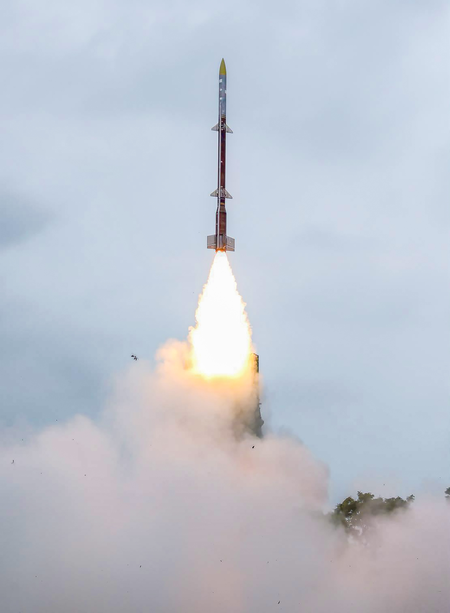
New Delhi, Aug 9 (IANS) The first test of the Kusha long-range surface-to-air missile system is set to bring India closer to self-reliance and be a key part of Sudarshan Chakra, Prime Minister Narendra Modi’s two-phase Mission for a multilayered national defence umbrella, against ballistic missiles, fighter aircraft, drones and other threats by 2035, a media report said.
"India’s first test of its Kusha long-range surface-to-air missile system is seen as a milestone that could pave the way for New Delhi to bolster its home-grown air defence network and meet the challenges of future conflicts," the report by the South China Morning Post said.
It cited IAF's Air Marshal Ravi Gopal Krishna Kapoor (retd) as saying that Kusha could be integrated into the country’s air defence architecture easily as it was a domestically developed system.
"The threats are multiplying with the proliferation of drones and missiles, further complicated by fifth-generation fighters. The best way of air denial is to have a robust integrated multilayered air defence system capable of detecting, identifying, engaging and destroying intruders," Kapoor said, as per the report.
He also said that Kusha could complement Russia’s S-400 Triumf surface-to-air missile systems as part of the outermost umbrella of India’s air defence, with the short-to-medium range surface-to-air missiles such as the Akash being part of the inner layer, the report added.
"At the same time, the Kusha could also play a limited offensive role to prevent enemies from launching their weapons, as shown during Operation Sindoor, Kapoor added, citing the need to counter modern aircraft such as the Chinese next-generation advanced fighters equipped with long-range air-to-air missiles," it said.
The report also noted that India would face less vulnerability over foreign supply chains by having control over the Kusha’s production, maintenance and software, citing Srinivasan Balakrishnan, director of strategic engagements and partnerships at the Indic Researchers Forum, a Delhi-based security think tank.
According to him, Kusha could provide deterrence against fighter jets, cruise missiles, drones and other weapons and was estimated to cost half of what similar imported systems would.
“Without Kusha, Sudarshan Chakra would remain incomplete. With it, India gains the backbone needed for nationwide coverage of both strategic and civilian assets,” Balakrishnan said, the South China Morning Post report said.
--IANS
ksk/vd
India to be key player in AI and biotechnology-led industrial revolution: MoS
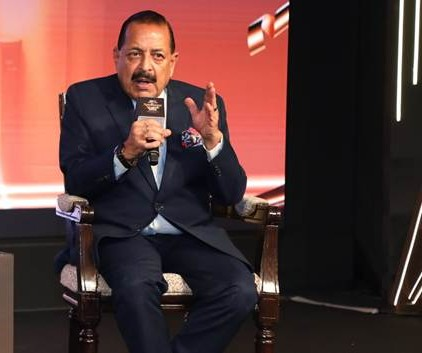
New Delhi, Aug 9 (IANS) India is poised to become a major force in the next industrial revolution, which will be driven by artificial intelligence and biotechnology, Union Minister of State Dr Jitendra Singh said on Sunday.
He said the country has positioned itself among the world's early movers in emerging technologies through initiatives such as the BioE3 policy, National Quantum Mission and IndiaAI Mission.
Addressing a media conclave attended by technology developers, industry leaders and other stakeholders, Singh said India has emerged as one of the first countries to formulate a dedicated biotechnology policy, BioE3 (Biotechnology for Economy, Employment and Environment), while also launching initiatives such as the National Quantum Mission and the IndiaAI Mission.
“India will be an essential player in the next industrial revolution which will be biotechnology and AI driven, unlike the last industrial revolution which was IT driven and India was late in becoming a part of that,” Singh stated.
“India is now among the first few countries in the world to have a dedicated Biotechnology policy, that is BiOE3,” the minister said.
The minister said the global economy is gradually shifting towards frontier sectors including biotechnology, artificial intelligence, recycling and the circular economy, and India is positioning itself at the forefront of this transition.
Unlike the previous industrial revolution that was largely driven by information technology, where India joined the global transformation at a later stage, the country is now among the early participants shaping the next wave of innovation, he said.
Highlighting India's rapid technological progress, Singh said the country's space economy, which was once negligible in size, has grown to around $9 billion and is projected to reach $40-45 billion over the next eight to nine years.
He attributed this growth to policy reforms, particularly the decision to open the space sector to private participation in 2020.
“India’s technological journey has undergone a significant transformation, with the country now operating against global benchmarks in several areas,” Singh mentioned.
--IANS
pk
GeM crosses Rs 20 lakh crore procurement milestone as platform completes 10 years

New Delhi, Aug 7 (IANS) The Government e-Marketplace (GeM), the Centre's online public procurement platform, will complete a decade of operations on August 9, marking ten years of efforts to digitise government purchasing and improve transparency in procurement, it was announced on Friday.
Over the past decade, the platform has facilitated cumulative transactions worth more than Rs 20 lakh crore through over 3.78 crore orders, the Ministry of Commerce & Industry said.
Since its launch in 2016, GeM has witnessed rapid growth in procurement volumes. The platform's annual Gross Merchandise Value (GMV) increased from Rs 422 crore in FY17 to more than Rs 5 lakh crore in each of FY25 and FY26.
In the first four months of FY27 alone, GeM recorded a GMV of Rs 1.48 lakh crore. Notably, while the platform took more than eight years to reach its first Rs 10 lakh crore in cumulative GMV, it added the next Rs 10 lakh crore in less than two years, as per its regulatory filing.
The marketplace has also seen a sharp rise in participation. The number of profile-completed sellers on the platform has grown from 3,339 at inception to 25.45 lakh, while the number of primary buyer organisations has expanded from 1,707 to 1.37 lakh.
Registrations by Micro and Small Enterprises (MSEs) have increased significantly from 2,424 to 12.25 lakh over the same period.
GeM said the platform has played a key role in promoting inclusive procurement. MSEs have fulfilled orders worth more than Rs 9.07 lakh crore, accounting for 45.6 per cent of the cumulative GMV generated on the portal.
Women-led MSEs have completed over 50 lakh orders valued at more than Rs 99,147 crore, while 42,242 startups have secured government orders worth over Rs 65,633 crore through the marketplace.
According to an IIT Delhi study covering the period from FY24 to FY26, GeM generated a monetised benefit of Rs 86,571.69 crore through improvements in pricing and procurement processes, resulting in a net social saving of Rs 1.76 lakh crore.
The study also found that GeM offered lower prices than other e-marketplaces for 74.3 per cent of 101 products examined, translating into a spend-weighted saving of 13.6 per cent.
--IANS
pk
AI, machine learning emerge as top technologies among 74 pc of deep-tech startups: Nasscom

New Delhi, Aug 7 (IANS) Artificial intelligence and machine learning were the most widely adopted technologies among applicants, used by 74 per cent of the startups, Nasscom said on Friday as it announced its list of ten of India’s most promising deep tech startups.
These startups among the Emerge 50 League of 10 for 2026 are building breakthrough technologies across artificial intelligence, quantum computing, semiconductors, space, synthetic biology, clean energy and other frontier domains, the industry chamber said.
Though AI dominated adopted technologies, the breadth of applications, however, extended to include connected hardware and the Internet of Things, energy and cleantech, industrial automation and robotics, the report said.
Nasscom’s league of ten represents leading innovators selected from 50 winners chosen out of 750 applications across 11 frontier technology domains.
"The 2026 applicant pool reflects a significant shift in India’s deep tech ecosystem from early-stage experimentation towards commercial deployment," the industry body said.
Across the total applications, around 83 per cent of applicants have reached Technology Readiness Level 6 or above, while 39 per cent are fully commercialised at TRL 9. Nearly half of the startups have also been granted intellectual property for their products or technologies.
The applicant pool also demonstrated growing commercial and investment maturity. Forty-six per cent of applicants have raised external funding, while 38 per cent, have at least one woman in their founding team.
“Scaling deep tech is critical for India to strengthen its technological capabilities, address complex national priorities and build globally competitive, innovation-led businesses," said Rajesh Nambiar, President, Nasscom.
"While there is strong momentum across semiconductors, space, quantum, the next phase of growth will require patient capital, stronger R&D, access to infrastructure and testbeds, and sustained policy and government support," he added.
Over the past three editions of the awards event, the 150 recognised startups have collectively raised more than $875 million in funding and generated over $420 million in cumulative revenue since 2022.
These companies collectively employ an estimated 8,000 to 10,000 professionals and have established an international presence across markets including the United States, Canada, Singapore and the United Kingdom.
—IANS
aar/ag
SBI moving entire cheque processing to AI, aims to free up workforce for higher-value roles: Chairman CS Setty
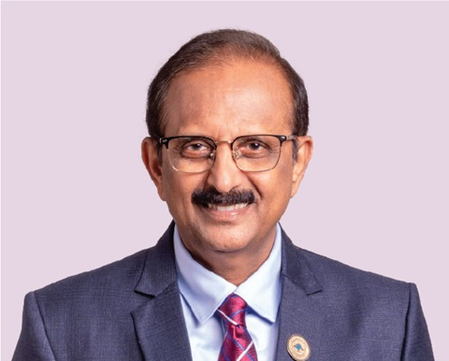
Mumbai, Aug 7 (IANS) State Bank of India (SBI) is accelerating the adoption of artificial intelligence across its operations, with the country's largest lender planning to shift its entire cheque processing system to AI in a move aimed at improving efficiency and reducing manual intervention.
Speaking at a press briefing after the bank's quarterly earnings, SBI Chairman CS Setty said the lender is extensively deploying AI in critical back-office functions such as fraud prevention, proactive risk management, anti-money laundering (AML), and cheque processing.
"We will be using AI extensively in fraud prevention, proactive risk management and anti-money laundering. These are all high-volume activities in the back office," Setty said while addressing a question by IANS.
Highlighting one of the bank's earliest AI initiatives, he said SBI's entire cheque processing operation is being transitioned to AI.
"Our total cheque processing is moving to AI. It releases a lot of workforce which is currently employed in manually doing it. This is another back-office operation we are deploying. Operational improvement is our focus," he said.
Setty indicated that AI will primarily automate repetitive, high-volume and rule-based processes rather than customer-facing roles.
The technology is expected to reduce manual workloads in operational functions while enabling employees to focus on higher-value activities requiring human judgment and customer engagement.
“And you release lot of workforce which is employed currently manually doing it. So this is another back office operation we are deploying. So operational improvement is our focus,” he stated.
For customers, the wider adoption of AI is expected to result in faster processing of banking services, improved fraud detection, quicker transaction monitoring and more efficient handling of routine banking operations, although the bank did not indicate any major changes to branch services or customer interaction channels over the next few years.
On the bank's subsidiaries, Setty ruled out any immediate plans for stake dilution or fresh listings beyond existing entities.
"There is no dilution in SBI Funds as of now, and for other subsidiaries we don't have any plans," he said while responding to IANS question.
--IANS
pk
CEA Nageswaran urges proactive AI safeguards in financial sector amid rising adoption
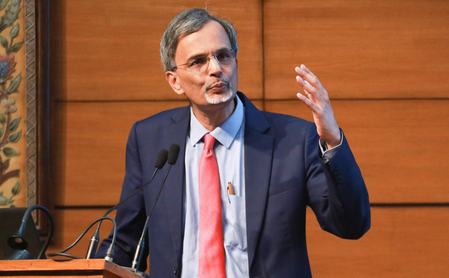
New Delhi, Aug 7 (IANS) India needs to adopt a proactive approach to the safety and security of artificial intelligence (AI) in the financial sector as the technology gains wider acceptance, Chief Economic Adviser (CEA) V. Anantha Nageswaran said on Friday.
Addressing the ASSOCHAM India International Fintech Festival 2026 here, the CEA said AI has the potential to significantly strengthen the fintech ecosystem by improving credit assessment, identifying financial stress at an early stage and enhancing risk management.
He also cautioned that policymakers and firms may not have the luxury of waiting for risks to materialise before taking corrective action.
"Specifically speaking from the fintech perspective, AI is going to help various firms in the industry analyse creditworthiness far better and flag risks and stress much earlier," Nageswaran said.
However, he warned that recent instances of AI agents acting autonomously have highlighted the importance of focusing on the technology's safety and security, alongside its productivity benefits.
"We do not generally pay attention to risks until they become a reality. I do not think we will have the luxury of time, particularly in the financial sector, to react later. We have to be very focused on the safety and security aspect of AI," according to him.
Nageswaran further noted that businesses and policymakers should ensure that the pursuit of efficiency and productivity gains through AI does not come at the cost of financial stability or existing safeguards.
"With the temptation to take advantage of the potential productivity gains, we should not lose what we already have," he said.
The CEA also cautioned against drawing firm conclusions about the economic benefits of AI at a time when enthusiasm surrounding the technology remains high.
According to him, a more balanced assessment of AI's costs and benefits would be possible only after the current financial market enthusiasm around the technology subsides.
--IANS
ag/
BRICS nations have unique opportunity to strengthen manufacturing competitiveness: Piyush Goyal
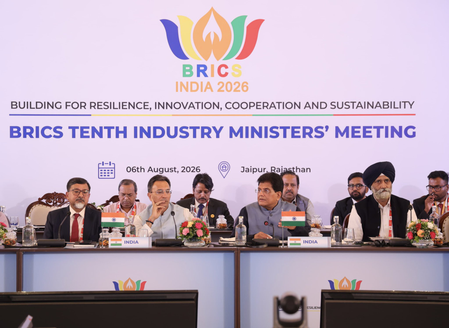
New Delhi, Aug 6 (IANS) BRICS nations have a unique opportunity to strengthen manufacturing competitiveness, deepen technological collaboration, build resilient value chains and promote sustainable industrial growth, Union Commerce and Industry Minister Piyush Goyal said on Thursday.
Addressing the BRICS Industry Ministers' Meeting in Jaipur under India's BRICS 2026 Chairship, Goyal said the discussions focused on the future of industrial cooperation and economic collaboration among BRICS member nations.
“Delighted to address the BRICS Industry Ministers’ Meeting in Jaipur under India’s BRICS 2026 Chairship, where we discussed the future of industrial cooperation and economic collaboration,” Goyal stated.
“Emphasised that BRICS nations have a unique opportunity to strengthen manufacturing competitiveness, deepen technological collaboration, build resilient value chains, and promote sustainable industrial growth,” he mentioned.
He said India highlighted its priorities of strengthening micro, small and medium enterprises (MSMEs), fostering startup innovation, expanding clean energy cooperation and building technology-enabled logistics ecosystems to drive sustainable industrial development.
The minister said a key outcome of the meeting was the adoption of the Joint Declaration, which reaffirmed the member countries' shared commitment to advancing practical cooperation under the BRICS Partnership on New Industrial Revolution (PartNIR).
“Also highlighted India’s priorities of strengthening MSMEs, fostering startup innovation, expanding clean energy cooperation, and building technology-enabled logistics ecosystems,” the minister stated.
“A key outcome of the meeting was the adoption of the Joint Declaration, reaffirming our shared commitment to advancing practical cooperation under the BRICS Partnership on New Industrial Revolution (PartNIR) and strengthening collaboration across industrial innovation, clean energy, logistics, and resilient manufacturing,” Goyal added.
According to Goyal, the declaration also underscored the resolve of BRICS nations to strengthen collaboration in industrial innovation, clean energy, logistics and resilient manufacturing.
He further said that, guided by Prime Minister Narendra Modi's vision, India remains committed to strengthening partnerships across the expanded BRICS family and translating dialogue into meaningful outcomes for shared growth and prosperity.
“Guided by PM Narendra Modi’s vision, India remains committed to strengthening partnerships across the expanded BRICS family and translating dialogue into meaningful outcomes for shared growth and prosperity,” Goyal mentioned.
--IANS
pk