
Global investors to deploy $144 billion in 2026 as India strengthens position in real estate sector

Mumbai, Jan 28 (IANS) Global institutional investors are set to deploy $144 billion into commercial real estate in 2026, marking a clear rebound in investment activity, and India is emerging as an increasingly relevant destination for global capital seeking scale, income visibility and long-term growth, a report showed on Wednesday.
Knight Frank’s latest ‘Active Capital Survey’ revealed that 87 per cent of investors (by AUM) intend to increase direct commercial real estate investment in 2026, while 62 per cent expect to be net buyers, highlighting strong acquisition appetite globally.
The resurgence of investor interest is being led globally by a renewed focus on Core and Core-plus strategies, with $37 billion of planned global investment targeting Core assets.
“Global capital is returning, but it is far more disciplined than in previous cycles, India is increasingly being viewed as a defensive growth market, supported by strong occupier demand, improving asset quality and long-term structural drivers,” said Shishir Baijal, International Partners, Chairman and Managing Director, Knight Frank India.
This shift closely aligns with India’s evolving commercial real estate market, particularly in Grade A office assets across major cities such as Mumbai, Bengaluru, Delhi-NCR, Hyderabad, Pune and Chennai.
Globally, offices have re-emerged as the most targeted asset class, with 69 per cent of investors planning allocations in 2026.
However, investors are highly selective, favouring well-located, ESG-compliant assets that meet modern workplace requirements, while avoiding assets facing long-term obsolescence.
This trend mirrors India’s experience, where leasing momentum continues to be driven by Global Capability Centres (GCCs), technology firms and domestic corporates, collectively accounting for approximately 75 per cent, thereby reinforcing confidence in high-quality office stock, said the report.
Beyond offices, living sectors are the second most targeted globally, with 65 per cent of investors planning allocations, attracted by demographic tailwinds and defensive income characteristics.
“While institutional living segments such as rental housing and student accommodation remain nascent in India, they represent a significant medium- to long-term opportunity given rapid urbanisation and a young population profile,” the report mentioned.
Retail has also returned to investor focus globally, with 56 per cent of investors planning allocations, reflecting stabilisation and opportunities in dominant, experience-led shopping centres.
Operational real estate sectors, including data centres, infrastructure and healthcare, are gaining traction globally as investors seek exposure to long-term structural tailwinds.
In India, rising digital adoption, expanding healthcare needs and sustained public infrastructure investment are translating into growing interest across these segments.
—IANS
na/
Google launches new AI-powered photo editing feature in India

New Delhi, Jan 28 (IANS) Tech giant Google on Wednesday launched a new Artificial Intelligence-powered photo editing feature in India.
With the new feature, users can edit images in Google Photos by simply describing the changes using voice or text.
“Now in India! Edit your images in Google Photos by simply asking. We’re rolling out the ability to edit your images by simply describing the edits you want using your voice or text. And, with a little help from advanced Gemini capabilities, Photos brings your vision to life,” Google shared in a blog post.
Individuals can use the feature by opening a photo and tapping “Help me edit.”
“You can now also ask Photos to remove a friend's sunglasses, open their eyes, or make them smile. The feature uses images from your private face groups to generate accurate, personalised edits of the people in your library,” Google said.
This feature in Google Photos is available in English, Hindi, Tamil, Marathi, Telugu, Bengali, and Gujarati on any Android device with at least 4GB of RAM and Android 8.0 or higher.
Google has also introduced three new features, such as conversational editing, personalised edits, and Nano Banana.
With conversational editing, users can easily switch between tools and sliders. One can simply describe the edits such as to ‘make the background blurry,’ ‘remove the glare,’ or ‘make the colours pop.’
By asking Gemini to "remove [name's] sunglasses" or "make [name] smile," users can personalise edits. Gemini will use images from private face groups to generate an accurate image.
With the Nano Banana in Google Photos, users can now ask for all kinds of new transformations to the images. Describing just a new style can help users bring their vision to life in seconds.
To continue ensuring transparency on AI-generated content, Google is also adding support for C2PA Content Credentials in Google Photos, which attaches a permanent digital label showing a modified image’s origin and edit history.
--IANS
rvt/
India Energy Week highlights ‘energy addition’, ‘balanced investment’ across verticals
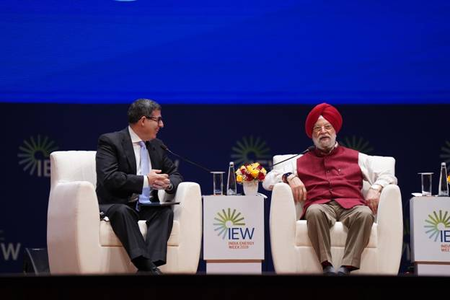
New Delhi, Jan 27 (IANS) Union Minister for Petroleum and Natural Gas, Hardeep Singh Puri, on Tuesday said that the global energy transition is fundamentally about “energy addition”, rather than replacement.
Addressing the 'India Energy Week' in Goa, Puri stressed the need for sustained investment across oil, gas, biofuels, green hydrogen, LNG, and clean cooking fuels, according to a statement from the Ministry of Petroleum and Natural Gas.
Goa, the host state of the summit, showcased a long‑term roadmap to achieve 100 per cent renewable energy by 2050.
Puri outlined India's reforms in the sector, including opening large sedimentary basins for exploration, successive Open Acreage Licensing Policy and Discovered Small Fields (DSF) bidding rounds to attract global investors.
Sultan Ahmed Al Jaber, Minister of Industry and Advanced Technology of the United Arab Emirates and Managing Director and Group CEO of ADNOC, stressed that underinvestment is the greatest risk to the global energy system and called for balanced investment across all energy forms to ensure security and affordability, the statement said.
Al Jaber underlined that global energy demand is entering a phase of transformation at scale, which is driven by emerging markets, digitalisation, and the integration of diverse energy systems.
The minister noted that India Energy Week has rapidly evolved into a trusted global forum, bringing together policymakers, producers, consumers, technology providers, and investors to navigate a period of unprecedented transition and volatility in the global energy system.
India Energy Week is the country’s flagship global energy platform, bringing together government leaders, industry executives and innovators to accelerate progress toward a secure, sustainable and affordable energy future.
Puri highlighted that India’s rapid expansion of LPG coverage, clean cooking access, and diversified energy mix reflects the country’s commitment to inclusive growth and equitable energy access.
A high-level Ministerial Panel at the event saw senior policymakers discuss the need for pragmatic policies, sustained investment, and stronger international partnerships to navigate global energy volatility.
Highlighting India’s ambition to increase the share of natural gas in its energy mix, Puri stressed the importance of global collaboration, investment, and realistic transition pathways.
Canada’s Minister of Energy and Natural Resources, HE Tim Hodgson, expressed a strong interest in deepening cooperation with India, particularly in the areas of LNG, critical minerals, oil supplies, and long-term energy trade.
--IANS
aar/rvt/
India, EU FTA brings big relief on car tariffs as import duties reduced to 10 pc from 110 pc

New Delhi, Jan 27 (IANS) India and the European Union on Tuesday concluded a long-awaited Free Trade Agreement (FTA), bringing tariffs on European cars entering India to 10 per cent from the current high level of 110 per cent.
This lower duty will apply under an annual quota of 250,000 vehicles. At present, India charges a 70 per cent duty on imported passenger cars priced below $40,000, while vehicles costing more than $40,000 attract an effective customs duty of 110 per cent.
The move opens up new opportunities for European carmakers in the Indian market, which is currently the world’s third-largest by sales.
With India’s car market expected to grow to around six million units a year by 2030, several European companies are preparing fresh investments.
Renault is returning to India with a new business strategy, aiming to expand beyond Europe where Chinese carmakers are gaining ground.
Meanwhile, Volkswagen Group is also finalising its next phase of investment in India through its Skoda brand.
Beyond automobiles, the trade agreement will lower or remove tariffs on more than 90 per cent of European goods exported to India.
This includes major reductions in duties on machinery, which currently face tariffs of up to 44 per cent, chemicals with duties of around 22 per cent, and pharmaceuticals taxed at about 11 per cent. Most of these charges will be gradually phased out.
The deal will also bring changes in other sectors. Import duties on European beer will be reduced to 50 per cent, while tariffs on chemicals, aircraft and spacecraft will be eliminated for almost all products.
According to the European Union, the agreement could help double EU exports to India by 2032 and lead to annual duty savings of up to four billion euros on European goods.
In addition to the trade pact, leaders at the India-EU Summit also launched a new EU-India Security and Defence Partnership, signaling deeper cooperation beyond economics.
--IANS
pk
IIT Guwahati develops method to monitor glacial hazards in Eastern Himalayas

Guwahati, Jan 27 (IANS) Researchers from the Indian Institute of Technology (IIT) Guwahati have developed a predictive framework that has identified 492 locations where glacial lakes are likely to form in the Eastern Himalayan mountains.
The research conducted using high-resolution Google Earth images and digital elevation models also provides crucial insights for hazard management and water-resource planning in high-mountain regions.
The models helped capture complex landscape features and estimate uncertainty in the predictions, making the forecasts more realistic and reliable.
With the developed framework, the research team identified 492 locations in the Eastern Himalaya where new glacial lakes are likely to form, thereby indicating areas that require careful monitoring and preventive measures.
“By pinpointing high-risk areas, the framework can guide early-warning systems for Glacial Lake Outburst Floods (GLOFs), help plan safer locations for roads, hydropower projects, and settlements, and support long-term water-resource management. It offers a practical tool for reducing risks to communities and infrastructure in the Himalayas,” said Prof. Ajay Dashora, Assistant Professor, Department of Civil Engineering, IIT Guwahati.
“Beyond hazard management, the method can help understand how water systems may change as glaciers continue to retreat. Importantly, the framework is adaptable to other glaciated mountain regions around the world, making it a valuable tool for climate-resilient planning and disaster-risk reduction globally,” Dashora added.
The findings, published in Nature’s Scientific Reports journal, confirm that the shape and structure of the land, often overlooked in previous studies, can play a central role in where and how a glacial lake may appear.
In the development process, the research team tested three predictive methods, including Logistic Regression (LR), Artificial Neural Network (ANN), and Bayesian Neural Network (BNN)
Among these, the research team found the Bayesian Neural Network (BNN) to be the most accurate and showed that certain earth features, such as neighbouring lakes, cirques, gentle slopes, and retreating glaciers, are the strongest predictors of glacial lake formation.
The team now plans to integrate moraine development histories, automate data preparation, and add field-based validation to the developed framework.
These improvements will enhance the model’s accuracy and broaden its use for large-scale monitoring of glacial hazards.
--IANS
rvt/
Humbled and honoured to be conferred the Padma Bhushan: Uday Kotak
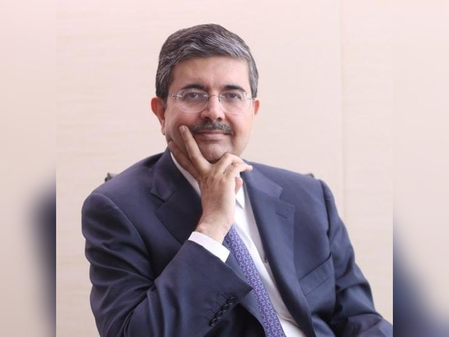
New Delhi, Jan 26 (IANS) Veteran banker and industrialist Uday Kotak on Monday said he was “humbled and honoured” to be conferred the Padma Bhushan.
The government on Sunday announced the Padma Awards on the eve of Republic Day, with Kotak being conferred the Padma Bhushan for his exceptional contribution to the financial sector.
“The India of today is unrecognisable from the one I was born in. The journey has been exhilarating. On this Republic Day, we stand at the fork of many roads,” Kotak posted on X.
He further stated that “I choose the path of karma with a sense of paranoia, with aspiration but conscious of ground realities. I have deep conviction that we, the people will make India even greater. We have miles to go before we sleep”.
The Padma Bhushan recognised Kotak’s lasting impact on India’s banking and financial landscape and his role in shaping a strong and credible private financial institution in the post-liberalisation era.
Kotak’s journey is seen as one of the most remarkable success stories in India’s financial sector. In the early 1990s, Kotak Finance expanded into areas such as auto loans, investment banking and stockbroking at a time when India was opening up its economy.
The timing proved crucial, as economic liberalisation in 1991 created new opportunities for private financial institutions. When Kotak started out, he did not come from a well-known business family and did not have the backing of large investors.
Many potential clients were hesitant to trust a new company with their money. Despite these challenges, Kotak focused on building his business on principles of honesty, transparency and low-risk lending.
His decisions were measured and driven by logic rather than aggressive expansion. The company’s early growth was powered by a modest loan of Rs 30 lakh borrowed from family and friends, which was used to start a bill discounting business.
Over time, this small beginning laid the foundation for what would become one of India’s largest private banking groups.
--IANS
na/
OpenAI adding advertisements in ChatGPT in US sparks privacy concerns

New Delhi, Jan 24 (IANS) Tech giant OpenAI has reportedly announced plans to introduce advertising in ChatGPT in the United States, placing ads on the free version and the low‑cost Go subscription while exempting Pro, Business and Enterprise users.
OpenAI said that advertisements will be clearly separated from chatbot responses, will not influence outputs, and that it will not sell user conversations, according to multiple reports.
The company also pledged to let users turn off personalised ads and to avoid showing ads to users under 18 or around “sensitive” topics such as health and politics. The move has drawn criticism and unease from some users and experts who question whether voluntary safeguards will hold once advertising becomes central to the business model.
Analysts said that social media platforms also followed the same trend, where targeted advertising reshaped services to maximise engagement which later eroded user privacy.
Though the AI company proposed not to show ads “near sensitive or regulated topics like health, mental health or politics”, observers noted that the company is vague about what counts as “sensitive,” or how and by whom terms like “health” will be defined.
While large‑scale AI has proved to be costly to develop and run, and OpenAI looks likely to burn $115 billion over the next five years, industry analysts said advertising is the most scalable revenue model. They noted that ad models reward user engagement, and content that sustains attention could turn out to be misleading or harmful.
A reliable alternative to such private AI firms would be a publicly funded AI system, such as Apertus in Switzerland developed through its universities and national supercomputing centre. It is open source, compliant with European AI law, and free from advertising.
If OpenAI, which is flouted as a “super assistant” placed messages under personalised guidance tags about products, lifestyle choices, finances or politics they could be more impactful than the same ads seen while browsing. Such practices will blur the line between advice and persuasion, according to industry experts.
—IANS
aar/na
JNCASR partners with industry to develop advanced thermal materials for aviation batteries
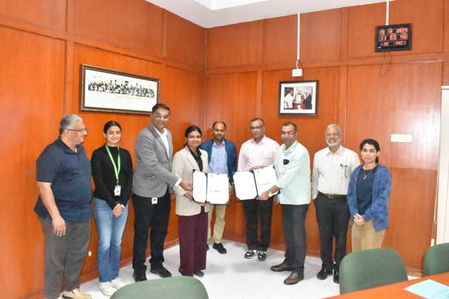
New Delhi, Jan 24 (IANS) The Jawaharlal Nehru Centre for Advanced Scientific Research (JNCASR), an autonomous institute of the Department of Science and Technology (DST), has signed a Memorandum of Understanding (MoU) with Bengaluru-based Dreamfly Innovations to develop advanced thermal materials for aviation batteries.
Under the collaboration, advanced thermal materials and thermoelectric devices will be developed for improving thermal management (storage and conversion) in aviation batteries.
The partnership will address current challenges through materials-level innovation and help translate fundamental materials research into robust, deployable thermal technologies for real-world aviation platforms.
“The joint effort combines JNCASR’s strengths in materials design, synthesis, advanced characterisation, and thermal transport measurements with Dreamfly Innovations’ expertise in aviation battery engineering and system-level integration,” the Ministry of Science and Technology said.
Effective heat management remains a major bottleneck for high-energy-density lithium-based batteries used in the aviation industry.
Excessive heat generation during high-power operation can compromise efficiency, reduce battery lifespan, and pose serious safety risks.
While passive thermal management strategies such as Phase Change Materials (PCMs) are attractive due to their low weight and zero power consumption, their widespread adoption has been limited by the inherently poor thermal conductivity of conventional PCMs.
As a result, heat generated by the battery is not absorbed rapidly enough, leading to temperature rise and accelerated degradation of battery components.
A common approach to overcome this limitation involves incorporating high-thermal-conductivity additives to form composite PCMs.
However, such composites often suffer from long-term stability issues, including additive agglomeration during repeated thermal cycling, which ultimately degrades performance and reliability.
“The advanced thermal materials will be engineered for high thermal conductivity to rapidly absorb excess heat during high-load operation, maintain battery temperatures within optimal operating windows, and enable lightweight, thermal regulation without compromising long-term stability,” the Ministry said.
The collaboration brings together academic research expertise from Prof. Kanishka Biswas' lab in JNCASR and industrial innovation in Dreamfly to address critical challenges in drone performance, safety, and operational endurance, it added.
--IANS
rvt/
Govt releases 3rd discussion paper ahead of new GDP series from Feb 27
New Delhi, Jan 23 (IANS) Ahead of the launch of new GDP series with FY 2022-23 as base year, the government on Friday launched a third discussion paper which focuses on changes in methodology of quarterly GDP series and Sub-national Accounts.
The Ministry of Statistics & Programme Implementation released the discussion paper, titled on “Changes in Methodology of Quarterly GDP series and Sub-national Accounts”.
The ministry has invited comments and feedback from experts, academicians, government bodies, state governments, financial institutions, users of national accounts data and other stakeholders on the discussion paper by February 5.
MoSPI is in the process of revising the base year of national accounts from February 27.
An Advisory Committee on National Account Statistics (ACNAS), under the chairmanship of professor B.N. Goldar, has been constituted to advise MoSPI, among other things, on inclusion of new data sources for improving the estimates of National Accounts and the methodology for compilation and presentation of National Accounts Statistics for purposes of economic analysis and policy formulation.
The Committee has representation from various Central Ministries and Departments, State Governments, Academia and Research Institutions.
According to the ministry, FY 2022-23 has been chosen as the base year of new series and the estimates of new series are scheduled to be released on February 27, 2026.
“With a view to apprise the users of national accounts data about the proposed changes being in the new series, Ministry has planned to release discussion papers on compilation of National Accounts Statistics,” it added.
The first discussion paper on changes in compilation of aggregates based on production/income approach was released on November 21, 2025 and the second discussion paper on the proposed improvements in compilation of GDP from expenditure approach was released on December 16, 2025 to seek feedback/suggestions from users.
--IANS
na/
India shows strong macroeconomic stability, capital-raising activity remains robust: SEBI Chairman
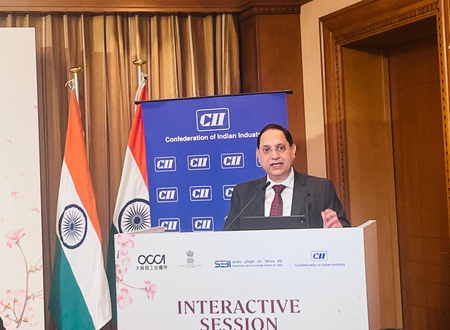
New Delhi, Jan 22 (IANS) SEBI Chairman Tuhin Kanta Pandey said on Thursday that India continues to demonstrate strong macroeconomic stability amid ongoing global volatility in trade and geopolitics, as capital-raising activity remains robust, with the country ranking first globally in the number of IPOs and third in terms of capital raised in 2025.
Outlining the resilience of the Indian economy, Pandey observed that moderate inflation, robust foreign exchange buffers, and stable external accounts place India among the world’s strongest economies, with growth continuing to rank among the highest globally.
During his address to an investors' meeting curated by the Confederation of Indian Industry (CII) in Osaka, Japan, he noted that India’s digital public infrastructure has set new global standards, while recent reforms in income taxation, labour regulations, and the GST framework are expected to stimulate consumption and reinvigorate the investment cycle.
Pandey described the rise of domestic investors as one of India’s most significant developments.
India today ranks as the world’s fifth-largest equity market by market capitalisation share, with the United States leading globally at 48.2 per cent, followed by China, Japan, and Hong Kong.
Mutual funds have deep penetration with strong monthly equity inflows, while the AIF industry has emerged as a key driver of private capital formation.
He further mentioned that debt markets continue to expand, private equity and AIF inflows are rising, and REITs and InvITs are increasingly channelising long-term capital into infrastructure and real estate. The municipal bond market is also gaining momentum.
Pandey stressed that investor education remains central to SEBI’s agenda, with intensified efforts to combat digital fraud and promote responsible investing. For Foreign Portfolio Investors (FPIs), SEBI has focused on simplifying market access through regulatory reforms, easier registration, and improved settlement mechanisms, alongside continued engagement with global investors.
India and Japan share a long-standing and symbiotic relationship anchored in their Special Strategic and Global Partnership, with bilateral trade exceeding $25 billion, underscoring the depth of economic cooperation.
Japanese investors have consistently found strong value and returns in India, which has produced a remarkable number of wealth-compounding companies, said Pandey.
Chandru Appar, Consul General of India, Osaka–Kobe, highlighted that India is currently in a high-growth phase, driven by its demographic dividend, rapid infrastructure development, and expanding consumption base, supported by landmark economic reforms over the past decade.
India’s capital markets are built on trust, transparency, and robust regulation, with SEBI playing a pivotal role in protecting investors and maintaining market integrity, Appar noted.
Setsuo Iuchi, President of the Osaka Chamber of Commerce and Industry, emphasized that India is a key partner for Japanese businesses, especially as companies seek opportunities in the Global South.
R Mukundan, President Designate, CII, said that India–Japan ties are built on shared values and institutional trust, with Japanese companies playing a vital role in India’s manufacturing, technology, and employment growth.
--IANS
na/