
Fugitive terrorist Sukhwinder Singh held by UP Police-ATS team from Mohali

Noida, Feb 19 (IANS) A joint team of UP Police's Anti-Terrorist Squad (ATS) and Gautam Buddha Nagar police has arrested a fugitive terrorist linked to the banned Khalistan Commando Force (KCF) after nearly three decades on the run.
The Noida unit of the ATS received credible information that Sukhwinder Singh Dhillon, also known as Dayal Singh, Rakesh Sharma, and Chinda, a resident of Punjab, was an active member of the banned terrorist outfit. An FIR had earlier been registered against him under the Arms Act at Sector 20 Police Station, Gautam Buddh Nagar.
During the investigation, authorities noted that Singh had been found in possession of an AK-56 rifle and 121 cartridges. He was produced in court on April 18, 1993, and subsequently granted bail on December 9, 1993. Following his release, Singh went absconding from August 16, 1995, remaining a fugitive for almost 31 years, during which a court-issued arrest warrant was also active against him.
The ATS and Gautam Buddha Nagar police later discovered that the 63-year-old fugitive, instead of residing in his native Kapurthala district in Punjab, was living in the state's SAS Nagar (Mohali) district instead. Acting on this information, the joint team conducted surveillance and successfully apprehended him without incident.
"The arrest marks a significant breakthrough in ongoing counter-terrorism operations," an ATS official said. Authorities are now interrogating Singh to gather further intelligence about his connections and possible involvement in other activities of the banned outfit.
This arrest underscores the sustained efforts of law enforcement agencies in tracking fugitives linked to terrorist organisations and highlights the importance of inter-state cooperation in combating terrorism. Singh has been handed over to the police authorities concerned for further legal proceedings.
Police have urged citizens to remain vigilant and cooperate with law enforcement by reporting any suspicious activity through the toll-free helpline.
--IANS
sn/vd
AICC reviews T’gana govt performance, discusses roadmap to strengthen party
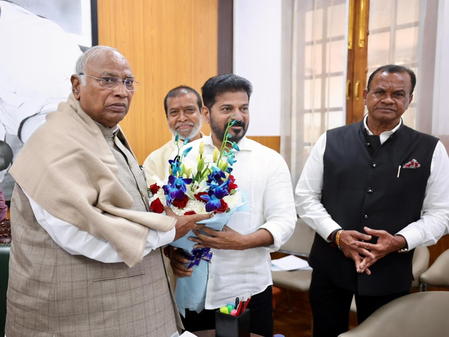
Hyderabad, Feb 19 (IANS) The All India Congress Committee (AICC) leadership on Thursday held discussions with Telangana Chief Minister A. Revanth Reddy and senior state leaders on an action plan to further strengthen the party organisation in Telangana and review governance initiatives.
The meeting, held in Delhi under the leadership of AICC President Mallikarjun Kharge, also reviewed the performance of the Congress government in Telangana over the past two years and assessed progress in implementing welfare and development programmes.
Senior Congress leader Rahul Gandhi, AICC General Secretary K.C. Venugopal, and AICC in-charge for Telangana Meenakshi Natrajan were present at the meeting, along with senior leaders from the state unit.
Chief Minister Revanth Reddy later stated on social media that there was an extensive discussion on the roadmap to strengthen the party in Telangana, the development initiatives undertaken by the state government over the past two years, the implementation of welfare schemes, and the outcomes of recent rural and urban local body elections.
According to the Chief Minister, Rahul Gandhi also enquired in detail about developments in the agriculture sector, including Telangana’s leading position in paddy production at the national level, and reviewed the progress of the Young India Integrated Schools initiative. He also offered suggestions to further strengthen governance and organisational outreach.
Telangana Pradesh Congress Committee (TPCC) President Mahesh Kumar Goud, Deputy Chief Minister Mallu Bhatti Vikramarka, and several state ministers attended the meeting held at the residence of Mallikarjun Kharge.
Deputy Chief Minister Vikramarka said that a roadmap was presented during the meeting to further strengthen the party organisation in Telangana following its performance in recent local body elections. He said Rahul Gandhi appreciated Telangana’s leading position in paddy production and the progress made under the Young India Integrated Schools initiative.
He added that the government remains committed to its ‘Praja Palana’ (people’s governance) vision and is focused on delivering development and welfare benefits to people across the state.
Minister Sridhar Babu said the meeting involved comprehensive discussions aimed at strengthening the party structure and aligning governance priorities with organisational objectives in Telangana. He said the deliberations focused on coordinated leadership, effective implementation of government programmes, and accelerating the state’s development trajectory.
TPCC President Mahesh Kumar Goud said there were detailed discussions on governance, development initiatives, and measures to further strengthen the party organisation at various levels. He said key programmes were reviewed and strategies were formulated to ensure effective implementation at the grassroots level.
He added that the party remains committed to delivering good governance while strengthening its organisational structure with unity, coordination, and dedication.
--IANS
ms/pgh
Two, including minor, held for rape of minor girl in Hyderabad

Hyderabad, Feb 19 (IANS) Cyberabad police have arrested a youth and a minor boy for the sexual assault of a minor girl.
Police were also on the lookout for another minor boy involved in the case.
The 16-year-old girl, who was reported missing on February 17, was rescued by Narsing police from Chanicherla double-bed rooms the next day.
According to the Deputy Commissioner of Police, Sherilingampally zone, a complaint was received on February 17 from the victim’s mother stating that her daughter, who was residing with her grandmother at Puppalaguda for studies, left for school on February 16 morning but did not return home. Despite searching and making enquiries, her whereabouts could not be traced. Hence, a First Information Report (FIR) was registered.
During the investigation, Narsingi police made all possible efforts to trace the missing girl. On the morning of February 18, the missing girl was traced to the Changicherla double-bedrooms and rescued.
The investigation revealed that on February 7, the minor girl went to the Charminar area for shopping and got acquainted with a 16-year-old boy, a resident of Talab Katta. They were in contact over the phone.
On February 16, she went to the Madina area to meet him without informing her family members. They both roamed around the Charminar. At night, the minor boy and his two friends, including another minor boy, all residents of Talab kata, took her in an auto to Chengicherla double bedrooms and threatened her with a knife. They forced her to consume alcohol and assaulted her physically and sexually.
The Narsingi police apprehended the accused and the minor boy who lured the minor girl. In further investigation, Narsingi police collected the evidence and produced the duo before the court. The other minor boy, involved in the crime, is absconding. Efforts are continuing to apprehend him, the DCP said.
The accused was previously involved in several cases, including robbery, theft, bodily offence, in various police stations and also a suspect sheet is being maintained in Rain Bazar Police Station.
The DCP said in this case, both the victim and all the accused persons belong to the same community.
--IANS
ms/vd
Congress claims Centre, BJP-ruled govts ordered removal of 9 AI-generated videos
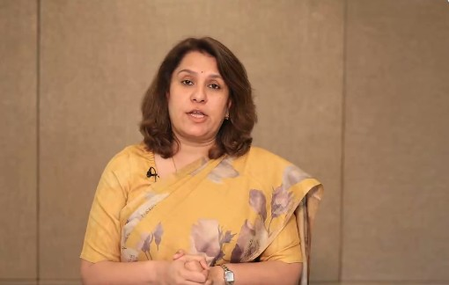
New Delhi, Feb 19 (IANS) The Congress, on Thursday, accused the Union government of ordering the removal of nine AI-generated satirical videos from the party's social media accounts.
Accusing the Centre of hypocrisy and double standards, Congress Spokesperson and Chairperson of its social media and digital platforms, Supriya Shrinate, termed it an irony that the government "was resorting to gross abuse of power by misusing the provisions of the Information Technology Act and censoring the AI content at a time when it was holding the AI Summit".
While addressing a press conference in New Delhi, Shrinate claimed that nine AI-generated videos created by the Congress have been deleted over the last six weeks "at the instance of the Narendra Modi government and BJP-ruled state administrations".
The Congress Spokesperson said that orders were issued either by police authorities in BJP-ruled states, including Bihar, Rajasthan, Madhya Pradesh and Maharashtra, or by the Ministry of Electronics and Information Technology.
She claimed there is a lack of transparency on why a video is being taken down, with no public order and complete secrecy, making judicial challenges difficult.
Shrinate asserted that the videos prominently carried the "AI Generated Video" disclaimers, and were made as political satire and dramatised commentary on issues the Opposition has consistently raised in the Parliament and at public forums.
The Congress leader also contended that the newly proposed online censorship portal "Sahyog" empowers multiple government officials to issue "takedown directives", which she noted, amounted to expanding the executive control over digital speech.
"Now the bureaucrats will decide what the nation should and should not watch," she remarked.
She also raised concerns over the alleged mismanagement at the ongoing AI Summit being held in New Delhi, referring to logistical lapses, restrictions on equipment, and inadequate internet connectivity for participants.
Pointing out the contribution of former Prime Minister late Jawaharlal Nehru "who built institutions like the IITs and IIMs", Shrinate claimed that "global CEOs are the products of those institutions".
She also alleged that the police were trying to "threaten and intimidate" members of the Congress IT cell.
--IANS
jb/khz
CBSE career counsellor directive: Bold mandate, unfinished framework
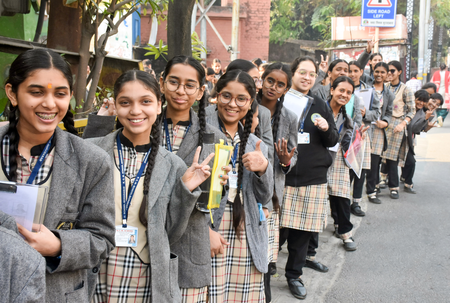
New Delhi, Feb 19 (IANS) CBSE’s decision to mandate career counsellors in schools is a long-overdue recognition of students’ needs, but its success will depend on how India builds professional capacity and quality standards.
For almost a hundred years, India’s educational policies have acknowledged the significance of guidance and counselling in educational institutions. From the Acharya Narendra Dev Committee Report in 1939 to the National Education Policy (NEP) of 2020, various policy documents have emphasised that students require organised assistance to manage their education, personal lives, and careers.
However, even with this longstanding agreement, career guidance in schools has mostly remained marginal - integrated into general counselling, provided informally by educators, or reliant on an unregulated private sector.
The recent change to the Central Board of Secondary Education (CBSE) 's Affiliation Bye Laws marks a significant shift from previous practices. By requiring schools to appoint a dedicated Career Counsellor, separate from the wellness and counselling teacher, CBSE has, for the first time, acknowledged career guidance as a specialised role within the educational system.
This change comes at a crucial time when academic pressures, student mental health, and uncertainty regarding future paths after school are closely linked.
The goal of this initiative is both timely and promising. Nonetheless, whether India’s educational institutions are adequately equipped to meet this expectation remains a crucial and unresolved issue.
Until now, the CBSE's affiliation guidelines mandated that schools hire a counselling and wellness teacher, implicitly suggesting that socio-emotional support alone would be adequate to tackle students' academic and career-related issues.
The updated clause notably shifts away from this assumption. It recognizes that career guidance necessitates a unique set of skills—such as career assessment, understanding the job market, knowledge of higher education options, research abilities, and collaboration with parents, universities, and industry representatives.
This acknowledgement aligns with global research indicating that career guidance provided by qualified professionals is significantly more effective than approaches that solely offer information.
It also mirrors the actual experiences of students, for whom worries about exams, subject streams, and future paths are often closely linked to mental health challenges.
The timing of the announcement is also important. In 2025, the Supreme Court of India delivered two significant rulings that highlighted the importance of mental health in educational settings.
One of these rulings provided a set of 21 guidelines, explicitly advocating career guidance for both students and parents and acknowledging the relationship between academic stress, career uncertainty, and mental health challenges.
Therefore, CBSE’s directive can be viewed as both a response to the imperatives of the NEP and a move to align with judicial concerns.
The notification implicitly recognizes a key limitation: the severe lack of trained career counsellors in India. This is highlighted by the option for schools to appoint a “trained teacher” where a career counsellor is not available, giving them a two-year period to obtain the necessary qualifications and skills.
While this provision is practical, it also reveals the weaknesses within the system. In India, career services are predominantly provided by individuals who lack formal training as career development professionals.
The field is mainly populated by teachers, social workers, human resource managers, IT professionals, industry representatives, and well-intentioned entrepreneurs.
Numerous private career counselling businesses are operated by self-taught individuals who entered the profession in response to increasing demand rather than through conventional training.
There are very few academic programs in India specifically designed to train career counselors. Currently, the country reportedly has only one dedicated postgraduate degree program in career guidance, and a small number of diploma and certificate courses.
Moreover, in guidance and counselling programs, career development is typically confined to a single paper or module.
The NCERT’s International Diploma in Guidance and Counselling (IDGC) stands out as a significant exception, but even in this case, only a small segment of the curriculum addresses career development.
When considering the size of India’s school system and the extensive need, the scale of these programs appears quite limited.
The CBSE's announcement outlines the minimum educational requirements for career counsellors and states that the Board should provide 50 hours of preferred capacity-building programs.
Although this is a significant move, it brings forth numerous unanswered questions. Who will create and present these programs? What criteria will be used to evaluate their quality and effectiveness? How will skills be assessed, certified, and regularly updated? What ethical principles will guide the field, and who will be responsible for enforcing them?
Currently, career guidance in India is neither well professionalised nor well regulated. There is no universally recognised competency framework, accreditation mechanism, or binding code of professional conduct.
While professional associations contribute positively through networking and advocacy, their ability to regulate practices remains limited. Without a reliable quality assurance framework, there is a significant risk that the initiative will devolve into mere procedural compliance rather than providing genuine support for students.
In practice, particularly in states with numerous schools and scarce resources, educators will continually bear a significant share of the burden for career counselling. This situation arises not from preference but from necessity.
Teachers are already guiding students and families, moulding aspirations, and managing expectations—frequently without adequate training, time, or support from their institutions. It is essential to recognise this reality rather than oppose it.
Making career guidance and counselling mandatory in teacher education programs and providing structured, practice-focused training in career counselling has become essential.
Additionally, flexible delivery models—such as school-complex or hub-and-spoke arrangements, in which trained professionals provide support to groups of schools on a part-time or consultative basis—might serve as a practical short-term solution.
It is also vital to establish clear boundaries. While information-based sessions can be conducted by trained educators or subject-matter experts, more in-depth career counselling—particularly when it relates to psychological vulnerability—should be provided by qualified professionals. Uninformed guidance, even with good intentions, can cause significant and lasting damage.
The CBSE directive is not the definitive solution, but it represents a crucial starting point. It indicates a long-overdue acknowledgement that making a career choice is not a singular decision or just an issue of information, but rather a developmental journey that necessitates skilled professional assistance.
To actualise this potential, India must urgently focus on: enhancing and reinforcing academic programs in career guidance; establishing national competency and accreditation systems; integrating career guidance into educator training; and nurturing professional communities dedicated to ethical, context-aware practices.
If this institutional framework is thoughtfully and promptly constructed, CBSE’s ambitious directive could mark a true turning point—not only for educational institutions but also for how India equips its youth to navigate work, identity, and purpose amid an unpredictable world.
(Professor Sachin Kumar is an Educationist and Career Development Practitioner with two and a half decades of experience)
--IANS
sachin/dan
Rajasthan govt to gradually eliminate unnecessary compliances and simplify regulations
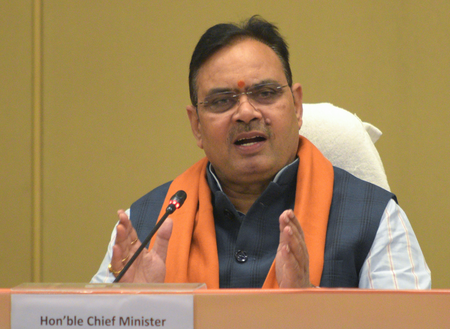
Jaipur, Feb 19 (IANS) The Rajasthan government, under the leadership of Chief Minister Bhajan Lal Sharma, has initiated steps to promote ease of doing business and ease of living by gradually eliminating unnecessary compliances and reducing regulatory burdens for businesses and citizens, an official said.
Officials said the state government is working on simplifying rules and procedures across key sectors, including land use, building and construction, labour, business licensing, and public utilities. The action plan has been finalised under the guidance of Chief Secretary V. Srinivas.
As part of the action plan, the state government will study the Andhra Pradesh model to reduce procedural delays, including eliminating land conversion requirements for certain categories of land use.
Amendments are being considered in building bylaws and master plans to enable automatic mixed land-use development, based on the principle that all activities will be permitted unless explicitly prohibited. Zone-wise lists of prohibited activities will be clearly defined to enhance transparency and regulatory clarity.
The government also plans to liberalise the industrial land allotment policy to ensure optimal utilisation of vacant land in industrial clusters.
Measures are being proposed to promote affordable housing for workers in industrial areas and encourage public-private partnerships for infrastructure such as wastewater treatment plants and fire safety systems. Building bylaws and fire safety regulations will be updated to align with global best practices, including rationalising height restrictions and setback norms.
To streamline approval processes, nodal agencies may be designated as single points of contact for building and construction clearances, industrial approvals, and health department licences.
A working group chaired by the Additional Chief Secretary (Industries) will be constituted, with representatives from the Energy, Urban Development, Local Self Government, Labour, and Pollution Control Board departments, to rationalise business licensing procedures and eliminate duplicate approvals.
The government is also considering lifetime registration for shops and commercial establishments through information-based deemed licensing, along with permitting round-the-clock operations.
Licensing procedures for weighing and measuring instruments will be simplified, with automatic approvals based on self-declaration and reduced inspections for low-risk categories.
Power distribution companies may also provide electricity connections based on self-declaration to facilitate faster access to essential services.
To accelerate industrial investment, the single-window clearance system will be further strengthened to reduce project approval timelines and promote priority sectors.
A unified state-level directory of government and private testing facilities for micro, small, and medium enterprises (MSMEs) will be created, along with a centralised digital repository of all state laws, rules, regulations, and government orders to improve accessibility and compliance.
To implement these regulatory reforms comprehensively, the state government plans to introduce legislation based on a draft prepared by the Central government, incorporating state-specific recommendations before seeking approval.
Officials noted that the Rajasthan government had earlier enacted the Rajasthan Public Trust (Amendment of Provisions) Act to promote trust-based governance.
Building on this initiative, the Rajasthan Public Trust Act 2.0 was announced in the State Budget for 2026–27 as part of broader governance and regulatory reforms aimed at enhancing transparency and public participation.
--IANS
arc/pgh
‘Shocked at your ignorance’: BJP trashes Mamata’s jibe at PM Modi over Sri Ramakrishna Paramahamsa (Lead)
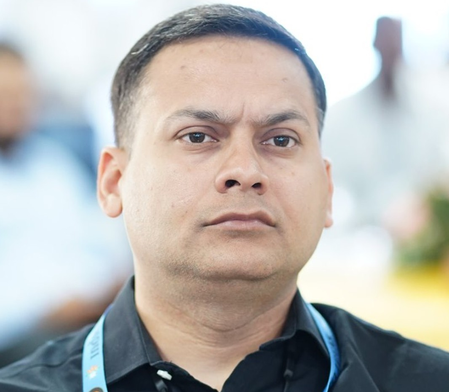
Kolkata, Feb 19 (IANS) Hours after West Bengal Chief Minister Mamata Banerjee's social media jibe against Prime Minister Narendra Modi earlier on Thursday over the latter's description of Sri Ramakrishna Paramahamsa as "Swami" while paying homage to the iconic Indian mystic on the occasion of "Ramakrishna Jayanti", the Bharatiya Janata Party (BJP) had issued a counter statement questioning the ignorance of the Chief Minister.
Earlier in the day, the Chief Minister issued a social media post on X describing Prime Minister Modi's description of Sri Ramakrishna Paramahamsa as "Swami", as another attempt by the Prime Minister to aggressively display cultural insensitivity to tall personalities of West Bengal.
Later on Thursday afternoon, BJP's Information Technology Cell Chief and the party's central observer for West Bengal, Amit Malviya, issued a counter statement on his official X account, questioning the ignorance of Chief Minister Mamata Banerjee in the matter.
"We are also shocked at your ignorance! The Prime Minister referred to Sri Ramakrishna Paramahamsa Deva, also called Sri Ramakrishna and 'Thakur' by his disciples, as Swami Ramakrishna Paramahamsa Ji while paying tribute to the universally respected great seer and saint of India on his birth anniversary," Malviya said in a social media post on X.
He also added that the use of the prefix "Swami" by Prime Minister Modi was not a reference to the title used by monks of the order of Swami Vivekananda-founded Belur Math, the international headquarters of Ramakrishna Math and Ramakrishna Mission at Belur in Howrah district of West Bengal.
According to BJP leader Malviya, the fact is that monks of Ramakrishna Math and Ramakrishna Mission dedicate their lives to spreading the message and teachings of their spiritual preceptor, Shri Ramakrishna Paramahamsa, who is adored worldwide "as the greatest 'swami' of all time".
"There is a larger metaphorical and metaphysical concept of spirituality, known as 'Advaita Vedanta', the non-dualism of the individual and God, which is practised and propagated by the Ramakrishna Mission. It forms the core of Sri Sri Ramakrishna Paramahamsa's experiential, mystical, and universalist vision. In this context, 'Swami' refers to the Great Master, whose kathamrit remains as overwhelming, awe-inspiring, and mind-absorbing today as it was when he walked this world of mere mortals," the BJP leader added.
Along with his social media post on X, BJP leader Malviya had also attached a video of Chief Minister Mamata Banerjee's recent speech, where she is heard referring to "Sri Ramakrishna Paramahamsa" as "Sri Krishna Paramhamsa”".
In the same speech, the Chief Minister was heard claiming that "Sri Krishna Paramahamsa" was the writer of the Shrimad Bhagwat Geeta.
--IANS
src/khz
Preliminary report on Maha Deputy CM Ajit Pawar plane’s crash to be released by Feb 27
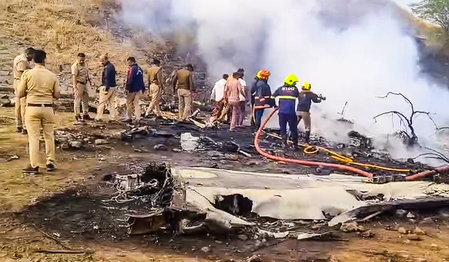
New Delhi, Feb 19 (IANS) A preliminary report on the investigation into the Learjet 45 (VT-SSK) crash at Maharashtra's Baramati on January 28, leading to the demise of Maharashtra Deputy Chief Minister Ajit Pawar and others on board, will be issued within 30 days of the occurrence of the accident, as per ICAO norms, and the final report will follow in due course, the Ministry of Civil Aviation said on Thursday.
The Aircraft Accident Investigation Bureau’s (AAIB) investigation into the crash is technical and evidence-based, involving systematic examination of wreckage, operational and maintenance records and laboratory testing of components where required, a ministry statement said.
The aircraft was equipped with two independent flight recorders. The Digital Flight Data Recorder (DFDR), manufactured by L3 Communications, has been successfully downloaded at the AAIB’s facility in New Delhi. The Cockpit Voice Recorder (CVR) sustained thermal damage. As it is manufactured by Honeywell, technical assistance has been sought from the state of design/manufacture, in line with ICAO (International Civil Aviation Organisation) rules, the statement said.
During 2025, the regulator, the Directorate General of Civil Aviation (DGCA), conducted 51 regulatory audits of non-scheduled operators. Additionally, multiple surveillances of M/s VSR Ventures were carried out across areas such as flight safety systems, flight duty time limitations, maintenance compliance (CAR M and CAR 145), documentation and station facilities. All surveillance findings were addressed and closed, the statement said.
Following the accident, the Civil Aviation Ministry asked the DGCA to conduct a special audit of VSR Ventures to conduct a comprehensive review of regulatory compliance, operational control systems, maintenance practices, crew training standards, safety management systems, and CVR/FDR monitoring. The audit commenced on February 4 and is expected to conclude shortly. Findings will be reviewed, and action will be taken in accordance with the DGCA’s enforcement policy and procedures manual, the statement said.
The DGCA was also asked to carry out special audits of other major non-scheduled operators and aerodromes engaged in VIP/VVIP operations. These audits are being conducted in phases, and appropriate enforcement action will be taken wherever required.
The ministry reiterated that the investigation into the Learjet 45 accident is being conducted by the AAIB strictly in accordance with the Aircraft (Investigation of Accidents and Incidents) Rules, 2025 and the ICAO’s Standards and Recommended Practices.
"The Ministry and its regulatory bodies remain fully committed to transparency, safety oversight and accountability. Stakeholders are requested to refrain from speculation and allow the statutory investigation and regulatory processes to proceed in accordance with established procedures," the statement added.
--IANS
Daily-rated workers’ regularisation from next fiscal year: Omar Abdullah
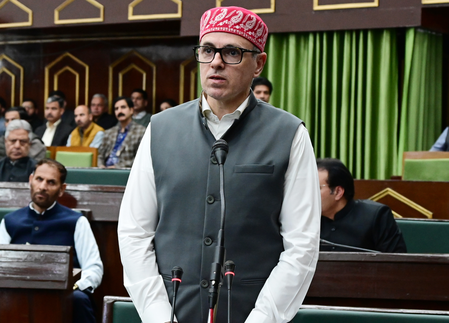
Jammu, Feb 19 (IANS) J&K Chief Minister Omar Abdullah announced that the regularisation of daily-rated workers will begin in a phased, structured, and transparent manner starting next financial year.
During the Assembly discussion on Demands for Grants, the Chief Minister stated that the long-pending issue of regularising daily-rated workers will be addressed in phases beginning next financial year.
Responding to concerns from members across party lines, the Chief Minister acknowledged the decades-long struggle of daily wagers, casual labourers, and other temporary workers seeking job security and dignity.
He stated that the Government is fully aware of the social and economic hardships faced by these workers and their families.
“The regularisation process will commence next financial year in a structured, transparent, and fiscally sustainable manner,” the Chief Minister said, emphasising that the Government will follow a clear and workable roadmap rather than making ad-hoc announcements.
The announcement carries political significance, as the issue of daily-rated workers has remained a recurring flashpoint in Jammu and Kashmir’s political discourse.
The Chief Minister emphasised that the present dispensation is committed to resolving the issue practically and humanely.
He noted that financial constraints cannot be ignored, but the Government also recognises its moral responsibility toward workers who have served various departments for years, often on meagre wages and without service benefits.
Official sources indicated that the proposed phased mechanism may include categorisation based on length of service, departmental needs, and financial viability.
However, the government has not yet disclosed detailed eligibility criteria or timelines. Opposition members, while welcoming the announcement, are expected to closely monitor its implementation.
The Chief Minister reiterated the government’s aim to balance fiscal discipline with social justice.
“We are determined to find a fair, practical, and humane solution,” he told the House, assuring that policy clarity will be provided in the upcoming financial year.
With thousands of daily-rated workers across departments awaiting stability, the Assembly statement has renewed hopes for long-awaited relief.
--IANS
sq/dan
Delhi Ministers, city BJP chief inaugurate Atal Canteens across the capital
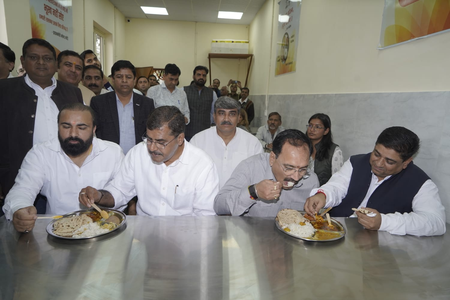
New Delhi, Feb 19 (IANS) Led by Chief Minister Rekha Gupta, several Delhi Cabinet Ministers, MLAs, and BJP leaders opened new Atal Canteens in different constituencies, with as many as 25 facilities being thrown open to the public across the city on Thursday.
An ‘Atal Canteen’ in the Lal Bagh area of Model Town was formally inaugurated by Environment Minister Manjinder Singh Sirsa, who also shared a meal with local residents on the occasion.
Addressing the gathering, Sirsa expressed gratitude to the people of Delhi and stated, “Delhi is the capital of the nation. Through their vote, the people have elected a government that is committed to the development of Delhi and to serving those in need.”
Minister for Art, Culture and Language, Tourism and Labour, Kapil Mishra, inaugurated an Atal Canteen at the Chauhan Patti Bus Terminal in the Karawal Nagar Assembly constituency.
The Minister served meals to beneficiaries and dined with them to personally assess the quality of the meals.
He stated that this initiative is being implemented under the leadership of Chief Minister Rekha Gupta in line with Prime Minister Narendra Modi’s resolve that no individual should go hungry.
The Cabinet Minister said that 25 new Atal Canteens were inaugurated across Delhi on Thursday, taking the total number to 71.
These canteens will provide nutritious meals to the poor, labourers, and the needy at just Rs 5.
Social Welfare Minister Ravindra Indraj Singh inaugurated an Atal Canteen at A-Block, Jahangirpuri, Adarsh Nagar, Delhi. On this occasion, Adarsh Nagar MLA Rajkumar Bhatia, along with social workers and a large number of local residents, was present.
During the inauguration, the Minister personally served meals to elderly citizens and also sat down to dine with them.
Local residents expressed gratitude towards the government, stating that the canteen would provide significant relief to workers and the underprivileged.
The Minister stated that the Atal Canteen is an important initiative to provide dignified meals to the poor and needy. Access to food is a right, and every necessary step will be taken to uplift the underprivileged.
The Delhi government aims to ensure that no one in the capital sleeps hungry and that every needy individual receives a wholesome meal, he said.
Delhi BJP President Virendra Sachdeva inaugurated the Atal Canteen in the Kasturba Nagar Assembly in the presence of MLA Neeraj Basoya and Municipal Councillor Sharad Kapoor.
Speaking on the occasion, Sachdeva said that, in line with the BJP’s Election Manifesto 2025, the Delhi Government has launched 25 more Atal Canteens on Thursday. With this, the total number of Atal Canteens in Delhi has now reached 71, providing food support to the poor.
Sachdeva said that the inspiration for Atal Canteens has come from the thoughts of former Prime Minister and Bharat Ratna Atal Bihari Vajpayee, who always prioritised the welfare of the poor, workers, and the underprivileged.
These canteens will provide a major relief to hardworking labourers, rickshaw pullers, daily-wage workers, and needy families, with nutritious meals available at a very nominal cost, he said.
--IANS
rch/dan