
India, Switzerland hold talks on fast-tracking Bilateral Investment Treaty
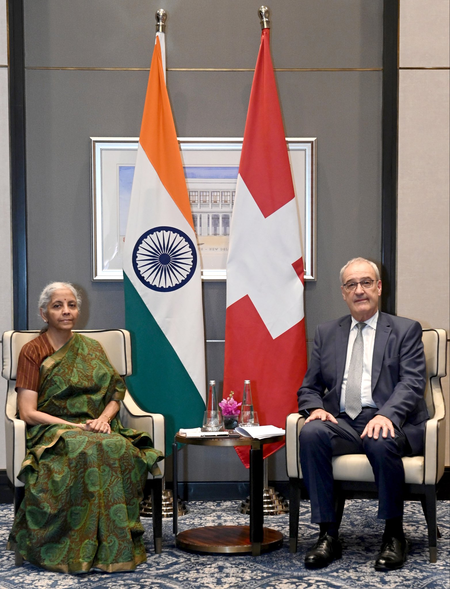
New Delhi, Oct 6 (IANS) Finance Minister Nirmala Sitharaman held discussions with Swiss President Guy Parmelin on Tuesday on taking forward negotiations over the Bilateral Investment Treaty between the two countries, with a view to enhancing investment flows and deepening economic engagement.
"Union Minister for Finance & Corporate Affairs Smt. @nsitharaman called on H.E. Mr. @ParmelinG, Swiss President, in New Delhi, today. They held discussions on issues of common interest to both India and Switzerland, including taking forward negotiations on the Bilateral Investment Treaty which is mutually beneficial to both nations with a view to enhance investment flows and deepening economic engagement," the Finance Ministry said on X.
India and Switzerland are strengthening their economic partnership with a focus on expanding market access, facilitating investment and deepening cooperation in infrastructure, technology, innovation and supply chains, Commerce Secretary Rajesh Agarwal had said.
In a post on X, Agarwal said India and the European Free Trade Association (EFTA) countries had implemented the Trade and Economic Partnership Agreement (TEPA) last year, describing it as India's first free trade agreement with a European economic bloc.
The agreement provides a framework for investment, innovation, jobs and shared prosperity, he added.
Prime Minister Narendra Modi has emphasised the importance of translating the growing India-Switzerland partnership into concrete outcomes in trade and investment.
Addressing a joint press conference with President Parmelin after their talks here on Monday, PM Modi said the two countries agreed that reforms in global institutions were essential to address growing global challenges.
"India and Switzerland both believe in democratic values, rule of law, dialogue and diplomacy," PM Modi said and added that India had consistently supported meaningful efforts towards peace in Ukraine and West Asia.
"We have taken several important decisions to enhance market access for India's exports in Switzerland and to further facilitate investment between the two countries. This will increase the export of India's agriculture, pharma, textile, and engineering goods to Switzerland. At the same time, we will attract new Swiss investment in India's important sectors such as biotech, life Sciences, banking, insurance, food processing, and Sustainability," he said.
Apart from that, PM Modi and the Swiss President reviewed the entire spectrum of bilateral ties and discussed ways to further deepen cooperation in trade, investment, innovation, Artificial Intelligence (AI), military matters, defence production, nuclear energy, science and technology, and people-to-people ties.
Moreover, India and the four EFTA members -- Switzerland, Iceland, Norway and Liechtenstein -- implemented TEPA in October 2025.
--IANS
sps/vd
Rahul Gandhi defaming constitutional institutions through false narratives: BJP
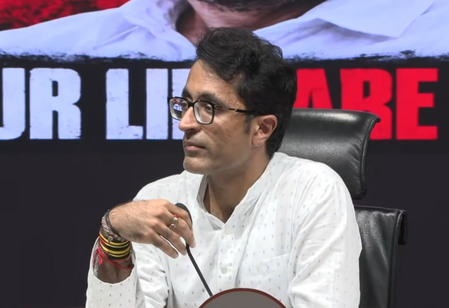
New Delhi, Oct 6 (IANS) The Bharatiya Janata Party (BJP) on Tuesday attacked the Leader of Opposition (LoP) in Lok Sabha Rahul Gandhi, accusing him of "defaming" India's constitutional institutions through "false narratives".
Addressing a press conference, BJP national spokesperson Pradeep Bhandari said: "The manner in which the Congress party and its entire ecosystem spread lies across the country, specifically targeting constitutional institutions, has been exposed."
The BJP spokesperson recalled a social media post by LoP Gandhi in which the latter alleged that the Delhi Police had attempted to sexually harass a female journalist.
"Following the incident, the Delhi Police held a press conference revealing how the Congress had circulated a false and fabricated video. In reality, the video had been created using AI, by a content creator named Nadeem Ahmed. The Congress and its ecosystem attempted to propagate a fake narrative based on it—a deception that has now been exposed. Yet, Rahul Gandhi remains completely silent on this falsehood today," he said.
Bhandari also remarked that the Congress party's primary agenda is to "spread chaos in the country through false narratives".
"The sole agenda of the Congress and its ecosystem is to push a fake narrative via independent content creators, which Rahul Gandhi and the party's ecosystem then attempt to amplify round-the-clock through various social media accounts," he alleged.
Referring to the arrest of Nadeem Ahmed, Bhandari said: "Now that the person who created the fake video has been arrested, will Rahul Gandhi—who has fostered a false atmosphere in the country through misleading narratives—offer an explanation? Will the nation's intelligentsia ask him why he propagated lies that were subsequently exposed, and hold him accountable for them?"
The BJP leader claimed that Rahul Gandhi is not in politics to save the country's democracy, but rather to "bring his family back to power".
"Rahul Gandhi and his entire ecosystem are attempting to hijack Indian democracy through fake narratives—a fact the public is witnessing," he said.
Pradeep Bhandari asked why Rahul Gandhi did not delete his social media post after the video was revealed to be fake and AI-generated.
"Was the order to create the fake video issued by the Congress party's IT cell? Isn't this a grave injustice to the country's journalists who engage in responsible reporting on the ground and strive to bring the truth to light? Is the Congress ecosystem not attempting to discredit the 'fourth pillar' of democracy today by infiltrating various movements with its paid creators?" he asked.
Bhandari asked: "Is the Congress ecosystem not attempting to strike a blow against the country's constitutional institutions? Every individual who believes in this nation's democracy should ask Rahul Gandhi a fundamental question: why is it that when your lies are repeatedly exposed, yet you fail to offer any clarification?"
--IANS
cg/khz
India, Austria discuss strengthening cooperation is security and strategic matters
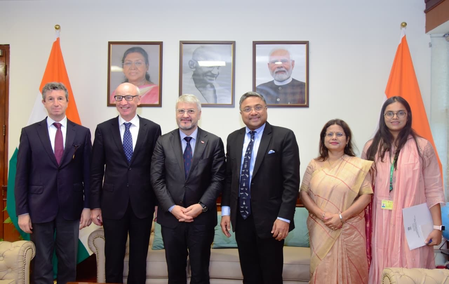
New Delhi, Oct 6 (IANS) India and Austria discussed ways to strengthen cooperation in security and strategic matters as Secretary (West) in the Ministry of External Affairs (MEA), Sibi George met Austria's National Security Advisor Peter Vorhofer.
“Secretary (West) Sibi George received Dr Peter Vorhofer, National Security Advisor of Austria. They discussed ways to further strengthen India-Austria cooperation in security and strategic matters, including counter-terrorism and exchanged views on regional and global issues of mutual interest,” the MEA said on X.
In June, the Indian Ambassador Shambhu S. Kumaran met a top Austrian Defence Ministry official to discuss bilateral cooperation in defence and security matters.
“Ambassador Shambhu S. Kumaran met Dr Arnold Kammel, Secretary General of the Austrian Ministry of Defence in Vienna. Substantive discussions on taking forward bilateral cooperation in defence and security matters following the Letter of Intent signed during the Austrian Chancellor’s visit to India in April 2026," the Embassy/Permanent Mission of India in Vienna wrote on X.
Chancellor Christian Stoker and Prime Minister Narendra Modi held a bilateral meeting during the former's visit with a focus on enhancing cooperation in trade, investment, and green technology.
According to the Prime Minister’s Office (PMO), the Letter of Intent (LoI) on Cooperation in Military Matters will provide an institutional framework for promoting cooperation in military matters, defence industrial and technology partnership, building on the momentum of the India-EU Defence and Security Partnership signed on January 27, as well as facilitating defence policy dialogue, training and capacity building.
During the Austrian Chancellor's visit, an LoI was also signed on the Joint Working Group on Counter Terrorism, which will advance counter terrorism cooperation between India and Austria, including the goal of both sides to work together to establish a Joint Working Group on Counter Terrorism for exploring areas of strategic cooperation on issues relating to the fight against terrorism.
--IANS
ksk/vd
Manipur CM calls for people’s contribution to Viksit Bharat 2047
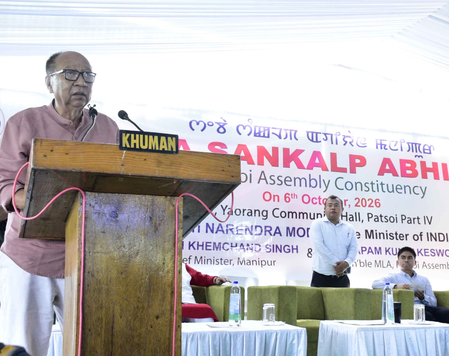
Imphal, Oct 6 (IANS) Manipur Chief Minister Yumnam Khemchand Singh on Tuesday called upon the people of the state to contribute towards Prime Minister Narendra Modi’s vision of building a Viksit Bharat by 2047.
The Chief Minister stated that peace, mutual trust and collective efforts are essential for Manipur to become an active participant in the country’s development journey.
Khemchand Singh was speaking at the Seva Sankalp Abhiyan held at Yaorang Sabal Community Hall in Imphal.
Speaking on the public service of Narendra Modi, the Chief Minister highlighted his 25 years of public service, from serving as Chief Minister to becoming the Prime Minister of India. He said that India has emerged as one of the world’s largest economies during this period.
The Chief Minister recalled that India was ranked 11th among the world’s largest economies before Narendra Modi became Prime Minister and said that under his leadership, India had risen to the fourth position among the world’s largest economies.
The CM’s reference was to the country’s earlier rise to fourth place. Referring to the difficulties faced by Manipur following the ethnic conflict that began on May 3, 2023, Khemchand Singh said that the people and the government have endured significant collateral damage. He stated that the ethnic violence had also adversely affected the state’s GST revenue, resulting in a decline of more than Rs 1,200 crore.
The Chief Minister further highlighted the difficulties faced by daily wage earners and other sections of society due to bandhs (shutdowns) and blockades. He said that a single day of bandh can cause an economic loss of around Rs 20–25 crore, with ordinary people and daily earners bearing much of the impact.
Appealing to the people and civil society organisations, Khemchand Singh urged all concerned not to resort to bandhs, stating that such disruptions adversely affect the livelihood of the common people and the overall economy of the State.
Speaking on the vision of Viksit Bharat 2047, the Chief Minister said that Prime Minister Modi has set the goal of transforming India into a developed nation by the time the country completes 100 years of Independence. He stressed that Manipur must also contribute to and benefit from this national development journey. The Chief Minister said that peace is essential for Manipur’s development and emphasised the need to remove the trust deficit among different communities.
He called for greater mutual understanding, trust and cooperation among the communities so that the State can move forward on the path of development. The CM also advised the government officials present at the programme to take all necessary measures within their respective responsibilities for the welfare of the people and ensure that government schemes and services reach the intended beneficiaries effectively.
More than 30 service stalls and counters set up by various government departments were opened during the programme, providing people with access to government services, information and welfare schemes.
The programme was attended by the MLA of Patsoi Assembly Constituency, Sapam Kunjakeswor (Keba) Singh, Deputy Commissioner (Imphal West) Mayanglambam Rajkumar Singh, senior government officials, representatives of various departments, local representatives and a large number of people from the constituency.
--IANS
sc/uk
‘Work underway to develop India’s 1st AI city in Lucknow’: CM Yogi Adityanath
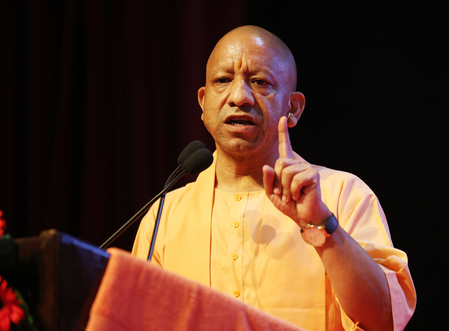
Lucknow, Oct 6 (IANS) Uttar Pradesh Chief Minister Yogi Adityanath said on Tuesday that the state government is working to develop the country's first artificial intelligence (AI) city in Lucknow and also foster an AI ecosystem in the district, urging young professionals to join the initiative.
The Chief Minister made the statement while addressing the 10th anniversary event of HCL Tech in Lucknow.
Maintaining that Uttar Pradesh's greatest strength has been its land, Chief Minister Adityanath said: "Today, I say that alongside our precious land, we possess the youngest workforce. The talent of this young workforce is also our greatest strength."
"HCL has now completed ten years here—marking the first milestone of a journey in which Lucknow has demonstrated to the world that, given the right opportunities, the youth of Uttar Pradesh will not lag behind anyone," he added.
Referring to Prime Minister Narendra Modi's vision of 'Digital India', CM Adityanath said: "At that time, opposition parties in the country mocked the Prime Minister's vision for Digital India. They used to laugh, saying how will this happen in India?"
The Uttar Pradesh Chief Minister recalled that the Opposition had also ridiculed the initiative when 'Jan Dhan' accounts were being opened.
"People laughed at the time, dismissing them as merely "empty accounts for the poor". And today, DBT—Direct Benefit Transfer—has realised the dream of 'Antyodaya' (upliftment of the last person)," he said.
He asserted that now if funds meant for the poor are released from Delhi or Lucknow, they will go entirely into the account of the specific poor person for whom the money was intended.
"Now, no one in between can skim off any 'cut money'. This is the marvel of technology; the marvel of Digital India. But it requires the resolve to make it happen," CM Adityanath said.
The Chief Minister also credited HCL Tech for helping village women and self-help groups move towards self-reliance and for transforming the lives of local children through their residential campuses and schools in districts like Sitapur and Bulandshahr.
"Over the past 10-11 years, they have extended their (HCL Tech) programmes to more than 50 lakh (5 million) people and over 3,000 villages across Uttar Pradesh. This serves as an example of how the benefits of technology and development can reach even the person at the very last rung of society," CM Adityanath said.
He added that this is important because development no longer means merely building large campuses in big cities.
The Chief Minister noted that today software companies are now looking beyond just Noida to Lucknow.
"Our IT parks are now operational in Kanpur, Prayagraj, Meerut, and Agra as well," he said.
He mentioned that seven Software Technology Parks are currently functional with new IT parks being constructed in Varanasi, Bareilly, Kanpur, and Gorakhpur.
"This means IT is no longer confined to the National Capital Region; it is no longer limited to just that region. It has reached Eastern Uttar Pradesh and is expanding into the Bundelkhand region as well. Gautam Buddha Nagar is also home to 12 IT and ITES Special Economic Zones (SEZs)," CM Adityanath said.
"Under our new startup policy, we have decided to develop Noida and Lucknow as Deep Tech hubs, and work on this is progressing steadily. We are also working rapidly on plans to establish the country's first AI City in Lucknow and to foster an AI ecosystem," the Chief Minister added.
CM Adityanath urged young professionals come together to become part of this initiative to establish Lucknow as one of India's leading innovation cities
"I have also extended an offer to HCL regarding this. (The goal is) to establish at least 50 world-class AI startups in Lucknow, strengthening them and helping them reach the global market. We are ready and committed to providing full support for building a robust innovation ecosystem," he said.
--IANS
cg/khz
Man injured in bear attack in J&K’s Tral area

Srinagar, Oct 6 (IANS) A man was injured in a bear attack in the Tral area of J&K's Pulwama district on Tuesday, officials said.
The incident was reported from Nagbal village of Tral.
Mushtaq Ahmed was attacked after he stepped out of his house in the morning and was subsequently shifted to a hospital for treatment.
Fear has gripped the residents of the area over the increasing animal-humankind conflict as the movement of wild animals has recorded a steep rise in recent years. Villagers said the presence of wild animals in and around different villages has become a growing concern, particularly for people venturing out during the early morning hours.
They urged the Wildlife Department to intensify surveillance in vulnerable areas and take necessary measures to capture and relocate animals posing a threat to human settlements.
Wildlife Protection Department officials said that a team was dispatched to the area shortly after receiving the information about the incident and the presence of wild animals. They sought cooperation from the public and advised them to stay safe and not go outside unnecessarily.
Human-wildlife conflict is a major environmental and public safety concern in Jammu and Kashmir driven by shrinking forest habitats, expanding human settlements, and changing land use.
Between 2023 and 2025, J&K recorded over 15,661 human-animal conflict cases, resulting in 32 deaths and more than 350 injuries. Over a broader five-year span (2020–2025), official data notes more than 17,200 incidents claiming over 100 lives and injuring nearly 1,100 people.
Asiatic black bears, Himalayan brown bears, and common/Indian leopards are the primary species involved in these encounters.
North Kashmir (Baramulla, Kupwara, Bandipora) and hill districts like Doda, Kishtwar, and Anantnag face high fatalities, while Jammu district records a high number of overall incidents.
Deforestation, road construction, and urban expansion fragment wildlife corridors and push animals toward villages and orchards.
A high population of stray dogs near human habitations attracts leopards into residential zones.
Bears often approach orchards and residential areas in autumn to feed before winter hibernation, while open or improper waste disposal attracts predators.
J&K government has set up 42 wildlife control rooms across the Union Territory equipped with tranquillising guns, rescue vehicles, cages, and capture nets.
Authorities have rolled out specialised wildlife rescue vehicles to improve mobility in high-risk zones.
--IANS
sq/vd
ED seizes land worth Rs 336 crore in Maharashtra’s Alibaug in Jai Corp money laundering case
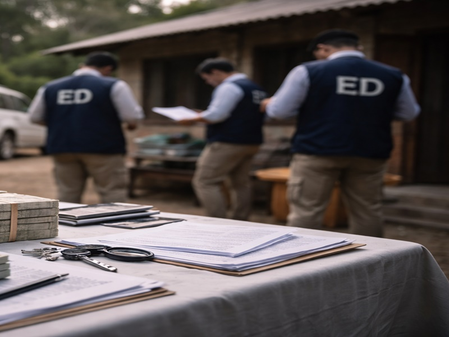
Mumbai, Oct 6 (IANS) The Enforcement Directorate (ED), Mumbai Zonal Office-II, has provisionally attached 88.47 acres of land parcels at Alibaug in Maharashtra, currently valued at Rs 336 crore, in a money laundering case involving Jai Corp Limited and others under the Prevention of Money Laundering Act (PMLA), 2002, the agency said in a statement.
The ED initiated the investigation based on an FIR registered by the CBI’s Economic Offences Branch, Mumbai, following a Bombay High Court order dated January 31, 2025.
The case names Jai Corp Limited, Urban Infrastructure Venture Capital Fund (UIVCF), Urban Infrastructure Trustees Ltd and others, alleging financial irregularities, diversion of funds and money laundering.
According to the ED, in 2006-07 Jai Corp Limited launched the Urban Infrastructure Venture Capital Fund and raised Rs 2,434 crore from a large number of investors, including public sector banks and other public sector financial institutions, it said. The funds were invested in several special purpose vehicles (SPVs) to undertake real estate projects across India.
Investigation revealed that the fund’s term was illegally extended beyond the permissible limit without SEBI approval. SEBI subsequently ordered the winding up of the fund and directed that investors be provided an exit by valuing the assets held in the SPVs through an independent valuer.
The ED found that the fair value of the fund’s share in the SPVs was fraudulently undervalued at Rs 269.20 crore in connivance with the management of UIVCF. As a result, investors exited at a significantly reduced amount. Residual units of the fund were then acquired at a much lower value by five entities linked to the promoters of Jai Corp Limited.
One of the SPVs, Neelkanth Township and Constructions Private Limited, in which UIVCF had invested Rs 51 crore, was used to acquire the Alibaug land. The fair market value of the fund’s share in this SPV was allegedly suppressed and acquired at an undervalued price by the five related entities. This led to the generation of proceeds of crime amounting to Rs 230 crore.
A provisional attachment order was issued on October 31, 2022, attaching the SPV’s immovable properties, then valued at Rs 230 crore. Their present market value stands at Rs 336 crore.
Earlier, searches in the case resulted in the seizure of approximately Rs 1.86 crore in cash and the freezing of demat accounts and mutual fund balances worth Rs 99.47 crore.
Further investigation is in progress.
--IANS
sktr/uk
Technology must become a tool for inclusive and sustainable development: PM Modi
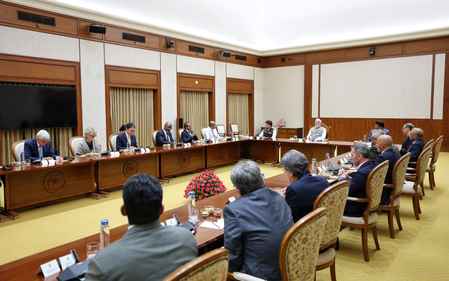
New Delhi, Oct 6 (IANS) Prime Minister Narendra Modi on Tuesday said technology must serve as a tool for inclusive and sustainable development, stressing that its benefits should reach every section of society.
At an interaction with Global System for Mobile Communications Association (GSMA) Board members ahead of the India Mobile Congress, the Prime Minister underlined the importance of affordable and accessible digital services, particularly for developing nations.
During the meeting, PM Modi stressed that the democratisation of technology is essential to ensure that no section of society is left behind in the digital age.
He said technology and digital services should be affordable and accessible to all, especially countries in the Global South, and emphasised the need to extend digital connectivity and services to the last mile to prevent a widening digital divide.
The Prime Minister highlighted the transformative potential of Digital Public Infrastructure (DPI), describing it as a powerful tool for accelerating socio-economic development.
"Discussions with several world leaders have demonstrated growing global interest in India's DPI model and said such platforms could serve as a springboard for developing countries seeking to expand access to digital services and strengthen their economies," PM Modi noted.
Addressing concerns around rising digital and cyber fraud, PM Modi said the issue requires technology-driven solutions and proactive awareness measures.
He suggested the use of sustained user awareness campaigns and alerts to help citizens identify and avoid potential fraud calls and online scams.
The Prime Minister also called for the development of global standards and common rules governing emerging technologies. Referring to the increasing prevalence of deepfakes and AI-generated content, he said there is a need to explore mechanisms that would allow users to immediately identify the origin and authenticity of digital content.
GSMA Board members, in their interaction with the Prime Minister, praised India's rapid progress in digital and mobile connectivity. They highlighted the country's swift expansion of 4G and 5G networks, the scale and success of its digital public infrastructure initiatives, and the growth of its telecom and mobile manufacturing ecosystem.
--IANS
pk/vd
Chennai Police probe mother’s allegation that clinic handed over her baby to childless couple

Chennai, Oct 6 (IANS) A 27-year-old daily wage labourer on Tuesday approached the Chennai police alleging that her son, born at a private fertility clinic in Kolathur, was handed over to a couple who are now refusing to return him.
Acting on the complaint, police have booked a doctor at the clinic and the couple from Tiruvottiyur.
An investigation is underway to establish how the baby came into their custody and whether the arrangement was intended to be temporary.
The woman, K. Megala of Chengalpattu, said she had agreed to let the couple care for her newborn for three months on a doctor's suggestion.
The Police, however, said her accounts contained contradictions that required further examination.
Megala, who already had a four-year-old son, lost her husband to natural causes in February 2025, police said.
She was then three months pregnant with her second child and struggling financially.
In her complaint, Megala said that she came across a social media advertisement offering free medical treatment at a hospital in Kolathur.
She visited the facility during the seventh month of her pregnancy and explained her financial circumstances to the doctors and other staff.
She gave birth to a boy at the hospital on July 29, 2025.
Megala alleged that hospital staff initially told her the newborn needed to be kept in isolation.
According to her account, she was shown the baby only 10 days after the delivery.
She also said that another doctor introduced her to a childless couple from Tiruvottiyur and suggested that they care for the infant for three months before returning him to her.
Megala added that she agreed to the proposed temporary arrangement.
Her complaint alleges that the hospital staff subsequently handed the baby over to the couple.
However, when she approached them recently and asked for her son to be returned, the couple allegedly refused.
She then sought police intervention.
The complaint centres on her assertion that she had consented to the couple caring for the child for a limited period, with the understanding that he would later be returned.
Police have booked the clinic doctor and the couple and begun inquiries into the allegations.
They are examining how the child came to be placed with the couple, while also looking into the inconsistencies they have identified in Megala's account.
--IANS
aal/khz
How India-UK economic ties can expand at regional level
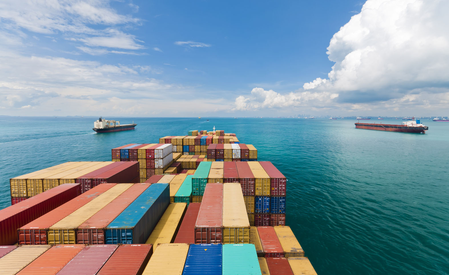
New Delhi, Oct 6 (IANS) The visit of a business delegation from the north of England to India offers an opportunity to shift the focus of bilateral economic engagement between the two nations from London to regional industries, universities and emerging centres of innovation, according to a media report.
The delegation, operating under the Great North banner, brings together representatives from Liverpool City Region, West Yorkshire, South Yorkshire, York and North Yorkshire, the North East, Cheshire and Warrington, according to the report on the Khalsa Vox news website.
India’s economic relationship with Britain need not be limited to attracting investment from London-based corporations or securing access to the British consumer market. Its companies can also benefit from establishing direct relationships with regional industrial clusters, universities and local administrations, it observed.
For the United Kingdom, the initiative also addresses a longstanding domestic challenge: ensuring that the benefits of international trade extend beyond London and the South East.
Northern England possesses substantial strengths in advanced manufacturing, engineering, technology, higher education, clean energy, and creative industries. Yet international perceptions of Britain’s economy often remain disproportionately associated with its capital.
The India mission offers an opportunity to challenge that imbalance by positioning northern cities and industrial clusters as destinations for Indian investment and collaboration.
This approach is particularly relevant for Indian states seeking to strengthen exports, attract technology partnerships and diversify international investment. Punjab and Haryana provide an instructive example.
Earlier Northern Powerhouse initiatives included engagement with Punjab, Karnataka, and Delhi. British diplomatic representatives in Chandigarh subsequently highlighted progress in education, skills development and exchanges involving students and businesses.
A stakeholder consultation organised by India’s Ministry of Commerce and Industry in Chandigarh in June highlighted opportunities arising from India’s expanding network of free trade agreements. Among the sectors identified as having export potential for Punjab and Haryana were textiles, apparel, engineering goods, agriculture, food processing, pharmaceuticals and chemicals.
Several of these industries align with the capabilities and commercial interests of northern England.
For example, Punjab’s manufacturing enterprises could explore partnerships involving specialised engineering, industrial technology and advanced production systems. Textile businesses could examine opportunities for technology transfer, product development and access to new distribution networks. Universities and technical institutions could collaborate on vocational education, research and industry-oriented skills programmes.
Clean energy and sustainable industrial development offer another promising area of cooperation, particularly as businesses in both countries respond to changing environmental requirements and the transition towards lower-carbon production, the article added.
--IANS
sps/vd