
ICMR transfers 41 technologies at India’s largest biomedical innovation, tech transfer event
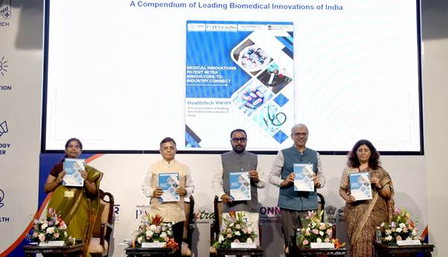
New Delhi, May 25 (IANS) The Indian Council of Medical Research (ICMR) on Monday held India’s largest biomedical and technology transfer facilitation here and 41 public‑health technologies were transferred to industry partners, an official statement said.
The event marked the establishment of country’s first structured platforms dedicated to biomedical innovation showcasing and technology transfer under the ICMR Medical Innovation Patent Mitra initiative.
The initiative aims to translate indigenous biomedical research into accessible, real-world healthcare solutions through strong industry partnerships, the statement from Ministry of Health and Family Welfare said.
Technologies transferred from ICMR institutes and innovators to industry partners include advanced diagnostics, vaccines, medical devices and biomedical solutions addressing critical public health priorities.
Among the technologies transferred were glycoconjugate and recombinant vaccines for Typhoid and Paratyphoid, as well as diagnostic technologies for diseases such as Japanese Encephalitis, Tuberculosis and Mpox.
“This initiative marks a decisive step in connecting Indian science with industry, ensuring that innovations developed in our laboratories translate into technologies that strengthen public health and advance Viksit Bharat,” said Prataprao Ganpatrao Jadhav, Union MoS, Ayush and Health and Family Welfare.
"India is moving from being a consumer of health technologies to becoming a global source of affordable and innovative healthcare solutions, powered by institutions like ICMR and strong industry partnerships,” Jadhav added.
India has the scientific capability and innovation ecosystem to emerge as a global leader in health technologies, Dr Gobardhan Das, Member, NITI Aayog, said.
Medical Innovation Patent Mitra will play a crucial role in protecting intellectual property, enabling technology transfer and accelerating the journey of indigenous innovations from laboratories to society, Das added.
The ‘Indian Biomedical Patent Landscape Report’ and the ‘Technology Compendium’ were also released at the event to strengthen India’s biomedical innovation, intellectual property and technology transfer ecosystem.
The event also showcased over 100 technologies in diagnostics, therapeutics and medical devices developed by ICMR institutes, researchers and startups.
—IANS
aar/pk
Modern radiotherapy technology commissioned at Delhi’s Army Hospital (Lead)
New Delhi, May 25 (IANS) In a significant step to enhance and modernise cancer care services, including early and precise tumour detection, the Army Hospital (Research and Referral) in the national capital has commissioned a ring gantry-based Linear Accelerator.
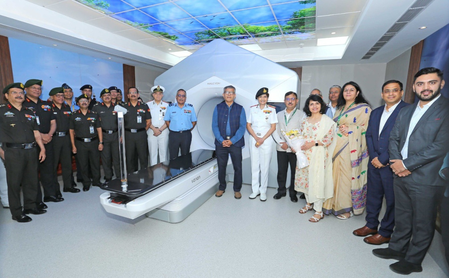
The state-of-the-art, ring-gantry-based Linear Accelerator machine was commissioned in the hospital's Department of Radiation Oncology on Monday, in the presence of Defence Secretary Shri Rajesh Kumar Singh.
The advanced technology is set to strengthen cancer care services at the Army Hospital (R&R) and improve access to advanced radiotherapy for serving personnel, veterans, and their dependents. It is also expected to enhance in-house treatment capacity to handle the hospital's significant patient load.
According to an official statement, this Linear Accelerator is capable of delivering modern radiotherapy techniques, including Volumetric Modulated Arc Therapy, Intensity-Modulated Radiation Therapy, Image-Guided Radiation Therapy, Stereotactic Body Radiation Therapy, and Stereotactic Radiosurgery.
“It enables precise delivery of radiation to tumour sites while minimising exposure to surrounding normal tissues, thereby supporting improved treatment outcomes and patient care,” the statement further said.
Also, the previous equipment used for screening and scanning tumours and other cancerous growths in patients has been decommissioned.
The procurement of the Linear Accelerator within the Armed Forces Medical Services (AFMS) marks a substantial upgrade from the previous equipment and will soon be implemented across various medical hospitals run by the Armed Forces.
“The induction marks a step towards modernisation of oncology services within AFMS. Other oncology centres under AFMS are also being upgraded in a phased manner,” said an official.
The occasion, i.e., commissioning of ring-gantry-based Linear Accelerator machine at the R&R hospital, saw the presence of DG AFMS Surgeon Vice Admiral Arti Sarin, Commandant, Army Hospital (R&R), Lieutenant General Avinash Das, and other senior officials.
--IANS
mr/dan
Hip replacement surgeries rise 40 pc among younger Indians post-COVID: Experts

New Delhi, May 24 (IANS) Orthopaedic experts on Sunday raised concerns over a sharp rise in hip arthritis and avascular necrosis (AVN) cases among younger and middle-aged Indians in the post-COVID period, warning that severe hip damage linked to steroid use during the pandemic is driving a surge in total hip replacement surgeries across the country.
Speaking at the 2nd Delhi HIP 360 Conference here, leading orthopaedic specialists said hospitals are witnessing a growing number of patients in their 30s and 40s suffering from advanced hip joint damage, stiffness, limping, and difficulty in walking.
The conference was organised by the Delhi Orthopaedic Association in association with the Indian Arthroplasty Association and brought together orthopaedic surgeons, arthroplasty specialists, fellows, and residents from across the country to discuss advancements in total hip arthroplasty, robotic-assisted surgeries, rehabilitation, and management of post-COVID hip complications.
Dr. L Tomar, Organising Chairman of DELHI HIP 360 and Director of the Department of Orthopaedics and Joint Replacement at Max Hospital, said doctors are observing nearly a 40 per cent rise in hip replacement surgeries among younger patients.
“Steroids played a life-saving role during the COVID pandemic, but indiscriminate or prolonged use in some patients has been associated with a rise in osteonecrosis and early degenerative changes in the hip joint. We are now seeing relatively younger patients coming with severe hip damage, collapse of the femoral head, and advanced arthritis requiring early hip replacement surgeries,” he said.
Dr. Karun Jain, Organising Secretary of the conference, said many patients ignore early signs such as groin pain and stiffness, often mistaking them for muscular discomfort.
“One of the biggest challenges with AVN is delayed diagnosis. By the time patients seek medical advice, the hip joint may already have undergone irreversible collapse. Awareness, timely MRI evaluation, and early intervention can help reduce disability,” he said.
Dr. Gaurav Govil said total hip replacement has become one of the most successful procedures in modern orthopaedics due to improvements in surgical planning, implants, and rehabilitation methods.
“With better implants, advanced surgical planning, and faster rehabilitation techniques, patients are able to return to normal life much earlier than before. However, the focus must remain on early diagnosis and evidence-based treatment to prevent avoidable disability,” he said.
--IANS
pk
Tulsi Gabbard resigns as US Intelligence chief

Washington, May 23 (IANS) Tulsi Gabbard, the US Director of National Intelligence, on Friday resigned from her position, citing her husband's ill-health.
"I am deeply grateful for the trust President Trump placed in me and for the opportunity to lead Office of the Director of National Intelligence (ODNI) for the last year-and-a-half. Unfortunately, I must submit my resignation effective from June 30. My husband, Abraham, has recently been diagnosed with an extremely rare form of bone cancer. He faces major challenges in the coming weeks and months. At this time, I must step away from public service to be by his side and fully support him through this battle." Gabbard said in her resignation letter addressed to the US President Donald Trump.
She said that while significant progress has been made at the ODNI in advancing "uprecedented transparency and restoring integrity to the intelligence community", there is still important work to be done.
She noted that she is fully committed to ensuring a smooth and thorough transition over the coming weeks to avoid any disruptions for the US President and his team in leadership or momentum.
Gabbard praised her husband for his support through her deployment to East Africa on Joint Special Operations mission political campaigns and her service in the role of Director of National Intelligence.
"I cannot in good conscience ask him (my husband) to face this fight alone while I continue in this demanding time-consuming position," she elaborated on her decision to step aside as the US Director of National Intelligence.
Trump responded to Gabbard's resignation on social media platform Truth Social, saying, "Tulsi has done an incredible job, and we will miss her. Her highly respected Principal Deputy Director of National Intelligence, Aaron Lukas, will serve as Acting Director of National Intelligence."
"Her (Tulsi Gabbard's) wonderful husband, Abraham, has been recently diagnosed with a rare form of bone cancer, and she, rightfully, wants to be with him, bringing him back to good health as they currently fight a tough battle together. I have no doubt he will soon be better than ever," the US President said.
--IANS
ksk/khz
Ebola risk upgraded to ‘very high’ in Congo: WHO chief
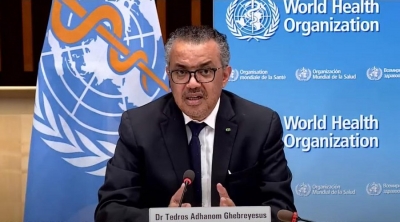
Addis Ababa, May 22 (IANS) The public health risk from the Ebola outbreak in the Democratic Republic of Congo has been upgraded from high to very high, the World Health Organization (WHO) said on Friday.
"We are revising our risk assessment of Ebola to very high at the national level, high at the regional level, and low at global level," WHO chief Tedros Adhanom Ghebreyesus told a press conference.
Meanwhile, the Africa Centers for Disease Control and Prevention (Africa CDC) called for enhanced solidarity to rapidly contain the latest Ebola outbreak in the Democratic Republic of the Congo (DRC) and Uganda, Xinhua News Agency reported.
In a statement released on Thursday, the African Union's specialised healthcare agency stressed that containing outbreaks "requires speed, coordination, and sustained support for the frontline responders and communities bearing the greatest burden."
The agency further announced that it has committed an immediate financial support of 1 million U.S. dollars to strengthen emergency operations and deployed an eight-member multidisciplinary team to Bunia in the DRC's Ituri Province.
Urging for robust African solidarity in action, the agency welcomed South Africa's contribution of 2.5 million US dollars to support Ebola response efforts. It also recognized the dedication of frontline health workers for their "commitment to ending the outbreak and protecting communities."
Meanwhile, the agency announced that, at the request of the Ugandan government, it is convening a high-level cross-border coordination meeting from Friday to Saturday, bringing together Uganda, the DRC, and South Sudan to strengthen regional preparedness and response.
According to the figures released Thursday by DRC Health Minister Roger Kamba, 626 suspected cases and 159 probable deaths have been recorded since the country declared its 17th outbreak on May 15.
The outbreak, initially reported in Ituri Province, has now affected North Kivu and South Kivu, while two confirmed cases have also been reported in the neighboring country of Uganda.
Ebola virus is highly contagious and can cause symptoms including fever, vomiting, diarrhea, generalized pain or malaise, and, in severe cases, internal and external bleeding. According to the World Health Organization, Ebola fatality rates range from 50 percent to 89 percent, depending on the viral subtype.
--IANS
akl/as
RML Hospital sets up India’s 1st heat wave centre with immersion cooling facility
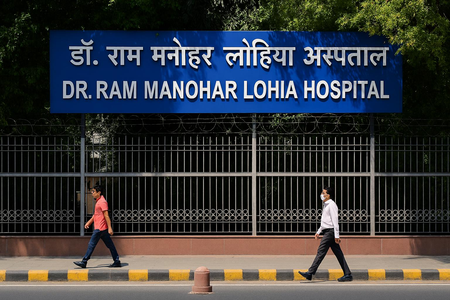
New Delhi, May 22 (IANS) As heatwave conditions intensify across parts of India, Delhi’s Dr. Ram Manohar Lohia Hospital has emerged as a pioneer in heatstroke treatment by establishing the country’s first immersion cooling facility, a globally recognised method that cools patients under water.
The specialised Heat Wave Centre, operational since 2024, is now being replicated at other healthcare facilities across the country, according to hospital officials.
Speaking to IANS about the initiative, Dr Ajay Chauhan said the facility was developed under the guidance of a committee formed by the Union Health Ministry under the National Programme on Climate Change and Human Health (NPCCHH), which functions under the National Centre for Disease Control.
Dr Chauhan said climate change has increased concerns over rising heatstroke cases, prompting experts to develop specialised cooling guidelines for patients suffering from severe heat-related illnesses.
“We found that the best practice globally is immersion cooling -- meaning cooling under water. However, such a facility did not exist anywhere in India before. So, for the first time, we brainstormed and established it here,” he said.
The Heat Wave Centre at RML Hospital has been equipped with advanced emergency treatment systems, including ice tubs, bath tubs, cooling systems, fans and air conditioning facilities to provide immediate relief to patients affected by extreme heat and heatstroke.
The centre operates round the clock to ensure emergency care is available at all times.
According to Dr Chauhan, two patients suffering from heat-related complications have already been successfully treated and discharged from the facility after recovering fully.
The senior doctor said the immersion cooling model introduced at RML Hospital is now being adopted by other institutions as India faces increasingly severe summer temperatures.
He also urged people to take precautions during the ongoing heatwave season. Dr Chauhan advised citizens to avoid stepping outdoors unless absolutely necessary and to stay hydrated by carrying cold water and consuming fluids regularly.
He recommended drinks such as lassi, buttermilk and bael sherbet to maintain hydration and body temperature.
He further cautioned that elderly people and children are particularly vulnerable to heatwave conditions and should be given special care during periods of extreme heat.
--IANS
pk
‘Wasn’t answering my calls’: Jammu woman sets herself ablaze after boyfriend ‘ignores’ her

Jammu, May 22 (IANS) In a shocking incident, a woman in J&K’s Jammu city set herself ablaze allegedly after her boyfriend ignored her calls, police said on Friday.
Police said that the incident occurred near the Tawi bridge area on Thursday when the woman allegedly poured an inflammable substance on herself and set herself on fire in a fit of rage, they said.
A police statement said that the 22-year-old woman allegedly set herself ablaze after her boyfriend did not respond to her phone calls.
Passersby immediately rushed to her aid and managed to douse the flames before police personnel admitted her to a hospital for treatment.
The woman suffered around 80 per cent burn injuries and is undergoing treatment, police said.
A senior police officer said preliminary investigations suggest that a strained relationship was the reason behind the incident. The officer said the woman's statement was recorded in the hospital on Thursday night in the presence of a magistrate.
"She told investigators that she had not spoken to her boyfriend for the past two to three days, as he was not answering her calls. She said that she had no intention to die but acted in a fit of anger," the officer said.
Police have registered a case and initiated further investigation into the matter.
In India, "love-lorn" or "love failure" suicides refer to individuals tragically ending their lives due to heartbreak, unrequited feelings, or relationship breakups. It is a devastating social issue, frequently driven by immense social stigma and the immense personal pressure placed on youth in relationships.
Official data highlights a deeply concerning trend across the country.
According to the National Crime Records Bureau (NCRB), thousands of people tragically die by suicide due to "love affairs" or "failure in love" every year.
The highest risk is concentrated among teenagers and young adults between the ages of 15 and 29.
Certain states, particularly Assam, Tamil Nadu, and West Bengal, consistently record higher numbers of lovelorn suicides compared to the rest of the country.
Studies indicate that many of these tragedies are compounded by strict family opposition (such as inter-caste or inter-religious relationships), familial rejection, and a general lack of accessible mental health resources to help youths navigate emotional distress.
--IANS
sq/vd
JP Nadda urges early lung screening, responsible AI use in health sector
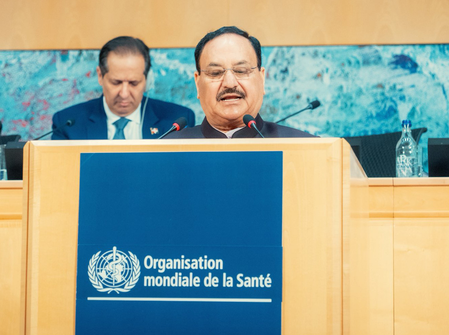
New Delhi, May 21 (IANS) Union Health Minister Jagat Prakash Nadda urged stronger global action on early lung‑health screening and responsible deployment of artificial intelligence to reshape healthcare systems.
Speaking at two high‑level side events during the 79th World Health Assembly in Geneva, Nadda said timely screening, early diagnosis and equitable access to care lies at the heart of resilient and people-centred health systems.
He mentioned India’s National Tuberculosis Elimination Programme and the TB‑Mukt Bharat campaign as one of the world’s largest screening and early detection efforts.
He underlined that the country has “expanded active case finding among vulnerable populations through house-to-house outreach, mobile screening teams, community campaigns and focused drives in high-risk areas and among vulnerable populations.”
The minister said that India has significantly scaled up modern diagnostics to detect TB and other lung diseases.
Molecular testing platforms, digital chest X-ray services, AI-assisted interpretation tools, handheld screening devices and decentralized testing systems are being deployed extensively to reduce diagnostic delays, particularly in remote and underserved regions.
Regarding India’s digital initiatives, Nadda noted that the government has launched the TB Mukt Bharat App featuring “Khushi”, an AI-enabled multilingual chatbot designed to be accessible even on entry-level smartphones.
The platform provides real-time guidance on symptoms, entitlements and nearest diagnostic facilities, thereby helping bridge the gap between symptom onset and timely care, the statement said.
In another event on the use of artificial intelligence in the health sector, the minister highlighted AI-led health care delivery must be “shaped by sound regulation, rigorous research, ethical oversight, and a deep commitment to equity so its benefits reach every citizen”.
The minister also highlighted the launch of the Strategy for AI in Healthcare for India (SAHI) during the India AI Impact Summit in February 2026 and described it as “the first comprehensive strategy emerging from the Global South, guiding India’s healthcare journey in an ethical, transparent and people-centric manner.”
—IANS
aar/pk
ICMR hosts first annual clinical trial meet to boost integrative medicine research
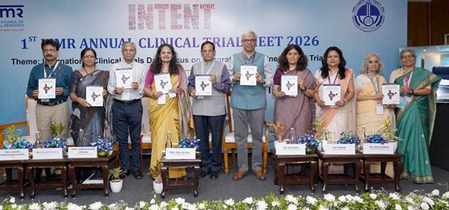
New Delhi, May 21 (IANS) The Indian Council of Medical Research (ICMR)'s multicentric Phase III clinical trial has found that Ayurvedic formulations are therapeutically equivalent to standard iron-folic acid supplementation in treating moderate iron deficiency anaemia among women, an official statement said on Thursday.
The ICMR has organised '1st ICMR Annual Clinical Trial Meet 2026' to strengthen India’s clinical trial ecosystem and advance evidence-based integrative medicine research in the country, the Ministry of Health and Family Welfare said.
According to the government, the trial -- conducted by ICMR in collaboration with the Central Council for Research in Ayurvedic Sciences (CCRAS) -- enrolled nearly 4,000 non‑pregnant women aged 18–49 with moderate anaemia.
The study compared Punarnavadi Mandura alone and in combination with Drakshavaleha against standard iron‑folic acid supplementation and assessed haemoglobin levels and clinical outcomes over a period of 90 days.
The event also witnessed the launch of the report on advancing First-in-Human Phase 1 Clinical Trials in India.
The study identified major bottlenecks affecting the advancement of early-phase clinical trials in India and recommended measures including strengthening regulatory capacity, streamlining approval processes and enhancing coordination among agencies to support innovation-driven clinical research in the country.
The report was developed through a two-round consultation involving 37 experts from the pharmaceutical industry, Contract Research Organisations (CROs), academia and national regulatory agencies.
A panel discussion saw meaningful deliberations on translating scientific evidence into public health policy and healthcare practice.
The meet brought together policymakers, scientists, clinicians, researchers, regulatory authorities and experts from diverse fields to discuss emerging opportunities, ethical frameworks, regulatory pathways and innovations in clinical research.
The dignitaries highlighted the need for robust clinical research systems, ethical governance and scientific validation of integrative healthcare practices to address emerging public health challenges and strengthen healthcare delivery mechanisms in the country.
—IANS
aar/ag
India remains committed to maternal, child health agenda: Health Minister Nadda
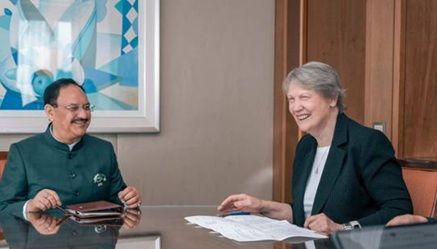
New Delhi, May 20 (IANS) Union Minister for Health and Family Welfare Jagat Prakash Nadda on Wednesday reaffirmed India’s strong commitment to advancing the global agenda for women’s, children’s and adolescents’ health, according to an official statement on Wednesday.
During a bilateral meeting with Helen Clark, Board Chair of the Partnership for Maternal, Newborn and Child Health (PMNCH), on the sidelines of the 79th World Health Assembly in Geneva, Nadda highlighted India’s longstanding association with PMNCH since its inception in 2005, the Ministry of Health and Family Welfare said.
The minister added that the country remains proud to continue its partnership and contribute meaningfully to its objectives.
Moreover, Nadda underlined India’s active leadership role in PMNCH as Vice Chair of the Board and Chair of the Standing Committee, and informed that India’s annual grant contribution of $2 million in perpetuity is currently under process.
He emphasised India’s achievements in public health, saying that India has been a hub of innovation and large-scale delivery of health interventions with equity and accessibility, keeping the health of women, children and adolescents at the core of its service delivery and sustainable development efforts.
He noted that India was among the first countries to launch a dedicated national programme for adolescents in 2014, reaching young people through facility-based, school-based and community-based interventions across the country.
Referring to improvements in major indicators, Nadda said India has recorded significant reductions in Maternal Mortality Ratio (MMR) and Infant Mortality Rate (IMR), at a pace surpassing global trends.
The minister also said India has much to offer the global community through evidence-based best practices and successful public health interventions implemented at scale and expressed readiness to provide technical guidance and support to other countries.
He invited PMNCH to showcase India’s successful models and innovations through physical and virtual platforms.
Reiterating India’s commitment as Vice Chair of PMNCH, Nadda said India is willing to support the organisation across priorities, including Women’s, Children’s and Adolescents’ Health (WCAH) and the growing burden of Non-Communicable Diseases (NCDs). He also noted India’s growing repository of technical resources and digital public health goods that can be shared globally.
In addition, Helen Clark appreciated India’s continued leadership and contributions to global public health and acknowledged its important role within PMNCH and the wider global health architecture.
--IANS
ag/